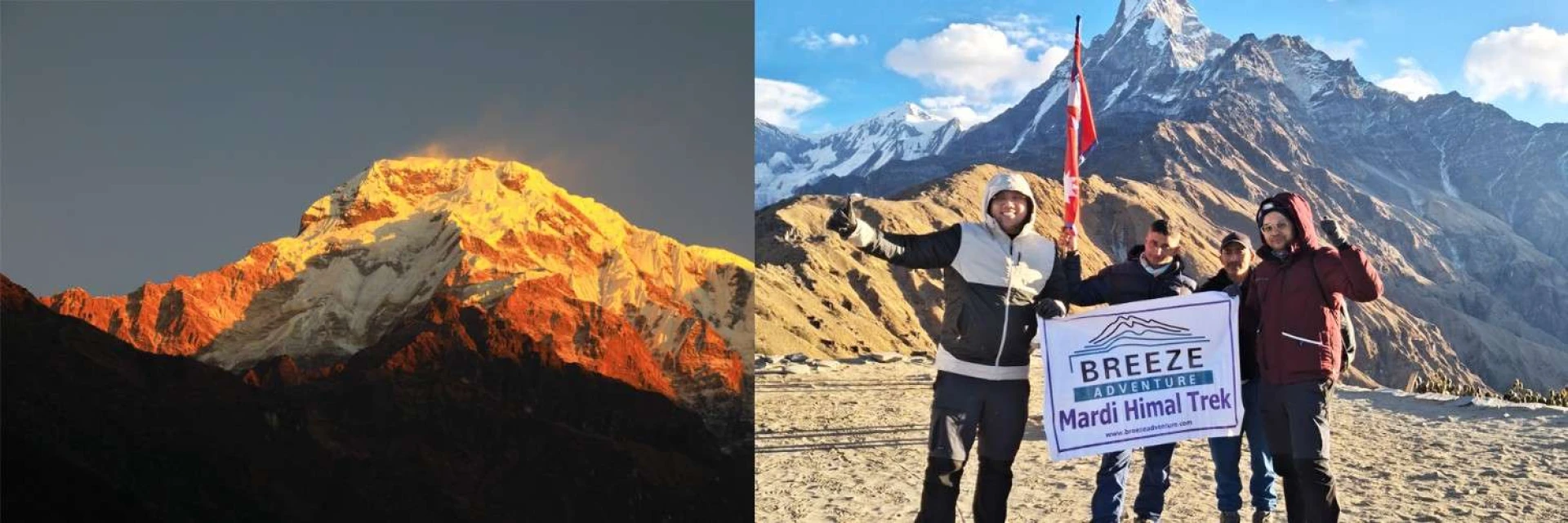
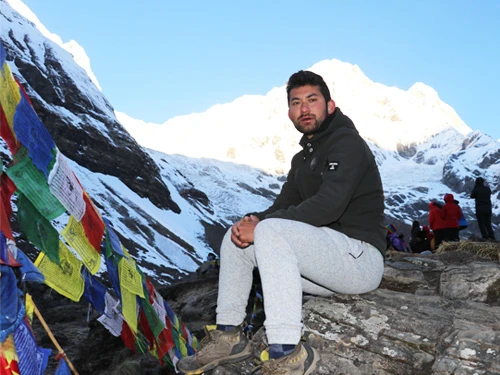
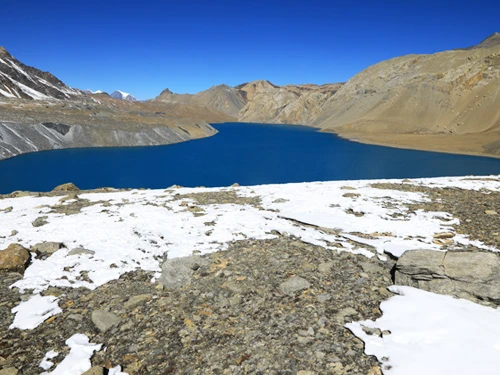
The first time I stood at High Camp on the Mardi Himal trek, I couldn't feel my toes, and I didn't care. Machhapuchhre, the fishtail peak, was hanging right there above the ridge like someone had propped up a painting. I had walked about fourteen kilometres to get to that view. On the Everest trail you'd still be in the queue at the airport.
That's the whole pitch for Mardi Himal, and I'll keep saying it through this guide: you get a proper Himalayan payoff without giving up two weeks of your life. If you have never done a multi-day trek before, or you only have a handful of days in Nepal, this is the one I send my friends on. I've now walked it three times, in different seasons and with people of very different fitness levels. So most of what follows comes from actually being on the trail rather than copying a brochure.
Here's everything you need to plan for Mardi Himal Trek Nepal: where it is, how high it goes, how long it takes, what it costs, the itineraries that make sense, the best time to go, and the honest downsides nobody mentions. This is based on my 2 decades of experience in Himalayan trekking and tours, so this fits perfectly for both beginners and experienced trekkers.
Table of Contents
Why Mardi Himal is the trek I recommend to first-timers
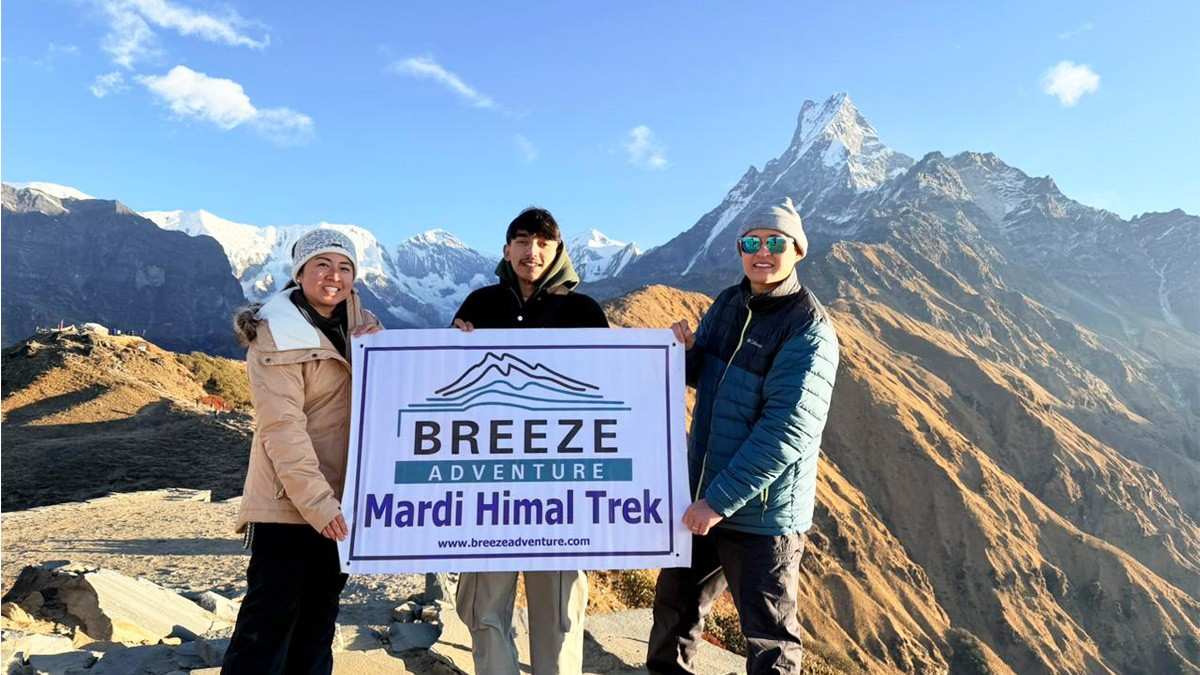
Mardi Himal Trek with Breeze Adventure team
Most treks in the Annapurna region are wonderful, and most of them are also long. Annapurna Base Camp is a week or more. The Circuit is close to two weeks. Himal Mardi squeezes the good part, the alpine ridge under the big peaks, into a route you can finish in two to five days.
A few reasons it works so well for beginners:
The trail stays quiet. It only opened up as a proper teahouse route around 2012, so it never got the crowds that Poon Hill and ABC did. You'll pass people, not tour groups.
You sleep low and walk high. The highest place you overnight is High Camp at about 3,550 metres, which keeps altitude sickness fairly unlikely if you take it steady.
The scenery changes every couple of hours. You start in thick rhododendron and oak forest, climb onto a grassy ridge, then break out above the treeline into bare alpine terrain with peaks on three sides.
It's cheap. More on the exact cost below, but a modest independent trek can be done for a few hundred dollars.
I won't pretend it's a flat walk in a park. There are steep, lung-burning sections and the last morning is genuinely cold. But as a first taste of the Himalaya, I struggle to think of anything better for the time it takes.
Where is Mardi Himal?
Mardi Himal sits in the Annapurna Conservation Area in central Nepal, tucked on the ridge that runs south from Machhapuchhre (Fishtail). The nearest city is Pokhara, which is the lakeside town most people already use as a base for Annapurna treks.
The trailhead at Kande is only about an hour's drive from Pokhara City. That short transfer is one of the reasons the trek feels so easy to slot into a trip. You can be sipping coffee by Phewa Lake in the morning and walking through cloud forest by early afternoon.
Mardi Himal trek height and the camps you'll sleep in
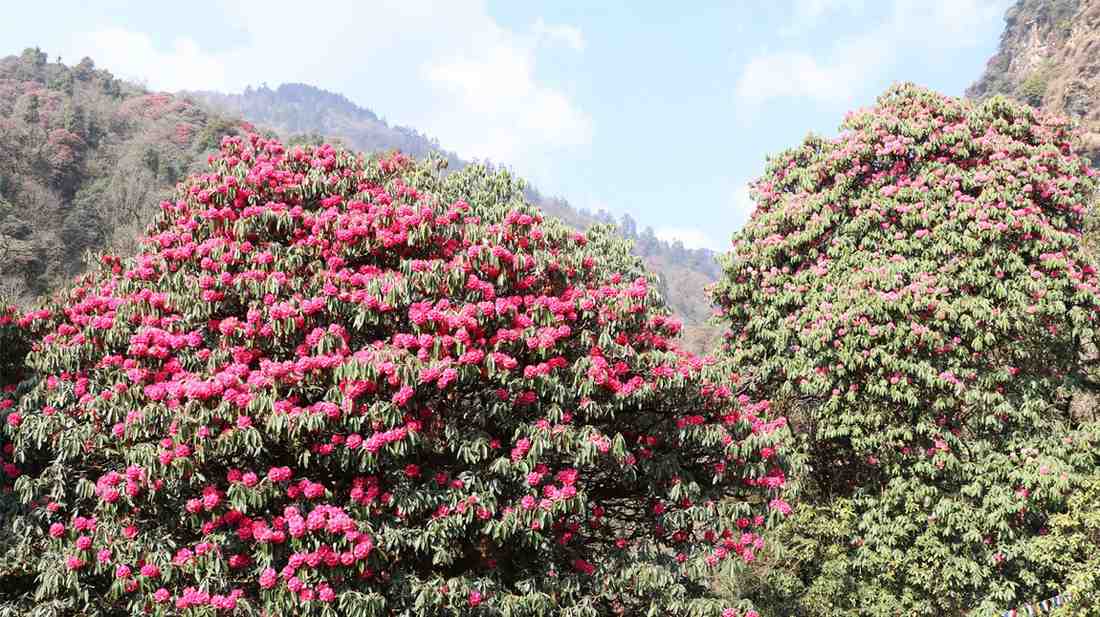
Beautiful rhododendron forest in Mardi Himal Trail
People search "mardi himal height" and "base camp" a lot, so let me lay out the whole ladder. The names on this trail are literal. Forest Camp is in the forest. High Camp is high. Base Camp is the top.
Here's the route from bottom to top with rough elevations:
Pokhara: 822 m (where you start the day)
Kande: 1,770 m (the trailhead, reached by road)
Australian Camp: 2,100 m (first big viewpoint, optional early stop)
Pitam Deurali / Pothana: about 2,000 m
Forest Camp (locally called Kokar): 2,550 m
Low Camp: around 2,970 m
Badal Danda: 3,210 m (the "cloud hill", and a lovely place to stay)
High Camp: 3,550 m (the last overnight before the top)
Upper Viewpoint: about 4,200 m
Mardi Himal Base Camp: 4,500 m (the highest point of the trek)
Base Camp sits under Mardi Himal peak itself (5,587 m) and holy Machhapuchhre (6,993 m), which climbers are still not allowed to summit. From the top, you can pick out Annapurna South, Hiunchuli Peak, Gandharba Chuli and, on a clear morning, the giant wall of Annapurna I in the distance.
One honest note: some trekkers turn around at High Camp or the Upper Viewpoint and skip the final push to Base Camp. The stretch above 4,200 m is a narrow, rocky ridge and it's the one place you might feel the altitude. If your legs or your lungs say no, the view from High Camp is already the money shot.
How long is the Mardi Himal trekking? Distance and days
The full walking distance comes to roughly 41 to 45 kilometres, depending on where you start the drive and how far up you go before turning back. That number scares some people, but it's spread over several days of gentle-to-moderate walking. The average day is only four to six hours on your feet.
You'll see the trek sold as everything from a two-day dash to an eleven-day slow journey. The difference is mostly how far you drive versus walk, and whether you add rest or side trips. For most people, the sweet spot is four or five days. Three days is doable if you're fit and short on time. Anything longer is about savouring it, not necessity.
Mardi Himal trek itineraries
Here are the major itineraries I actually use, from fastest to most relaxed. All of them assume you're starting and ending in Pokhara.
The 2 day version (fastest)
The Mardi Himal Trek 2-day itinerary is the fastest way you can reach. This is a perfect fit for your getaway with a minimum time limit.
Day 1: Drive to Sidding (2 hours) and trek to High Camp
Day 2: Hike to Base Camp, then trek back to Sidding (about 6 hours) and drive to Pokhara (2 hours)
The 3-day version (fast, for fit walkers)
This 3 days itinerary is a squeeze, but it works if you're reasonably fit and want the highlights.
Day 1: Drive from Pokhara to Dhampus, then trek to Forest Camp (2459 m).
Day 2: Trek from Forest Camp to High Camp, drop your bag
Day 3:Hike to the Upper Viewpoint and Mardi Base Camp (4500 m) for the views. Come back down to Sidding and drive to Pokhara.
The 4-day version (a good middle ground)
The Mardi Trek 4 days is also a sweet spot for beginners. You will get more time to enjoy nature and have some rest on the trail.
Day 1: Drive from Pokhara to Lwang and then trek to Forest Camp.
Day 2: Trek from Forest Camp to High Camp
Day 3: Trek from High Camp to Base Camp, then return to Badal Danda
Day 4. Trek back from Badal Danda to Siding and drive to Pokhara
If you want to slow right down, some lodges around Australian Camp and Lwang village now run yoga and wellness stays. You can bolt a couple of quiet mornings onto either end. It's a nice way to stretch out sore legs before you head back to the city.
Day 1: Drive from Pokhara to Kande. Walk to Forest Camp (2,550 m). Easy afternoon in the trees.
Day 2: Forest Camp to Low Camp or Badal Danda. The views of Fishtail start opening up.
Day 3: Short climb to High Camp (3,550 m). Rest in the afternoon, watch the sunset.
Day 4: Pre-dawn walk to Base Camp (4,500 m) for sunrise, then back down to Low Camp.
Day 5: Descend to Sidhing and drive back to Pokhara.
The sunrise on the morning of Day 4 is the reason people come. You leave High Camp in the dark, headtorch on, and the sky goes from black to grey to gold on the snow while you climb. I've done it three times, and it still gets me.
Getting there: Mardi Himal trek from Kathmandu and Pokhara
Almost everyone treks Mardi Himal out of Pokhara, so the real question is how you get to Pokhara.
From Kathmandu, you have three options. You can fly, which takes about 30 minutes and is the easiest on your body. You can take a tourist bus, which is cheap and takes six to eight hours along the river valley. Or you can hire a private car, which sits somewhere in between on price and comfort. I usually fly one way and take the bus the other, so I get both the view and the value.
Once you're in Pokhara, the trek itself begins with that short one-hour drive to Kande. So when people ask about the "Mardi Himal trek from Kathmandu," the honest answer is that Kathmandu City is just where you land. Pokhara is the true starting line.
What the trail is actually like to walk
The Nepal Mardi Himal trail has three distinct moods, and I love that about it.
The first is forest. From Kande and Australian Camp you climb into deep, mossy woodland full of oak, maple and rhododendron. In spring the rhododendrons flower red and pink and you walk through what feels like a tunnel of blossom. This lower section, the stretch toward Forest Camp and the alternate approach from Lumle and Lwang, is damp, green and quiet, with tree roots underfoot and birds you'll hear long before you see them.
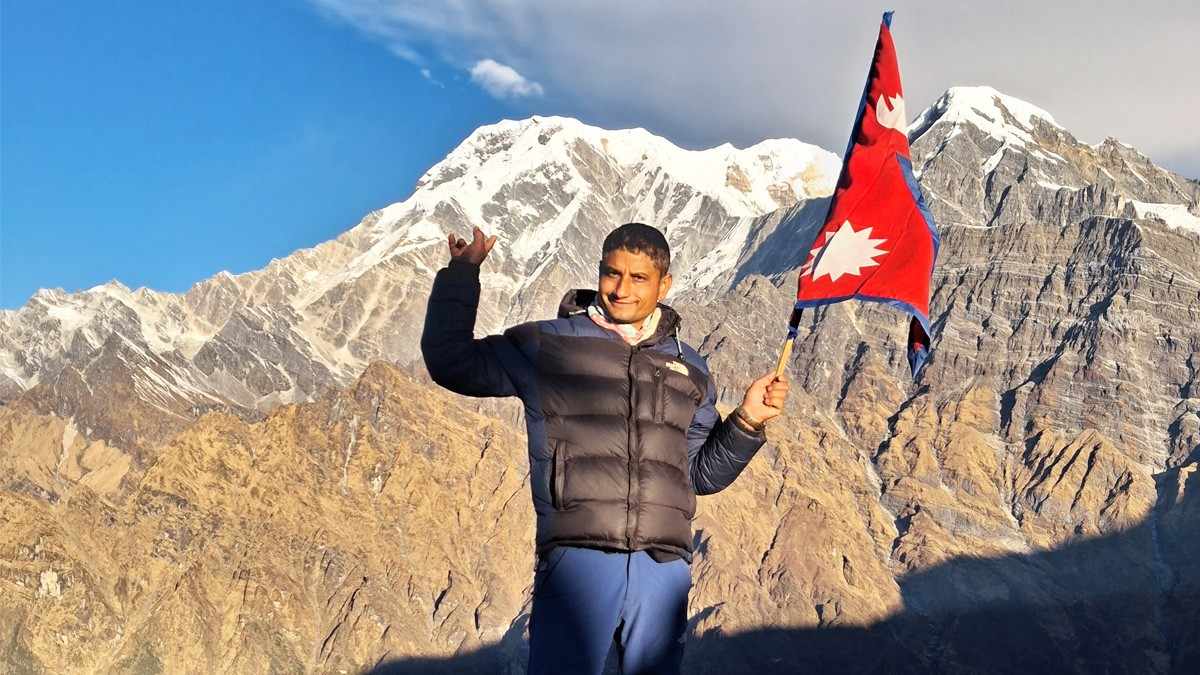
Image captured in Mardi Himal Trek Nepal
The second mood is ridge. Above Low Camp, the trees thin out and you step onto a long grassy spine with a drop on either side. This is where Machhapuchhre stops being a rumour and starts filling half the sky. Badal Danda, "cloud hill", often has a sea of cloud sitting below you in the morning, so it looks like you're walking above the weather.
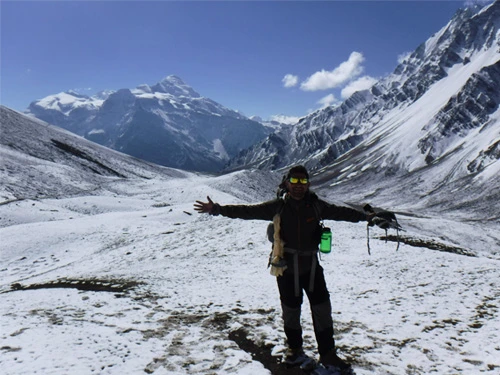
The third mood is alpine. Past High Camp, the grass gives way to rock and, in the colder months, snow. The final ridge to the viewpoints is narrow and exposed, and the air feels thin and sharp. It's a short section, but it's the one that makes you feel like you've earned the top.
If you come out via Sidhing rather than retracing your steps, you drop through farming villages and terraced fields on the way down. This gives you a completely different slice of rural Nepal for the last day. I prefer looping out that way when I can.
The distance is short, and there's no technical climbing, no ropes, no ice axes. What makes it a real trek rather than a stroll is the steepness in a couple of places. Mainly, the pull from Low Camp up to High Camp, and the altitude on the final morning.
If you can walk uphill for four to six hours and you don't mind basic teahouse comfort, you can do this trek. You don't need to be an athlete. I've walked it with people in their sixties and with someone who'd never hiked before in their life, and both made it to High Camp comfortably. A little training beforehand, some stair climbing or hill walks, makes the whole thing far more pleasant.
Altitude is the thing to respect, not fear. Base Camp is 4,500 m, which is high enough to cause mild altitude sickness in some people. The trick is simple: don't rush the last two days, drink plenty of water, and if you get a headache that won't shift, go down. You sleep no higher than High Camp, which keeps the risk low compared with treks where you sleep above 4,000 m. Also, Breeze Adventure offers an oxygen cylinder per group to deal with altitude sickness. The team also guides on symptoms and immediate actions, so there is nothing to worry about.
Best time for the Mardi Himal trek: weather and temperature
The month-by-month weather analysis of this trek matters a lot before booking the trip, as Nepal shows variations in climate and temperatures frequently. If you only remember one thing about timing, remember this: autumn and spring are the good seasons, and October is the busiest month for a reason.
Autumn (late September to November)
This is peak season and my personal favourite. The monsoon has washed the dust out of the sky, so the mountain views are as clear as they get all year. October has the most reliable weather and the fullest teahouses, which also means it's the most crowded. If you want that same clear air with fewer people and slightly lower prices, go in November. The trade-off is colder nights.
Spring (March to May)
The second-best window, and arguably the prettiest. This is when the rhododendron forests bloom, so the lower trail turns into colour. Skies are mostly clear early in the season, though you can get some afternoon haze and the odd shower as it warms up. March and April are lovely.
Monsoon (June to August)
This is mostly for experienced trekkers. Even beginners can do this provided that they do good preparation and training. Heavy rain makes the trail slippery, the forest fills with leeches, and clouds usually swallow the peaks. However, rain affects the lower region only; as altitude increases, rain decreases. Trekking at this time means you will have a peaceful trail, lush greenery, the best views, and lower cost than peak season.
Winter (December to February)
This season brings a cold, quiet, and clear experience. If you have the right gear and don't mind bitter nights, winter gives you empty trails and sharp visibility. Snow starts covering the trail above High Camp from mid-December, and the top section can be impassable after heavy snowfall. People love trekking at this time due to fewer crowds, empty teahouses, lower cost, and snow hiking.
Here's roughly what to expect for temperature. At the lower and mid camps, daytime is mild, often 12 to 22°C. Up at High Camp it's a different world: daytime highs sit around 0 to 8°C in autumn, and nights drop well below freezing. In November, High Camp nights commonly fall to around -8 to - 12°C, and deep winter can hit - 15°C. Bring a sleeping bag rated colder than you think you need.
Mardi Himal Trek cost in 2026/2027
The cost depends almost entirely on how you trek and what services you take. If you are a couple or a group, you will get a discount. The more people you are, the more discount you will be granted.
A basic trek can be done for around $400 to $450 per person, covering permits, transport, food, and simple teahouse rooms.
A comfortable mid-range guided trip, the five-day standard with a licensed guide, usually runs 500 to 600 dollars per person.
A premium package with a porter, private transfers, better lodges and insurance can climb past 1,500 dollars.
ACAP (Annapurna Conservation Area Permit): about NPR 3,000 for foreign trekkers in 2026, less for SAARC nationals, free for children under 10.
TIMS card (Trekkers' Information Management System): around NPR 2,000, sometimes cheaper if arranged through an agency.
Together that's roughly NPR 5,000, or about 33 US dollars. You can get both at the Nepal Tourism Board offices in Kathmandu or Pokhara, or your agency can sort them out for you. One thing that trips people up: permits are paid in Nepali rupees, in cash. Don't turn up expecting to tap a card.
There's also a small local municipality fee collected at a checkpoint on the trail, which goes toward trail upkeep and the mountain villages. Keep some small notes (cash) handy.
Can I do Mardi Himal Trek solo?
Since 2023, Nepal has pushed toward requiring foreign trekkers to hire a licensed guide in many regions. Especially in mountain trekking, a licensed trekking guide is mandatory. This is for safety reasons. A travel agency will also provide you with an experienced guide and porter also if you require.
A Mardi Himal Trek route map
There isn't much point printing a static map here since you'll want a proper GPS or Maps.me file on your phone, but here's the shape of it so you can picture the route.
Start in Pokhara. Drive northwest to Kande. From Kande, the trail heads north and up, through Australian Camp and Pothana, then swings deeper into the forest to Forest Camp. From there it climbs the ridge north through Low Camp and Badal Danda to High Camp. The final spur runs north again along a narrow ridge to the Upper Viewpoint and Base Camp beneath Machhapuchhre. To come out, most people descend east off the ridge to Sidhing village and drive back to Pokhara, which makes a loop rather than an out-and-back.
Download an offline map before you go. Signal is patchy above Low Camp.
Photo spots worth knowing about
This trail gives immense photo opportunities. Take a moment in Badal Danda at sunrise, when cloud sits in the valley below you. Similarly, the ridge between Low Camp and High Camp, where Fishtail dominates the frame.
And obviously the Base Camp and Upper Viewpoint at first light, when the sun catches the snow before it reaches you. Charge your batteries the night before. Cold drains them fast, so I keep a spare in an inside pocket close to my body.
What to pack for Mardi Himal Trek Nepal
You do not need a climbing kit, but you do need warm layers and good gear for the cold peak. You can rent big items cheaply in Pokhara. Kindly include the following things as your Mardi Himal Packing List:
Boots: Good, broken-in walking boots.
Clothing: Warm down jacket, warm hat, and gloves.
Sleeping Gear: Sleeping bag rated for -10°C to -15°C.
Lighting: Headtorch for the sunrise climb.
Health & Safety: Sunscreen, basic first aid kit, plus blister and headache medicine.
Rental Option: Rent bulky items cheaply in Pokhara lakeside shops.
Mardi Himal trek FAQs
How long is the Mardi Himal trek?
The walking is about 41 to 45 km total, usually spread over three to five days. Four or five days is the comfortable choice for most people.
Is the Mardi Himal trek difficult?
It's moderate. There's no technical climbing, but there are steep sections between Low Camp and High Camp, and the final morning is at altitude. Fit beginners handle it well.
What is the best time for the Mardi Himal trek?
Autumn (October to November) for the clearest skies, and spring (March to May) for the rhododendron blooms are normally the best time.
Can you do the Mardi Himal trek solo?
Nepal has tightened its guide rules since 2023, and made it mandatory for foreign trekkers to hire a licensed guide for Himalayan trekking. Hiring a local guide is cheap and, honestly, worth it.
How high is Mardi Himal Base Camp?
Base Camp sits at around 4,500 metres. High Camp, the last overnight, sits at about 3,550 metres.
How much does the Mardi Himal trek cost in 2026?
Roughly $400 to $700 based on services and package. A couple or a group will get a discount.
Can I do the Mardi Himal trek from Kathmandu?
Yes, but you route through Pokhara. Travel from Kathmandu to Pokhara first (fly, bus, or private car), then drive an hour to the Kande trailhead.
Is Mardi Himal good for beginners?
It's one of the best short treks in Nepal for a first-timer. It’s short, scenic, not too high, and near Pokhara.
Final thoughts
I've walked a lot of trails in Nepal, and Mardi Himal is still the one I recommend most, not because it's the biggest or the highest, but because it gives so much back for so little. Five days, a couple of hundred dollars, and a sunrise you'll be describing to people for years.
If you're new to trekking and you've been staring at the Everest and Annapurna Circuit itineraries thinking you don't have the time or the legs for it, start here. Get your permits, book a room at High Camp, set an early alarm for that last morning, and go stand under the fishtail. You'll be glad you did. This is one of the finest things you can experience in Nepal.
Kishwor Adhikari is a passionate writer with a deep enthusiasm for trekking and adventure. His extensive travels across Nepal, exploring its diverse landscapes and hidden corners, have shaped his unique perspective on the country's natural beauty. With a wealth of first-hand experience in adventure trekking, Kishwor has become a trusted voice for fellow enthusiasts. Through his writing, he shares invaluable insights, offering practical advice and inspiration for both seasoned trekkers and novices alike. His dedication to sharing his journey and knowledge helps others discover the wonders of Nepal's wilderness, making his work an essential resource for anyone seeking adventure in the region.