
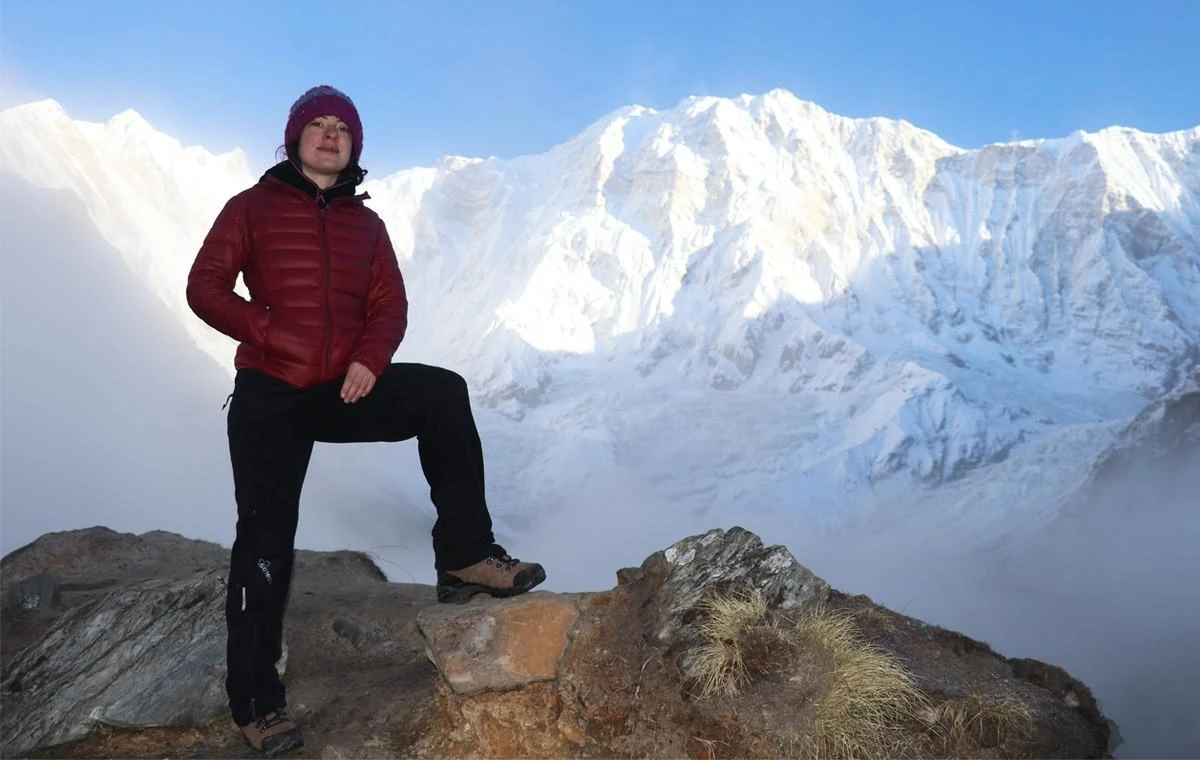
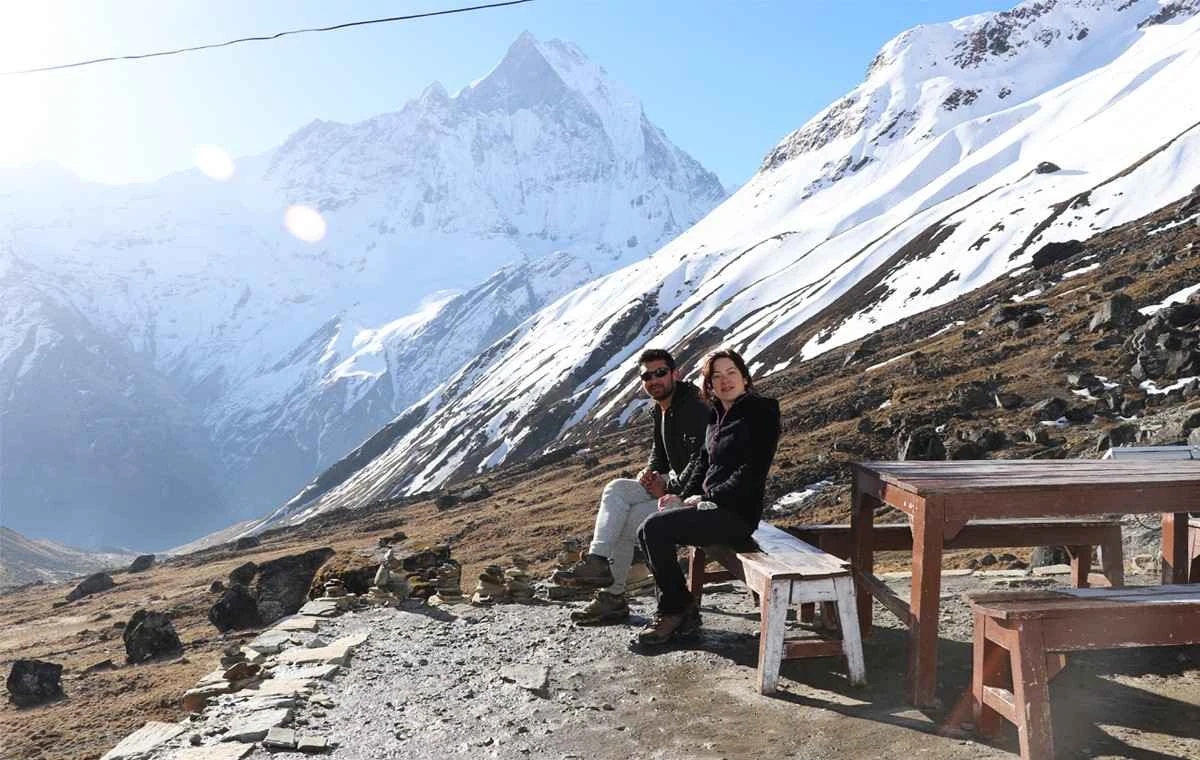
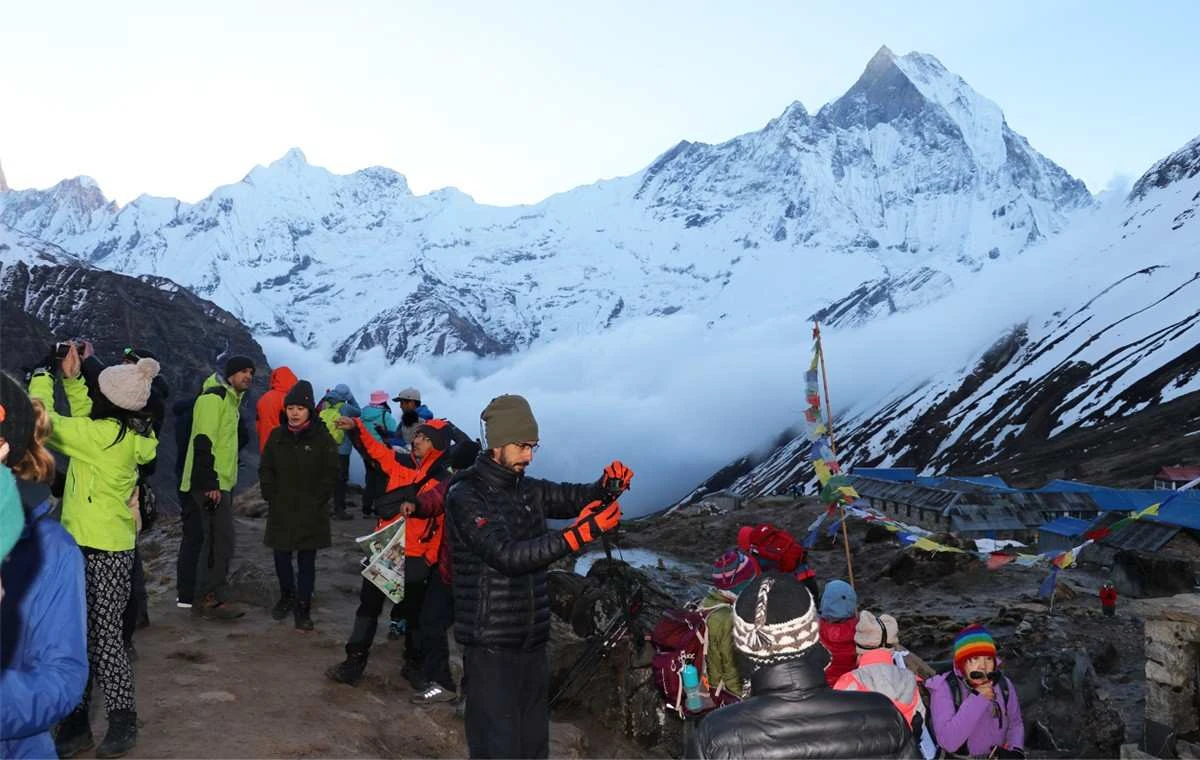
ABC Trek at a glance
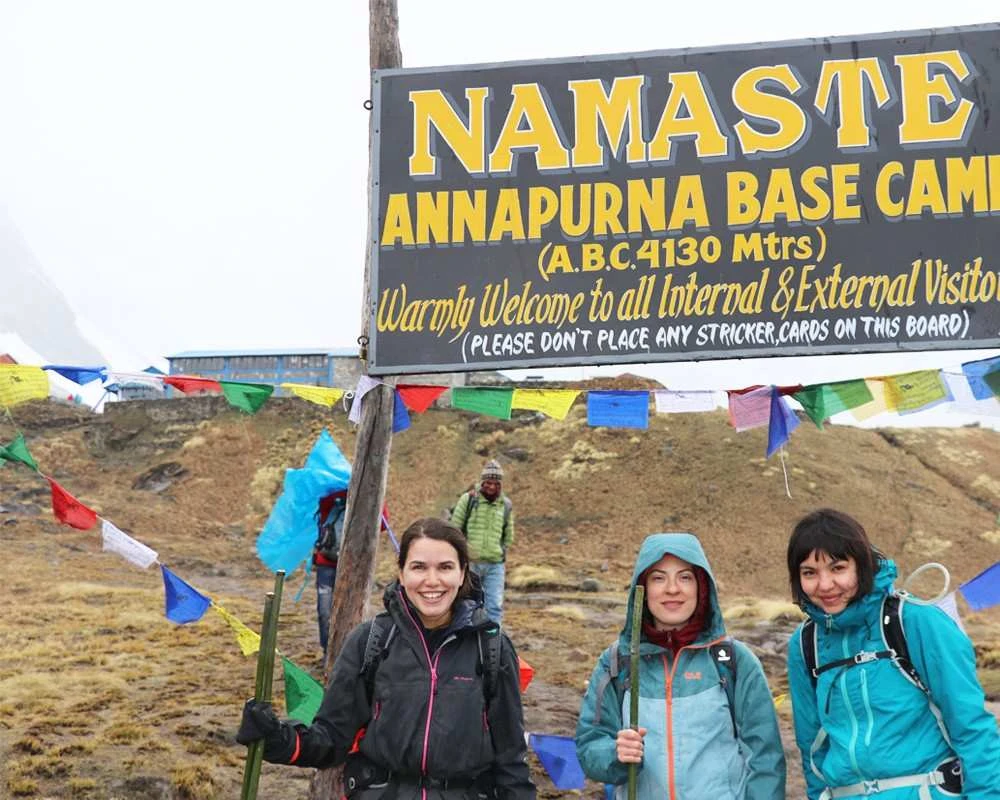
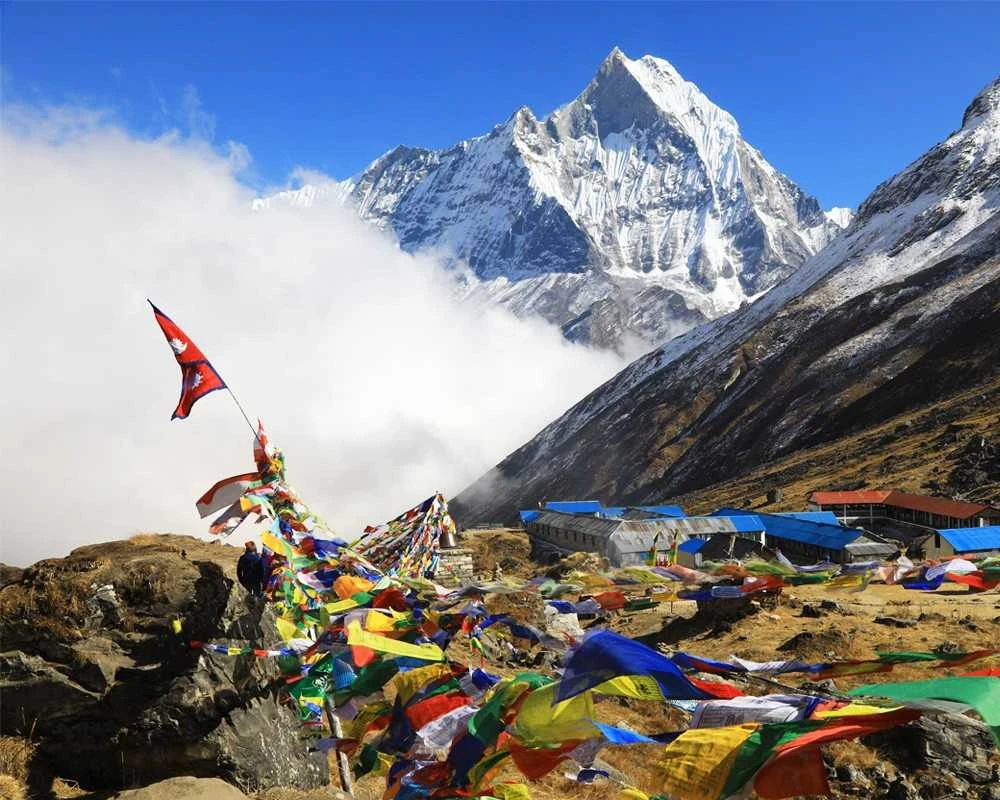
The Annapurna Base Camp Trek (ABC) takes you from sub-tropical Pokhara up the Modi Khola valley, through bamboo forests and Gurung villages, into a glacial amphitheater at 4,130 meters surrounded by ten peaks over 7,000 m. This includes Annapurna I (8,091 m), Hiunchuli, and the unmistakable shark-fin of Machhapuchhre. The whole loop, on a standard itinerary, takes just 5 days.
It's not the tour des Annapurnas (that's the longer Annapurna Circuit, 8–10 days, crossing the Thorong La pass at 5,416 m). ABC is shorter, lower, and finishes inside the sanctuary itself rather than crossing it.
Why the ABC trek works particularly well for French trekkers
For trekkers from France, the ABC trek Nepal is not just about adventure and mountain range, the trail is surprisingly rich in culture, natural beauty, as well as infrastructure and hospitality. Here’s why you should be a part of this journey:
The Annapurna region has been a favourite with French hikers for decades, and there are real reasons for that beyond just the scenery. The trail infrastructure is mature: teahouses are comfortable, menus are varied (you will eat well), and the routes are well-marked. This isn't a wilderness expedition where you carry everything on your back. It's a classic Himalayan trek with a clear path, proper beds each night, and local families who have been hosting trekkers for generations.
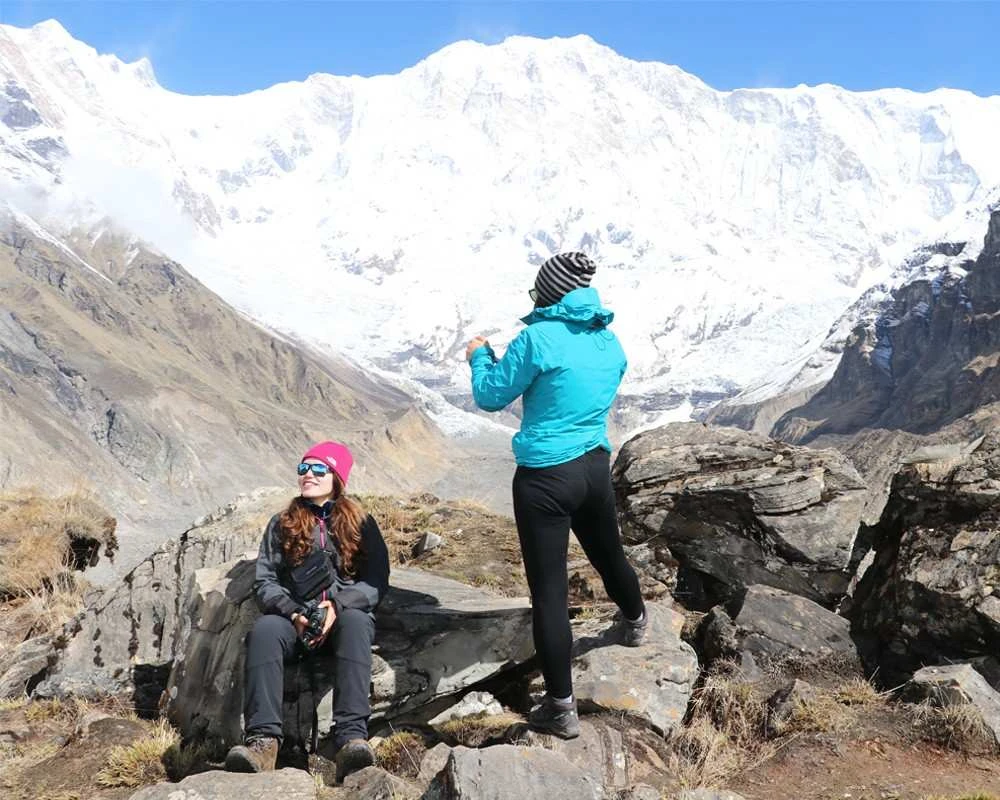
The physical demands match what most fit French hikers possess. People who walk the GR20 or spend weekends in the Alps are already capable of it. The ABC trek isn't technical. It doesn't require crampons or ropes. What it requires is endurance, some patience with altitude, and the willingness to slow down and let the mountain come to you. Day four or five, when you crest into the amphitheatre, and Annapurna South fills the entire sky in front of you, is the kind of moment that stays with people for years. There's a reason so many trekkers who do it once come back again.
The cultural dimension is something French travellers tend to appreciate too. The trail passes through Gurung and Magar villages, through rhododendron forests and terraced fields, and through Chhomrong - one of the most beautifully situated villages in the Himalayas. It's not a landscape you just pass through; it's one you actually enter. The people are warm, the pace is human, and the food is as simple as it is, it is genuinely good. Garlic soup at altitude hits differently.
Annapurna Base Camp Trek difficulty: the honest answer
Technically, there's nothing hard. No exposure, no scrambling, no ropes. The trail is well-marked and well-trodden. Anyone who hikes regularly in the Vosges, the Massif Central, or does GR routes in the Pyrenees has the baseline.
What makes it demanding is the volume. You'll walk 5 to 7 hours a day, day after day, on stone-step staircases that go up forever and then down forever. The descent from Chhomrong to the Modi Khola river, then straight back up the other side, is the kind of thing that breaks knees if you're not prepared. Walking poles are not optional - they redistribute about 30% of the load off your quads.
The altitude is real but manageable. Above 3,000 m (Deurali, MBC, ABC), some people feel headaches and shortness of breath. Acute mountain sickness (AMS) is rare on ABC because the ascent profile is reasonable, but it happens. If you have any cardiac history, get cleared by your médecin traitant before booking.
Rough honest assessment: if you can do a 6-hour hike in the Pyrenees with 1,000 m of elevation gain and feel tired-but-fine at the end, you can do ABC. If you are just a beginner for adventure trek, then do some light training a week before your ABC trek officially starts.
The guide question: trek Annapurnas sans guide?
This is the section I most needed to update for the latest trips because the rules changed in April 2023. Many queries come asking whether I can walk the sanctuaire des Annapurnas solo. The answer is: You generally cannot.
Here's the actual current situation, verified against the Trekking Agencies' Association of Nepal (TAAN) and recent reports from on-trail operators:
- The mandatory licensed guide rule introduced in April 2023 still applies to ABC in 2026. You have to hire a licensed guide for the Himalayan trek Nepal.
- The TIMS card situation is no longer mandatory. If you book through an agency, they handle it along with other paperwork.
- ACAP permit (Annapurna Conservation Area Permit) is non-negotiable. NPR 3,000 (about €21) for foreign nationals. Checked at multiple points on the trail. So, no exceptions to this.
My honest recommendation for French trekkers: hire a guide. Not because the trail is dangerous - it isn't - but because the rule exists, a good guide costs €30-40 per day, and the value they add (language, route knowledge, AMS recognition, lodge negotiation, cultural context) is genuinely worth it. We can arrange a French-speaking guide if you want. This works best if you are not comfortable with an English-speaking guide. The beautiful idea of trek Annapurnas sans guide is appealing; the practical reality is that a guide makes the trip better.
When to go ABC Trek: seasons from a French calendar perspective
Planning Annapurna Trek for the right season means you have achieved a major milestone. The right time picking makes the journey smooth and enjoyable.
March to May: Best for rhododendron blooms (the hillsides go red and pink), generally clear mountain mornings, afternoons can be hazy. This overlaps neatly with French school spring holidays. April is the most popular month, so trails are busy and lodge availability is tight. You can take children as well. The Annapurna Base Camp Trek for Children and Family members is a must-try to make your kids experience the Himalayas.
Late September to late November: This is the classic season. There will be crystal-clear mountain views, stable weather, and cool nights. The Toussaint break in late October–early November is a sweet spot. Book lodges in advance.
June to early September: This is worthwhile if you have prior trekking experience. There will be leeches, the possibility of landslides, and fogged-out views.
December to mid-March: Possible but cold. Nights at MBC and ABC drop to –15°C. Some lodges close. Snow can block the upper trail, but the views look stunning with snow. For experienced winter hikers, this is a good option.
For most French trekkers locked into school holidays, October to November is the gold standard window.
Tea houses, food, and what to expect at night
Accommodation along the camp de base Annapurna trail is in tea houses. These are mostly family-run lodges with simple twin rooms, shared bathrooms (mostly), and a central dining hall heated by a stove. Don't expect French hotel standards. Do expect warmth, decent food, and people who've been hosting trekkers for thirty years.
The unwritten rule: you stay in the lodge that serves you dinner. You will get warm, locally grown rice and lentils with veg curry.
Food is repetitive but good. The national dish, dal bhat (rice, lentil soup, vegetable curry, pickle), comes with free refills and is what your body actually wants after seven hours of walking. Pasta, fried rice, pancakes, and Tibetan bread are universally available. Meat gets less safe the higher you go - most experienced trekkers go vegetarian above Chhomrong.
Hot showers cost €2–3 above Chhomrong. Wi-Fi is available at most lodges via the AirLink network - about €2 for an hour, often slow.
Charging your phone costs €1–2 per device per hour. A 20,000mAh power bank pays for itself.
Annapurna Base Camp Trek price: what it really costs for French Trekkers
Cost is where most blogs get vague. Let me break it down honestly, in euros, for a French trekker booking from France.
Trek package (paid to a Nepali agency)
| Package Level | USD | Euro ((Approx)) | What you get |
| Budget | $600–800 | €560–745 | Basic tea houses, twin sharing, licensed guide, permits, ground transport |
| Standard | $900–1,200 | €840–1,120 | Better lodges where available, sometimes flight to Pokhara, porter included |
| Comfort | $1,300–1,800 | €1,210–1,675 | Best available lodges, private rooms, hot showers, full porter, flights |
Real talk on agencies: a Western European agency (UK, France, Germany) will charge €2,500–3,500 for exactly the same trek that a Kathmandu-based operator sells for €750. The guide on the trail is Nepali either way. Booking direct with a registered Nepali agency is the single biggest cost-saver, and TripAdvisor + a 30-minute video call before booking gets you 90% of the trust signal you need.
The cultural side of the ABC Trail Nepal
The sanctuaire des Annapurnas is sacred ground for the Gurung people who live in these valleys. A few things French trekkers from a secular background often miss:
The base camp area is considered a place of spiritual significance. Loud music, drone flying without permission, and certain foods (traditionally, meat and eggs) are discouraged inside the sanctuary itself.
"Namaste" with palms together is more than hello - it's a small gesture of respect that opens every interaction.
Tipping your guide and porter is not optional in Nepalese trekking culture. €80–120 for a guide, and €50–80 for a porter, given in cash on the final day, is the norm.
Similarly, the villages along the lower trail (Ghandruk, Chhomrong) are working settlements, not folkloric sets. Ask before photographing people.
French travelers are generally well-regarded in Nepal - partly because of long-standing French mountaineering history in the Annapurnas (Maurice Herzog's 1950 first ascent of Annapurna I is still remembered locally), partly because French trekkers tend to be respectful of slow travel. Lean into that reputation.
Practical Tips
French trekkers to Nepal Annapurna Base Camp should consider the following things while being on this Himalayas tour:
Getting to Nepal from France takes a full day of travel. There's no direct flight, but that's honestly fine. The connections via Istanbul (Turkish Airlines), Doha (Qatar Airways), Delhi, or Bangkok are well-trodden and reliable. From CDG, budget 14 to 18 hours door to door. Turkish via IST is usually the best value during shoulder season, and the layover in Istanbul can be a treat in itself if you have a few hours to spare.
One thing that genuinely works in your favor: the jet lag on the way out. Nepal sits at GMT+5:45, so when you land in Kathmandu around 1 pm local time, your body clock isn't completely wrecked. You'll feel a little fuzzy, sure, but nothing that a good night's sleep and a bowl of dal bhat won't sort out. Use that first evening gently, walk around Thamel, eat something warm, sleep early, and you'll hit the trail feeling fresher than you'd expect.
The Nepal visa process is refreshingly straightforward. France is on the visa-on-arrival list, which means no embassy appointments, no advance paperwork, just a queue at Tribhuvan Airport. Bring a printed passport photo (the machine at the counter is there, but you don't want to rely on it), and bring USD cash. The fee is $30 for 15 days, $50 for 30 days, or $125 for 90 days. Most French trekkers go with the 30-day option, which gives you the trek itself plus comfortable time on either end for acclimatisation, Kathmandu, or Pokhara. Euros are not accepted at the visa counter, so sort your dollars before landing.
Now, the insurance question, and this one is worth reading carefully, because it catches a surprising number of people. Most standard French travel insurance for Nepal, including the coverage bundled with Visa Premier and Carte Bleue cards, has a high-altitude cap of 3,000 metres. The Annapurna Base Camp trek tops out at 4,130 metres at the base camp itself, and the trail regularly sits above 3,000 m for several days. That gap matters. You need a specialist trekking policy that explicitly covers high-altitude trekking to at least 5,000 metres, and this is the non-negotiable part - helicopter evacuation.
In the Annapurna region, if altitude sickness or injury requires evacuation, a helicopter is almost always used. Rescue helicopters do not operate on goodwill; they require confirmed insurance before they fly. Getting this sorted before you leave France takes about 20 minutes online and costs far less than the alternative.
Annapurna Base Camp Trek duration: how many days do you actually need?
The Annapurna Base Camp trek is the most popular trekking option in Nepal. Fortunately, you can do this trek for any number of days you wish. The ABC Trek package is absolutely customizable based on your preference.
6 days — This is often referred to as the Short Annapurna Base Camp Trek. It starts from Siwai or Kimche by jeep, skips Ghorepani, and you may do a fast ascent. You'll see the stunning beauty of ABC and the local village culture. This is best if you have just a week for the Himalayan experience.
8 days — This is called the Classic Annapurna Base Camp Trek. It is best for most French trekkers. This gives more time to acclimatize and enjoy the scenery.
10 days — If you have time, then you can enjoy a 10-day itinerary for the ABC Trek Nepal. This adds the Poon Hill detour through Ghorepani. This is worth doing if it's your first Himalayan trek. You will love the sunrise view of the entire Annapurna and Dhaulagiri ranges from Poon Hill (3,210 m).
Luxury ABC Trek with helicopter return- If you want less walking and more luxury, then you should try a Luxury ABC Trek with Helicopter Return. It is perfect for an amazing adventure trek, stunning mountain scenery, and a comfortable return without hurting your knees.
For a French trekker with about five weeks of annual leave, blocking two weeks for the whole Nepal trip is sensible. In just two weeks, you will do a memorable Annapurna Base Camp Trek, visit Kathmandu Valley, and relax in Lakeside Pokhara. This will definitely make your trip worthwhile.
.webp)