7 Days Manaslu Circuit Trek

Tripadvisor169 reviews
google141 reviews
youtube99 reviews
trustpilot31 reviews
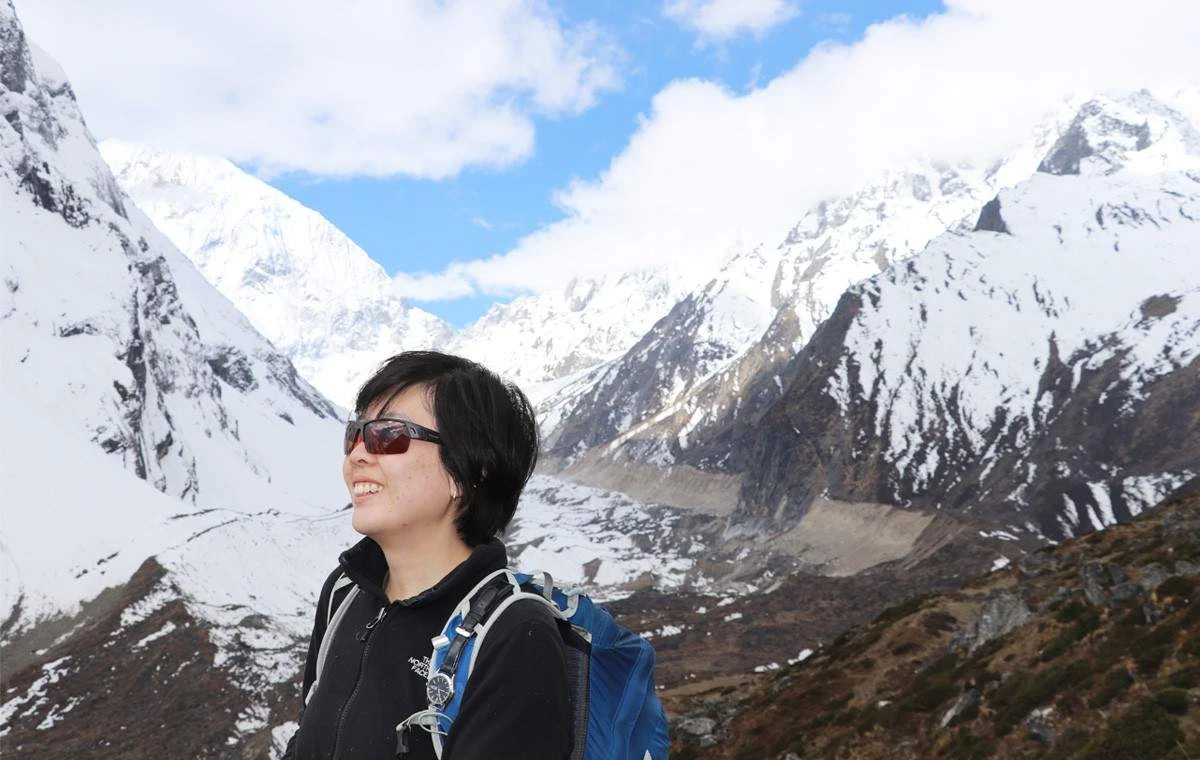
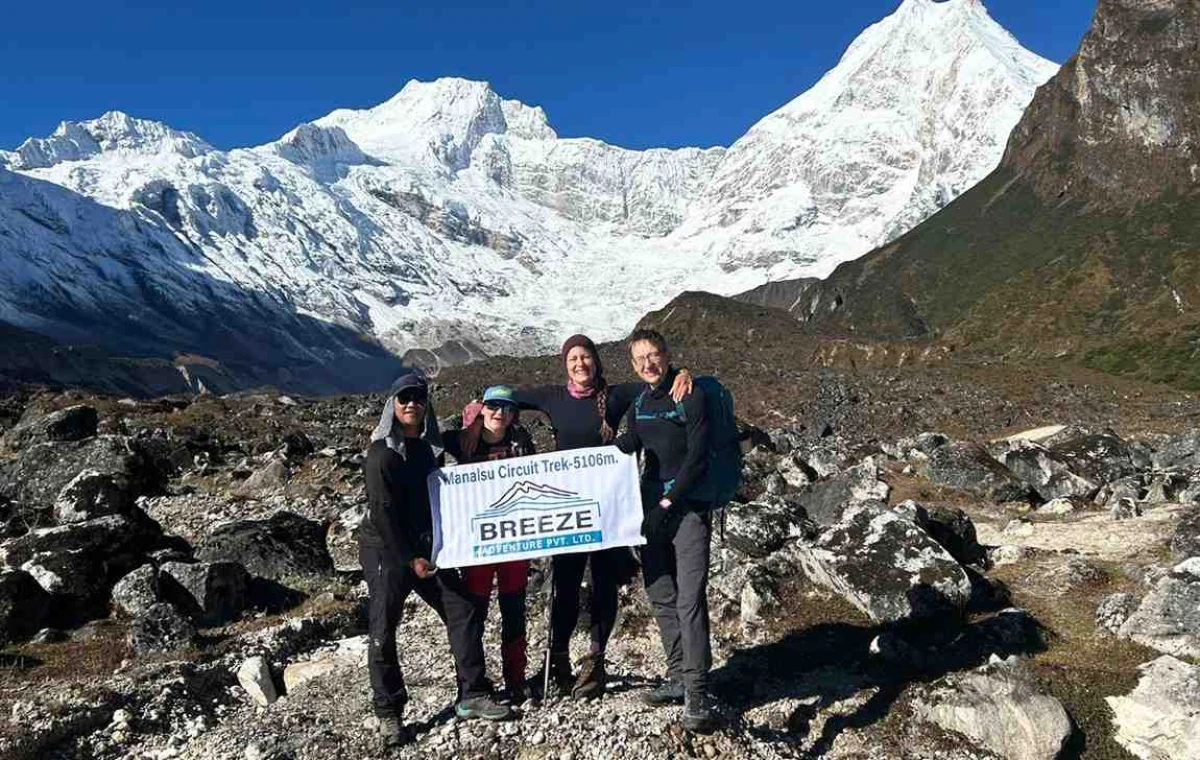
A beautiful smile captured on Manaslu Circuit Trek

Most people discover the Manaslu Circuit after getting frustrated with the crowds on Everest Base Camp or the Annapurna Circuit. That's how a lot of serious trekkers end up here, almost by accident. And almost all of them say the same thing afterward: " Why didn't I come here sooner?”

The 7-day version of the Manaslu Circuit is a compressed, demanding, and genuinely rewarding route that loops around Mount Manaslu, the world's eighth-highest peak at 8,163 m. The trek is absolutely for even beginners with the right preparation and guidance. 

Actually, the itinerary moves fast, the altitude climbs hard, and the Larke La Pass at 5,106 m is not the kind of thing you stumble across unprepared. But for experienced trekkers with limited time, this might be the best week you can spend in the Himalayas right now.

Within a week, this journey lets you witness the Intact Tibetan Buddhist Culture, Dramatic ecological and climatic transition, along with untouched wilderness. This is something you rarely experience within the same trip. This 7 days Manaslu Circuit trek Package from Breeze Adventure is based on my 2-decade-long journey in Himalayan trekking and tours. With this, you will find all the things you need to know for this remote mountain trek Nepal.

At a Glance
  • Duration7 Days
  • Max Altitude 5106 m
  • Start City Kathmandu
  • End City Kathmandu
Trip Highlights
  • Crossing the Larke La Pass (5,106 m) before dawn through snow and rock
  • Standing at the top of the pass with Himlung Himal, Cheo Himal, Kang Guru, and Annapurna II in front of you
  • Birendra Lake at 3,450 m. It is turquoise water with Manaslu reflected on still mornings
  • Close-up views of Mount Manaslu (8,163 m), the world's eighth-highest peak
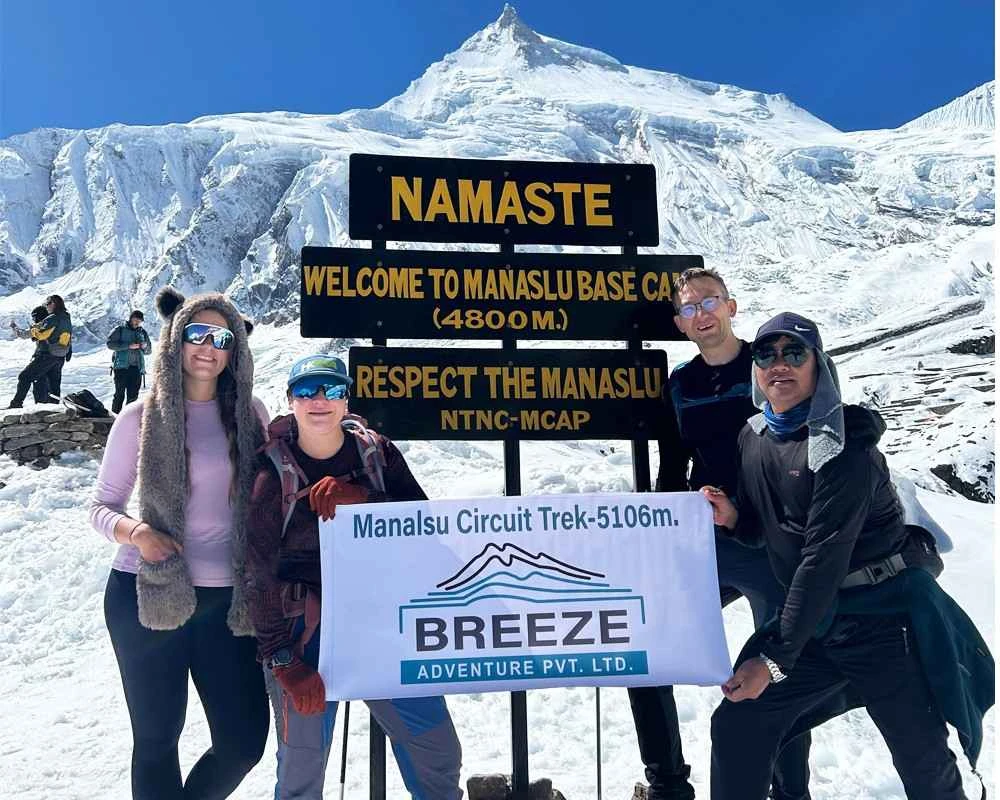
  • Optional hike to Manaslu Base Camp at 4,800 m
  • Walking through centuries-old villages reflecting unique architecture
  • The gompas of Lho and Samagaun, which are actively used, are not museum pieces
  • Mani walls, chortens, and prayer flags throughout the upper route
  • Manaslu glacier views from Samagaun and the surrounding ridgelines
  • Rhododendron forests in full bloom during spring (March–April)
  • Snow leopard and Himalayan tahr territory inside the Manaslu Conservation Area
  • The descent into Bimthang after the pass, a wide valley, big views, genuine relief
  • Views of Ngadi Chuli (7,871 m), Himalchuli (7,893 m), Manaslu North (7,157 m), and Shringi Himal along the route

The Route: Machha Khola to Dharapani

The 7 days Manaslu Circuit Trekking starts at Machha Khola, which you reach after a long jeep ride from Kathmandu. It is roughly seven to nine hours, depending on road conditions. Let me tell you this, there's no airport, so no shortcut. That drive alone tells you something about the kind of place you're heading into.

From Machha Khola, the route threads through Jagat, Deng, Namrung, and Lho before climbing into the upper Budhi Gandaki valley toward Samagaun and Samdo. Then comes Dharamsala (also called Larke Phedi), which is essentially the staging point for the pass. 

After crossing Larke La, you descend through Bimthang and finish at Dharapani. Here you can connect back toward Besisahar and eventually Kathmandu.

A seven-day trip involves roughly 177 km total and a lot of vertical gain. It's compact, but it's complete.

Larke La Pass: The Part Everyone Talks About

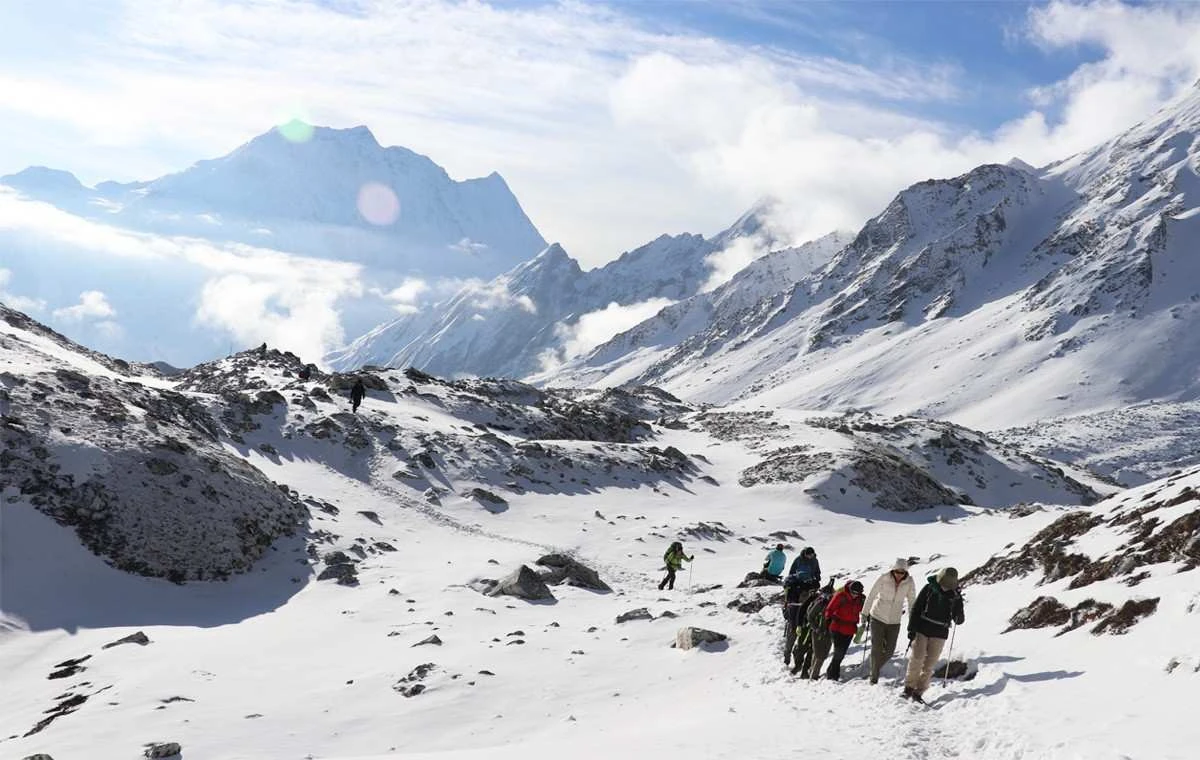
The Larke La Pass crossing starts before dawn. You're moving through rocky, snow-covered terrain in the dark with headlamps. It is the kind of cold that makes your face feel like it belongs to someone else. At 5,106 m, Larke La is one of the highest trekking passes in Nepal, and the views from the top are the payoff for everything leading up to it.

From the summit, you can see Himlung Himal, Cheo Himal, Kang Guru, and Annapurna II laid out in front of you. On a clear morning and in autumn or spring, most mornings are clear, it looks almost unrealistic. Like a photograph of mountains rather than actual mountains. The descent into Bimthang afterward is long and hard on the knees, but nobody's complaining at that point.

This is the part of the trek that experienced trekkers describe as genuinely memorable, not just "nice." There's a difference, you will literally feel it once you are there.

Samagaun: The most preferred acclimatization point

Most people pass through Samagaun as a rest day before pushing toward the pass, and that's the right call. But don't spend the whole day horizontal.

Just outside the village sits Birendra Lake at 3,450 m, a turquoise glacial lake with Mount Manaslu reflected in it on still mornings. It's a 30–40 minute walk from the village, and it's worth every minute. From here, you get one of the cleanest views of the Manaslu glacier and the peak itself without any serious climbing effort.

If you have the energy and an extra half-day, the optional hike up to Manaslu Base Camp at 4,800 m is available. It's not easy, and it's not required, but the view of the world's eighth-highest peak from its base is a different experience entirely from looking at it from the valley floor. Most people who do it don't regret it. Try this, you will surely love it.

Tibetan Culture and Traditional Life

One thing that separates the Manaslu Circuit from most Himalayan treks is that the cultural experience isn't something you encounter at a monastery stop on day three and then forget about. It runs through the whole upper section of the route.

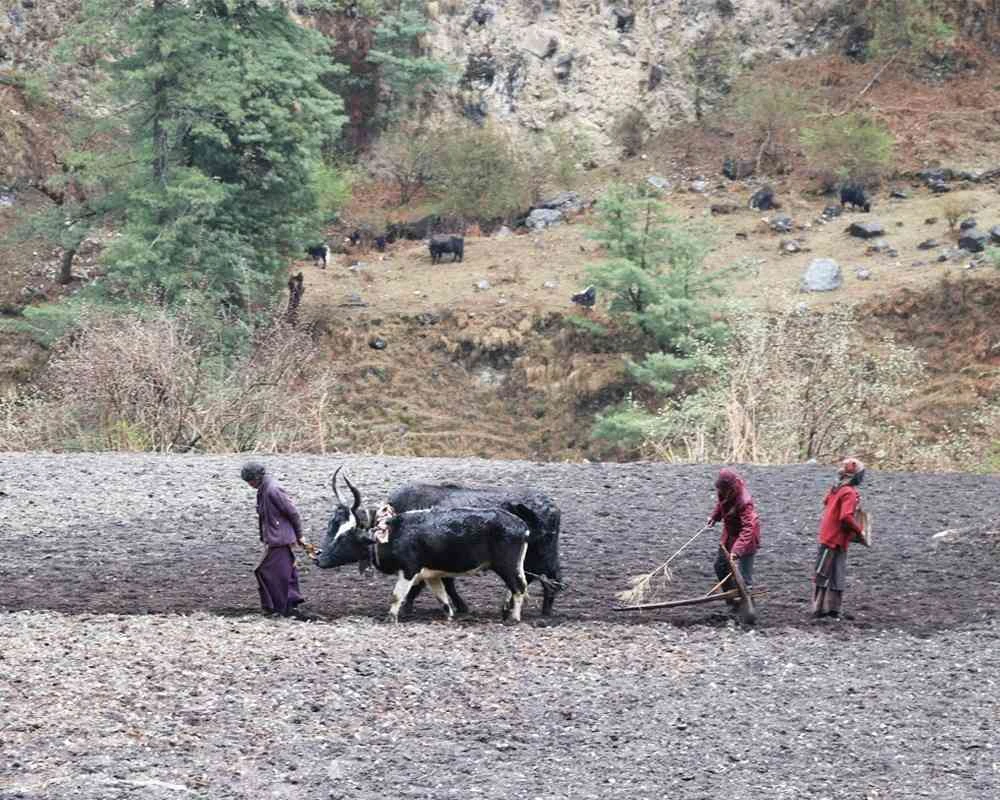
The traditional communities in the upper Manaslu region have maintained a way of life that's closely tied to Tibetan Buddhism. This is largely separate from the lowland Nepal that most visitors experience. Their language belongs to the Tibeto-Burman family.

Likewise, the gompas in Lho and Samagaun are centuries old. The mani walls, chortens, and prayer flags you walk past aren't decorative, they're in use.

Lhosar, the Tibetan New Year, is the community's biggest celebration, and if your timing lines up, it's something to see.

Another surprising thing you see on this trail is the locals. They are not the chatty, tourist-seasoned guides you meet on the Annapurna Circuit. They're quieter, more reserved, and more genuinely welcoming once you've been in a village long enough not to be a stranger. That shift takes a day or two. So, plan for it you will love other Manaslu Trek Villages too. All of them reflect traditional ancient culture even today.

Accommodation and Food: What to Actually Expect

Tea houses along the Manaslu Circuit are basic. There will be twin-sharing beds, shared bathrooms, and a warm common room where everyone gathers in the evening. In the upper sections, especially, don't expect hot showers or reliable charging ports for your devices.

The food is primarily dal bhat, the standard Nepali meal of lentil soup, rice, and vegetables. It's filling, it's usually good, and the portions are generous. At the higher elevations, you'll see some Western menu options, but the quality drops. So it is better to stick to what the kitchen does well.

During peak season, October and early November in autumn, late March through April in spring, book ahead. The best tea houses fill up fast, and the alternative is either a worse room or a cold tent.

When to Go- the best for Manaslu Circuit Trek

7 days Manaslu Circuit trek Nepal is doable throughout the year, but for many reasons, the peak seasons are mostly preferred. Yes, Autumn (mid-September through November) and spring (March to May) are the two windows. Both are good for different reasons.

Autumn gives you the clearest air. The monsoon has just finished washing everything clean, and the mountain views are at their sharpest. Temperatures are comfortable at lower elevations, though it gets cold fast once you're above 4,000 m and brutal at the pass.

Spring brings rhododendrons. Similarly, the forests between Machha Khola and the midpoint of the route bloom heavily in March and April. You will love the trail through those sections being genuinely beautiful. Also, the mountain views are slightly hazier in spring than in autumn, but the lower sections feel more alive.

People suggest avoiding June through August. They fear the road beyond Arughat becoming dangerous in the monsoon, prone to landslides, and the Larke La Pass can become impassable with wet snow and unstable conditions. Still, this time is ok if you want a peaceful and green atmosphere.

Mid-winter (December to February) is also less considered due to the pass often freezing over, and the temperatures at altitude become genuinely hazardous. But for snow lovers, this can be an opportunity with fewer crowds and a more solitary experience.

Let me add this, from December to February, Nepal has stopped seeing lots of snow due to global warming and climate change. It means you can absolutely plan this trip for winter as well. A winter trip is often a golden opportunity for budget travellers with fewer crowds on the trail. Saying this, the right time to Manaslu Circuit Trek matters for the overall best experience and memories.

The Following Treks Are The Most Popular in the Manaslu Region

Here are some of the places you must visit in the Manaslu Region. These can either be included in the Manalsu Circuit Trek or can be done independently.

Short Manaslu Circuit Trek 7 Days: This is best for a quick getaway to the Raw Himalayan trip for adventure and less crowded trails.

Manaslu Circuit Trek 10 Days: Try this version if you want more relaxation walking days and acclimatization stops. 

Manaslu Circuit Trek 13 Days: This is a standard Circuit trek package, which is best for adventure, natural beauty, and pure Himalayan culture. You don't have to rush while trekking.

Manaslu Tsum Valley Trek 16 Days: Tsum Valley is a perfect reflection of Tibetan Buddhist Culture. So, combining the Manaslu Circuit with this valley means two different experiences in the same package.

Manaslu Base Camp Trek: If you don't want to experience the raw, remote circuit trek, then Manaslu Base Camp is the best alternative for you. Try this for adventure, nature, and cultural shocks; you will love it.

Tsum Valley Trek: This Tibetan Buddhist valley is a beautiful settlement with centuries-old architecture and lifestyle. This appears like a picture rather than a reality.

Manaslu Circuit with Serang Gompa: This is 500 years old Tibetan Buddhist Monastery in the Manaslu Region. This ancient structure is something worth experiencing; you will love it.

Manaslu Rupina La Pass Trek: This is a remote camping-based trekking experience in the Manaslu Region. Combining this in your circuit trek is a great option to add more rawness and adventure.

Luxury Manaslu Circuit Trek: Luxury Manaslu Circuit Trek is the best option if you want fewer walks and a more scenic experience. This can either be done as a helicopter tour or trekking with a helicopter return. 

What You Need to Know Before Booking

The Manaslu Conservation Area is a restricted zone. That means two things practically: you need a licensed guide, and you need to be in a group of at least two trekkers. Solo trekking is not permitted. This is enforced for safety reasons.

The Manaslu Conservation Area was established in 1998 and covers 1,663 sq km of habitat that includes snow leopards, Himalayan tahr, and dense rhododendron and pine forests at the lower elevations. The permit requirements exist partly to protect this, and partly because the terrain is genuinely remote enough that going alone without a guide is a bad idea regardless of regulations.

The maximum altitude of 5,106 m at Larke La carries a real risk of acute mountain sickness. The 7-day itinerary moves fast enough that acclimatization is tight. The rest day at Samagaun is essential, not optional. If your body is telling you something is wrong at altitude, the correct response is to descend, not push through.

This trek is recommended for trekkers who are fit and have some prior high-altitude experience. You need to have good preparation and the right guidance, along with the required training, to make the journey smooth.

The Honest Summary

The 7-day Manaslu Circuit is not a casual adventure. It's a week of hard walking through a restricted zone at serious altitude, crossing a high pass in the dark, sleeping in basic tea houses, and eating dal bhat. It's also one of the most visually spectacular and culturally authentic trekking routes in Nepal. This is made even better by the fact that it still draws far fewer visitors than Everest or Annapurna.

If you're fit, have some trekking experience, and have exactly one week, this is the route. Just make sure you prepare properly and follow the guide.

100% Successful & Guaranteed Trip

We assure you that the Manaslu Region Trek will be a successful and guaranteed trip for fit trekkers throughout the autumn and spring seasons of 2026/2027. We have multiple trip departures, and you can change the plans and itinerary according to your choices or preferences.

Manaslu Circuit Trek Route

Kathmandu → Machha Khola → Deng → Namrung → Samagaun → Dharamsala (Larke Phedi) → Larke La Pass (5,106 m) → Bimtang → Dharapani → Kathmandu
Itinerary

Expand allCollapse all

On the first day of 7 day Manaslu Circuit Trek, you leave Kathmandu before the city wakes up. Our trek guide meets you at the hotel, you load into a shared jeep, and you're moving before most people have had their first cup of tea.

The first couple of hours are pleasant with terraced rice fields, small market towns, kids walking to school along the highway. Past Arughat Bazaar, the road changes its mind about being a road. It narrows, roughens, and starts hugging cliff edges above the Budhi Gandaki river. Not scary, but you'll understand why the jeep is shared. Here, nobody drives solo without a reason.

We sort out the restricted area permits on the way and check in at the Machha Khola checkpoint. By the time we reach Jagat, you'll be tired from sitting but glad you didn't attempt this in a private car. The river is loud here. In the evening, walk along the bank. Let the sound of the Budhi Gandaki be the first thing this place teaches you.

  • Max Altitude: 869 m
  • Accommodation: Lodge, Jagat
  • Time: 8-9hours
  • Meals: Breakfast, Lunch, Dinner
  • Transport: Sharing Jeep

Finally, the trekking starts properly from here.

Today, you follow the Budhi Gandaki upriver, crossing suspension bridges that bounce and sway just enough to remind you they're real. Small waterfalls cut down from the cliffs above. Then the trail moves through farmland, then forest, then farmland again. There's a permit check at Jagat village, so have your documents handy.

The first day on your feet is almost always the best. Your legs feel strong, the altitude is nothing yet, and everything is still new. The river stays with you the whole way, its noise shifting from a roar to a rush depending on where you stand. Deng appears after a long, last stretch. Then, a small cluster of tea houses perched above the gorge.

  • Max Altitude: 1860 m
  • Accommodation: Tea house, Deng
  • Time: 7-8 hours
  • Meals: Breakfast, Lunch, Dinner

Something shifts today. You can't name it exactly, but the landscape starts to feel less Nepali and more Tibetan. The farmhouses change shape. Prayer flags multiply. Mani walls with long rows of carved stone tablets appear along the trail with regularity. You walk to the left of them, always to the left.

The trail crosses the Budhi Gandaki several more times through pine and rhododendron forest. The rhododendrons won't be flowering unless you're here in spring, but the forest is thick and cool even without them.

Namrung is a beautiful little village. Walk around it before dinner. The people here have a warmth that's genuine rather than performed. They're used to trekkers passing through, but they haven't become bored by it. The gompa is worth five quiet minutes of your time.

  • Max Altitude: 2,630 m
  • Accommodation: Tea house, Namrung
  • Time: 6-7 hours
  • Meals: Breakfast, Lunch, Dinner

Today, Manaslu shows up.

You're walking through Lho and Shyala villages when it appears, 8,163 meters of mountain sitting above everything else. It looks so large that it doesn't look real at first. Himalchuli and Ngadi Chuli flank it on either side. You'll stop and stare more than once. That's fine, that's the point.

Your guide will run a short warm-up before you set off. Don't skip it, your body is working harder than you think at this altitude. Walk slowly through the upper sections. You should drink more water than you feel like drinking.

Let’s talk about the beautiful rural settlement, Samagaun. It is the largest village on the circuit. There's an old gompa (Pungyen Gompa) here worth a visit, and the teahouse owners will have stories if you ask for them. This is also where altitude starts to deserve real respect. Kindly eat well and sleep early.

  • Max Altitude: 3,530 m
  • Accommodation: Tea house, Samagaun
  • Time: 6-7 hours
  • Meals: Breakfast, Lunch, Dinner

The landscape strips itself bare today. Gone are the forests and the villages with their monastery bells. What's left is rock, sky, and altitude.

You pass through Samdo Village, the last real village before the pass, where most people stop for tea and a bowl of something hot. From there, the trail climbs steadily to Dharamsala, also called Larke Phedi, which simply means "foot of the Larke." It's a basic cluster of lodges at 4,460 meters. It is built for one purpose: to shelter people the night before they cross the pass.

Don't fight the fatigue here. It's normal, the air is thin. You just eat dinner even if you're not hungry, drink water even if you're not thirsty, and go to bed early. Tomorrow starts before dawn.

  • Max Altitude: 4460 m
  • Accommodation: Tea house / basic lodge, Dharamsala
  • Time: 6-7 hours
  • Meals: Breakfast, Lunch, Dinner

Today, you have to move by 5, so make sure you have set an alarm the previous night.

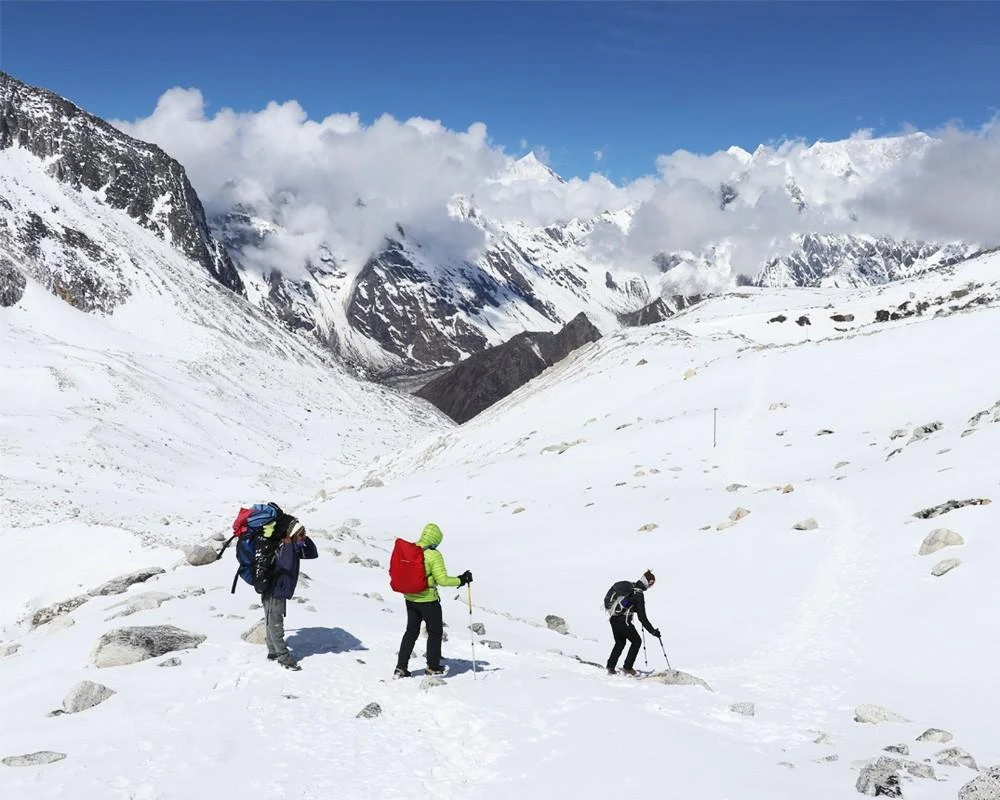
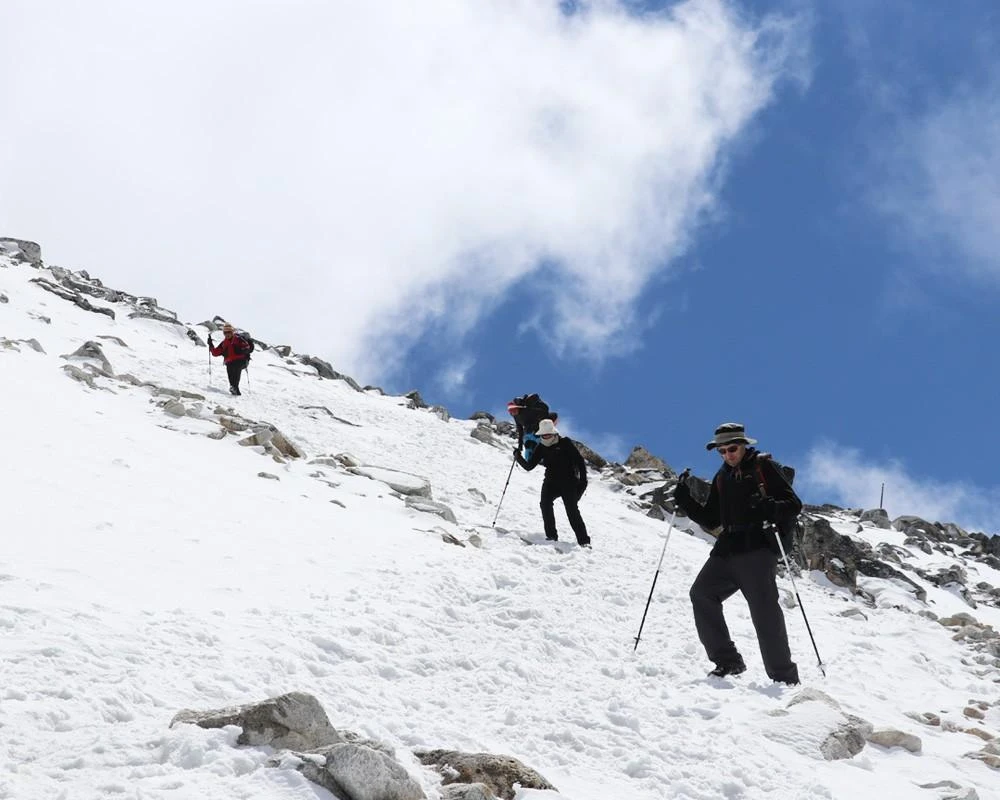
The trail to Larke La Pass is rocky, steep, and often snow-covered in its upper sections. You climb by headlamp for the first hour or two. Here, your breath is visible in the cold, and your poles are finding purchase where your boots can't be sure. Bring micro-spikes, not optional, genuinely useful here.

And then you're at the top 5,106 meters. Himlung Himal, Cheo Himal, Kang Guru, Annapurna II, all of it lay out around you in a 360-degree panorama that no photo fully captures. Take your time, you've earned this view.

After that, the descent to Bimtang is long. Actually, a few thousand meters of elevation lost over several hours, through glacial moraine and then down into highland meadows ringed by peaks. By the time you walk into Bimtang, your legs will have given everything they have. The hot dinner will be the best meal of the trip.

  • Max Altitude: 5106 m
  • Accommodation: Tea house, Bimtang
  • Time: 8-9 hours
  • Meals: Breakfast, Lunch, Dinner

Finally, the last day of you 7 day Manaslu Circuit Trek. The last day asks a lot.

You descend through glacial stone and then into rhododendron and pine forest, with Manaslu and Larke Peak behind you shrinking as you drop altitude. The mountain that's been your constant companion for a week gets smaller in the frame. It feels like leaving something behind.

You pass through Karche, Gho, and Tilje before reaching Dharapani, where the jeep is waiting. The drive back to Kathmandu is long and rewarding in the way that long drives always are after big physical things, you've earned the sitting.

That evening in Kathmandu, enjoy the farewell dinner with the team and create a lovely memory. If you have time, then you can enjoy the next day doing the Kathmandu Valley Cultural Tour and Sightseeing. This cultural sightseeing is worthwhile after 7 days of tireless experience. 

Total distance: ~143 km · Highest point: Larke La Pass, 5,106 m · Best seasons: October–November, March–May

    7 Days Itinerary of Manaslu Circuit Trek via Larke La Pass (5,106 m) is a compressed yet the most worthy journey for a Himalayan trip Nepal.

    Cost Details
    What's Included
    • Airport pick up and drop off service (if required).
    • Government license holder mountain guide from Kathmandu.
    • 6 nights local tea house accommodation during the trek.
    • Full board meals throughout the trek (Breakfast, Lunch, and Dinner).
    • Manaslu Restricted Area Permit (RAP).
    • Manaslu Conservation Area Permit (MCAP).
    • Annapurna Conservation Area Permit (ACAP).
    • Kathmandu to Machha Khola and Dharapani to Kathmandu by local sharing jeep.
    • Hot beverages, three cups of tea/coffee per day.
    • Seasonal fruits during the trek.
    • Trekking gear: down jacket, sleeping bag, company t-shirt, trekking pole, and duffle bag. (If needed)
    • Medical supplies (first aid kit will be available).
    • All government taxes and official service charges.
    What's Not Included
    • Your travel and rescue insurance (mandatory).
    • Porter costs US$220 for the whole trip (one porter can be used by two trekkers, 10 kg per person).
    • Private jeep cost on request.
    • Kathmandu hotel accommodation and meals in the city.
    • All personal expenses (hot showers, Wi-Fi, charging, bottled drinks).
    • Tips for the guide and porter.
    • Any expenses arising from emergency evacuation or itinerary changes due to weather.

    7 Days Manaslu Circuit Trek FAQs

    • It's in the Gorkha district of mid-west Nepal, looping around Mount Manaslu, 8,163 meters, the world's eighth-highest peak. The route runs through the Manaslu Conservation Area, which sits right up against the Tibetan border.

    • Seven days to Larke La Pass and back to Kathmandu is a fast itinerary. It is considered a moderate to strenuous level of difficulty. However, with the right preparation, fitness, and good guidance, this is absolutely possible even for beginners.

    • For Manaslu Circuit Trek Nepal, you need the Manaslu Restricted Area Permit (RAP), the Manaslu Conservation Area Permit (MCAP), and the Annapurna Conservation Area Permit (ACAP). The region is government-restricted, which also means solo trekking is not allowed.

    • October and November are the sweet spot with clear skies, and the pass is crossable. You will see the mountain views as good as they get. March to May works well too, with spring colour in the lower forests and generally stable weather at the pass.

    • Teahouses are functional. Twin-sharing rooms, shared toilets, a dining area with a wood stove that becomes the most important place in the building after dark. At villages like Samagaun and Namrung you might find hot showers and Wi-Fi for an extra fee.

      At Dharamsala, the night before the pass, expect the basics and nothing more. Bring a good sleeping bag; the lodges provide blankets but the cold at 4,460 meters is a different thing entirely.

    • Yes, above 3,000 meters it's a real factor, and this route climbs fast. Headaches, nausea, and disrupted sleep are common. Serious symptoms are confusion, loss of coordination, and fluid in the lungs; they are rare but they happen, and they happen faster than people expect.

      The practical things: drink more water than you feel like drinking, walk slower than you think you need to, and tell your guide immediately if something feels off. Our guides are trained to recognise the early signs. Get comprehensive travel insurance that covers helicopter evacuation before you fly to Kathmandu, not after.

      Breeze Adventure offers an oxygen cylinder to handle altitude sickness. Also, we have a pulse oximeter and trained staff to monitor your condition.

    • No, you cannot. It's not a policy choice, it's government law. The Manaslu region is restricted, and a licensed guide is a legal requirement. You also need to be in a group of at least two people.

    • Larke La Pass at 5,106 meters, on day six. It's the hardest day and the best one, a pre-dawn climb in the cold, and then a panorama at the top that takes in Himlung Himal, Cheo Himal, Kang Guru, and Annapurna II. The descent to Bimtang is long but the views stay with you the whole way down.

    • Yes, and honestly it's worth discussing. We can extend to 10, 13, or 20 days if you want more time to acclimatize properly, which most people should. We can also add the Tsum Valley, swing by Manaslu Base Camp, arrange private transport, or upgrade accommodation in Kathmandu. Tell us what your timeline and budget look like and we'll build around it.

    Clients Reviews

    • Crossing Larkya La Was Unforgettable

      The highlight of my Manaslu Circuit Trek was crossing Larkya La Pass. The climb was demanding, but the spectacular mountain views made every step worthwhile. Breeze Adventure prepared us well and ensured we were ready for the challenge.

      The guide was experienced, patient, and constantly monitored our health and comfort. Every lodge was arranged in advance, and the logistics were handled perfectly throughout the trek.

      I am grateful to Breeze Adventure for making this dream adventure possible. Their professionalism and attention to detail were outstanding.

      J
      Jane KCanada,May 27, 2026
      Google
    • The Perfect Off-the-Beaten-Path Adventure

      I chose the Manaslu Circuit because I wanted to avoid the crowds, and Breeze Adventure made the entire experience seamless. The route was filled with dramatic landscapes, suspension bridges, waterfalls, and traditional mountain villages.

      Our guide shared fascinating insights into the local Tibetan-influenced culture and always made sure everyone acclimatized properly. The itinerary was well paced, allowing us to fully enjoy every part of the journey.

      This was one of the best trekking experiences I've ever had. I wouldn't hesitate to book another adventure with Breeze Adventure.

      M
      Michael KAustria,May 11, 2026
      TripAdvisor
    Similar Trips
    You May Also Like