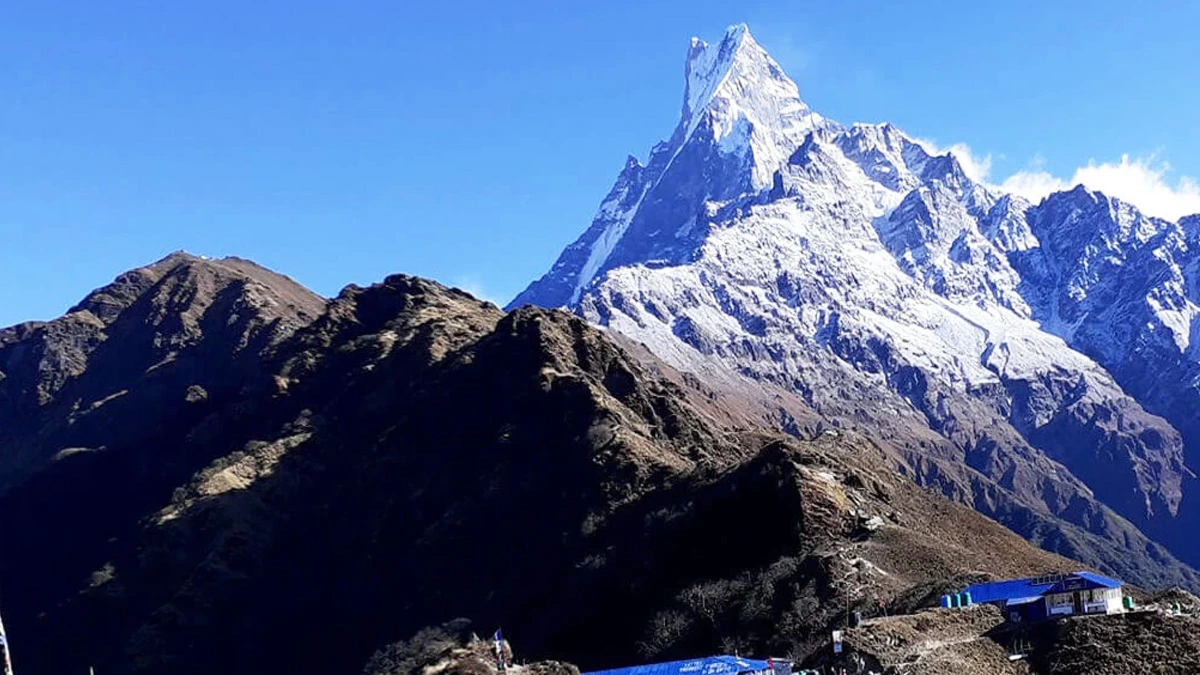
Mardi Himal Trek difficulty is considered moderate to beginner-friendly. Even though the trail is in the remote Himalayas with few crowds, you will manage the journey with the right preparations. Well, the surreal view of Machhapuchhre (Fishtail) from the ridge might give you a common fear: Am I fit enough? The answer is quick- YES. You are definitely fit for this heavenly pleasure with a giant trail.
This is a moderate trek, just perfect for first-timers. Being active plays an important role here, you don’t necessarily have to be a marathon runner. All you need is the right guide and strategies to deal with possible hurdles. Thousands of trekkers successfully complete the Mardi Himal trek Nepal every year. What helps them is definitely proper planning and execution.
In this guide, I will brief you on the actual difficulty level in Mardi Trek Nepal. Based on my years of experience, I will suggest the best way to deal with altitude, climate change, and Himalayan survival. This will definitely help you lead a smooth journey to your dream destination.
Table of Contents
Breaking Down the Mardi Himal Trek Difficulty Level
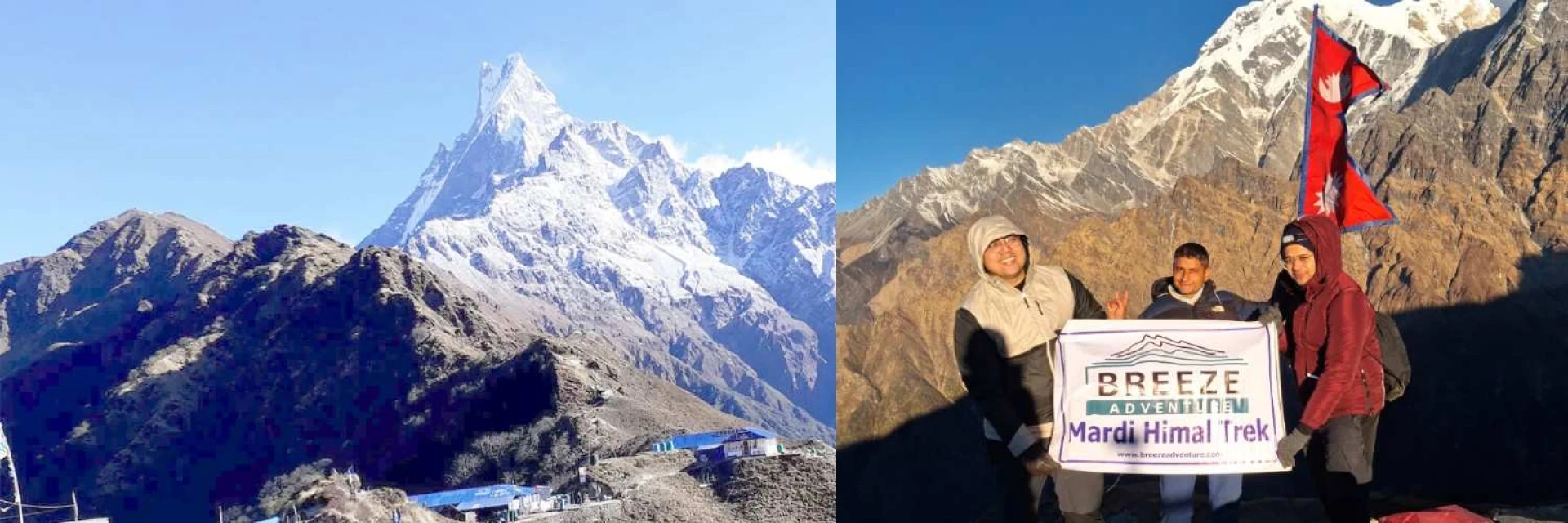
Stunning View of Mardi Himal High Base Camp
When we talk about the Mardi Himal Trek difficulty level, it is necessary to have a real talk about the word moderate. The word moderate in Himalayan trekking is actually different from what we call it at sea level.
Here’s the reality:
You aren't scaling vertical rock faces with ropes, but you are working for every single view.
The Reality of "Nepali Flat"
You may hear your guide say, "Don't worry, it's just a bit of Nepali flat." Let me translate what this actually means to you. Well, it means a relentless series of stone stairs in Nepal. This literally goes up, then down, then up again, creating a tiring chaos.
Similarly, the trekking terrain is mostly well-defined, but it’s taxing on the joints. Instead of smooth switchbacks, you may have to navigate thousands of uneven stone steps carved into the hillside. Though it doesn't require technical climbing skills, it does require "stairmaster" endurance. Not just that, your quads will feel the burn on the way up. And your knees will definitely have an opinion on the way down.
Clocking the Miles (and the Hours)
The total distance of about 40-50 km might trigger you as a beginner. However, the distance also varies depending on your starting and ending points. You have to cover this in 4-5 days of your trek. It is also a fact that in the Himalayas, we don't measure progress in kilometers; we measure it in breath.
On average, you’ll be looking at 5-7 walking hours per day. Some days are shorter "acclimatization" crawls, while the push from High Camp to the Viewpoint and back down can be a long, 8-hour marathon. The pace is slow, think "tortoise, not the hare", because as the air thins, your heart rate climbs faster than your boots do.
Is this trek doable for a beginner?
Absolutely, this is perfect for a beginner. But don't let the "short" distance fool you. The journey turns out to be a physical challenge that rewards you with some of the most intimate views of the Annapurna range. Just take the stairs one at a time, embrace the frequent tea breaks, and remember: the mountain isn't going anywhere.
Enjoy every moment and scenic beauty, and capture them in your device. This is the best thing you can do in this trail. Though this trek is within the Annapurna Region, they are different trek. People often show curiosity about the Mardi Trek vs Annapurna Base Camp Trek. Knowing his companions further helps in decision-making.
Altitude: The Real Challenge at 4,500 Meters
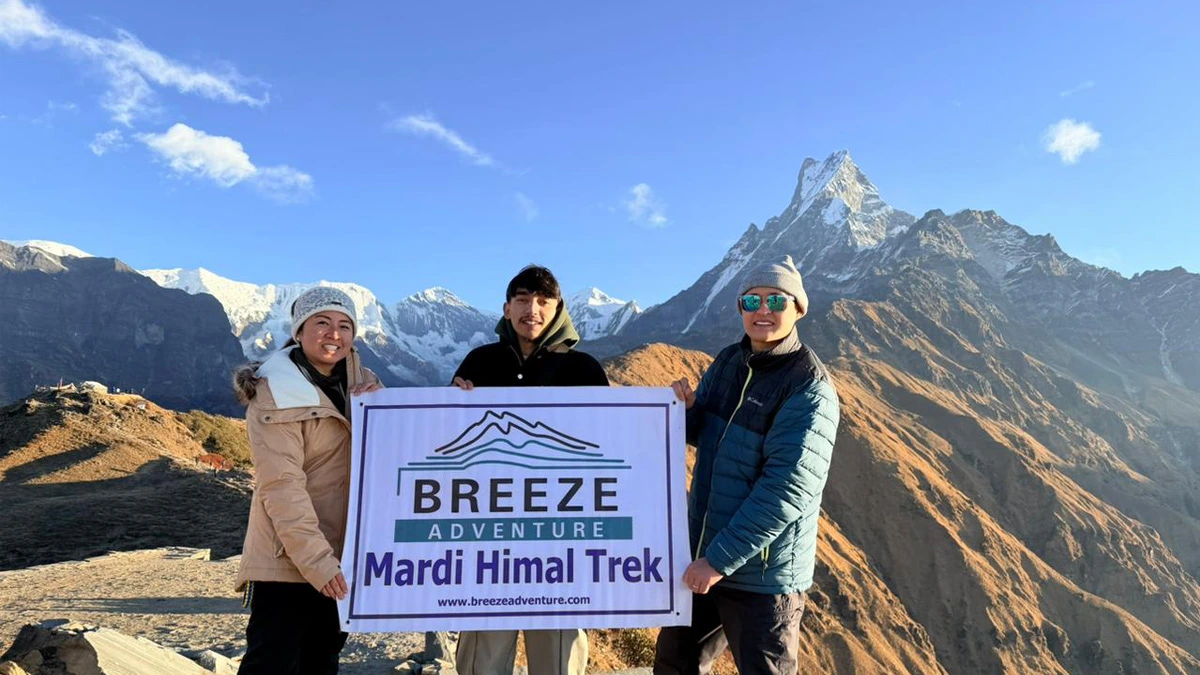
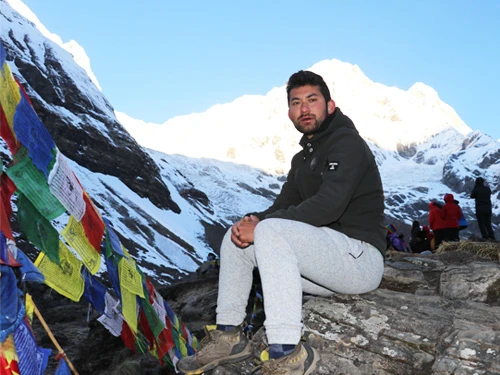
Breeze Adventure Team in Mardi Himal Trek at an altitude of 4500 m
If you ask any guide about the Mardi Himal Base Camp trek difficulty, they’ll tell you: it’s not your legs that give out; it’s your lungs.
High Camp vs. Base Camp: The Invisible Wall
In this trek, the shift in air quality is real. At High Camp elevation (3,580 m), you may feel huffing just by tying your boot laces. But the push to Base Camp (4,500 m) is the true test. With this, you will gain nearly 1,000 meters in a single morning, and with roughly 40% less oxygen than at sea level. Here, every step feels like walking through waist-deep water.
The Ridge Walk: Why "Slow" is Pro
The famous ridge walk is a mental game. My top acclimatization tips for you is, adopt slow walk than you think you need to. If you can't hold a conversation, you're moving too fast. Urther, it is better to drink 3-4 liters of water daily to help your blood carry what little oxygen is available.
Safety First: Red Flags
To keep this trek safe for beginners, you must monitor altitude sickness symptoms (AMS). Watch out if you or your trekking partner experiences the following symptoms:
A persistent, throbbing headache.
Total loss of appetite (even for Dal Bhat).
Dizziness or "drunken" stumbling.
These symptoms mean it’s time to stop and reassess. There’s no shame in turning back; the mountain isn’t going anywhere, but your health is.
Easy Starts to Spicy Finishes in Mardi Himal Trail Segments
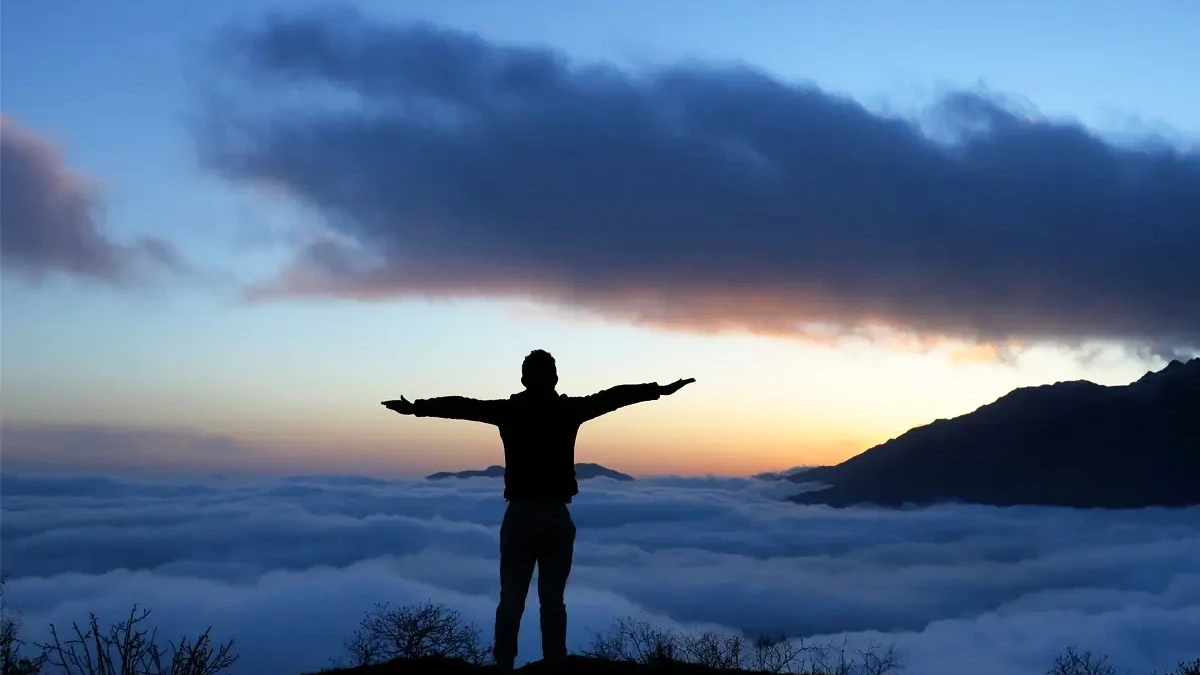
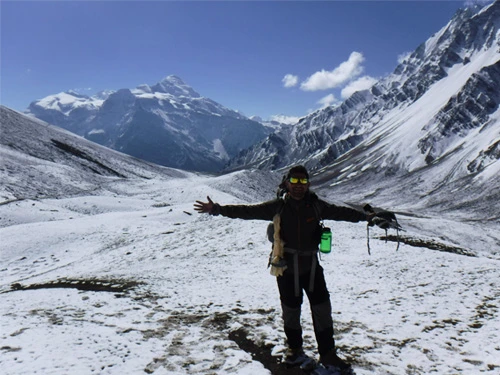
Above the clouds in Mardi Himal Trek Nepal
To make this even easier to digest, here is how the Mardi Himal trail conditions shift as you climb. Think of it as a three-act play where the scenery gets better, but the air gets thinner.
Phase
section
Difficulty
What to expect
Phase 1: The Jungle
Forest Camp to Low Camp
Easy
Lush rhododendron forests, shaded paths, and soft soil. Great for finding your rhythm.
Phase 2: the Skyline
Low Camp to High Camp
Moderate
The tree line vanishes. You’ll experience the famous narrow ridge walking with massive drop-offs and 360° views.
Phase 3: The Summit
High Camp to Base Camp
Spicy
The "Tough" part. Steeper, rocky inclines and the final push to the Upper Viewpoint (4,500m).
How does the right season impact the Mardi Himal Trek difficulty?
The weather in the Himalayas is the ultimate "X-factor." It can turn a beginner-friendly path into a real test of grit. Here is how the seasons affect the Mardi Himal trek difficulty:
This gives you the right month's vibe. Actually, you get crisp, blue skies and stable temperatures. Not just that, in Spring, there will be explosions of red rhododendrons.
The difficulty level for trek is Moderate, so best for even beginners. The trails are dry, the footing is solid, and you won’t be fighting the elements.
The "Hard Mode" Seasons (Winter & Monsoon)
Winter (Dec–Feb) Trekking makes you realize the difficulty is high because of the snow. The narrow ridge can become icy and dangerous without crampons, and the "moderate" incline feels twice as hard when you’re post-holing through knee-deep powder.
During Monsoon (June-Aug), you can expect "slippery" everything. The trails become mud-slides, and the views are often hidden by clouds.
This is prime time for monsoon leeches in Nepal. They don’t hurt, but they are a mental hurdle for many first-timers.
How to Prepare (The "No-Gym-Required" Guide)
Preparing for the Himalayas doesn't mean you need a gym membership. Since the Mardi Himal trek difficulty for beginners is mostly about endurance and leg strength, you can train anywhere.
Here are 7 easy, actionable ways to get trail-ready:
Conquer the Stairs
Find a local stadium or a tall building and walk the stairs. This is the best way to simulate the stone stairs in Nepal, which you will face daily. This little effort can be a big relief when you actually face them in trek.
The Weighted Pack Walk
Once a week, go for a 2-hour walk wearing the backpack you plan to bring. It is loaded with 5kg (about 11 lbs) of gear. Further, this helps your shoulders and core adapt to the trekking load later on the journey. This type of training is mostly for beginners.
Lunges for the Downhill
Kindly practice walking lunges in your hallway. Strong glutes and quads act as brakes for your knees during the long descent from High Camp. You can also do this type of practice in nearby trekking or hiking.
Brisk Interval Walking
This is a famous Japanese technique for a smooth journey without feeling too tired. As per this, it is better to walk at a fast pace for 5 minutes, then slow for 2. This mimics the fluctuating heart rate that you experience as the physical fitness requirements increase with altitude. With this smart idea, you can deal with steep, rough paths of the Himalaya.
Break in Your Boots
Never wear brand-new boots on the trek. It is a smart move to wear them during your training walks. Yes, this ensures you don't end up with blisters on Day 1. If you have already used hiking boots in good condition, then that is much better.
The Teahouse Mindset
Prepare yourself for basic living on the Himalaya trail. You can expect thin plywood walls (bring earplugs), squat toilets, and limited electricity. It’s part of the charm, but knowing this ahead of time reduces culture shock.
Hydration Habit
Start drinking 3 liters of water daily now. Good hydration is the number 1 acclimatization tip to prevent headaches once you hit the 3,000 m mark. This further helps in retaining oxygen levels in high altitudes.
Final Verdict & Pro-Tips
Yes, you can do this trek. The Mardi Himal trek is a fantastic entry point for the Himalayas, but the secret to a smooth journey is the trust factor, hiring a local guide or porter. Not only does this support the local economy, but it also significantly lightens your physical load. This further ensures you're making the safest route choices to create the best memories.
Kishwor Adhikari is a passionate writer with a deep enthusiasm for trekking and adventure. His extensive travels across Nepal, exploring its diverse landscapes and hidden corners, have shaped his unique perspective on the country's natural beauty. With a wealth of first-hand experience in adventure trekking, Kishwor has become a trusted voice for fellow enthusiasts. Through his writing, he shares invaluable insights, offering practical advice and inspiration for both seasoned trekkers and novices alike. His dedication to sharing his journey and knowledge helps others discover the wonders of Nepal's wilderness, making his work an essential resource for anyone seeking adventure in the region.