If you're planning a trek in Nepal for 2027, plan on hiring a licensed guide through a registered agency. That's the rule on almost every popular route, and nothing announced so far changes it for 2027.
Here's the whole thing in one place:
A licensed guide is required in national parks, conservation areas, and restricted areas. That covers Annapurna, Langtang, Manaslu, Mustang, Dolpo, and Kanchenjunga.
Everest (Khumbu) is the grey zone. The local municipality has pushed back on the guide rule, so enforcement varies, but most agencies and checkpoints still expect one.
Popular teahouse treks cost about NPR 5,000 to 6,000 in permits per person (roughly US$40 to 45).
Since 22 March 2026, solo travellers can get a restricted area permit on their own. You still need a guide.
The details are below. Fees are in Nepali rupees because that's how the parks charge them; restricted area permits are priced in US dollars. You should know the latest changes in Nepal Trekking Rules for a smooth and enjoyable journey without any hurdles, so here we go:
Table of Contents
Is a guide mandatory for trekking in Nepal in 2027?
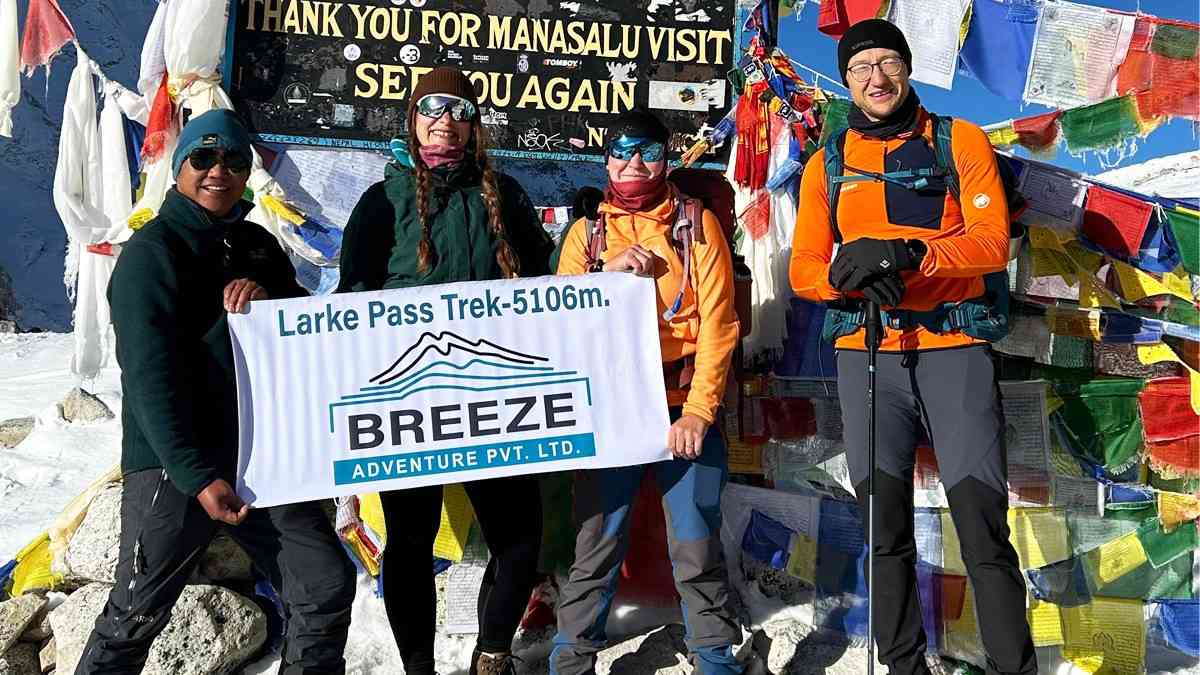
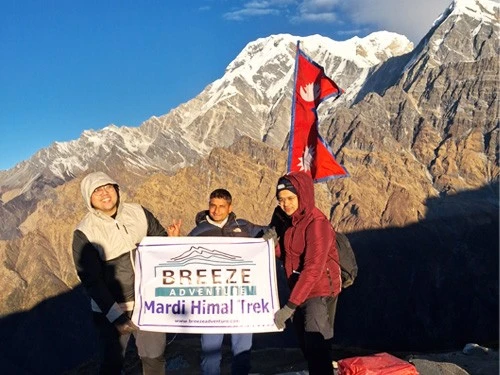
Breeze Adventure team as a trusted Himalayan Trekking guide in Nepal
Yes, on almost every route foreigners actually want to walk. The Nepal Tourism Board brought in the mandatory guide rule in 2023, after a run of trekkers going missing or dying on unguided treks. It has stayed in force through every season since.
The rule is simple on paper. If you're not a Nepali citizen and you're trekking inside a national park, a conservation area, or a restricted area, you need a government-licensed guide hired through a registered trekking agency. A porter-guide with a licence also counts, which keeps costs down if you're on a budget.
Can you still trek solo in Nepal?
You can travel alone, but you can't trek alone on the regulated routes. A solo traveller who books a private trek with one licensed guide is fully legal, and for a lot of people that's the best of both: your own pace, your own itinerary, someone who knows when the weather is turning.
If you get to a checkpoint without a guide on a route where one is required, expect to be turned back. Rangers check the guide's licence, and the group manifests at points like Ghandruk, Chame and Syabrubesi.
What about Everest Base Camp?
Everest Base Camp is the one place where it gets murky. The Khumbu Pasang Lhamu Rural Municipality, which runs the Everest region locally, has at times said independent trekkers are welcome. National enforcement at the Monjo park checkpoint doesn't always agree.
Our advice is boring but safe: book a guide for EBC, Gokyo and the Three Passes. You won't lose days arguing at Monjo, and the Lukla flight cancellations alone make a local fixer worth having.
Where you can still walk without a guide
Trails outside parks and conservation areas aren't covered by the rule. Day hikes around the Kathmandu Valley rim and short walks around Pokhara are the obvious examples.
Once a route crosses into ACAP, Langtang Valley or Sagarmatha National Park, the rule applies.
Nepal trekking permits 2027: what you need and what it costs
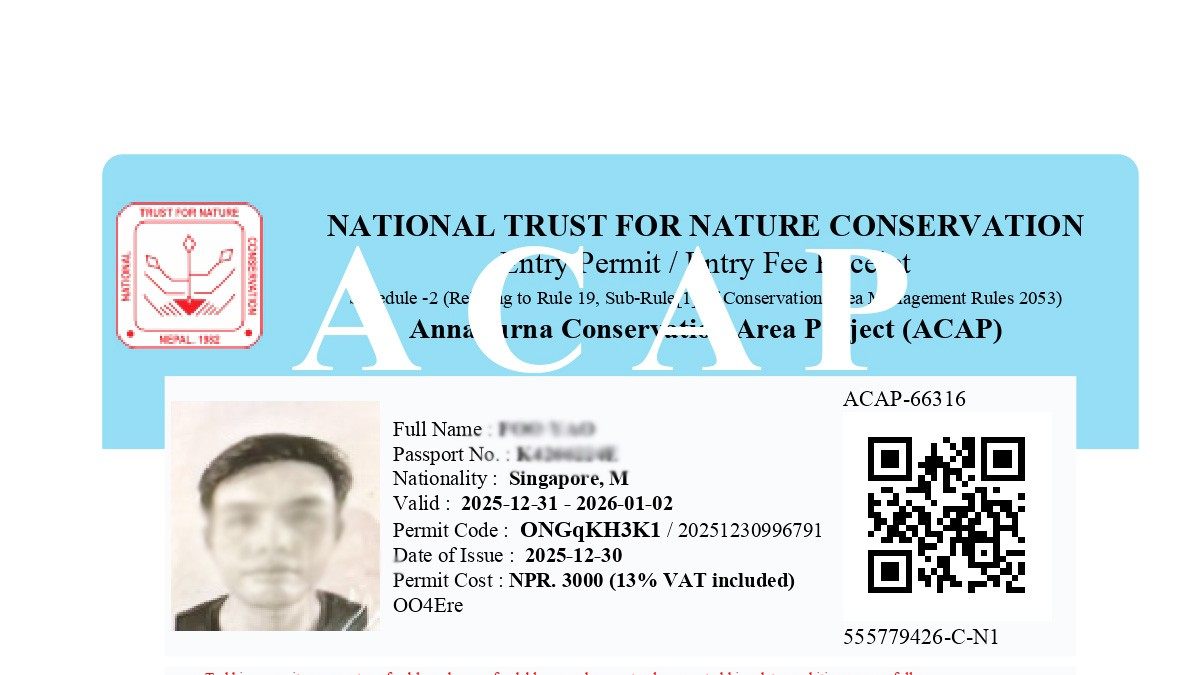
Annapurna Conservation Area Permit Sample
Which permits you need depends on the region, not the trek length. These are the fees for foreign trekkers going into 2027. SAARC nationals pay less, and children under 10 are free for ACAP.
Manaslu restricted area permit + MCAP + ACAP (you exit through Annapurna)
US$100 for the first 7 days in Sep to Nov, US$75 off-season, plus NPR 6,000
Upper Mustang
Restricted area permit + ACAP
US$500 for the first 10 days, then US$50 a day, plus NPR 3,000
TIMS card in 2027
TIMS (Trekkers' Information Management System) is the registration card that tells the authorities where you are. It now costs NPR 2,000 and is issued only through registered agencies.
You don't need TIMS for the Everest Base Camp Trek. The Khumbu municipality permit replaced it back in 2018. Plenty of websites still list TIMS for EBC, and some agencies still charge for it. Ask before you pay.
A note on the Khumbu permit price
The Khumbu Pasang Lhamu permit went up from NPR 2,000 to NPR 3,000. Carry enough rupees for the higher one, since it's collected in cash at Lukla or Monjo.
Restricted areas: the 2026 change that carries into 2027
On 22 March 2026, the Department of Immigration dropped the two-trekker minimum for restricted area permits. Before that, a solo traveller wanting to do Manaslu or Upper Mustang had to find a stranger to join their permit, often through Facebook groups or a "group joining" fee at the agency.
That's over. One person can now hold a restricted area permit in their own name. Agencies can also process the permit before you land in Kathmandu, which saves a day of waiting in Thamel.
The guide rule did not change. Restricted areas still need a licensed guide and a registered agency, as they always have. You can't walk into the immigration office and buy one yourself.
Nepal has 15 restricted districts. The ones most trekkers ask about are Manaslu, Tsum Valley, Nar Phu, Upper Mustang, Upper and Lower Dolpo, Kanchenjunga and Humla. Permits are tied to fixed entry and exit dates, so sort out any extension with your agency before you go, not on the trail.
Other rules worth knowing before you book
Travel insurance
Registered agencies will ask for a Nepal travel insurance policy that covers trekking at your maximum altitude and helicopter evacuation. For EBC, that means cover up to at least 5,500 m. Read the altitude limit in the fine print. A lot of standard travel policies stop at 3,000 or 4,000 m, which is useless above Namche.
Visa
Most nationalities get a tourist visa on arrival at Tribhuvan Airport. It's US$30 for 15 days, US$50 for 30 days, and US$125 for 90 days. A typical EBC or Annapurna Circuit trip fits inside 30 days, but give yourself a buffer for flight delays out of Lukla.
Weather closures
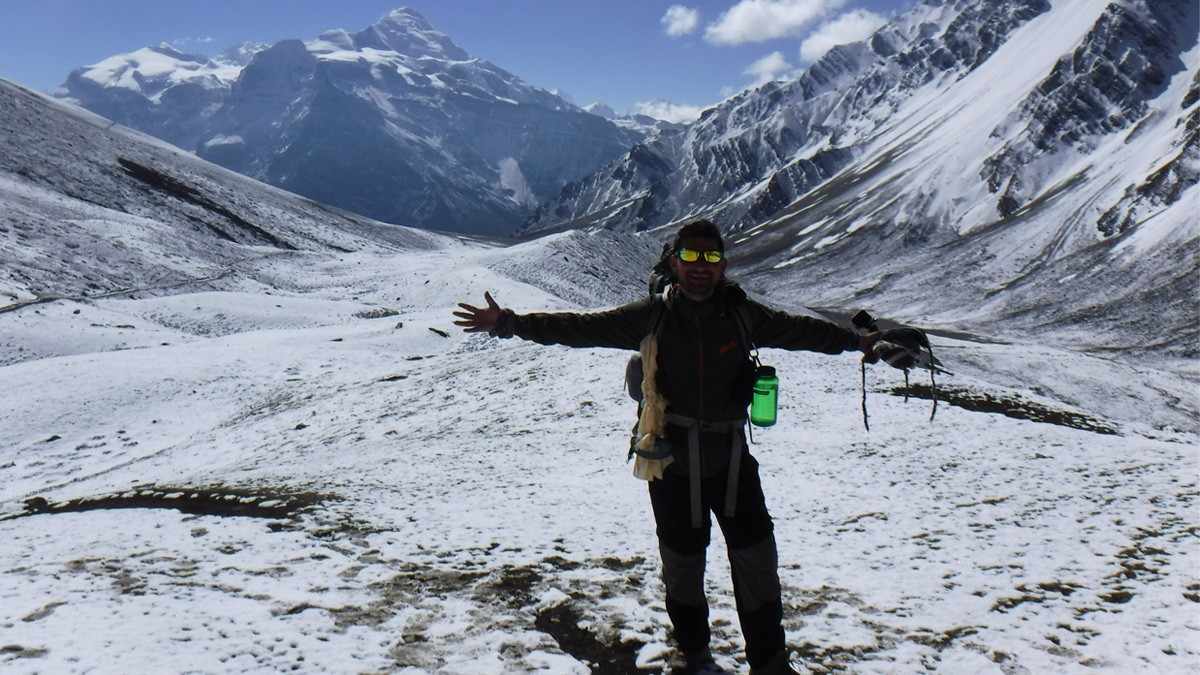
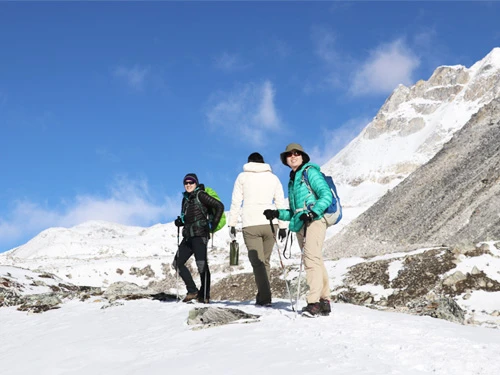
Bliss of enjoying snow trekking in Nepal Himalaya
The government can and does stop issuing permits when a storm is forecast. In late October 2026, the Department of Immigration suspended restricted area permits in the high hills and Himalaya for 29 to 31 October because of a snowstorm and avalanche warning. Trekkers already on the trail were told to stay put. Build a spare day or two into any autumn itinerary.
Carry your permits
Keep the originals, your passport and a couple of passport photos in a dry bag you can reach. Permits are checked several times on most routes, and losing one means paying again.
If you're climbing, not trekking
A tourism bill working through parliament would require Everest climbers to have summited a 7,000 m peak in Nepal first. It doesn't affect anyone trekking to Base Camp. On the other side of the ledger, Nepal has waived permit fees on 97 peaks in Karnali and Sudurpaschim provinces through 2027.
How to get your trekking permits
In practice, your agency does most of this. Here's what actually happens:
Pick your route and dates. Spring (March to May) and autumn (late September to November) are the main seasons, and October is the busiest month.
Book a registered agency and a licensed guide. Check that the agency is listed with the Department of Tourism and TAAN (Trekking Agencies' Association of Nepal) before you send a deposit.
Send your passport scan, a passport photo, insurance details, and your itinerary. For restricted areas, the agency can file this before you arrive.
Your agency gets the TIMS card, conservation or park permit, and any restricted area permit. Sagarmatha National Park permits can also be bought at the Nepal Tourism Board office in Kathmandu or at Monjo.
Pay the Khumbu municipality fee in cash at Lukla if you're heading to Everest.
Keep everything with you and show it at each checkpoint.
One tip that saves real stress: during Dashain and Tihar, government offices close for days. If your trek starts in October, get permits sorted before the holidays.
FAQ: Nepal trekking rules 2027
Is solo trekking banned in Nepal?
For foreigners, yes, on routes inside national parks, conservation areas, and restricted areas. You can still travel solo and hire a private guide.
Can I do Everest Base Camp without a guide in 2027?
The local Khumbu authority has been more relaxed than the national rule, so you'll hear stories of people doing it. Checkpoint enforcement varies, and most agencies won't arrange EBC permits without a guide. Plan for one.
Can I trek the Annapurna Circuit without a guide?
No. Annapurna is inside ACAP, and the guide rule is enforced at its checkpoints.
Do I need a TIMS card for Everest Base Camp?
No. You need the Sagarmatha National Park permit and the Khumbu Pasang Lhamu municipality permit. TIMS is for Annapurna, Langtang, and most restricted treks.
How much are trekking permits in Nepal?
About NPR 6,000 for Everest Base Camp and NPR 5,000 for Annapurna or Langtang. Restricted areas cost much more: Upper Mustang is US$500 for 10 days.
Can I get trekking permits online?
Your agency can apply for restricted area permits before you arrive. Park and conservation permits are still mostly handled in Kathmandu, Pokhara, or at the trailhead.
What happens if I trek without a guide or permit?
You'll most likely be stopped at a checkpoint and sent back, and you may be fined. You'll also have no rescue coordination if something goes wrong.
Will the rules change in 2027?
Nothing new for trekkers has been announced as of October 2026. Fees and enforcement do shift from season to season, so check with your agency a month before you fly.
Kishwor Adhikari is a passionate writer with a deep enthusiasm for trekking and adventure. His extensive travels across Nepal, exploring its diverse landscapes and hidden corners, have shaped his unique perspective on the country's natural beauty. With a wealth of first-hand experience in adventure trekking, Kishwor has become a trusted voice for fellow enthusiasts. Through his writing, he shares invaluable insights, offering practical advice and inspiration for both seasoned trekkers and novices alike. His dedication to sharing his journey and knowledge helps others discover the wonders of Nepal's wilderness, making his work an essential resource for anyone seeking adventure in the region.