Classic Annapurna Circuit Trek 2026/2027

Tripadvisor155 reviews
google130 reviews
youtube99 reviews
trustpilot36 reviews
Ice lake Annapurna Circuit Trek

The Classic Annapurna Circuit Trek (Classic ACT) is one of the world’s most legendary trekking experiences. Since it first opened to international trekkers in the 1980s, the route has inspired generations of hikers with its dramatic Himalayan passes, cultural richness, and stunning ecological diversity. Today, it remains a bucket-list journey—ideal for trekkers seeking adventure, culture, and high-altitude mountain landscapes in a single route.

At a Glance
  • Difficulty Level Moderate
  • Max Altitude 5416m
  • Group Size 1 - 20 Person
  • Start City Kathmandu
  • End City Kathmandu
  • Trip Type Group joining and Private
  • Activity Trekking and Hiking
  • Best Season September - January and March - May
Trip Highlights
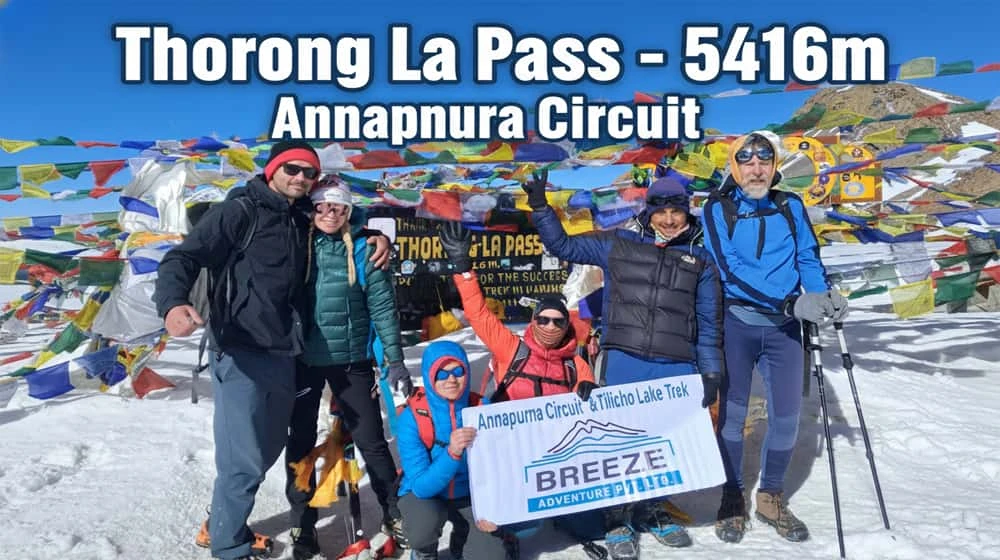
  • Thrilling Thorong La Pass- 5416 meters
  • The cultural beauty of local villages
  • Religious experience at Muktinath Temple
  • Kali Gandaki Valley
  • Views of Annapurna, Dhaulagiri, Machhapucchre, Hiunchuli, and numerous other high peaks
  • Lovely rhododendron forest
  • Remarkable hospitality
  • Diverse landscapes – from sub-tropical forests to desolate alpine wilderness

Why the Classic ACT Is So Special

The Classic ACT is a full-circuit experience, beginning in the lush lower valleys and finishing in the sacred Mustang region. In just two weeks, trekkers pass through sub-tropical forests, glacial valleys, Tibetan-influenced villages, barren high-alpine deserts, and the deepest gorge in the world. No other Himalayan trek offers such diversity day after day.

Classic Annapurna Circuit Trek Map

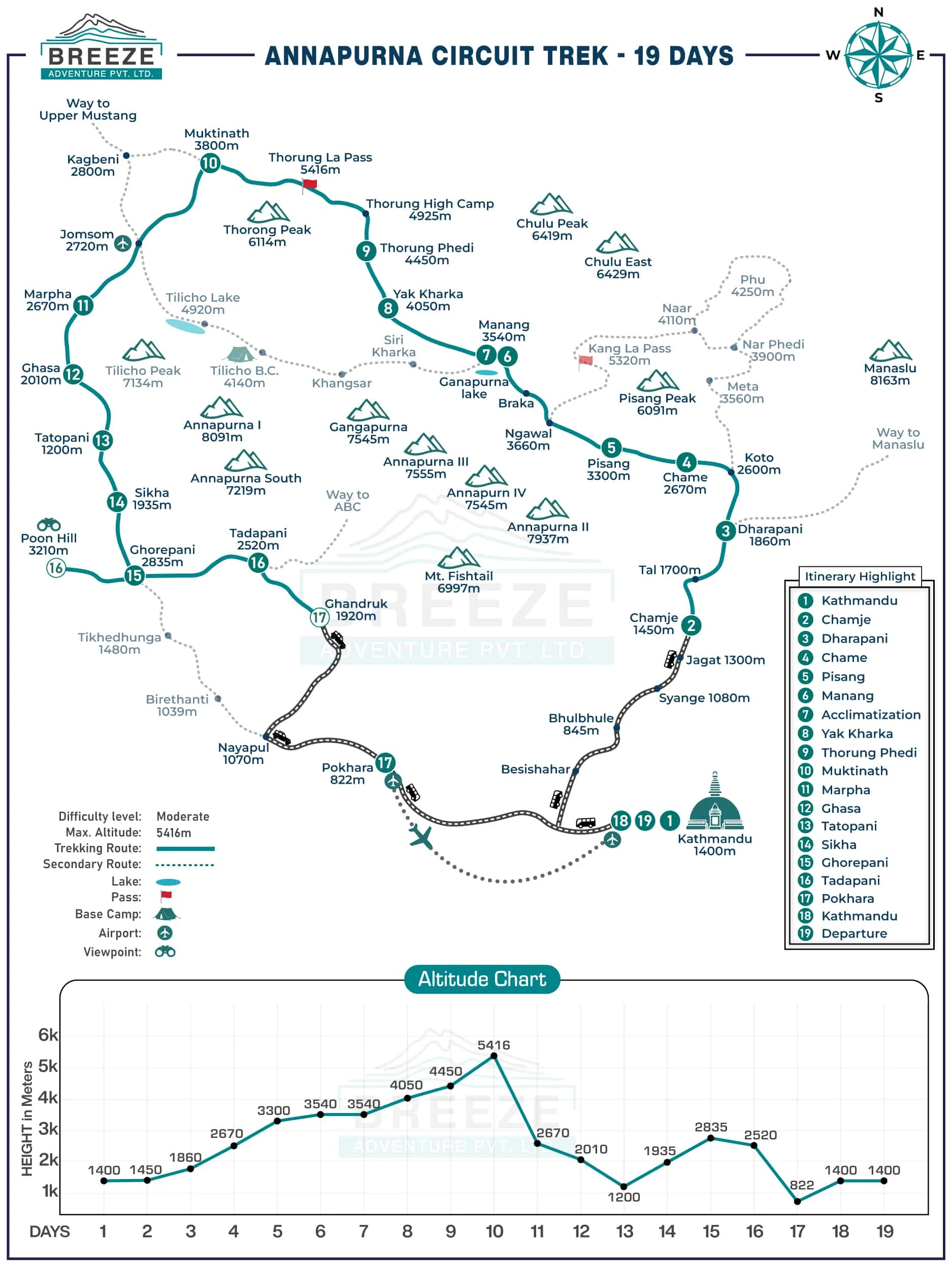
The classic Annapurna Circuit trek map shows the route rising from lush valleys to the high Thorong La Pass (5,416 m) and descending into the sacred Mustang region. It follows the Marsyangdi River through forests and villages en route to Manang, then crosses the Himalayan ridge into the Kali Gandaki Valley. The map highlights altitude points, acclimatization days, side trips, and safe daily elevation planning.

Understanding the Route, Elevation, and Terrain

The classic Annapurna circuit trek map shows a natural progression from green valleys to the high Himalayan pass and down into the mystical Mustang region. The trail follows the Marsyangdi River valley until Manang, ascends to Thorong La, and then descends toward the Kali Gandaki.

Breeze Adventure provides a detailed Classic ACT map, including:

  • key altitude points
  • acclimatization days
  • Recommended overnight stops
  • side trips like Tilicho Lake & Ice Lake
  • cultural highlights
  • safe acclimatization strategy

Classic ACT Route Experience

The Classic ACT follows a spectacular route through changing landscapes and cultures. It begins in lush lower valleys, passing rhododendron forests, waterfalls, rice terraces, and traditional villages along the Marsyangdi River. As you reach Manang, the scenery shifts to Tibetan-influenced Buddhist settlements, with dramatic views of snow-covered peaks. The ascent to Thorong La Pass (5416m) is the trek’s most thrilling moment, offering a vast Himalayan panorama. Descending into Muktinath, you encounter sacred temples and the unique culture of Mustang. The journey continues through the Kali Gandaki Gorge, ending with scenic viewpoints and relaxing hot springs.

Lower Valley: Lush Forests & Local Culture

The journey begins from the lower Annapurna region, where the trail winds through rhododendron and pine forests, cascading waterfalls, rice terraces, and traditional settlements. Guided by the Marsyangdi River, the first days are filled with energy and excitement.

Manang: Tibetan Buddhist Heritage

The landscape changes dramatically as you enter the Manang district. Buddhist monasteries, prayer wheels, and stone villages reflect Tibetan influence. This is also an ideal place for acclimatization, with side hikes to Gangapurna Lake, Ice Lake, or Tilicho Base Camp.

Thorong La Pass (5416m): The High Point

Crossing Thorong La Pass is the most thrilling moment of the Classic ACT. The ascent requires patience, slow pacing, and acclimatization—but rewards you with a sweeping panorama of Himalayan peaks including:

  • Dhaulagiri (8167m)
  • Manaslu (8156m)
  • Annapurna I (8090m)
  • Annapurna II, III & South
  • Machhapuchhre (6993m)
  • Tilicho Peak (7134m)

Muktinath: A Sacred Sanctuary

Descending from the pass brings you to Muktinath Temple, a major pilgrimage site for both Hindus and Buddhists. Devotees bathe in the stone fountains, light butter lamps, and make offerings beneath snow-covered peaks—an unforgettable cultural moment.

Kali Gandaki Gorge & Lower Trails

From Muktinath, the trek leads into the Kali Gandaki Valley, home to the world’s deepest gorge, and continues through charming villages. A sunrise visit to Poon Hill (3210m) offers another spectacular Himalayan panorama. Trekkers often end their journey with a relaxing dip in Tatopani Hot Springs, then continue to Pokhara and return to Kathmandu.

Best time for the Classic Annapurna Circuit Trek

The best time for the Classic Annapurna Circuit Trek is during two main trekking seasons: Spring (March–May) and Autumn (September–January). Spring offers mild temperatures, clear mornings, and valleys painted with blooming rhododendron forests, creating vibrant landscapes and excellent photography. The trails feel alive with fresh greenery and panoramic mountain views. Autumn brings stable weather, crystal-clear skies, and comfortable walking conditions, making high passes like Thorong La safer and more enjoyable. This period also aligns with traditional festivals in local villages, adding cultural richness to the journey. Both seasons offer peaceful trails and the most rewarding Himalayan experience.Both seasons offer excellent photography opportunities and peaceful walking days.

Itinerary

Expand allCollapse all

Welcome to Nepal! A representative from Breeze Adventure will welcome you to our hotel.  We will prepare you with information and gear for your trek. Overnight at hotel.

  • Max Altitude: 1400m
  • Accommodation: 2/3 Star Hotel
  • Meals: Breakfast
  • Transport: Car/Van

We start our day early by taking a bus to Chamje, stopping for breakfast and lunch along the way. We will stop in Besisahar after about 7 hours, and change buses to continue to Chamje. During the bumpy ride to Chamje, we pass Ghermu and Chamje waterfalls, and the Marshyandi River and get views of the beautiful mountain Manaslu peeking behind the hills. We reached our destination after about two and a half hours. 

  • Max Altitude: 1450m
  • Accommodation: Guest House
  • Time: 8/9 Hours
  • Meals: BLD
  • Transport: Bus | Jeep

After breakfast in Chamje, we begin our journey up through the foothills. We follow along the bank of the Marshyangdi River. Today, we pass Taal village, the official entry point of the Manang region. Here, we can stop for a snack or a cup of tea and breathe in the fresh air.  Climbing the stone steps, we reach Dharapani, where we rest for the night. Overnight in guesthouse. 

  • Max Altitude: 1860m
  • Accommodation: Guest House
  • Time: 5 Hours
  • Meals: BLD
  • Walking Distance: 13km / 8 Miles

After breakfast, we follow the rocky, mellow trail past Timang. The path is surrounded by lush, dense forests. Soon, we reach Kopar, where we rest and appreciate an outstanding view of the Annapurna peak. The soft trail ahead takes us to Chame, the district headquarters of the Manang region. Overnight in the guest house.

  • Max Altitude: 2670m
  • Accommodation: Guest House
  • Time: 6 Hours
  • Meals: BLD
  • Walking Distance: 15.5km/ 9.6 Miles

After breakfast, we depart from Chame, looking forward to the beauty that lies ahead.  After hiking for about two hours, we reach Bhratang, where we can sample some local apple cider from the nearby orchards. Throughout the day, we are blessed with amazing views of snow-topped Himalayan peaks. After lunch, we will reach Pisang village, our destination for the night. Overnight in guesthouse.

  • Max Altitude: 3300m
  • Accommodation: Guest House
  • Time: 6 Hours
  • Meals: BLD
  • Walking Distance: 13.7 km /8.5 miles

Today, we walk through the desolate and arid, yet mesmerizing sections of the Manang district. The landscape is out of this world. The majestic peaks on the horizon, contrasting with the dry, rocky landscape close to us make for an incredible scene. We take it slow today because the high elevation makes us a bit more tired than usual. After passing through the quaint villages of Ghyaru and Braga, we finally reach Manang village. Overnight in guesthouse.

  • Max Altitude: 3540m
  • Accommodation: Guest House
  • Time: 5 Hours
  • Meals: BLD
  • Walking Distance: 15.5km / 9.6 Miles

Today is a special day of relaxing, exploring, and most importantly, acclimatizing. There are some day hikes in the area we can check out, which helps us to avoid altitude sickness. Manang is densely populated with Tibetan Buddhists. Spend some time with them, learn about their culture, and experience their great hospitality. Several colorful monasteries and chhortens are scattered around the village area, enhancing the village’s charm. We can take a beautiful day hike to Gangapurna Lake and explore the surroundings. Overnight in guesthouse.

  • Max Altitude: 3540m
  • Accommodation: Guest House
  • Time: 2 Hours
  • Meals: BLD
  • Walking Distance: 5km

After breakfast, we head to Yak Kharka. It is a relaxing, slow uphill hike today so we can take our time. Soon, we reach the Jharsang stream and follow its bank into the alpine meadows. Yak Kharka is a gorgeous open grazing meadow for, you guessed it, yaks. We rest here for the night. Overnight in guesthouse. 

  • Max Altitude: 4050m
  • Accommodation: Guest House
  • Time: 5 Hours
  • Meals: BLD
  • Walking Distance: 10.7km / 6.6 Miles

From Yak Kharka, the trail becomes even more of a struggle due to the high altitude.  We first cross Ledar and head towards the river. Gradually ascending, we eventually reach Thorong Phedi. Because it doesn’t take long to reach, we can walk a bit higher and then again back to Phedi. Overnight in guesthouse.

  • Max Altitude: 4450m
  • Accommodation: Guest House
  • Time: 5 Hours
  • Meals: BLD
  • Walking Distance: 7.5km / 4.6 Miles

Today is the most strenuous day of our trek, as we cross the highest point at 5416 meters. However, with our struggle comes great rewards.  We wake up extra early because the weather at the Thorong La Pass can be precarious and chances for clear skies and good weather are higher in the morning. We arrive at the pass and see the amazing scenery of Annapurna, Manaslu, Hiunchuli, Lamjung, and other neighboring peaks. After taking some snaps and soaking in the views, we trek down all the way to Muktinath. Overnight in guesthouse. 

  • Max Altitude: 3800m
  • Accommodation: Guest House
  • Time: 8 Hours
  • Meals: BLD
  • Walking Distance: 16.5km / 10.25 Miles

We wake up and visit Muktinath, feeling the spiritual energy exuberating from the temple and its devotees. We walk with Hindu and Buddhist devotees towards the temple. We come back for breakfast, and begin our trek down to Jomsom, passing through Jharkot along the way. We go through the Kali Gandaki river valley, which can become uncomfortably windy after mid-day. To avoid this, we will start our hike a little earlier than usual. Soon, we reach Marpha, a beautiful village famous for its apple orchards and stone-built houses. Overnight in guesthouse. 

  • Max Altitude: 2670m
  • Time: 7 Hours
  • Meals: BLD
  • Walking Distance: 22km | 13.6 Miles

After breakfast, we will start along the banks of Kali Gandaki on a gentle descent, quickly passing some more populated settlements, such as Tukuche, Largung, Kalopani, and Lete, before reaching Ghasa. Overnight at guest house.

  • Max Altitude: 2010m
  • Accommodation: Guest House
  • Time: 6 Hours
  • Meals: BLD
  • Walking Distance: 22km 13.6 Miles

We will start our trek after breakfast. we will mostly trek on the downhill today. we will pass the most popular waterfall, Rupse Chahara, a noteworthy waterfall, that is a pleasant resting point before moving on to Tatopani where we stop for the day. Here, we have lunch, dinner, and sleep for the night. Check out the hot springs for a relaxing and rejuvenating dip.

  • Max Altitude: 1200m
  • Time: 6 Hours
  • Meals: BLD
  • Walking Distance: 14km | 8.6 Miles

Today’s trek starts out easy until we cross the Kali Gandaki and Ghar Khola. At this point, we take an intensely steep uphill, with dense forest around serving as our distraction. We take a lunch break in Ghara village, a nice relief for the legs. A couple hours later, we reach Sikha, where we stop for the night. Here, we have incredible views of Dhaulagiri and Annapurna South.

  • Max Altitude: 1935m
  • Accommodation: Guest House
  • Time: 5 Hours
  • Meals: BLD
  • Walking Distance: 10Km | 6.2 Miles

After breakfast, we hike for a delightful 2 hours to Chitre, where we stop for a bit, enjoying views of Nilgiri to the north. Continuing towards Ghorepani, we have one last steep ascent of around half an hour. Ghorepani lies amidst a largerhododendron forest. We enjoy the beautiful colors and rest for the night. Overnight in the guest house.

  • Max Altitude: 2835m
  • Accommodation: Guest House
  • Time: 5 Hours
  • Meals: BLD
  • Walking Distance: 10 Km | 6.2 Miles

Early in the morning, we hike up to Poon Hill to watch the sun light up the snow-capped Himalayas. This is one of the most famous views in the Annapurna region. The breathtaking sight of Annapurna, Manaslu, Dhaulagiri, Machhapuchhre, and the surroundings will blow you away. We hike down to Ghorepani, have breakfast, and trek further to Tadapani through Deurali. We have lunch along the way. Overnight at guest house.

  • Max Altitude: 2520m
  • Accommodation: Guest House
  • Time: 6 Hours
  • Meals: BLD
  • Walking Distance: 13km | 8 Miles

We wake up with Machhapuchhre, Huinchuli, and the Annapurna South still in view. Although we’d like to stay in the mountains forever, it’s time to head back. Hiking down a steep descent for roughly three and a half hours, we reach Ghandruk from this point, a gentle downhill takes us to Syane. We catch a bus from here, arriving at Pokhara after about two and a half hours.

  • Max Altitude: 825m
  • Accommodation: 2/3 Star Guest House
  • Time: 4 Hours
  • Meals: BLD
  • Walking Distance: 10km

After breakfast, we take a drive back to Kathmandu along the Prithvi Highway. Take in any scenery you may have missed along the way. After 6-7 hours, we reach Kathmandu and transfer you to the hotel. Take a rest and spend your day freely. Celebratory dinner in Kathmandu in the evening.

  • Max Altitude: 1400m
  • Accommodation: 2/3 Star Guest House
  • Time: 7 Hours
  • Meals: Breakfast
  • Walking Distance: 201.5km
  • Transport: Tourist Bus

Transfer to Tribhuvan Airport.  Thank you for choosing Breeze Adventure as your trekking guide!  We look forward to your next adventure with us.

  • Meals: Breakfast

Route Map

Classic Annapurna Circuit Trek 2026/2027 map
Cost Details
What's Included
  • Transportation to and from Tribhuvan Airport.
  • Three nights in a 2-3 star hotel in Kathmandu, breakfast included.
  • One night in a 2-3 star hotel in Pokhara, breakfast included.
  • All transportation for the trek.
  • Local guest house accommodation in the mountains.
  • Government-authorized, experienced guides and porters
  • Insurance, food, accommodation, and wage for guides and porters
  • Hygienic meals (breakfast, lunch, and dinner) during the trek.
  • All equipment (sleeping bag, warm layers, etc.)
  • First Aid Kit
  • Maps
  • Service charges and government taxes
  • Post-trek celebration dinner in Kathmandu
What's Not Included
  • International airfare
  • Meals in Kathmandu (besides breakfast)
  • Your personal expenses, shopping, etc.
  • Shower and electronic charging fees at guest houses during the trek
  • Alcoholic drinks, chocolates, tea and coffee
  • Tips for guide and porter
  • Extra accommodation and meals outside of the itinerary
  • Costs from unexpected occurrences (i.e. cancellations, weather problems, damages of property, illness, etc.)

Client's Experience

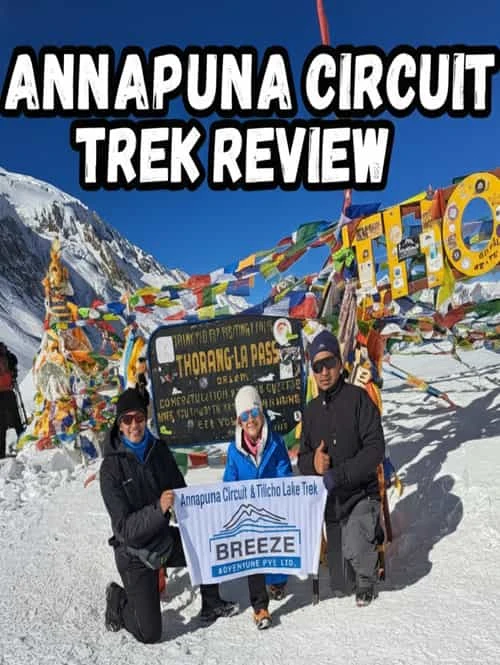
  • Annapurna Circuit Reviews
    Annapurna Circuit Trek Review
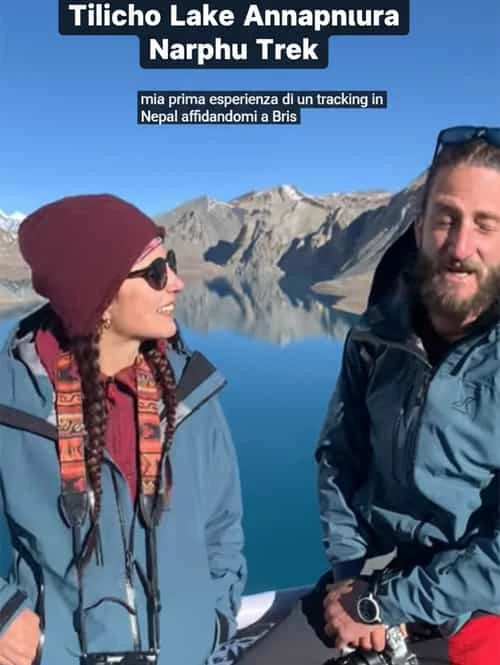
  • Narphu Valley Tilicho Trek Review
    Narphu Tilicho Annapurna Trek Review
  • Annapurna Circuit Review
    Annapurna Circuit Trek Review
  • Annapurna Circuit Trek Review
    Best Trek to Annapurna Circuit

Essential Information

Fitness & Acclimatization

The Classic ACT covers around 130 miles and requires good physical condition, strong legs, and proper acclimatization. Breeze Adventure ensures safe altitude progression, guiding you through slow ascent plans, hydration advice, and regular health checks to reduce the risk of AMS.

Our team carries first-aid kits, pulse oximeters, and emergency plans for helicopter evacuation where required. We also recommend travel insurance that covers up to 6000m altitude trekking.

Can I Do It?

Yes! You can complete the Classic ACT with the right mindset and preparation. You don’t need to be an elite athlete; just steady fitness, strong legs, and determination. With a safe acclimatization plan, supportive guides, and oxygen standby, you’ll walk step-by-step to Thorong La. Stay positive, believe in yourself, and the Himalaya will welcome you.

Who This Trek Is For

The Classic Annapurna Circuit Trek is ideal for beginner to intermediate trekkers with good fitness and a strong sense of determination. It suits travelers who want both cultural immersion and high-altitude adventure, experiencing rural mountain life alongside dramatic Himalayan landscapes. The route is a dream for photographers and nature lovers, offering diverse scenery—from lush valleys to snow-covered peaks—and captivating village traditions. It is also perfect for solo travelers looking for a safe, professionally guided journey with local expertise. Friends, families, and trekking clubs will enjoy the experience as a shared Himalayan adventure, creating unforgettable moments together on one of the world’s most iconic trekking routes.

Permits and Fees for the Classic ACT

To complete the Classic Annapurna Circuit Trek, two permits are required: the Annapurna Conservation Area Permit (ACAP) and the TIMS Card. ACAP supports conservation and community projects in the region, while the TIMS Card ensures trekker safety, record tracking, and emergency support. The current fees are: ACAP – NPR 3,000 for international travelers (NPR 1,000 for SAARC nationals) and TIMS – NPR 2,000 for organized trekkers (NPR 1,000 for SAARC nationals). Trekkers joining a licensed agency can easily obtain both permits in Kathmandu or Pokhara before departure. Always carry physical copies and keep permits accessible for checkpoints along the route.

Packing List for the Classic ACT

The right packing makes your Classic ACT journey easier, safer, and more comfortable. With the correct layers, boots, and warm gear, every step feels lighter. We’ve provided a seasonal packing list below—use it to prepare confidently. If you cannot buy everything in your country, you can rent or purchase gear in Kathmandu at a reasonable cost.

Seasonal Packing Recommendations

Packing the right gear is essential for comfort, safety, and performance on the Classic Annapurna Circuit Trek. Conditions change quickly as you ascend from warm valleys to high alpine zones, so your equipment should cover both mild temperatures and freezing mornings. Below is a recommended list based on two trekking seasons: Spring (March–May) and Autumn/Winter (September–January).

Core Clothing for All Seasons

  • Lightweight trekking shirts (quick-dry)
  • Long-sleeve base layers (thermal)
  • Fleece or soft-shell jacket
  • Insulated down jacket
  • Trekking pants + light inner layer
  • Waterproof jacket & pants
  • Warm hat, buff/scarf, gloves
  • Hiking socks (4–5 pairs)
  • Sun hat & UV protection

Spring (March–May)

  • Light fleece + windproof layer
  • Convertible trekking pants
  • Light thermal for cold mornings
  • Thin gloves
  • Rain cover for sudden showers
  • Autumn to Early Winter (September–January)
  • Heavy thermal tops and bottoms
  • Thick down jacket (800 fill recommended)
  • Warm gloves (windproof)
  • Extra wool socks
  • Neck gaiter & liner gloves
  • Micro-spikes (optional in December/January)

Footwear

  • Hiking boots (ankle support + broken-in)
  • Lightweight shoes or sandals for lodges
  • Gaiters (useful in snow/dusty trails)
  • Trekking poles (essential on Thorong La)

Sleeping Gear

  • Sleeping bag (rated to -15°C for late autumn/winter)
  • Sleeping bag liner (adds warmth + hygiene)

Accessories

  • Sunglasses (UV protection, category 3–4)
  • Sunscreen (SPF 50), lip balm
  • Reusable water bottle/hydration bladder (2L min)
  • Microfiber towel
  • Headlamp with spare batteries
  • Personal toiletries
  • Travel adapter + power bank

Health & Safety

  • Personal medication
  • Basic first-aid kit
  • Water purification tablets or filter
  • Diamox (optional, consult doctor)
  • Pulse oximeter (optional)
  • Insurance documents (hard copy + phone)

Recommended by Breeze Adventure:
We carry oxygen support and a professional AMS safety protocol, but trekkers should still bring personal medications and travel insurance covering up to 6,000m.

Tech & Documents

  • Passport & permits (TIMS + ACAP)
  • Trekking insurance details
  • Cash (ATMs limited after Besisahar/Chame)
  • Phone + charger
  • Camera (optional)

Packaging Tips

  • Use a duffel bag (we provide for porter use)
  • Carry a daypack (30–35L) for essentials
  • Pack in waterproof stuff sacks

Optional Additions

  • Light crampons (Dec–Jan)
  • Thermos bottle
  • Ear plugs (for teahouse nights)
  • Journal/notebook
  • Lightweight reading book
  • Protein bars/snacks
  • Playing cards (great for evenings)

Expert Advice

  • In spring, temperatures are mild in the lower sections but nights above 3,500m still drop below freezing, so bring at least one warm layer.
  • In late autumn and winter, expect colder mornings at Thorong High Camp and potential snow, so extra insulation is important.
  • Equipment rental is possible in Kathmandu and Pokhara for jackets, sleeping bags, and trekking poles if needed.

Road Impact on the Classic Annapurna Circuit

Over the last decade, the construction of jeep roads in the lower Annapurna region, especially along the Marsyangdi and Kali Gandaki valleys, has significantly changed parts of the classic trekking trail. While the original footpaths are still present, some sections now run close to or alongside the motor road. This has reduced the feeling of isolation in a few lower areas and introduced occasional vehicle noise and dust on the main route.

However, the impact is not fully negative. For local communities, the road has brought easier access to markets, hospitals, and schools, improving daily life and helping farmers transport goods. It also supports emergency evacuation options, especially for altitude or health issues.

For trekkers, the situation today is well managed. New alternative trails—known as “NATT Trails” (New Annapurna Trekking Trails)—have been created to avoid road sections and preserve the authentic trekking experience. These trails pass through traditional villages, quiet forests, and scenic viewpoints, keeping the essence of the Classic ACT alive.

Trekkers can still enjoy the full cultural and natural beauty of the original route, especially in the middle and upper sections—Manang, Thorong La, Muktinath, and the Kali Gandaki Valley, where the landscape remains untouched and free from traffic.

In summary, while roads have altered certain lower sections, the core experience of the Classic Annapurna Circuit Trek remains spectacular, and updated routes now provide safer access, better support for local people, and a memorable Himalayan journey for trekkers.

Safety Preparation

Safety is the core focus of our Classic Annapurna Circuit Trek. We follow a well-designed AMS (Acute Mountain Sickness) protocol, including gradual altitude gain, daily health checks, and guidance on hydration and pacing. Each group carries oxygen support, allowing emergency assistance in high-altitude sections like Thorong La Pass. We recommend travel insurance that covers trekking up to 6,000 meters, including helicopter evacuation in case of medical emergencies. Our guides are trained in first aid and altitude response, with clear procedures for rescue coordination. With proper preparation and experienced leadership, trekkers can enjoy the journey with confidence and peace of mind.

Trip Customization

The Classic Annapurna Circuit Trek can be fully customized to match your interests, timeframe, and comfort level. Whether you are traveling solo or in a group, we design the ideal journey based on your group size, available travel schedule, and trekking goals. You can add popular side destinations such as Tilicho Lake, Ice Lake, Poon Hill, or even extend the journey towards Upper Mustang for deeper cultural insight. Itineraries are planned with careful attention to your acclimatization needs, ensuring safe altitude progression. We also offer flexibility in hotel categories in Kathmandu and Pokhara. Share your dates, and we’ll create your perfect Classic ACT experience.

Optional Trekking Routes in the Region

For trekkers wanting a deeper Himalayan experience, several optional routes connect beautifully with the Classic ACT. The Nar Phu Valley Trek offers remote Tibetan culture and dramatic landscapes. The Manaslu Circuit Trek provides a wilder, less crowded circuit experience with iconic passes. For a unique adventure, the Upper Mustang Trek reveals ancient kingdoms, cave monasteries, and desert-like Himalayan scenery. Here is the list of optional trails in the same region:

Responsible Trekking Tips

Responsible trekking helps protect the culture, environment, and communities that make the Classic Annapurna Circuit special. Respect local traditions by greeting people with a smile, supporting family-run teahouses, and asking permission before taking photographs. Walk mindfully—stay on marked trails to prevent erosion, avoid littering, and carry reusable bottles to reduce plastic waste. Choose meals that use local ingredients, helping village economies. In monasteries and temples, dress modestly and follow posted rules. Share the trail kindly with yaks, mules, and locals. Responsible behavior ensures that future trekkers can enjoy the same beauty while helping preserve the heritage of the Annapurna region.

Why Trek with Breeze Adventure?

Breeze Adventure inspires confidence by offering experienced local guides who know every trail, village, and weather pattern on the Classic ACT. We provide flexible itinerary planning, supporting solo trekkers, small teams, and large groups with equal care. Our transparent pricing and authentic teahouse accommodation ensure real value and cultural immersion. To enhance safety, we carry oxygen support on high passes. Our approach blends warm Nepalese hospitality with professional Himalayan leadership for a truly memorable journey.

Equipment Lists

clothCity Clothing and Travel Essentials
  • Comfortable everyday wear such as trousers, shirts, and T-shirts (season-dependent)
  • A lightweight jacket or fleece layer suitable for the weather
  • Essential travel documents: passport, visa, insurance papers, and flight details
  • Backup copies of all important documents (digital or printed)
  • Cash in USD or NPR and/or travel cards (NPR preferred)
  • UV-protection sunglasses
  • A light duffel bag or suitcase for storing city clothing

Casual footwear or sandals for downtime

trekkingPorter Carried Trekking Gear
  • Duffel bag (provided by Breeze Adventure)
  • Sleeping bag and down jacket (rentable in Kathmandu)
  • Quick-dry trekking pants (2–3 pairs)
  • Thermal base layers (2 sets)
  • Trekking T-shirts (2–3)
  • Fleece or softshell jacket
  • Waterproof shell jacket and pants
  • Inner and insulated gloves
  • Waterproof, broken-in trekking boots
  • Lightweight camp shoes
  • Power bank with cables
  • Essential toiletries and hygiene items
bagDaypack Essentials
  • 30–40L daypack with rain cover
  • Water bottles or a 2L hydration bladder
  • Rain jacket or windbreaker
  • Quick snacks like energy bars, nuts, or dried fruits
  • Headlamp with spare batteries
  • Sunscreen and SPF lip balm
  • Hand sanitizer and a few wet wipes (rest goes in the porter bag)
  • Camera or smartphone
  • Lightweight gloves, hat, and a Buff/neck gaiter
  • Personal ID and some cash
medical kitPersonal Medical Kit
  • Personal prescription medications (with copies of prescriptions)
  • Diamox/Zolamide for altitude sickness (consult your doctor)
  • Pain relief tablets (ibuprofen, paracetamol)
  • Antiseptic cream and band-aids
  • Blister treatment (Compeed, moleskin)
  • Anti-diarrheal medicine (loperamide)
  • Oral rehydration salts (ORS)
  • Broad-spectrum antibiotics (doctor’s advice required)
  • Cold and flu tablets
  • Throat lozenges
  • Daily multivitamins
  • Tweezers and small scissors

Note: Always seek medical advice before taking any of these medications.

listAdditional Recommended
  • Collapsible trekking poles
  • Water purification tablets, a portable filter, or SteriPEN
  • Journal, notebook, or e-reader (Kindle)
  • Quick-dry travel towel
  • Earplugs and an eye mask
  • Duct tape or a small repair kit
  • Biodegradable laundry soap
  • Extra camera batteries and memory cards
  • Lightweight thermos for hot drinks
  • Snacks or any special dietary items

Classic Annapurna Circuit Trek 2026/2027 FAQs

  • Yes, a beginner can do the Annapurna Circuit trek with proper preparation and good fitness. Many beginners have tried and successfully completed this trail. Yes, experience matters, but with determination and good preparation, anyone can ace this trek.

  • The Annapurna Circuit Trek is normally considered a moderate to challenging journey. Various factors are responsible for making this journey challenging, such as varied landscapes, unpredictable climate, and high altitude.

  • This trek starts from Beshishahar and Chame. It depends on the duration of your trek. The Classic Annapurna Circuit Trek starts from Besishar, and another shorter version ACT Trek, starts from Chyamche or Chame, depending on the trip duration.

  • It is located in the Annapurna Region of Central Nepal. It is a long-distance trekking route that circles the Annapurna Massif. Also, it lies within the Annapurna Conservation Area.

  • It costs  $555 to $799 per person; the price varies depending on the group size and peak season.

  • For this trek, you have to be fit both physically and mentally. You should have a strong and active body with the absence of major disease. No matter whether you are an experienced trekker or just a beginner, your fitness level plays a major role in a safe and successful journey.

  • Yes, a sleeping bag is necessary for this trek. Even though you will stay at tea houses in higher altitudes, the unpredictable climate and extra comfort demand a sleeping bag.

  • The success of this trek is between 95 to 98 %. As you do not need to climb a mountain and it is all about just a circular trek of the massif, you will do this comfortably with proper fitness and preparation.

  • No, you are not allowed to do this trek without a guide. There is no legal provision to do this trek without a guide, as it is one of the challenging trails of Nepal. You must deal with high altitudes, unpredictable weather, and unusual terrain. Still, people are doing this without a guide, as there is no action has yet been taken by the government.

  • The exact distance between the Annapurna Circuit trek and Tilicho Lake is 22km.

  • Yes, you can do an ACT trek with kids, with proper planning and preparation. Breeze Adventure will help you in advance with your training for the successful trek with kids.

  • Its altitude is 5416 meters, with Thorung La Pass being the highest point. The trek begins at a lower elevation of about 800 meters.

  • The best season for ACT trek is Spring (March to May) and Autumn (September to November).

  • No, this trek cannot be considered a luxury trek, as you will start the journey taking a bus or jeep from Kathmandu. After that, you will trek for some days in rugged, steep, and narrow paths. You will have to spend nights at local tea houses and consume local food in local hotels.

  • No, training is not strictly required for this trek. However, you should have a good fitness level to deal with challenging terrain. The high altitude, unusual paths, and unpredictable weather demand good fitness and preparation.

  • The weather and temperature in this trek vary according to the season. In Spring, you will enjoy mild and pleasant weather with blooming rhododendron. The daytime temperature ranges between 15 to 20 degrees Celsius while nighttime drops to 5 degrees Celsius.

  • During the Annapurna circuit trek, you need to walk between 10 and 15 km, which will take 5 to 6 hours every day. Only on the 7th day do you hike for about 10 hours to cross the Throng Phedi. As per data, 10-day Annapurna circuit trek distance is almost 120kms.

  • Kathmandu, the capital city of Nepal, obviously has lots of ATMs, and you can draw your case any time here. The last ATM you will find before the trip is a besisahar. Beyond that, you will not find any ATM until you reach Jomsom. Even then, the ATM in Jomsom might not always function properly, so we suggest you take all the needed cash for 10 days Annapurna Circuit Trek cost from Kathmandu itself.

  • Yes, nowadays, almost all hotels on the route of the Annapurna circuit trek have Wi-Fi. However, the internet speed in Nepal's mountain region is not very good. Even if you use the mobile data of the local SIM cards, you only contact people, i.e. use services such as calls and messages. It might not be possible to upload heavy videos and all the work during the 10-day Annapurna Circuit trek.

  • Once you buy the trekking gear for 10 days ACT trek, it might be difficult to sell them after the war. There are no proper thrift stores in Nepal where you can sell the Annapurna trekking gear after the trek. So, if you're not planning to take back your packing list for the Annapurna 10-day trek, we suggest you rent the gear instead of buying it. You can easily rent all kinds of trekking gear from Thamel and other areas of Kathmandu once you are in Nepal. The prices of these trekking gears in Thamel can range from $ 1 to $5 per day for each item.

  • Yes, the porter and guide to Annapurna circuit Trek 10 days often expect the travellers to tip them. Although tipping culture is not very popular in Nepal, the guide and porter only make a basic salary, which is also the case in the peak trekking season. Even a small amount of the tip can be beneficial to them. In general, there is a culture of tipping 10% to 20% of the total amount at the end of the 10 -days Annapurna Circuit trek if you like the service.

  • Yes, the options for vegetarian food are really great in Nepal. In fact, we do not suggest anyone have meat items in the mountains and would rather go vegetarian. However, there is no vegan-specific menu for food during Annapurna Circuit trek.

  • It is really important to remain hydrated when you are trekking to a higher altitude. Since the oxygen level in the blood is very low, it is important to compensate for it with a higher water level. Besides water, we recommend drinking tea, coffee, and juice to keep yourself hydrated. Energy drinks can also be used while you are trekking. However, we highly discourage all kinds of alcoholic products while on Annapurna Circuit Himalayas. Especially at a higher altitude, consumption of alcohol makes you prone to altitude sickness.

  • Typically, a porter will carry 25 kgs in total. The travel agency often provides one porter for two people so he can carry 2 kgs of bags for each person. If you need to carry more than 15 Kgs in your backpack, you need to hire a personal porter.

  • Annapurna circuit trek has become very flexible after the introduction of the road network in this region. The Annapurna circuit trek itinerary starts from 7 days and lasts up to 22 days. Depending upon your duration, you can design the route as per your needs. Ideally, the Annapurna Circle trek takes about 12 days.

  • Yes, it is compulsory that you get travel insurance before booking your Annapurna Circuit Himalayas Trek in Nepal. In fact, you must get travel insurance that covers high-altitude helicopter rescue with a cover-up for cancellation or changes due to altitude sickness before booking any treks in Nepal.

  • Storage facilities are available in the hotels where you stay in Kathmandu. You can request the owner or reception to keep the extra clothes and baggage for you until the completion of the Annapurna Circuit Himalayas Trek.You can also leave the cloth at the Breeze Adventure office. We are happy to keep the valuables of our trekkers safe until they return from Annapurna circuit trek safely.

  • You need two kinds of bags for the Annapurna Circle Himalayas.. The first one is a day bag backpack where you keep your valuables, gadgets, some food, and a water bottle for the daytime. The other one is a duffle or trekking bag where you keep all your clothes and trekking gear like boots and a sleeping bag, which can store up to 20kgs. The porter will carry the duffel bag for you on the 10 days Annapurna Circuit Himalayas trek.

  • Rooms with private bathrooms are available only in Manang Valley and Mustang during Annapurna region trekking. Otherwise, you need to share the common bathroom with people in the tea house. Thankfully, almost all toilets in Annapurna region trek now have Indian seats replaced by Western seats.

  • Mostly all tea houses in Annapurna Circle trek now have common bathrooms with hot showers coming from the geyser. You are allowed to shower when you pay 2- 3 dollars extra. Since the charge for the hotel room in Annapurna circuit trek Itinerary is kept at a minimum, i.e., about five dollars, all the additional benefits need to be paid.

  • Accident and Injury: Since the Annapurna region trekking mountain trail is steep and often slippery, especially due to rainfall and snowfall, there is a chance that you met accident while you are trekking in the high mountain. If the accident is minor, we will provide you the first aid and manage to rest for short time. Otherwise we will arrange for a helicopter evacuation.

    Altitude sickness: As we reach over 5500m, there is high chance that you suffer from altitude sickness during the Thorang La Pass Trek The minor altitude sickness can be treated with medication and enough rest. If the situation gets worse we will have to evacuate you.

    Bad weather: The weather in the mountains are always flactuating and sometime we might have to stop the trek due to bad weather. These might extend your trip for a few days but it will not be life-threatening. Weather plays a big role while you are crossing Larke La Pass.

  • No, the government of Nepal has not implemented any age limit for trekking in Nepal. It has been recorded that children as young as 10 years old and elderly people up to 70 years old have successfully completed the Annapurna base camp trek before. As long as you are healthy and physically fit, People of any age can complete the Annapurna Circuit trekking. However, our recommended age for Annapurna Circuit Trek Itinerary ranges from 15 to 65.

  • Yes, you will need to have a valid passport visa and two passport-size photos to get your Permit for Annapurna. In Nepal, the government documents are still printed on paper, and you will need a printed photo to get your Permit from the migration department.

  • Yes, the tea house in Annapurna Circuit Trek Itinerary mostly provides charging plugs inside the room. Even if they do not have in-room plugs, you can charge your phone in the reception. If you charge your battery in the reception, it might cost 2- 3 dollars extra, but you will not remain out of charge during the entire Annapurna circuit Itinerary.

Similar Trips
You May Also Like