Short answer: you can still go trekking in Nepal without a guide in 2027, but only in a few places. The big exception is the Everest region, where the local municipality lets you walk on your own. On almost every other famous trail, including Annapurna, Langtang and Manaslu, a licensed guide has been mandatory for foreign trekkers since April 2023.
That sounds simple, but the internet makes it confusing. Forum threads from 2019 tell you to just grab a TIMS card and go. Agency blogs tell you solo trekking is banned everywhere. Neither is quite right.
This guide sorts out what is actually true this season. It covers where you can hike in Nepal without a guide, where you can't, and whether going alone is a smart idea in the first place. I've tried to keep it honest, including the parts that don't flatter either side of the argument. Let's dive deep into this.
Table of Contents
Nepal Trekking Without a Guide: What the 2023 Rule Actually Says
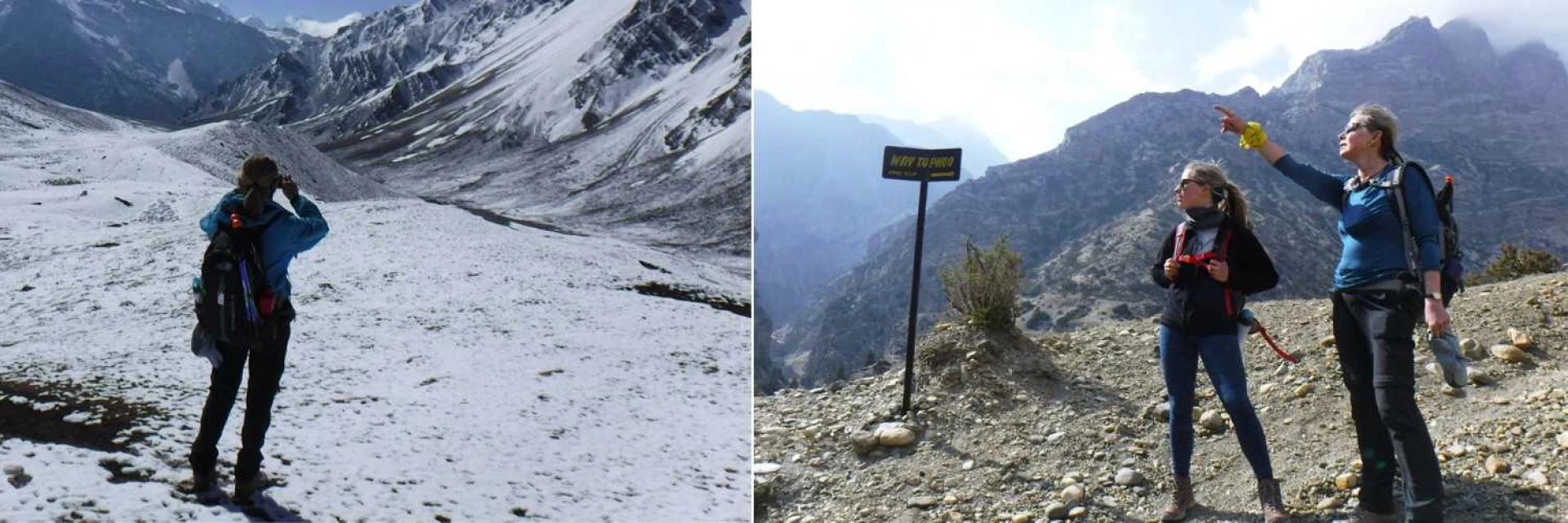
Nepal Trekking without guide is less recommended in Himalayas
From 1 April 2023, the Nepal Tourism Board (NTB) stopped issuing the green Free Individual Trekker (FIT) TIMS card. Without that card, a foreigner can't legally enter most national parks and conservation areas alone. You now have to book through a government-registered trekking agency and walk with a licensed guide or porter-guide.
NTB based the decision on the Nepal Tourism Act 1996 and the TIMS operating guidelines. Its stated reasons were safety, faster rescues, and more local jobs. The trigger was a string of deaths and injuries among independent trekkers, as The Himalayan Times reported in March 2023.
In practice, the rule covers almost every trail most visitors have heard of:
The Everest region is the one big place you can still do Nepal treks without a guide. A few lower, lesser-known trails outside protected areas are the other option.
The Everest (Khumbu) region: the famous exception
Days before the national rule started in 2023, the Khumbu Pasang Lhamu Rural Municipality issued its own notice. It said guides were not compulsory for solo trekkers in its area. The municipality runs its own trek card system instead of TIMS, so it decides who can walk.
That position still holds this season. You can walk to Everest Base Camp, Gokyo Lakes, or over the Three Passes on your own with two permits:
Khumbu Pasang Lhamu Rural Municipality permit: about NPR 3,000, bought in Lukla or at Monjo.
Sagarmatha National Park entry permit: NPR 3,000 plus VAT, bought in Kathmandu or at the Monjo gate.
You don't need a TIMS card for the Khumbu
Here's the honest caveat. Federal officials have never accepted the Khumbu exemption. In late October 2026, a 26-year-old Australian trekking alone fell near Kongma La, the highest of the Three Passes at about 5,535m. He was flown to intensive care in Kathmandu. Officials quoted after the accident called unguided trekking in the Khumbu a breach of the national rule and a cause of preventable rescues.
So the door is open, but it isn't nailed open. Check the current position with the municipality or a trusted Kathmandu contact a few weeks before you fly.
Trails outside national parks and conservation areas
The guide rule is tied to protected-area permits. If a trail doesn't enter a park or conservation area, there's usually no checkpoint asking for a guide. Common examples:
Kathmandu Valley day hikes, such as Champadevi, Nagarkot to Dhulikhel, and Shivapuri (a national park, but day visitors usually just pay the entry fee).
Pikey Peak in lower Solukhumbu (about 4,065m). The standard route sits outside Sagarmatha National Park, though some agencies still insist a guide is needed, so confirm before you go.
Short village walks nearPokhara that stay outside the Annapurna Conservation Area boundary.
These hikes are quieter, cheaper, and lower. They also have fewer signs and fewer teahouses, so offline maps matter even more.
Is Hiking in Nepal Safe Without a Guide?
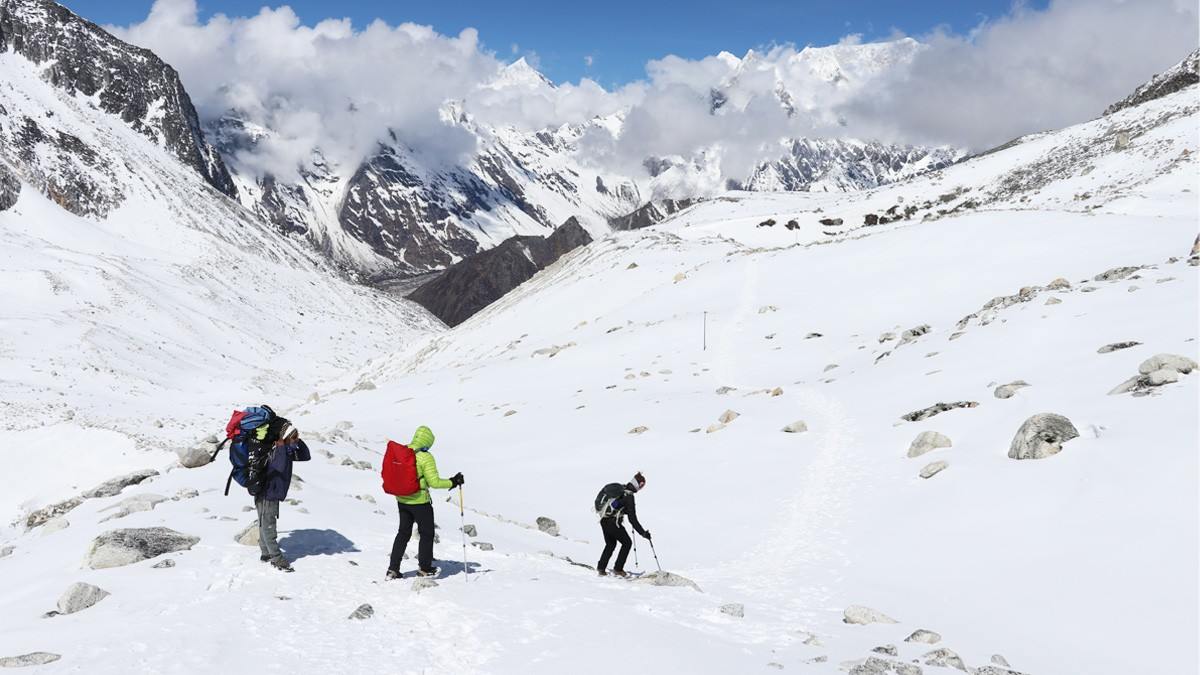
Manaslu Trekking with guide and porter
Nepal is a safe country to walk in when it comes to people. Theft on the trail is rare, teahouse owners look out for guests, and violent crime against trekkers is very unusual. The risks that hurt trekkers come from the mountains, not from other people.
Here's what actually goes wrong, and why being alone changes the picture.
Altitude sickness: Acute mountain sickness can start above about 2,500m, and most popular treks go far higher. EBC sits around 5,364m and Thorong La on the Annapurna Circuit at 5,416m. The danger isn't the headache. It's the confusion that comes with severe cases, when you're the last person able to judge your own state. A guide notices when you stop making sense. On your own, nobody does.
Falls and trail accidents: Moraine, ice on passes, and yak traffic on narrow paths cause most injuries. The Kongma La accident in October 2026 is a good reminder: a fall on a remote pass, alone, at over 5,000m.
Weather: Autumn is the best season, but it isn't guaranteed calm. Late-season storms and cyclone remnants can dump heavy snow on high passes with little warning, as happened more than once this autumn. Teahouse owners and guides hear about closures first.
Getting lost: Main trails like EBC are busy and easy to follow. Side valleys, pass crossings in cloud, and quieter routes are not. Most "missing trekker" stories in Nepal involve someone alone, off the main path.
Rescue delays: Helicopter rescue is good in Nepal, but someone has to call it. If you're injured alone, that someone may not exist for hours.
So, is it safe?
For a fit, experienced hiker on the main Everest trails in peak season, independent trekking is reasonably safe. You'll rarely be more than a few hours from other trekkers or a teahouse. For a first-timer, a high pass, a quiet route, or the off-season, a guide meaningfully cuts your risk. That's not agency marketing. It's simply that two people make better decisions at 5,000m than one.
Tips for Trekking in Nepal Without a Guide (Safely)
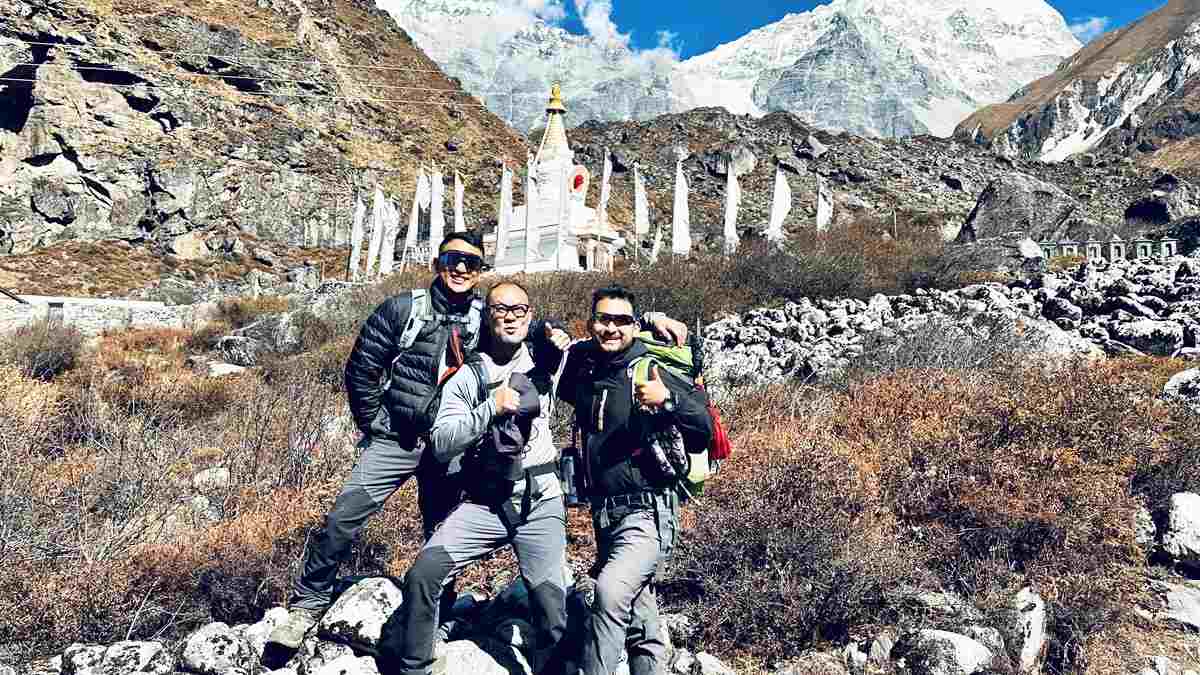
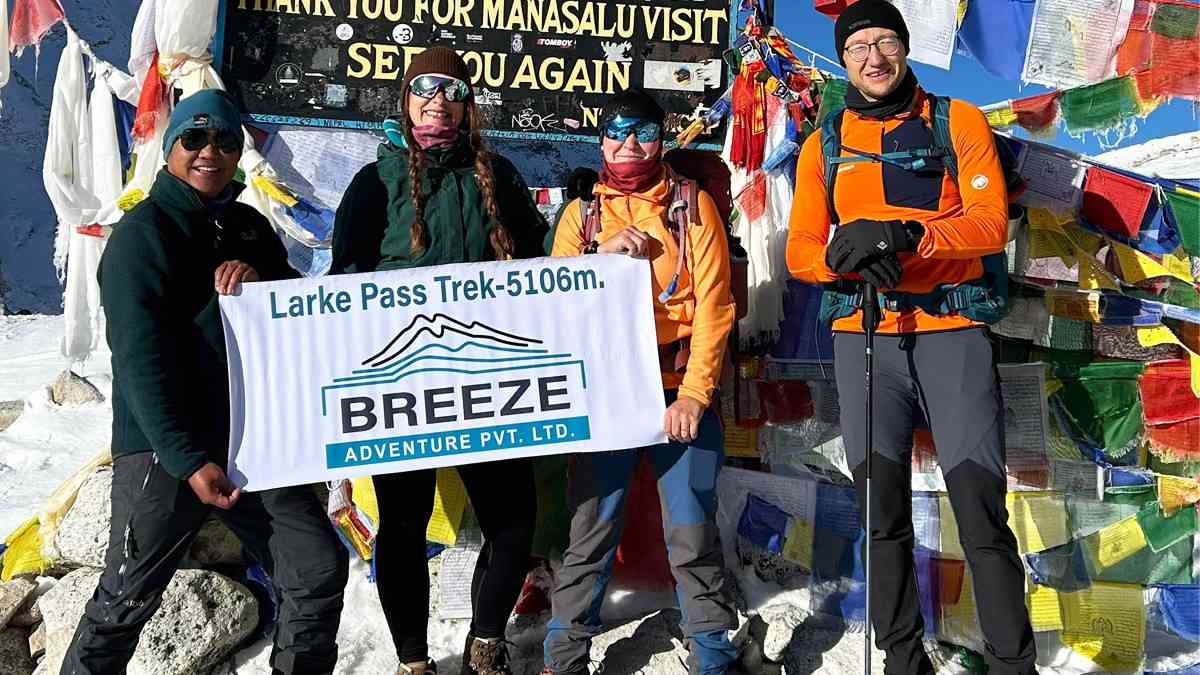
Himalayan Trekking Nepal with Breeze Adventure team
If you're heading to the Khumbu or a trail outside the protected areas on your own, these habits matter more than any piece of gear. Kindly consider the following tips:
Ascend slowly. Above 3,000m, raise your sleeping altitude by no more than about 300 to 500m a night. Take a rest day every three or four days. On EBC, that means proper acclimatisation days in Namche and Dingboche.
Know the warning signs. A headache that won't shift, nausea, stumbling, or confusion means stop. Breathlessness at rest is worse. Descend, even a few hundred metres, rather than waiting it out.
Buy the right insurance. Your policy must cover trekking at your maximum altitude and helicopter evacuation. A rescue above 4,000m can cost several thousand dollars. Carry the policy number and emergency line on paper.
Download offline maps. Maps.me or a similar app with the trail layer loaded works well. Save the teahouse names for each night too.
Get a local SIM. NTC and Ncell both reach much of the EBC trail. Many teahouses also sell Wi-Fi cards.
Tell someone your plan. Leave your route with your Kathmandu hotel or embassy registration, and tell each teahouse owner where you're heading next.
Never cross a high pass alone in bad weather. Wait a day, or join other trekkers going over. Kongma La, Cho La and Renjo La are not places to be stuck in clouds by yourself.
Start early. Weather in the high Himalaya usually turns in the afternoon. Aim to finish the day's walk by early afternoon.
Carry cash. ATMs above Namche are unreliable or absent. Bring enough rupees for food, lodging, hot showers, and charging, plus a buffer for weather delays.
Know where the help is. The Himalayan Rescue Association runs aid posts at Pheriche on the EBC trail and Manang on the Annapurna Circuit during peak seasons.
Final Thoughts: Should You Trek Nepal Without a Guide?
The best way to trek in Nepal is through a registered agency. You will have a relaxed vacation with the agency doing all the paperwork and necessary arrangements on your behalf. Also, we ensure safety, emergency evacuation, and assistance at every step till the last day of the trip. This is more secure, full of special memories, and a lifetime of experience. We manage altitude sickness with an oxygen tank, experienced teammates, and timely rescue if needed.
Still, if your heart is set on walking alone, the Everest region is your best bet, and it's a genuinely good one. The trails are busy, teahouses are everywhere, and you'll meet other trekkers every hour. Go in spring or autumn, acclimatise properly, and don't cross the high passes alone in poor weather.
For everywhere else, the question is already answered. Annapurna, Langtang, Manaslu and the restricted areas need a licensed guide, and that isn't changing any time soon. The good news is that a porter-guide costs less than many people expect. A good one will make your trek better, not just legal.
Rules in Nepal can shift between seasons, sometimes with little notice. Check with the Nepal Tourism Board, your agency, or the relevant local municipality a few weeks before you fly.
Kishwor Adhikari is a passionate writer with a deep enthusiasm for trekking and adventure. His extensive travels across Nepal, exploring its diverse landscapes and hidden corners, have shaped his unique perspective on the country's natural beauty. With a wealth of first-hand experience in adventure trekking, Kishwor has become a trusted voice for fellow enthusiasts. Through his writing, he shares invaluable insights, offering practical advice and inspiration for both seasoned trekkers and novices alike. His dedication to sharing his journey and knowledge helps others discover the wonders of Nepal's wilderness, making his work an essential resource for anyone seeking adventure in the region.