Mardi Himal is a short but wild ridge that you complete in just five days. In this trek, you climb from warm, leafy forests to a narrow ridge at an altitude of 4,500 m. It is much steeper than the famous Everest walks. Because the path is so vertical, packing light for Nepal is the only way to keep your sanity while scrambling up those stone steps.
Similarly, the weather here is a total mood swing. One hour, you are sweating through a humid jungle, and the next, a freezing fog rolls in from the peaks. Your knees will definitely feel the Mardi Himal trek difficulty on the trail. So, if you bring the wrong layers, you’ll either be a shivering mess at the viewpoint or a heat-stroked hiker in the woods.
This guide helps you get the right gear, making your journey smooth and blissful. Kindly follow the Mardi Himal Trek Packing List below to ensure a successful trek.
Table of Contents
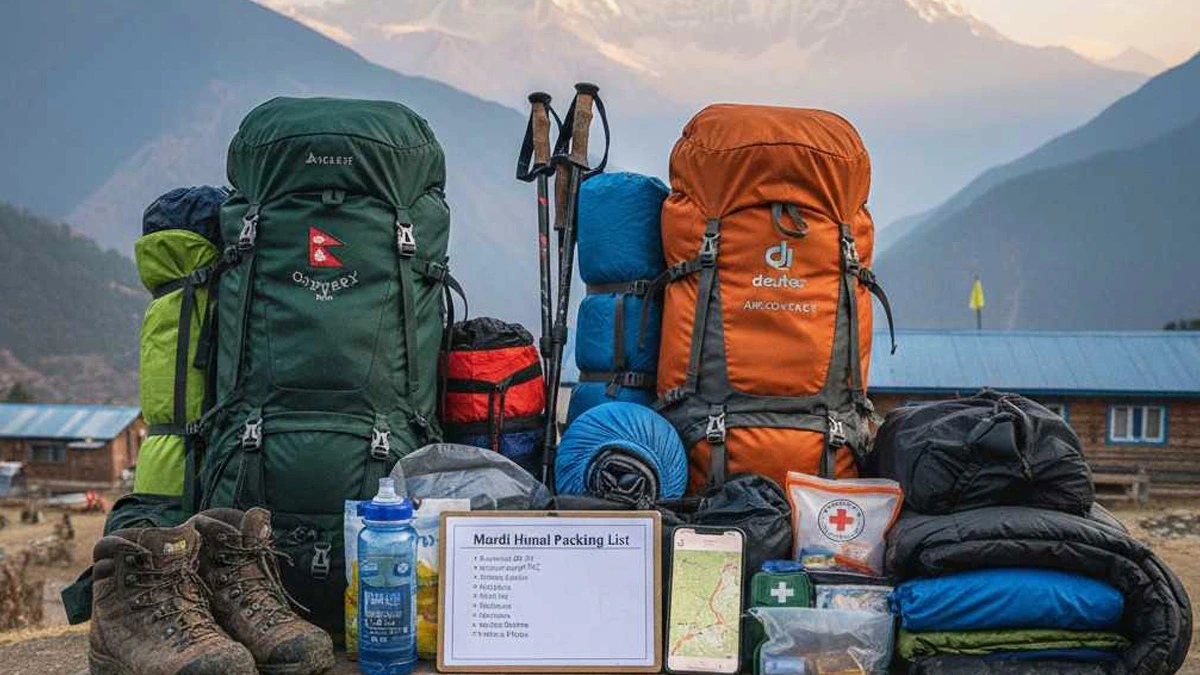
The right backpack not just makes a journey smooth, but can be a savior in different phases. Your Nepal travel preparation, training, and mental readiness include good packing, too. Here are the major things to include in your trekking bag:
Right backpack for Mardi Himal Trek Nepal
The Layering System: Clothing (Top Priority)
Getting your layers right is the only way to survive the "mountain mood swings." Here is the breakdown of exactly what to put on your body, layer by layer.
Base Layers: The Sweat-Wickers
Your skin needs to stay dry to stay warm. Here are the right base layers to keep you protected:
2 Merino Wool Long-Sleeves: Keeps you dry and protects arms from the sun.
2 Synthetic T-shirts: Good for the lower, hotter jungle sections.
Thermal Leggings: Essential for sleeping in freezing teahouses.
Mid Layers: The Heat Trappers
This layer is all about insulation to trap your body heat inside. This is helpful while you’re resting at a teahouse or hiking through the shaded forest.
1 Mid-weight Fleece Jacket: Lightweight, breathable, and dries quickly.
1 Pair of Trekking Pants: Choose "zip-off" versions if you want to switch to shorts easily.
Outer Shell: The Shield
The wind on the Mardi Himal ridge is no joke. You need a "hard shell" that acts as a wall against freezing weather or sudden rain.
1 Waterproof/Windproof Jacket: Ensure it has a hood and "pit zips" for ventilation.
1 Pair of Rain Pants: Essential if you’re trekking during the shoulder months.
The "Must-Have": The Summit Specialist
When you hit the High Camp, your thin layers won't be enough. You need a serious down jacket for Mardi Himal to keep your core warm during the final sunrise push.
1 Heavy Down Jacket: Must be rated for at least $-10$°C.
Packable Stuff Sack: To squash the jacket down into your bag when not in use.
Choosing the wrong footwear can be even more dangerous than missing a flight. On the Mardi Himal trail, you aren't just walking; you are climbing thousands of stone stairs. So, your footwear needs to be a fortress for your feet, but a comfortable one.
Right footwear is necessary for rough trails in higher altitude
Hiking Boots: Your Main Wheels
The best hiking boots for Nepal are ones you have already worn for at least 30-40 km back home. You need mid-to-high cut boots with solid ankle support. This is good for the descent from High Camp to Siding. Kindly pack,
1 Pair of Waterproof Hiking Boots: Look for Gore-Tex lining and a "Vibram" sole for grip on wet stones.
Spare Laces: Because snapping a lace at 4,000m is a headache you don't need.
In such high-altitude remote trekking, a snowy path is no surprise. Even on sunny days, you may experience snow hiking in Nepal at higher elevations. So, strong and supportive boots are a must.
Camp Shoes: The Teahouse Relief
After eight hours in heavy boots, your feet will be screaming for freedom. Camp shoes for teahouses should be lightweight and easy to slip on. Mostly for those midnight bathroom runs.
1 Pair of Crocs or Lightweight Sandals: Perfect for wearing with thick socks inside the lodge.
Flip-flops: Ideal if you’re brave enough to take a shower in the lower camps.
Socks: The Blister Barrier
High-quality trekking socks prevent blisters by keeping your feet dry and reducing friction. I always carry one "sacred" pair of thick thermal socks that never leave the teahouse. They are strictly for sleeping and staying warm at night.
3-4 Pairs of Merino Wool Socks: These dry fast and don't hold onto odors.
1 Pair of Heavy Thermal Socks: Your "sleeping socks" for the freezing nights at High Camp.
2 Pairs of Thin Liner Socks: (Optional) Wear these under your main socks if you are very prone to blisters.
Technical Gear & Equipment
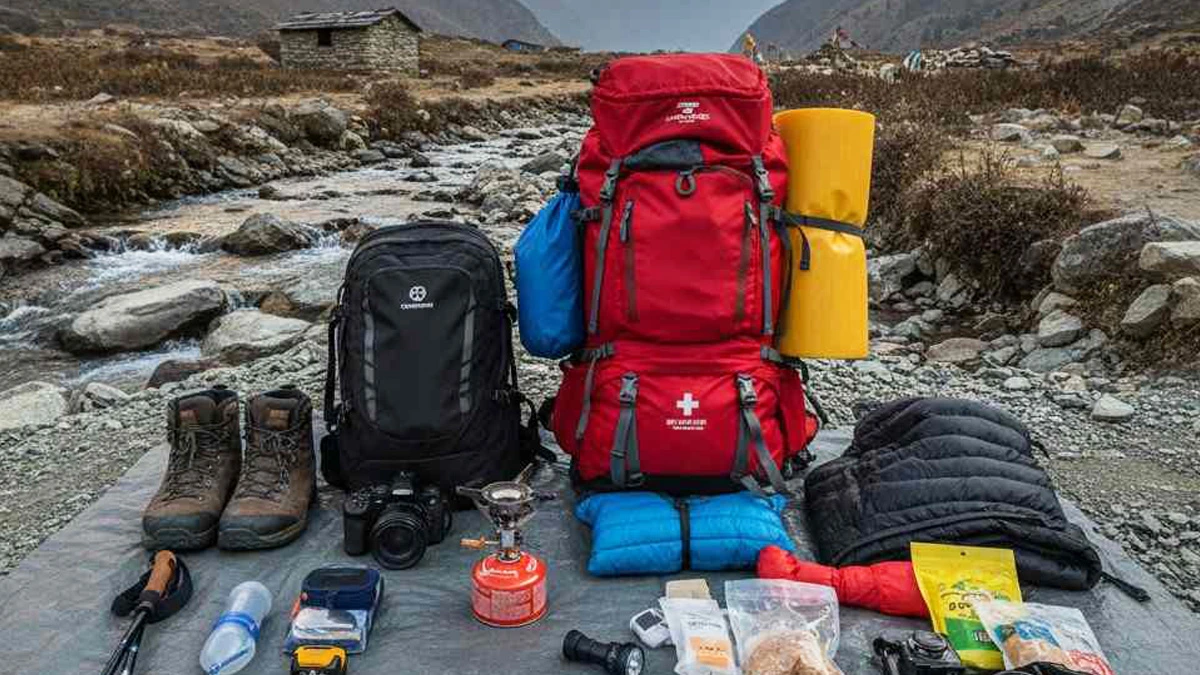
Technical gears for Mardi Himal Trek
When you're hiking the Mardi ridge, you aren't just a tourist; you’re a temporary resident of the Himalayas. Hence, it is necessary to pick the right technical gear. This isn't about looking fancy, it’s about having a second set of hands.
Backpack: Your Mobile Home
A backpack size for Mardi Himal should be between 35L and 45L. Anything bigger and you'll tempt yourself into overpacking; anything smaller and you'll be struggling to stuff your down jacket inside every morning.
1 Backpack (35-45L): Must have a padded hip belt to take the weight off your shoulders.
Rain Cover: Essential for the forest section, where mist can turn into a soak in minutes.
Dry Bags/Zip-locks: To double-proof your electronics and dry socks inside the bag.
One of the biggest trekking poles benefits is balance on the narrow sections of the Mardi ridge. But the real reason they are non-negotiable is the descent, dropping 2,000 m in a single day back to Siding.
1 Pair of Collapsible Poles: Look for "lever locks" rather than twist locks, which can freeze and get stuck.
Sleeping Bag: Your Hygiene Shield
Even though teahouses give you blankets, they aren't washed after every guest. A sleeping bag rental in Pokhara is much more hygienic and will keep you toasty when the teahouse walls feel like blocks of ice.
1 Four-Season Sleeping Bag: Rated for $-10$°C minimum for High Camp.
Silk Liner: (Optional) Adds an extra layer of warmth and keeps your rental bag clean.
Headlamp: The Path Finder
You cannot do the 4:00 AM push to the Mardi Himal Viewpoint without good light. You need both hands free to scramble over rocks, so a phone flashlight just won't cut it in the pre-dawn freezing dark.
1 LED Headlamp: Aim for 300+ lumens so you can actually see the trail markers.
Spare Batteries: Cold air drains power fast; keep these in your pocket close to your body heat.
Electronics & Power
Modern trekking is as much about managing your batteries as it is about managing your breath. These days, the teahouses on the Mardi route are more connected than ever, but electricity is still a precious (and expensive) commodity once you pass Forest Camp. Kindly include the power bank in your bank.
Power Bank: Your Personal Grid
The best power bank for trekking is a 20,000mAh brick that can survive the cold. High Camp often charges $3 to $5 just to charge up your phone for an hour. Hence, bringing your own fuel pays for itself by day three.
1 20,000mAh Power Bank: Look for brands like Nitecore or Anker that handle low temperatures without draining.
Insulated Case: Tuck your power bank into a spare wool sock or your sleeping bag at night; cold air is a battery killer.
Universal Adapter: Making the Connection
While many modern lodges now have multi-sockets, you’ll still run into the classic round-pin outlets in older teahouses. Packing the right adapter reduces stress in remote mountain journey.
1 Universal Adapter: Ensure it supports Type C (two round pins) and Type D (three round pins).
Multi-USB Plug: A single wall plug with 2-3 USB ports lets you charge your phone, watch, and camera at the same time from one outlet.
Offline Maps: Navigating the Fog
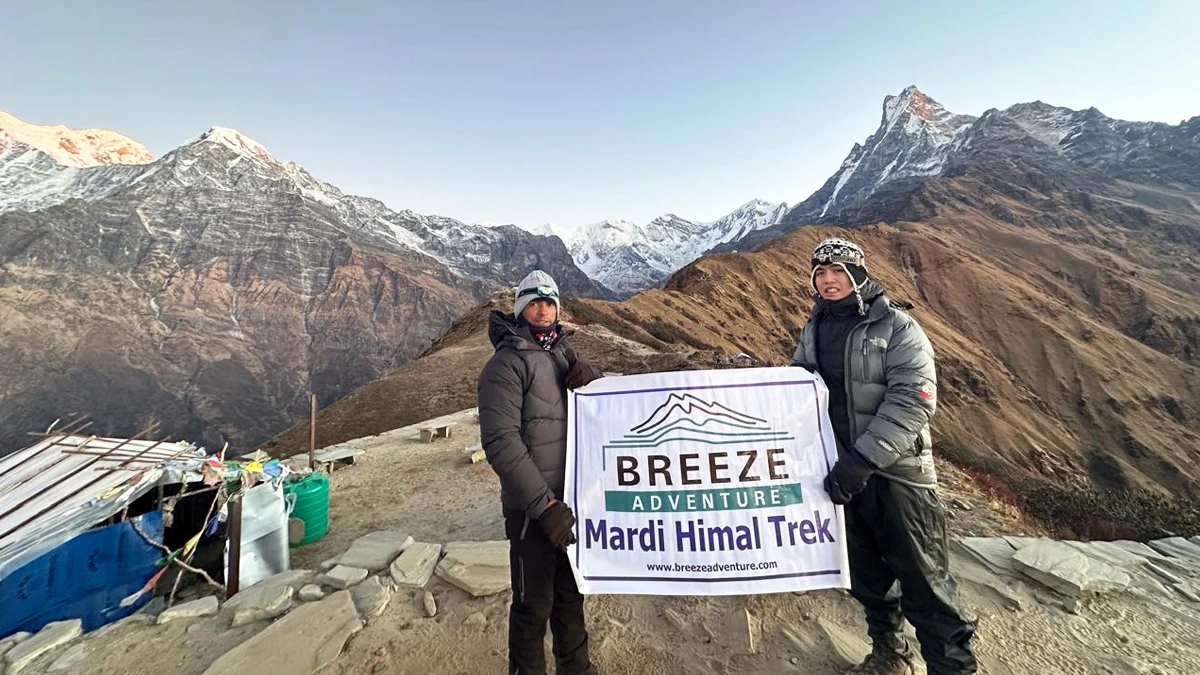
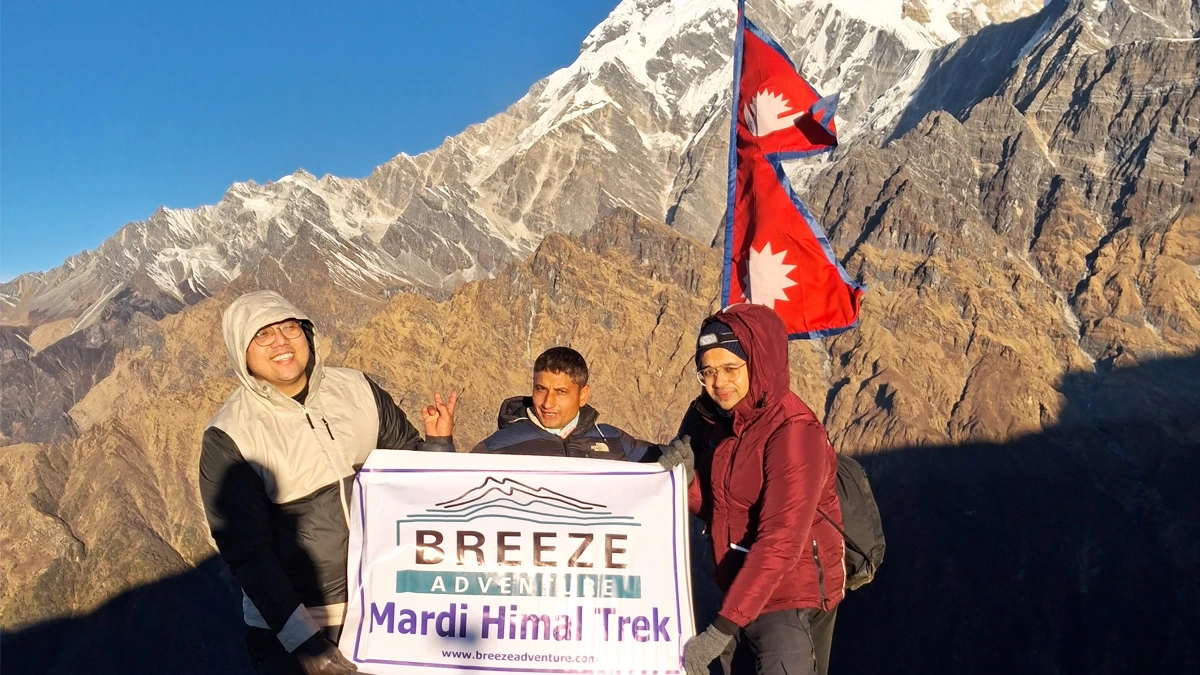
Breeze Adventure Team in Mardi Himal Trek
Don't count on having 4G/5G on the narrow ridge sections. Just download the maps while you’re still in Pokhara. This helps you see your exact GPS location even when you’re in total airplane mode to save battery.
Maps.me: The holy grail for Nepal; it shows tiny forest paths and even water taps that Google Maps misses.
AllTrails (Pro): Great for checking elevation profiles so you know exactly how many "false summits" are left before the viewpoint.
Organic Maps: A fantastic, privacy-friendly alternative to Maps.me that works 100% offline with zero ads.
Health, Hygiene & First Aid
Maintaining your health is the secret sauce for a successful trek. At high altitudes, small scratches can get infected easily, and the sun can burn you twice as fast as it does on the beach. Here is your mountain medicine cabinet and hygiene kit.
Water Purification: Staying Hydrated Safely
Avoid buying plastic bottles on the trail to help keep the Himalayas clean. You can use simple tablets or a filter that lets you refill from any teahouse tap for free.
Chlorine Dioxide Tablets: Lightweight and effective against all bacteria and viruses.
LifeStraw or Sawyer Squeeze: Great for drinking directly from streams or taps.
1L Reusable Water Bottle: Nalgene bottles are perfect because they can also hold hot water at night.
Altitude Meds: Breathing Easier
Altitude sickness prevention for Mardi Himal starts with walking slowly. But sometimes your body needs a little extra help. Many trekkers carry Diamox to speed up acclimatization, but you must consult your doctor before the trip to check if it’s right for you.
Diamox (Acetazolamide): Helps your body adjust to the thinning air.
Paracetamol/Ibuprofen: For those inevitable altitude-induced headaches.
Electrolyte Powder: Keeps your minerals balanced when you're drinking 4L of water a day.
Sun Protection: The High-Altitude Shield
The UV rays at 4,000 m are incredibly intense and can peel your skin in hours. Hence right sun protection kits are helpful.
Sunscreen (SPF 50+): Small tube for your face and neck.
Polarized Sunglasses: Essential to prevent "snow blindness" and eye strain.
SPF Lip Balm: Keep this in your pocket for constant application.
Toiletries: The Mountain Shower
Hot showers are rare and expensive at High Camp. So, you may learn to love the wet wipe wash. Kindly use eco-friendly trekking toiletries to ensure that your greywater doesn't poison the local streams or forest.
Biodegradable Soap: Good for a quick sink-wash of your socks or body.
Large Wet Wipes: Your best friend for feeling human after a long day of sweating.
Microfiber Towel: Dries in minutes and packs down to the size of a lemon.
Pro-Tips: Packing Smart & Sourcing Gear
Kindly consider the tips below to do a smart and effective packing:
Follow the "Two-Set Rule": One outfit for trekking, one dry set for the teahouse.
Aim for 8-10 kg: This is the "sweet spot" weight for your backpack.
Wear your boots on the bus: Save space and weight in your bag by wearing your heaviest gear.
Skip the "Just-in-case" items: If you didn't use it in training, leave it in Pokhara.
Use compression sacks: Squash your down jacket and fleece to half their size.
Rent instead of buying: Rent sleeping bags and down jackets at Ganga Purna View Trekking Shop (Lakeside).
Buy local brands: Check out brands for high-quality, affordable Nepali gear.
Get meds locally: Buy Diamox and blister tape at any Lakeside pharmacy for a fraction of the price.
Pack a "Sacred" pair of socks: Keep one thick pair of thermal socks strictly for sleeping so they stay dry.
Decant your toiletries: Use tiny travel bottles for sunscreen and soap.
Download Organic Maps/Maps.me: Don't rely on the cloud; have your trail maps ready offline.
Final Words
With the right Mardi Himal trek packing list, you will enjoy that final 4,500 m sunrise with fun. Just ensure you have a merino wool base layer, a solid down jacket for Mardi Himal, and broken-in boots in your bag. You can keep your backpack size for this trek under 10kg. Pack smart, lean on local rentals in Pokhara, and you’ll find that packing light for Nepal is the best way to conquer this steep, stunning ridge.
Kishwor Adhikari is a passionate writer with a deep enthusiasm for trekking and adventure. His extensive travels across Nepal, exploring its diverse landscapes and hidden corners, have shaped his unique perspective on the country's natural beauty. With a wealth of first-hand experience in adventure trekking, Kishwor has become a trusted voice for fellow enthusiasts. Through his writing, he shares invaluable insights, offering practical advice and inspiration for both seasoned trekkers and novices alike. His dedication to sharing his journey and knowledge helps others discover the wonders of Nepal's wilderness, making his work an essential resource for anyone seeking adventure in the region.