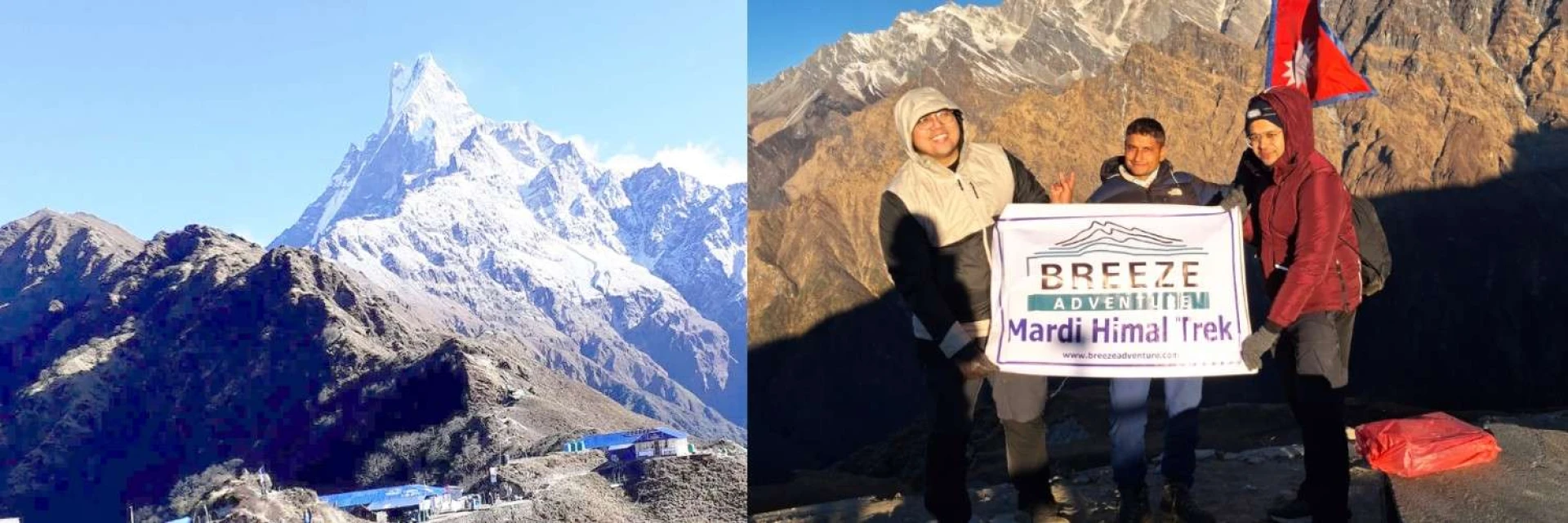
If Mardi Himal is next on your list, then you have made the right decision. It’s a smart choice, honestly. This hidden ridge above the Annapurna foothills offers some of the most dramatic close-up views of Machhapuchhre, Annapurna South, and Hiunchuli, without the crowds that mob the classic routes. But before you lace up those boots and head to Pokhara, there's one thing you absolutely cannot skip.
That’s Permits. Yes, Mardi Himal Trek Permits.
Getting your paperwork wrong - or worse, showing up at a checkpoint without the right documents - can get you turned back. Not just that, you may be fined, or forced off the trail entirely. That's not how anyone wants their Himalayan adventure to go, right?
So let's break it all down clearly. What permits you need, how much they cost in 2026, where exactly to get them, and a few practical tips that most blogs forget to mention. Based on my experience, I will simplify all the permits and paperwork for the Mardi Himal Trek Nepal. This definitely helps you make the right decision.
Table of Contents
Do You Actually Need a Permit for Mardi Himal Trek?
Yes. No exceptions.
The Mardi Himal trek permit 2026 requirement includes the Annapurna Conservation Area Permit (ACAP) as the main requirement. Since the entire trail runs through the Annapurna Conservation Area, every foreign trekker must carry a valid ACAP permit Mardi Himal.
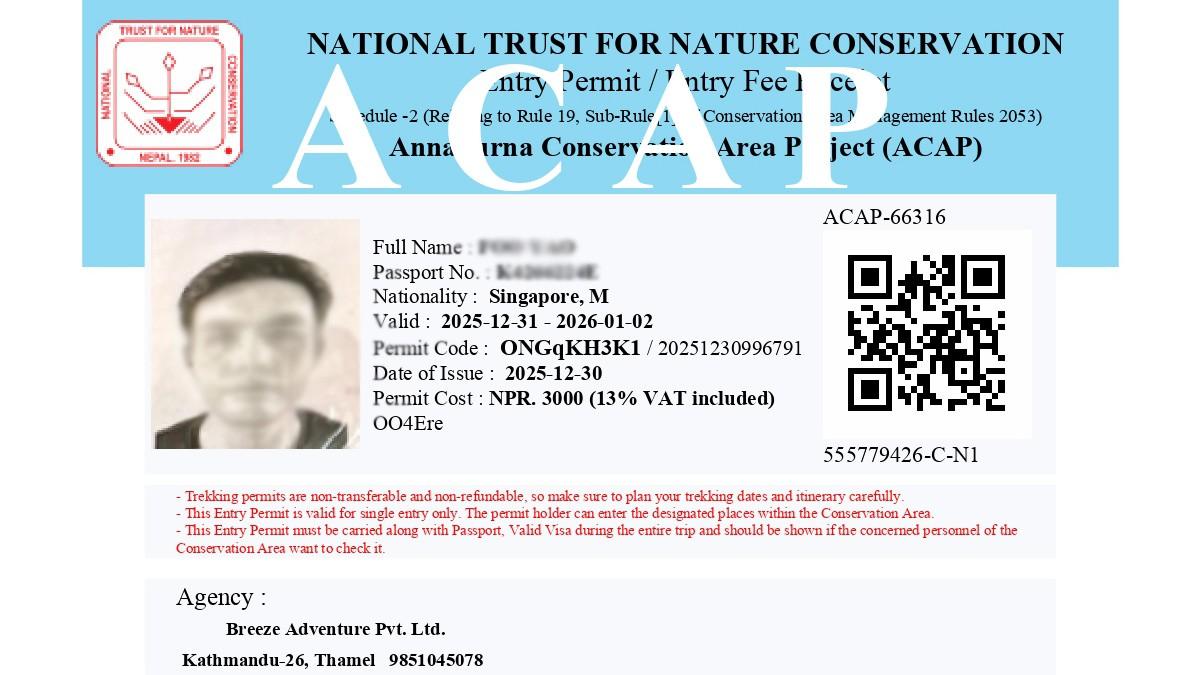
Mardi Himal Trek Permit sample
Nepal's mandatory guide policy, enforced since April 1, 2023, applies to all non-Nepali trekkers on the Mardi Himal route and requires guide assignment through a government-registered trekking agency. So if you were planning to head out solo based on an old blog from 2021, that information is outdated. Things have changed. The trail is still stunning, the teahouses are still warm, but the rules have changed now.
There's also a lot of confusion out there. Older pre-2023 blogs still describe Mardi Himal as a solo-friendly trek, while the March 2026 update on restricted area permits was widely misunderstood as a nationwide return of independent trekking. Mardi Himal was not included in that change because the route operates under Annapurna Conservation Area rules, not restricted area permit rules.
So, kindly get a licensed guide, get your permits, and enjoy the mountains with zero stress.
The Two Main Mardi Himal Trek Permits You Need in 2026
Here are the two major permits for this trek, check out:
1. ACAP – Annapurna Conservation Area Permit
This is the big one. The ACAP is non-negotiable for anyone entering the Annapurna Conservation Area, which includes the entire Mardi Himal route.
Yes, the ACAP is a mandatory trekking permit needed as the whole route lies within the Annapurna Conservation Area. Let me tell you, this is Nepal's first and largest protected area. Further, this permit was established in 1986 to protect this fragile Himalayan ecosystem.
Here's something useful, though. This single permit grants you legal access to trek anywhere within the Annapurna Conservation Area. It doesn't matter if you're doing the 15-day Circuit, the 7-day Base Camp trek, the 5-day Mardi Himal route, or the 4-day Ghorepani loop. One permit covers them all. So if you're combining treks, you don't have to buy separate ACAP permits for each one.
The ACAP permit is issued by the National Trust for Nature Conservation (NTNC) and costs NPR 3,000 (approximately USD 22) for foreign nationals and NPR 1,000 for SAARC citizens.
Your money doesn't just disappear into a bureaucratic black hole either. Your ACAP permit Mardi Himal fee directly supports conservation work, trail maintenance, community development, and wildlife protection throughout the region. Think of it as your contribution to keeping these mountains exactly as breathtaking as they are today.
Let’s talk about the one important detail many people miss. Permits are paid only in Nepalese Rupees (NPR) cash. Permit offices accept no card payments. So, carry cash. Seriously. Don't assume you can tap your Visa at a permit counter in the mountains.
2. TIMS Card – Trekkers' Information Management System
The TIMS situation in 2026 is honestly a bit confusing, depending on which source you read. Some say it's mandatory, others say it's recommended. Here's the clearest picture based on the latest information.
TIMS is a database system designed to safeguard hikers' safety and security in Nepal. It aids in the tracking of trekkers in the event of an emergency and offers significant details about their locations during the walk.
Practically speaking, for foreign nationals, the total cost is around NPR 5,000 (~USD 38): NPR 3,000 for the ACAP and NPR 2,000 for the TIMS card Nepal trekking. If you're trekking through a licensed agency, TIMS might cost only NPR 1,000. Wow, isn’t that amazing?
Actually, the TIMS Card is available in two colors: green for independent hikers and blue for organized hikers. Since you're now required to trek with a guide anyway, you'll most likely be getting the blue card through your agency.
Even if requirements shift slightly before your trip, getting the TIMS card is just smart. It's a safety net. If something goes wrong up at Mardi High Camp or near Mardi Base Camp, rescue teams know exactly where to look.
Local Municipality Fee in Mardi Himal Trek
This is the one most people always forget. Yes, it’s a third charge that surprises almost every first-time trekker on this route.
The local municipality fee is a small, separate charge used to fund community development and keep the trails in good shape. For the Mardi Himal Trek cost, this fee is collected by the Machhapuchhre Rural Municipality. You'll usually pay this at a checkpoint along the route, specifically near Kande or as you head toward High Camp.
The money goes directly back into the local area, supporting everything from better trail signage and emergency shelters to clean water systems for the mountain villages.
The Machhapuchhre Rural Municipality local fee adds NPR 3,500–5,500 (USD 26–41), collected at checkpoints along the trail. Budget for this separately. It's not part of what your trekking agency typically covers upfront.
Most trekkers arrange their permits at the ACAP Permit Counter located at Damside in Pokhara. If you want this in Kathmandu, you can obtain it at the Tourism Office in Bhrikutimandap. Both offices are open from 9:00 AM to 5:00 PM, Sunday to Friday, excluding public holidays.
Pokhara makes the most sense logistically. You're already there the night before the trek. You can grab permits in the morning, have a nice lakeside lunch, and get an early night before the trail begins. It’s easy.
Option 2 - Kathmandu
If you are starting your trek in Kathmandu, you will want to head to the NTB for your ACAP and TIMS permits. Sorting your permits in Kathmandu means one less thing to think about in Pokhara.
It's recommended to obtain permits in Kathmandu Valley for efficiency, as Pokhara's offices may have longer queues during peak seasons (March–April, October–November).
Option 3 - Through a Registered Agency
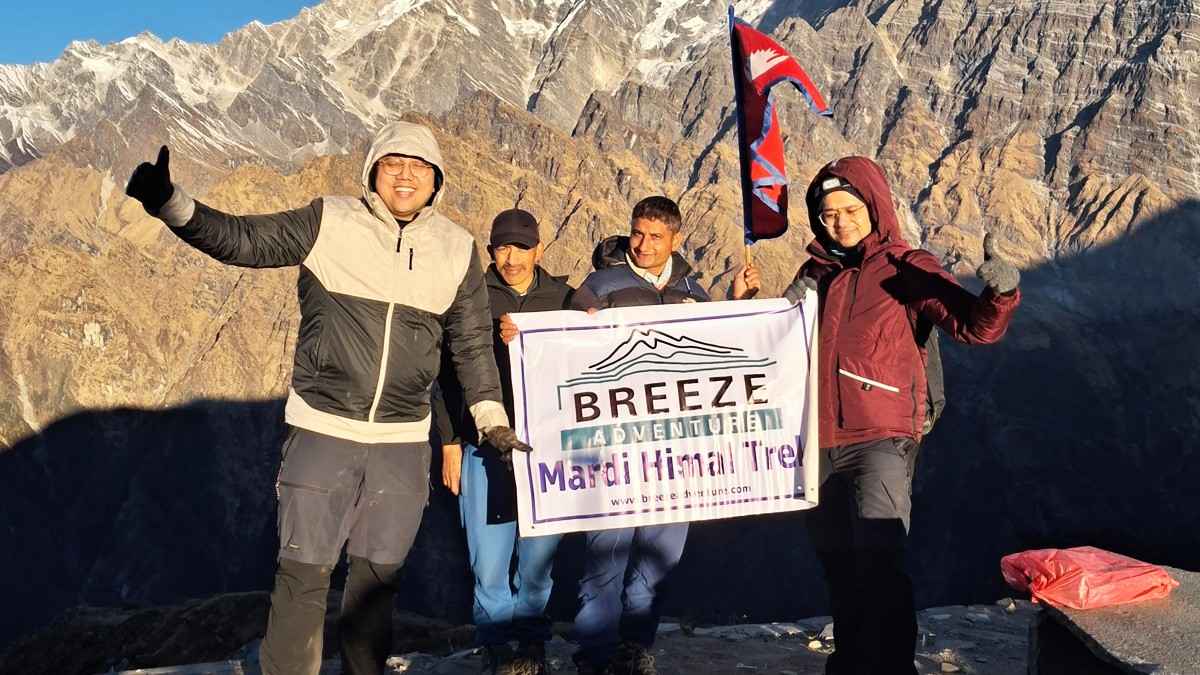
Breeze Adventure team in Mardi Himal Trek Nepal
If you'd rather skip the queues and the paperwork altogether, just have a registered trekking agency take care of it. This is easily the most stress-free route, especially since a licensed guide is now mandatory for the Mardi Himal Trek.
Most packages from reputable agencies in Pokhara and Kathmandu already include permit handling as part of their service. You hand over your passport details and photos, and they sort everything out. It’s done.
What to bring when applying for Mardi Trek Permits:
Quick Mardi Himal Trek Permit Cost Summary for 2026
Permits
Foreign Nationals
SAARC Nationals
ACAP
NPR 3,000 (~USD 22)
NPR 1,000
TIMS (Solo)
NPR 2,000
NPR 1000
TIMS (Agency)
NPR 1,000
NPR 500
Local Municipality Fee
NPR 3,500–5,500
varies
Keep these figures handy. Prices can shift slightly, so always confirm at the official office before paying.
Tips to Avoid Common Permit Mistakes
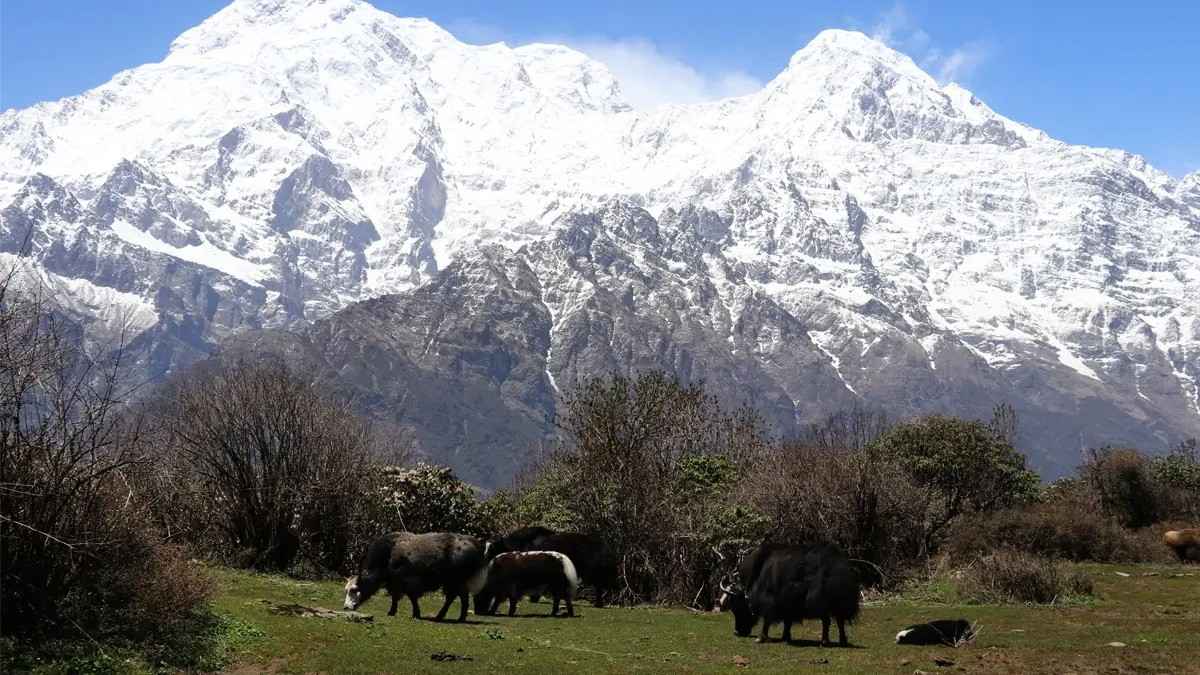
Animals grazing in Mardi Himal Trek Route
Even though you start trek with a registered travel agency, having knowledge of certain things makes sense here. Just consider these:
Start early
Start your trek early, especially during peak season. In March to April and October to November, permit counters get crowded. Show up right when they open. Mardi Himal weather by month helps you get an idea about the temperature and weather up there.
Carry physical copies, always
Keep both printed and electronic copies of all your permits. Checkpoint officers want to see them in hand, not on a phone screen that might be low on battery at 4,000 meters.
Double-check your details
The permit will be issued the same day. Double-check that your name, passport number, and trek dates are correct. A small typo can cause real headaches at checkpoints.
Don't trek without valid permits
Trekking without a valid ACAP permit could get you fines. You may be prohibited from entry at checkpoints and compelled to evacuate. Not worth the risk.
Travel Insurance
Travel insurance Nepal is not a permit, but treat it like one. It should cover high-altitude trekking (up to 4,500 meters), medical emergencies, trip cancellations, and helicopter rescues. Helicopters to Mardi Base Camp cost a lot of money without coverage.
Final Thoughts
Mardi Himal is one of Nepal's best-kept secrets, and slowly, the world is catching on. The trail gives you front-row views of the Annapurna range from a ridge that feels almost too good to be real. But getting there starts with getting your paperwork right.
The ACAP permit is mandatory, the TIMS card is highly recommended, the local municipality fee will catch you at the checkpoint, and a licensed guide is now required by law. Budget roughly USD 40–60 for all your permit costs, carry NPR cash, bring your passport photos, and sort everything out in Pokhara or Kathmandu at least a day before you start walking.
That's it. Permits sorted, trail is open, mountains are waiting. Now go, you will have the best time of your life.
Kishwor Adhikari is a passionate writer with a deep enthusiasm for trekking and adventure. His extensive travels across Nepal, exploring its diverse landscapes and hidden corners, have shaped his unique perspective on the country's natural beauty. With a wealth of first-hand experience in adventure trekking, Kishwor has become a trusted voice for fellow enthusiasts. Through his writing, he shares invaluable insights, offering practical advice and inspiration for both seasoned trekkers and novices alike. His dedication to sharing his journey and knowledge helps others discover the wonders of Nepal's wilderness, making his work an essential resource for anyone seeking adventure in the region.