
The Mardi Himal Trek sits in the eastern part of the Annapurna region, on a ridge that most trekkers walk straight past on their way to Annapurna Base Camp. That is exactly what makes it worth doing.
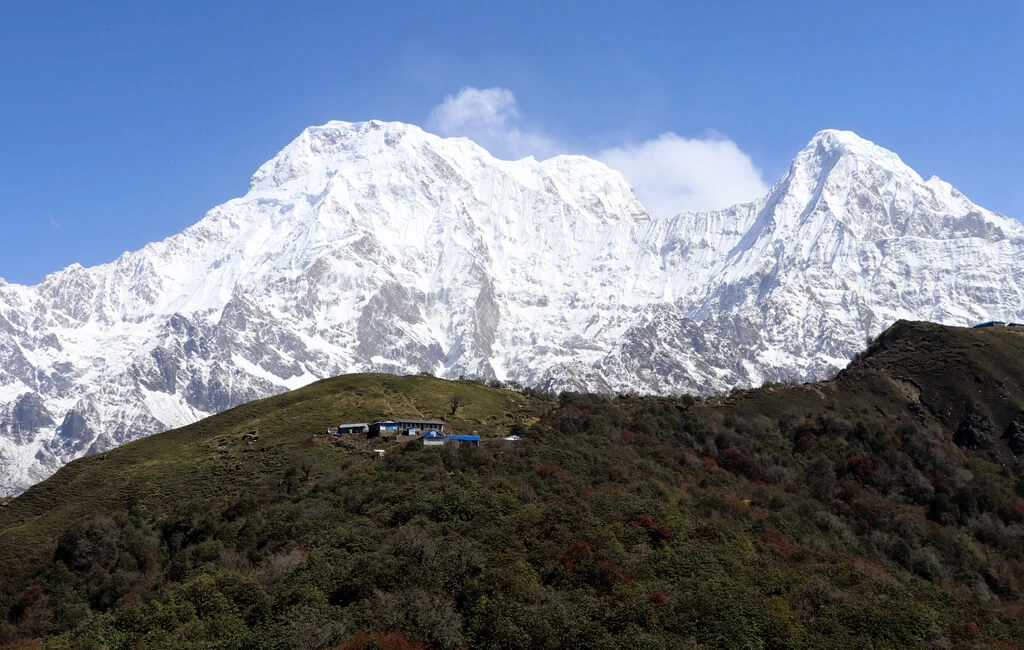
The trail climbs from dense rhododendron and oak forests, bright red in spring, impossibly green in autumn, up onto an open alpine ridge at around 4,500m. From the Upper Viewpoint, you see Mardi Himal (5,587m) close enough that it feels almost too near, with Machhapuchhre (6,993m), Annapurna I (8,090m), Annapurna South (7,219m), Hiunchuli (6,441m), Baraha Shikhar (7,647m), and Singu Chuli (6,501m) spread out behind it. Few short treks in Nepal put you this close to this many peaks.
The loop descends to Siding village, a different path down from the one you took up, which keeps the return journey fresh rather than a rerun. From Siding, you drive back to Pokhara — the whole trip starts and ends there, so there are no complicated logistics from Kathmandu.
Trekking is possible year-round, but the two best windows are spring (March to May), when the rhododendrons are in full bloom, and the trails have color, and autumn (September to November), when skies are clearest, and mountain views are sharpest. Winter treks (December to February) are possible for those who don't mind cold nights, and the trails are very quiet. Monsoon (June to August) is manageable, but the views suffer.
Which duration is right for you?
The Mardi Himal trek can be done in 2 to 5 days, depending on your schedule, fitness, and how much of the journey you want to experience. Here is an honest comparison:
Duration | Best for | Daily walking | Difficulty | Price from |
Experienced trekkers, very tight schedule | 6–7 hrs | Moderate–Hard | $220 | |
Previous hiking experience, good pace | 5–6 hrs | Moderate | $250 | |
Most trekkers, comfortable pace | 4–5 hrs | Easy–Moderate | $399 | |
First-timers, relaxed pace, best acclimatization | 3–5 hrs | Easy–Moderate | $450 |
Not sure? Most first-time visitors to Nepal choose the 4-day or 5-day option. The extra days aren't just padding — slower altitude gain makes the difference between a comfortable summit and a headache at High Camp. If you have done multi-day treks before and are reasonably fit, the 3-day is a solid choice. The 2-day is genuinely rushed and best left to trekkers who know what they are signing up for.
What you will see on the trail
The first section from Kande climbs through subtropical forest. Oak and rhododendron close in on both sides, and in March and April, the red of the rhododendron trees is striking enough that people stop and photograph it more than the mountains. The forest path is quiet — noticeably less foot traffic than the main Annapurna routes.
As you gain altitude, the trees thin out, and the ridge opens up. This is where the landscape shifts completely. Grazing meadows, wide views, cold, clean air. The trail runs along the ridge spine for most of the upper section, so you have mountain views on both sides for long stretches.
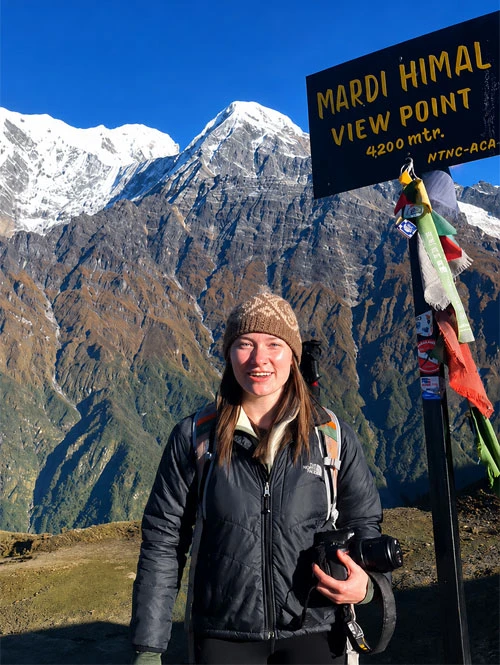
The Upper Viewpoint at around 4,200m is the highlight of the trek. On a clear morning, the peaks feel impossibly close. Mardi Himal Base Camp, a further two hours from the viewpoint at 4,500m, adds extra altitude and an even more exposed position looking directly up at Machhapuchhre's south face.
Badal Danda (Cloud Hill, roughly 3,210m) is one of the underrated stops — a ridge point where valley clouds often sit below you at dawn, with the peaks rising above. Many trekkers say this sunrise is better than the one at Base Camp.
Difficulty and fitness
The Mardi Himal Trek is rated moderate and is suitable for people with a reasonable general fitness level. You do not need technical climbing experience or prior high-altitude trekking.
What to expect:
- Maximum altitude: 4,500m (Mardi Himal Base Camp)
- Daily walking: 3–7 hours, depending on your chosen itinerary
- Trail type: Well-marked paths, some steep sections on ascent and descent
- Altitude gain: Gradual on 4 and 5-day itineraries; steeper daily gain on 2 and 3-day versions
The biggest risk is altitude sickness above 3,500m. Symptoms — headache, nausea, dizziness — are a signal to stop and rest, not push on. Our guides carry oxygen and are trained to handle AMS. The slower itineraries (4–5 days) build in more acclimatization time, which is why we recommend them for first-timers.
Best time to trek
Spring (March–May): The rhododendrons are in bloom from late February through April. Temperatures are warm at lower elevations and cold but manageable at High Camp. Skies are mostly clear before the pre-monsoon cloud builds in late May. This is the busiest season.
Autumn (September–November): Generally, the clearest skies of the year, especially in October. Post-monsoon air is clean, views are sharp, and the trails have dried out. Also busy, particularly in October.
Winter (December–February): Cold at altitude — nights at High Camp can drop well below freezing — but trails are empty, and views can be excellent on clear days. Experienced trekkers who don't mind the cold often prefer this.
Monsoon (June–August): Trails are green and lush, but cloud cover is persistent, and views from the upper ridge are frequently blocked. Rain is common. Not the best time for the views, but possible if it is your only window.