6 days Annapurna Circuit Trek

Tripadvisor200 reviews
google200 reviews
youtube99 reviews
trustpilot50 reviews
Annapurna circuit trekking

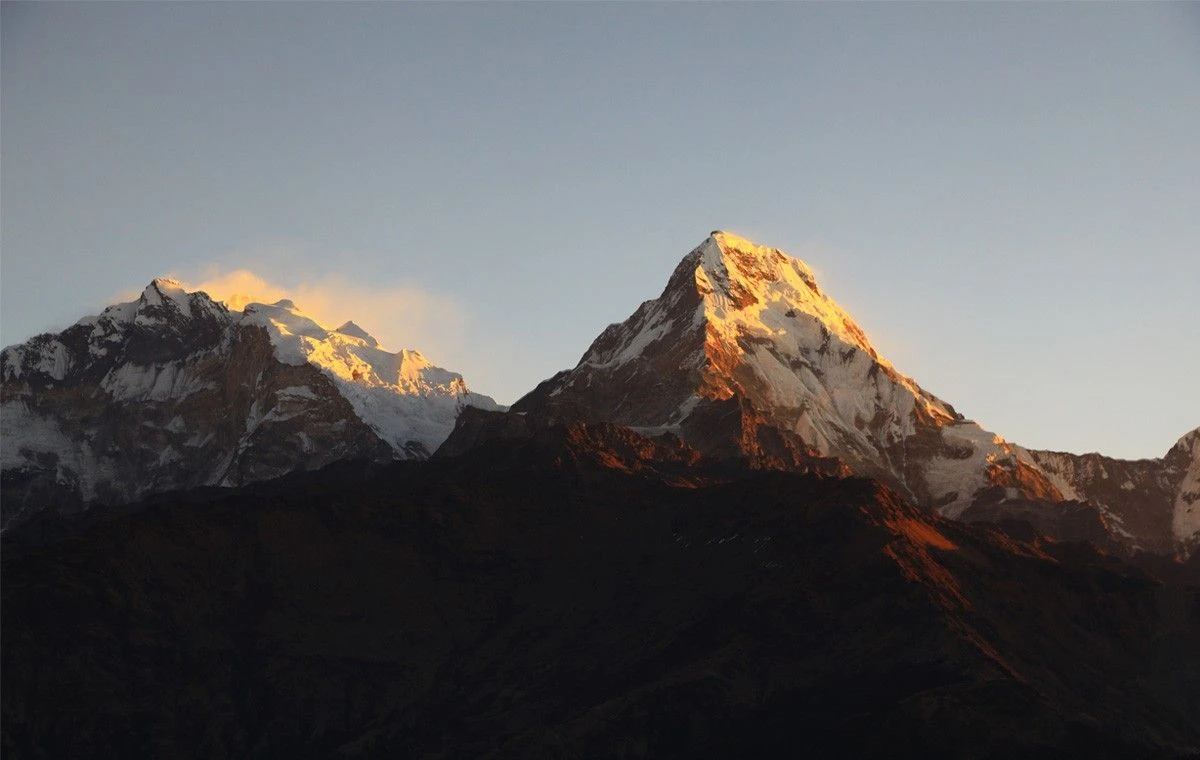
Located right below the central Himalayas in Nepal, the Annapurna Circuit trek is Nepal's most famous trekking route. This 6-day circuit trek rotates around Mount Annapurna. This is claimed to be the world's most beautiful and one of the top 10 tallest peaks. This longer trek in Nepal, which was previously 18 to 21 days, has now been shortened due to the construction of roads and the domestic flight. It means you can witness one of the most beautiful views in the world and complete a challenging Short Annapurna Circuit Trek in 6 days, less than a week, on a very low budget. Now, isn't that exciting?

Sitting in the central north part of Nepal, this short 6-day Annapurna Circuit route lies around the Annapurna massif, in proximity to other peaks such as Dhaulagiri, Machapuchare, Manaslu, Mardi, Lamjung Himal, and more. 

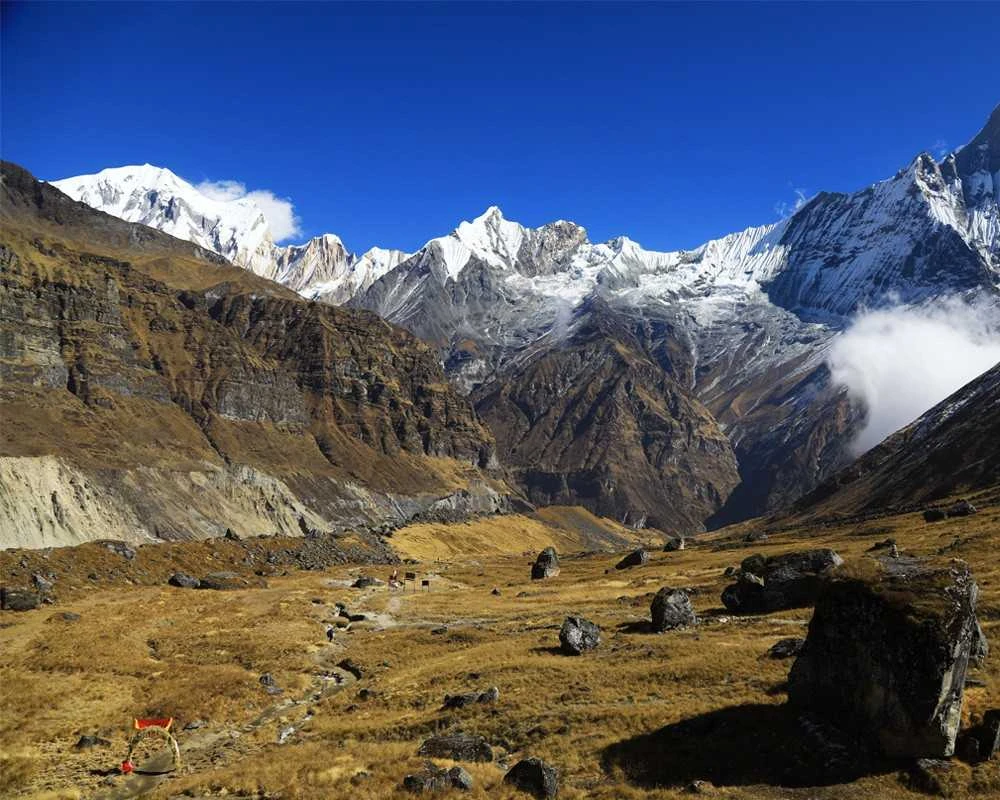
Similarly, the diverse landscape that ranges from thick tropical forest land to the alpine meadow and the semi-deserted land makes 6 days Circuit trek to the mountain a wholesome package. The cultural insight into the restricted land of Manang and the semi-deserted land of Mustang, with places to visit, such as Muktinath, is a real blessing. In addition to that, the rich biodiversity of the Annapurna conservation area, with rare wildlife, is like a cherry topping. The fact that the entire circuit area has comfortable accommodation and connection to the internet makes it a comfortable journey. 

So, for this 6 Days ACT, we first drive directly to Chame from Kathmandu and then head to Upper Pisang. Then, we explored the Manang village before rushing to Thorong Phedi. The major highlight of this trip is crossing the Thorang Pass to reach Muktinath, from where you can fly or drive back to Kathmandu, ending the short 6-day Annapurna Circuit Trek Itinerary.

At a Glance
  • Max Altitude 4548 m
  • Group Size 1-20
  • Start City Kathmandu
  • End City Kathmandu
  • Best Season Autumn, Spring
Trip Highlights
  • Crossing the legendary Thorong La Pass at 5,416 metres
  • Panoramic views of the Annapurna, Dhaulagiri, and Manaslu ranges
  • The sacred temple town of Muktinath
  • Diverse landscapes from subtropical forests to high alpine desert
  • Authentic Gurung and Manangi village culture
  • Dramatic descent into the arid Mustang plateau
  • Natural hot springs at Tatopani
  • Ancient Buddhist monasteries and mani stone walls
  • Rhododendron forests blazing in spring colour
  • Sunrise over snow-capped Himalayan peaks

Best Time to Visit

Talking about the best time to visit this trek, October and November are pure magic. During this autumn season, the monsoon has packed up and left, the sky is sharp and clear, and the mountains stand there like they're showing off.

Spring, March through May, runs a close second. Rhododendrons are blazing red and pink along the trail, temperatures are comfortable, and the views don't disappoint.

Further, the Winter treks are possible if you're bold and well-prepared. But expect biting cold above 3,000 metres.

Avoid June through September if you can, as heavy rainfall turns trails slippery, leeches come out in force, and mountain views hide behind thick cloud for days at a stretch. For this 6-day itinerary, especially, clear skies aren't just nice to have; they're part of the whole experience.

What to Expect in 6 days Annapurna Circuit Trek Nepal?

This 6 day Annapurna Circuit trek is not just about adventure and natural beauty; there are hundreds of things that teach you about life. 

Dramatic Altitude Gain: You'll climb from lush subtropical valleys to high alpine terrain within a few days. The landscape shifts fast, and it's genuinely breathtaking in every sense of the word.

Thorong La Pass: At 5,416 metres, this is the crown jewel of the circuit. Crossing it is tough, but rewarding. This is something you'll talk about for years.

Diverse Landscapes: Dense forests, terraced farmland, arid Mustang-like plateaus, snow-dusted peaks. Few treks pack this much variety into one route.

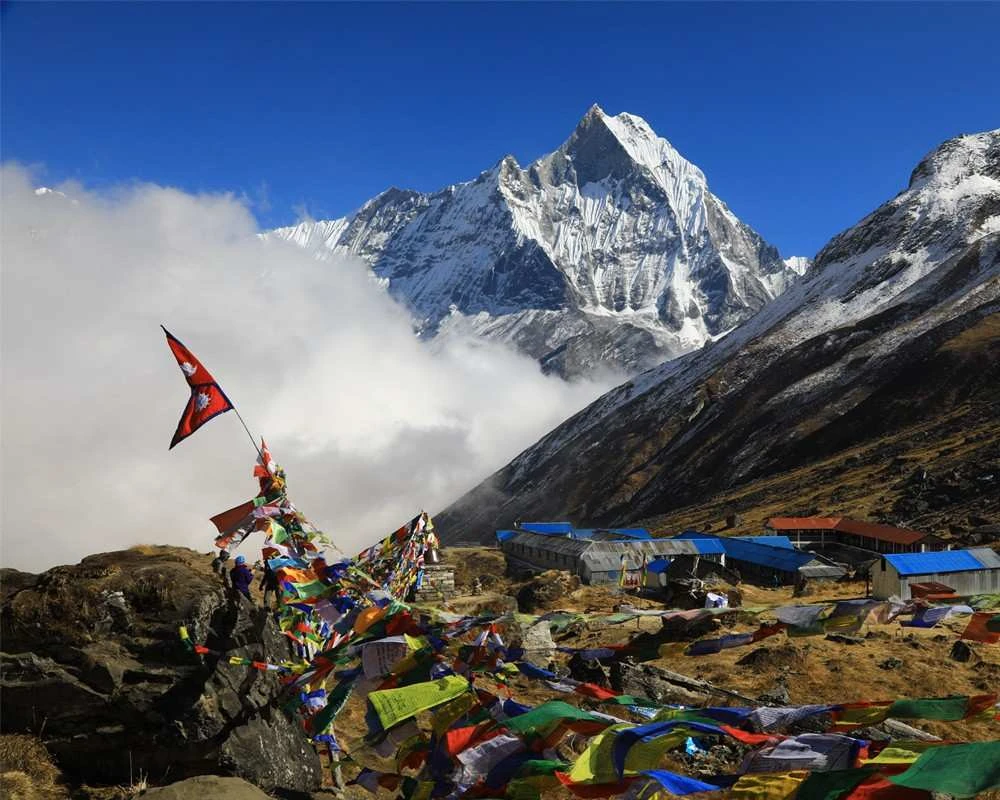
Rich Cultural Encounters: Gurung and Manangi communities live along this trail. You'll walk through ancient villages, pass mani walls, hear monastery bells, and if you're lucky, share a cup of butter tea with a local.

Physical Challenge: This is not a casual walk. Even the 6-day version demands stamina, a good pace, and honest fitness. Sore legs are guaranteed. But you rarely regret that.

Teahouse Stays: Accommodation is teahouse-style, simple, warm, and deeply authentic. Don't expect five stars, but do expect hot soup and a kind host after a long day on the trail.

Unpredictable Weather: Mornings are often clear and golden. Afternoons can turn cloudy fast. Pack layers, carry a rain cover, and never assume tomorrow's forecast.

Permit Requirements: You need an Annapurna Conservation Area Permit (ACAP) and a TIMS card. Our guide handles all of this, just make sure you're trekking with someone who knows the system.

Adventure to boast: You will be enjoying this thrill in the Annapurna massif. It’s a moment of boast for a lifetime. This adventure journey lets you recognize your actual capability. 

Mental refreshment and rejuvenation: This 6 day short adventure trek is enough to keep your mind busy yet refreshed. You will get perfect relaxation in the Himalayas, thereby rejuvenating your life. 

Why Breeze Adventure?

Breeze Adventure is your ultimate destination for 6 days in the Annapurna Circuit. We have a decade-long experience in the travel and trekking field. Here’s what we offer:

Local Knowledge, Not Guesswork: We, Breeze Adventure's guides, grew up in Nepal. We know these trails the way most people know their own neighbourhoods: the shortcuts, the best viewpoints, the teahouses with the warmest kitchens.

Safety First, Always: Every itinerary is planned with acclimatisation, altitude awareness, and emergency protocols built in. Your health is never traded for a tighter schedule.

Small Groups, Real Experience: No overcrowded convoys. For us, smaller groups mean a more personal journey, better interaction with locals, and a guide who actually has time for your questions.

Transparent Pricing: What you see is what you pay. No surprise charges mid-trip, no hidden fees at checkout. Everything is laid out clearly before you book.

Experienced, Certified Guides: Every guide is wilderness first-aid trained, government-licensed, and genuinely passionate about the mountains. They're not just walking ahead of you; they're looking out for you.

Flexible and Responsive: We work on a schedule but still plan for change, citing weather shifts. Breeze Adventure is highly flexible and adaptable. If something needs adjusting on the trail, the team moves quickly and keeps you informed every step of the way.

So, why not Breeze Adventure for your next ACT holidays, right? We are skilled and passionate travellers with a decade-long experience in the field. We make sure you have the greatest time with us. 

6 days ACT Difficulty Level

This 6-day ACT in Nepal is moderate in difficulty. Yes, you don't have to be a pro trekker; even a beginner can ace this journey. With the right preparation, good physical condition, and proper guidance, anyone will do this trek successfully. It's not that difficult. Also, you wouldn't have to rush. 6 days are enough to smoothly finish the route. 

Talking with the guide and following his guidance are all you need for this trek. It's neither hard nor too easy. Just a moderate level of difficulty that is due to rough terrain and increasing height. You will do it even as a first-timer; just trust yourself and follow the guidance. 

Preparation Tips for the 6 days Annapurna Circuit Trek

Whether you are a beginner on this route or an experienced trekker, the right preparation tips work for all. Kindly consider the following tips to make a smooth journey:

Warm up and training

It is better if you start training at least two months before your departure date. With this, your legs will carry you through some of the most demanding terrain in the world, so treat them accordingly. Hiking, stair climbing, and long walks with a loaded backpack are your best friends during preparation. Cardio matters too. Build it gradually, not frantically in the final week.

Pack light but smart

Pack smart, not heavy. Your back will remind you of every unnecessary item after hour three on a steep ascent. Stick to the essentials: moisture-wicking base layers, a warm mid-layer, a waterproof shell jacket, and sturdy, broken-in trekking boots. Never debut new boots on this trail. Blisters at 4,000 metres are miserable.

Consult with a doctor if major health issues

Visit your doctor early. Discuss if you have been taking medicines or undergoing any treatments. Consult about the altitude medication and have an honest conversation about your fitness and health history.

Altitude sickness awareness

Be aware of altitude sickness above 3200 m. Diamox can help with acclimatisation, but it's not a magic shield; your body still needs time to adjust. Rushing altitude gain is the single biggest mistake trekkers make on this route.

Mental preparation

Mental preparation is just as real as physical training. Some days will be hard. The weather will turn. Your muscles will burn. There will be a moment, usually somewhere above 4,500 metres, where you question everything. That moment passes. Push through it with patience, not pride.

Documents arrangements

Organise your documents well in advance. ACAP permit, TIMS card, travel insurance details, emergency contacts- keep physical copies and digital backups. Losing paperwork on the trail creates unnecessary stress in places with no printer in sight.

Local Culture as a bonus tip

Learn a few words of Nepali. Namaste goes a long way, but trekkers who make even a small effort to connect in the local language are received with extraordinary warmth. It costs nothing and adds everything to the experience.

Finally, leave ego at the trailhead. Altitude humbles everyone equally, seasoned hikers and first-timers alike. Listen to your guide, respect the mountain, pace yourself honestly, and this trek will give you something far greater than a summit crossing. It will give you a story worth telling for the rest of your life.

6 days ACT Alternative packages

You can also try other alternatives to this 6 days trek. No matter whether you love longer circuit treks or even shorter than this, there are quite interesting packages with us:

5 days Annapurna Circuit Trek

Try 5 days trek if you want to explore this circuit trek in a short time. This is a beautiful journey that makes you witness the finest Himalayan beauty even in your busy schedule. 

7 days Annapurna Circuit Trek

Try 7 days circuit trek with your family, friends, or you can enjoy it solo as well. The travel guide will show you the best of this area for a lifetime of memories. 

Classic Annapurna Circuit

If you have enough time, then the Classic Annapurna Circuit is hands down the best option in the Himalayas. This is best if you have a minimum of 8 days. You can also extend this to some extra days for relaxing in the snow.
Itinerary

Expand allCollapse all

The 10-hour-long drive from Kathmandu to Chame begins via the East-West highway until we join the Prithivi highway at Muglin. In the early afternoon, we reached Besisahar, the headquarters of the Lamjung district. After some last-minute shopping here, we head on an off-road path to Chamne on a shared jeep. As we head to Chame, we enter into the Annapurna Conservation area and a very different landscape from the cities. 

  • Max Altitude: 2726 m
  • Accommodation: Guest house
  • Time: 8-9 hours
  • Meals: Breakfast, Lunch, Dinner

On the first hiking day of 6 Days ACT, we cross the village of Chame to enter into the deep pine forest. In the morning, we cross a very steep path carved by the narrow-flowing Marsyangdi River. Then, we open up into a wide valley that opens up to the Marsyangdi Valley, which overlooks the Paungda Danda rock. Interestingly, locals believe that Paungda Danda is a holy rock in the area. You will love the local views there. For the night's stay, we hike to the Upper Pissang.

  • Max Altitude: 2726 m
  • Accommodation: Tea house
  • Time: 4-5 hours
  • Meals: Breakfast, Lunch, Dinner

This is an exciting day of 6 Days Annapurna Circuit Thorang La Pass Trek as we hike to the Upper Part of Manang. From Pisang, we follow the path made by the Marsyangdi River. Then, we crossed villages such as Mungji and Braga on the way. There are only many beautiful stupas we can see during the ACT in 6 Days on the way up to the Manang village. Today, we need to hike for 22 km, crossing other villages until we reach Manang. 

  • Max Altitude: 3560 m
  • Accommodation: Tea house
  • Time: 7 hours
  • Meals: Breakfast, Lunch, Dinner

On this day of ACT in 6 Days, we walk to Yak Kharka in the morning, crossing villages such as Tengi and Ghunsang. We hike for 10 km on the first part before stopping at Yak Kharka for a short while. While many tourists choose to crash here for the night, our plan is to move further up to the villages, such as Ledar and Deurali, until we reach Thorang Phedi. This is the last tea house location we can see before Thorang Phedi Pass.  

  • Max Altitude: 4548 m
  • Accommodation: Tea house
  • Time: 4 hours
  • Meals: Breakfast, Lunch, Dinner

This is an adventurous day of 6 Days Annapurna Circuit Trek Package in the mountains, but not that difficult with the right kind of preparation. It's wise to start the trek early so that we can cross the Thorong Pass before the afternoon, as the pass is very windy in the afternoon. From here, we can see the entire Annapurna Himalayan range with a panorama of dozens of mountains. Then, we walked down to Mustang, which is the second and final semi-deserted district beyond the Himalayas. 

  • Max Altitude: 3611 m
  • Accommodation: Tea house
  • Time: 7-8 hours
  • Meals: Breakfast, Lunch, Dinner

In the early morning on the last day of 6 Days Annapurna Circuit Thorang La Pass Trek, we visit the Muktinath Temple before breakfast. Then we take a shared jeep that takes us to Jomsom. If possible, we stop to explore the fort of Kagbeni. Then, we drive all the way to Pokhara and then to Kathmandu.

However, our suggestion is that you take a flight from Jomsom to Pokhara and then drive to Kathmandu if you want to finish the 6 Days Annapurna Circuit Trek Package early.

    This trek will be an absolute delight with the right itinerary guidance. It is necessary to know about each day you spend there to have a smooth journey. 

    Cost Details
    What's Included
    • All necessary trekking permits (ACAP and TIMS).
    • Licensed, English-speaking local trekking guide.
    • 5 nights of teahouse accommodation during the trek.
    • Three daily meals (Breakfast, Lunch, Dinner) on the trail.
    • Ground transportation from Kathmandu/Pokhara to the trailhead.
    • Return transport from the trek endpoint to the city.
    • First-aid kit and altitude monitoring by the guide.
    • All government taxes and office service charges.
    • Staff insurance, salary, and equipment for the guide.
    • One oxygen tank
    What's Not Included
    • Nepal entry visa fees (approx. $30 for 15 days).
    • International airfare to and from Kathmandu.
    • Travel insurance covering high-altitude helicopter evacuation.
    • Personal trekking gear (boots, down jacket, sleeping bag).
    • Personal expenses (hot showers, Wi-Fi, and device charging).
    • Bottled water, soft drinks, and alcoholic beverages.
    • Tips for the guide and porters at the end of the trip.
    • Meals and hotel stays in Kathmandu or Pokhara.
    • Personal porter service to carry the main luggage.

    Essential Information

    Here are the essential things that you can expect on this trek. 

    Accommodation

    Teahouses are your home on this trek, and they're more charming than they sound. Run mostly by local families, these lodges offer clean rooms with basic beds, wool blankets, and a shared dining hall that turns into the social heart of the trail each evening. Higher up, rooms get simpler, but the warmth of hospitality never really fades. Hot showers exist at lower elevations. Above 3,500 metres, expect bucket baths or cold water, and honestly, after a day like that, you won't care.

    Food and Drink

    Dal bhat is the fuel of the Himalayas, steamed rice, lentil soup, vegetables, and pickle, and teahouse cooks refill your plate without asking. It's simple, nutritious, and surprisingly delicious after eight hours of walking. Momos, noodle soups, and porridge round out the menu. At lower stops, you'll find pancakes, pasta, and even apple pie. Drink only filtered, boiled, or bottled water on the trail. Carry water purification tablets as a backup, your gut will thank you.

    Safety

    The Annapurna Circuit is one of Nepal's most well-trodden trekking routes, but respect for the mountain is non-negotiable. Altitude sickness can affect anyone regardless of fitness level, recognise the symptoms early, communicate with your guide, and never push through serious warning signs. Stay on marked trails. Check in at ACAP checkpoints along the way. Trekking solo is possible but not recommended for this route, a guide adds not just safety, but real depth to the experience.

    Health and Insurance

    Visit your doctor at least four weeks before departure. Discuss altitude sickness medication like Diamox, update your routine vaccinations, and pack a solid first-aid kit. Nepal Travel insurance is not optional on this trek, it's essential. Make sure your policy covers high-altitude trekking, emergency helicopter evacuation, and trip interruption. Many standard travel policies exclude trekking above 4,000 metres, so read the fine print carefully before you buy.

    Network and Communication

    Mobile signal exists in the lower villages and surprisingly holds in some higher sections too, NTC and Ncell both have decent coverage along key stretches of the trail. Above Manang, connectivity becomes patchy and unreliable. Most teahouses offer WiFi for a small fee, though speed varies wildly. Embrace the occasional disconnect,  it's part of the experience. Let your family know your itinerary before you leave, and carry a basic offline map on your phone as a reliable backup.

    Last Words

    The Annapurna Circuit Trek Nepal is not just a trail, it's a transformation. Six days in these mountains will push your body, quiet your mind, and open your eyes to a world that feels both ancient and alive. From the thundering elevation of Thorong La Pass to the quiet hospitality of a teahouse kitchen at dusk, every moment carries weight. Whether you're a seasoned trekker chasing your next great adventure or someone finally saying yes to the trip you've dreamed about for years, this circuit delivers, honestly, fully, and unforgettably. Book your dates, lace up your boots, and trust the mountains to do the rest.

    6 days Annapurna Circuit Trek FAQs

    • Thorong La Pass sits at a breathtaking 5,416 metres above sea level and is the defining high point of the entire circuit. Crossing it on a clear morning with the Himalayas surrounding you is genuinely one of trekking's greatest rewards.

    • Absolutely, altitude sickness can hit anyone regardless of age or fitness level. Staying hydrated, ascending gradually, and communicating early symptoms to your guide are the three things that keep most trekkers safe.

    • Pack light but smart, warm layers, a waterproof jacket, broken-in trekking boots, sunscreen, a first-aid kit, and a reliable water purification method cover the essentials. Leave anything you're unsure about at the hotel.

    • Solo trekking is technically permitted but only with a guide, as it’s genuinely risky on this route. Especially at higher elevations, where weather and altitude create unpredictable conditions. A licensed local guide adds safety, cultural depth, and real peace of mind.

    • Costs vary depending on the agency, group size, and season, but a well-organised package typically ranges between $600–$1,200 USD. That usually covers permits, accommodation, meals, and a certified guide.

    • October and November consistently deliver the clearest skies, stable weather, and the most rewarding mountain views on the entire circuit. March through May runs a strong second, with warmer temperatures and spectacular rhododendron blooms lining the trail.

    • Six days cover the essential highlights beautifully when the itinerary is planned well. You'll cross Thorong La Pass, experience authentic village culture, and witness jaw-dropping Himalayan scenery without dragging the journey unnecessarily long.

    • It's a moderately challenging trek that demands genuine fitness and mental resilience. The high altitude and long daily walking hours push most trekkers, but with proper preparation and a good guide, it's absolutely achievable.

    • Prior experience helps significantly, but it isn't strictly mandatory. What matters more is honest physical fitness, a willingness to push through discomfort, and the wisdom to listen to your body and guide.

    • You'll need two permits, the Annapurna Conservation Area Permit (ACAP) and a TIMS card. Your trekking company handles the paperwork, but budget roughly $30–$50 USD for both combined.

    Similar Trips
    You May Also Like