Gosaikunda Circuit Trek: Nepal's Sacred Lake Walk Near Kathmandu

Tripadvisor169 reviews
google141 reviews
youtube99 reviews
trustpilot31 reviews
Gosaikunda Circuit Trek Nepal

Some treks in Nepal take almost two weeks to reach the first big mountain view. The Gosaikunda Circuit Trek is no exception. Within a week, you can leave the traffic of Kathmandu behind, climb through forests of oak and rhododendron, pass grazing yaks, and stand on the shore of a deep blue lake at 4,380 meters (14,370 ft) that Hindus and Buddhists have treated as holy for hundreds of years.

Gosaikunda (also spelled Gosainkunda) sits inside Langtang National Park. It is north of Kathmandu City and close to the Tibetan border. The trek usually starts with a 7- to 8-hour drive to the trailhead at Syabrubesi or Dhunche, then follows a steady climb to the lake basin. Here, around a hundred small glacial lakes are scattered across the high rocky bowl.

The biggest and most famous of these is Gosaikunda itself, often done combined with the Langtang Valley Trek. From here, stronger walkers can cross the Laurebina La pass at 4,610 meters (15,100 ft), the high point of the full circuit, and drop down into the quiet Helambu valley to finish.

This is one of the best short high-altitude treks in Nepal. It mixes real mountain scenery, Tamang and Sherpa culture, and a sacred pilgrimage site into a route you can do on a one- or two-week holiday. It suits first-time trekkers who are reasonably fit, and it also works for experienced walkers who want a quieter alternative to the crowded Everest and Annapurna trails.

In this guide, you'll find the trek highlights, the best time to go, an honest look at what to do and what to avoid, a full packing list, and everything you need to book the trip with confidence.

At a Glance
  • Duration5 Days
  • Max Altitude Laurebina La Pass 4,610 m (15,100 ft); Gosaikunda Lake 4,380 m
  • Start City Kathmandu
  • End City Kathmandu
  • Best Season Autumn and Spring
Trip Highlights
  • The sacred Gosaikunda Lake at 4,380 m is a holy site for both Hindus and Buddhists. According to legend, it was created by Lord Shiva.
  • Over a hundred alpine lakes are spread across the high basin. So, many of them are frozen for much of the year.
  • Crossing Laurebina La pass (4,610 m) is the highest point of the trek, with prayer flags and wide Himalayan views in every direction.
  • Big mountain scenery including the Langtang Lirung, Ganesh Himal and Manaslu ranges, plus peaks across the border in Tibet.
  • Rhododendron and pine forests that turn bright red and pink in spring. Also, it is home to the red panda and the Himalayan tahr.
  • Tamang and Sherpa villages where you can see traditional stone houses, Buddhist monasteries, prayer wheels, and mani walls.
  • Fresh yak cheese at the cheese factory in Chandanbari (Sing Gompa), a local favourite stop.
  • Close to Kathmandu, which means less time and money spent on long internal flights.
  • A real high-altitude trek without the crowds of the Everest and Annapurna regions.
  • The option to extend through Helambu for a longer, loop-style circuit back towards Kathmandu.

Best Time to Do the Gosaikunda Circuit Trek

The best time for the Gosaikunda Trek is often spring or autumn. These two seasons give you the clearest skies, the safest trail conditions, and the best mountain views.

Autumn (late September to November) is the most popular season. The monsoon rain has washed the dust out of the air, so the mountains look sharp and close. Days are dry and sunny, nights are cold but clear, and the trails are busy with other trekkers in the best possible way.

Spring (March to May) is the other great window. The weather warms up, the rhododendron forests burst into red and pink flowers, and wildlife becomes more active lower down. It is a beautiful time to walk, though a light afternoon haze can build up later in the season.

Monsoon (June to August) brings heavy rain, slippery trails, leeches, and clouds that often hide the peaks. Most trekkers avoid it. The big exception is the Janai Purnima festival on the August full moon, when thousands of Hindu pilgrims climb up to bathe in the holy lake. If you want to see this living tradition, this is the time, but be ready for rain and crowds.

Winter (December to February) is cold and quiet, with a real chance of heavy snow on the pass. The lake often freezes over, and on a clear day the views are stunning. Crossing Laurebina La in deep snow can be risky, so well-prepared groups with an experienced guide should handle winter trekking here.

Why Gosaikunda Circuit Trek Matters

The Gosaikunda Circuit Trek is not just about a Himalayan journey; rather, it is a trip that combines adventure, nature, culture, and wellness. It is done along with the Langtang Valley Trip, making it a perfect package to experience so many things closer to the Kathmandu Valley. 

It is a true pilgrimage, not just a view. Gosaikunda is one of the most important holy lakes in Nepal. Walking the same path that pilgrims have used for centuries gives the trek a meaning that a normal viewpoint cannot match.

You reach real high altitude fast. Within a few days, you go from 1,460 m at the trailhead to above 4,600 m at the pass. For many people, this is their first taste of walking in the thin, clean air of the high Himalaya.

The culture is still alive. The Tamang and Sherpa people who live here follow Tibetan Buddhist traditions. You pass working monasteries, spinning prayer wheels and family teahouses, and the warmth of the welcome is a big part of the trip.

It protects a fragile landscape. Langtang National Park was the first Himalayan national park in Nepal, set up in 1976. Your permit fee goes directly into protecting rare wildlife such as the red panda and the snow leopard.

It is close and affordable. There are no expensive mountain flights. A short drive from Kathmandu puts you on the trail, which keeps the cost and the planning simple.

It carries the memory of 2015. The Langtang region was hit hard by the earthquake of April 2015. Local families have rebuilt their villages and teahouses with huge effort, and trekking here today directly supports that recovery.

It gives you a complete Himalaya in a short trip. Forests, waterfalls, high passes, sacred lakes, snow peaks, and mountain villages, all packed into a route most people can finish in a week.

Major Things to Do on the Trek

This trip is a wholesome package that allows you to experience so many things that stay with you as a memory. Kindly consider the following things as your trip plans:

Sit quietly by Gosaikunda Lake. Reach the lake early, before the midday wind picks up, and take time at the water's edge. Many trekkers say this is the moment the whole trip comes together.

Cross Laurebina La pass. Standing on the pass at 4,610 m among the prayer flags, with mountains on every side, is the physical and emotional high point of the circuit.

Visit the monastery and cheese factory at Chandanbari (Sing Gompa). Spin the prayer wheels, look inside the gompa, and try a slice of fresh local yak cheese.

Watch sunrise from Lauribina or Cholangpati. On a clear morning, the first light hitting the Langtang and Ganesh Himal peaks is worth the early start.

Spot wildlife in the forest. Keep your eyes open for the red panda, Himalayan tahr, langur monkeys, musk deer, and the colourful Himalayan monal, which is Nepal's national bird.

Learn about the 2015 earthquake and the rebuild. Take time to talk with local people about how the region has recovered. It adds real depth to the walk.

Take a small dip or sprinkle of the holy water, if you wish, in the respectful way that pilgrims do. The lake is sacred, so follow your guide's lead.

Extend into Helambu. If you have the days, carry on over the pass into the Helambu Valley for a longer, loop-style finish through Sherpa villages and terraced farmland.

Things to Avoid

To make your journey smooth and effective, make sure you avoid the following things:

Don't climb too fast. Altitude sickness is the biggest risk on this trek. Gaining height too quickly, especially the jump to Gosaikunda, can make you seriously ill. Build in an acclimatisation day and walk slowly. Breeze Adventure manages altitude sickness with an oxygen cylinder, skilled team members, and emergency evacuation if needed.

Don't trek without a licensed guide. Solo trekking is no longer allowed in the Langtang region, and the trail can be hard to follow in snow or fog. A guide keeps you safe and legal.

Don't disrespect the holy site. Gosaikunda is sacred. Avoid soap, shampoo, or loud behaviour at the lake, and don't swim unless your guide says it is acceptable.

Don't underestimate the cold. Nights at altitude drop well below freezing even in the main seasons. A warm sleeping bag and good layers matter.

Don't skip Nepal travel insurance. Make sure your policy covers trekking up to 5,000 m and, most importantly, helicopter rescue. Standard holiday insurance usually does not.

Don't rely on finding an ATM or signal. There are no banks on the trail, and mobile coverage is patchy. Carry enough Nepali cash in small notes for snacks, charging, and hot showers.

Don't leave rubbish behind. This is a protected national park and a sacred place. Carry out what you carry in, and avoid single-use plastic where you can.

Don't overpack. A heavy bag makes every climb harder. Stick to the packing list below and let a porter carry the main load if you have one.

Why You Should Book Gosaikunda Circuit Trek

If you have ever wanted to walk in the Himalaya but felt put off by the time, cost, or crowds of the big-name treks, the Gosaikunda Circuit is the trip for you.

It gives you a genuine high-mountain experience without needing a month off work or an expensive flight to a remote airstrip. In a single, well-paced holiday, you get snow peaks, a sacred lake, a high pass, and a warm cultural welcome. The trail is challenging enough to feel like a real achievement, but accessible enough for a fit beginner who trains a little beforehand. This is close to Kathmandu Valley, making it an ideal short trip.

You will come home with more than photos. You will have stood at a place that is holy to millions, supported families who are still rebuilding after the 2015 earthquake, and pushed yourself a little further than you thought you could. For a lot of people, this trek becomes the story they tell for years.

Spaces on the best spring and autumn dates fill up early, so if the idea is pulling at you, it is worth locking in your dates now rather than waiting.

Why Book With Breeze Adventure

Choosing the right trekking partner makes the difference between a stressful trip and the best holiday of your life. Here is why trekkers choose Breeze Adventure for the Gosaikunda Circuit. 

Local experts who know the Gosaikunda Langtang trail. Our team lives and breathes the Nepal Himalaya. We know the best teahouses, the right pace for the pass, and the quiet corners most groups walk straight past.

Government-licensed, English-speaking guides. Every trek is led by a trained, licensed guide who is first-aid ready and carries the right safety gear. You trek legally, and you trek safely.

Safety comes first, always. We plan proper acclimatisation, carry an oximeter and a first-aid kit, and have a clear emergency and helicopter-rescue plan if the mountain asks for it.

Fair, honest pricing. We give you a clear quote with no hidden extras. Permits, guide, porter support, and logistics are sorted so you can focus on the walk.

Flexible, tailor-made itineraries. Short on time, or want to add the Helambu extension? We build the trip around your dates, fitness, and budget.

We support local communities. We hire local guides and porters, pay them fairly, and spend in the villages you pass, so your trip helps the Langtang region keep rebuilding.

Real human support. From your first question to the moment you fly home, you talk to real people who answer fast and care about your trip.
Itinerary

Expand allCollapse all

Your Gosaikunda Circuit Trek starts behind the wheel, not on foot. The road out of Kathmandu follows the Trishuli River, climbs past Trishuli Bazaar, and winds up into the hills of Rasuwa to reach Dhunche, the headquarters of Rasuwa district, which sits at roughly 1,960 meters. It's a long, bumpy ride with big valley views, so take it easy and enjoy the scenery.

Dhunche is also the main checkpoint for Langtang National Park, where the whole trek takes place. After lunch and a short rest, you set off on your first walk of the trip, climbing gently through forest to the small settlement of Dimsa.

Highlights: the Trishuli River gorge, your first taste of Tamang village life, and the green entry into Langtang National Park.

What to do today: sort out your permits at Dhunche (you'll need the park entry and your TIMS card), stretch your legs on the short climb to shake off the drive, drink plenty of water, and get an early night.

  • Max Altitude: 2,900 m (Dimsa)
  • Accommodation: Tea house
  • Time: Drive: 110–120 km (6–7 hours), Trek: ~6 km (3–4 hours)
  • Meals: Breakfast, Lunch and Dinner

Today is a proper climbing day. The trail goes up steadily through pine and rhododendron forest, passing Deurali and reaching Chandanbari, also called Sing Gompa, at about 3,330 meters. This is a lovely spot to stop for tea. Sing Gompa is known for its monastery and its local yak-cheese dairy, so it's worth a short break and a taste. 

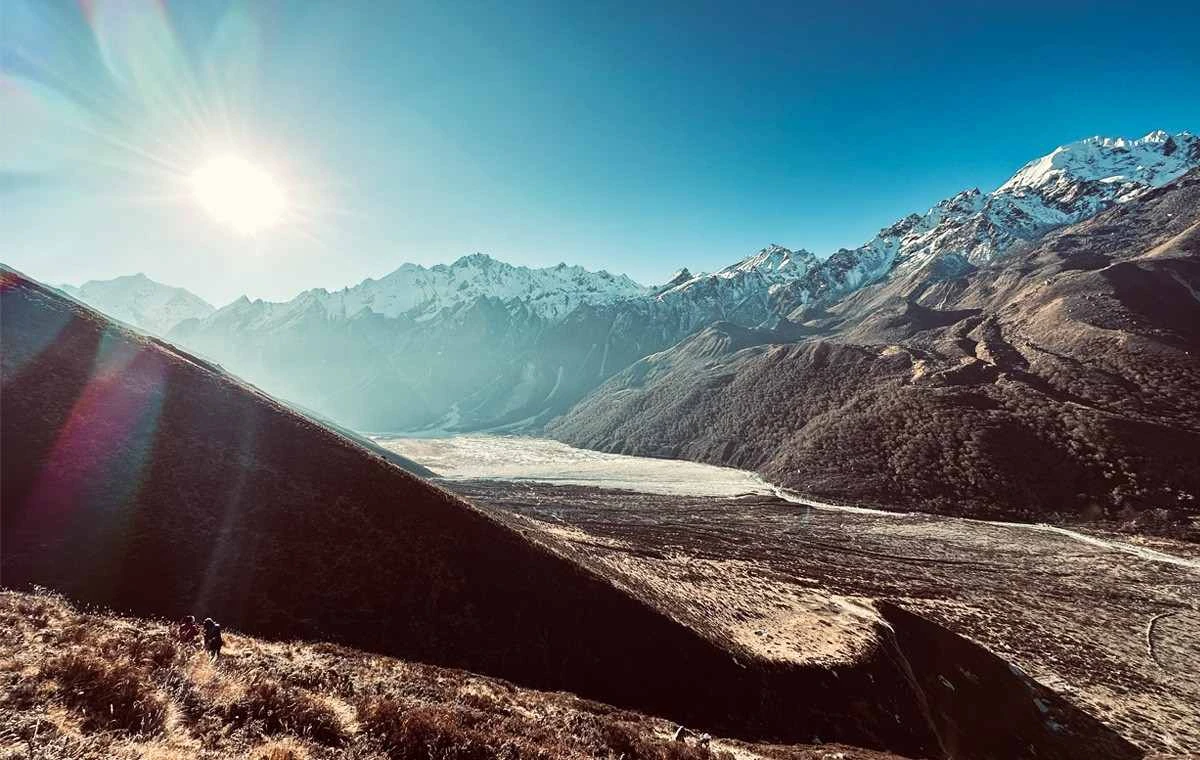
From here, the forest starts to thin out. You keep climbing to Lauribina (also spelled Lauribinayak), where the trees give way to open ridges. Many trekkers first feel the altitude around Lauribinayak, which sits near 3,910 meters, so slow and steady wins the day. On a clear afternoon, the views open up toward the Langtang range and Ganesh Himal. 

Highlights: the cheese and monastery at Sing Gompa, quiet forest full of birds (this is red panda country, though sightings are rare), and the first wide mountain views from the Lauribina ridge.

What to do today: walk slowly to help your body adjust, keep sipping water, watch for any headache or dizziness, and settle in for sunset over the peaks.

  • Max Altitude: ~3,910 m (Lauribina)
  • Accommodation: Tea House
  • Time: Trek: ~10 km (6–7 hours)
  • Meals: Breakfast, Lunch and Dinner

A short day, but a big one. The trail leaves the treeline behind and enters open alpine country, with rocky slopes and sweeping views on both sides. You pass a few smaller holy ponds before the main lake comes into view.

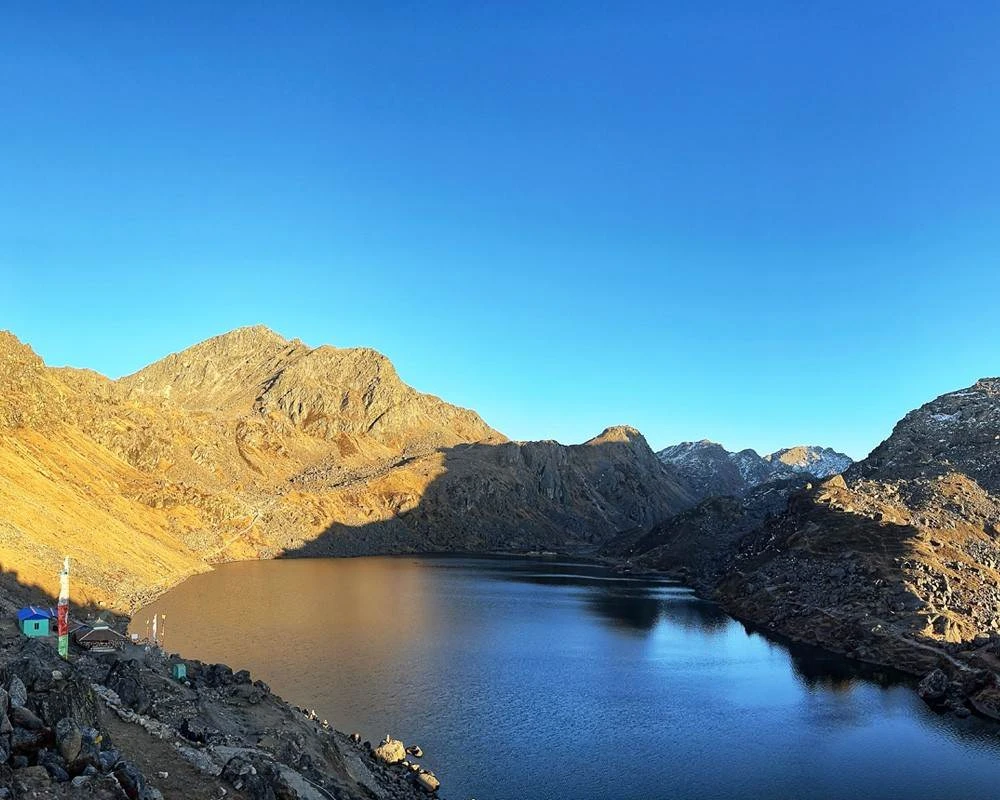
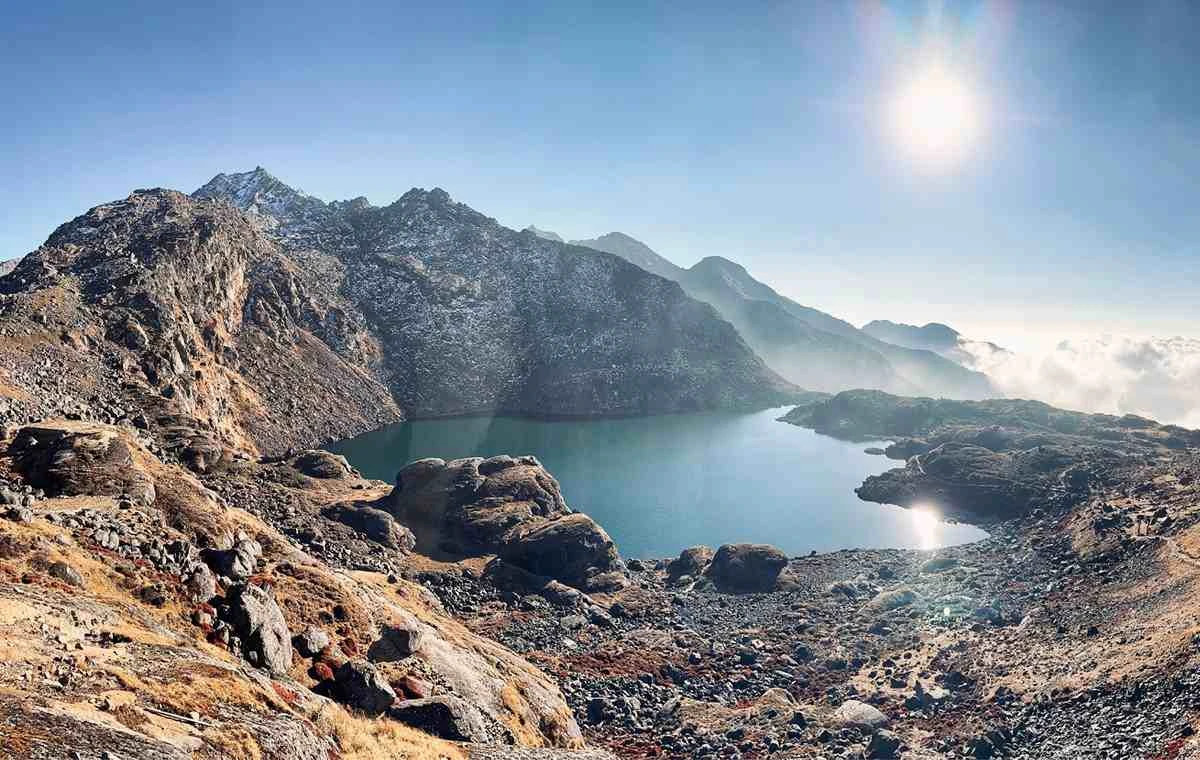
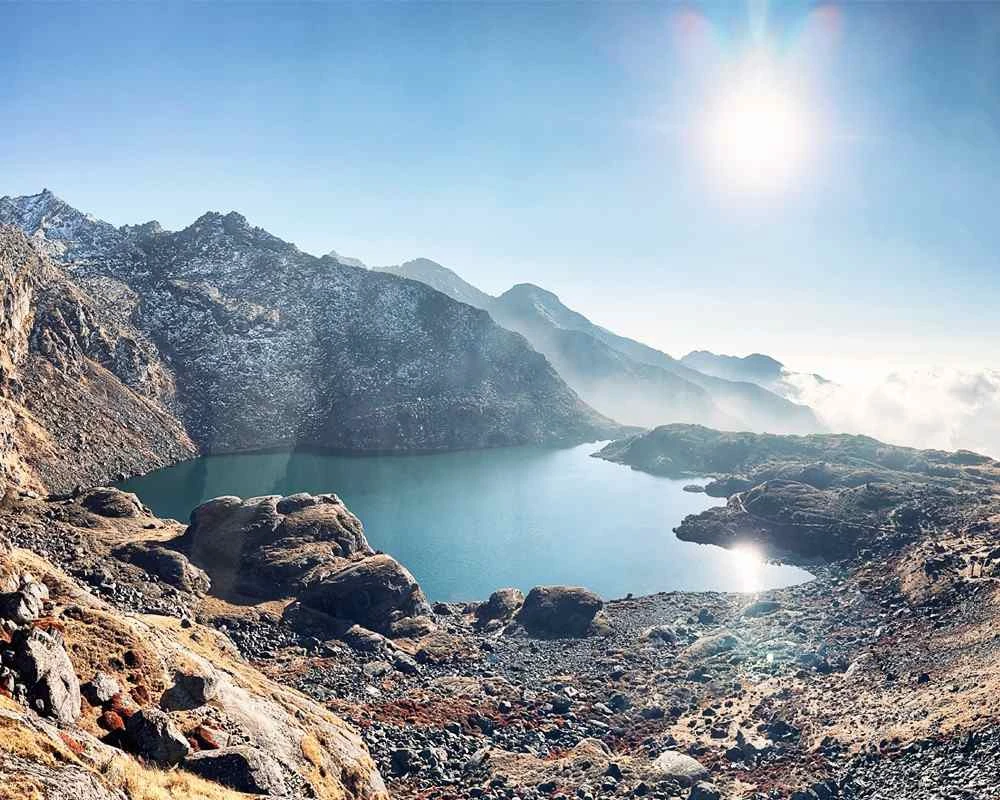
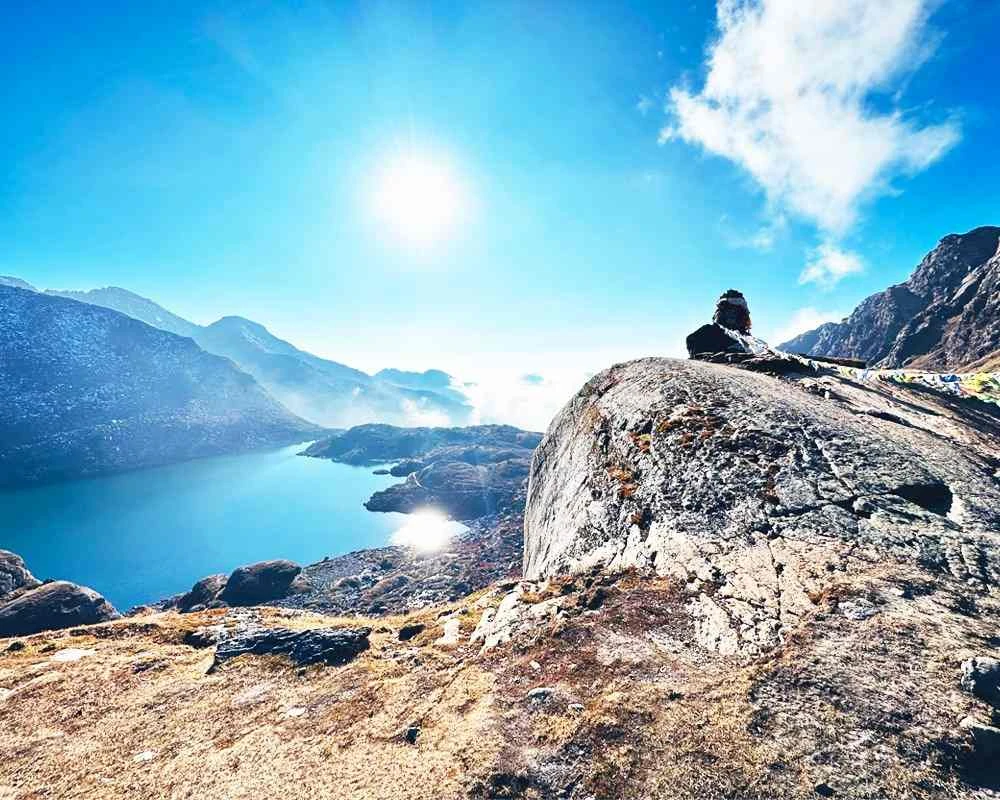
Then you reach it: Gosaikunda Lake, the sacred alpine lake at 4,380 meters. The water is a deep, clear blue, ringed by bare mountains. The lake here is revered by both Hindu and Buddhist pilgrims, especially during the Janai Purnima festival on the August full moon, when thousands make the climb to bathe in the water. Local belief ties the lake to Lord Shiva, which gives the place a calm, special feeling even when it's quiet. 

Highlights: the string of small kundas (ponds) before the main lake, the sacred Gosaikunda Lake itself, and the Shiva shrine on its shore.

What to do today: arrive by early afternoon, rest up, then take a short walk along the lakeshore. Keep warm, eat well, and get to bed early. Tomorrow is the hardest day.

  • Max Altitude: 4,380 m (Gosaikunda Lake)
  • Accommodation: Tea House
  • Time: Trek:~5 km (3–4 hours)
  • Meals: Breakfast, Lunch and Dinner

Start early, while the air is still and the weather is kind. The trail climbs past a chain of smaller holy lakes, including Suryakunda, on its way to the top. The Lauribina La Pass, also known as the Gosaikunda Pass, tops out at 4,610 meters and is the highest and most dramatic point of the trek. The pass rewards every hard step with huge, open Himalayan views. 

From the top, instead of turning back toward Dhunche, you drop down the western side of the mountains. This is the part that makes it a true circuit. The descent is long, and the path can be rocky, leading you off the main pilgrim route and into quieter forest on the way down to Talu.

Highlights: the sunrise climb past Suryakunda and the high lakes, the big-sky views from the pass, and the switch from the busy east side to the lonely, little-walked west side.

What to do today: set off at first light to beat the wind, go slow and watch your footing on the loose sections near the pass, layer up (it's cold and exposed up high), and pace yourself on the long drop. Teahouses on this side are simple and few, so carry snacks and water.

  • Max Altitude: 4,610 m (Gosaikunda Pass / Lauribina La)
  • Accommodation: Tea house
  • Time: ~10–12 km (6–7 hours)
  • Meals: Breakfast, Lunch and Dinner

The last trekking day is a gentle goodbye. You walk downhill through thick lower forest and past small farms, following the trail that locals have used for years. This western route runs through the Ghyangphedi–Talu–Dupcheshwor corridor, an old path that has only recently been opened up for trekking, so expect few other walkers and lots of quiet. Waterfalls, terraced fields, and friendly Tamang villages keep you company as you lose height. 

You finish at the road head near Ghyang Phedi, where your vehicle is waiting. From there it's a scenic drive back toward Kathmandu through the hills and river valleys of Nuwakot, closing the loop on your Gosaikunda Circuit.

Highlights: green, humid forest and waterfalls, village and farm life on the Dupcheshwor side, and the satisfying feeling of ending somewhere new rather than retracing your steps.

What to do today: take it slow on the steep, sometimes slippery forest steps, soak in the last of the trail, meet your driver at Ghyang Phedi, and settle in for the ride home. The next day, you can enjoy a sightseeing trip in Kathmandu Valley. This comprises unique Newari culture, world heritage sites, local traditions, and more.

  • Accommodation: Hotel
  • Time: Trek: ~7–9 km (4–5 hours), Drive: ~4–6 hours to Kathmandu
  • Meals: Breakfast, Lunch and Dinner
Cost Details
What's Included
  • Airport pick-up and drop-off at Tribhuvan Airport
  • Two nights in a luxury hotel in Kathmandu with breakfast
  • All ground transport to and from the trek start point (Kathmandu to Dhunche/Syabrubesi and back)
  • Local guest house/tea house accommodation during the trek
  • Government-licensed experienced guide and porters
  • Insurance, food, accommodation, and wages for the guide and porters
  • All meals during the trek (breakfast, lunch, and dinner)
  • Langtang National Park entry permit
  • TIMS card (Trekkers' Information Management System)
  • First aid kit
  • Map of the Langtang / Gosainkunda region
  • Service charge and all government taxes
  • Post-trek celebration dinner in Kathmandu
What's Not Included
  • International airfare
  • Nepal visa fee
  • Meals in Kathmandu except breakfast
  • Your personal expenses, shopping and so on
  • Hot shower and device charging fees at the tea houses during the trek
  • Alcoholic and cold drinks, chocolates, tea and coffee (outside the included meals)
  • Travel and medical insurance (covering emergency rescue and evacuation)
  • Tips for the guide and porters
  • Any cost arising from delays beyond our control (weather, landslide, strike, flight cancellation, etc.)

Essential Information

From the 5-day Gosaikunda Circuit trek, you can expect the following things:

Accommodation

Along the Gosaikunda route, you'll be staying in basic teahouses, mostly simple wooden or stone lodges run by local families. In the lower villages like Dhunche and Sing Gompa (Chandanbari), the rooms are reasonable, usually twin beds with a shared toilet down the hall.

Higher up at Lauribina and Gosaikunda itself, the lodges get more basic and cold, and in peak season (October–November and March–April) they fill up fast, so it's worth getting there by early afternoon. 

Food and Drinking Water

The food is standard teahouse fare. Dal bhat is your safest bet almost everywhere because it's freshly cooked and you usually get free refills. You'll also find noodles, fried rice, Tibetan bread, potatoes, pancakes, and the occasional egg dish. Menus shrink, and prices climb the higher you go, since everything is carried up by porter or mule.

For water, don't drink straight from taps or streams. You can buy bottled water lower down, but it gets expensive and creates plastic waste up high. So most trekkers carry a filter or purification tablets and refill from the lodges.

First Aid, Health and Sanitation

The main health concern on this trek is altitude. Gosaikunda sits at about 4,380m. The Laurebina La pass is around 4,610m, so acute mountain sickness is a real risk, especially if you push up too quickly from Dhunche. Take it slow, stay hydrated, and don't ignore headaches, nausea, or dizziness. 

Our team member will carry first aid kits and emergency medicines. For any symptoms or uneasy feelings, consult a guide as soon as possible. Carry your own personal hygiene tools.

Travel Insurance and Emergency Case

Proper travel insurance that covers trekking up to at least 5,000m and includes helicopter evacuation is essential for this route, not optional. If someone develops serious altitude sickness or gets injured near the lake, the realistic way out is a helicopter, and that can cost several thousand dollars if you're uninsured.

In a genuine emergency, the first step is to descend immediately if the person can still walk, and coordinate rescue through your lodge, guide, or agency, who can reach operators in Kathmandu.

Network and WiFi

Mobile coverage is patchy but better than it used to be. Ncell and NTC both work reasonably well around Dhunche and Sing Gompa, and you'll catch occasional signal higher up depending on the weather and your exact spot. Buying a local SIM in Kathmandu with some data is the most reliable option. Some teahouses advertise WiFi, usually paid, but it's slow and unreliable the higher you climb.

Ready to walk to the sacred lakes? Message Breeze Adventure today for available dates, a custom quote, and friendly advice. Your Gosaikunda adventure starts with a single hello.

Gosaikunda Circuit Trek: Nepal's Sacred Lake Walk Near Kathmandu FAQs

  • It is a moderate trek. The walking is not technical, but there are some long, steep climbs and you reach over 4,600 m, so altitude and fitness are the main challenges. A fit beginner who trains with a few hill walks beforehand can do it.

  • The core trek to the lake and back takes about 5 to 8 days. If you cross Laurebina La and continue through Helambu, the full circuit runs around 10 to 15 days, including the drive days from Kathmandu.

  • Gosaikunda Lake sits at 4,380 m (14,370 ft). The highest point of the trek is the Laurebina La pass at 4,610 m (15,100 ft).

  • Yes. You need a Langtang National Park entry permit and a TIMS card. As a rough guide, the park permit is around NPR 3,000 (about USD 25 to 30) for foreign trekkers and the TIMS card is around USD 10 to 20. Fees change from time to time, and your operator usually arranges both for you.

  • Yes. Nepal now requires a licensed guide for trekking in the Langtang region, and solo trekking is not allowed. A guide also makes the route far safer in snow or fog.

  • Yes, with some preparation. It is one of the more beginner-friendly high treks in Nepal because it is short and close to Kathmandu. The key is to be reasonably fit and to let your body acclimatise.

  • Spring (March to May) and autumn (September to November) are the best times, with clear skies and stable weather. Autumn gives the sharpest mountain views.

  • Gosaikunda is a sacred lake for both Hindus and Buddhists. According to legend, Lord Shiva created it, and every year during the Janai Purnima festival, thousands of pilgrims climb up to bathe in its holy waters.

  • Yes, when done sensibly. The main risks are altitude sickness and cold weather on the pass. Trekking with a licensed guide, pacing your climb, and carrying good travel insurance that covers helicopter rescue keeps you well protected.

Similar Trips
You May Also Like