Most people come back from a holiday needing another holiday. You rest for a week, spend half of it checking your phone, and by the end you feel about the same as when you left.
An Annapurna Base Camp wellness trek is a different kind of trip. You walk a few hours a day through some of the quietest, most beautiful country on earth. You sleep early, eat simple food, and put your phone away because there isn't much signal up there anyway. Somewhere around the third day, your head goes quiet in a way it hasn't in months.
This guide covers everything in plain language: what the trip is, what you actually do each day, who it suits, and the facts you need to plan for 2027. This is the best wellness trip in Nepal if you really need to heal your body, mind, and soul.
Table of Contents
What is the Annapurna Base Camp wellness trek?
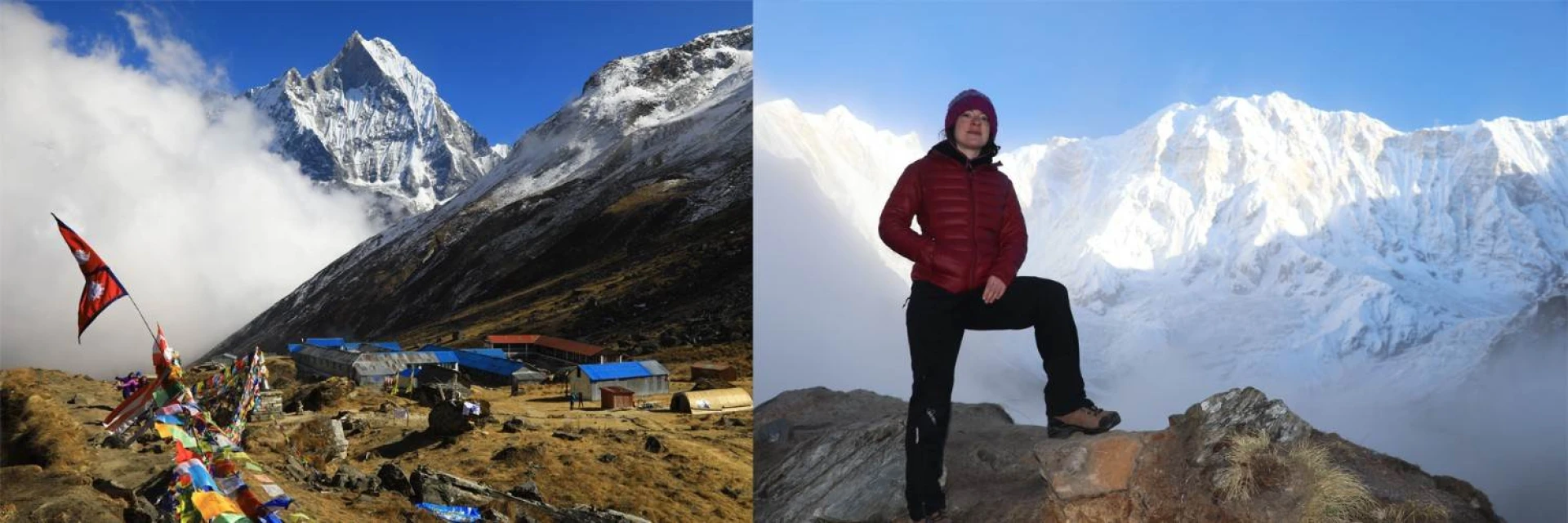
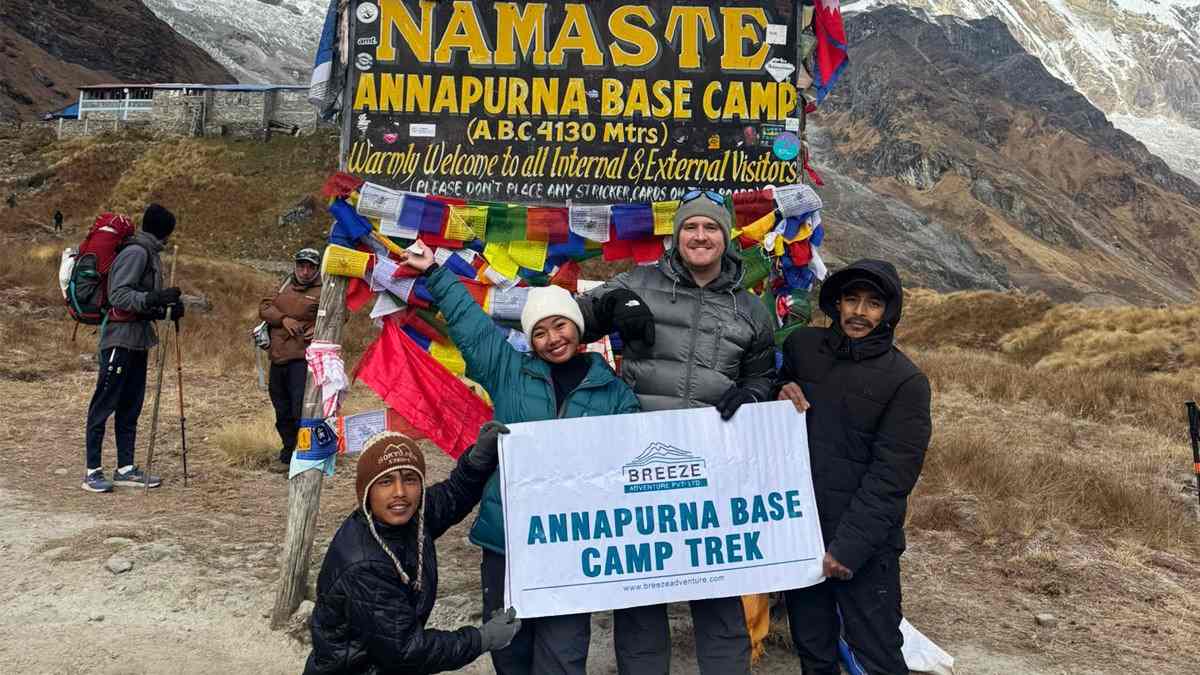
Annapurna Base Camp sits at 4,130 metres (13,550 feet) in north-central Nepal. It lies inside a ring of giant peaks called the Annapurna Sanctuary, deep in the Annapurna Conservation Area. From base camp, you stand in a bowl of mountains, with Annapurna I (8,091 metres, the world's tenth-highest mountain) on one side and the sharp, famous peak of Machapuchare, the "Fishtail," on the other.
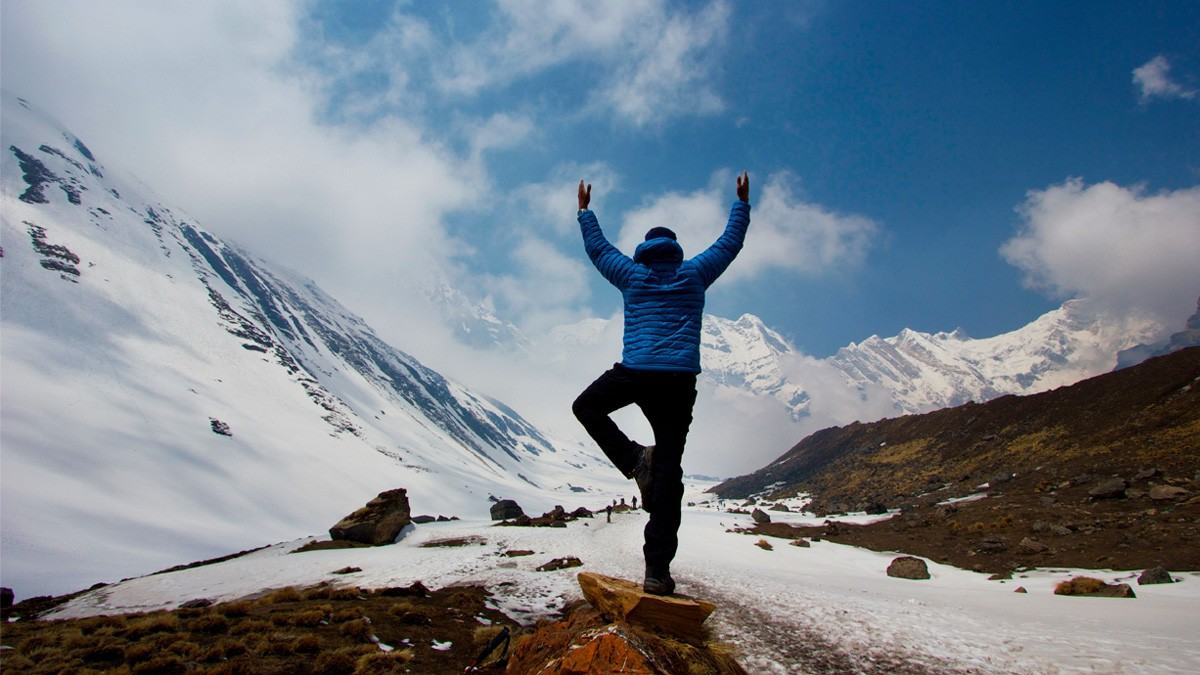
Yoga moves in Annapurna Base Camp Nepal
The classic trek to get there takes about 7 to 11 days, with 9 days being a comfortable pace for most people. You start near the lakeside town of Pokhara, walk in through villages like Ghandruk and Chhomrong. Then climb slowly up the Modi Khola River valley through forests of rhododendron and bamboo. You spend a night or two high up, and then walk back down.
A wellness trek follows the exact same trail, but the trip is built around slowing down instead of rushing to tick off the base camp and leave. A standard group might race up and back. A wellness group walks at an easy pace, adds things like morning yoga, breathing practice, and quiet time, and treats the walk itself as the point. You're not trying to set any records. You're trying to feel better.
Why a wellness trip makes sense right now
We spend more time on screens than ever. Work follows us home on our phones. Sleep is worse, stress is higher, and real rest is getting harder to find. You don't need a study to tell you that, though plenty exist.
A wellness trek quietly fixes a few of these at once, simply by its nature. Up in the mountains there's often no signal, so the phone goes quiet on its own. You move your body for hours, which most of us never do. You go to bed not long after dark and wake with the light. You talk to real people over dinner instead of typing at them.
None of this is magic. It's just the simple stuff our bodies were built for, packed into one trip. For a lot of people, a week on the trail does more for their head than a month of good intentions at home. That's the real reason these trips have grown so fast.
What's different from a normal ABC trek
The route is the same. But the way you walk it is not.
A standard Annapurna Base Camp trek often pushes long days to save time and money. A wellness trek keeps the days shorter and the pace easy, so your body has room to adjust and your mind has room to settle. Mornings usually start with some gentle stretching or yoga and a few minutes of slow breathing. That breathing isn't just for show. Higher up, where the air is thinner, slow and deep breathing actually helps you feel steadier and sleep better.
Wellness in Annapurna lets you recharge yourself in the lap of Himalayas
There's also time built in to do very little. You might sit by the river for an hour, soak in a hot spring, or read in the sun. On a rushed trek, that kind of hour never arrives. Groups tend to be smaller too, which keeps everything calmer and lets the guide watch how each person is really doing.
Good operators think hard about food and sleep as well, because both decide how you feel the next morning. Warm, simple, easy meals and a decent night's rest matter more at altitude than most people expect.
So a normal trek mostly asks how fast you can get up and down. A wellness trek asks how well you can feel along the way.
ABC Wellness Trip: The real benefits for your body and head
Let me be honest about what a trek like this does and doesn't do. It won't cure anything, and it won't change your life in a week. But the benefits are real, and most people start to feel them within a few days of ABC Trek.
The first one is physical. You're walking four to six hours a day on hills, which builds leg strength, stamina, and a steadier heart with no gym in sight. Plenty of people come home fitter than they've been in years. Sleep is the next thing to improve. Fresh air, honest tiredness, and early nights tend to fix a broken sleep pattern fast, and by the third or fourth night most people are sleeping deeper than they have in ages.
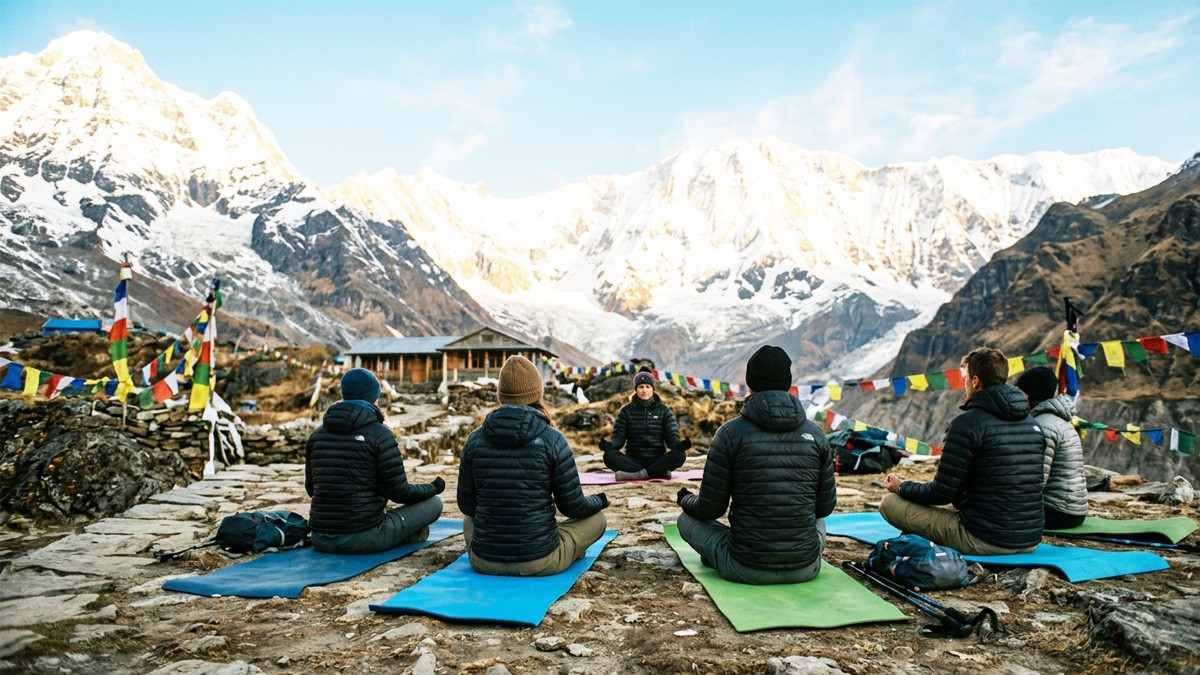
Meditation in fresh air
Then there's your head. With nothing to scroll and no messages coming in, the low background hum of worry starts to settle. The walking turns into a kind of moving meditation, and problems that felt enormous at home often look a lot smaller from up there. The slow breathing you practise each morning has a way of sticking with you after the trip, and so does the habit of simple food and real hunger.
The last benefit is the hardest to put into words. Standing in the cold at dawn while the first light hits a snow peak is the kind of moment that pulls you all the way into the present. Most of us lose that feeling in ordinary life. A trip like this hands it back.
How the wellness part actually works
People often ask what the "wellness" part really looks like day to day. It isn't a spa. It's a set of simple practices woven into normal trekking. A good trip usually includes most of these:
Gentle yoga or stretching most mornings, to loosen stiff legs before the day's walk.
Slow breathing sessions, which calm the mind and genuinely help your body cope with thin air.
A few minutes of guided meditation or quiet sitting, often with a mountain filling the view.
Mindful walking at an easy pace, phone away, actually noticing where you are.
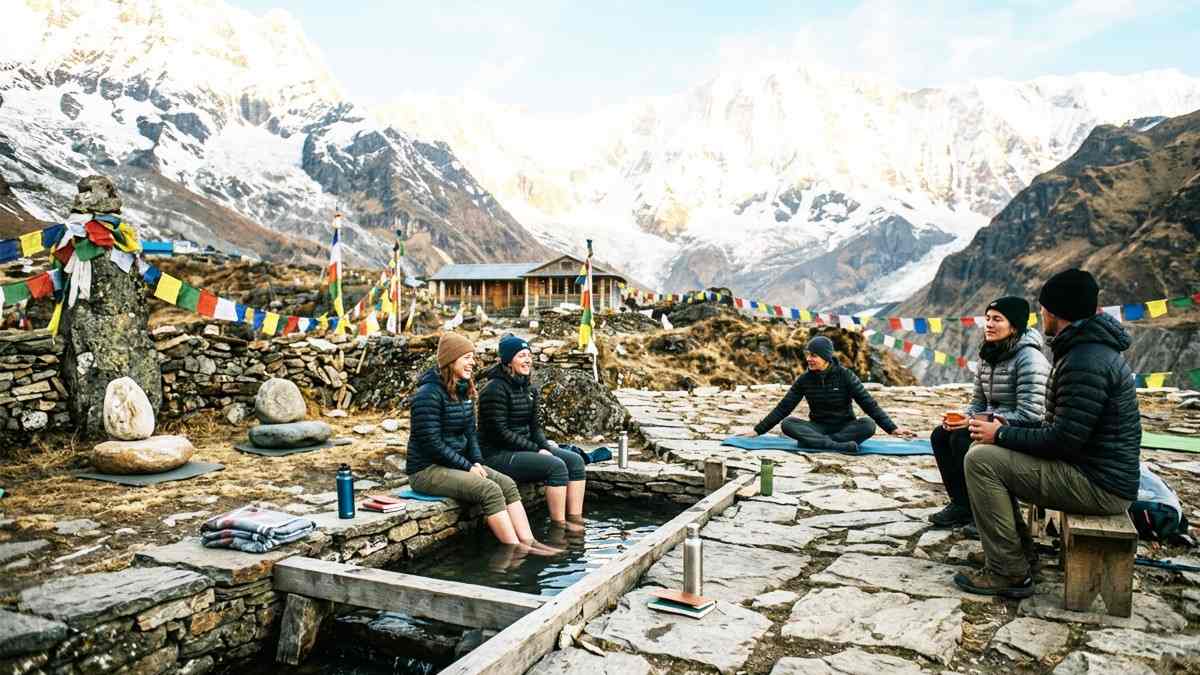
A soak in the natural hot springs at Jhinu Danda on the way down, which does wonders for sore muscles.
A screen break that happens on its own, since the signal is patchy to none for much of the trail.
Simple local food, plenty of water and early nights, all treated as part of the trip rather than an afterthought.
Time with local Gurung families and your trek crew, which is its own quiet kind of healing.
None of it is complicated. That's the beauty of it. You're just doing a few good things, every day, in a place that makes them easy.
What you actually do, from the trailhead to base camp and back
Here's the shape of a typical trip, so you know what you're signing up for.
Annapurna Base Camp wellness trip with Breeze Adventure team
You'll usually fly or drive to Pokhara first and spend a night by the lake before the trek begins. A short drive the next morning gets you to the trailhead near Nayapul or Siwai, and from there you're on your feet.
The first couple of days take you up through terraced farmland and Gurung villages like Ghandruk and Chhomrong. There the peaks grow bigger ahead of you. Then the trail drops into the Modi Khola gorge and climbs through cool, mossy forest, past small settlements called Sinuwa, Bamboo and Dovan. These are gentle, green days, full of waterfalls and birdsong and not much hurry.
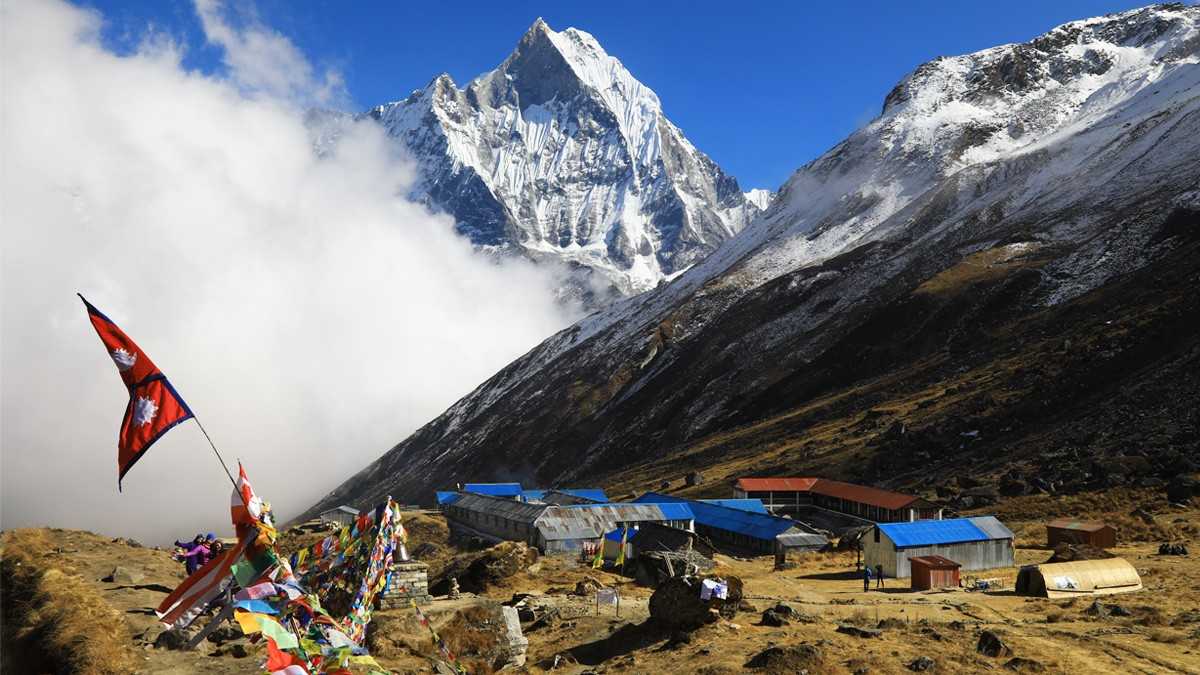
Higher up, the forest thins out, and the valley opens into the Annapurna Sanctuary. Most groups sleep at Machapuchare Base Camp (3,700 metres) to help the body adjust, then make the short, early walk up to Annapurna Base Camp Nepal, the next morning. Standing there at 4,130 metres, ringed by white peaks with the sun coming up, is the moment the whole trip builds toward. This is where a wellness group will often sit for some quiet time or a short meditation. The place earns it.
Then you turn around and walk back down the same valley, which feels like a different trail going the other way. The big reward on the way out is Jhinu Danda, where you climb down to the river and sink into the hot springs. After days of walking, that first soak is hard to beat. From there it's a final stretch and a drive back to Pokhara, usually with a proper bed and a hot shower waiting.
Best way to do Annapurna Wellness Trip
Start with the mountain you'll be staring at for days. Machapuchare, the sharp "Fishtail" peak above the trail, has never been climbed and is closed to climbers for good. The Gurung people hold it sacred, as a home of the god Shiva. There's something quietly moving about a mountain that people have chosen to leave alone.
The hot springs are worth understanding too. No machine heats the pools at Jhinu Danda. They're natural, fed by warm water from deep underground, sitting at around 35 to 40°C right next to the Modi Khola River. Locals call hot water tatopani. After days on your feet, lowering yourself in is a small, perfect reward.
Annapurna Trip Nepal is a hub for relaxation and happiness
The culture is part of the walk, not a side trip. The trail passes through Gurung and Magar villages, each with its own language, food, and way of life. A good wellness trek leaves time to actually sit with people instead of hurrying past for a photo.
And then there's the quiet. For long stretches, you'll hear nothing but wind, water, and your own boots on the path. In a world that never shuts up, that kind of silence is a reason to go all on its own.
One more thing worth knowing: this is a gentler trek than Everest Base Camp. Annapurna Base Camp tops out at 4,130 metres, well under Everest Base Camp's 5,364 metres. The altitude risk is lower, and the climb is kinder, which is exactly why it suits a slow, wellness-focused trip. And if you come in spring, the lower forests fill with red and pink rhododendron flowers, which might be the prettiest time of all to walk the valley.
Know before you go: planning your 2027 trek
This is the practical part. Get these right, and the rest of the trip takes care of itself.
Best time to go
There are two good windows for the ABC trip. Spring, from March to May, brings warm days, blooming rhododendrons, and clear mountain views. Autumn, from late September to November, brings the most stable, clear weather of the year, which is why it's the busiest season.
Winter is cold with snow high up, and summer (June to August) is the monsoon, with rain, leeches, and clouds that hide the peaks. For 2027, aim for spring or autumn, and book a few months ahead to get the best lodges and guides.
If you like greenery, then monsoon can also be a good option. Similarly, winter can be the right option if you like cold, thin air, and snowfall at higher altitudes.
Permits and the guide rule
You need one main permit: the Annapurna Conservation Area Permit (ACAP). It costs NPR 3,000 (about USD 23) for most foreign travellers, NPR 1,000 for citizens of SAARC countries, and it's free for children under 10. The old TIMS card has been on and off since 2023 and isn't reliably checked on this route, but your agency will handle whatever is needed.
One rule does matter: since 2023, solo trekking has not been allowed in the Annapurna region. You must go with a licensed guide, booked through a registered Nepali travel agency. For a wellness trip that's a plus, not a hassle.
Permit fees and rules can change, so confirm the latest before you travel.
How fit you need to be
This is a moderate trek, not a technical climb. There's no climbing gear and no ropes, just walking, including some long uphill days and many stone steps. If you can walk for four to six hours and you train with some hikes and stair-climbing for a couple of months beforehand, you'll be fine. The slower pace of a wellness trip makes it friendlier for beginners and older travellers than a standard trek.
Altitude and staying safe
Annapurna Base Camp is high enough (4,130 metres) that altitude sickness is possible, though serious cases are uncommon here because the climb is gradual. Most people feel nothing worse than a mild headache or some breathlessness. Breeze Adventure manages altitude sickness with an oxygen cylinder. Our skilled team members provide regular monitoring of the travellers.
The rules are simple: walk slowly, drink three to four litres of water a day, don't skip the night at Machapuchare Base Camp, and tell your guide right away if you feel unwell. Going down even a little usually fixes it fast. Nepal Travel insurance that covers high-altitude helicopter rescue is a must.
Annapurna Base Camp Wellness Trip: What it costs
Prices vary a lot by group size, length, and comfort. As a rough guide, a standard guided ABC trek often starts somewhere around USD 750-1000 per person and climbs from there with more comfort and smaller groups. Wellness-focused trips usually cost more because of smaller groups, extra rest days, and the added practices.
Always check exactly what's included: permits, guide, porter, lodging, meals, and transport to and from Pokhara. (These figures are approximate and change year to year.)
What to pack
You don't need much, but a few things matter in ABC trip packing:
Broken-in walking boots and good socks (blisters ruin treks).
Warm layers for the top, plus a warm hat and gloves. It's cold at base camp even in peak season.
A waterproof jacket, whatever the forecast says.
A reusable water bottle and a way to purify water.
Sunscreen, sunglasses, and lip balm. The high sun is strong.
A small first-aid kit with blister care and any personal medicine.
A headlamp or torch, and a power bank, since charging gets scarce and pricey higher up.
Tea houses provide blankets, but a liner or light sleeping bag adds comfort. Pack light, and let a porter carry the heavy bag so you can enjoy the walk.
Who this trip is perfect for (and who should wait)
This trek suits more people than you'd think, but it isn't for everyone.
It's a great fit if you're burned out and need a real reset, if you want adventure without extreme risk, if you like the idea of mixing walking with yoga and quiet, or if you're an older or first-time trekker who'd rather take it slow. Solo travellers do well on it too, since the small group and shared guide make it easy to meet people.
It's probably not the right trip if you can't walk for several hours a day, or if you have a serious heart or lung condition that altitude could make worse (check with your doctor first). If your idea of a holiday is lying by a pool and not moving, this won't be it. And if you're chasing a hard physical challenge and personal records, a standard fast trek might suit you better than a gentle wellness one. For those who want just a wellness trip and no trekking, you can opt for Lumbini Wellness Tour Nepal, or Pokhara Wellness Trip.
If you're somewhere in the middle and simply curious, that's usually a good sign you'll get a lot out of it.
FAQs
1. How hard is the Annapurna Base Camp Wellness trip?
It's a moderate journey, not a climb, with long walking days and plenty of stone steps but no technical sections. With a little training and a slow pace, most reasonably fit people manage it well.
2. How many days does it take?
The trek usually runs 5 to 9 days, with 7 days being a comfortable and popular choice. A wellness trip may add a day or two for rest and acclimatisation.
3. When is the best time to go in 2027?
Spring (March to May) and autumn (late September to November) are the two best windows, with clear views and stable weather. Autumn is the most reliable, while spring adds blooming rhododendrons.
4. What permit do I need?
You need the Annapurna Conservation Area Permit (ACAP), which costs about NPR 3,000 (USD 23) for foreign travellers. Your trekking company usually arranges it for you.
5. Can I trek to Annapurna Base Camp alone?
No. Since 2023, solo trekking has been banned in the Annapurna region, so you must go with a licensed guide booked through a registered agency.
6. Will I get altitude sickness?
It's possible above 2,500 metres, but serious cases are uncommon on this trek because the climb is gradual. Walking slowly, drinking plenty of water, and sleeping at Machapuchare Base Camp greatly lower the risk.
7. Do I need to be very fit?
No, but you should be able to walk four to six hours a day on hills. Regular walking and stair-climbing beforehand make a big difference.
8. How much does the trek cost?
A standard guided ABC trek often starts around USD 750-1000 per person and rises with comfort and smaller groups. Wellness trips usually cost more because of added rest days, practices, and smaller group sizes.
9. Is the trek safe?
Yes, it's one of Nepal's safer and most popular treks, especially with a good guide and a sensible pace. Travel insurance that covers high-altitude helicopter rescue is strongly recommended.
10. Can complete beginners do it?
Yes, plenty of first-timers finish the ABC trek every year, and the slower wellness pace makes it even more beginner-friendly. The key is honest preparation and a willingness to take it easy.
Final thoughts, and your first step
An Annapurna Base Camp wellness trek won't solve everything waiting for you back home. But it will give you something most holidays don't: a stretch of days where your body moves, your phone stays quiet, and your head finally gets some room. For a lot of people, that turns out to be exactly what they didn't know they needed.
If 2027 is the year you want to do this, the first step is simple. Pick your season (spring or autumn), choose a trekking company that runs proper wellness trips with small groups, and start taking regular walks now to build your base. Everything else falls into place from there.
The mountains have been standing there a very long time, and they'll wait. When you're ready, they're worth the walk. Contact us to book your welness trip.
Kishwor Adhikari is a passionate writer with a deep enthusiasm for trekking and adventure. His extensive travels across Nepal, exploring its diverse landscapes and hidden corners, have shaped his unique perspective on the country's natural beauty. With a wealth of first-hand experience in adventure trekking, Kishwor has become a trusted voice for fellow enthusiasts. Through his writing, he shares invaluable insights, offering practical advice and inspiration for both seasoned trekkers and novices alike. His dedication to sharing his journey and knowledge helps others discover the wonders of Nepal's wilderness, making his work an essential resource for anyone seeking adventure in the region.