Lumbini, the birthplace of Gautam Buddha, is a perfect destination for a wellness retreat. This wellness hub offers profound healing through peace and spirituality.
Actually, most people come to Nepal for the mountains. They fly into Kathmandu, trek Everest Base Camp or Annapurna, buy the prayer flags, and go home with sore legs. All they carry is camera rolls and mountain memories. They forget about Lumbini, which sits in the flat green south of the country, far from all chaos, and it asks something different of you. It asks you to slow down.
If you've been running on empty, too many screens, too little sleep, a mind that won't switch off, this is the trip I'd point you toward in 2027. Not because it's trendy. Because it actually works.
Let me tell you why.
Table of Contents
Lumbini- The place where it all began
Around 563 BCE, a queen named Maya Devi, traveling to her parents' home to give birth, stopped in a garden of sal trees and bathed in a pond. There, under the trees, she gave birth to a boy named Siddhartha Gautama. He grew up to become the Buddha, and the garden where he took his first breath is called the Lumbini Pilgrimage Site.
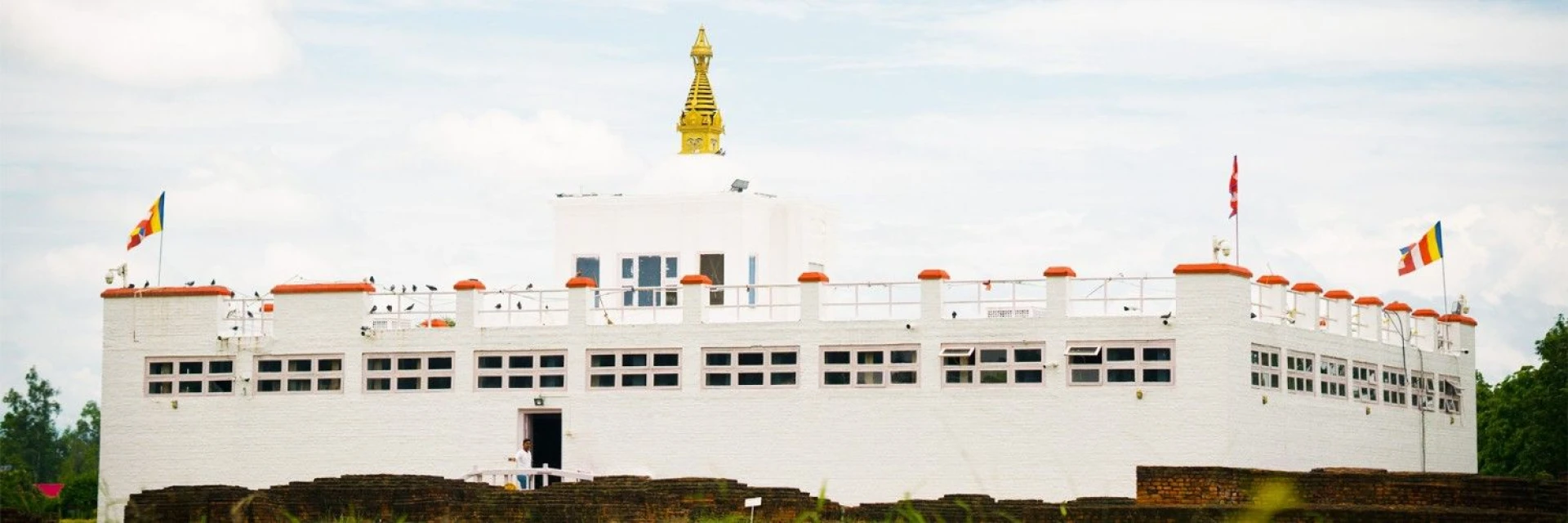
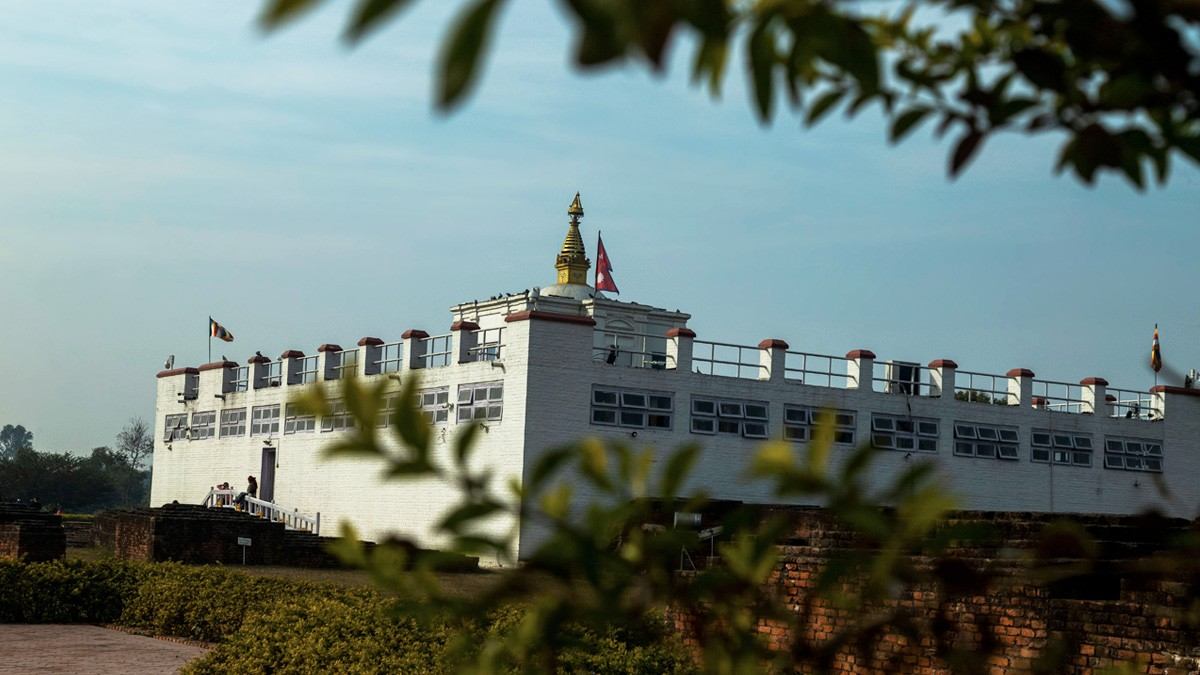
Inside the modest white Maya Devi Temple, protected under glass, sits a small sandstone marker stone, unearthed in 1996, that pinpoints the precise place of the birth. A few steps away stands the Ashoka Pillar, planted in the ground in 249 BCE by the Mauryan emperor Ashoka during his own pilgrimage here.
Lumbini is famous as the birth place of Gautam Buddha
The inscription carved into it, in ancient Brahmi script, says that here the Buddha was born. It is the oldest written evidence of the Buddha's life anywhere on Earth. And in 2013, a team from Durham University digging beneath the temple found the remains of a timber shrine from the 6th century BCE. This pushed the confirmed sacred history of this ground back roughly 350 years, to within living memory of the Buddha himself.
You can stand there and grasp that. This is not a legend dressed up for tourists. This is a documented spot on the planet, held sacred without a break for two and a half thousand years. UNESCO made it a World Heritage Site in 1997. Buddhists count it as one of the four great pilgrimage places, alongside Bodh Gaya, Sarnath, and Kushinagar.
But you don't have to be Buddhist to feel it. Plenty of visitors arrive as sceptics and leave quiet.
Why Lumbini is different from anywhere else in Nepal
Kathmandu is a cultural hub, wonderful and completely exhausting. Lumbini is the opposite. The great Japanese architect Kenzo Tange laid out the whole sacred complex in the 1970s, deliberately designing it around silence, water, and open sky.
Walk it, and you'll understand the plan. At the heart is the Sacred Garden, with the temple, the pillar, the ancient pond, and a grove of old trees strung with prayer flags. North of that runs a long central canal you can drift along in a slow boat. On either side of the water sits the Monastic Zone, where more than thirty monasteries have been built by different Buddhist nations, each in its own style. Thailand's is white marble.
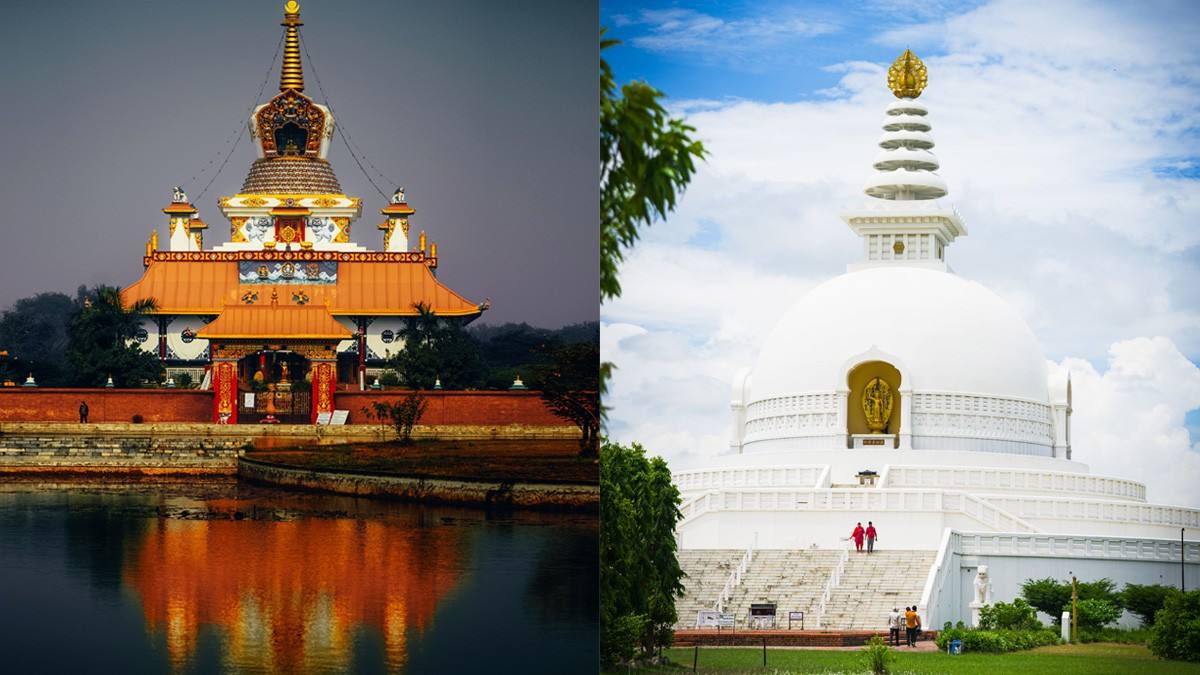
Myanmar's Golden Temple glitters like a smaller Shwedagon. Germany contributed the Great Lotus Stupa with its painted interior. Korea's Dae Sung Shakya is the tallest thing in the complex. You can spend a whole day cycling from one country to the next, and it feels a little like walking through the entire Buddhist world in an afternoon.
At the far end stands the World Peace Pagoda, a pure white dome built by Japanese Nipponzan Myohoji monks. And near the garden burns the Eternal Peace Flame, lit on the first of November, 1986, and never put out since.
Wetlands here, too, are home to the rare Sarus crane, the world's tallest flying bird. So it's not unusual to look up from a meditation cushion and see a pair of them stalking through the reeds.
The point is this: Lumbini isn't a monument you tick off in an hour. It's a landscape built to hold your attention gently for days.
What "wellness" actually means in Lumbini
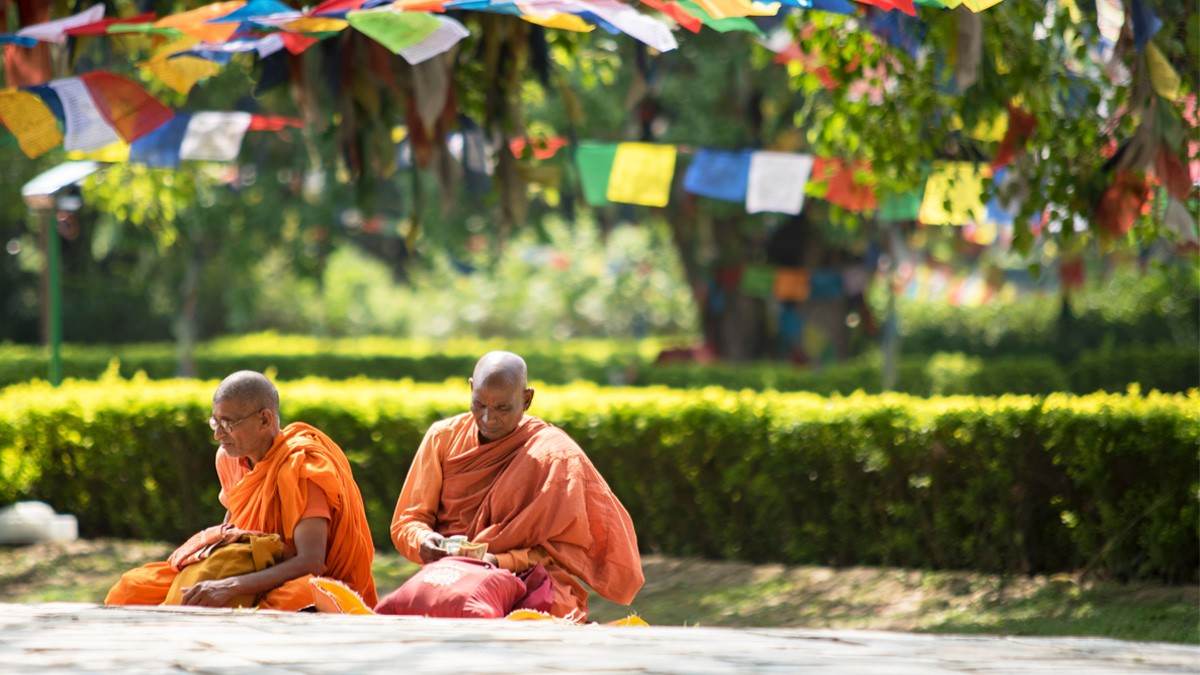
Monks in Lumbini Pilgrimage Site
Wellness has become a word slapped on green juice and infinity pools. Lumbini's version is older, plainer, and honestly more effective. Here's what genuinely works on this trip, based on what's really on offer.
Real meditation, from real teachers: This is not a hotel spa reading you a script. The Panditarama Lumbini International Vipassana Meditation Centre was founded in 1999 by a Burmese master. It runs residential retreats the traditional way, days that alternate hours of sitting meditation with hours of slow walking, structured around simplicity and silence.
There's also a Goenka-tradition Vipassana centre running the classic ten-day courses. Both run on donation, the ancient principle of dana, not a fixed fee. If a full retreat feels like too much, our package includes guided sessions with experienced teachers so you get the technique properly, in small doses, in the exact place where mindfulness began.
Sound healing that predates the word: Tibetan singing bowls, bells, and low chanting have been used across the Himalaya for centuries to drop the body into stillness. A good session leaves you loose and clear-headed in a way that surprises first-timers. We build these into the itinerary, either as standalone evenings or woven into longer stays.
Gentle yoga and mindful movement: Slow morning stretches on the monastery grounds, breathing practice as the mist lifts off the canal. Nothing performative. Just enough to wake the body kindly.
The healing that has no technique at all: This is the one people underestimate. There's a specific kind of rest that comes from a place with no traffic noise, no rush, vegetarian food eaten slowly, and early nights. Several days of that resets something. Guests routinely tell us they slept better in Lumbini than they have in years. That isn't magic. It's what happens when you finally stop.
Who this trip is for and what you'd actually do
The Lumbini Wellness trip is actually for everyone who wants a proper healing of body, mind, and soul. Here’s who can take maximum benefits of this:
The burned-out professional: You don't need a spiritual awakening. You need to switch off. Four or five days of walking meditation, boat rides, sound baths, and unhurried meals will do more for you than another beach holiday you spend answering emails.
The solo traveller and seeker: Lumbini is one of the safest, most contemplative places to travel alone in South Asia. It is well managed, well kept, and welcoming to guests from everywhere. Join a short retreat, sit with the monks at morning and evening chanting, and go as deep as you want.
Couples: A rare kind of trip: no packed schedule to argue over, no queues, just long quiet days, cycling between monasteries, watching the light change on the water. People come back closer.
Families with older kids and teenagers: The cycling, the crane-filled wetlands, the "temple from every country" tour- it turns a history lesson into an adventure. And the calm rubs off on everyone.
Devout pilgrims. For Buddhists, standing at the marker stone and the Ashoka Pillar is the journey of a lifetime. We handle the logistics so you can focus entirely on the pilgrimage.
Why 2027 is the right year to go
Beautiful monuments in Lumbini Nepal
For a long time, the hard part of Lumbini was simply getting there. The overland haul from Kathmandu City can eat the best part of a day.
That's changing. Gautam Buddha International Airport at Bhairahawa, roughly a thirty-minute drive from the Sacred Garden, opened in 2022 and is finally building out its international connections, with pilgrim and regional routes coming back onto the schedule. It means you can increasingly land close to Lumbini instead of grinding across the country to reach it. Getting in is becoming easier, which is exactly why the smart time to go is now, before the wider world catches on.
A note on timing: come between October and March. The air is soft, the mornings are cool, and the light is beautiful. Skip April to June, when the plains bake past 38°C, and skip the July–September monsoon. If you want the sacred energy at full volume, Buddha Jayanti in May fills the garden with pilgrims- spectacular, but crowded.
Best way to do Lumbini wellness Retreats
Combine your Himalayan trekking with a Lumbini wellness trip. This is the best way; you can satisfy your soul with breathtaking mountain views and a calm Lumbini atmosphere.
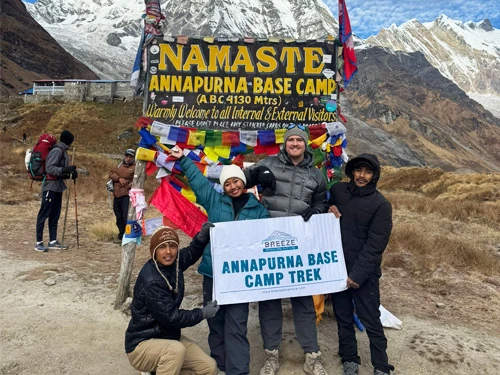
You can enjoy a Short Annapurna Base Camp trek and, right after that, take soothing wellness in Lumbini. The relaxation, meditation and spa just after short Himalyan trekking, means the actual trip of Nepal. From adventure to wellness, you will get complete healing of your body, mind, and soul. Also, there will be spiritual achievement in the land of Gautam Buddha.
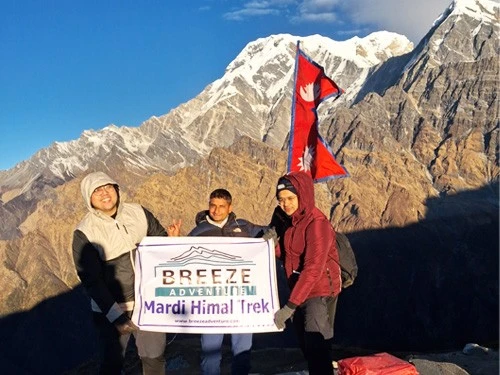
Other short trip options are the 2-day Poon Hill Trek, Mardi Himal Trek, or Langtang Trek. You can either trek, take a jeep ride, or combine both. The 2-3 day trips are enough to enjoy the soul of the Himalayas. After that, calm meditation, spa, and chanting in the Lumbini Pilgrimage. There is nothing close to this pleasure.
What our 2027 Lumbini package includes
We've built this so you arrive, exhale, and let us carry the rest:
Comfortable stays, from simple monastery guesthouses to quiet hotels a short walk from the Sacred Garden
Guided visits to the Maya Devi Temple, Ashoka Pillar, Sacred Pond, the Eternal Peace Flame, and the world's monasteries
Guided meditation and mindfulness sessions with experienced teachers
Traditional sound healing with Tibetan singing bowls
Gentle morning yoga and breathwork
Simple, nourishing vegetarian meals
Slow boat rides along the central canal and a cycling tour of the Monastic Zone
Airport transfers and all local logistics handled end to end
The option to extend into a full residential Vipassana retreat if you want to go deeper
You come with an open mind. We take care of everything else. We suggest you enjoy just 2 days Poon Hill Trek before the Lumbini Wellness Retreats. You will have the best of your healing journey.
Come and put yourself back together
There aren't many places left that ask nothing of you except that you be present. Lumbini is one of them. Two and a half thousand years ago, a child was born here who spent his life teaching people how to quiet their minds. You can go to the exact spot and try it for yourself.
Spaces on our 2027 journeys are limited, and the good months fill early. If some part of you has been waiting for a reason to slow down, this is it.
Reach out today to reserve your place on the 2027 Lumbini Wellness & Spiritual Retreat. Tell us how many days you have and what you're looking for, and we'll build the trip around you. It is best to do a short trek first, then move towards wellness programmes.
Frequently Asked Questions
1. Why is Lumbini a big deal for a wellness trip in 2027?
Nepal has officially named 2027 its National Wellness Year, and Lumbini, the birthplace of Buddha, is being developed as a global center for spirituality and meditation. It has meditation retreats and pilgrimage wellness packages based on Buddhist philosophy. So it's basically the year the whole country is pushing this kind of travel, and Lumbini is the heart of the spiritual side of it.
2. What actually is a Lumbini wellness tour?
It usually mixes visits to the sacred sites with meditation, mindfulness sessions, and simple healthy living. Think early morning walking meditation, silent sessions, vegetarian meals, and lectures on Buddhist thinking rather than a packed sightseeing rush.
3. When is the best time to go?
Aim for October to April. Lumbini sits in Nepal's hot southern plains, so it's best to avoid May to September for the heat and monsoon. Cool, dry mornings are perfect for meditation and moving around.
4. How do I get to Lumbini?
The easiest way is to fly from Kathmandu to Gautam Buddha International Airport in Bhairahawa, which is about 22 km away, then take a short taxi ride of roughly 30 to 40 minutes. If you're on a budget, tourist buses run from Kathmandu but take around 8 to 10 hours.
5. What will I see there?
The main draw is the Maya Devi Temple, marking the exact birth spot, along with the Ashoka Pillar, the sacred pond, and a Monastery Zone with 20+ international temples. Each monastery is built by a different country, so you can wander between very different meditation styles in one afternoon.
6. What's the entry fee?
For foreigners, it's roughly NPR 1000 depending on the ticket. The Monastery Zone itself is free, though some temples ask for a small donation.
7. Can beginners do the meditation, or is it only for serious practitioners?
Beginners are totally fine. The international monastic zone lets you learn diverse meditation techniques from different Buddhist traditions, so you can start with simple guided or walking meditation and go deeper only if you want to.
8. How many days do I need?
For a proper wellness visit, plan two to three days. Two full days is really the minimum to see the Sacred Garden and both Monastery Zones without rushing, and a wellness retreat naturally wants a slower pace anyway.
9. Is a Lumbini retreat a quick relaxing getaway?
Not exactly. Lumbini is where people go when they want to go deep, not a weekend retreat but a genuine reset of inner life, often with monastery-based silent meditation. If you want a lighter, spa-style break, Pokhara suits that better.
10. Will 2027 be more crowded or better organized than usual?
The government is putting money into religious hubs like Lumbini and rolling out national wellness standards and a code of conduct by the end of 2027. So, retreats should be more certified and reliable, but popular dates and festivals will fill up fast. Booking early is smart.
Kishwor Adhikari is a passionate writer with a deep enthusiasm for trekking and adventure. His extensive travels across Nepal, exploring its diverse landscapes and hidden corners, have shaped his unique perspective on the country's natural beauty. With a wealth of first-hand experience in adventure trekking, Kishwor has become a trusted voice for fellow enthusiasts. Through his writing, he shares invaluable insights, offering practical advice and inspiration for both seasoned trekkers and novices alike. His dedication to sharing his journey and knowledge helps others discover the wonders of Nepal's wilderness, making his work an essential resource for anyone seeking adventure in the region.