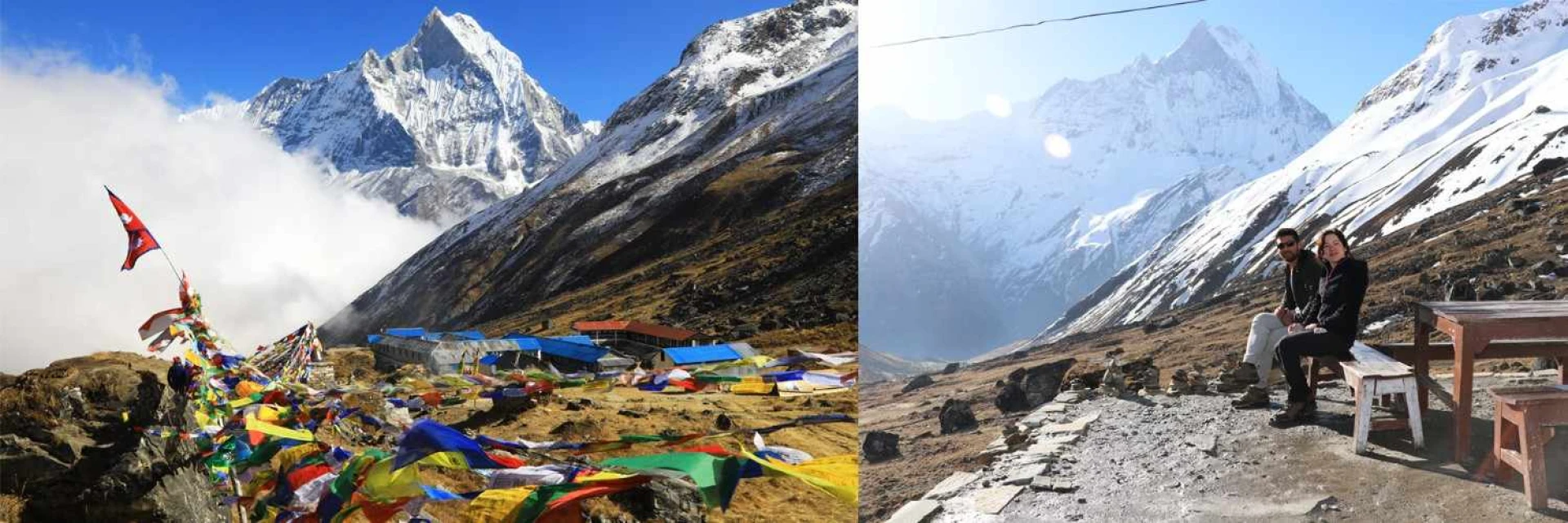
If you are wondering whether you can do the Annapurna Base Camp Trek in June, then let me tell you, this trek is absolutely doable in June. A lot of people who do it walk away saying it was the best decision they made. The trail is emptier, the hills are impossibly green, the waterfalls are roaring at full volume, and the lodges actually have room for you. You trade some afternoon cloud for a kind of solitude you simply cannot buy in October.
Based on my decades-long experience, June is the month actually best for adventure lovers and peace seekers. June is the month when most of the foreign trekkers have gone home, and the Annapurna trails go quiet. I think that's the right time to enjoy the peaceful trail with green natural beauty.
People say to avoid June for monsoon rain, but due to changes in climatic situations and global warming, June is no longer a month with disturbing rain in the Annapurna Region. In fact, it is the time for peaceful adventure and a unique experience. So let me walk you through what June really looks like on this trek.
Table of Contents
What June actually feels like on the trail
ABC Trek in June feels amazing with stunning views
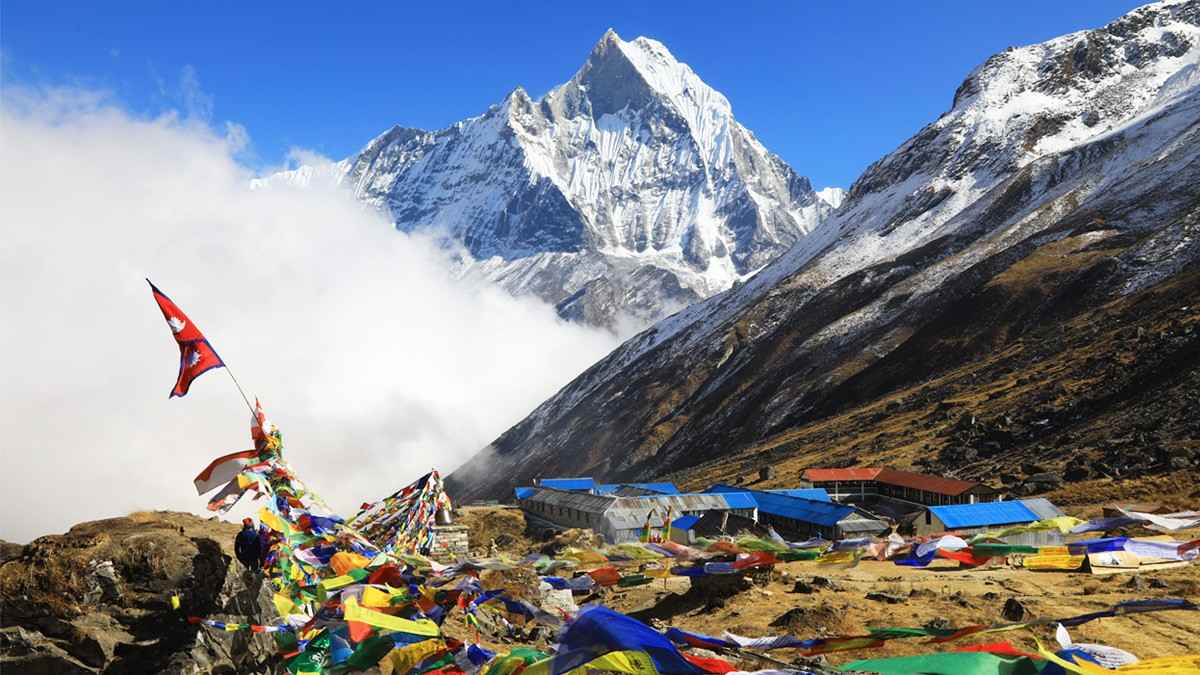
The first thing you notice is the green. After spring, the rhododendron forests below Chhomrong have thickened up, the bamboo groves are dense and dripping, and the rice terraces around Ghandruk and Landruk glow that electric shade of green you only get in the early monsoon. Similarly, the Modi Khola, the river you follow most of the way up, runs loud and full. Waterfalls that are a trickle in autumn come back to life.
In June, the daytime temperatures sit in a comfortable range. At the lower and middle elevations, you're looking at roughly 16 to 20°C while you walk, warm enough that you're hiking in a t-shirt most of the day. Up at Annapurna Base Camp itself, at 4,130 metres, the daytime average is around 16°C with nights dropping to about 3°C. That's mild for a Himalayan base camp. You won't be fighting the deep cold that winter trekkers deal with, and the high section is free of the snow that can block the trail earlier in the year.
The trail is also yours in a way it never is in peak season. In October, you queue on the stone staircases above Chhomrong. In June, you might walk for an hour and see no one. The tea house owners actually have time to sit and talk with you. That changes the whole texture of the trip, right? Also, the trek becomes more in your budget, being offseason.
What is special about the ABC Trek in June?
ABC Trek in June is a different experience, you feel the journey to the fullest, like no other time of the year. The fewer crowd, more greenery, and occasional rain makes this trek really memorable. Here’s what you can expect in June:
1. Solo Sanctuary on a Crowd-Free Trail
During the peak months of October or April, the ABC trail winding through the Annapurna Conservation Area (ACA) can become highly congested. June offers a stark contrast. Because it falls outside the standard peak window, mass-tourism traffic thins out dramatically. You will often find yourself walking for hours without seeing many trekkers. The peace turns iconic stops like Poon Hill and the Machapuchhare Base Camp into deeply personal, meditative spaces.
2. Lush, Emerald-Green Bio-Diversity
June breathes vibrant life into the lower valleys of the Modi Khola river basin. Fueled by early summer showers, the sub-tropical forests, terraced rice paddies, and alpine meadows transform into a saturated, striking emerald green. The region is home to over 1200 species of flowering plants. During this month, the vegetation is at its most dense and visually stunning. This creates a brilliant contrast against the grey granite and white glacial ice of the higher elevations.
3. Crisp Morning Panoramas
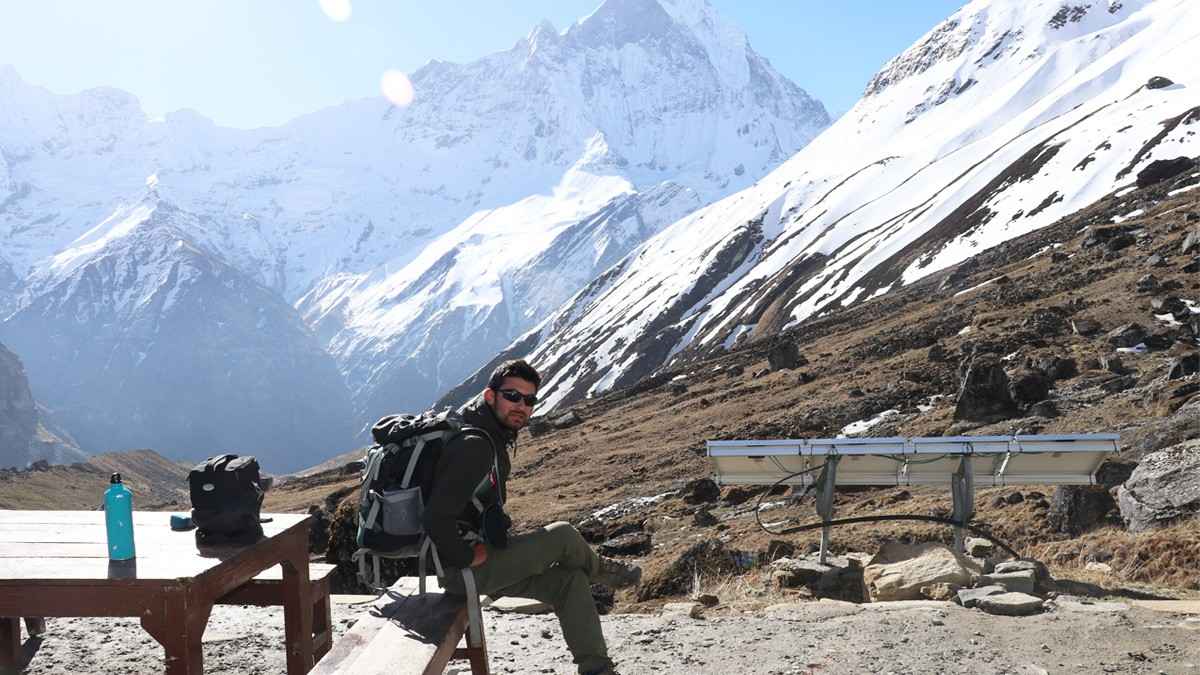
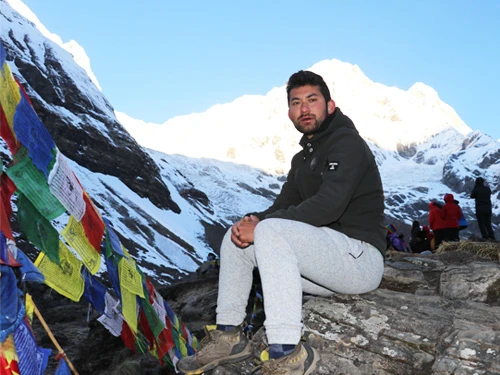
Morning view capturing Snow clad mountain in Annapurna Base Camp
While afternoon clouds are common as the monsoon cycle builds, June mornings are frequently clear, crisp, and completely clear of dust. Waking up at dawn reveals sharp, uninterrupted views of the Annapurna Massif, including Annapurna I, Annapurna South, and the sacred, unclimbed peak of Machapuchhare. The early morning alpine glow hitting these faces is exceptionally vivid during the summer.
4. Vibrant "Teahouse Culture" and Authentic Hospitality
With fewer trekkers on the trail, the local Gurung and Magar lodge owners have far more time to interact with visitors. Rather than managing chaotic dining halls, hosts frequently invite June trekkers around the central kitchen stoves. This offers a genuine look into their traditional mountain lifestyle, folklore, and local hospitality. You will enjoy freshly prepared Dal Bhat and customized care that simply isn't possible during peak bottlenecks.
5. Energetic, Roaring Waterfalls and Rivers
The increased humidity and early summer precipitation completely revitalize the hydrology of the region. Glacial melt, coupled with seasonal rain, causes the waterfalls cascading down the steep Modi Khola gorge to swell to their maximum volume. Watching these massive torrents drop hundreds of meters off vertical quartz cliffs offers an intense display of raw natural energy that autumn trekkers miss entirely.
6. Warmer High-Altitude Temperatures
Trekking to an elevation above 4,000 m can involve dealing with bitter, sub-zero conditions. However, June brings some of the warmest temperatures of the year to the sanctuary. While you will still need protective layers for the evenings at ABC, the daytime trekking temperatures at lower and mid-elevations are pleasant and warm. This eliminates the biting, freezing chill associated with winter or late-autumn itineraries.
Essential Trekking Tip for June: To maximize your experience, start your trekking days very early (by 5:00 AM or 6:00 AM). This allows you to complete your daily altitude gains during the clear, dry morning window well before afternoon cloud cover or convective showers set in. Packing high-quality waterproof gear, gaiters, and insect defense is highly recommended for the lower forest sections.
Alert: Since this month brings rain in most of the places on the ABC trail, there may be leeches on the way. So, be prepared for dealing with them.
Can you actually see the mountains in June?
This is the real question, and it's the one most pages answer badly. They'll tell you "clouds block the views" and leave it there, as if you'll spend a week staring at grey. That's not how it works, and knowing how it works is the difference between a great June trek and a frustrating one.
Here's the pattern. In the early monsoon, the sky tends to be clearest in the early morning, before the valley heats up and the clouds build. By late morning or afternoon, the cloud often rolls in, and the high peaks disappear. Then the cloud frequently clears again at sunset, and the night skies can be startling.
So the move is simple: get up early. Be walking by 6 or 6:30 in the morning. The trekkers who time their high days this way regularly get clean, fleeting views of Machapuchare (the Fishtail) and Annapurna I before the clouds come up. Plenty of June trekkers reach Annapurna Base Camp to find the Sanctuary clear at dawn, with the amphitheatre of peaks lit gold, and then watch it close in by mid-morning. You don't get the all-day, postcard clarity of October. You get something more dramatic and more earned: the mountains revealing themselves for an hour and then pulling the curtain.
One more thing worth knowing: the higher you climb, the less it rains. Most of the wet falls on the lower forested sections. Up around Deurali, Machapuchare Base Camp, and ABC, conditions are often drier and clearer than down in the valley. That's good news, because the top is exactly where you want the view.
ABC Trek route, day by day
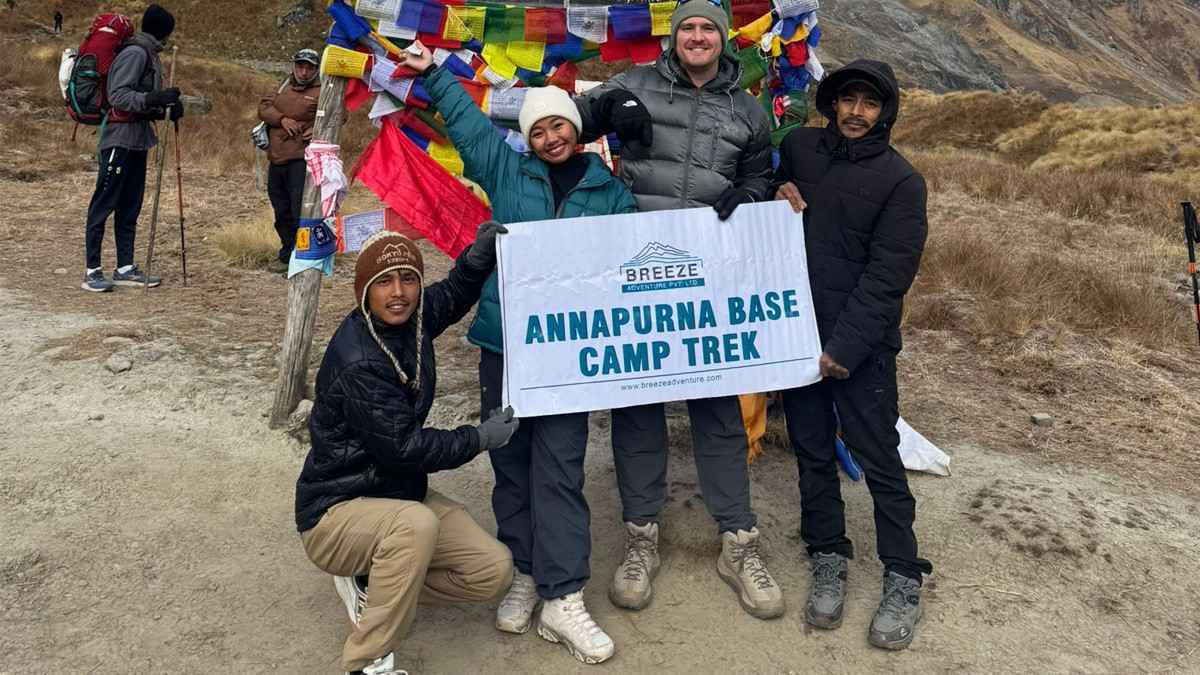
ABC Trek with Breeze Adventure team holding company banner
The classic Annapurna Base Camp trek runs around eight days of walking, roughly 80 to 90 kilometres round trip, usually packaged as an 8-day trip. You may add extra days for the Kathmandu City cultural tour and a buffer day. You can do it faster, but in June, I'd give yourself the full schedule so you have room to wait out a heavy morning if you need to.
Day 1: Pokhara to Banthanti (Drive) & Trek to Ghorepani:3.5h Drive | 3.5h Walk Max: 2,874 m.
Drive 3.5 hours (56 km) via Nayapul and Hile to Banthanti. Trek 3.5 hours through rhododendron forests to Ghorepani, a charming Magar cultural village.
Day 2: Early Hike to Poon Hill & Trek to Tadapani:5-6h Walk | Max: 3,210 m.
Hike 1 hour at dawn to Poon Hill for a panoramic Himalayan sunrise over Dhaulagiri and Annapurna South. Return for breakfast, then trek to Tadapani via Deurali.
Day 3: Trek Tadapani to Chhomrong:5h Walk | Max: 2,170 m.
Descend through rhododendron and oak forests past Chuile and Gurjung villages. Cross suspension bridges before climbing the stone steps into the Gurung village of Chhomrong.
Day 4: Trek Chhomrong to Himalaya:6-7h Walk | Max: 2,920 m.
Descend stone steps to the Chhomrong Khola, cross the bridge, and climb steeply to Sinuwa. Follow the trail through dense, humid bamboo forests past Bamboo and Dovan to reach Himalaya.
Day 5: Trek Himalaya to Annapurna Base Camp (ABC):5-6h Walk | Max: 4,130 m.
Ascend steadily along the Modi Khola valley past Deurali to Machapuchhare Base Camp (3,700m). Continue upward onto a gentler path to reach ABC, enveloped by a 360-degree mountain amphitheater.
Day 6: Explore ABC & Descend to Himalaya or Dovan:5-7h Walk | Max: 4,130 m (Start) / 2,600 m (End).
Catch the magical sunrise over Annapurna I and Machapuchhare. Retrace your steps back down the valley out of the alpine zone and re-enter the lush bamboo forests to spend the night in Himalaya or Dovan.
Day 7: Trek Himalaya/Dovan to Jhinu Danda (Hot Springs):7-8h Walk | Max: 1,780 m.
Trek back through Sinuwa, climb to Chhomrong, and make a final descent to Jhinu Danda. Walk down to the riverside pools along the Modi Khola to soak in the natural hot springs.
Day 8: Walk to Roadhead, Drive to Pokhara:20 min Walk | 3h Drive | Max: 1,400 m.
Walk 20 minutes from Jhinu Danda to the roadhead. Catch a jeep for a 3-hour drive back to Pokhara. Spend the afternoon relaxing, shopping, or boating around vibrant Lakeside and Phewa Lake.
The leech question, answered properly
Let's deal with this head-on, because the internet loves to make leeches sound like a horror film, and they're really not. They're harmless. They don't carry disease, the bite doesn't hurt (their saliva numbs it), and the only real annoyance is that the bite keeps bleeding for a while afterward because of a mild anticoagulant. That's it. People build them up into a deal-breaker, and it's just not warranted.
What helps is knowing exactly where you'll meet them. On this trail, leeches live in the damp forest zones below the alpine areas. The hotspots are the stretches below Chhomrong, the forest around Sinuwa and Bamboo, the climb up toward Deurali, and the lower trails through Ghandruk and Tadapani. You won't find them on MBC or ABC. They like wet leaf litter, shade, and humidity, and they're most active during light drizzle and right after rain.
Now the good part, which is how easily you handle them:
Wear leech socks, which are tightly woven knee-high socks you pull over your trekking socks and tuck your trousers into. This is the single most effective thing you can do. Tuck your shirt into your trousers and your trousers into your socks so there are no gaps. Stick to the centre of the trail and avoid brushing through wet foliage at the edges.
Carry a small bag of salt or a little Dettol, Savlon, or Iodex; a pinch of salt or a dab makes a leech let go instantly. And check your ankles and legs when you stop for a break. That's the whole defence. Trekkers who prep this way barely notice them, which means the right Annapurna Packing List makes this easy.
Honestly, after a day or two, you stop caring. They become part of the scenery, like the rain itself.
Does it rain all day in the ABC June trek?
No, and this is another thing people get wrong. June is the start of the monsoon, and yes, there will be rain, but it rarely rains all day, every day. The typical rhythm is clearer mornings, building clouds through midday, showers in the afternoon, and evening. Some days you'll walk for hours in nothing but humidity. Then a downpour will come through and pass.
That afternoon-rain pattern is exactly why the early-start strategy works so well. You do your walking and your view-catching in the morning, you're settled into your lodge with a cup of tea by the time the heavy stuff arrives, and you watch the storm roll up the valley from a dry porch.
Bring proper rain gear, and you'll be fine. A breathable rain jacket, a waterproof pack cover, quick-drying synthetic or merino layers (skip cotton, it stays wet), and a cheap travel umbrella, which Nepali porters swear by for light rain because it keeps you cooler than a sealed jacket. Trekking poles earn their keep on the wet stone steps.
Which week of June is best
If you have flexibility, aim for the first half of June. The monsoon usually arrives in Nepal somewhere at the end of the month. Even the whole month is doable without being disturbed by rain. The high altitude in this trail barely gets heavy rain.
Early June gives you the green hills and the empty trails without the full weight of the wet season. As the month goes on, the rain becomes more reliable, the leeches get more enthusiastic, and the views get more elusive. The trek is still very doable later in June; you just lean harder on the early-morning routine.
The Annapurna Conservation Area Permit (ACAP) costs NPR 3,000 for foreign nationals (around USD 25 to 30), and NPR 1,000 for trekkers from SAARC countries.
The TIMS card (Trekkers' Information Management System) costs NPR 2,000 for foreigners (around USD 17 to 20). So budget roughly USD 50 total for permits.
Children under 10 are exempt. You get both in Pokhara or Kathmandu, or your agency arranges them, and they're checked at points like Birethanti and Chhomrong. Kindly carry physical copies because there's no phone signal up there.
Since 2023, Nepal requires trekkers in this region to go with a licensed guide, so factor that in. A standard guided ABC trek in 2026 runs somewhere around USD 800 to 1,100 per person, covering guide, permits, lodging, and meals on the trail, depending on the operator and how many days you take.
Here's a genuine June bonus: this is off-season, so it's often the cheapest time to go. Agencies run quieter, guides and porters are more available, and there's more room to negotiate. Your money goes further in June than it does in the autumn rush.
Are the lodges even open in June?
People worry about this, and it's a fair question for the off-season. The answer is yes. The Annapurna Base Camp route is the busiest tea house trek in Nepal, and the main lodges along the standard trail stay open through June.
You'll have fewer choices than in peak season, and the very smallest places might be quiet, but you will not be sleeping rough. In June, you can usually walk in and get a room without booking ahead, which never happens in October.
Food is the standard tea house fare, with dal bhat the reliable engine of any Himalayan trek. Going with a guide also means someone who knows which lodges are running and can call ahead.
Is June good for first-timers?
It can be, with the right mindset. The walking itself isn't more technically difficult in June; it's the same trail. What changes is that wet stone steps are slippery, so you go slower and use your poles, and you accept that some views will be cloudy.
If you're a first-timer who's relaxed about a bit of rain, happy to start early, and more interested in the experience than in ticking off a perfect photo, June suits you well. The mild temperatures actually make it gentler than the cold of winter or the thin-air chill of a clear autumn dawn.
Go at a steady pace, drink plenty of water as you climb toward the base camp, and give your body time to adjust to the altitude.
So, should you go in June?
I'll be straight with you: October will give you more reliably clear skies. But October will also give you crowded trails, fuller lodges, and higher prices, and you'll be sharing every sunrise with a hundred other people. Meanwhile, June offers something different and, for the right trekker, better. You get the trail to yourself, the forest at its greenest, the waterfalls at their loudest, the warmest base camp nights of the trekking calendar, and a real chance at those dawn views if you're willing to set an early alarm.
Pack your rain gear, bring your leech socks, start each day before the cloud builds, and walk into a version of the Annapurna Sanctuary that most trekkers never see. The mountains are still there in June. You just have to meet them in the morning and follow the guidance with the right mindset and preparation.
Kishwor Adhikari is a passionate writer with a deep enthusiasm for trekking and adventure. His extensive travels across Nepal, exploring its diverse landscapes and hidden corners, have shaped his unique perspective on the country's natural beauty. With a wealth of first-hand experience in adventure trekking, Kishwor has become a trusted voice for fellow enthusiasts. Through his writing, he shares invaluable insights, offering practical advice and inspiration for both seasoned trekkers and novices alike. His dedication to sharing his journey and knowledge helps others discover the wonders of Nepal's wilderness, making his work an essential resource for anyone seeking adventure in the region.