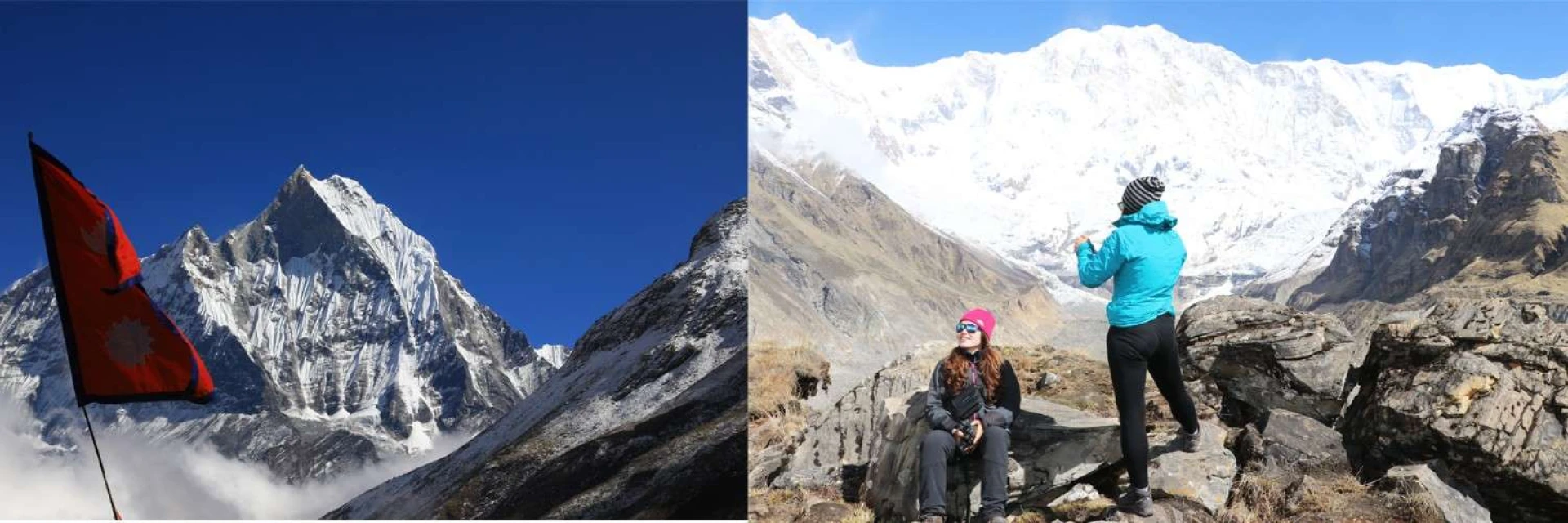
Not everyone treks the Himalaya to stand in a queue of hundreds, ticking off a destination like a task. Some trekkers want quiet trails, time to think, and mountains they don't have to share. In August, the Annapurna Base Camp trek offers exactly that.
August falls in Nepal's monsoon, well before the autumn peak season, and most advice will tell you to avoid it. After twenty years of guiding treks in the Himalaya, including many trips to this base camp, I'd put it differently: August depends entirely on what you're hoping to get out of it.
If that's lush green hillsides, waterfalls at full volume, and a trail nearly to yourself, this is the best month there is. Yes, it rains, but most of it falls on the lower sections, while the upper sanctuary stays noticeably drier. Come prepared, and the monsoon becomes part of the experience rather than the enemy.
This guide from Breeze Adventure covers everything you need to know before booking an Annapurna Base Camp trek in August.
Table of Contents
Why August Works for the Annapurna Base Camp Trek
Peaceful Annapurna Base Camp in August
August can be the right pick for the ABC trek as it offers some of the most beautiful things that even the peak season cannot. So, here is what you can expect from this month:
Empty Trail
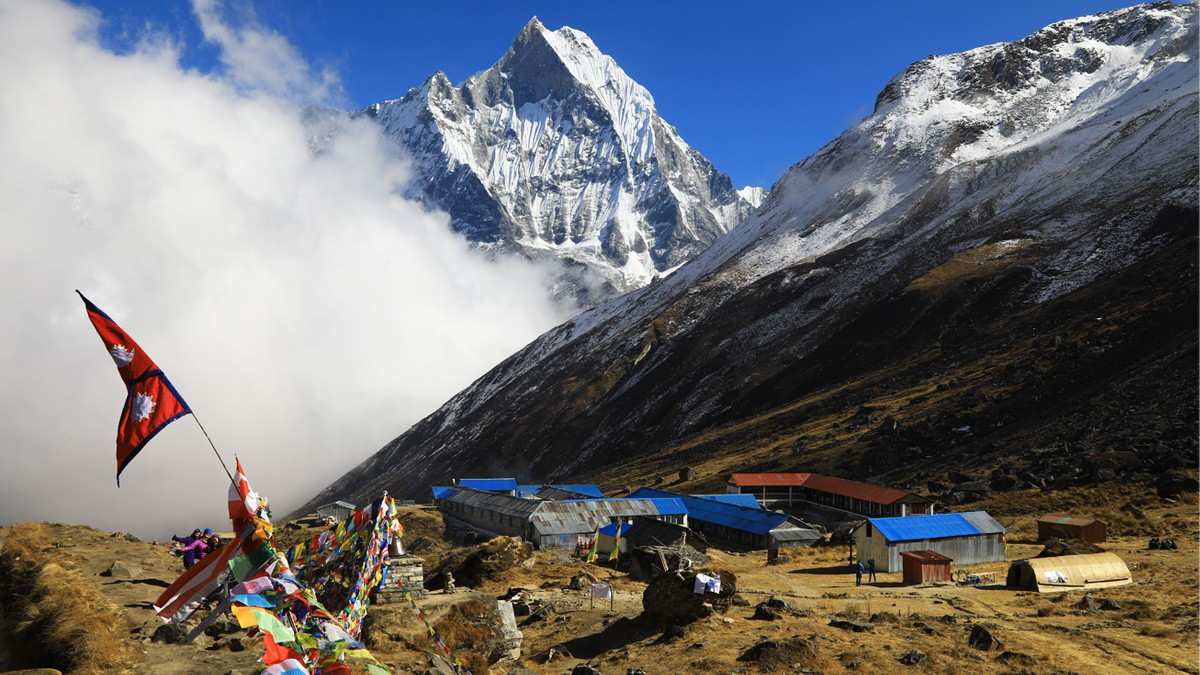
The trail is basically empty in August. October crowds mean queuing for photos at base camp and fighting over teahouse rooms. In August, you might share the whole lodge with just a few other trekkers. That solitude changes the entire experience.
Lush green landscapes
Everything is green in this month. The rhododendron forests, the terraced rice paddies around Ghandruk, and the bamboo sections before Bamboo village itself. Monsoon rain turns the lower trail into something out of a painting. Autumn trekkers never see it like this.
Waterfalls everywhere
Streams that barely trickle in November come roaring down the Modi Khola gorge in August. The walk between Sinuwa and Deurali is honestly better for it. You will enjoy many more powerful waterfalls during this time than at other times of the year.
Warm nights
Base camp at 4,130 m in August sits well above freezing most nights. Compare that to December, when your water bottle turns to ice inside the room. High altitude and warmer nights are a better feeling for enjoying the Himalayan trails.
Budget Travel
ABC trek in August means cheaper everything. Lodge owners negotiate and offer cheap as well as more comfortable services than in peak seasons. Guides and porters are also available at short notice and often at lower rates. Pokhara hotels will practically become a smooth place to stay. NO more stressful room reservations, just ABC Travel in budget.
Dramatic mountain reveals
The main thing you came for, the mountains, literally will show you up just close and clear. Yes, clouds roll in by mid-morning. But when Machapuchare breaks through at dawn after a night of rain, washed clean and sharp against blue sky, it beats any hazy autumn view. You earn those moments, and they stick with you.
Unique Himalayan culture
Since this is not the month of the crowd, the locals and teahouse owners will have enough time to interact with you. The local lifestyles and unique culture are worth experiencing in this region. Magar and Gurung cultures are mostly dominant in this region. Try their food, local activities, and enjoy the communication. The people are very friendly and welcoming.
Is August a good time to trek to Annapurna Base Camp?
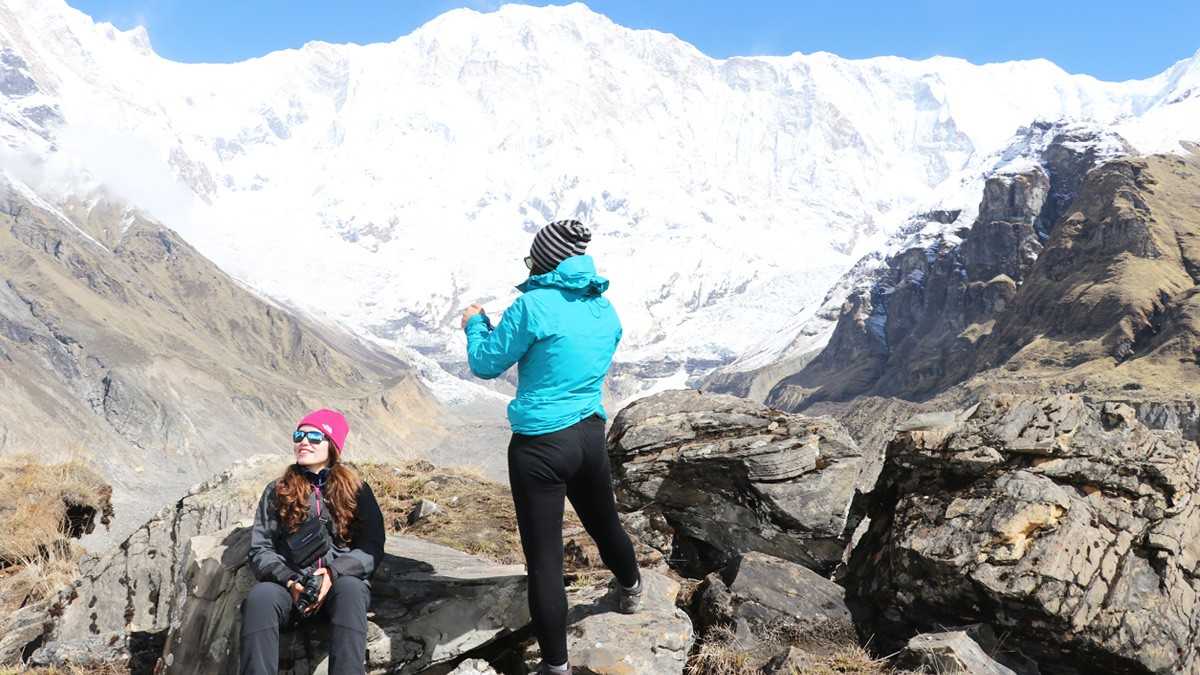
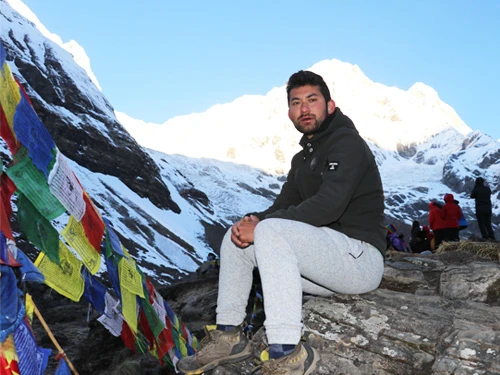
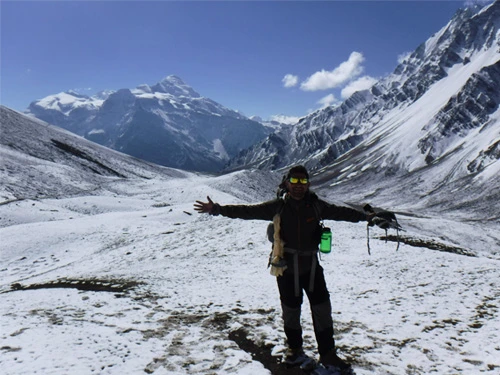
Trekkers enjoying Himalaya beauty in ABC Trek Nepal
Yes, August is a good time for this trek, provided that you do the right preparation. This month can be a trade-off, and you should know exactly what you're trading.
August sits in the middle of Nepal's monsoon, which dumps roughly 80% of the country's annual rain between mid-June and late September. Pokhara, the gateway town, gets some of the heaviest rainfall in the country. So yes, you will get wet.
What you get in return is a trail almost to yourself. The teahouses that stay open are quiet, room rates drop 20 to 30%, and you don't need to book anything in advance. The hillsides below Chhomrong turn an absurd shade of green, the waterfalls are at full volume, and the whole sanctuary feels like it belongs to you and a handful of locals.
If your main goal is nonstop mountain photography, go in October instead. If you want the mountains mostly to yourself and can handle rain, August is genuinely underrated. The last week of August is the sweet spot, since the monsoon starts tapering and you beat the autumn crowds.
Even if you book the trip in early August, the rain does not affect the higher altitude where you will be trekking. So, relax, you will enjoy the mountains even with rain.
What is the weather like at ABC in August?
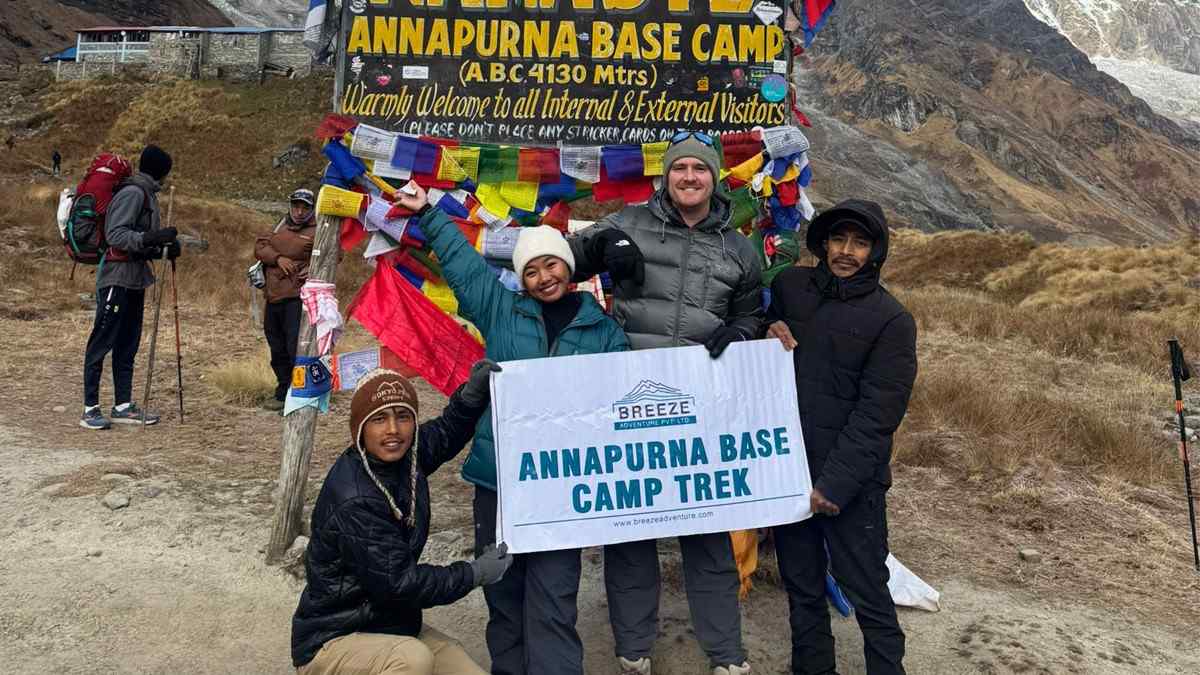
Breeze Adventure team handeling the trip in Annapurna Base Camp
The rain follows a pattern, and the pattern is your best friend. Most days it rains in the afternoon and evening, while mornings are often dry or even clear. Trekkers who leave at 6 am and reach their teahouse by early afternoon stay mostly dry. Sleep in until 9, and you'll pay for it.
Temperatures are comfortable in the ABC trail. Expect 20 to 25°C in the lower villages and around 5 to 10°C at night up at base camp (4,130 m). You won't freeze, but the damp cold at MBC and ABC bites harder than the numbers suggest.
The upper sanctuary gets noticeably less rain than the lower forest sections. Most of the misery happens below 3,000 m. Above Deurali, the showers thin out even if the clouds don't.
Will I actually see the mountains in the August ABC trek?
Yes, this month is good for mountain views. Sometimes, cloud cover hides the peaks on most monsoon days, and you have to make peace with that before you book anything.
But the clearings, when they come, are unreal. On my clear morning at base camp, Annapurna I and Machhapuchhre appeared out of nowhere around 7:30 after a rainy dawn, and the whole dining room emptied out in about ten seconds. The scenic beauty was literally breathtaking.
Warning: The leech situation
Let's be real about this. Between roughly Jhinu and Bamboo, the wet forest is full of leeches, and everyone I met on the trail had bites. They're harmless but gross.
What worked for me: gaiters or leech socks, long trousers tucked in, salt in a film canister, and checking my ankles at every rest stop. What didn't work: pretending I'd be the exception.
Packing list for Annapurna Base Camp in August
Keep it simple but get these right:
A proper rain jacket and rain pants, breathable ones, because you'll sweat inside cheap plastic
Waterproof pack cover plus a dry bag inside for sleeping clothes and electronics
Quick-dry synthetic or merino layers. Cotton stays wet for days out here.
Trekking poles for the slippery stone staircases, especially the endless steps down from Chhomrong
Gaiters for mud and leeches
More spare socks than feels reasonable
An umbrella, honestly. Locals use them for a reason
Drying clothes is the hidden battle of monsoon trekking. Teahouses are damp, so anything that doesn't dry overnight gets carried wet.
How difficult is the ABC trek in August?
The route itself is moderate: no technical sections, teahouses every couple of hours, and a well-worn trail used by locals year-round. The monsoon adds two real risks, though. Stone steps get slippery, and the sections below Chhomrong occasionally see small landslides after heavy rain.
Altitude is the other factor. Base camp sits at 4,130 m, high enough for altitude sickness if you rush. Take the standard 7 days minimum, drink constantly, and don't push through a worsening headache to keep a schedule. The schedule should bend, not you.
A licensed guide is compulsory for Himalayan trekking in Nepal, as per the government. No matter what month you go, you have to be accompanied by a local licensed guide. This ensures a safe and enjoyable journey. They know the path and can interact with the locals in case of need.
What permits are needed?
You'll need the ACAP permit, which is arranged easily in Pokhara or Kathmandu. The TIMS card is no longer required for this trek. This saves you money.
Tips for Trekking ABC in August
The right preparation, right guidance, and right mentality are all you need for the August trek in Annapurna Base Camp. Consider the following travel tips to make your journey smooth and enjoyable:
Start walking by 6 am. Mornings are usually clear; rain comes in the afternoon. Plan to reach your lodge by 1 or 2 pm.
Leeches are real from Jhinu to Bamboo. Keep salt, leech socks, or trekking gaiters. Check your ankles at every rest stop.
Pack proper rain gear, not a cheap poncho. A good shell jacket, pack cover, and dry bags for everything inside.
Bring extra socks and sandals for lodge evenings. Wet boots are miserable.
Watch for landslide updates on the Chhomrong to Bamboo stretch. Ask lodge owners each morning, they know the trail conditions better than any app.
Fly to Pokhara instead of driving if the budget allows. The Prithvi Highway gets rough with monsoon landslides.
Build in one buffer day. Rain can hold you back, and you don't want to skip base camp because of a tight flight.
Keep quick-dry clothes only. Cotton stays wet for days in this humidity.
One honest caveat: August is a monsoon month, and it rewards flexible, experienced trekkers more than first-timers chasing guaranteed views. Go in with the right expectations, and it's a brilliant trip.
A few things that make the trip
The hot spring at Jhinu Danda, after days of rain, is close to a religious experience. The trail-side dal bhat tastes better when the dining room is quiet, and the owner has time to chat. And if your dates line up with Janai Purnima, the full-moon festival in August, the villages get a burst of life you'd never see in peak season.
Final verdict
Trek to Annapurna Base Camp in August if you value solitude, green landscapes, and lower costs, and you can be flexible with your itinerary. Skip it if guaranteed mountain views are the whole point of your trip. Go in with the right expectations and the right rain gear, and the monsoon stops being the enemy. It becomes the reason the trail is yours.
Kishwor Adhikari is a passionate writer with a deep enthusiasm for trekking and adventure. His extensive travels across Nepal, exploring its diverse landscapes and hidden corners, have shaped his unique perspective on the country's natural beauty. With a wealth of first-hand experience in adventure trekking, Kishwor has become a trusted voice for fellow enthusiasts. Through his writing, he shares invaluable insights, offering practical advice and inspiration for both seasoned trekkers and novices alike. His dedication to sharing his journey and knowledge helps others discover the wonders of Nepal's wilderness, making his work an essential resource for anyone seeking adventure in the region.