Most people ask me the same question before they book an Annapurna Base Camp trek in December: Is it too cold, or is it actually the best month nobody talks about? Well, December splits the difference between the crowded photogenic chaos of October and the genuinely brutal cold of January, and depending on what you're after, that middle ground is either exactly right or a compromise you'll regret.
Let me tell you this based on my 2-decade-long journey in travel and trekking. Early December is arguably one of the best windows of the whole year. Mostly stable weather, clear peaks, and a trail that's finally emptied out after autumn's rush. However, the last week of December can get noticeably harder if you are underprepared. Snow starts showing up above Chhomrong, temperatures at Base Camp drop well below freezing overnight, and a few teahouses start closing for the season. But that is also an opportunity to enjoy a peaceful trail with stunning snow beauty around.
Annapurna Base Camp Trek in December is all about the cold nights, clear skies, and empty trails. This is the best month for adventure lovers, peaceful seekers, as well as for snow hiking. This guide from Breeze Adventure tells you everything about the ABC Winter trek, helping you plan for a better experience.
Table of Contents
Is December Actually a Good Time for This Trek?
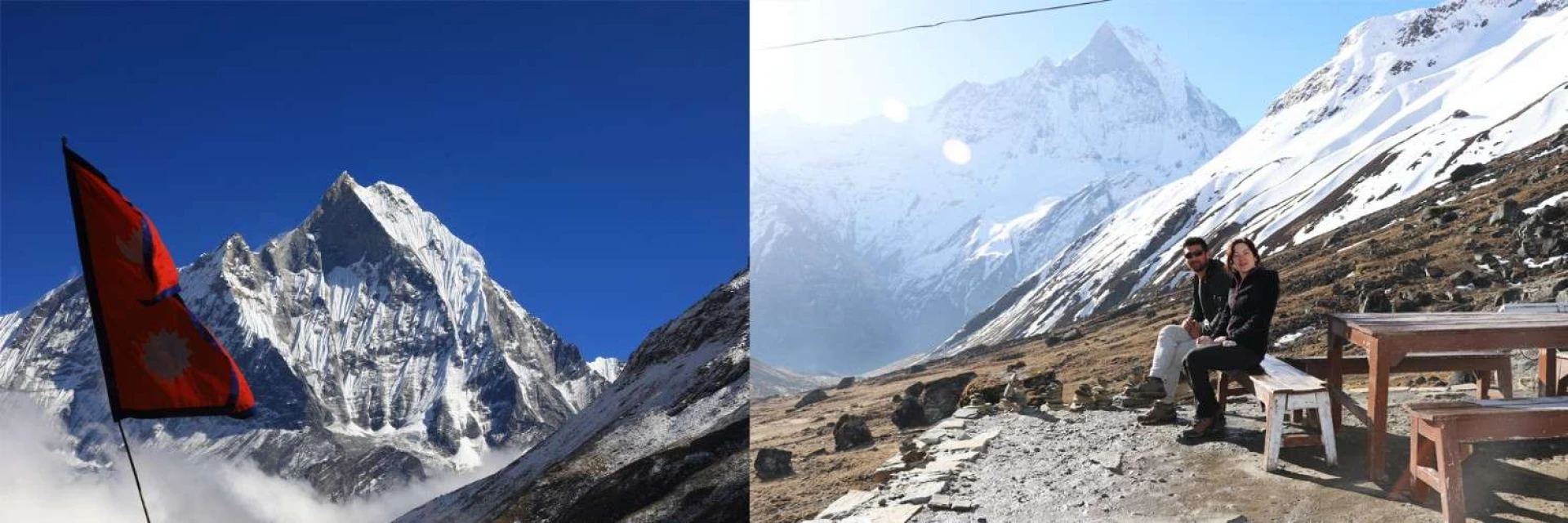
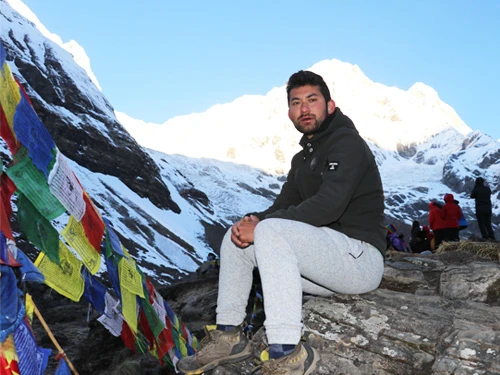
Annapurna Base Camp Trek in December is peaceful experience
Yes. The Annapurna Sanctuary in December gets some of the clearest air of the year. You won’t face any monsoon haze, no autumn dust, just cold, dry air and mountains that look close enough to touch. You'll also have the trail mostly to yourself. Where October has you queuing for a table at teahouses in Chhomrong, December might have you as one of the few guests.
The caveat is altitude. Namche-level cold at 3,000 meters is one thing. Sub-zero nights at 4,130 meters with a thin sleeping bag is another. People who've only trekked in autumn tend to underestimate this, and it's the single biggest reason December trips go wrong - not fitness, but cold.
Why Trek Annapurna Base Camp in December
Cold gets all the attention when people talk about a December trek, so the actual upsides tend to get buried under packing lists and temperature warnings. Here's what you're actually trading that comfort for.
1. You might walk straight into Tamu Losar
If your dates land toward the end of the month, there's a real chance you'll pass through Gurung villages in Ghandruk and Chhomrong, especially during Tamu Losar, the Gurung New Year. It usually falls around December 30th, give or take a few days depending on the lunar calendar, and it's not staged for visitors the way some festival tourism is.
Families gather, there's traditional dance, homemade raksi gets passed around, and if you happen to be sitting in a teahouse when it kicks off, you're not watching a performance. You're a guest at someone's actual New Year's.
2. The afternoon haze that ruins other seasons just doesn't show up
Ask anyone who's trekked ABC in spring or peak autumn about the 11 am cloud wall, and they'll know exactly what you mean, that stretch where the peaks vanish behind haze just as you reach a viewpoint.
December's dry winter air mostly skips this. Mornings are clear, and more often than not, they stay clear straight through the afternoon. You get a full day of visibility instead of a two-hour window you have to plan your whole itinerary around.
3. The Sanctuary looks like an entirely different place
Snow doesn't just decorate the peaks in December, it changes the geometry of the whole Annapurna Sanctuary. Ridgelines that look brown and rocky in October turn into clean white lines.
Not just that, actually, the contrast between dark rock faces and fresh snow does something to the light. Especially at sunrise, the other seasons don't really produce. If you've seen a hundred autumn photos of ABC already, December photos genuinely don't look like the same location. You will love the scenario this month.
4. Wildlife moves closer to the trail
As the high pastures freeze over, animals that spend summer well above the trekking route start dropping down to lower elevations to find food. Himalayan tahr in particular show up more often around the middle sections of the trek in winter.
Nobody guarantees a sighting, and I wouldn't build a trip around it, but December odds are noticeably better than the crowded autumn months, if only because there's less noise on the trail to scare everything off.
5. Everything moves easier, and most of it costs less
Flights into Pokhara, teahouse rooms, even permit-office queues, all of it loosens up once peak season ends. You're not booking rooms a week in advance or racing other groups to the good lodges in Chhomrong.
Prices for flights and accommodation often drop too, since operators are working with a fraction of the autumn traffic. It's not a guaranteed discount trek, but the leverage is on your side in a way it just isn't in October.
6. The teahouses stop feeling like teahouses
This is the one people don't expect. When a lodge that normally serves forty trekkers a night is hosting four, the whole dynamic shifts. Owners sit down and talk instead of running the kitchen nonstop. You get the good room without asking.
Dinner conversations in ABC teahouses run long because nobody's rushing off to bed early to beat tomorrow's crowd. It stops feeling like a stop along a busy trail and starts feeling like staying at someone's house, because that's closer to what it actually is.
Annapurna Base Camp Temperature in December
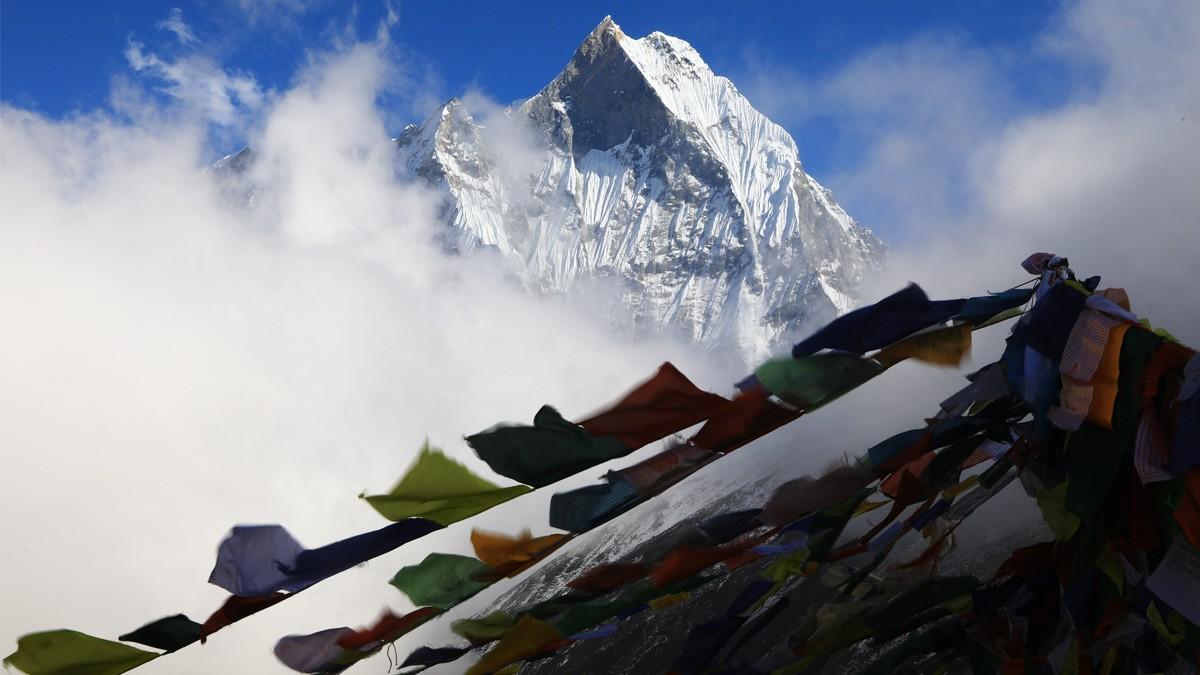
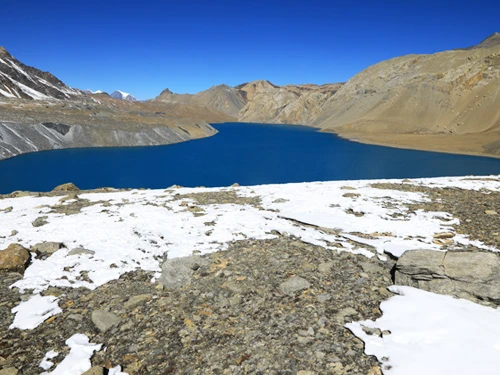
Stunnning mountain view captured in ABC Trek December
Coming to the ABC Trek December temperature, the numbers vary a bit between reports. Weather stations up there are sparse, so every operator's "average" is really an estimate. But here's a range you can actually plan around.
Lower trail, under 2,000 m (Nayapul, Tikhedhunga, Ghandruk): The daytime temperature sits comfortably between 12°C and 20°C in direct sun. Nights drop to somewhere around 5°C, occasionally lower. This part barely feels like winter.
Mid-trail, 2,000–3,000 m (Chhomrong, Bamboo, Dovan): Here, the daytime highs fall to roughly 5–12°C. Similarly, nights get into the low single digits and sometimes below freezing, especially past mid-month. This is usually where trekkers first reach for the down jacket instead of the fleece.
High trail, above 3,500 m (Deurali, Machhapuchhre Base Camp, ABC itself): This is where December earns its reputation. Daytime highs at Annapurna Base Camp average somewhere around 0–9°C, depending on sun exposure and how far into the month you are.
Once the sun drops behind the ridgeline, and it drops fast up there, the temperature falls off a cliff. Overnight lows commonly hit -10°C to -15°C, and by the back half of December, -18°C to -20°C isn't unusual on a clear, windless night. This sounds counterintuitive until you remember that clear skies mean nothing to hold the heat in.
Here, the pattern to remember is that early December behaves more like a cold, dry autumn. Late December starts behaving like actual winter.
What the ABC Trail Actually Looks Like in December
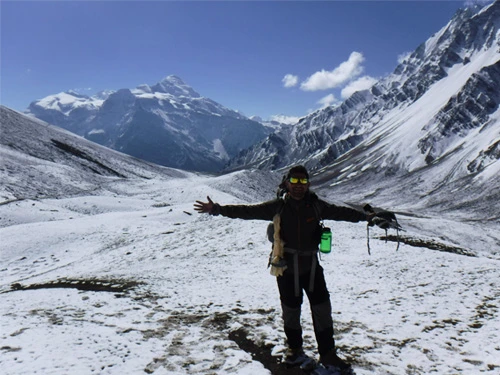
Below Bamboo, you'll barely notice winter. It’s dry trail, maybe frost in shaded patches early morning, gone by 9 am. Between Bamboo and Deurali, that changes fast. Snow starts appearing on the trail itself, not just on the peaks, and by Machhapuchhre Base Camp you're usually walking on a mix of packed snow and ice rather than dirt. The final stretch into Annapurna Base Camp in December is often fully snow-covered. Sometimes ankle-deep, occasionally deeper after a fresh fall.
None of this makes the trek technical. You don't need mountaineering skills. But it does slow you down, and a few sections. Particularly, the steeper switchbacks near Himalaya and just below MBC get genuinely slippery.
I recommend microspikes for this stretch specifically, even though the rest of the trek doesn't need them. Trekking poles stop being optional once there's ice involved.
The trade-off for all this is the payoff at the top: a fresh dusting of snow at the amphitheater of peaks around Base Camp is one of those views that photos genuinely undersell.
Pros and Cons of December ABC Trek Nepal
ABC Trek in winter is definitely a great experience. Here are some of the pros and cons to consider for better planning:
Pros
Clear skies, best visibility of the trek season
Fewer crowds, easier teahouse bookings
No leeches (unlike monsoon season)
Cheaper rates at teahouses/guides due to the low season
Crisp mountain photography conditions
Peaceful, quieter trail experience
Cons
Very cold at night, especially near ABC/MBC (can drop below -10°C)
Risk of snowfall blocking higher sections (rare but possible)
Shorter daylight hours for trekking
Some teahouses at higher altitudes may close later in the month
Icy/slippery trail sections need extra caution
No rhododendron blooms (that's spring only)
Higher risk of altitude-related cold injuries if underprepared
ABC December Trek Permits
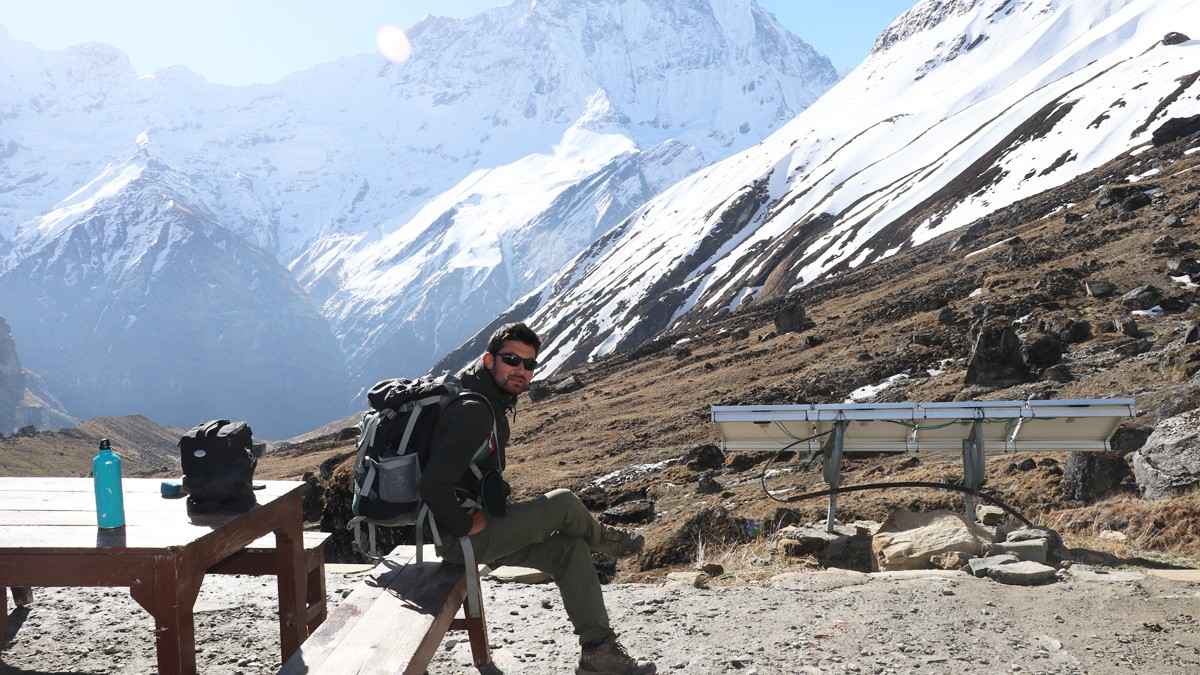
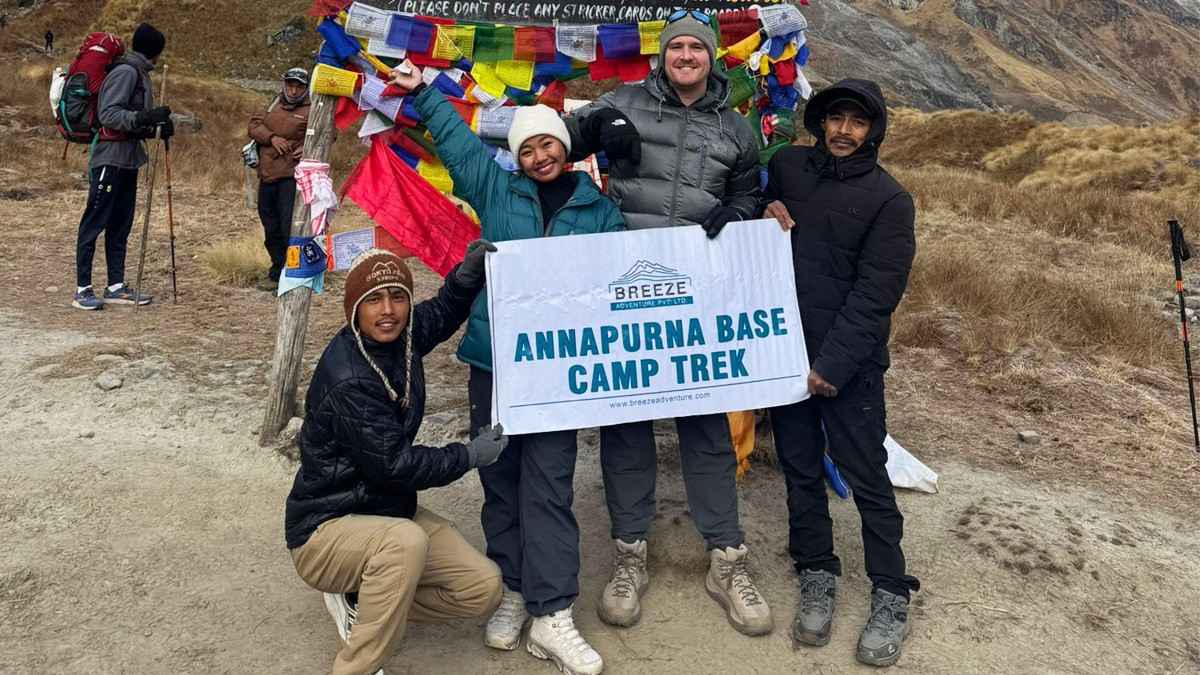
Breeze Adventure handles permit for ABC trek
This is worth being straight about, because permit information for the Annapurna region has gotten genuinely confusing lately.
ACAP (Annapurna Conservation Area Permit)
This is not optional. Every foreign trekker needs one, checked at multiple points along the route (Birethanti and Chhomrong being the two you'll definitely hit). It runs around NPR 3,000, roughly $25, for non-SAARC nationals. Get this in Kathmandu or Pokhara before you start, or have your agency sort it. For this, bring the physical copy, since rangers at checkpoints don't accept photos on your phone.
TIMS card
This is no longer enforced in Annapurna Trekking. You save money for this.
One more thing that's easy to miss: since 2023, trekking with a licensed guide is mandatory for foreign visitors on Annapurna routes, ABC included. You can't just show up and walk it solo the way people did years ago.
What to Pack for December Specifically
The ABC trek packing list plays a major role in defining the difficulty of the trek. Yes, right packing and preparation are everything. What's specific to an Annapurna trek in December:
Sleeping Bag: Rated to at least -15°C (or -20°C if you run cold). (Note: Teahouse blankets are available but are not enough on their own at 4,000 m in December.)
Down Jacket: A high-quality, proper down jacket (heavyweight/expedition style, not a fleece or light mid-layer).
Hand Wear:
Liner gloves (crucial for keeping skin covered when taking photos).
Insulated outer gloves (hands freeze quickly at Base Camp).
Traction: Microspikes or lightweight crampons (essential for the icy stretches above the Himalaya).
Lighting: Headlamp + backup batteries. Tip: Cold weather drains battery life quickly, and December days are short (sunset is around 5:30 PM).
Hydration: Wide-mouth water bottle. (Avoid: Water bladders/hoses, as the tubes will freeze solid overnight and on the trail.)
A Realistic Annapurna Base Camp December Itinerary
Mostly, there are 7–9-day versions depending on pace and whether you include the Poon Hill sunrise detour. A typical breakdown:
Day 1: Pokhara to Banthati drive with scenic village
Day 2: Early morning hike to Ghorepani and then trekking towards Tada pani
Day 3: Trek from Tadapani to Chomrong
Day 4: Trekking from Chomrong to the Himalaya
Day 5: Trek from the Himalaya to ABC
Day 6: Explore ABC, then move towards Dovan
Day 7: Trek to Jhinu towards Hotsprings, then drive to Pokhara. Enjoy lakeside Pokhara.
The wintertime in Nepal is really the best time to explore the cultural sites in Kathmandu Valley. Take a day or 2 extra to enjoy the stunning beauty of Kathmandu.
A warning to consider
I'll be direct about the downsides, because most December-trek content skips straight to the marketing version.
The cold at Base Camp is not a minor inconvenience, it's the main variable that decides whether someone has a great trip or a miserable one. If you've never spent a night below freezing in a teahouse with no heating beyond a single wood stove in the dining room, December ABC will be a real adjustment.
Some teahouses in the higher villages reduce their menu or close entirely by late December. This limits food options exactly where you need calories most. And short daylight hours mean your trekking window is tighter than in autumn. So, start late, and you're finishing in the dark.
Against all that: empty trails, the clearest mountain photography of the year, teahouse owners who actually have time to sit and talk with you instead of running between forty guests, and a version of the Sanctuary that most visitors never see.
Surviving Teahouse Nights When It's -10°C Outside
A few things that make a real difference and rarely make it into packing lists:
Fill a water bottle with boiling water before bed, and sleep with it inside your bag near your core. This is a cheap, effective hot water bottle.
Eat a hot dinner with real calories, not just soup, because your body burns through fuel fast trying to stay warm overnight.
Change into dry base layers before sleeping rather than sleeping in the clothes you hiked in, even if they don't feel wet. Trapped sweat cools and chills you through the night.
And don't skip the garlic soup that shows up on every winter trekking menu in the region. It's a genuine local remedy believed to help with circulation and altitude symptoms, and at minimum, it's hot, and it works.
Annapurna Base Camp Trek in Winter: How December Compares to January and February
If you're weighing December against the rest of winter, January is colder and drier, with Base Camp nights regularly dropping toward -20°C. Snow becomes a near-constant feature above Deurali.
February starts thawing slightly but tends to bring the heaviest snow accumulation of the three months. Occasionally, closing sections of the trail for a day or two at a time.
December, especially the first half, sits as the mildest and most reliable of the three. This is exactly why serious winter trekkers who don't want the full extremity of January often pick it deliberately.
Frequently Asked Questions
Is Annapurna Base Camp open in December?
Yes. Some remote teahouses reduce services late in the month, but the route itself stays open and accessible all December, snow permitting.
What's the coldest it gets at Annapurna Base Camp in December?
Overnight lows can reach -15°C to -20°C by late December, though early-month nights are usually milder, closer to -10°C.
Do I need crampons for an Annapurna Base Camp trek in December?
Not full crampons, but lightweight microspikes are worth carrying for the icy stretch between the Himalaya and Machhapuchhre Base Camp.
Is December too cold for beginners?
Not if you're reasonably fit and properly geared. It's a bigger jump in difficulty than an autumn trek, but it's not a technical climb, just a colder one.
If you're still deciding between December and the more obvious autumn window, it comes down to what you actually want from the trip. Autumn gives you comfort and company. December gives you silence, clear air, and a Base Camp that looks like almost nobody else has seen it recently. For a lot of trekkers, that trade is worth every cold night.
Kishwor Adhikari is a passionate writer with a deep enthusiasm for trekking and adventure. His extensive travels across Nepal, exploring its diverse landscapes and hidden corners, have shaped his unique perspective on the country's natural beauty. With a wealth of first-hand experience in adventure trekking, Kishwor has become a trusted voice for fellow enthusiasts. Through his writing, he shares invaluable insights, offering practical advice and inspiration for both seasoned trekkers and novices alike. His dedication to sharing his journey and knowledge helps others discover the wonders of Nepal's wilderness, making his work an essential resource for anyone seeking adventure in the region.