Last updated: September 6, 2026. This is the one trekking region directly affected by the August 26 disaster, and conditions are improving week to week. Treat everything below as a current snapshot, and confirm the latest situation with a registered operator or the Nepal Tourism Board before finalizing plans.
Langtang was the only major trekking region directly hit by the flood, because its gateway town, Syabrubesi, sits in the flood corridor. For any near-term departure, the honest advice is still to postpone or reroute while recovery work continues.
The situation is consistently improving, and the positive news is that access to the region is opening back up. Road connectivity to the district has already been re-established through detour routes, and the upper section of the Langtang trekking trail remains mostly undamaged. As repair work solidifies and safety inspections wrap up, guided treks are projected to become viable once more throughout the autumn. Langtang is recovering, not closed for good.
If you have an upcoming trip to Langtang, avoid making a hasty cancellation. Instead, consult with your operator to discuss altering your route, shifting your travel dates, or choosing an alternative trekking region, as viable solutions are available for the majority of itineraries.
Table of Contents
A note on safety first
Rasuwa remains a zone of active recovery efforts. Local authorities have put out alerts regarding potential glacial lake outburst risks originating from the Tibetan side, and ongoing monsoon rainfall keeps landslide risks elevated along the compromised river corridor. Consequently, upcoming travel to the most severely affected areas should be put on hold until local governing bodies and the Langtang National Park office formally certify that the roads and trails are safe.
This isn’t a reason for alarm. It’s simply why the responsible move right now is to plan rather than travel immediately.
What happened to the Langtang gateway
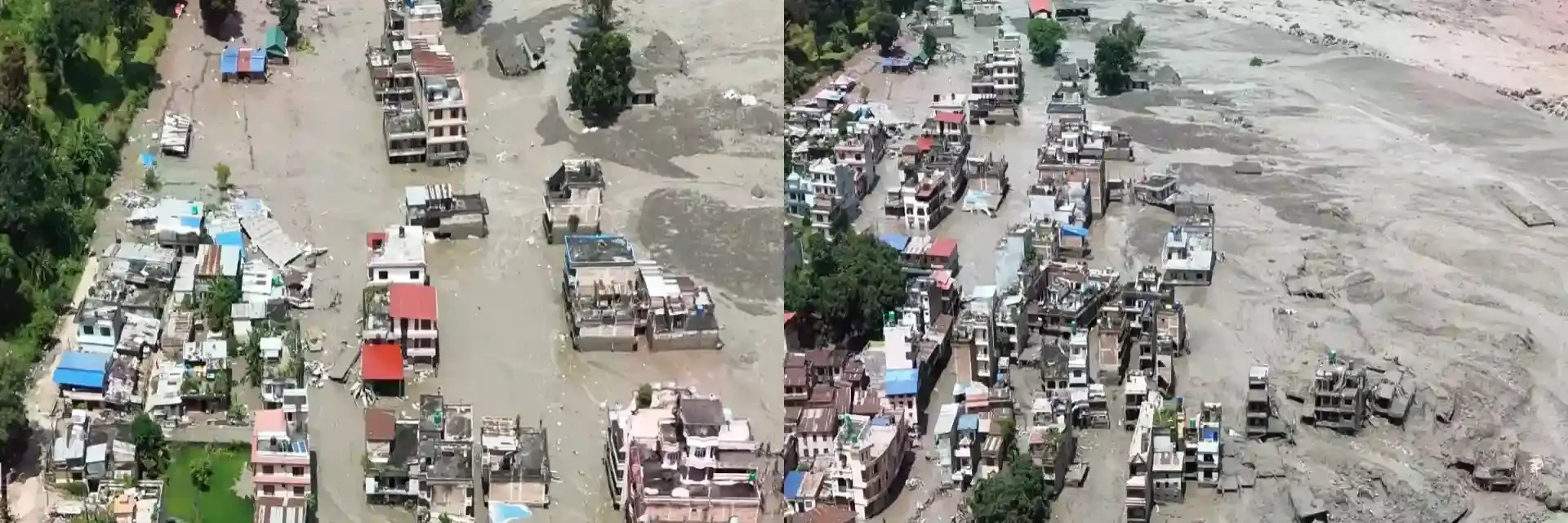
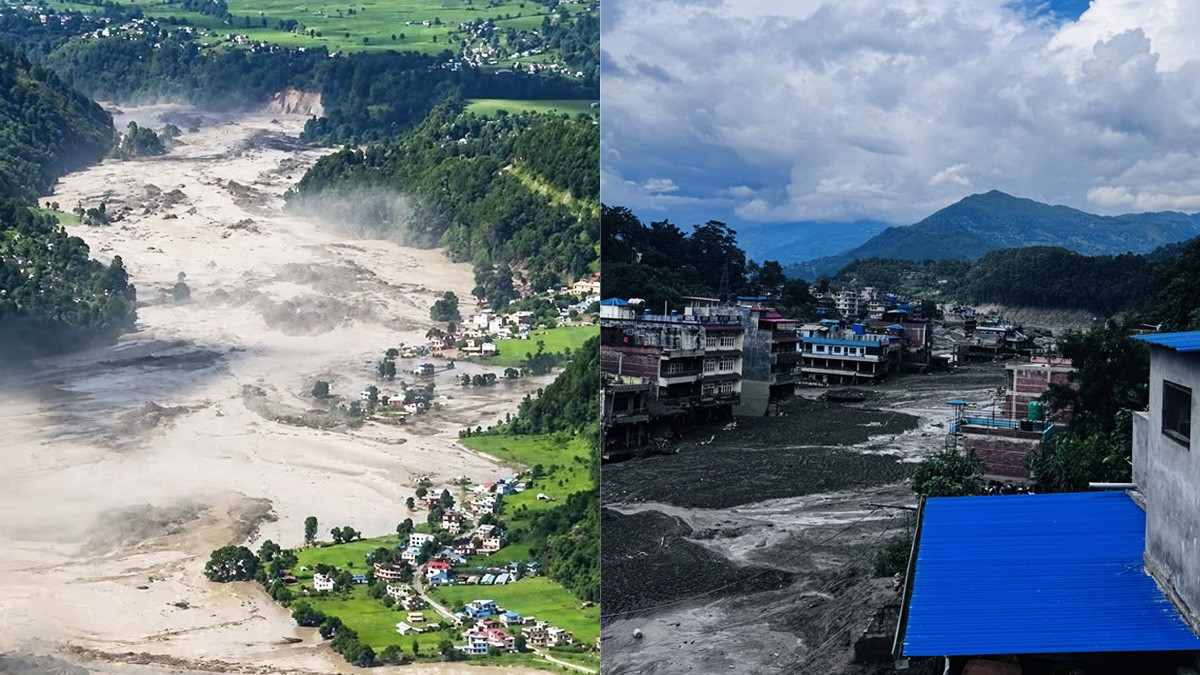
Devastation after Flash Flood in Langtang Gateway
The August 26 flood surged down the Lhende Khola into the Bhote Koshi and Trishuli, and the damage in Rasuwa was severe:
Syabrubesi, the main trailhead for the Langtang trek accessible by road, suffered severe structural damage due to its location at the junction of two rivers.
The motorable bridge on the Pasang Lhamu Highway serving Syabrubesi was washed away.
Sections of the Pasang Lhamu Highway between Betrawati, Dhunche, and Syabrubesit suffered collapses, mudslides, and river-undercut damage.
Several bridges across Rasuwa district were lost, cutting the district off in the first days after the flood.
The key distinction: the trail vs the gateway
This is the part most rushed news coverage gets wrong, and it matters.
Although Langtang treks commence at Syabrubesi, the route immediately veers east to ascend the Langtang Khola Valley, which is an entirely separate drainage system from the flooded Bhote Koshi. The verified, severe destruction is localized within the Bhote Koshi corridor, specifically impacting Timure, Syabrubesi, the border highway leading to Rasuwagadi, as well as downstream sections near Betrawati and Trishuli.
What has not been reported is major damage to Langtang village or the upper valley itself. Several operators believe the upper trail came through largely untouched, and that may well prove correct, though it is still being formally assessed and certified. The honest position: the gateway and access road were hit hard, while the upper trail is probably intact but awaiting confirmation.
Current access status and the alternative road in
Here’s the practical, on-the-ground picture, and the good news for anyone planning a Langtang trek later this season.
The district has successfully reconnected through alternative routing to Dhunche rather than the destroyed lower sections of the old highway. As the district headquarters, Dhunche is situated at a higher elevation above the river, safely positioned before the most severely damaged sections. Additionally, a hill route from Kathmandu through the Tokha-Kalikasthan side has been opened for light vehicles, fully restoring the transportation link to Dhunche.
Locally, the road between Dhunche and Betrawati is in use, and there is a bridge above Betrawati village that crosses over to the Rasuwa side, providing a working connection back onto the route toward Dhunche. This crossing is a key part of how access has been re-established while the main washed-out bridges are rebuilt.
Two things to keep in mind: the Dhunche-Syabrubesi stretch is still being worked on, and these routes are emergency repairs on fragile monsoon roads, so expect them to be rough, occasionally one-way, and subject to change after heavy rain. Always confirm the current status with your operator before travelling. But the headline is positive: you can now reach the Dhunche side, which is the launch point for getting into the Langtang region.
How to trek Langtang via the alternative route
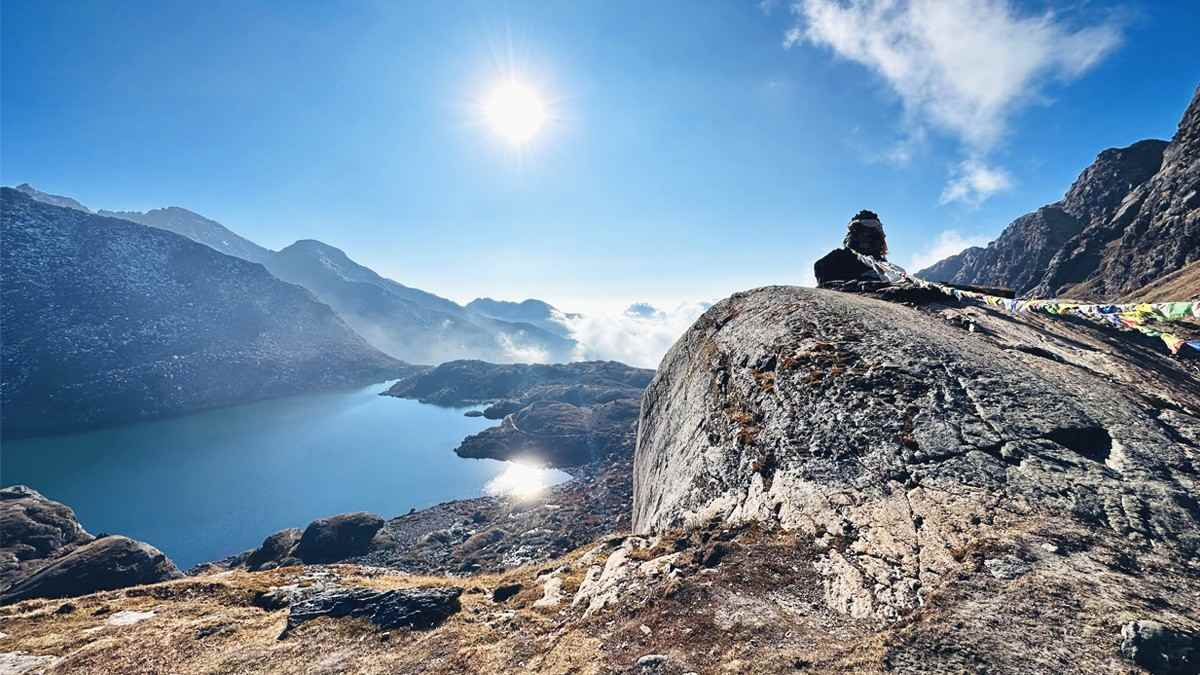
Beautiful sunshine captured in Langtang Valley Trek
Since Dhunche is accessible, the most practical method to enter the region at present is to begin your trek from Dhunche and hike in through Thulo Syabru. This path allows you to connect with the traditional Langtang Valley trail at a higher elevation, completely circumventing the damaged Syabrubesi trailhead. Opting for this route adds approximately one additional day of walking compared to the standard start from Syabrubesi, which is a minor modification to access the exact same stunning valley.
Other options, depending on your time and budget:
Walk in on the ridgeline: The traditional Sundarijal-Chisapani-Kutumsang-Gosaikunda route allows you to begin trekking directly on foot from Kathmandu, completely avoiding the flood-affected river valleys. This excellent high-altitude path links up naturally with Gosaikunda and can be extended onward to Langtang. While it requires several additional days and involves slippery stone steps, leeches below 3,000 meters, and regular cloud cover during the monsoon, it serves as a viable and picturesque alternative.
Helicopter charter: For those short on time or wanting to skip the rough roads, a helicopter into the region is possible, though costly and dependent on weather and aircraft availability.
Reopening outlook
Two things need to be in place for guided Langtang treks to run smoothly again:
Reliable road access for passenger vehicles up to Dhunche, and ideally on toward Syabrubesi.
Trial and bridge certification by Langtang National Park and Gosaikunda Rural Municipality, including secure footbridges over damaged crossings.
Both areas are making progress. Looking at how Himalayan zones typically rebound from monsoon impacts, a realistic timeframe for comfortable trekking in Langtang begins around late September and continues to improve throughout the peak autumn months, assuming conditions remain stable. If you have flexibility with your travel dates, planning for October allows more time for restoration work to finish and aligns with the most favorable weather conditions in the region.
Gosaikunda and the Tamang Heritage Trail
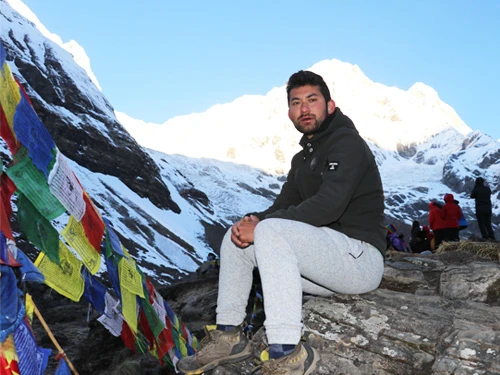
Langtang Valley Trek with Breeze Adventure team
Gosaikunda shares the same access side as Langtang, via Dhunche. As the Dhunche approach stabilises, Gosaikunda becomes reachable too, and the on-foot ridgeline route is a ready alternative in the meantime.
The Tamang Heritage Trail spends more time in the northern villages closer to Timure, deeper in the damaged corridor, so it's the most exposed of the three. Treat it as a later-season option and plan it carefully with your operator.
If Langtang matters less than the trek itself
If your main goal is a great autumn trek and the specific region is flexible, the rest of Nepal is open and welcoming, including:
Annapurna (Base Camp, Poon Hill): Unaffected trails, and the closest in feel to Langtang for a first Himalayan trek. Reached via Pokhara, so you can fly rather than drive while the Kathmandu-Pokhara Road is under repair, or you can use an alternative driving route, which is longer and rougher.
Everest / Khumbu: unaffected and running completely normally, reached by the Lukla flight.
Manaslu Circuit: The trail is unaffected, with the approach drive currently detouring, so confirm routing with your operator.
Please refrain from making a flat cancellation. Because doing so helps no one, particularly the Langtang communities who are actively rebuilding and depend heavily on trekking revenue. Instead, consult with your operator regarding the following alternative:
Adjusting your dates to late in the autumn once the region is fully certified.
Rerouting via Dhunche and Thulo Syabru, or the ridgeline, once access is confirmed for your dates.
Switching to an unaffected region for your existing dates.
A reliable operator directly verifies road and trail status with local guides and governing bodies, and can transparently advise you on which option best suits your situation.
How to verify the current status
Ask your operator for confirmed road and trail conditions on your exact dates, not just general news.
Follow official alerts from Nepal Police, the local administration, and Langtang National Park, including any landslide or glacial-lake warnings.
Check your government’s travel advisory for Nepal.
Not in the normal Syabrubesi-based way just yet, but access is being restored via Dhunche, and the region is expected to become comfortably trekkable again through the autumn, from around late September onward as conditions hold.
Q. How do I get to Langtang now that the road was damaged?
Vehicles are reaching Dhunche via alternative routing, including the Dhunche-Betrawati road and a bridge above Betrawati village that crosses to the Rasuwa side. From Dhunche, you walk into the valley via Thulo Syabru, joining the classic trail higher up.
Q. Was the Langtang trail itself destroyed?
The severe damage is in the Bhote Koshi corridor around Syabrubesi and Timure. The upper Langtang valley sits in a separate drainage and is believed to be largely intact, though still being assessed.
Q. Is it safe to trek to Gosaikunda?
Gosaikunda is reached from the same Dhunche side and becomes accessible as that approach stabilises. The ridgeline walking route from Kathmandu is the alternative in the meantime.
Q. Should I cancel my Langtang trek?
No need to cancel outright. Talk to your operator about adjusting dates, rerouting via Dhunche, or switching regions. Most itineraries have a workable option.
Q. Which other treks are unaffected?
Everest, Annapurna, Manaslu (trail), Mustang, Kanchenjunga, and Makalu are all operating normally.
The Langtang Valley was devastated before, in the 2015 earthquake, and the community rebuilt through the trekkers who returned. As the region reopens this season, going back will be one of the most meaningful ways to support its recovery. Talk to our team; we're tracking conditions directly with local guides and will tell you honestly when and how a Langtang trek works best for your dates.
Kishwor Adhikari is a passionate writer with a deep enthusiasm for trekking and adventure. His extensive travels across Nepal, exploring its diverse landscapes and hidden corners, have shaped his unique perspective on the country's natural beauty. With a wealth of first-hand experience in adventure trekking, Kishwor has become a trusted voice for fellow enthusiasts. Through his writing, he shares invaluable insights, offering practical advice and inspiration for both seasoned trekkers and novices alike. His dedication to sharing his journey and knowledge helps others discover the wonders of Nepal's wilderness, making his work an essential resource for anyone seeking adventure in the region.