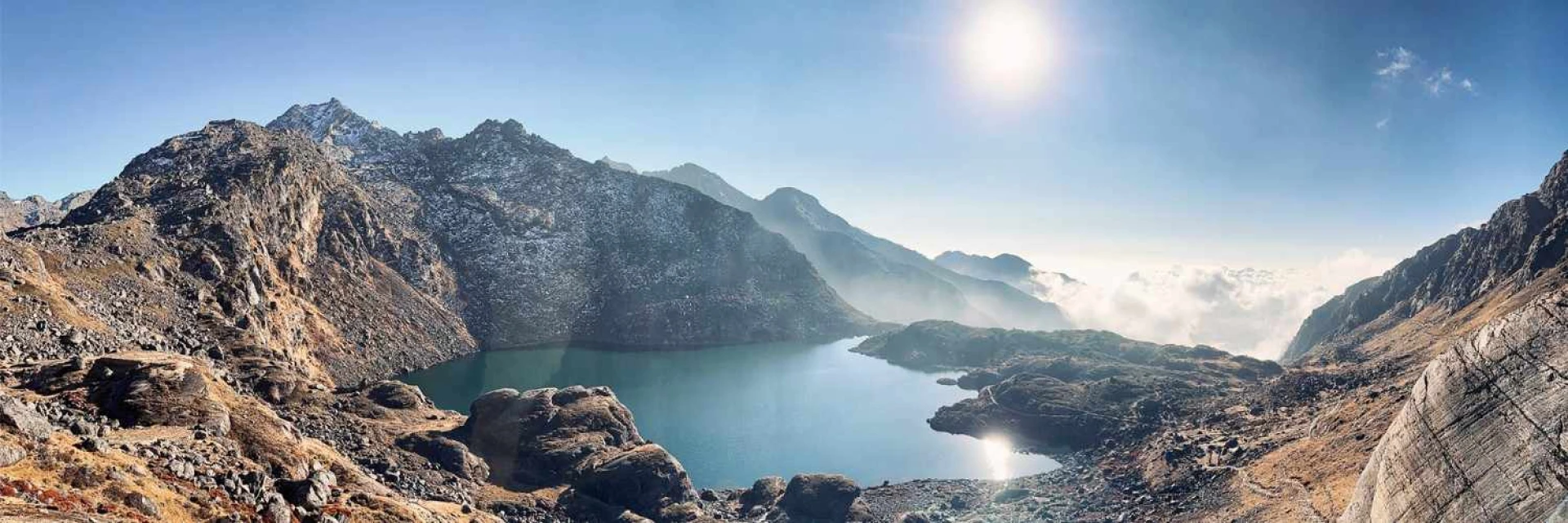
Gosaikunda Lake doesn't announce itself the way most destinations do. You don't stumble upon it. You earn it, slowly, breath by breath, through rhododendron forests and rocky ridgelines that eventually open up to something that stops you mid-step.
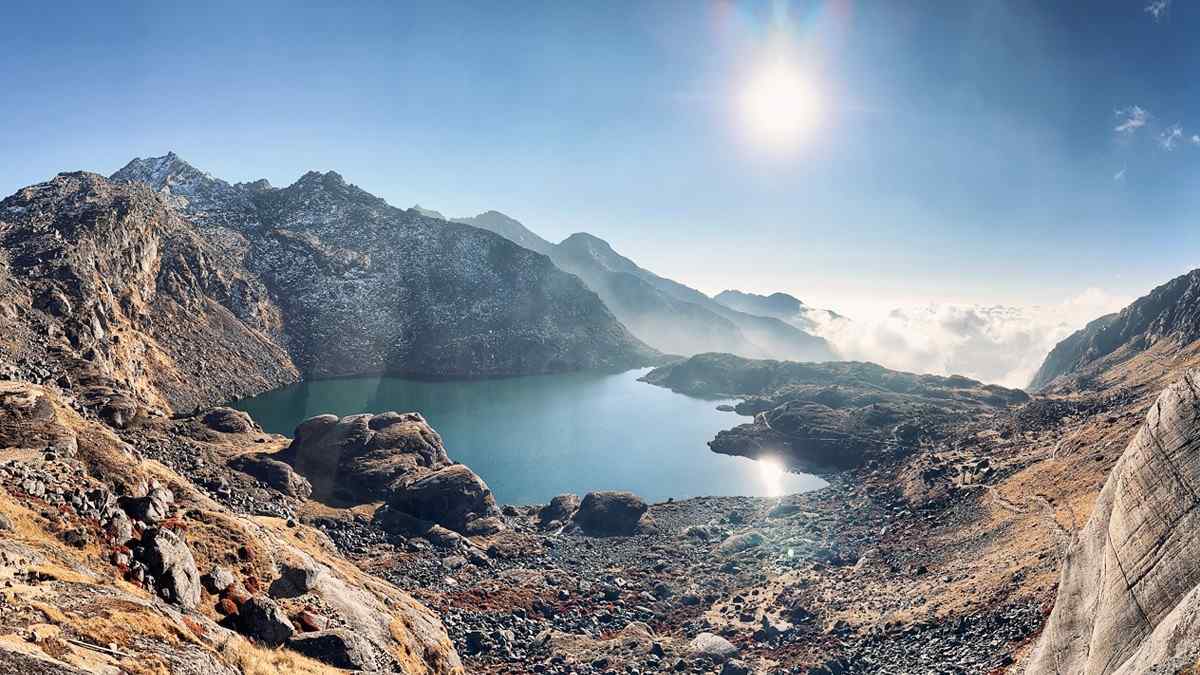
Nestled at an altitude of 4,380 meters above sea level, the lake is one of the highest sacred lakes in Nepal. Actually, it carries that weight in every sense with the Himalayas crowd at the horizon on all sides. Similarly, the water, impossibly still on calm mornings, reflects whatever sky hangs above it. The silence up there that city people find either deeply peaceful or deeply unsettling, usually both.
For Hindu pilgrims, Gosaikunda Lake is far more than a scenic alpine lake. It is the earthly home of Lord Shiva. There is a belief that the lake was formed when Shiva drove his trident into the mountainside after drinking the poison that threatened the world. So, people pay homage to this Holi site on the occasion of the Janai Purnima festival each August.
Trekkers approaching from the Langtang Valley can add Gosaikunda as a natural extension of their route, crossing the Laurebina Pass before descending toward Helambu. The Gosaikunda Lake trekking itself, typically accessed from Dhunche or Sundarijal, is a solid 4 to 6 day route that gives you everything.
Well, what makes this journey special is the layering, the way ancient pilgrimage routes and modern trekking trails share the same stone path. Also, the way faith and wilderness occupy the same high-altitude air without either one diminishing the other.
Table of Contents
Gosaikunda Lake Quick Facts
Parameter
Details
Altitude
4,380 m / 14,370 ft
Location
Rasuwa District, Bagmati Province, Langtang National Park, Nepal
Coordinates
28°05′N 85°25′E
Distance from Kathmandu
Approximately 110 km to 140 km (depending on the exact driving route via Trishuli to the Dhunche/Syabrubesi trailheads), plus a 16 km to 18 km trek on foot. The direct aerial distance from Kathmandu is about 45 km.
GPS Waypoint / Dec. Coordinates
28.0833° N, 85.4167° E
Where is Gosaikunda Lake?
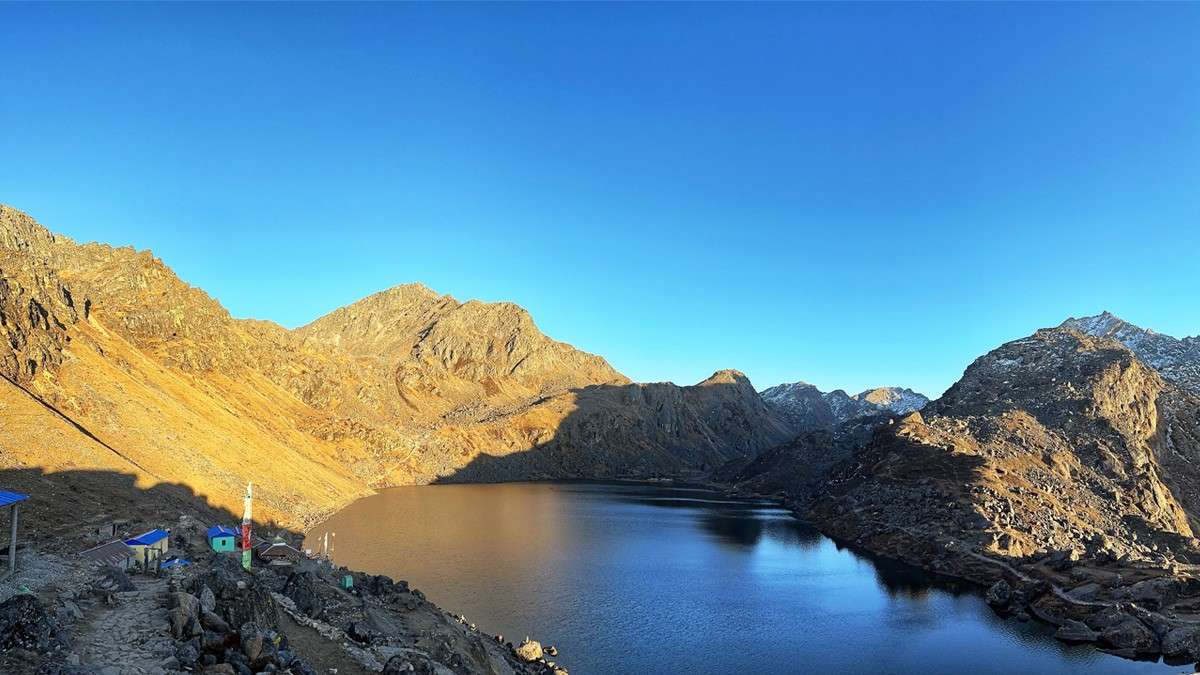
Gosaikunda Lake surrounded by Langtang and Ganesh Himal Ranges
Gosaikunda Lake lies inside Langtang National Park, to the north of Kathmandu. At an elevation of approximately 4,380 meters, the lake is famous as Nepal's Sacred Alpine Jewel. It is surrounded by rugged ridges, glacial moraines, and sweeping Himalayan landscapes.
Although the lake feels remote and untouched, Gosaikunda is surprisingly accessible compared to many high-altitude lakes in Nepal. Its location within a protected national park ensures rich biodiversity, clean mountain air, and a peaceful atmosphere that enhances both trekking and spiritual experiences.
Why is Gosaikunda Lake unique?
What sets Gosaikunda apart from every other high-altitude lake in Nepal is that it refuses to be just one thing. Yes, the pilgrims have been climbing to its shores for centuries, long before trekking became an industry. And that living religious tradition gives the place a weight that purely scenic destinations simply don't have.
At the same time, the surrounding Langtang National Park protects one of the most ecologically rich corridors in the Himalayas. You will be stunned by the live view of snow leopards, Himalayan tahr, red pandas, and dozens of bird species. Most people never get to see these things outside of a documentary.
In your journey to this lake within the Langtang Valley Region, you're not just walking through pretty mountains, rather you're moving through a landscape that is simultaneously a living pilgrimage site, a high-altitude trekking destination, and a protected wilderness.
Gosaikunda Lake History: Origins, Mythology & Religious Significance
Gosaikunda, the sacred lake carrying history and eternity
Hindu Belief on Formation
During the cosmic churning of the ocean, the Samudra Manthan, a deadly poison emerged that threatened all creation. Lord Shiva, the god of destruction, swallowed it to save the world, and the burning drove him high into the Himalayas to seek relief. He drove his trident into the mountainside, then water burst forth. This way, Gosaikunda Lake was born.
That water, many believe, still flows. The lake is said to drain directly into the Trishuli River through an underground channel. During Janai Purnima festival, which falls mostly in August, the pilgrims who can't make the climb to Gosaikunda bathe in the Trishuli below, believing it carries the same sacred water.
On the occasion of this Hindu festival, Janai Purnima, tens of thousands of pilgrims make the climb on foot. Many of them are barefoot, with some doing this in the middle of the night. That kind of devotion reshapes how you see a place.
Gosaikunda is also where Shiva is said to reside with Goddess Gauri. A rock formation rising from the centre of the lake is venerated as Shiva himself. This is not a symbol, but a presence. You will feel it once you get there.
Buddhist Beliefs - Bodhisattva Avalokiteshvara Connection
Gosaikunda isn't exclusively Hindu. Tibetan Buddhist tradition associates the lake with Bodhisattva Avalokiteshvara. For your kind information, Bodhisattva Avalokiteshvara is the most revered bodhisattva in Mahayana Buddhism. This translates roughly to "the Lord who looks down upon the world with compassion".
This figure embodies the supreme compassion of all Buddhas and has vowed to remain in the cycle of suffering to tirelessly guide and save all sentient beings. The embodiment of compassion, monks and nuns have long made the journey here for solitary meditation.
The altitude, the silence, the sheer remove from everything, it's not hard to understand why.
The 108 Sacred Lakes
Gosaikunda sits within a cluster of lakes, not alone. The most visited among them are Saraswati Kunda, Bhairav Kunda, Nag Kunda, and Surya Kunda. Each of these carry their own deity associations and ritual meaning.
The number 108 holds deep significance in both Hindu and Buddhist traditions, and this entire lake cluster is collectively considered sacred. Pilgrims don't just come for one lake. They come for what the whole landscape represents.
Exploring this lake system is a major visual and spiritual highlight of the Gosaikunda trek. This offers trekkers a rare chance to witness high-altitude Himalayan hydrology and sacred geography together.
Gosaikunda Ramsar Wetland & Conservation Status
Let me tell you, Gosaikunda is a designated Ramsar Wetland. This is internationally recognised for its ecological importance, not just its spiritual one. Located inside Langtang National Park, the lake and its surrounding alpine wetlands support a surprisingly fragile and biodiverse ecosystem. There you see migratory birds, high-altitude amphibians, and endemic plant species.
The same site that draws pilgrims by the thousands is also a protected habitat that conservationists actively monitor. Both things are true, and both matter.
Gosaikunda Distance From Kathmandu & How to Reach
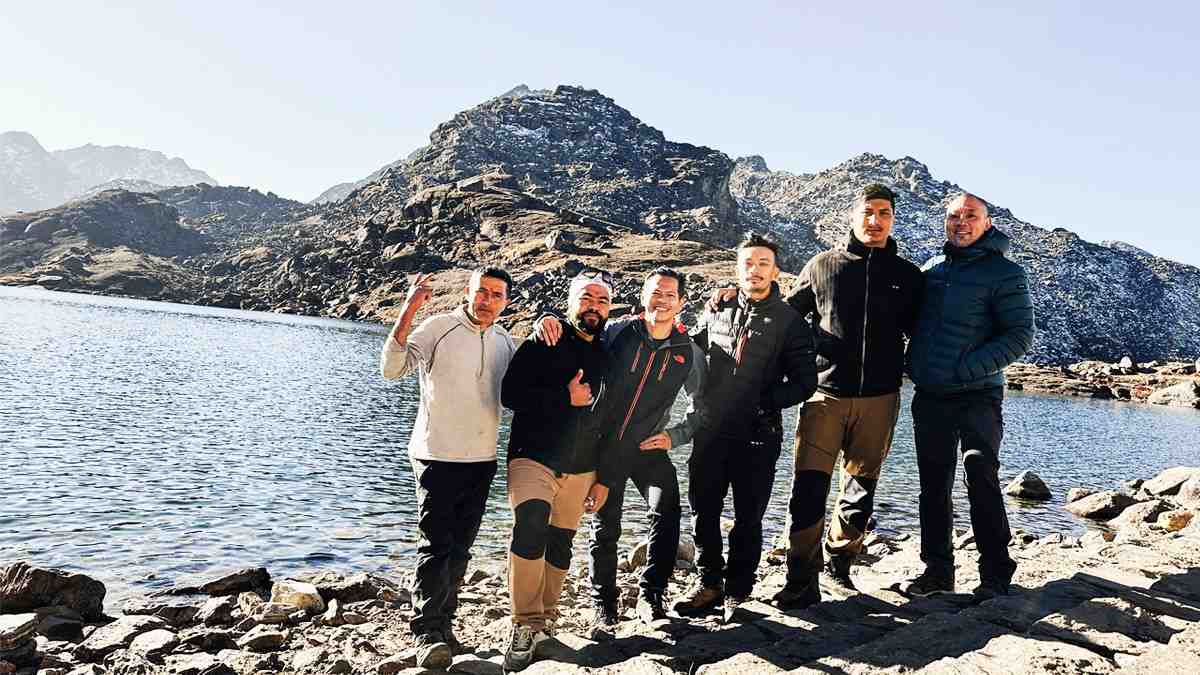
Foreign trekkers enjoying the moment infront of Gosaikunda Lake Nepal
The journey to Gosaikunda begins with a scenic drive from Kathmandu City to Dhunche, covering about 120 kilometers in 6 to 7 hours by bus or jeep. From Dhunche, trekkers walk for two to three days to reach the lake. It gradually gains altitude.
Most travelers follow the classic Gosaikunda trek route via Dhunche or Syabrubesi. Many also combine this journey with the Langtang trek, creating a longer and more diverse itinerary. This includes alpine lakes, traditional villages, and dramatic mountain scenery within the Langtang region.
Gosaikunda Yatra & Festivals: A Spiritual Mass Gathering
According to Hindu mythology, Gosaikunda was created by Lord Shiva. Because of this sacred origin, the lake is believed to be directly connected to Shiva himself. For centuries, devotees have regarded Gosaikunda as a holy place where nature and divine power coexist. Thereby making it one of Nepal’s most spiritually important alpine sites.
Gosaikunda holds deep religious value for both Hindus and Buddhists in Nepal. Every year during Janai Purnima (full moon day in June or August), thousands of pilgrims make the challenging journey to the lake. Bathing in its icy waters is believed to wash away sins and bring spiritual renewal. They also put on religious threads at wrist as a protective shield.
Shamans, monks, and devotees perform rituals, prayers, and offerings along the lake’s shores. During this period, the quiet alpine basin transforms into a vibrant spiritual gathering. Mostly, highlighting the strong connection between Nepalese culture, faith, and the Himalaya. Over 30,000 pilgrims ascend to this place annually.
A few things worth knowing before you go:
Leeches are aggressive on the lower sections of the trail from June through August, exactly when the yatra peaks. Gaiters or leech socks aren't optional during this window.
The trail gets genuinely congested near the top during Janai Purnima. Start early, move at your own pace, and don't underestimate how altitude affects you when you're also navigating crowds. Breeze Adventure handles altitude sickness with trained members and good preparation.
Respect the flow. Pilgrims have the right of way.
Other Religious Events at Gosaikunda
Janai Purnima gets all the attention, but it's not the only reason devotees make the climb.
During Shrawan, the holy month of July/August, the trail sees a steady stream of Shiva devotees throughout, not just on the full moon. Teej, the women's festival falling in August or September, brings groups of women in red to the lake, fasting and praying. The atmosphere during these visits is quieter than Janai Purnima but no less sincere.
On the Buddhist side, small puja ceremonies take place near the lake during significant Tibetan calendar dates. You won't always find these announced anywhere, they happen quietly, as they always have.
Gosaikunda Trek Views & Natural Beauty
The place is not just famous as a holy spot at a higher altitude. Actually, the natural beauty and visuals covered are insane.
Standing at the shores of Gosaikunda, you'll find yourself face-to-face with Langtang Lirung, Ganesh Himal, and Dorje Lakpa, all at once. It genuinely stops you in your tracks.
You will see there, snow-covered ridges wrap around the lake from every direction. It feels less like a mountain lake and more like nature built its own amphitheater just for you.
It is better to be here in autumn when the lake becomes a mirror. The mountains reflect so perfectly on the surface, you'll question which side is real.
Similarly, Spring softens everything up. Wildflowers start pushing through the trail edges. Then, the whole route takes on this quiet, colorful energy that's hard to describe until you see it.
Winter is a completely different world. The lake freezes solid, creating amazing visuals. This eerie, silent icescape feels almost otherworldly. But winter isn't for everyone. It's raw, it's cold, and it demands real experience. Those who are ready for it, though, get Gosaikunda entirely to themselves.
Gosaikunda Trek & Langtang Trek Connection
The Gosaikunda trek can be completed as a standalone pilgrimage and trekking route, but it also connects beautifully with the Langtang Valley Trek. Many trekkers start in Langtang Valley and cross Laurebina Pass to reach Gosaikunda. This combines cultural villages, high passes, and sacred lakes in one journey.
Not only that, this connection creates a richer Himalayan experience, blending natural beauty with deep spiritual heritage. For trekkers seeking variety, fewer crowds, and a strong cultural context, linking Gosaikunda with Langtang Valley is one of the most rewarding trekking options near Kathmandu.
Final Thoughts
Gosaikunda Lake is more than just a trekking destination; it is a sacred meeting point of nature, spirituality, and Himalayan wilderness. Whether visited as part of the Langtang trek or through the dedicated Gosaikunda trek, the journey offers profound cultural insight and unforgettable mountain scenery. From ancient mythology to crystal-clear alpine views, Gosaikunda leaves every visitor with a deep sense of peace, respect for nature, and appreciation for Nepal’s living spiritual traditions.
Common Queries
Does Gosaikunda Lake freeze in winter?
Yes, it freezes solid from December through February. The surface gets thick enough that locals and pilgrims actually walk across it during the Magh Purnima festival, which honestly sounds wild, but it's true.
Is there any fish in Gosaikunda Lake?
No, there is no fish or any aquatic life in this lake. Also, fishing is not allowed due to religious reasons behind it, too. The lake is considered sacred to Lord Shiva, and fishing is strictly prohibited.
What is the source of the Trishuli River?
The Trishuli River originates from the Gosaikunda lake area, which is one of the reasons the lake holds such spiritual weight. The water flows down through Dhunche and eventually joins the Narayani river system further south.
Can senior citizens visit Gosaikunda?
Senior citizens can actually visit Gosaikunda, and thousands do each year. The problem is not the steep path and high altitude, it’s all about how much preparation you have done. So, senior citizens with good guidance and preparation do this smoothly with extra acclimatization days in Dhunche or Sing Gompa.
Is Gosaikunda a Ramsar Wetland site?
Yes, it was designated a Ramsar site on 23rd September 2007. The whole Gosaikunda lake system was recognized for its ecological importance, particularly as a high-altitude wetland habitat.
Can I do Gosaikunda without a guide (2026 rule)?
No, you cannot do the Gosaikunda Trek without a guide. For safety reasons, the Nepal Government has made it mandatory to hire a local guide for this lake. The route can get tricky in bad weather, and signage isn't always great, so going alone is a calculated risk.
Gosaikunda vs Tilicho Lake, which is better?
Depends on what you're after. Gosaikunda has the religious and cultural pull plus easier access, while Tilicho is more dramatically scenic and sits even higher at 4,919 m. If you want raw mountain grandeur, Tilicho edges ahead, but for cultural depth and a slightly more manageable trek, Gosaikunda wins.
What is Gosaikunda called in Sanskrit/Nepali meaning?
"Gosaikunda" breaks down to "Gosai" (a name for a holy person or lord, referring to Shiva) and "Kunda" meaning a sacred lake or pond. So it roughly translates to "the sacred lake of Lord Shiva", fitting given how central the lake is to Hindu and even some Buddhist traditions.
Can I visit Gosaikunda on a day trip from Kathmandu?
Not realistically, the lake itself takes 2 days of trekking from Dhunche, which is already a 4–5 hour drive from Kathmandu. People who try to rush it usually end up with altitude sickness. Three to four days minimum is the sensible approach. If you do a helicopter round trip, then this is absolutely doable in a few hours.
What permits are required for the Gosaikunda Trek?
You need the Langtang National Park Entry Permit (NPR 3000 for foreigners and NPR 1500 for SAARC Citizens) and TIMS Card (NPR 2000) for this trek.
Kishwor Adhikari is a passionate writer with a deep enthusiasm for trekking and adventure. His extensive travels across Nepal, exploring its diverse landscapes and hidden corners, have shaped his unique perspective on the country's natural beauty. With a wealth of first-hand experience in adventure trekking, Kishwor has become a trusted voice for fellow enthusiasts. Through his writing, he shares invaluable insights, offering practical advice and inspiration for both seasoned trekkers and novices alike. His dedication to sharing his journey and knowledge helps others discover the wonders of Nepal's wilderness, making his work an essential resource for anyone seeking adventure in the region.