Medical disclaimer: This article is general information for trekkers, not medical advice, and is not a substitute for assessment by a qualified healthcare professional. A cough at altitude can occasionally be an early sign of a serious condition, so always tell your guide about changing symptoms and seek medical help if you are unwell or unsure.
Khumbu cough is an informal name for the persistent dry cough some trekkers develop while spending time at high altitude in Nepal's Everest region. Cold, dry air and increased breathing during strenuous trekking can irritate the airways. Most cases are uncomfortable rather than dangerous, but a cough accompanied by breathlessness at rest, pink or frothy sputum, confusion, or other serious symptoms requires urgent medical attention.
Ask anyone who has trekked to Everest Base Camp about the teahouses at night, and they will mention the coughing. Somewhere above Namche Bazaar, a dry, hacking cough starts working its way through trekking groups, and it has a name: “Khumbu cough”. It is named after the Khumbu, the high valley in Nepal that leads to Everest, where cold, bone-dry air and heavy breathing at altitude irritate the airways of trekkers and climbers alike.
If you are planning an Everest Base Camp trek, you have probably read about it and wondered whether to worry. In short, most cases are an irritating but manageable part of high-altitude trekking, not an emergency. Even so, a cough at altitude is not something to shrug off completely, because it can occasionally overlap with or mask more serious altitude-related problems.
Table of Contents
Khumbu cough at a glance
What is it?
Informal term for a persistent dry cough experienced at high-altitude.
Common trigger
Cold, dry air, increased breathing, and prolonged exertion
Is it contagious
The environmental cough itself isn’t, but infections can also cause coughing.
Can you continue trekking?
Depends on symptoms and overall condition.
Emergency signs
Breathlessness at rest, pink/frothy sputum, confusion, severe weakness, or other serious symptoms.
What should you do?
Tell your guide and monitor symptoms. Seek medical assessment if symptoms worsen.
What is Khumbu cough?
Khumbu cough is the informal name for a dry, persistent, often violent cough that develops in people spending extended time at high altitude in cold, dry conditions. It takes its name from the Khumbu, the region of northeastern Nepal that contains the trail to Everest Base Camp. Climbers on Everest expeditions have complained about it for decades, and the name stuck.
It is not a formal medical diagnosis. Doctors would describe it as a high-altitude cough or an irritative airway cough caused by environmental conditions. The distinction matters, because “Khumbu cough” describes a pattern, not a disease with a single defined cause.
Is Khumbu cough the same as a normal cough?
Not necessarily. A cough is a symptom, not a diagnosis, and it can have many causes. While Khumbu cough is generally linked to high-altitude environmental conditions, coughing may also result from a common cold, influenza, COVID-19, allergies, asthma, bronchitis, pneumonia, or other respiratory conditions. So do not assume every cough on an Everest trek is simply Khumbu cough. If symptoms are persistent, worsening, or come with concerning signs such as difficulty breathing or fever, get a medical assessment.
Is Khumbu cough contagious?
No, Khumbu cough itself is not contagious because it is not caused by an infectious organism. However, trekkers share teahouses where respiratory infections spread easily, and a cough caused by infection rather than environmental irritation may well be contagious. Since it can be hard to tell the two apart from symptoms alone, practice good hygiene and seek medical advice if you are unsure.
Why does Khumbu cough happen?
Researchers continue to study high-altitude cough, and it is thought to result not from one cause but from several overlapping factors such as the environment and the body’s response to exercising at altitude.
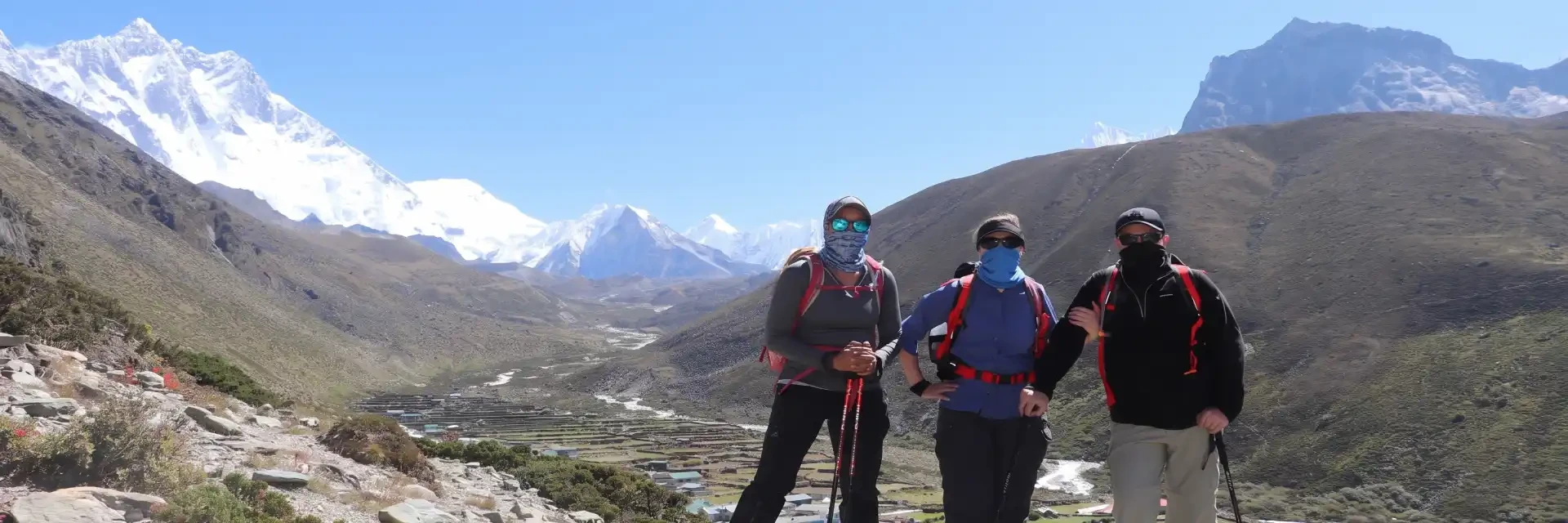
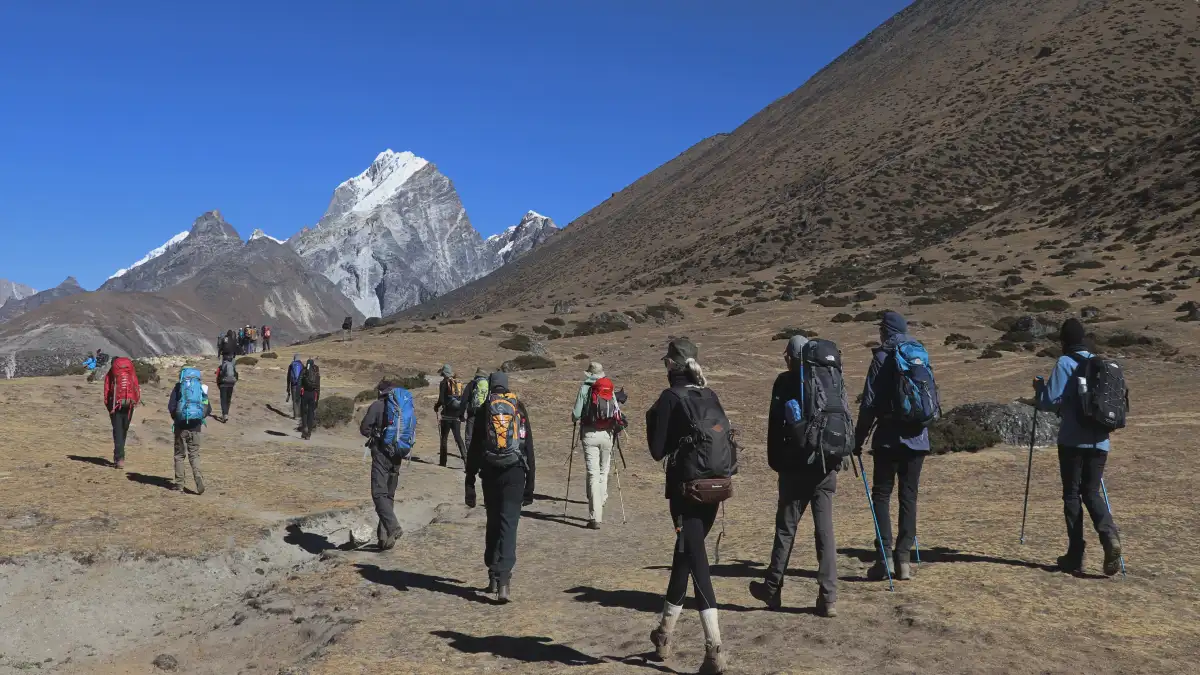
Dry, dusty high-altitude terrain that irritates trekkers' airways
Cold, dry mountain air
The Everest region is defined by cold, extremely dry air, especially during the main trekking seasons. Every breath of it gradually irritates the lining of the throat and airways, and over several days this repeated irritation can trigger a persistent dry cough. The higher you climb, the more noticeable these conditions become.
Increased breathing at high altitude
At higher elevation, the air pressure is lower, so although the air still contains about the same percentage of oxygen, each breath delivers fewer oxygen molecules than at sea level. To compensate, your body breathes more frequently and deeply, exposing your airways to larger volumes of cold, dry air. For trekkers walking six to eight hours a day, that repeated exposure adds up.
Airway irritation and sustained effort
Repeated exposure to harsh mountain conditions makes the airways more sensitive, leading to a scratchy throat, frequent throat clearing, and a dry cough. Because EBC trekking means walking uphill for consecutive days, sustained effort raises your breathing rate and increases that exposure further. Which is why symptoms often become noticeable after several days rather than on arrival, and why they tend to feel worse in the evening or when lying down to sleep.
Why experiences differ
Because Khumbu cough comes from a mix of cold, dry air, harder breathing, prolonged trekking, and individual susceptibility, two people hiking together in identical conditions can have completely different experiences. One may never cough at all, while the other develops persistent throat irritation.
Who is most likely to get Khumbu cough?
A common misconception is that only Everest climbers get it. In reality, anyone spending prolonged time in cold, dry, high-altitude conditions may experience it. But some groups meet these conditions more than others:
Everest Base Camp trekkers: Several days of continuous walking while gaining altitude, moving into ever colder, drier air and breathing deeply on the climbs, make EBC trekkers one of the groups most commonly associated with Khumbu cough.
High altitude climbers: Mountaineers on peaks such as Everest, Lhotse or Ama Dablam spend longer at even higher elevations, with repeated rotations between camps increasing the likelihood of a persistent dry cough.
First-time high-altitude trekkers: if you have never trekked above 3,000 meters, the Himalayan environment is new to your body. Being a beginner does not mean you will develop the cough, but good preparation and a sensible acclimatization schedule help you adjust more comfortably.
Trekkers spending many days at altitude: The EBC trek usually lasts 12-14 days, much of it above elevations where the air is cold and dry. The longer you stay, the greater the cumulative exposure.
Does everyone get Khumbu cough?
No. Some trekkers finish the trek without coughing at all, while others get mild throat irritation that clears quickly, and a small number have a persistent cough that continues until they descend or after they return home. Responses vary widely, which is why preparation, pacing, and paying attention to your own symptoms matter more than assuming you will either definitely get it or definitely avoid it.
Khumbu cough symptoms
There is no single symptom that confirms Khumbu cough. It is generally recognized as a persistent dry cough that develops at high altitude in cold, dry conditions, and it varies from person to person. Because a cough can also signal a viral infection or a more serious altitude illness, do not assume severe or worsening symptoms are simply Khumbu cough; seek medical assessment.
Common symptoms
Many trekkers describe:
A dry, persistent cough
A scratchy or irritated throat, and frequent throat clearing
Coughing fits, especially after long trekking days or at night
Mild chest discomfort or soreness from repeated coughing
Hoarseness or voice changes after several days at altitude
Some people notice only an occasional dry cough while others find coughing interrupts conversations, meals, or sleep.
Typical Symptoms vs warning signs
This table is not for diagnosing yourself; it shows when medical evacuation becomes especially important.
Commonly reported with Khumbu cough
Needs prompt medical evaluation
Dry cough
Difficulty breathing at rest
Throat irritation
Severe shortness of breath
Persistent cough during trekking
High fever
Cough worse at night
Coughing up blood, or frothy/pink sputum
Chest soreness from repeated coughing
Chest pain not clearly related to coughing
Hoarse voice
Confusion, extreme fatigue, or worsening altitude symptoms
If you notice anything in the right-hand column, do not assume it is Khumbu cough. Tell your guide immediately and seek medical attention.
A cough can be an early sign of HAPE. High-altitude pulmonary oedema (HAPE) is a serious build-up of fluid in the lungs that can develop at altitude and become life-threatening quickly. Warning signs include breathlessness at rest, a cough producing frothy or pink-tinged sputum, extreme weakness, and a blue tinge to the lips or fingertips.
HAPE is a medical emergency. The main priority for this is immediate descent and seek medical help. This is the advice trekkers give who have experienced altitude sickness. If you see these signs in yourself or another trekker, tell your guide at once.
How can Khumbu cough affect your trek?
The cough may not hurt at first, but days of repeated coughing become uncomfortable with sore abdominal muscles, rib discomfort, a dry, irritated throat, and broken sleep when it continues through the night. That, in turn, can make long days more tiring, disrupt eating and drinking, affect breathing comfort on steep climbs, and take the shine off the trek. For most people, the real challenge is not the danger but the constant irritation and fatigue of repeated coughing, even when overall fitness is good.
Where on the trek does Khumbu cough usually develop?
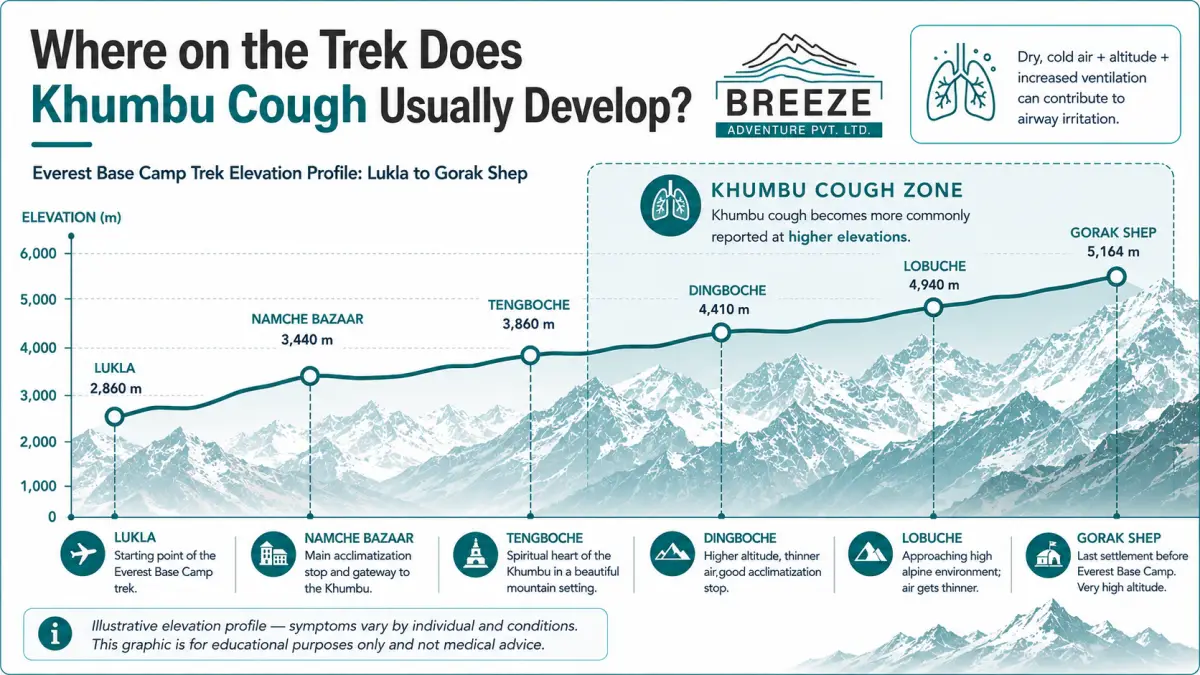
There is no fixed day or altitude when everyone develops symptoms. But guides and experienced trekkers often observe that coughing becomes more common once trekkers have spent several days at higher elevations, where the air is colder and drier, and breathing is more demanding.
Everest Base Camp elevation profile from Lukla to Gorak Shep
As you move up a typical Everest Base Camp itinerary, the environment shifts stage by stage:
Trek stage
What changes
Lukla to Phakding
Beginning to adjust to altitude
Namche Bazaar
First acclimatization stop
Tengboche
Colder temperatures become noticeable
Dingboche
Higher altitude and drier air
Lobuche
Increased exposure to cold conditions
Gorak Shep & Everest Base Camp
Highest sleeping and trekking elevations for most visitors.
Higher up, you breathe harder, spend longer exposed to cold air, walk for hours, and sleep in the cold. Which is why coughing usually shows up later in the trek rather than in the first day or two.
Tip: following your guide’s acclimatization schedule and avoiding rapid ascent supports both your adjustment to altitude and your comfort on the trail.
Khumbu cough treatment
There is no treatment designed specifically for Khumbu cough. Management is about reducing irritation, supporting recovery, and recognizing when medical assessment is needed. In practice that means:
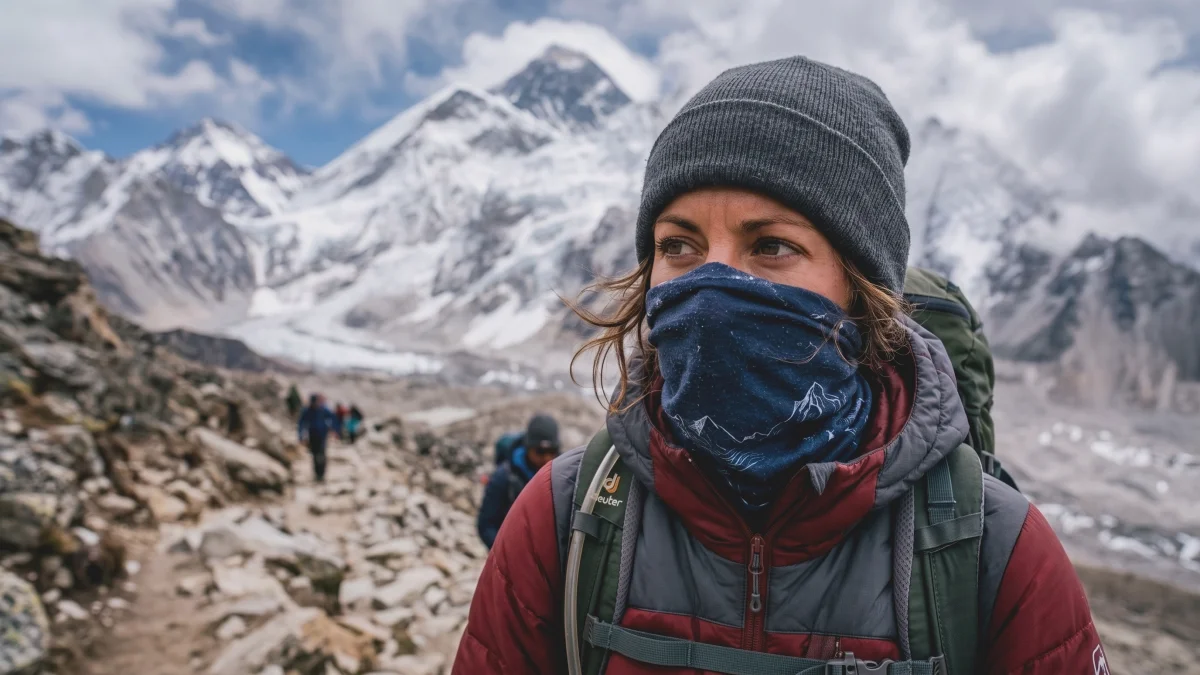
Trekker wearing a buff over the nose and mouth to warm and Humidify cold, dry air
Stay well hydrated. Altitude and exertion increase fluid loss through breathing, so drink regularly. Warm drinks are more comfortable than very cold ones and may ease throat dryness.
Protect your airway from cold air. Wear a buff or neck gaiter over your mouth and nose in cold or windy conditions to help warm and humidify the air before it reaches your airways.
Pace yourself. A steady, sustainable pace lets your body adapt and reduces strain. The old advice still holds: walk slowly enough to hold a conversation.
Rest and recover. Sleep adequately, take acclimatization days seriously, and avoid unnecessary overexertion.
Follow professional medical advice. If symptoms persist or concern you, consult a healthcare professional. Because coughing can stem from infection, asthma, pneumonia or altitude illness not just dry air and self-diagnosis is not recommended.
What to do if you develop a cough on the trek
A cough does not automatically end your trek; the key is responding thoughtfully rather than ignoring it.
Notice your symptoms. Is the cough dry or productive? Did it come on gradually? Any fever or difficulty breathing? How symptoms change over time tells you more than a single coughing fit.
Tell your guide. Let them know if the cough is getting more frequent, affecting your sleep, or coming with new symptoms or a general sense of being unwell. Guides are trained to monitor trekkers for altitude-related concerns and to judge when a medical assessment is needed.
Keep up good practice. If symptoms stay mild and your guide has no concerns, carry on with the basics (hydration, acclimatization, appropriate clothing and a comfortable pace) and avoid sudden strain such as rushing to catch the group.
Escalate if it worsens. Increasing breathlessness, persistent fever, chest pain, or coughing up blood mean you stop relying on assumptions and seek medical assessment as soon as possible.
When should you stop trekking and seek medical help?
A cough is only one symptom and should always be weighed against how you feel overall. If yours is mild and dry, not worsening, not affecting your breathing, and not joined by other concerning signs, your guide may suggest continuing while monitoring closely alongside the usual hydration, acclimatization and warmth. Arrange a medical assessment if the cough comes with any of these:
Difficulty breathing or severe shortness of breath
High fever
Chest pain that is not simply soreness from coughing
Coughing up blood, or frothy or pink sputum
Confusion or unusual drowsiness
These need prompt evaluation because they may point to conditions that require treatment. Never try to diagnose yourself on the trail. If you are unsure or on the side of caution, then ask your guide or a healthcare professional.
Khumbu cough recovery
“How long will this cough last?” is the most common question that arises after reaching Base Camp, and the honest answer is that it varies.
During the trek, a cough tied to the environment may persist while you remain exposed to cold, dry air, high altitude, and consecutive trekking days. It will not necessarily worsen daily, but it may linger until those factors ease. After descending, many trekkers improve as the air warms, humidity rises, and breathing becomes less demanding (for some it happens quickly, for others it happens more gradually).
After returning home, a lingering dry cough is not unusual, but seek medical advice if it persists without improving, worsens, comes with fever or breathing difficulty, or interferes with daily life. There is no fixed timeline that fits everyone.
Can you prevent Khumbu Cough?
There is no guaranteed way to prevent it, but good preparation and sensible habits can reduce airway irritation and make the trek more comfortable. Think of it in three stages.
Before the trek
Learn how your body responds to altitude. Understand the value of acclimatization; a steady pace, hydration, and recognizing symptoms early help significantly. Choose a realistic itinerary with proper acclimatization days rather than the fastest schedule. Overly short itineraries are one of the most common first-timer mistakes.
Pack for cold, windy conditions and layering with something to protect your neck and face (full checklist below). And if you are recovering from a respiratory illness before you travel, discuss your plans with your healthcare provider.
During the trek
Your daily habits matter as much as your preparation. The core measures are the same as for managing a cough, which is drinking regularly rather than waiting until you are thirsty, walking slowly enough to hold a conversation, covering your mouth and nose in cold or wind stretches, and treating acclimatization days as an essential part of the plan rather than something to skip.
Above all, listen to your body and do not ignore rising fatigue, persistent coughing, poor sleep, reduced appetite or new symptoms, and tell your guide early rather than waiting for things to become severe.
After the trek
Give yourself time to recover before returning to intense exercise. Your body has spent days adapting to altitude, cold, and long days on foot. Keep an eye on any cough, and arrange a medical evaluation if it persists, worsens, affects your breathing, or comes with fever or other concerning signs.
What to pack to help reduce throat irritation
No item guarantees you will avoid Khumbu cough, but the right kit keeps you more comfortable in the Everest region. And the packing list for EBC should be chosen carefully.
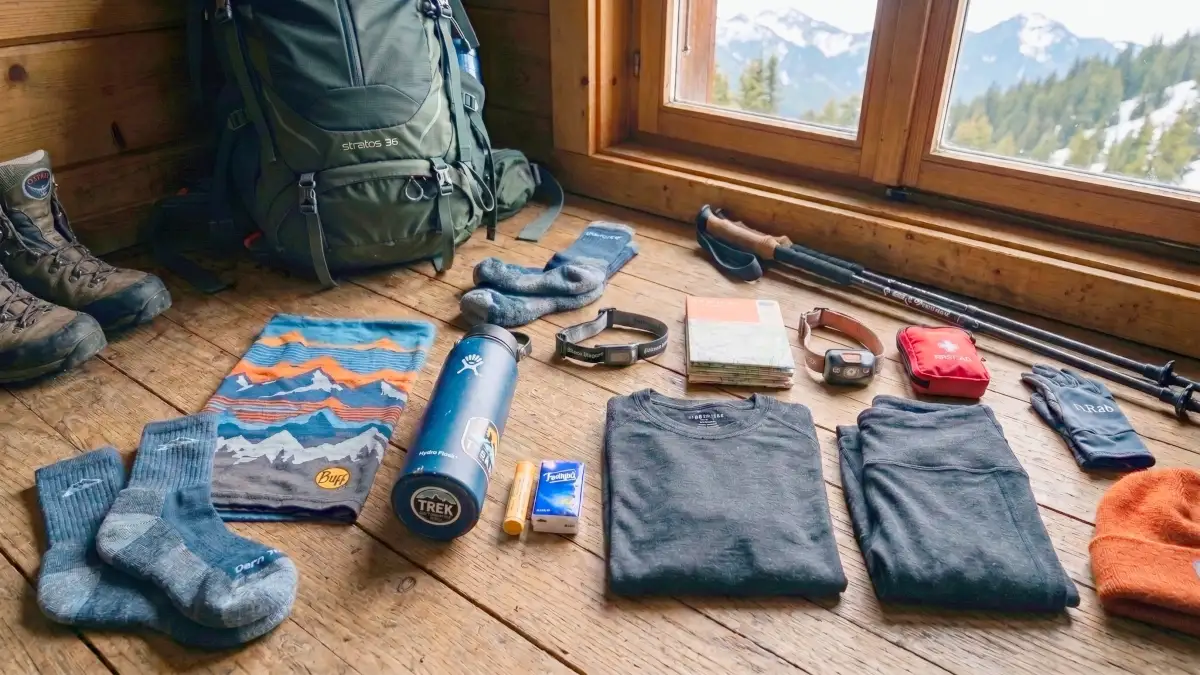
Cold-weather trekking kit: buff, insulated water bottle, lip balm and base layers
Clothing: Buff or neck gaiter, warm scarf, moisture-wicking base layers, insulated jacket, waterproof outer layer, warm hat.
Hydration: Reusable water bottles, an insulated bottle for warm drinks, and a water purification method.
Personal care: Lip balm, moisturizer, sunscreen, tissues.
Health essentials: any medications recommended by your healthcare provider, plus a basic personal first-aid kit. Do not rely on other trekkers’ advice on medication.
Common mistakes trekkers make
Discomfort on the EBC trek usually comes not from one big error but from small decisions that add up. Avoiding these makes the trek more comfortable:
Ignoring a persistent cough. A mild dry cough is common, but do not treat every cough as harmless. If it becomes more frequent, disturbs your sleep, or comes with breathing difficulty or fever, tell your guide and seek evaluation.
Walking too fast. Trying to keep up with faster hikers is a classic first-timer mistake. EBC is an endurance journey, not a race, and a steady pace helps you adapt.
Not drinking enough. Cold weather dulls your thirst while your body keeps losing fluid through breathing and effort. Drink regularly anyway.
Skipping acclimatization days. They are built into itineraries for a reason. An overly aggressive schedule raises your risk of altitude problems.
Underestimating the dry air. Many trekkers prepare for snow but not for how dry the air feels. A buff or neck gaiter makes cold air more comfortable to breathe.
Self-medicating without advice. A cough has many possible causes, and medicating blindly can delay proper treatment. Consult your guide and seek medical advice rather than following fellow trekkers.
Is Khumbu cough a sign of altitude sickness?
Not necessarily. Khumbu cough is generally associated with airway irritation in cold, dry, high-altitude conditions, while acute mountain sickness (AMS) is a separate altitude-related condition. However, a cough combined with breathing difficulty or other serious symptoms requires medical assessment.
AMS is caused by the body struggling to adjust to the lower oxygen levels at altitude, and it usually appears within hours of gaining elevation. Its hallmark sign is a headache, often alongside nausea or loss of appetite, fatigue or weakness, dizziness, and difficulty sleeping. It can occur with or without a cough, which is why a cough on its own neither confirms nor rules it out. If AMS is suspected, the usual response is to stop ascending, rest and hydrate, and descend if symptoms do not improve or get worse. Never continue climbing with AMS symptoms.
For the detailed breakdown of altitude sickness (AMS, HAPE and HACE), including their symptoms and how to prevent them, you can see our altitude sickness guide. Breeze Adventure manages altitude sickness with an oxygen cylinder. We also have an experienced team with trained staff to deal with this at higher altitudes.
Khumbu cough vs common cold vs altitude-related illness
Not every cough means serious illness. This comparison highlights general differences and should not be used for self-diagnosis. If you are concerned, seek professional advice.
Features
Khumbu cough
Common cold
Altitude-related illness
Common cause
Cold, dry air and prolonged high-altitude exposure
Viral infection
High-altitude exposure
Cough
Usually dry
Dry or productive
May occur, depending on the condition
Fever
Not typical
Common
Not usually a defining feature
Runny nose
Usually absent
Common
Usually absent
Sore throat
May occur
Common
Not a primary feature
Difficulty breathing
Not typical in mild cases
Sometimes
Can occur and requires medical assessment
Contagious
No
Yes
No
Medical assessment?
If symptoms worsen or warning signs develop
If severe or persistent
Yes, especially if worsening
Altitude-related illness includes several conditions, such as acute mountain sickness (AMS), HAPE and HACE. Diagnosis and treatment should always be made by a qualified medical professional.
Final thoughts
Coughing is common enough on the Everest Base Camp trail that Khumbu cough has become part of the region’s trekking vocabulary. For most people, it is an uncomfortable reminder of the cold, dry, high-altitude environment rather than a medical problem.
The most important thing is to watch your overall condition, not just the cough. And follow your acclimatization schedule, stay hydrated, protect yourself from the cold, and tell your guide if symptoms change. Taking sensible precautions and responding well to any health concern is what lets you enjoy the journey while keeping the risks in check.
Planning your Everest Base Camp trek? Talk to the Breeze Adventure team about itineraries with sensible acclimatization days and experienced guides who monitor trekker health along the way.
Frequently asked questions about Khumbu cough
Q. What is Khumbu cough?
Khumbu cough is the name commonly given to a persistent dry cough that some trekkers and climbers develop while spending time at high altitude, particularly in Nepal’s Everest region.
Q. Why is it called Khumbu cough?
The name comes from Nepal’s Khumbu region, home to Mount Everest and the Everest Base Camp trekking route, where this type of cough has long been recognized among trekkers and climbers.
Q. Is Khumbu cough dangerous?
In many cases, it is an uncomfortable but manageable condition. However, because coughing can also be a symptom of more serious respiratory or altitude-related illnesses, persistent or worsening symptoms should always be medically evaluated.
Q. Is Khumbu cough contagious?
No. Khumbu cough itself is not contagious because it is not an infectious disease. However, respiratory infections can also cause coughing and may spread between trekkers staying in shared teahouses.
Q. Does everyone get Khumbu cough?
No. Some trekkers never experience it, while others develop mild or more persistent symptoms. Individual responses to altitude vary considerably.
Q. How long does Khumbu cough last?
There is no fixed timeline. Some trekkers improve after descending to lower elevations, while others notice a lingering dry cough for a period after returning home. If symptoms persist or worsen, seek medical advice.
Q. Can I continue trekking with Khumbu cough?
It depends on the severity of your symptoms and your overall condition. A mild cough may not prevent you from continuing, but if your symptoms worsen or are accompanied by warning signs, you should stop and seek medical evaluation.
Q. How can I reduce throat irritation during the trek?
Staying hydrated, protecting your airway from cold, dry air with a buff or scarf, following a sensible pace, and taking acclimatization days seriously may help improve comfort during your trek.
Q. Should I carry cough medicine on the Everest Base Camp trek?
Carry only medications recommended by your healthcare provider. Because coughing can have different causes, avoid self-medicating without professional advice.
Q. Can children develop Khumbu cough?
Anyone exposed to cold, dry, high-altitude conditions may experience throat irritation or coughing. Families trekking with children should monitor symptoms carefully and seek medical advice if there are any concerns.
Q. Can Khumbu cough happen on other treks in Nepal?
Yes. Although the term “Khumbu cough” is strongly associated with the Everest region, similar dry coughs may occur during other high-altitude treks where environmental conditions are similar.
Q. Should I see a doctor after returning home?
If your cough does not gradually improve, worsens over time, or is accompanied by fever, breathing difficulties or other concerning symptoms, arrange a medical evaluation.
Q. Does travel insurance cover medical treatment for respiratory problems during trekking?
Coverage varies depending on your insurance policy. Before travelling, review your policy carefully to understand what medical treatment, emergency evacuation, and high-altitude trekking are covered.
Q. What should I pack to stay comfortable in cold, dry conditions?
Useful items include a buff or neck gaiter, warm layers, an insulated water bottle, lip balm, moisturizer, and any personal medications recommended by your healthcare provider.
Q. Is Khumbu cough the same as altitude sickness?
No. Khumbu cough and altitude sickness are different. However, because some symptoms can overlap with other medical conditions, it is important not to diagnose yourself while trekking.
Kishwor Adhikari is a passionate writer with a deep enthusiasm for trekking and adventure. His extensive travels across Nepal, exploring its diverse landscapes and hidden corners, have shaped his unique perspective on the country's natural beauty. With a wealth of first-hand experience in adventure trekking, Kishwor has become a trusted voice for fellow enthusiasts. Through his writing, he shares invaluable insights, offering practical advice and inspiration for both seasoned trekkers and novices alike. His dedication to sharing his journey and knowledge helps others discover the wonders of Nepal's wilderness, making his work an essential resource for anyone seeking adventure in the region.