In 2016, I was an experienced trekking guide, having spent nearly a decade in Nepal's high Himalayas. I had crossed Thorong La Pass, led groups across the Everest Three Passes, and walked the Everest Base Camp Trek more times than I can remember. Altitude sickness was always something I looked out for in my clients and never imagined that I would have to experience myself. But at Dingboche (4,410 m), my oxygen level dropped to 25%. I was dreaming of my own death while my lungs filled with fluid. This is the story of that night about what caused it, what saved me, and what every trekker must know.
I Almost Died at Dingboche: Altitude Sickness on the Everest Base Camp Trek
Table of Contents
Who Am I, and Why You Should Read This
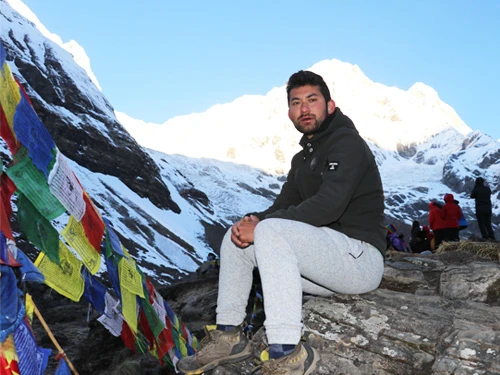
My name is Kishwor Adhikari. I began my mountain career as a porter in 2007 and became a licensed trekking guide in 2009. Since then, I have led trekkers on most of Nepal's demanding high-altitude routes multiple times, including the Annapurna Circuit, the Manaslu Circuit, Kanchenjunga, Upper Mustang, Dolpo, Kang La Pass, the Everest Three Passes, and countless Everest Base Camp Treks.
I have reached altitudes above 5000 meters more times than I can count.
And in 2016, on a route I knew well and walked many times before, altitude sickness nearly killed me at Dingboche (4,410 m), while I was the guide responsible for keeping everyone else safe. I am sharing it because it may hold lessons that could save your life while trekking in the Himalayas.
The Trek Begins: A South African Group, Perfect Weather
In 2016, I was hired to lead a group of South African trekkers to Everest Base Camp via the classic EBC route (Lukla-Namche-Tengboche-Dingboche-EBC). The group was excellent with fit, enthusiastic, and well-prepared trekkers. Even the weather held steady and worked in our favor.
We followed the standard acclimatization itinerary that everyone follows on a classic EBC route. At Namche Bazaar (3,440 m), we took a full rest day and hiked up to the Everest View Hotel at 3,880 m before returning to Namche Bazaar. This followed the classic "climb high, sleep low" acclimatization technique for high altitude. Everyone felt strong, including me.
After that we pushed on toward Tengboche, and then planned to Ascent to Dingboche.
I had done this exact route before many times, in all seasons and conditions. The trail felt familiar beneath my boots, the altitude felt manageable, and the rhythm of the trek felt like second nature.
Looking back now, I think that familiarity was precisely what made me careless. When a place feels like home, you stop listening to what it is trying to tell you. I was reading the mountain through the lens of every previous journey, not through the reality of that particular morning, that particular body, that particular set of lungs. I should have known better. And I should have paid far closer attention to the quiet signals my body had already begun to send.
Day 6: The Symptoms I Ignored
On Day 6, trekking from Tengboche (3,860 m) to Dingboche (4,410 m), something shifted after lunch at Somare.
My legs felt heavy, not the normal fatigue of a long day, but a leaden, uncooperative weight. On a small uphill section near Dingboche, I struggled to climb. I, a guide who had crossed Thorong La Pass at 5,416m many times without any trouble, found myself laboring on a modest slope.
I said nothing to anyone in the group. After reaching Dingboche, we checked into Hotel Good Luck in Dingboche. I ordered dinner for the whole group and ate only a little myself. I felt okay, not great, but functional. I went to bed at around 9:30 pm.
What I did not know was the night before in Tengboche, I had sweated through my clothes completely with sweat. I had woken up wet and told myself it was just the exertion. So, I kept going.
That one decision, to keep moving by staying silent and trusting habit over honest self-assessment, was not a strength. It was a form of denial that I had learned to wear as professionalism. I had spent years putting the needs and schedule of my clients ahead of my own discomfort, and I had confused that habit with responsibility. But a guide who cannot acknowledge his own vulnerability is not protecting his group; he is just adding an invisible risk to every step they take together. I know that now, in a way I could not have understood before that night.
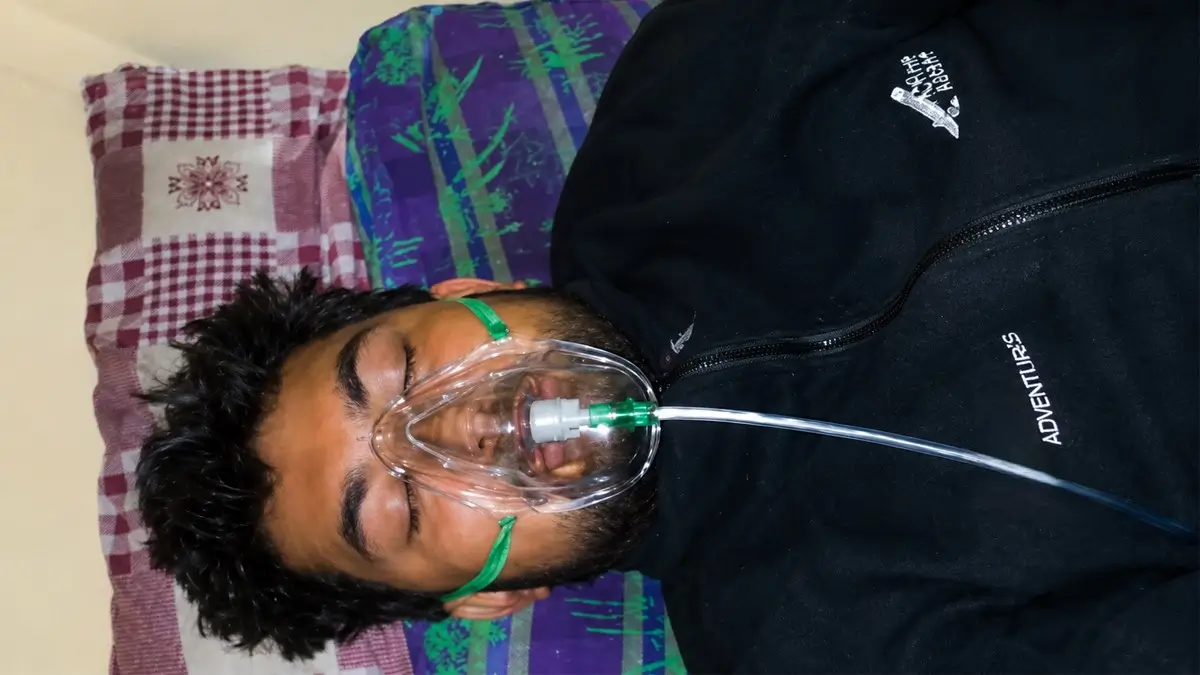
The Night I Dreamed My Own Death
After going to bed, I fell asleep and started dreaming.
In my dream, I was dead. My body lay on the bank of the river near my childhood home in Nepal. My entire family was gathered around me, crying. I was trying to speak to tell them I was there, but no sound came out. I was struggling, reaching, and fighting to be heard.
Then my uncle, who was part of our team, reached over to check on me.
I woke up. I was on the bed. I was alive.
"Where am I?" I asked him.
He told me that I had been making frightening sounds in my sleep. My body was restless, and I seemed to be struggling for breath. He called my name several times, but I didn't respond. When he touched me, I woke up gasping.
I told him I could not breathe properly. And then I heard it myself - a wet, rattling sound on every breath I took, like someone snoring through water. It was coming from my own lungs. They were filled with fluid.
He grabbed the pulse oximeter and checked my oxygen saturation, which showed around 25-30%.
A healthy person at sea level typically has an oxygen saturation of 95-100%. At high altitude, levels naturally drop, and anything below 80-85% is generally considered concerning, depending on symptoms and acclimatization. Below 75% can indicate a serious medical emergency. And I was at around 25%.
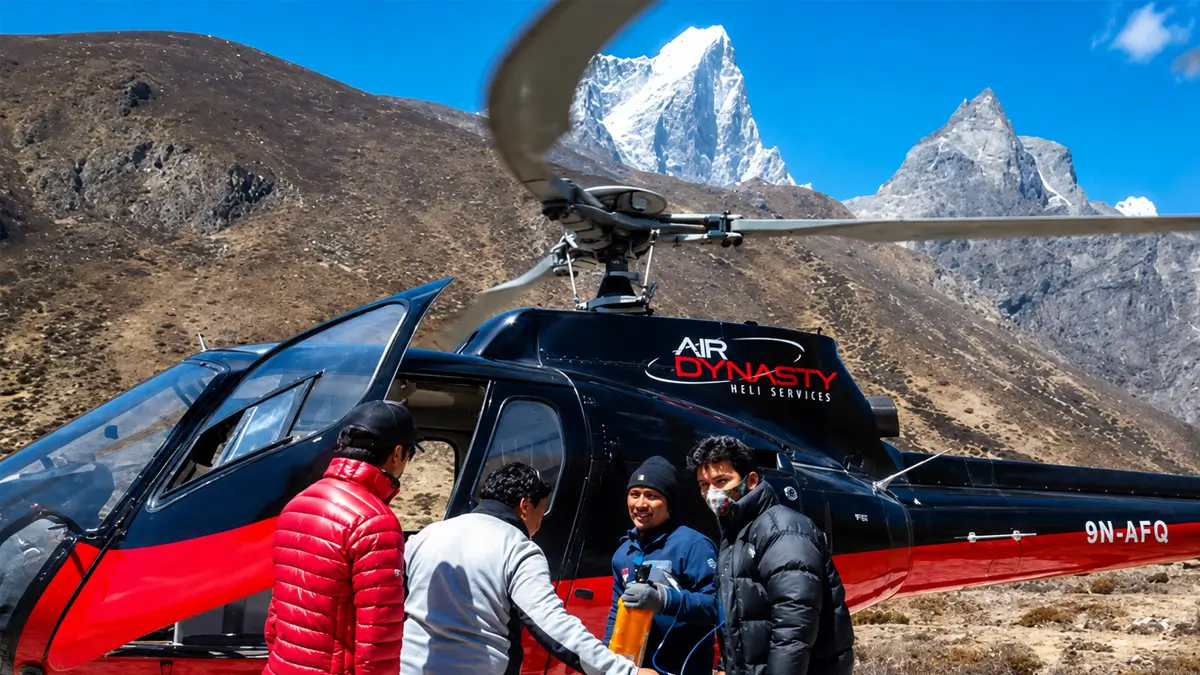
The Emergency: Pheriche Hospital and the Helicopter Out
My uncle ran to our international group leader, who rushed to my room and checked my oxygen again. It had risen slightly to 30–35%, possibly because the door had been opened and I had taken a few sips of water. He was still in shock.
They tried to arrange a night helicopter evacuation, but it wasn't possible.
Then the owner of Hotel Good Luck, Mr. Kul Tamang, stepped in. He organized his staff, and they carried and walked me to Pheriche Hospital (4,240 m), a facility run under the Mountain Rescue program and the only properly equipped hospital above Namche Bazaar on the entire EBC trail. There is now a medical post at Gorak Shep as well, but it is not equipped to the same standard as Pheriche for serious emergencies like this.
Normally, the walk to Pherche Hospital takes only about thirty minutes from the hotel, but it took us one and a half hours to cover that short distance.
When the doctor checked my oxygen at Pheriche, it had climbed up to around 40%. He was still alarmed, but I was moving, so some improvement had occurred from the walking outside. He put me in a bed immediately and placed me on supplemental oxygen. Only after that I feel like I was going to survive. Before that, I wasn't even sure I would make it through the night.
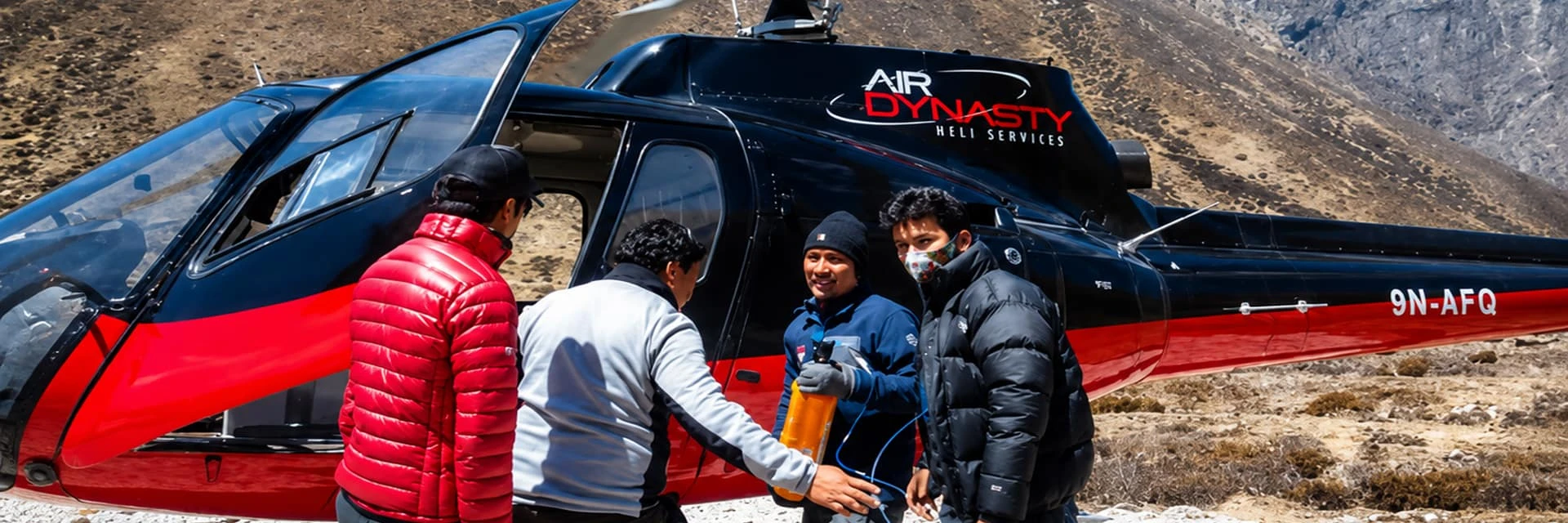
The next morning, a helicopter flew me to Lukla at a lower altitude. Within ten minutes of landing at Lukla, I felt about 75% recovered. The drop in altitude worked like medicine. By the time I reached Kathmandu, I was almost back to normal. I went straight home without going to the hospital. And I celebrated being alive.
What Actually Caused My Altitude Sickness, And Why It Can Happen to Anyone
After I fully recovered, I did something very important: I went to see a high-altitude specialist doctor in Kathmandu.
He reviewed my case and told me plainly that this can happen to anyone. Even elite Everest climbers have been struck by severe altitude sickness at Base Camp. Experience and fitness offer some protection, but not immunity.
In my case, he helped me trace back the likely causes:
Pre-existing lung inflammation
Before the trek, the roads in Kathmandu were heavily under construction. I commuted daily on my motorbike through thick dust. As a result, my lungs were likely already irritated before I ever set foot on the trail.
Smoking on the trail
I was smoking during the trek. This compromised my lungs' ability to absorb oxygen at high-altitude, exactly when they needed to work harder.
Ignored warning signs
I felt uncomfortable climbing to Namche. I sweated through the night in Tengboche which is a classic warning sign of early High Altitude Pulmonary Edema (HAPE). I had heavy legs at Somare, but I ignored all that and kept going anyway.
Upward momentum without assessment
I had no reason to keep going except habit and responsibility to the group. I should have assessed my condition properly and descended at the first serious sign.
The doctor told me to stop smoking and start exercising daily. I did both.
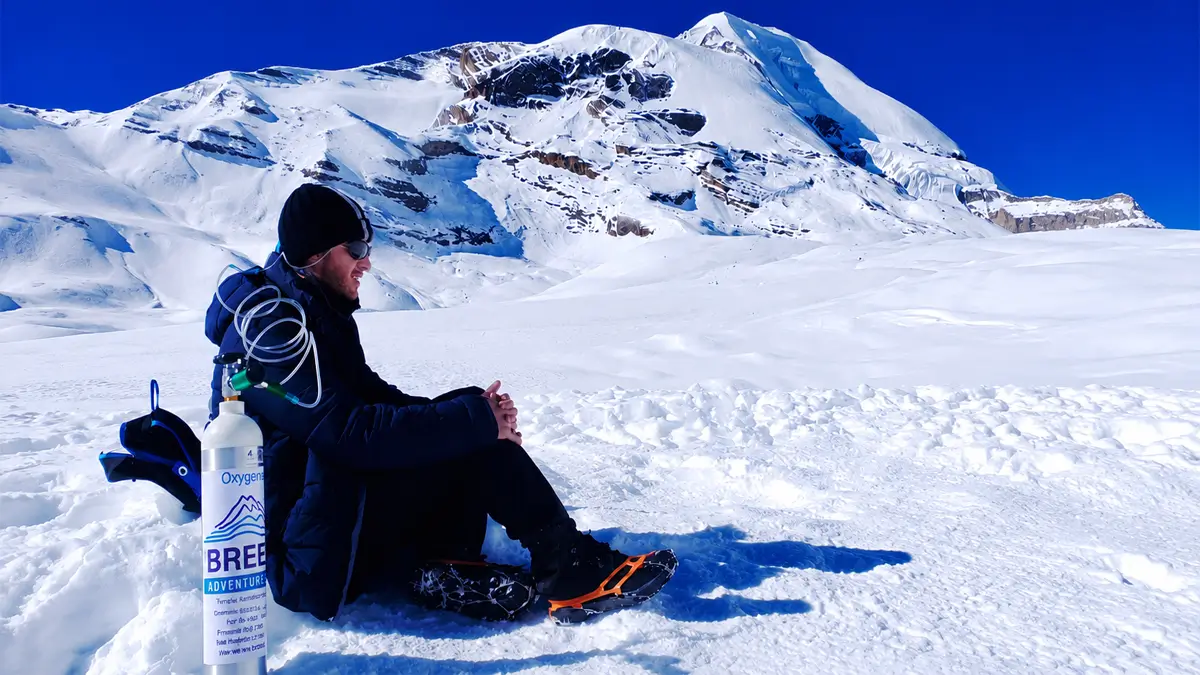
My Return to the Mountains, Proving It Was Possible
When I returned to the office after recovery, my colleagues and even my boss told me I would never be able to guide on high mountains again.
That broke my heart.
But the specialist had said otherwise. I followed his advice, stopped smoking, improved my fitness, and prepared for the autumn season. A few months later. I accepted a job, recommended by one of my friend, leading three Australian clients on the Annapurna Circuit Trek and crossed Thorong La Pass (5,416 m) without a single problem.
Later, I even climbed Island Peak (6,189 m), not just to prove something to others, but to prove something to myself.
Today, I am still guiding trekkers on some of Nepal's highest and most challenging mountain routes.
Frequently Asked Questions: Altitude Sickness on Nepal Treks
What is altitude sickness and when does it occur on the Everest Base Camp Trek?
Altitude sickness, also called Acute Mountain Sickness (AMS), occurs when the body cannot acclimatize quickly enough to reduced oxygen levels at high elevation. On the Everest Base Camp Trek, the risk rises significantly above 3,500 m, and is highest in the zone between Namche Bazaar (3,440 m) and Gorak Shep (5,164 m).
What are the early warning signs of altitude sickness on a Nepal trek?
Common early signs of altitude sickness include:
- Headache (especially at night or in the morning)
- Loss of appetite
- Nausea or vomiting
- Fatigue beyond normal trekking tiredness
- Dizziness or lightheadedness
- Difficulty sleeping or shortness of breath at rest
Looking back, my own early warning signs were heavy legs on uphill sections, excessive night sweating, and a general feeling that something was not quite right. I ignored those signals and kept going.
What is HAPE, and how dangerous is it?
High Altitude Pulmonary Edema (HAPE) is a life-threatening condition in which fluid accumulates in the lungs at altitude. It is one of the leading causes of altitude-related death. Symptoms include a gurgling or crackling sound when breathing, extreme breathlessness, a persistent cough (sometimes producing pink or frothy mucus), and an inability to exert yourself even slightly.
Based on the symptoms I experienced at Dingboche, the doctor concluded that I had developed HAPE. An oxygen saturation of 25–30% is a critical medical emergency and requires immediate treatment and descent.
Can an experienced trekking guide or mountaineer get altitude sickness?
Yes, absolutely. This is one of the most dangerous misconceptions in mountain trekking. My own case proves it clearly. I had trekked at high altitude for nearly a decade before this incident. Experience does not confer immunity. Physiological factors, prior lung health, smoking history, and ignoring early symptoms can all put an experienced person at serious risk.
What should you do if you or someone in your group shows altitude sickness symptoms?
- Stop ascending immediately. Do not take another step upward if symptoms are present.
- Descend as soon as possible. Descent is the single most effective treatment for altitude sickness. Even 300-500 m of descent can produce rapid improvement.
- Use supplemental oxygen if available. This can stabilize the person while descent is being arranged.
- Seek medical help. The Himalayan Rescue Association clinic in Pheriche (4,240 m) is the most established high-altitude medical facility on the Everest Base Camp route and has extensive experience treating altitude-related illnesses.
- Do not wait and hope symptoms will pass. Mild symptoms may improve with rest and acclimatization, but moderate or severe symptoms require immediate action. HAPE (High Altitude Pulmonary Edema) and HACE (High Altitude Cerebral Edema) are serious medical emergencies and can be fatal if left untreated.
What oxygen level is dangerous while trekking at altitude?
| Sp O2 Reading | Interpretation |
| 95-100% | Normal (sea level) |
| 85-94% | Acceptable at high altitude |
| 75-84% | Concerning |
| Below 75% | Descend immediately |
| Below 50% | Critical - life-threatening |
My reading of 25–30% was at a level associated with unconsciousness and death. That I survived was due to rapid response, the effort of those around me, and luck.
How can I prevent altitude sickness on the Everest Base Camp Trek?
While altitude sickness can never be completely eliminated, you can significantly reduce your risk on the Everest Base Camp Trek by following these guidelines:
- Acclimatize properly. Never skip rest days at Namche Bazaar (3,440 m) and Dingboche (4,410 m).
- Follow "climb high, sleep low." Hike to higher elevation during the day, return to lower altitude to sleep.
- Stay hydrated. Drink 3-4 litres of water daily.
- Avoid alcohol and smoking on the trail and in the weeks before departure.
- Listen to your body. Do not push through warning signs out of pride, schedule pressure, or concern for others.
- Choose a guide company that carries supplemental oxygen.
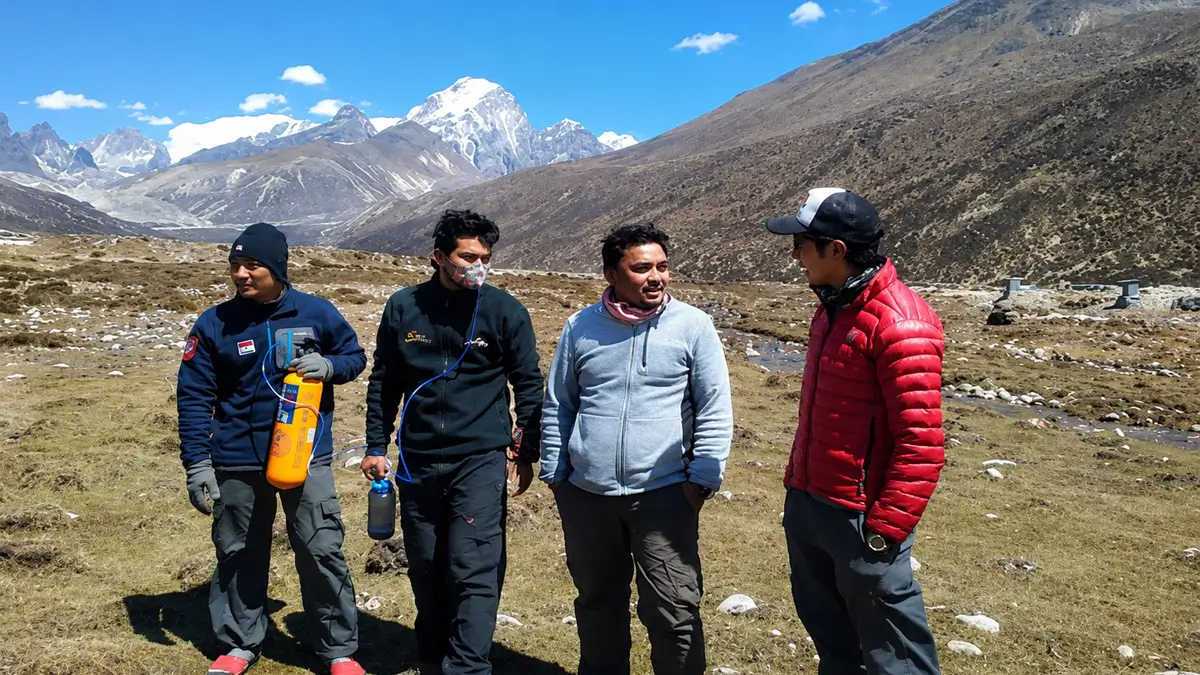
How Breeze Adventure Prepares for Altitude Emergencies: Our Oxygen Cylinder Protocol
After this experience, I founded Breeze Adventure and built our safety protocols around one principle: no trekker in our care should ever face the same situation I faced without immediate help available.
As part of our safety protocol, we carry dedicated oxygen cylinders on every high-altitude route above 4,000 m.
Each oxygen cylinder provides approximately 20 hours of supplemental oxygen for one person. If a trekker develops symptoms of AMS, HAPE, or any other serious altitude-related illness, our guides can administer oxygen immediately while coordinating a descent or emergency helicopter evacuation.
In a high-altitude emergency, oxygen can stabilize a trekker, ease the effects of oxygen deprivation, and buy valuable time until they reach lower altitude or receive advanced medical care.
We use this protocol on:
- Everest Base Camp Trek
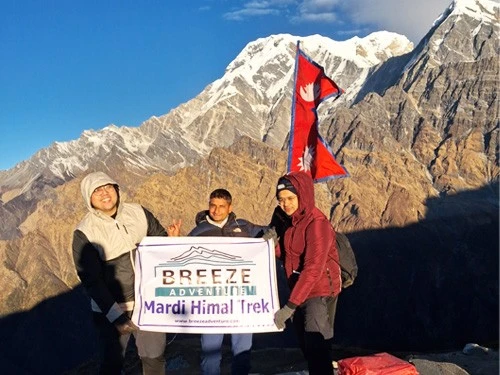
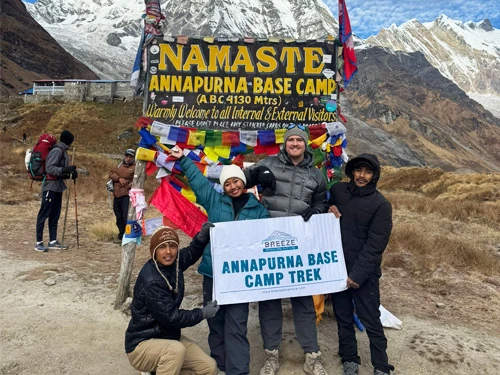
- Annapurna Base Camp Trek
- Manaslu Circuit Trek
- Nar Phu Valley Trek
- Kanchenjunga Circuit Trek
- Annapurna Circuit Trek (including Thorong La Pass)
- Langtang Valley Trek
- All Peak Climbing and Expeditions
We have used our oxygen cylinders many times across these routes. In every case, the outcome was positive. Trekkers who might have needed emergency evacuation stabilized, descended safely, and in most cases completed their treks.
Beyond its medical value, carrying supplemental oxygen provides something equally important i.e. peace of mind.
Knowing that oxygen is readily available changes the psychological experience of trekking at high altitude. Trekkers are often more willing to report symptoms early rather than hiding them out of fear of being sent home, because they know their safety is being actively monitored and managed.
Early reporting allows guides to respond quickly, assess the situation properly, and take appropriate action before a minor issue develops into a serious altitude-related illness.
What to Look for When Choosing a Trekking Company for Altitude Safety
Before booking any high-altitude trek in Nepal, ask your operator these questions directly:
- Do you carry supplemental oxygen above 4,000 m?
- Do your guides carry pulse oximeters and know how to interpret the readings?
- What is your evacuation protocol if a trekker develops severe AMS or HAPE?
- Do your guides have wilderness first aid or high-altitude medical training?
- Have you managed altitude sickness emergencies before, and what happened?
If a guide or company hesitates, provides vague answers, or cannot clearly explain its safety procedures, consider that a warning sign. When it comes to high-altitude trekking, preparation and experience matter.
The Lessons I Carry Down From Dingboche
More than a decade of guiding, and one night at 4,410 metres taught me more than all the rest combined.
Here is what I know now:
- Altitude sickness does not care about your experience, your fitness, or your reputation.
- Early symptoms are a message, not an inconvenience. Treat them that way.
- A guide who ignores warning signs and pushes through in silence is not being strong, he is being reckless with his own life and the trust his clients placed in him.
- Descend early, and descend fast. Altitude is generous, it gives you back to yourself the moment you drop.
- The difference between life and death on a Nepal trek can come down to one thing: whether the team around you is prepared.
I am alive today because my uncle noticed I had stopped responding. Because Mr. Kul Tamang organized his staff in the middle of the night. Because the Pheriche Hospital existed. Because a helicopter could fly in the morning.
Not everyone is that lucky.
The mountain does not care how experienced, fit, or confident you are. When the moment comes, preparation matters. Make sure your team is prepared before the mountain asks the question.
About the Author
Kishwor Adhikari has been guiding treks in Nepal since 2009 and is the founder of Breeze Adventure, a Kathmandu-based trekking company specializing in high-altitude routes including the Everest Base Camp Trek, Annapurna Circuit, Manaslu Circuit, and Island Peak. He has personally crossed major Himalayan passes, including Thorong La (5,416 m) and Kang La Pass, and summited Island Peak (6,189 m). He speaks openly about his own altitude sickness experience because he believes honest education saves lives.

Kishwor Adhikari
Call us on WhatsApp+977 9851045078OrChat with us