May is the right pick for your Annapurna Base Camp Trek Nepal. This is the month offering suitable weather, stunning Himalayan beauty, and fewer crowds than the peak months. You will walk through red and pink rhododendron forests with the unique Gurung and Magar culture, making your trip worthwhile.
Let me be straight with you: May is not the postcard month for the Annapurna Base Camp trek; that’s October. But I'd argue May might be the more enjoyable one, and after doing the ABC trek in May myself, here's the honest version of what you're signing up for.
The ABC trek in May is absolutely doable and worth it. Mornings are clear, trails are quieter than in April, and the upper section around Machhapuchhre Base Camp still has rhododendron blooming.
This is a guide from Breeze Adventure based on my 2 decades of experience in Himalayan tours and treks. Here, I have covered everything you require to know before booking your ABC Trek for the month of May.
Table of Contents
Why ABC Trek in May?
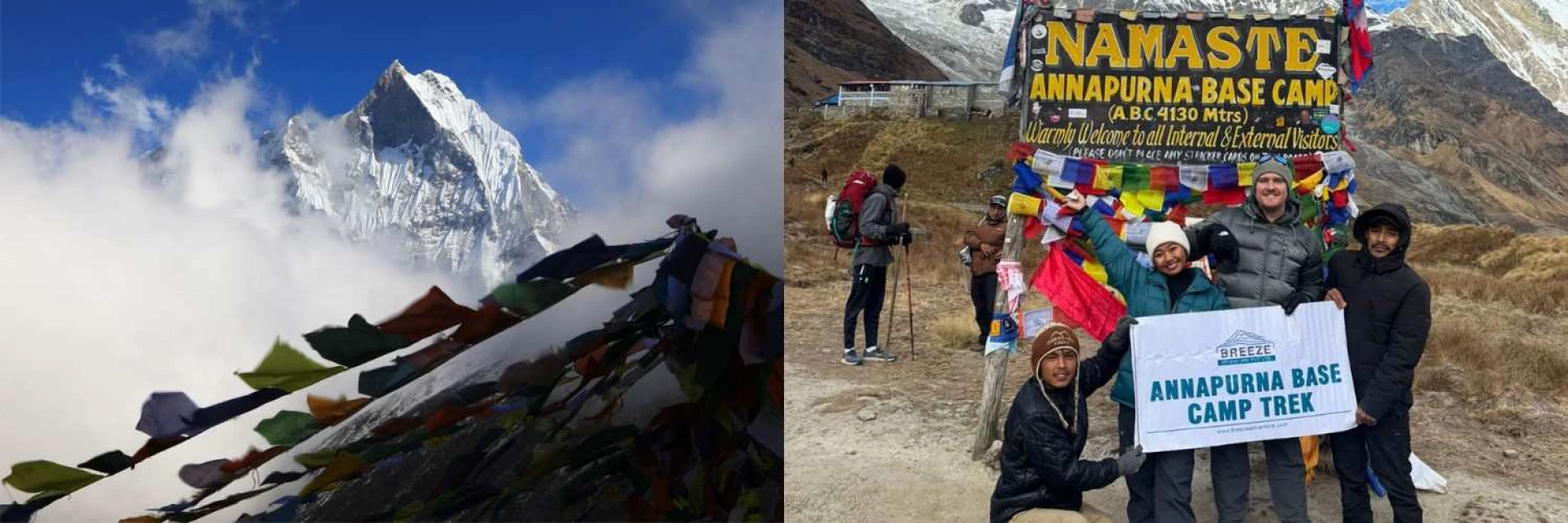
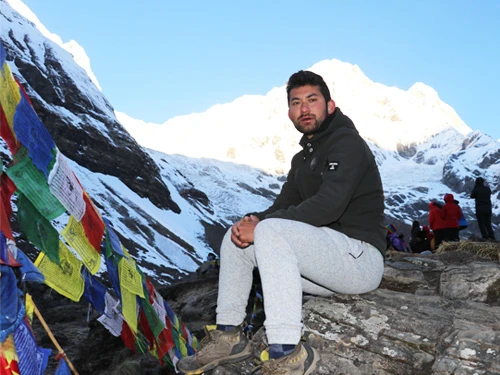
Annapurna Base Camp in May looks stunning
April gets all the attention because of the rhododendron bloom, so the teahouses at Chhomrong and Bamboo fill up fast. By the first week of May, that crowd thins noticeably. During my Annapurna Base Camp Trek in May, I had a room to myself at Deurali without booking ahead, which people who trekked in peak season found hard to believe.
The lower forests are past their peak bloom by then. But above 3,000 metres, the rhododendrons bloom later, so early May still gives you red and pink patches on the climb from Dovan up toward MBC. And the base camp amphitheatre itself, that 360-degree wall of Annapurna I, Annapurna South, Machhapuchhre, and Hiunchuli, doesn't care what month it is. At 6 a.m. in May, it was dead clear both mornings I was up there. The scenery was stunningly good; I could not help but love it.
Major highlights of this month:
Late rhododendron bloom above 3,000 m
Quieter trails and easy room availability compared to March–April
Warm daytime trekking, so lighter packs
Reliably clear mornings at base camp before clouds roll in around 10–11 a.m.
Slightly cheaper flights and guide availability than peak season
Weather and temperature in May Annapurna Trekking
Annapurna Base Camp in May means you typically get warm days, cool nights, and cloudy afternoons.
Lower villages (Jhinu, Chhomrong, 1,700–2,200 m): 18–25°C daytime. Honestly, there will be hot on the stone staircases. Nights around 10–14°C.
MBC and ABC (3,700–4,130 m): 8–12°C in the sun, and it drops to around 0 to -3°C overnight, even in May. The dining hall stove at ABC still earns its keep.
Rain is the real variable. In the first half of May, I got just one afternoon shower in eight days. From roughly May 20 onward, pre-monsoon buildup means you should expect rain some afternoons, sometimes heavy. The pattern is predictable, though: clear till late morning, clouds build, rain by 2–4 p.m.
So, start walking by 7 a.m., and you'll be drinking tea under a roof when it hits. Leeches start appearing in the lower forest sections late in the month. Annoying, not dangerous.
Let me add this one thing, May is not a monsoon month, but it can be considered premonsoon. This brings little to moderate rain some days, but the thing is, rain affects the lower section only. The higher altitude will get no rainfall, making it dry and comfortable walking.
How many days does the ABC trek take?
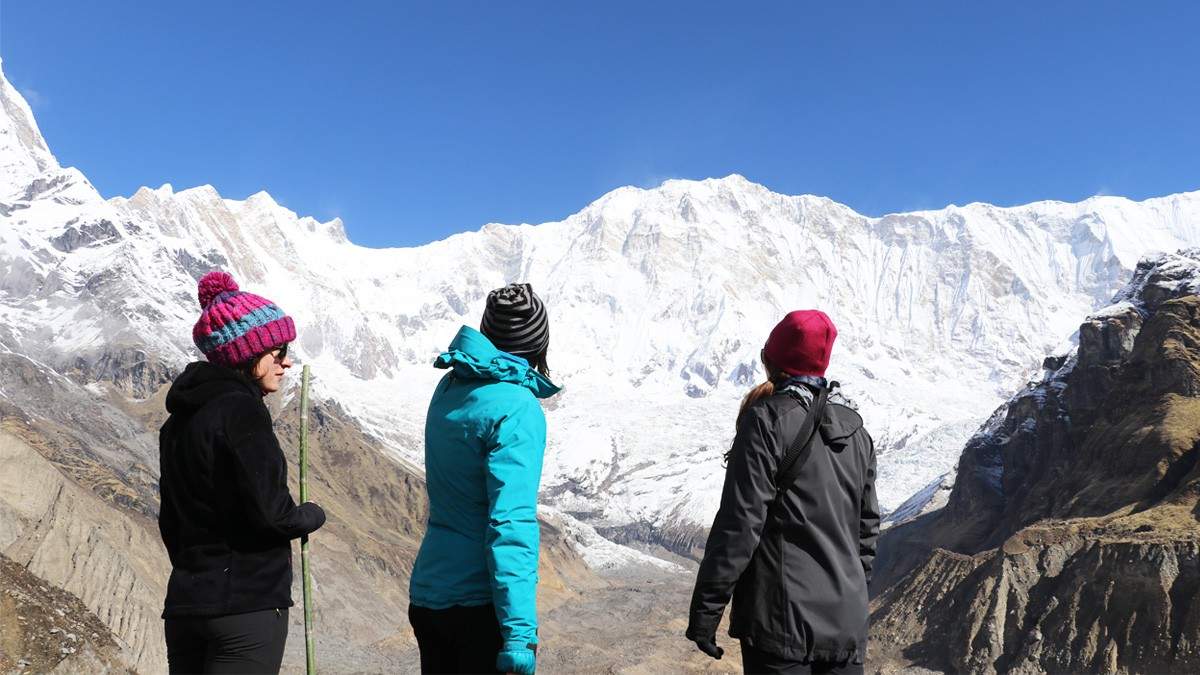
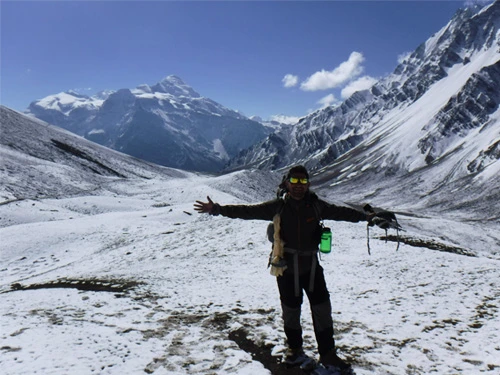
Female Trekkers in ABC trail enjoying mountain views
Most people do it in 6-8 days from Pokhara, and that's what I'd recommend for May:
Day 1: Drive from Pokhara to the Jhinu Danda area, then trek to Sinuwa
Day 2: Trekking from Sinuwa to Himalaya
Day 3: Trek from the Himalaya to the MBC
Day 4: Trekking from MBC TO ABC
Day 5: Trek from ABC to Dovan
Day 6: trek from Jhinu Danda to the hot springs, and drive back to Pokhara
You can compress it to 5 days if you're fit and the jeep roads cooperate, or stretch it to 10–11 by adding Poon Hill and Ghorepani at the start.
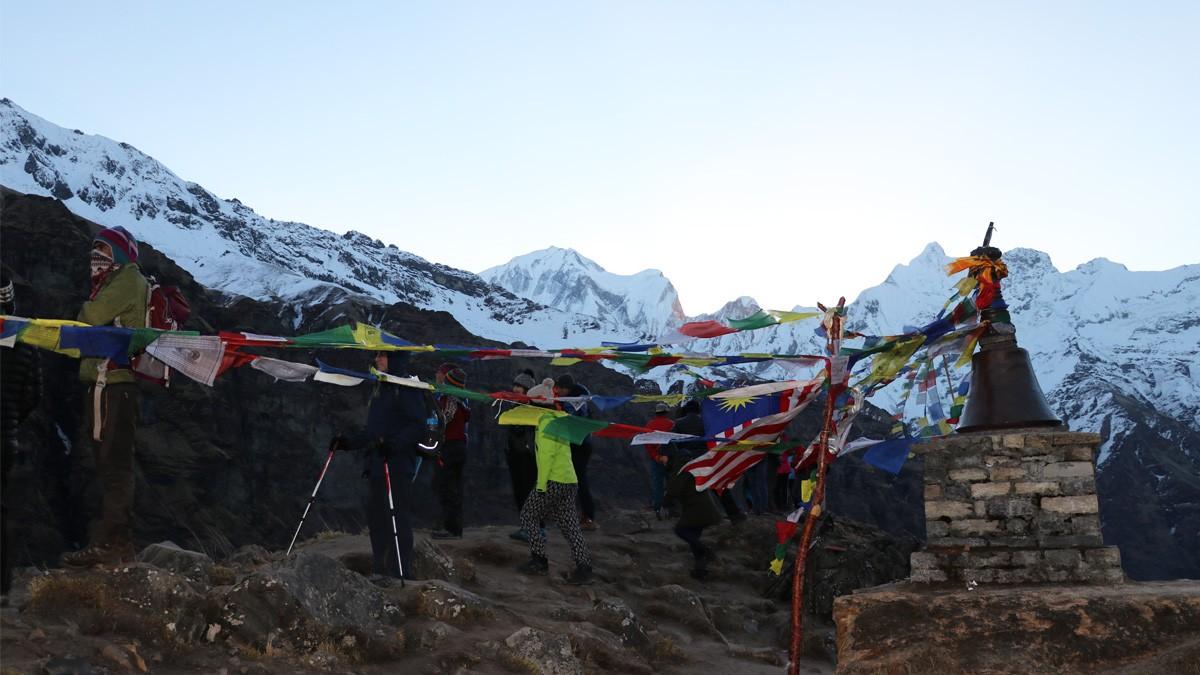
In May, Poon Hill looks shockingly beautiful. It decorates itself into red and pink, just like an elegant Nepali bride. Its whole selling point is the sunrise panorama and colorful forests.
After completing the trek, you can spend a day doing a cultural tour in Kathmandu Valley. There are 7 UNESCO World Heritage Sites in the Valley only, out of 10 in the country.
Is the ABC trek difficult in May?
This is considered a Moderate trek even for beginners. That word gets thrown around lazily, so here's what it means in practice. Yes, there are no technical sections, no glacier travel, and a maximum altitude of 4,130 m, which is low enough that serious altitude sickness is uncommon if you sleep at MBC or take the standard itinerary.
The difficulty is the stone staircases. The climb out of Chhomrong and the endless steps between Jhinu and Chhomrong are what break people, not the altitude. If you can comfortably walk 5–6 hours a day with a daypack, you'll manage. Trekking poles help more than any fitness plan on the descents.
One May-specific note: the avalanche-prone stretch between Deurali and MBC is much safer in May than in winter or early spring, since most of the snow has already come down. Still, cross it in the morning.
What to pack for the May Annapurna Trekking
Pack lighter than the winter lists tell you, but don't get cocky about the top section. You can consider the following things in your backpack for Annapurna Base Camp:
Broken-in trekking shoes (boots optional, the trail is good)
One fleece plus a light down jacket for ABC evenings
Rain jacket and a pack cover, non-negotiable after mid-May
T-shirts for the lower half, you will sweat
Warm hat and light gloves for the base camp morning
Sleeping bag rated to about -5°C (teahouse blankets exist but are hit or miss at ABC)
Sunscreen and sunglasses, the UV at 4,000m is brutal even when it's cool
Water purification tablets or a filter
Salt or a lighter for leeches if trekking late May
Cash in Nepali rupees, there are no ATMs after Pokhara
Permits: You need the ACAP entry permit, arranged in Pokhara or Kathmandu, and Nepal currently requires a licensed guide for trekking in the Annapurna region. Rules and fees change, so confirm both with a registered agency or the Nepal Tourism Board just before you go.
Pros and cons of the ABC trek in May
I recommend this month as the right pick, but here are some negative points as well:
Pros
There will be fewer trekkers
You can enjoy the warm days
Late rhododendrons up high, creating stunning scenes
Clear mornings for photography
easier bookings
Lower avalanche risk than early spring.
Cons
Sometimes, hazy midday views lower down
Occasional afternoon rain
Leeches late in the month
hot climbs below 2,000 m.
My verdict: early May is genuinely underrated. Late May is a gamble I'd only take if I had flexible dates and a good rain jacket. With the right guidance and proper preparation throughout the month of May is good to go.
A Few Things to Consider Before Booking the ABC Trek in May
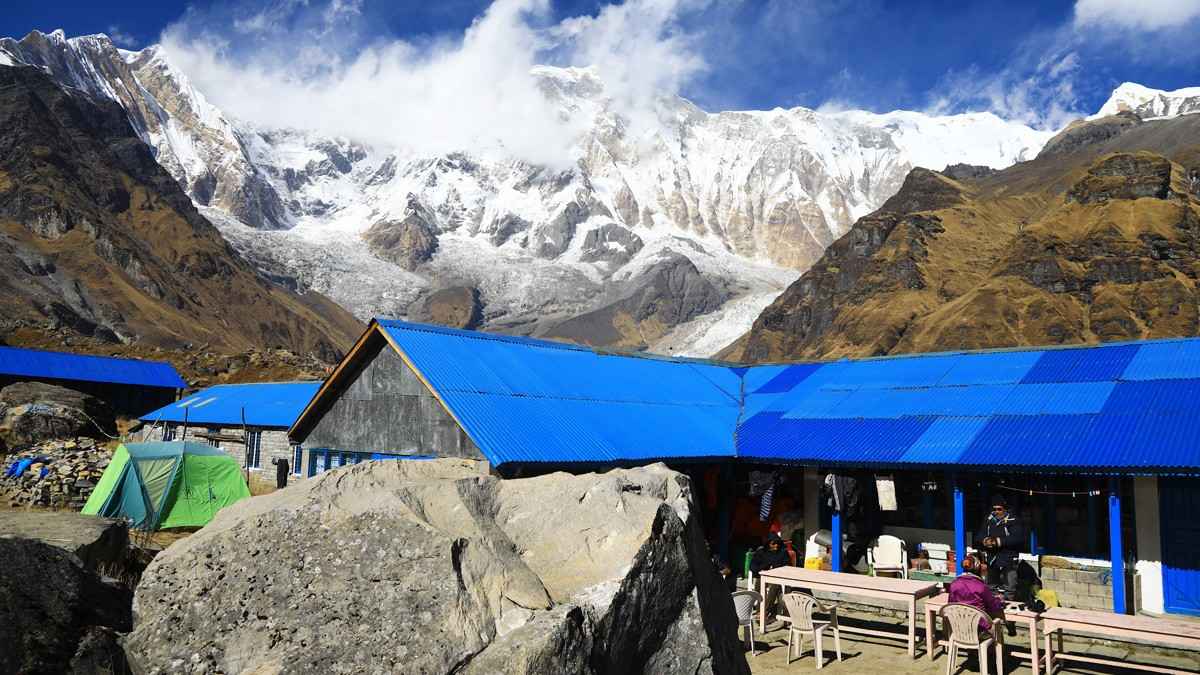
Teahouse in ABC trek for smooth journey and relaxation
To make your ABC Trekking smooth and enjoyable, here is additional information to think about:
Early May vs late May: not the same trek
-
May 1-10
May 11-20
May 21-31
Morning Views
Usually clear till 10–11 am
Clear till 9–10 am
Hazy even at dawn some days
Rain
Short afternoon showers, 1 in 3 days
Most afternoons affecting lower section only
Heavy, near-daily, first monsoon pulses possible but only in the lower section
Leeches
None to rare
Appearing below Sinuwa after rain
Active Jhinu to Bamboo
Crowds
Busy, book ahead at MBC/ABC
Thinning fast
Quiet, rooms everywhere
Rhododendrons
Blooming
Blooming
Fading Slowly
The first week of May is basically late spring. Last week is basically pre-monsoon. If you can choose, choose early.
Wifi, signal, and charging
NTC works better than Ncell on this route. You'll have a usable signal to Chhomrong, patchy 4G at Sinuwa and Bamboo, then it dies in the Modi Khola gorge. From Dovan to Deurali, expect nothing.
Oddly, some spots at MBC and ABC catch a weak NTC signal off the open bowl, enough for a text, not a call. Teahouse wifi (mostly satellite-based) exists at Chhomrong, Dovan, Himalaya, Deurali, MBC, and ABC at NPR 200–300 a session, and at MBC/ABC, it frequently doesn't work at all.
A 20,000mAh power bank covers a 7-day trek if you use airplane mode. Charge everything fully in Chhomrong; it's the last cheap electricity.
Rain strategy for May
You should walk from 6:30 am to 1 pm, done. Clouds build by late morning, and rain falls between 1 and 4 pm most May afternoons, especially late in the month. The stretch you don't want to be on after lunch is Deurali to MBC. It's an avalanche section in spring and gets slick, cold rain fast.
Do it before 11 am. Bamboo to Sinuwa also turns into a stone-step waterslide when wet. And when it rains hard, the jeep road below Jhinu can close due to mud and small landslides, so if the sky's ugly on your last day, walk out early or budget an extra half day.
Water and food
Bottled water is banned above Chhomrong inside the conservation area, so carry a filter or tablets. Boiled water from teahouses costs NPR 100–150 a litre, low down, up to NPR 300 at ABC. Tap refills are free and fine once treated.
Locals will tell you to skip meat above Chhomrong, and they're right. There's no refrigeration, and everything is carried up on someone's back for days. Most teahouses above Sinuwa don't serve meat anyway. A vegetarian week here looks like: dal bhat twice a day, Tibetan bread, and eggs for breakfast. Similarly, garlic soup at altitude, momos, and fried rice when you're bored. Honestly, you eat better than the meat-eaters.
Insurance and helicopters
Get Nepal travel insurance that covers trekking above 4,000 m, because ABC sits at 4,130 m, and standard policies stop at 3,000 m or 4,000 m. Check the wording. A helicopter evacuation from the sanctuary runs roughly USD 2,000–5,000, cash or insurance guarantee before the machine lifts off.
Some checkpoints now ask to see proof of insurance before letting you into the higher sections. Twenty minutes comparing policies is the cheapest thing you'll do for this trek.
This is in case of emergency only, but the route will be operated by the travel agency with full preparation. Breeze Adventure offers an oxygen cylinder in case you get altitude sickness. Also, we have trained and skilled members guiding you throughout the journey.
Where the road actually reaches
Jeeps from Pokhara now reach Samrong / Matque, a 15–30 minute walk and one long suspension bridge from Jhinu Danda. That's the current practical trailhead. Crossing the 287 m Jhinu suspension bridge cuts nearly two hours of descent and climb.
The drive takes 3–4 hours, and the last stretch needs a 4WD. This road access means the classic 10–11 day itinerary is now comfortably 6–7 days.
May vs October, May vs April
-
May
April
October
Views
Clear Mornings
Clear most of the day
Sharpest of the year
Trail
Rhododendrons (early May), warm, some rain
Peak bloom, stable
Dry, cold nights up high
Crowds
Moderate, then empty
Busy
Packed, rooms scarce at MBC/ABC
Prices/room
Easy to find, negotiable late May
Book ahead
Arrive by 2 pm or sleep in the dining hall
Short version: October wins on views, April wins on flowers plus stability, May wins on solitude and warm trekking. If May is when you have leave, early May is a genuinely good trek, not a compromise.
Toilets, showers, and sleep
Below Chhomrong, you'll find Western toilets and even attached bathrooms. Above Dovan, it's mostly squat toilets, often outside the building, and at MBC, that means a 2 am walk in freezing air.
Bring your own paper, always. Showers above Himalaya are solar or gas buckets, and at MBC, they're "often unavailable" because pipes freeze overnight. Plan on your last real shower in Chhomrong.
Rooms at MBC and ABC are often dormitory-style in season, with thin plywood walls, and in busy May weeks, solo trekkers get paired with strangers. Blankets are provided everywhere, and they're heavy, but bring a sleeping bag rated to at least -5°C for the top two nights.
FAQs: Annapurna Base Camp trek in May
Is May a good time for the Annapurna Base Camp trek?
Yes, May is a good time. It is one of the better shoulder-season windows. Late May works too, but expect some afternoon rain as the monsoon approaches.
How cold is it at base camp in May?
Around 0 to -3°C at night, 8–12°C during sunny daytime hours. Cold enough for a down jacket at dinner, not cold enough for expedition gear.
Will I get mountain views in May?
Mornings, almost always. Afternoons, rarely. Structure every day around a pre-7 a.m. start.
Do I need to book teahouses in advance in May?
Not actually, outside of odd bottleneck nights; walking in and asking works fine in May.
Is the trek crowded in May?
Much quieter than October or April. You'll have company at ABC itself, but long stretches of trail to yourself.
Can beginners do the ABC trek in May?
Yes, if you can handle consecutive 5–6 hour walking days and some stairs. It's many people's first Himalayan trek for a reason. All that matters is the right guidance and good preparation.
Kishwor Adhikari is a passionate writer with a deep enthusiasm for trekking and adventure. His extensive travels across Nepal, exploring its diverse landscapes and hidden corners, have shaped his unique perspective on the country's natural beauty. With a wealth of first-hand experience in adventure trekking, Kishwor has become a trusted voice for fellow enthusiasts. Through his writing, he shares invaluable insights, offering practical advice and inspiration for both seasoned trekkers and novices alike. His dedication to sharing his journey and knowledge helps others discover the wonders of Nepal's wilderness, making his work an essential resource for anyone seeking adventure in the region.