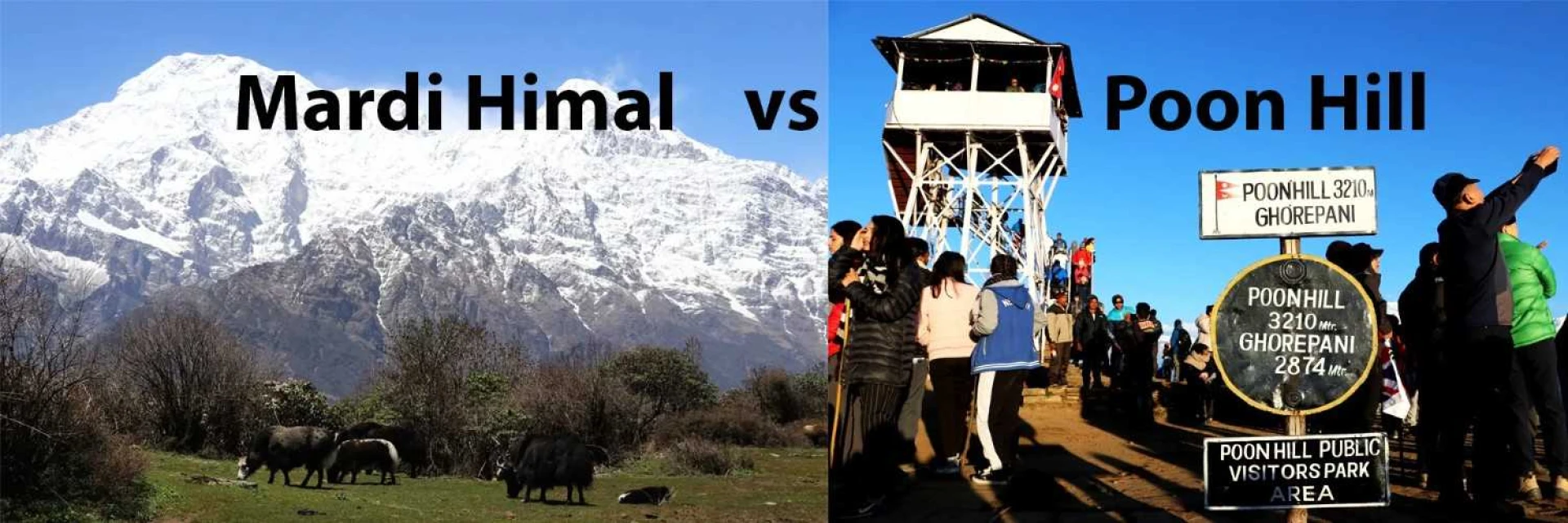
Short on time but still want the big Himalayan views? Both of these Annapurna treks deliver in under a week. Poon Hill is the gentler, culture-rich sunrise classic that suits first-timers and families. Mardi Himal is the higher, quieter ridge climb for people who want fewer crowds and closer mountain views.
This guide breaks down the real differences so you can choose with confidence.
Table of Contents
Mardi Himal vs Poon Hill at a glance
Here is a clear difference to choose between the Mardi Himal Trekking and the Poon Hill Trek. It shows where the two treks are similar and where they part ways
High alpine ridge, close-up Fishtail and Annapurna South
Tea houses
Plenty, well developed
Fewer, simpler higher up
Altitude risk
Low or Not at all
Low to mild (watch the climb above High Camp)
Permits
ACAP
ACAP
Best For
First-timers, families, culture, limited time
First-timers with good preparation, repeat trekkers, quiet-seekers, big mountain close-ups
Start/end
Pokhara (via Nayapul/Ulleri)
Pokhara (via Kande/Phedi)
Both treks sit inside the Annapurna Conservation Area; both start and finish near Pokhara. Also, both need the same two permits. The real choice comes down to how high you want to go, how many people you want around you, and what kind of view you are chasing.
Poon Hill Trek: the classic sunrise walk
Poon Hill Trip is short popular trek in Annapurna Region
The Ghorepani Poon Hill Trek is the trek most people picture when they think of an easy Himalayan sunrise. It has been popular for decades, and for good reason. You get huge mountain views without climbing very high or spending a lot of days away.
The walk usually starts with a short drive from Pokhara to Nayapul or Ulleri. Then the path follows stone staircases up through villages and thick rhododendron forest to Ghorepani at around 2,874 m. The big moment comes before dawn on day two or three: a one-hour climb in the dark up to Poon Hill at 3,210 m, where the sun lights up Dhaulagiri, the Annapurna range and the pyramid of Machhapuchhre (Fishtail) one peak at a time.
Most people then loop down through Tadapani to the lovely Gurung village of Ghandruk before heading back to Pokhara. The trail passes through Gurung and Magar communities, so the culture is as much a part of the trip as the mountains.
Mardi Himal Trek: the quiet ridge climb
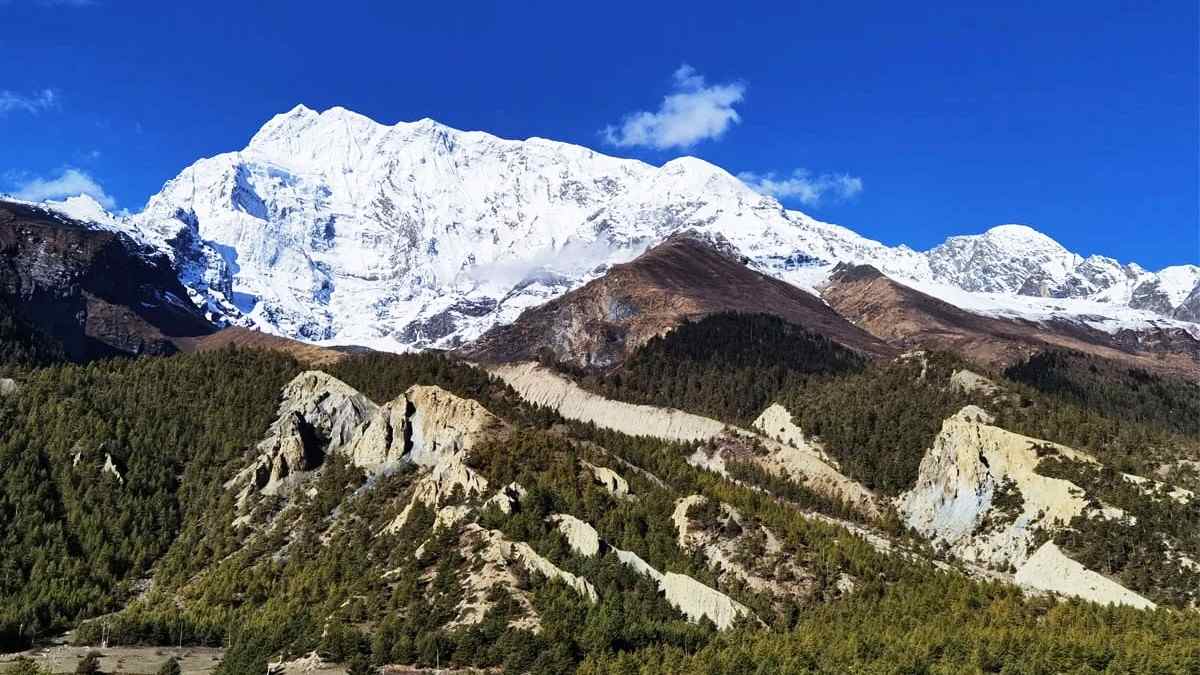
Breeze Adventure team in Mardi Himal Trek
Mardi Himal is the newer option on the block. The route only opened to teahouse trekkers around 2012, so it still feels wilder and far less crowded than Poon Hill. Even though it sits right next to the busy Annapurna Base Camp trail, it’s not that crowded.
The trek climbs a single long ridge above Pokhara. From trailheads like Kande or Phedi, you walk up through moss-draped forest to Forest Camp and Low Camp, then break out above the treeline onto open grassland at High Camp (around 3,580 m). The payoff is the pre-dawn push from High Camp to the Upper Viewpoint at about 4,200 m; strong, well-acclimatised hikers can carry on to Mardi Himal Base Camp at roughly 4,500 m.
Up there, Machhapuchhre looks close enough to touch, with Annapurna South, Hiunchuli and Mardi Himal filling the rest of the skyline. The final ridge is narrow and exposed, which is part of the thrill.
How hard is each trek?
Neither trek is a mountaineering expedition. You do not need ropes, crampons, or any technical skill for either. What separates them is height and the length of the hard days.
Poon Hill trek difficulty: It is graded easy to moderate. The toughest part is the long stone staircase up to Ulleri and Ghorepani; some people count thousands of steps and feel it in their legs the next morning. But you top out at 3,210 m, which is low enough that altitude sickness is rare. Daily walking is usually 4 to 6 hours. A reasonably fit beginner, or a family with older kids, can manage it comfortably.
Mardi Himal trek difficulty: It is a step up to moderate. The climbing is steadier, and you go noticeably higher. The summit-day push from High Camp to the Upper Viewpoint gains serious altitude on a narrow, exposed ridge, often starting in the cold and dark. Expect 5 to 7 hours on the big days.
A quick word on altitude. At Poon Hill heights, altitude sickness (AMS) is uncommon. On Mardi Himal, the jump toward 4,200–4,500 m is enough that some trekkers feel headaches or breathlessness. The fix is simple and free: walk slowly, drink plenty of water, sleep low, and never rush the final morning. If symptoms get worse as you go up, go down and consult a guide as soon as possible.
Poon Hill vs Mardi Himal: Views, crowds and the feel of the trail
Both treks show you the same famous peaks, but the experience is different.
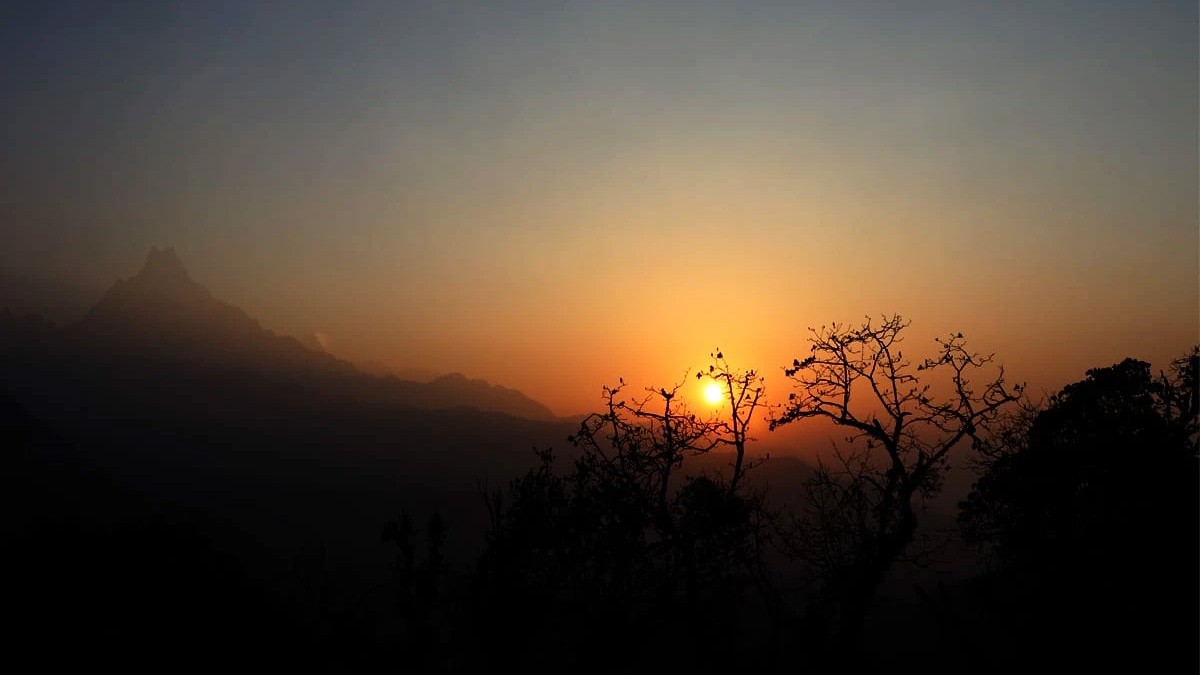
Poon Hill gives you a wide, panoramic sunrise. From the viewpoint, you see a long sweep of the horizon, with Dhaulagiri far to the west and the Annapurnas and Fishtail to the east. It is a postcard view, and you will usually be sharing it with a lot of other people, cameras out, all waiting for the same first light. In spring, the forest around the trail turns red and pink with blooming rhododendron, which is a sight in itself. Ghorepani Poon Hill Jeep Tour is an even more luxurious trip option, if you want to avoid walking completely.
Stunning sunrise captured from Poon Hill
Mardi Himal gives you closeness instead of width. You are not looking at the mountains from a distance; you are walking straight at them along a ridge, with Machhapuchhre towering ahead for most of the final day. There are far fewer trekkers, so the mornings feel still and personal. The trade-off is fewer villages and a more remote, bare-bones feel up high.
So it comes down to taste. Want a lively, social trail and a sweeping sunrise? Choose Poon Hill.
Want solitude and a mountain almost in your face? Choose Mardi Himal.
Itineraries: how many days do you need?
Both treks are flexible and can be shortened or stretched. Here are the common versions, counting trail days from Pokhara City.
Poon Hill — 2-day loop
Drive Pokhara to Banthati and then trek to Ghorepani
Hike to Poon Hill, then return to Banthati and then drive to Pokhara
This trek is available for a 2-day or 3-day trip, but you can extend the days if you want a more relaxed trip.
Mardi Himal — 3-day route
Drive from Pokhara to Dhampus and the trek to Forest Camp
Fit trekkers sometimes compress this to 2 days also, but the extra night helps you acclimatise and enjoy the ridge instead of racing it.
You can also do this trek in 4 or 5 days, giving more time for sightseeing, enjoying mountain views, and relaxing on the trail.
Add a day or two on either end for travel between Kathmandu and Pokhara, plus a rest day in Pokhara, and you have a comfortable one-week holiday around either trek.
Permits and costs in 2027
Good news here: both treks need exactly the same two permits, because both sit inside the Annapurna Conservation Area. You arrange them in Kathmandu City or Pokhara, or let your trekking agency handle the paperwork.
ACAP (Annapurna Conservation Area Permit) — the entry permit for the whole region.
Permit
Foreign Nationals
SAARC Nationals
ACAP
NPR 3,000 (~USD 23)
NPR 1,000
What the whole trip costs. Permits are a small part of your budget. On a guided package, both treks tend to land in a similar range because the daily costs (teahouse, food, guide, porter) are alike. As a rough guide:
Guided package: commonly USD 300–500 for Poon Hill and USD 300–700 for Mardi Himal Adventure trip, depending on days, group size, and season.
Hiring a licensed guide is now strongly encouraged across Nepal's trekking regions and is worth it for safety, local knowledge, and supporting the local economy. A porter spares your back and directly helps a mountain family earn a living.
Costs are approximate and depend on season, group size, and operator. Treat the USD figures as ballpark conversions.
Poon Hill vs Mardi Himal: Best time to trek
The seasons work the same way for both routes, since they share the same region.
Autumn (late September to November) is the most popular window. Skies are clear, air is crisp, and mountain views are at their sharpest. Expect busy trails, especially on Poon Hill.
Spring (March to May) is the other sweet spot. It is a touch hazier but warmer, and the rhododendron forests burst into colour, which makes Poon Hill especially pretty.
Winter (December to February) is quiet and cold, with a chance of snow up high. Poon Hill is still very doable; Mardi Himal's exposed upper ridge can be icy, and some high teahouses close, making it more suitable for experienced trekkers.
Monsoon (June to early September) brings rain, leeches, and clouds that hide the peaks. Most people skip it, though the lower Poon Hill forest can be lush and green between showers.
If you want the clearest Fishtail close-ups on Mardi Himal, aim for a settled spell in autumn. If you are dreaming of red rhododendrons framing the Poon Hill sunrise, go in spring.
Can you do both treks in one trip?
Yes, and plenty of people do. Because the two trails are neighbours in the Annapurna foothills, you can link them into one longer loop, often sold as the Mardi Himal via Poon Hill trek.
A common plan is to walk the Poon Hill section first (Ghorepani and the sunrise), then traverse across toward Ghandruk and up onto the Mardi Himal ridge to High Camp and the Upper Viewpoint, before dropping back to Pokhara. This usually takes around 7 to 10 days.
The combo is a smart choice if you have a spare week and want the best of both worlds: the culture, forest and easy sunrise of Poon Hill as a natural warm-up, followed by the height and solitude of Mardi Himal once your legs and lungs have adjusted. That gradual build also helps you acclimatise before the higher Mardi days.
Which trek should you choose?
Still torn? Match yourself to one of these, and you will have your answer.
Choose Poon Hill if you...
are trekking in Nepal for the first time
are travelling with children or less-active family members
have only two to four days to spare
love the idea of villages, forest and an easy, sociable trail
want the lowest possible chance of altitude trouble
Choose Mardi Himal if you...
have done some hiking or trekking before
want to get higher and feel properly up in the mountains
prefer quiet trails over crowds
are happy with a couple of steeper, longer days
want Machhapuchhre and Annapurna South right in front of you
Choose both if you
have about a week to ten days and want a trip that starts gentle and builds to a high, wild finish.
There is no wrong answer here. Poon Hill rarely disappoints, and the Mardi Himal Trip is one of the best-value short adventures in the whole Annapurna region. Pick the one that fits your time, fitness, and the kind of morning you want to wake up to.
Mardi Himal vs Pokn Hill Trek: Frequently asked questions
Is Mardi Himal harder than Poon Hill?
Yes, a little. Mardi Himal climbs higher and has longer, steeper days, so it is rated moderate, while Poon Hill is easy to moderate.
Which trek is better for beginners?
Poon Hill is best for beginners. It is lower, shorter, and has more teahouses, which makes it the friendliest choice for first-timers, families, and anyone short on time.
Do I need a guide for these treks?
A licensed guide is strongly encouraged for trekking in Nepal and adds real safety and local insight. Both routes are well marked, but a guide (and a porter) makes the trip easier and supports the local economy.
How high is Poon Hill vs Mardi Himal trek?
Poon Hill tops out at 3,210 m. Mardi Himal reaches about 4,200 m at the Upper Viewpoint, with Base Camp near 4,500 m.
Can you see Machhapuchhre (Fishtail) from both?
Yes, but Mardi Himal gets you much closer. On Poon Hill, it is one peak in a wide panorama; on Mardi Himal it fills the sky ahead of you.
When is the best time to go?
Autumn (late September to November) for the clearest views, or spring (March to May) for warmer days and blooming rhododendrons.
How many days do I need?
Plan 2 to 4 trail days for Poon Hill and 3 to 5 for Mardi Himal, plus travel days to and from Pokhara.
Kishwor Adhikari is a passionate writer with a deep enthusiasm for trekking and adventure. His extensive travels across Nepal, exploring its diverse landscapes and hidden corners, have shaped his unique perspective on the country's natural beauty. With a wealth of first-hand experience in adventure trekking, Kishwor has become a trusted voice for fellow enthusiasts. Through his writing, he shares invaluable insights, offering practical advice and inspiration for both seasoned trekkers and novices alike. His dedication to sharing his journey and knowledge helps others discover the wonders of Nepal's wilderness, making his work an essential resource for anyone seeking adventure in the region.