Is the Annapurna Base Camp (ABC) Trek Affected by the Nepal Flash Flood 2026?
Last updated: September 3, 2026. We keep this page current as conditions change. Confirm route-specific details with a registered operator or the Nepal Tourism Board before you travel.
The short answer: your trek is fine
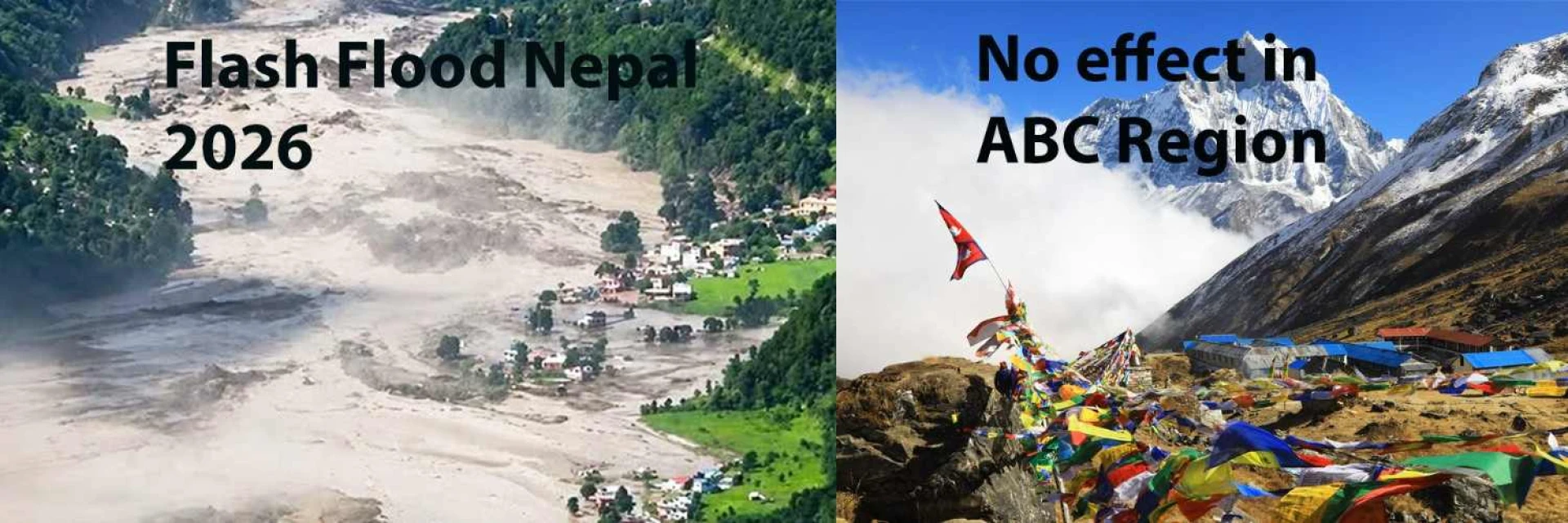
No, the 2026 flash flood hasn't touched the Annapurna Base Camp trek. The whole region is open and running as normal, including Pokhara, the trailheads at Nayapul, Ghandruk, Kimche and Jhinu, and the trail all the way up to Base Camp. Permits, teahouses and the path itself all came through fine.
So if you've got an ABC trek booked, you're good to go.
One small thing worth knowing, and it's an easy fix: the main Kathmandu–Pokhara highway has roadworks in one section at the moment. The simplest option is to take the 25-minute flight to Pokhara, though there's also an alternative road route if you'd rather drive. Either way, it makes no difference to the trek itself. Details below.
Table of Contents
Why the flood didn't touch the Annapurna region
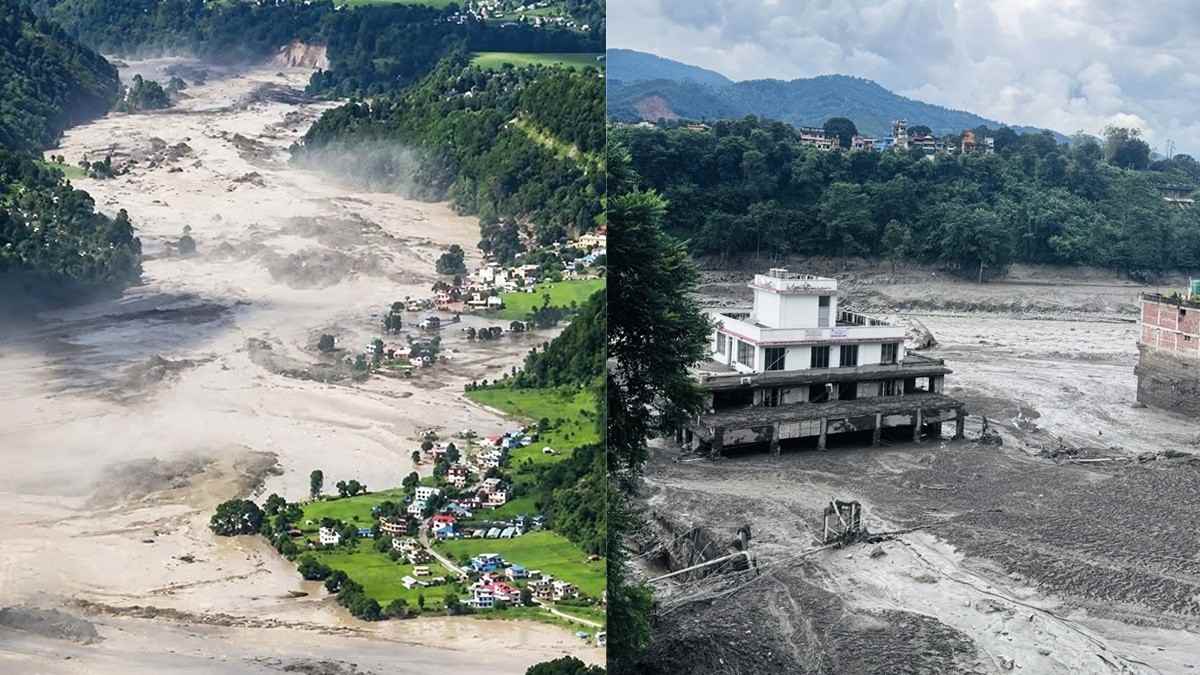
The August 26 event was a glacier and rock collapse near the Nepal–China border, up above the Langtang Lirung area. The floodwater came down the Lhende Khola into the Bhote Koshi, then the Trishuli, running through Rasuwa district in the north-central part of the country.
Devastation in local settlement due to Nepal Flash Flood 2026
Annapurna sits in a completely different river system. Its water drains into the Marsyangdi and Kali Gandaki, neither of which connects to the rivers that flooded. There's no way for floodwater or debris to reach any Annapurna trail. The ABC route was never anywhere near it.
What's running normally
Every part of a standard ABC trek is operating as usual:
Pokhara, the gateway city, is well outside the affected area and completely normal — hotels, restaurants and the lakeside all open.
Flights from Kathmandu to Pokhara are on their normal schedule.
Permits (the ACAP card and TIMS) are being issued as usual.
Trailheads at Nayapul, Ghandruk, Kimche and Jhinu Danda, and the drive to them from Pokhara, are unaffected.
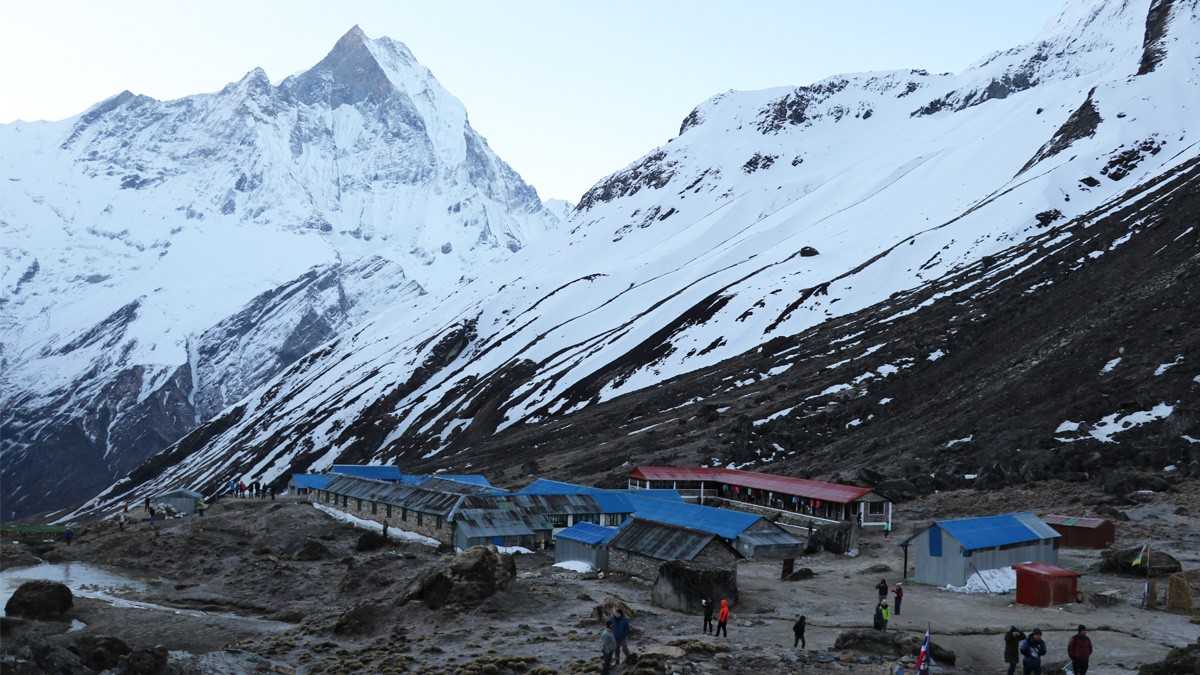
Teahouses all the way up through Chhomrong, Bamboo, Deurali, Machhapuchhre Base Camp and Annapurna Base Camp are open and welcoming trekkers.
Getting to Pokhara right now: your options
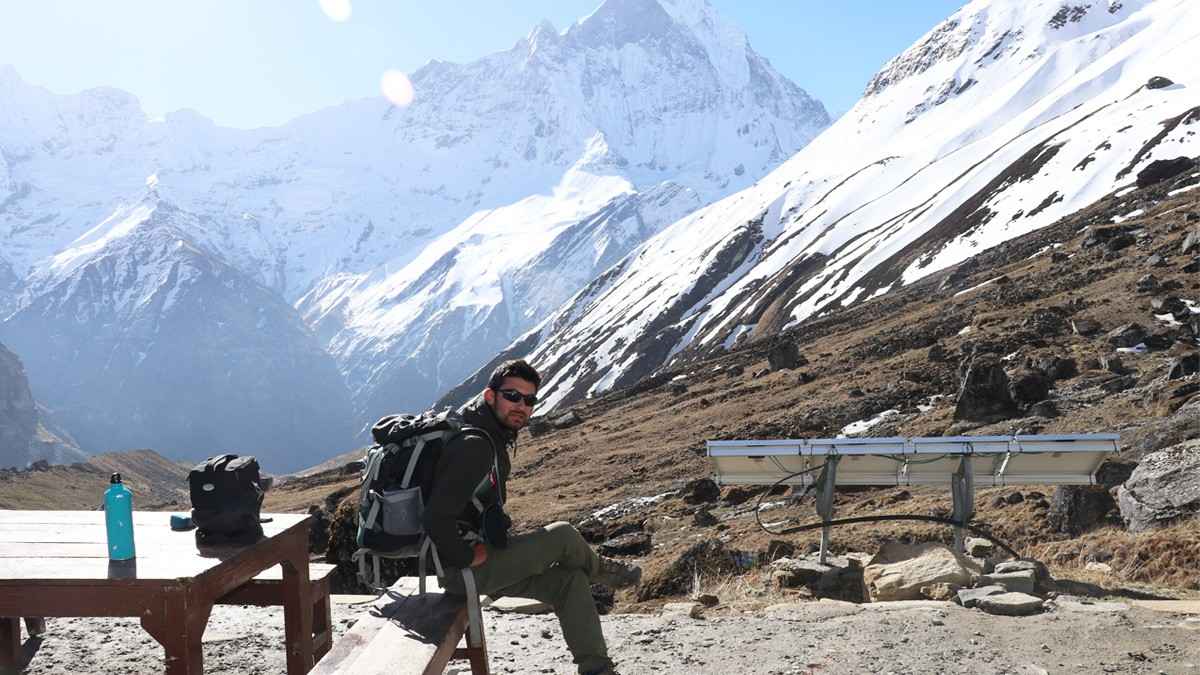
Annapurna Region is completely untouched by the recent flood
Here's the one practical detail, and none of it changes the trek itself.
Part of the Prithvi Highway (the main Kathmandu–Pokhara road) was affected at Krishna Bhir, in Dhading, when the swollen Trishuli eroded a section of the road. Government crews are actively repairing it, and alternative routes are already in operation, so this is a matter of how you travel to Pokhara, not whether you can trek. You have three easy ways forward:
1. Fly Kathmandu–Pokhara (recommended). The 25-minute flight is running normally and skips the road situation entirely. For most trekkers, this is the simplest choice, and it's how many reach the Annapurna region anyway.
2. Drive via the Galchhi–Dhading route. Vehicles are reaching the Dhading side by turning off at Galchhi and crossing the Trishuli River there, continuing on toward the west. Your operator can advise if this is the best option on your travel day.
3. Drive via Gorkha and Abu Khaireni. A longer but reliable overland alternative runs through Gorkha and Abu Khaireni to rejoin the highway toward Pokhara, bypassing the Krishna Bhir section. This is the standard detour authorities have opened for western-bound traffic.
Encouragingly, repair work at Krishna Bhir is underway, and the expectation is that the highway will be properly maintained and back to smooth running well before the peak of the autumn season. So by October, when most ABC trekkers arrive, overland travel should be comfortable again. Either way, flying means you don't have to think about it at all.
A few worries we can put to rest
"Is Pokhara safe?" Yes. Pokhara is outside the affected area and running normally. The road repairs are on the Dhading stretch of the highway, nowhere near Pokhara itself.
"Wasn't there an earthquake?" The collapse was picked up by seismometers worldwide, which caused some confusion. That was the seismic signal of the glacier falling, not a tectonic earthquake, and there's no ongoing hazard to the Annapurna region.
"Could the flooding spread to Annapurna?" No. This was a one-off glacier collapse in a specific corridor, not a spreading or ongoing flood. The Annapurna region is in no way exposed to it.
What to plan for this season (the honest bit)
Beautiful scenery in Annapurna Base Camp
The flood isn't a factor for ABC, but any good operator will still be straight with you about the normal seasonal realities. These are just things a well-planned trek is built around.
Shoulder-season weather. Late August into mid-September is the tail of the monsoon, so expect some rain lower down, cloud that comes and goes over the peaks, leeches on the forested sections, and slippery stone steps. Conditions dry out, and views open up beautifully from late September into October, which is peak ABC trekking season.
The drive to the trailhead. The road from Pokhara toward Nayapul and Kimche can see minor monsoon landslides in a wet spell, occasionally adding time. This is normal for the period and unrelated to the flood.
The upper valley. The stretch above Deurali toward Machhapuchhre and Base Camp of Annapurna passes through terrain that guides watch closely in certain conditions. There’s standard year-round risk management on this trek, not something the flood changed.
Altitude. ABC tops out around 4,130 m, much lower than Everest Base Camp, so altitude is a gentler concern here, though a sensible pace still matters.
None of these are reasons to cancel. They're the ordinary rhythms of a monsoon-shoulder Himalayan trek.
Should you cancel or rebook? There's no need, actually
There's no flood-related case for cancelling an ABC trek. Going ahead also directly supports the guides, porters and Annapurna communities who rely on the autumn season.
If your dates are flexible and you want the clearest views and driest trail — plus the smoothest overland travel once the highway repairs are complete — aiming for October over early September will reward you. That's a bonus, not a safety concern.
A quick pre-trip checklist
Check with your operator for current trail and road conditions on your exact dates.
Choose fly or drive for Kathmandu City–Pokhara. Flying is the easy default while repairs finish; if you'd rather drive, your operator will pick the best current route.
Is the Annapurna Base Camp trek open after the 2026 flood?
Yes, fully. The Annapurna region wasn't affected — permits, trailheads, teahouses and the trail are all normal.
Was the Annapurna region in the flood's path?
No. The flood stayed in the Bhote Koshi–Trishuli corridor in Rasuwa. Annapurna drains into the separate Marsyangdi and Kali Gandaki systems and was never in the path.
How do I get to Pokhara right now?
The easiest way is the 25-minute flight from Kathmandu, which is running normally. Overland, vehicles are using the Galchhi–Dhading route or the longer Gorkha–Abu Khaireni detour to bypass the Krishna Bhir repair section. Repairs are expected to be complete well before peak autumn.
Was the Kathmandu–Pokhara road affected?
A section at Krishna Bhir is under repair after the Trishuli eroded it. Flights are unaffected, alternative road routes are in operation, and the highway is expected to be back to smooth running by around October.
Is Pokhara safe to visit?
Yes. Pokhara is outside the affected area and operating normally.
Is the Annapurna Circuit or Poon Hill trek affected?
No. Like ABC, both are in the unaffected Annapurna region and running normally.
Should I cancel my ABC trek?
There's no reason to. For the best weather, views and travel conditions, October beats early September, but that's a preference, not a safety call.
Which treks were actually affected?
Langtang Valley, Gosaikunda and the Tamang Heritage Trail, reached through the flood-hit Syabrubesi gateway, plus the Kailash Mansarovar route via Rasuwagadhi. See our full [region-by-region safety update] for details.
Planning an Annapurna Base Camp trek and want a status check for your exact dates? [Contact our team] — we confirm conditions directly with guides on the ground and can sort the easiest Kathmandu–Pokhara travel for your trip.
Kishwor Adhikari is a passionate writer with a deep enthusiasm for trekking and adventure. His extensive travels across Nepal, exploring its diverse landscapes and hidden corners, have shaped his unique perspective on the country's natural beauty. With a wealth of first-hand experience in adventure trekking, Kishwor has become a trusted voice for fellow enthusiasts. Through his writing, he shares invaluable insights, offering practical advice and inspiration for both seasoned trekkers and novices alike. His dedication to sharing his journey and knowledge helps others discover the wonders of Nepal's wilderness, making his work an essential resource for anyone seeking adventure in the region.