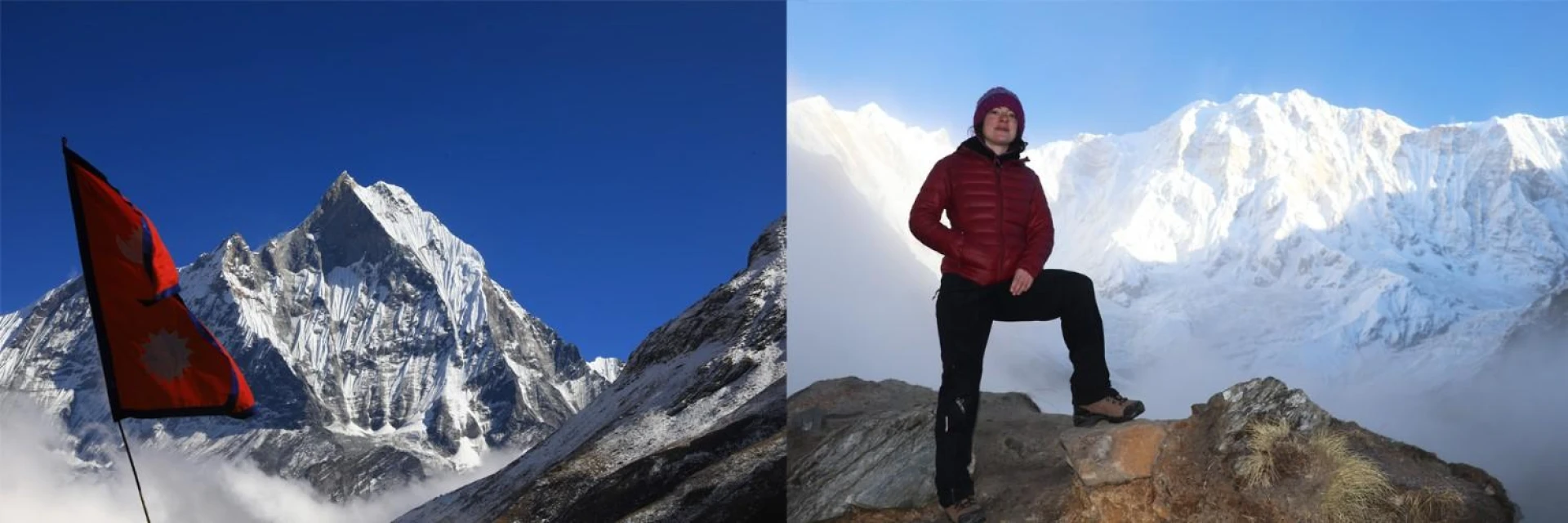
The first time the clouds cleared at Annapurna base camp, I stopped walking and just stood there with my mouth slightly open like an idiot. That happens to most people. You spend days walking up a narrowing river valley with steep green walls on either side, seeing almost no big mountains, and then the valley opens out. And you're suddenly standing in a bowl of 7,000- and 8,000-metre peaks. This is the magic of ABC Trek in October.
October is the month most people pick for the magic, and after walking it, you will understand why. But "best month" gets thrown around so loosely in trekking blogs that it stops meaning anything. So this is the version with the actual numbers, the real trade-offs, and the stuff that actually makes the Annapurna Base Camp trip a healthy bet. Let's deep dive into why October is the best time for this Himalayan Trek.
Table of Contents
Is October actually the best time for Annapurna Base Camp?
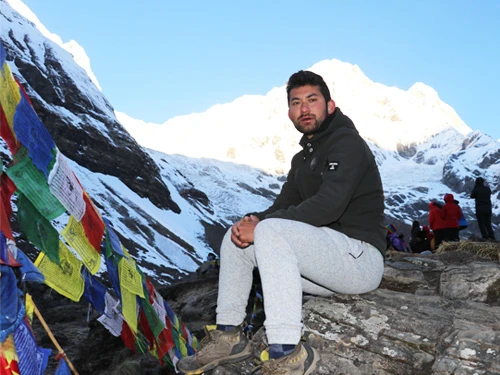
Stunning mountain beauty featuring Annapurna Base Camp in October
Yes, October is the actual best time for the ABC trek. Let me tell you why, here's the honest case for it. The monsoon rains end across most of Nepal in late September, and they leave behind air that's been scrubbed clean.
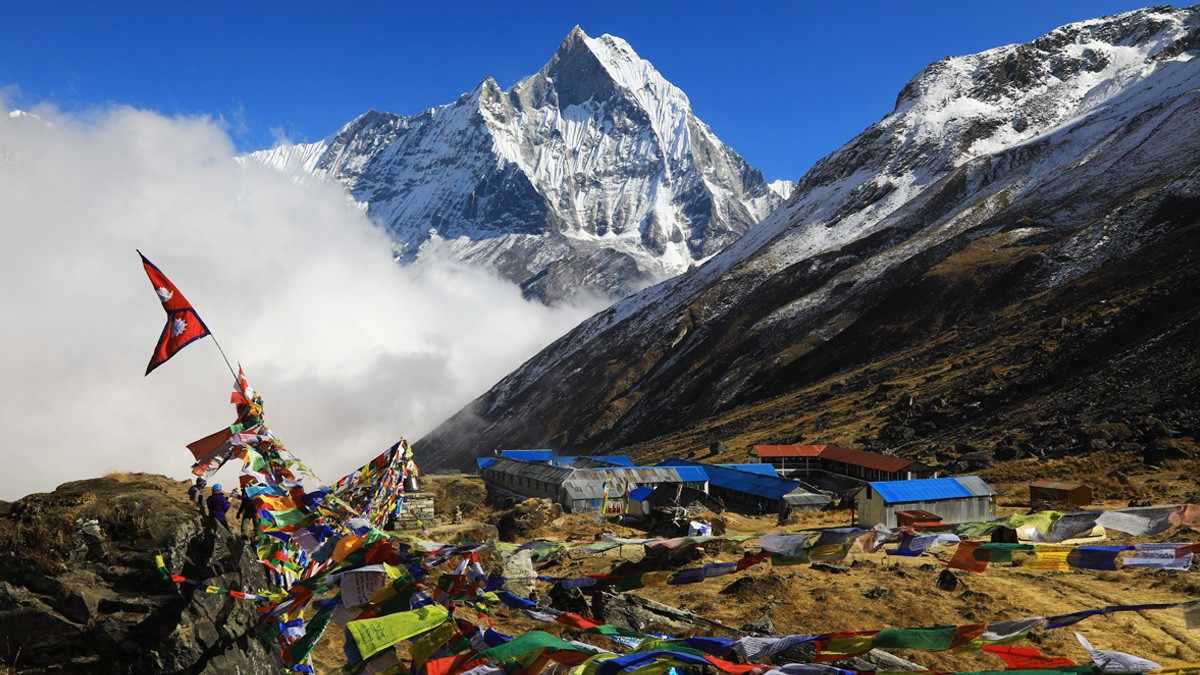
From the sanctuary floor, you can see Annapurna I (8,091 m, the tenth highest mountain on earth), Annapurna South, Hiunchuli, and the sharp fin of Machhapuchhre, the "Fishtail," all at once. That clarity is the single biggest reason October fills up.
It's regarded as the most perfect time for the ABC Trek by most of the trekkers. Yes, if you only have one window and you want the postcard like Himalyan experience, then October earns its reputation.
Why do the Annapurna Base Camp Trek in October?
The right time for the Annapurna Base Camp Trek Nepal means a great experience for a lifetime. The journey will be smooth, enjoyable, and the views will be stunning. Here are the major reasons why October is the right pick for the:
Clearest skies of the year
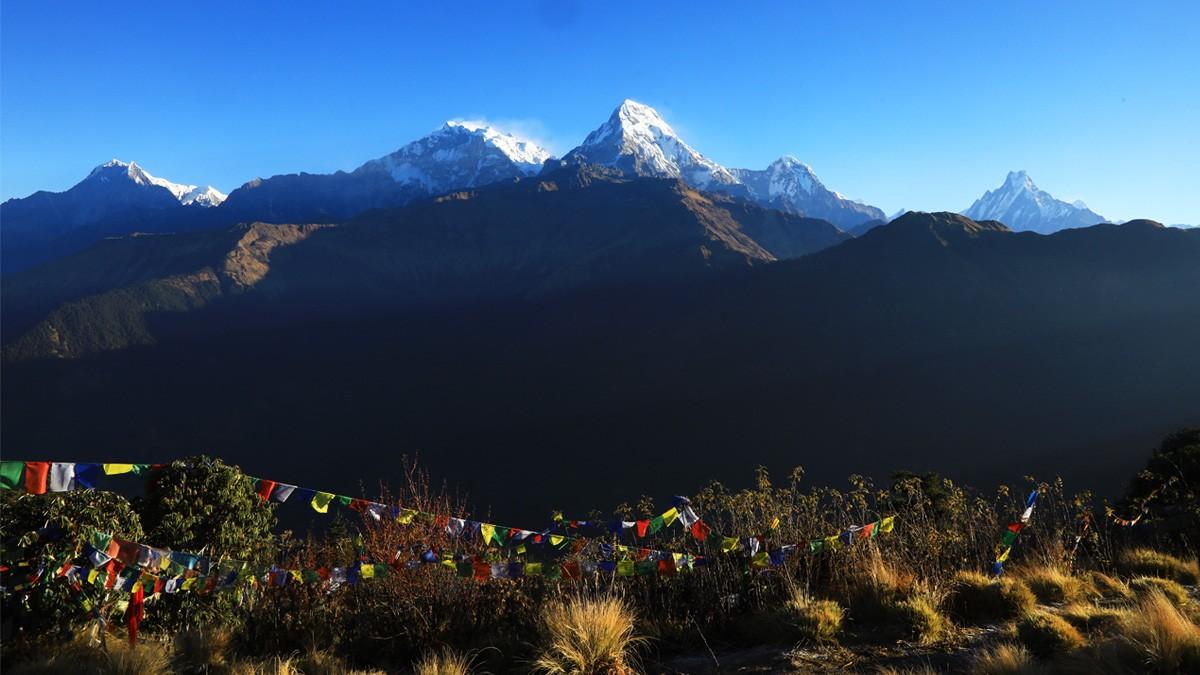
October in Nepal means the post-monsoon visibility is the whole point. The rain washes the dust out of the sky, and mornings in October regularly give you six to eight peaks in one frame. No other season is this consistently sharp. Clear mountain views every morning mean a heavenly pleasure, you won't believe your eyes.
Mountains sit unusually close
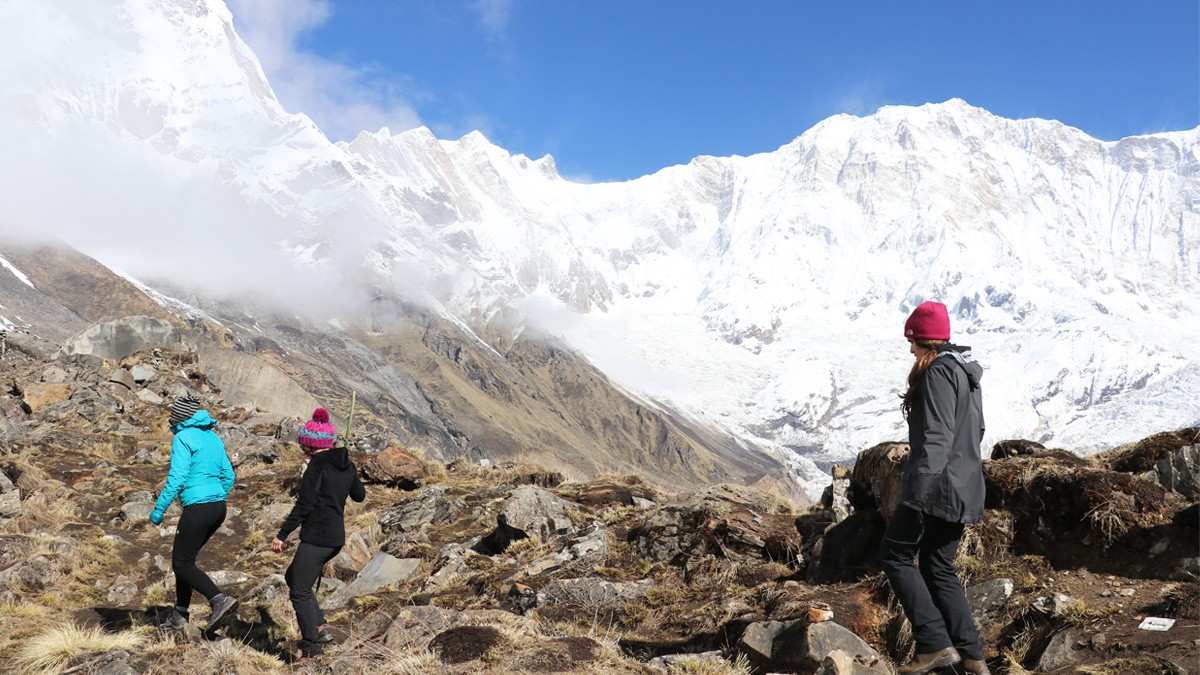
Most base camp treks leave you a long way from the giants. Annapurna's sanctuary is different. It's a natural amphitheatre, and the peaks surround you at a distance of one to two kilometres. You feel small in a way photos never quite capture. You will be there, literally very close to snow giants, the ultimate fulfillment of your bucket list.
Walking temperature is genuinely comfortable
October hits the sweet spot. During this month, you don’t have to face the monsoon, heat, and the leeches, and you're ahead of the deep winter ice above Deurali. Daytime trekking in the lower and middle sections is shirt weather most days.
Dry, firm trails
This month brings out the dry and smooth path. There will be no monsoon mud, far lower landslide risk on the dodgy stretch between Bamboo and Deurali. And there won’t be leeches below Chhomrong. Your feet and your nerves both thank you. Isn’t this amazing benefit booking in this month?
The biggest festival of Nepal
During this month, you walk straight through Nepal's biggest festivals. Dashain and Tihar usually fall in October. Villages get decorated, families gather, and the whole trail has a holiday warmth to it. It's a cultural layer you simply don't get in other months. An interesting thing is that you see the variation in culture while celebrating the same festival as the altitude rises.
Teahouses and Services at their best
October means everything is open and running. Full teahouse service all the way to ABC, guides and porters easy to arrange, hot food, and working lodges. For a first trek at altitude, that reliability matters more than people admit.
The harvest landscape
Early October catches the terraced paddy around Ghandruk and Chhomrong while it's still golden and uncut. It's one of the few times the trek is as pretty looking down as it is looking up. Those traditional ways of harvesting and farming are rare. You will see cultural influence and social harmony there. How local people help each other in harvesting will make you feel cry. The Himalayan cooperation is nothing less than a family vibe.
Annapurna Base Camp temperature in October (by elevation)
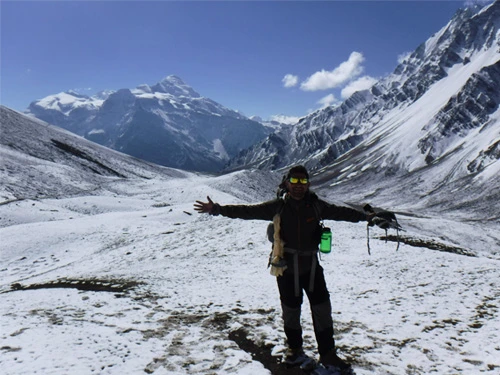
ABC Trekkers enjoying walking in appropriate temperature in October
The thing nobody warns you about is how much the temperature changes between where you sleep and where you stand. The gap between the lower villages and the base camp can be 15°C or more on the same day. Here's the realistic breakdown.
Section (elevation)
Daytime
Night
Lower villages -Ghandruk, Chhomrong, Jhinu (~1,300–2,170 m)
15–20°C early Oct, dropping to ~11–13°C by late Oct
5–10°C, near freezing by month's end
Mid-trail -Bamboo, Dovan, Himalaya, Deurali (~2,300–3,200 m)
10–15°C
2–6°C
MBC and ABC (~3,700–4,130 m)
5–10°C on a clear day, 3–4°C if it's overcast
around −5°C, colder after mid-October (−8 to −10°C is normal)
The above numbers are typical ranges, not guarantees. One cold front rolling through can knock them sideways for a couple of days. And there's a clear shift mid-month: the first half of October is noticeably milder, and from roughly the third week, the lower villages start dropping toward freezing at night while ABC gets properly cold. If your dates are flexible and you feel the cold, lean earlier.
This is a typical temperature update based on years of long experience. However, due to global warming effects, there might be fewer cold or more based on the weather update.
The practical takeaway: It is better to pack for two climates. You'll trek in a t-shirt at midday near Chhomrong and need a down jacket the same evening at Deurali. A sleeping bag rated to around −10°C is the right call for October nights at base camp, even though most teahouses provide blankets.
Annapurna Base Camp weather in October
ABC Trek weather plays a major role in deciding what your Himalayan experience will be. In October, you will actually feel that the mornings are the prize. Skies are often crisp and clear from before dawn, which is exactly why guides push you to be standing at MBC or ABC early.
Cloud tends to build up from the valley by mid-to-late morning, and by afternoon, the high peaks are often tucked away. If you reach base camp at 2 pm expecting the panorama, you may get a wall of grey instead. Plan to be up there before mid-morning, ideally for sunrise.
Lower down, places like Ghandruk and Jhinu barely cloud over. The middle section around Deurali is the moody one. It can fog up around late afternoon and clear again within a few hours.
October also runs drier and slightly windier than spring, so expect some wind gusts at base camp after midday. It's not dangerous, but bare legs and thin gloves will feel it.
One thing I want to be straight about, in some recent years the monsoon has lingered into early October, and a few unlucky trekkers have lost days of views to rain that arrived a month late. It's still the most reliable month overall. Just don't treat clear skies as a contract. Build a buffer day into your itinerary if you can.
What the trek itself is like
October ABC Trek is all about clear skies and beautiful scenary
The standard route runs from Pokhara, with a drive to the trailhead, then up through Ghandruk and Chhomrong, down to the Modi Khola river, and up the long forested corridor through Sinuwa, Bamboo, Dovan, Himalaya, and Deurali to Machhapuchhre Base Camp and finally Annapurna Base Camp at 4,130 m. Most people take six to twelve days depending on the variation and how many side trips (Poon Hill, the Jhinu hot springs) they bolt on.
It's rated moderate, and that's fair, but the stone staircase out of Chhomrong can be a headache for some. You descend a few thousand steps to the river and then climb a few thousand back up the other side, and your knees will have opinions. It's not technical. It's just relentless. October's cooler air makes it a lot more bearable than the monsoon would.
After base camp, the descent to the hot springs at Jhinu Danda is one of the small joys of the route. Soaking tired legs in a warm pool by the river after the cold of altitude is a genuinely good idea, not a marketing line.
ABC Permits and the guide rule (the part that's changed recently)
You need an ACAP permit (Annapurna Conservation Area Permit). It costs NPR 3,000 for foreign nationals and NPR 1,000 for SAARC nationals, roughly USD 25–30. You buy it in Kathmandu or Pokhara before you start. There is no permit office on the trail, so if you turn up at the first checkpoint without one, you'll be sent back. Carry a printed copy, because connectivity is patchy and digital copies aren't always accepted.
Since 1 April 2023, solo trekking is not allowed in the Annapurna region. Every foreign trekker has to go with a licensed guide or through a registered agency. This is the rule that catches independent travellers off guard, so factor a guide into your budget and your plans.
On the TIMS card: this one is genuinely in flux, and I'd rather tell you that than pretend it's settled. Some sources and offices still treat TIMS as required (NPR 2,000 solo, NPR 1,000 if you're with a guided group), while others report it's no longer enforced on Annapurna trails. Actually, the TIMS Permit is no longer applicable in Annapurna Trekking now.
What October gets wrong (the honest downsides)
October is the busiest month on the trail. The stretch from roughly 5 October to 5 November sees teahouses between Deurali and ABC running at or above capacity most nights. If you don't book ahead, especially around Chhomrong and Dovan, you can end up sleeping on a dining-room bench. A good guide books rooms a day ahead by phone, which is one more reason the guide rule isn't purely a tax.
The crowds also mean the prices nudge up 15–20% versus the quiet months, and the trail can feel more like a procession than a wilderness on the popular days. If solitude is the thing you're chasing, late November or early March will give you thinner crowds at the cost of colder, less certain weather.
So my actual recommendation, October is definitely the best time to do the ABC Trekking in Nepal. The weather will be favorable with a suitable temperature. The views will be breathtaking, and the festival vibes in Himalyas means experiencing some of the most unique cultures in the world. However, be prepared for the crowd and prebooking.
If you trek to Annapurna Base Camp in October, do one thing for me: get up in the dark on your morning at the top and be standing on the sanctuary floor when the first light hits Annapurna I. The whole walk leads to those twenty minutes, and the clouds usually haven't woken up yet.
Annapurna Base Camp Trek in October - FAQs
How cold does it get at Annapurna Base Camp in October?
Nights at base camp typically fall to around −5°C, and colder after mid-month, often −8 to −10°C. Daytime is far milder, usually 5–10°C in clear conditions. Lower villages are warm by day (up to ~20°C early in the month) but still drop toward freezing at night late in October.
Is October a good time for the Annapurna Base Camp Trek?
Yes, for most people, it's the strongest single month. You get the clearest skies of the year, dry and firm trails, comfortable daytime walking, and full teahouse service. The two real trade-offs are heavy crowds and the small but rising chance of a late monsoon eating into your first days.
What is the weather like at Annapurna Base Camp in October?
Clear, crisp mornings with excellent visibility, cloud building from the valley by late morning, and dry, slightly windy afternoons. Mornings are best for mountain views, so plan to reach high viewpoints early.
Do I need a guide for the Annapurna Base Camp Trek?
Yes. Since April 2023, solo trekking has been banned in the Annapurna region, so foreign trekkers must go with a licensed guide or registered agency.
What permits do I need, and how much do they cost?
You need an ACAP permit: NPR 3,000 for foreigners, NPR 1,000 for SAARC nationals (about USD 25–30). A TIMS card is no longer enforced in this region. Buy permits in Kathmandu or Pokhara before you start.
How hard is the trek?
ABC trek is considered moderate. The altitude is manageable (base camp is 4,130 m, lower than many Himalayan treks), and days run five to six hours of walking. The hardest single part is the long stone staircase in and out of Chhomrong, however, basic fitness and a sensible pace are enough for most people. Even beginners can find this trek suitable with the right preparation and guidance.
How many days does it take?
Usually six to twelve days, depending on your route and side trips like Poon Hill or the Jhinu hot springs. Adding a buffer day is smart in October in case the weather costs you a viewing morning.
Kishwor Adhikari is a passionate writer with a deep enthusiasm for trekking and adventure. His extensive travels across Nepal, exploring its diverse landscapes and hidden corners, have shaped his unique perspective on the country's natural beauty. With a wealth of first-hand experience in adventure trekking, Kishwor has become a trusted voice for fellow enthusiasts. Through his writing, he shares invaluable insights, offering practical advice and inspiration for both seasoned trekkers and novices alike. His dedication to sharing his journey and knowledge helps others discover the wonders of Nepal's wilderness, making his work an essential resource for anyone seeking adventure in the region.