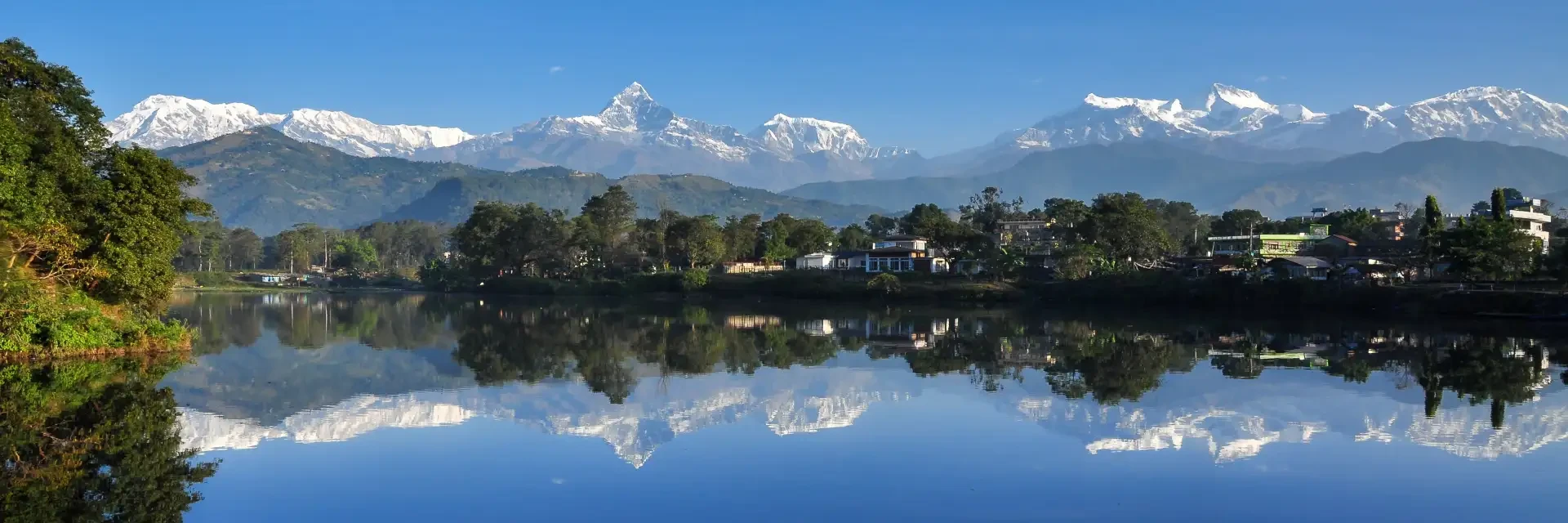
Pokhara is a wonderful place on earth which has a strange effect on people. They arrive for two nights and somehow, they’ll still be there even after the week, standing at the teahouse counter and asking about the trail to Poon Hill. The city sits at 820 meters with Annapurna and Machhapuchhre (Fishtail) mountain range reflected on the Phewa lake and seems close enough that it almost feels like you’re already on a trek even before you’ve taken your first step on the trail.
This sets Pokhara apart from any other trekking base in Nepal. Most of the region’s classic trails begin within a couple of hours of lakeside. Once you are in Pokhara valley, you don’t need a domestic flight or a day-long bus ride to most of the trailhead. Whether you have two days before a flight or a full week to burn, there’s a route that fits.
We’ve been running treks out of Pokhara for years. This list covers 20 routes we know well and have done multiple times from easy first-timer walks to the restricted desert kingdom of Upper Mustang. We’ve organized them by difficulty so you can find your level quickly, and for the highlights, we’ve included Annapurna Base Camp and Upper mustang’s full details because those trips deserve more than a bullet point.
Table of Contents
Before You Go: The Practical Basics
Permits: Nearly all Pokhara-region treks require an ACAP (Annapurna Conservation Area Project) permit which cost ~$25 USD and TIMS card which cost ~$15 USD. Upper Mustang requires additional Restricted Area permit and the current costs for that is in the Upper Mustang sections below.
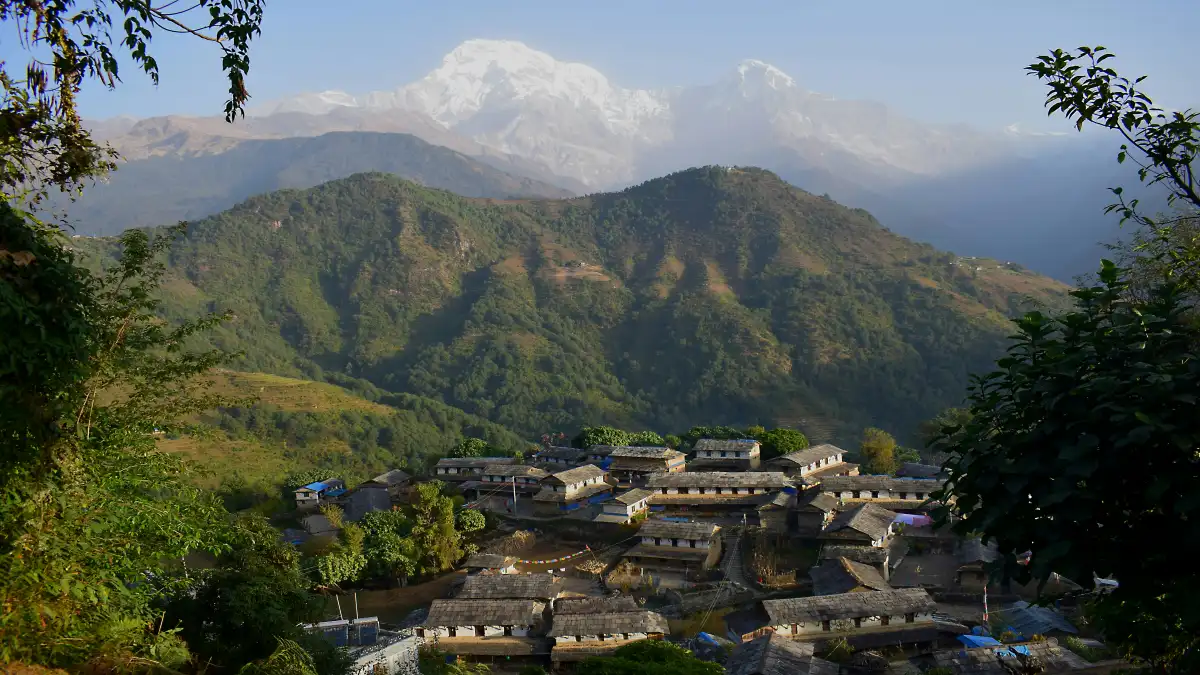
Ghandruk stone village with Annapurna South behind
Best season: Spring (March-May) and autumn (September-November) offer the clearest skies and warmest trails. Winter works well for the lower routes like Poon Hill. Monsoon (June-August) is the one season to avoid for most treks, though Upper Mustang stays dry year-round because of its rain-shadow position.
Teahouses vs. camping: Every trek on this list follows established teahouse routes, so there’s no need to carry camping equipment. In teahouses, you can expect a bed, hot meals, and basic facilities, including hot showers at most stops for each overnight stay.
Quick Reference: All 20 at a Glance
#
Trek
Days
Max Altitude
Difficulty
Best For
1
Sarangkot Sunrise Hike
1–2
1,592m
Easy
First-timers, sunrise lovers
2
Dhampus Village Trek
2
1,650m
Easy
Families, cultural walks
3
Australian Camp Trek
2
2,060m
Easy
Panoramic views, short trip
4
Royal Trek
3
1,425m
Easy
Low altitude, village culture
5
Begnas Lake Circuit
2–3
1,100m
Easy
Birdwatching, off-the-beaten-path
6
Panchase Trek
3–4
2,517m
Easy–Moderate
Rhododendron forests, Gurung villages
7
Khumai Danda Trek
3
2,519m
Easy–Moderate
Hidden gem near Pokhara
8
Ghorepani Poon Hill
2
3,210m
Moderate
Most popular sunrise viewpoint
9
Ghorepani–Ghandruk Loop
4–5
3,210m
Moderate
Cultural villages + Poon Hill
10
Mohare Danda Trek
4–5
3,300m
Moderate
Quieter Poon Hill alternative
11
Sikles Trek
4–5
1,981m
Moderate
Largest Gurung village in Nepal
12
Muldai (Mulde) Viewpoint Trek
4-5
3,627m
Moderate
360-degree view of the Annapurna range, Dhaulagiri, Fishtail, Gangapurna, and Lamjung.
13
Kokhe Danda trek
3-5
3,303m
Moderate
Sunrise views without pre-dawn uphill like Poon Hill
14
Mardi Himal Trek
4–5
4,500m
Moderate
Fishtail up-close, uncrowded trail
15
Khopra Ridge
5
3,660m
Moderate–Hard
High viewpoint, off-peak quiet
16
Poon Hill + Tadapani
4–5
3,210m
Moderate
Extended cultural circuit
17
Australian Camp to MBC
4-5
3,700m
Moderate–Hard
Fastest route to Machhapuchhre BC
18
4-Day ABC Trek
4
4,130m
Moderate–Hard
Annapurna Base Camp, fast route
19
7-Day Upper Mustang Trek
7
3,840m
Moderate
Forbidden Kingdom, desert landscape
20
5-Day Upper Mustang Jeep Tour
5
3,840m
Easy (by road)
Lo Manthang without the longwalk
Easy Treks: Good Starting Points
These seven routes are the easiest treks on the list with low altitude, short daily walks, and these don’t need prior trekking experience. They are suitable for first-time trekkers, older travelers, families, or anyone who wants to see the Annapurna foothills without committing to a major expedition.
Sarangkot Sunrise Hike: 1-2 Days, 1,592m
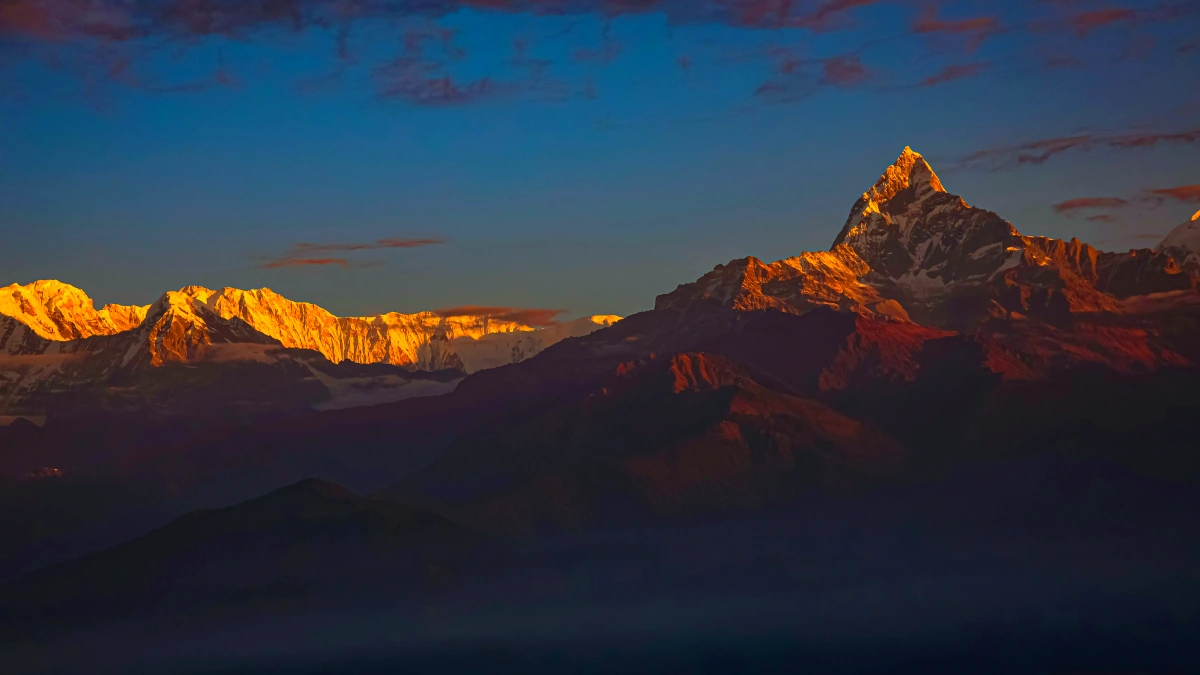
Most people take a taxi at 4 am up to Sarangkot as a pre-dawn day trip, and watch Annapurna and Machhapuchhre glow red at sunrise, then head back to Lakeside for breakfast. The most enjoyable option is to walk up from Lakeside the afternoon before, sleep at one of the simple lodges on top, and have the viewpoint almost to yourself before the jeep crowds arrive.
The ridge sits at 1,592m, and the climb from Lakeside usually takes two to three hours on a straightforward trail through forest and small villages. On a clear morning, the panorama stretches from Dhaulagiri (8,167m) to Annapurna I (8,091m), with Fishtail standing directly in front of you.
Sunrise view from Sarangkot viewpoint near Pokhara
Dhampus Village Trek: 2 Days, 1,650m
Dhampus is one of the closest proper Gurung villages to Pokhara, and it is about a two-hour walk from the road at Phedi. The first part of the trail winds past terraced rice fields before climbing a series of old stone steps into rhododendron forest. As you gain the ridge, the trees gradually give way to open views of the village and the Annapurna range beyond.
It's not a dramatic, high-altitude trek. It's more of a slow, pleasant walk with good mountain views and a real village to sleep in. No prior experience needed. The route involves around 4-5 hours of gentle uphill on day one and the same back down on day two. This trek is comfortable and perfect for everyone, including families, the elderly, and solo travelers visiting Nepal for the first time.
Australian Camp Trek: 2 days, 2,060m
This one starts the same way as Dhampus but carries on up through dense rhododendron to a viewpoint the Australian Himalayan Foundation developed years ago, hence the name. At 2,060 m, it’s higher than Dhampus, and the panorama of the Annapurna range on a clear morning is excellent. The camp itself has a handful of lodges with good food and friendly hosts.
Day one is mostly uphill (4-5 hours), and day two is a descent to the road to Kande, where a jeep back to Pokhara takes 30 minutes. It also works as the starting point for longer treks, and several people combine it with the Mardi Himal route. This trek is for those with more time who want a proper mountain panorama without going above 2,000 m.
Royal Trek: 3 Days, 1,425m
The Royal Trek got its name from Prince Charles trekking this route in 1980. That history is a bit oversold in most descriptions; what’s actually notable is that this trail stays at genuinely low altitude (never above 1425m), goes through a series of Gurung and Magar villages, and ends at Begnas Lake. It’s a cultural walk more than a mountain trek. You won’t get dramatic Himalayan views from most sections, but on clear mornings the Annapurna range appears above the hills, and the valley life is interesting.
Daily walks are 4-5 hours on gently rolling trails. It’s genuinely suitable for anyone in reasonable health, including older travelers who find the steeper hill routes too demanding. This trek is best for travelers interested in rural Nepali village life, low-impact walking, and birdwatching at Begnas Lake.
Begnas Lake Circuit: 2-3 days, 1,100m
Begnas is the third-largest lake in Nepal and sits about 15km east of Pokhara, but almost nobody goes there compared to Phewa. The circuit around the lake and up to Begnas Kot (a small hilltop temple) is mostly flat to gently rolling, with views over rice paddies and the lake below.
It's the most accessible walk on this list, and this trek has no steep sections, no altitude gain, and very few other trekkers on the trail. The birdwatching here is genuinely good in October and November, and the boat ride across the lake on the return is worth staying for. This is suitable for birdwatchers, anyone who prefers a slow, contemplative walk over a mountain climb.
Panchase Trek: 3-4 Days, 2,517m
Panchase sits in a quieter corner of the Annapurna foothills southwest of Pokhara and gets far fewer visitors than Poon Hill despite having very similar views. The trail goes through oak and rhododendron forest, passes a small lake near the summit, and offers an unobstructed panorama of the Annapurna range and Dhaulagiri from the top.
At 2,517 m, it's higher than the previous routes on this list, so expect some genuine climbing on day two, but the gradient is manageable for anyone in basic fitness. Overnight stops are at Gurung and Magar villages. Those who want the Poon Hill experience without the Poon Hill crowds, this trek is best for you.
Khumai Danda Trek: 3 Days 2,519m
The Khumai Danda (also called the Machhapuchre Model Trek) is a newer route that runs along a ridge parallel to the Modi Khola valley, giving walkers one of the closest views of Machhapuchre (Fishtail) available without going all the way to base camp.
The trail is mostly unexplored compared to the main Annapurna trails, passes through dense rhododendron forest, and spends most of its time with the Fishtail towering directly overhead. The lodges are basic, but the route is genuinely special. Good for: photographers, travelers who've already done Poon Hill and want something fresher.
Moderate Treks: The Classic Pokhara Trails
These trek routes are the moderate treks that go higher, walk further, and ask for a bit more fitness than the beginner section above. All are manageable for people with average fitness who’ve done some hiking before. Daily walking time runs 5-7 hours.
Ghorepani Poon Hill: 2 Days, 3,210m
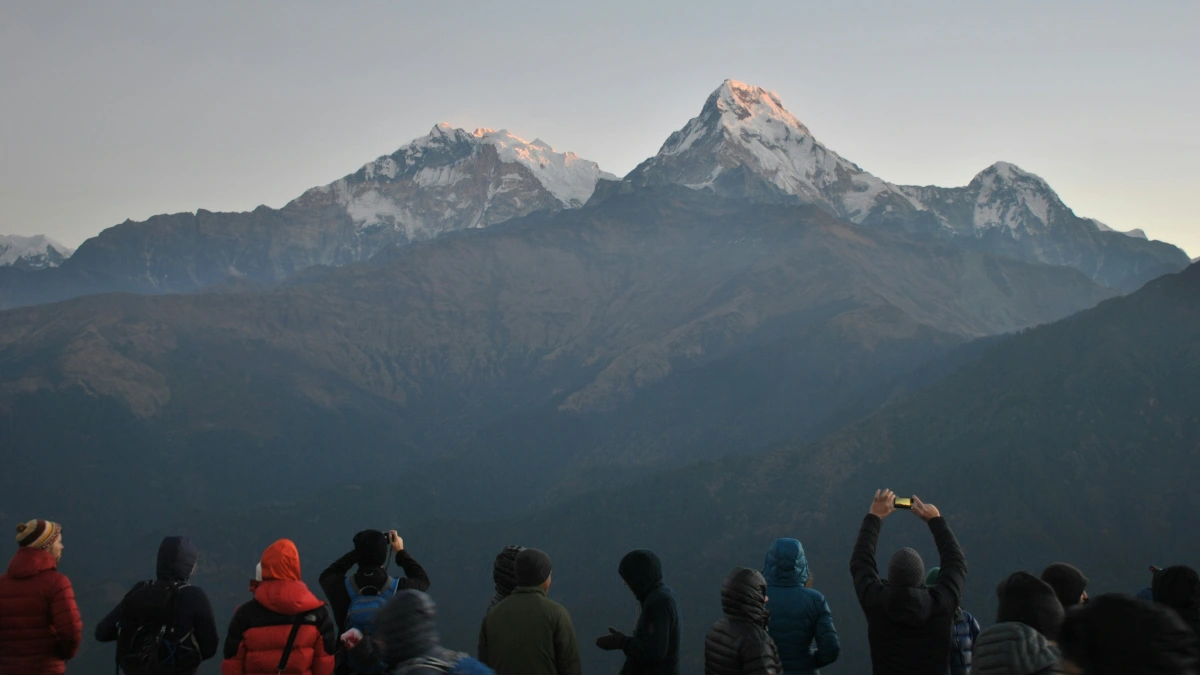
If you only do one trek from Pokhara, most guides would point you to the Ghorepani Poon Hill trek. Because Poon Hill at sunrise is exactly what the photo suggests. A flat ridge at 3,210m with an unobstructed 180-degree view of the Annapurna range, Dhaulagiri, and Fishtail turning orange in the early light. It’s also genuinely crowded in peak season.
The trail from Nayapul goes through the old salt-trade villages of Ulleri and Ghorepani, passing stone-flagged paths, prayer wheels, and rhododendron forests that are extraordinary in March-April. The classic three-day version (Nayapul-Ghorepani-Poon Hill-Nayapul) is the most popular. The climb to Ulleri is the hardest section, with a long staircase that catches people off guard and makes this a moderately difficult trek.
Sunrise from Poon Hill viewpoint
This is best for trekkers who haven’t been to Nepal before.
Ghorepani-Ghandruk Loop: 4-5 Days, 3,210m
This is the extended version of the Poon Hill route and the one we recommend most often for first-time Nepal trekkers who have four or five days. The loop adds Tadapani and Ghandruk to the Classic Ghorepani Poon Hill itinerary. Ghandruk is one of the largest and best-preserved Gurung villages in Nepal, with a Gurung Museum, traditional stone houses, and wide mountain views from the village itself.
The final optional stop at Jhinu Danda hot springs (a 20-minute walk below Ghandruk) is an excellent way to end a trek. Moderate grade throughout. For those who want culture alongside the classic mountain views, this trek is perfect.
Mohare Danda Trek: 4-5 Days, 3,300m
Mohare Danda is the route to take if you want the Ghorepani experience without the busiest section of the main trail. The approach goes through Galeshwar on the western side of the Ghorepani hills, passing through unspoiled villages that see far fewer trekkers than the main route.
The viewpoint at Mohare Danda (3,300 m) rivals Poon Hill, and the community lodge at the top is genuinely excellent. It’s run as a sustainable tourism model with proceeds going directly to local communities. Best done in March-April for rhododendron season. Anyone who values quiet trails: this trek is the best and comfortable.
Sikles Trek: 4-5 Days, 1,981m
Sikles is worth knowing about because it stays relatively low while going somewhere genuinely interesting. The village of Sikles, northeast of Pokhara, is the largest Gurung settlement in Nepal, and the community is active in maintaining traditional architecture and culture.
The walk goes along the Madi River valley with views of Lamjung Himal and Annapurna II overhead. It’s not a dramatic high-altitude route, but the Gurung culture here is more intact than on the busier southern trails. This Trek is good for travelers interested in ethnography and traditional mountain village life.
Muldai (Mulde) Viewpoint Trek: 4-5 Days, 3,637m
Muldai, also spelled Mulde, is the viewpoint people started talking about once Poon Hill got too busy. It sits a little east of Ghorepani at 3,637m and delivers a full 360-degree sweep of the Annapurna range, Dhaulagiri, Fishtail, Gangapurna, and Lamjung, but on trails that carry a fraction of the traffic.
The route drives to Ghandruk, then climbs through rhododendron and oak forest via Tadapani to the quiet settlement of Dobato, from where it's a short pre-dawn push up to the viewpoint for sunrise.
It's newly developed enough that the lodges are simpler than on the main trail, but that's part of the appeal. This trek is for repeat visitors and photographers who want Poon Hill's panorama without Poon Hill's crowds.
Kokhe Danda Trek 3-5 days 3,303m
Kokhe Danda is the quiet answer to "what's better than Poon Hill?" At 3,303m, it's the highest point in Parbat district, sitting on the ridge right next to Mohare Danda, and on a clear morning it takes in Dhaulagiri, Annapurna, and the Manaslu and Langtang ranges with a noticeably better Dhaulagiri view than Poon Hill offers, plus Pokhara valley and Phewa Lake laid out below.
Two things set it apart from Poon Hill. First, the lodge sits right at the top, so unlike Poon Hill there's no pre-dawn uphill scramble, and sunrise is just a few steps from your bed. Second, because the trail falls outside the Annapurna Conservation Area, it needs no ACAP permit, which keeps both cost and paperwork down.
The route runs through Magar villages such as Haljure and Lespar, where accommodation is in family homestays, and you'll likely share the trail with only a handful of other walkers. Because it's a newer, less-marked trail, a local guide is strongly recommended here.
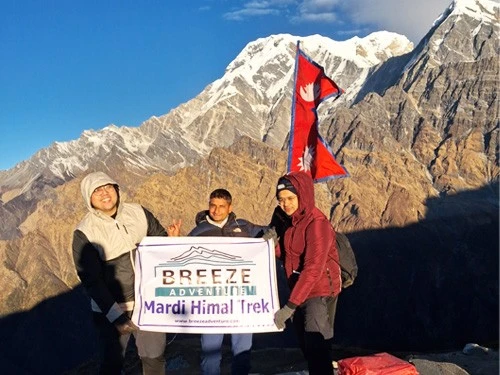
Mardi Himal Trek: 4-5 days, 4,500m
Mardi Himal is the trek that does the one thing Poon Hill doesn’t quite do. It puts you at the base of Machhapuchhre. The trail goes up a ridge running directly toward the mountain, staying in high forest and then alpine terrain for most of the route.
The views from High Camp (3,580 m) and Mardi Himal Base Camp (4,500 m) are close-up and dramatic in a way that the wider panorama from Poon Hill isn’t. It’s also still relatively uncrowded compared to the main Ghorepani trail. Fit beginners can manage this with good preparation. The descent returns to Pokhara through Siding village. Anyone who wants something that feels more adventurous than the standard Pokhara routes: this is a perfect trek.
Khopra Ridge: 5 Days, 3,660m
Khopra Ridge branches off the main Ghorepani trail at Tadapani and heads south to a high viewpoint overlooking the Annapurna South massif. It's a quieter, slightly longer route than Poon Hill, and the views from the ridge (particularly of Dhaulagiri) are exceptional.
Adding a day to visit Khair Lake (4,730m) turns it into a high-altitude extension that approaches the level of a proper challenge. The lodges on the ridge are simple. For those who want the Ghorepani area without the crowds, and who have a full five days, this is the best trek
Poon Hill + Tadapani Extension: 4-5 days, 3,210 m
This extends the standard Poon Hill loop by continuing from Tadapani to Ghandruk and then down to Jhinu Danda hot springs before returning to Pokhara. It’s essentially the Ghorepani-Ghandruk Loop (item 9 above) with a slightly different pace and one night less. Those with exactly four days who want both the Poon Hill sunrise and the Ghandruk village experience.
Australian Camp to Machhapuchre Base Camp: 4-5 days, 3,700m
This variant starts with the Australian Camp trail (2,060 m) and then continues up through Low Camp and High Camp to Machhapuchhre Base Camp at 3,700 m. It’s the start of the Mardi Himal route without going the full distance to the base camp at 4,500m.
The views at MBC are stunning, with Fishtail Mountain that fills the sky directly above and the route is manageable for fit trekkers with four days available. Moderate to hard grade on days two and three.
The Headline Routes: Full Detail
The three treks below deserve more space than a paragraph. They’re the most ambitious options on this list and the ones we get the most questions about at Breeze Adventure.
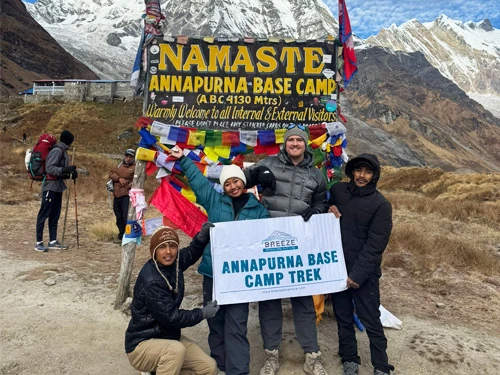
4-Day Annapurna Base Camp Trek from Pokhara
The standard Annapurna Base Camp trek takes 7-10 days. But you can complete it in just 4 days. Not by cutting corners, but by using the jeep road to Jhinu Danda (1,780 m), which removes the lower approach days that used to start from Nayapul on foot.
The result is a faster, more intense version of the same classic trek that involves two days going up, one night at base camp, two days coming down, with a jeep back to Pokhara on day four.
It's a hard four days with daily walking of 6-8 hours on steep stone trails; it's honest work. But the rewards are proportional. You walk through bamboo and rhododendron forest, cross suspension bridges over the Modi Khola, pass through Chhomrong (a well-preserved Gurung village at 2,170 m), and arrive at the base camp with a 360-degree view of a cirque of Himalayan giants like Annapurna (8091 m), Annapurna South (7,219m), Gangapurna (7,455), Machhapuchhre (6,997), and Hiunchuli (6441m), all surrounding you at once.
Day-by-day Itinerary:
Day 1: Pokhara to Jhinu Danda to Bamboo (2,400m)
Day 2: Bamboo to Machhapuchhre Base Camp (3,700m) to Annapurna Base Camp (4,130m)
Day 3: Annapurna Base Camp to Bamboo (2400m)
Day 4: Bamboo to Chhomrong to Jhinu Danda to Pokhara
What to know before you book:
A guide is required, and on this itinerary that’s a good thing anyway. Since 2023, foreign trekkers in the Annapurna Conservation Area must trek with a licensed guide booked through a registered agency, and enforcement at the Birethanti and Chhomrong checkpoints has tightened.
On the compressed four-day version, a guide isn’t just a legal box to tick; having someone watching the group for early altitude symptoms and making the call on trail conditions matters more when you’re moving this fast. We arrange the guide as part of the package.
Permits: ACAP is the one that gets checked. You’ll need the Annapurna Conservation Area Permit (NPR 3,000, about USD 25 for foreigners) plus a TIMS card. Both are arranged in Pokhara or Kathmandu before you set off. There is no permit office on the trail, and arriving at the Birethanti checkpoint without one means being turned back on the spot. We handle all of this for you.
Altitude is the real trade-off. This is what you’re accepting in exchange for doing ABC in four days. Day two climbs from Bamboo (2,400 m) to Machhapuchhre Base Camp (3,700m) and on to Annapurna Base Camp (4,130m), where you sleep.
You will gain more than 1,700 m in a single day. That’s a much faster ascent than the standard 7–10-day route, and it raises the odds of altitude sickness (headache, nausea, broken sleep) noticeably.
Most fit people manage it, but if you’ve never been above 3,000m or you know you acclimatize slowly, the 5- or 7-day ABC itinerary is the safer and more comfortable choice. Drink plenty of water, don’t rush day two, and tell your guide the moment you feel off.
The avalanche stretch above Deurali. The section between Deurali and MBC runs through a gully that is avalanche-prone after heavy snowfall (mostly a concern in deep winter and during the early-spring melt. It’s a known, manageable hazard rather than a reason to avoid the trek, but it’s why the route is best walked in the stable weather windows (October-November and March-April) and with a guide who checks conditions before committing to that stretch.
Book ahead in peak season, and remember there’s no spare day. From Chhomrong up to base camp, the teahouse beds are limited and fill fast in October-November and March-April, with the fewest rooms of all at MBC and ABC. A guided booking secures your space. Just as important, the four-day plan carries no buffer, so if base camp is socked in with cloud on your one morning there, there’s no extra day to wait it out. Factor that risk in, or add a day if your schedule allows.
Expect 6-8 hours a day on steep stone staircases, including the punishing climb out of the Chhomrong valley, which you tackle on the way up and again on the way down. No technical skills or prior high-altitude experience are needed, but you do need to arrive in reasonable walking shape. A few weeks of hill walking or stair training beforehand makes a real difference.
7-day Upper Mustang trek from Pokhara
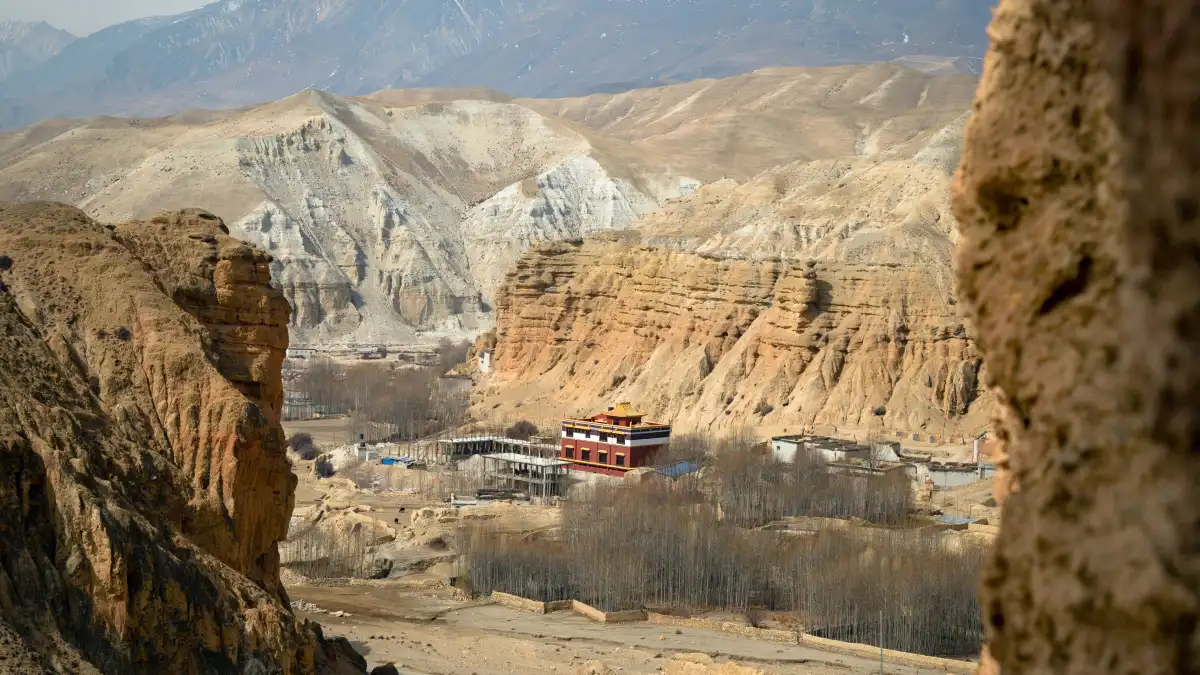
Upper Mustang is the part of Nepal that doesn’t look like Nepal. Behind the Annapurna and Dhaulagiri ranges, in the rain shadow where the monsoon can’t reach, the landscape goes from Himalayan green to Trans-Himalayan desert in the space of an hour’s drive.
Lo Manthang in Upper Mustang's desert landscape
Canyon walls in red ochre and grey. Sky caves carved into cliffs by people who lived here a thousand years ago. Apple orchards in Marpha that look like they were transplanted from the French Alps. And at the end of the Kali Gandaki valley, behind a medieval wall, the walled city of Lo Manthang, home of the former Kingdom of Lo, a Buddhist civilization that was closed to outsiders until 1992.
The 7-day Upper Mustang Trek from Pokhara is a compact but complete version of the classic Upper Mustang route. It starts with an early morning flight from Pokhara to Jomsom (20 minutes through the gorge between Annapurna and Dhaulagiri; the flight itself is worth the price of the whole trip), then follows the Kali Gandaki Riverbed north through Kagbeni, Chele, Syanboche, and Ghami before reaching Lo Manthang on day four.
Day-by-Day itinerary:
Day 1: Pokhara to Jomsom (2,720m) to Kagbeni (2,810m)
Day 2: Kagbeni to Chele (3,050m)
Day 3: Chele to Syangboche (3,800m) to Ghami (3,520m)
Day 4: Ghami to Tsarang (3,570m) to Lo Manthang (3,840m)
Day 5: Exploration Day in Lo Manthang
Day 6: Lo Manthang to Ghami to Chele (or Kagbeni)
Day 7: Kagbeni/Chele to Jomsom to Pokhara (by flight)
What to know before you book:
Restricted Area Permit: Upper Mustang requires a special permit separate from ACAP and TIMS. As of 2026, the cost is USD 50 per person per day, so a 7-day permit costs USD 350 per person. (The old system charged USD 500 for the first 10 days regardless of length; the new per-day pricing actually makes the 7-day version more affordable than before).
The $50/day is counted for days inside the restricted zone from Kagbeni, not the whole trip, so "7 permit days" / "5 permit days" is a rough estimate, not a fixed number. Solo trekkers are now allowed, but a licensed guide is mandatory for the trek.
Flights to Jomsom: The Pokhara-Jomsom Flight is scenic and short (20 minutes) but highly weather-dependent. Strong afternoon winds in the Kali Gandaki valley mean flights operate only in the early morning. Delays and cancellations happen. Build at least one contingency day into your schedule around the Jomsom airport.
Altitude: Most of the trek is between 2700m and 3840m. Altitude sickness is possible but less of a risk than on the ABC or EBC trails, partly because you ascend gradually and partly because Lo Manthang’s 3840m is modest compared to many other Himalayan destinations. Drink plenty of water and take the first two days slowly.
Best time to go: May is excellent. The Tiji Festival at Lo Manthang (masked dances in the royal palace courtyard, usually in May) is one of the most remarkable events in Nepal. October-November is the other peak window. Unlike most Nepal treks, Upper Mustang can be visited during monsoon (July-August) because the region sits in the rain shadow and stays dry while the rest of Nepal is wet.
5-Day Upper Mustang jeep from Pokhara
The Upper Mustang Jeep tour covers the same ground as the 7-day trek (Pokhara to Lo Manthang and back) but by road rather than trail, which cuts the time from seven days to five. It’s not a shortcut to a lesser experience.
The off-road drive through the Kali Gandaki Gorge is an adventure in its own right, and because you’re not spending five hours walking every day, you can spend more time stopped at the viewpoints, poking around cave complexes, and exploring villages at a slower pace once you arrive.
The road has improved significantly in recent years, though sections between Kagbeni and Lo Manthang are still rough enough to require a proper 4WD and a driver who knows what they’re doing. The wind is a factor (afternoons in the gorge can be genuinely strong, so most drives go in the morning).
This tour is particularly well-suited to anyone who wants to visit Upper Mustang but has Physical limitations that make multi-day trekking difficult, older travelers, families with young children, or anyone who simply wants to move faster and spend more time exploring rather than walking.
Day-by-Day Itinerary:
Day 1: Pokhara to Beni to Tatopani to Kagbeni (2,810m)
Day 2: Kagbeni to Muktinath (optional) to Lo Manthang (3,840m)
Day 3: Exploration Day in Lo Manthang
Day 4: Lo Manthang to Kagbeni to Jomsom (2,720m)
Day 5: Jomsom to Pokhara
What to know before you book:
The same restricted-area permit used for the trekking route is also required for the jeep tour. This costs USD 50 per person, per day, but because the vehicle covers the route much faster than trekking, you’ll usually need only five permit days instead of seven. That brings the permit cost down to USD 250 per person, making the jeep option slightly cheaper in overall permit fees.
Road conditions are another thing to consider. While the roads through Upper Mustang remain usable for most of the year, the sections between Pokhara and Beni and above Kagbeni can be disrupted by landslides during the monsoon, particularly in July and August. If you want the most reliable road conditions and the clearest mountain views, spring and autumn remain the best times to visit.
Which trek should you choose?
The right trek isn’t necessarily the longest or the highest; it depends on how much time you have, your fitness level, and the kind of experience you want.
If you're only in Pokhara for a couple of days, Sarangkot and Australian Camp are hard to beat. Both offer rewarding Himalayan views without demanding long days on the trail, making them ideal for first-time trekkers or anyone short on time.
With three or four days, Poon Hill via Ghorepani remains one of Nepal's classic short treks. The early morning climb to the 3,210 m viewpoint is well worth the effort, especially on a clear day when the Annapurna and Dhaulagiri ranges light up at sunrise. If you're looking for a bigger challenge in the same timeframe, the 4-day Annapurna Base Camp Trek takes you to 4,130 m (the highest point on this list and into the heart of the Annapurna Sanctuary).
If you have five to seven days and want an experience that feels completely different from the lush valleys around Annapurna, Upper Mustang stands apart. The landscape changes from green hills to wind-carved cliffs and wide desert valleys, while centuries-old monasteries and the walled city of Lo Manthang reflect a Tibetan culture that has remained remarkably well preserved.
Whichever trek you choose, every route in this guide starts from Pokhara and can be arranged through Breeze Adventure with a licensed guide, the required permits, and teahouse or hotel accommodation, depending on the itinerary.
FAQs about Short Treks from Pokhara
Q. Do I need a guide for short treks from Pokhara?
It depends on the route. If the route falls inside the Annapurna Conservation Area, then a guide is required. And in Upper Mustang also a licensed guide is mandatory because it’s a restricted area. Even where a guide isn’t required, many trekkers choose one for local knowledge, easier logistics, and extra support if the weather or trail conditions change.
Q. What permits do I need for treks from Pokhara?
Most treks in the Annapurna Region require an Annapurna Conservation Area Permit (ACAP). Upper Mustang also requires a Restricted Area Permit, which currently costs USD 50 per person, per day. Permits are arranged by your trekking agency.
Q. Can Beginners do the 4-day ABC trek?
The 4-day ABC trek for beginners is more challenging than the standard options on this list. It involves 6-8 hours of walking per day on steep trails and reaches 4,130 m altitude. If you’re reasonably fit and have prepared with regular walking or cardio training, it’s achievable. However, if this is your first multi-day trek, the 5-day or 7-day Annapurna Base Camp itinerary is a better choice. The slower pace allows more time to adjust to the altitude and enjoy the journey instead of rushing between stops.
Q. When is the best time to trek from Pokhara?
For most routes, October to November and March to May offer the best combination of clear mountain views and comfortable daytime temperatures. Winter is also a good option for lower-altitude treks, although mornings can be cold. If you're travelling during the monsoon, Upper Mustang is the standout choice. Its location in the Himalayas' rain shadow means it stays much drier than the rest of Nepal.
Q. How much does a 4-day Annapurna Base Camp Trek cost?
The final price depends on the size of your group, the level of service you choose, and the time of year. As a general guide, a fully supported 4-day ABC trek usually costs USD 400–600 per person, including permits, accommodation, meals on the trail, guide services, and transport between Pokhara and the trailhead. Contact us for an up-to-date quotation based on your travel dates.
Q. How much does the Upper Mustang Trek cost?
The Restricted Area Permit costs USD 50 per person, per day, which comes to USD 350 for a seven-day itinerary or USD 250 for a five-day trip. Once flights, accommodation, meals, permits, and guide services are included, most travelers spend around USD 1,200–1,800 per person, depending on group size and the season. If you'd like an exact price, we're happy to prepare a quotation for your preferred itinerary.
Q. Is Upper Mustang accessible during monsoon?
Yes. Because Upper Mustang lies in a rain shadow behind the Annapurna and Dhaulagiri ranges, the region stays dry when the rest of Nepal is wet. July–August is actually an excellent time to visit Upper Mustang if you want to avoid crowds and potentially catch the Yartsa Festival (horse racing and traditional sports, held in August). Note that the road between Pokhara and Beni can have landslide delays during the monsoon.
Kishwor Adhikari is a passionate writer with a deep enthusiasm for trekking and adventure. His extensive travels across Nepal, exploring its diverse landscapes and hidden corners, have shaped his unique perspective on the country's natural beauty. With a wealth of first-hand experience in adventure trekking, Kishwor has become a trusted voice for fellow enthusiasts. Through his writing, he shares invaluable insights, offering practical advice and inspiration for both seasoned trekkers and novices alike. His dedication to sharing his journey and knowledge helps others discover the wonders of Nepal's wilderness, making his work an essential resource for anyone seeking adventure in the region.