Solo Trek vs Group Trek in Nepal: Which One Is Right for You?
I've walked Nepal's trails both ways. Once with a big, chatty group where someone always had a spare blister plaster, and once mostly on my own, listening to nothing but my boots on the trail and the wind coming off the ridge. Both were some of the best weeks of my life. But they were very different weeks.
If you're trying to decide between a group trek and a solo trek in Nepal, this guide breaks down what each one is really like, what it costs, and what the trekking rules actually allow. There's been a big rule change since 2023, and I have prepared this fresh update. Let's get you the current picture of solo vs. group treks in Nepal.
Short answer: A group trek is the easier, safer, and usually cheaper choice for most first-timers. Going "solo" is still possible, but on all the main routes, you now have to walk with a licensed guide by law. True guide-free trekking is only allowed on a handful of short, low-altitude trails.
Table of Contents
Group trekking in Nepal
A group trek is when you join an organized trip run by a trekking agency. You usually book it through a company in Kathmandu, and they sort out the major parts for you: permits, transport, teahouse bookings, a guide, and porters to carry the heavy bags.
You can join a fixed-date group with other travelers, or book a private group just for you and your friends or family. Either way, you're not planning the logistics yourself.
Why people choose a group trek
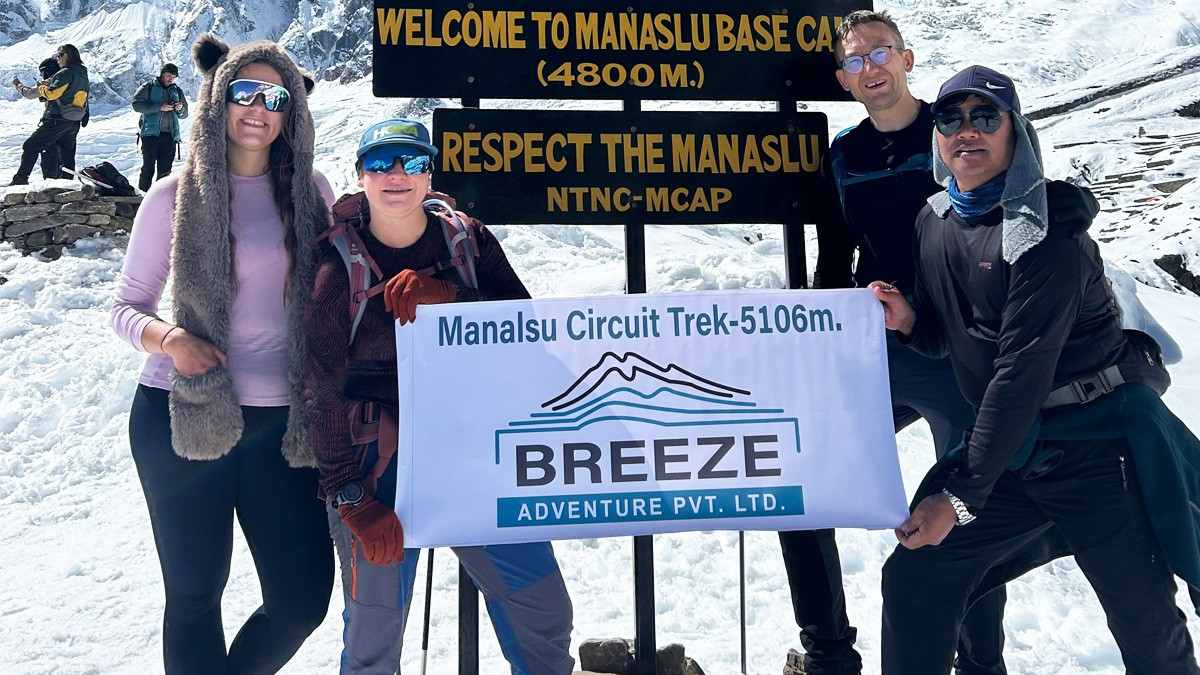
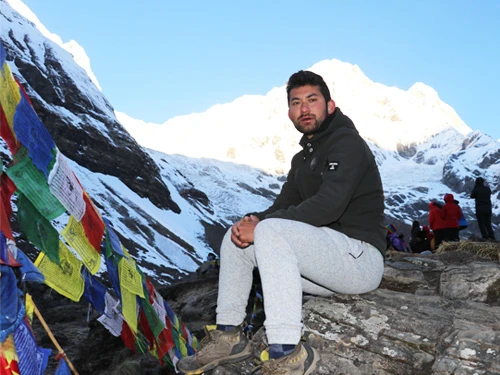
Group Trekking with Breeze Adventure team
The biggest reason is safety. At altitude, things can go wrong fast, and having a trained guide and other people around you matters when someone gets a headache that isn't just a headache. Your guide watches for altitude sickness, sets a sensible pace, and knows how to arrange a rescue if it ever comes to that. Breeze Adventure manages altitude sickness with experienced and skilled team members.
The second reason is the company. You meet people from all over the world, and something about walking six hours a day together turns strangers into friends by day three. If you're traveling alone but don't want to be lonely, a group trek is a good middle path.
It's also cheaper than you'd think. When you split the cost of a guide, porters, and jeep transport across a group, your per-person price drops. And you don't have to spend days chasing permits or figuring out where to sleep. That's all handled.
Best group treks in Nepal
If you want the classic experience, start with one of these:
Everest Base Camp Trek: It is the famous one, with Sherpa villages, high passes, and that first view of Everest you don't forget.
Annapurna Circuit Trek: This trek is a long, varied loop that crosses the Thorong La pass and changes scenery almost every day.
Langtang Valley Trek: This is a shorter, quieter trek close to Kathmandu, with warm Tamang villages along the way.
Manaslu Circuit Trek: It is remote and dramatic, and a great pick if you want fewer crowds than Everest.
Solo trekking in Nepal
Solo trekking means going at your own speed, on your own schedule, without a fixed group. You decide when to stop for tea, when to take a rest day, and how far to push. For independent travelers, that freedom is the whole point.
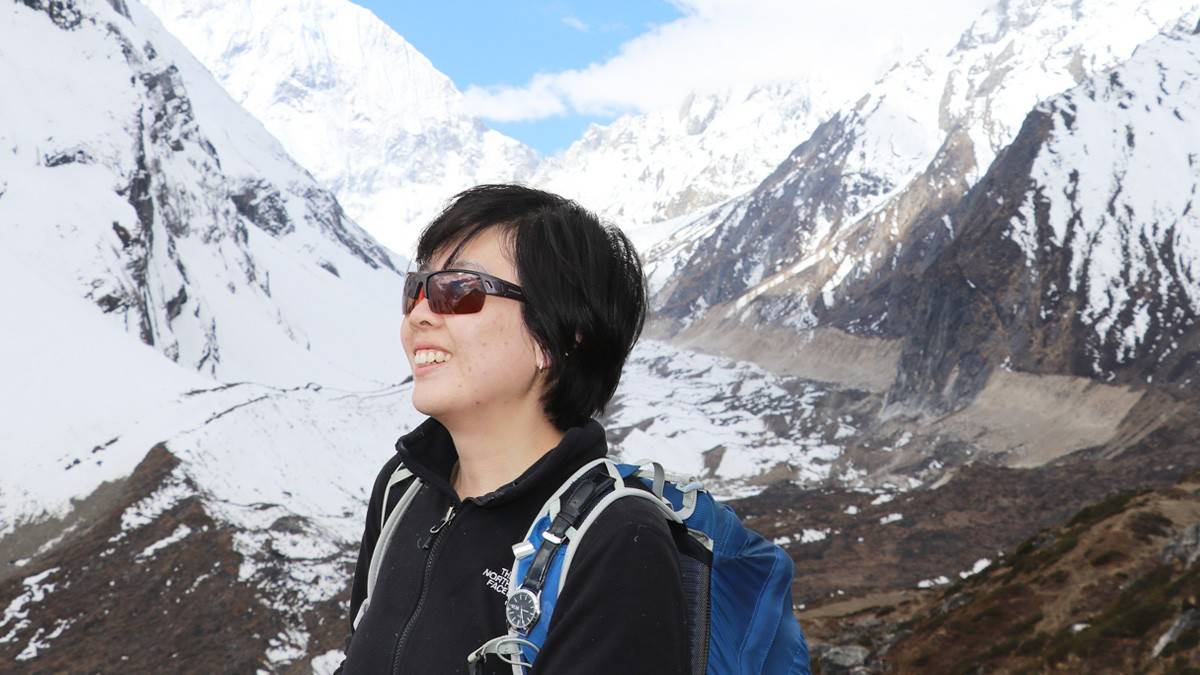
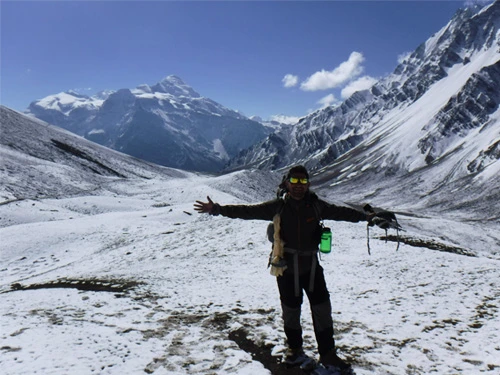
Solo female trekker enjoying stunning beauty in Nepal Himalaya
But there's an important thing to understand about the word "solo" in Nepal today. Since 2023, "solo" no longer means "no guide" on the main routes. It means it's just you and your guide, instead of a big group. You'll get into what's allowed a bit further down.
Why people love going solo
You set the rhythm. No waiting for the slow walker, no rushing to keep up with the fast one. Some of my calmest mornings in the mountains happened when it was just me and an empty trail at sunrise.
You also notice more. Without a group chatting beside you, you hear the river, the birds, the bells on a passing mule train. And there's a real sense of achievement in handling a trek mostly on your own. You come home a little more sure of yourself.
The trade-offs of going solo
It's less safe when something goes wrong. A twisted ankle, a stomach bug, or a wrong turn in fog all get harder to deal with when there's no one with you. That's the main reason Nepal tightened its rules.
It usually costs more per person, too. There's no group to split the guide, porter, and transport costs with, so you carry the full bill yourself.
And it can get lonely. Teahouses are social places, so you'll still meet people, but you don't get the built-in friendships that a group trek gives you.
Is solo trekking allowed in Nepal in 2027?
Here's the part that trips people up, so read this carefully.
On all the main trekking routes, you cannot trek without a licensed guide anymore. Since April 2023, Nepal has required every foreign trekker to hire a licensed guide or porter-guide in the country's national parks and conservation areas. That covers the big names: Everest, Annapurna, Langtang, and Manaslu. In 2027, this rule is being enforced strictly, and checkpoints turn people back if they don't have a guide.
Before that, restricted areas like Upper Mustang, Nar Phu, Tsum Valley, Dolpo, and Kanchenjunga needed a minimum of two trekkers. Now a single trekker can get a restricted-area permit through a registered agency. A licensed guide is still required, and one guide can now look after up to seven trekkers.
So the honest way to say it: you can trek "solo" in the sense of not joining a group. You just can't trek guide-free on the popular high-altitude and remote trails. The rule exists because too many independent trekkers were getting hurt, sick, or lost with no one to help.
Where you can still trek (nearly) on your own
Not every trail sits inside a national park, and on shorter, lower routes you have more freedom. These are the friendliest options if you want an independent-style trip:
Nagarkot hiking trails — easy ridge walks with big Himalayan views on a clear morning.
Pokhara day hikes — gentle walks like the one up to the World Peace Pagoda.
Dhulikhel area — quiet villages and sunrise viewpoints a short drive from Kathmandu.
On these, a guide is not legally required. I'd still hire a local one, though. A good guide keeps you on the right path, tells you the stories behind the places, and supports the local economy.
One route worth a special note: the Ghorepani Poon Hill trek. It's short, beginner-friendly, and one of the best sunrise views in the country. But it sits inside the Annapurna Conservation Area, so under the current rules you now need a licensed guide there. It's still a fantastic pick for anyone who wants a light, independent-feeling trek without a huge group. You just won't be walking it entirely alone.
If sorting out guides, porters, and permits sounds like a headache, that's what a company like Breeze Adventure handles. We put together custom packages, arrange licensed local guides and porters, and take care of the paperwork so you can just walk.
Group vs solo trek: a quick comparison
What matters
Group Trek
Solo Trek (with required guide)
Safety
Highest, with a guide and others around
Good with a guide, but fewer people to help
Cost per person
Lower (shared guide, porters, transport)
Higher (you cover it all)
Freedom over pace
Less, you follow the group
More, you set the schedule
Meeting People
Built in
Depends on teahouse crowds
Planning effort
Almost none, the agency handles it
More on you, even with a guide
Where it's allowed
Everywhere, including high routes
High routes need a licensed guide
So which one should you pick?
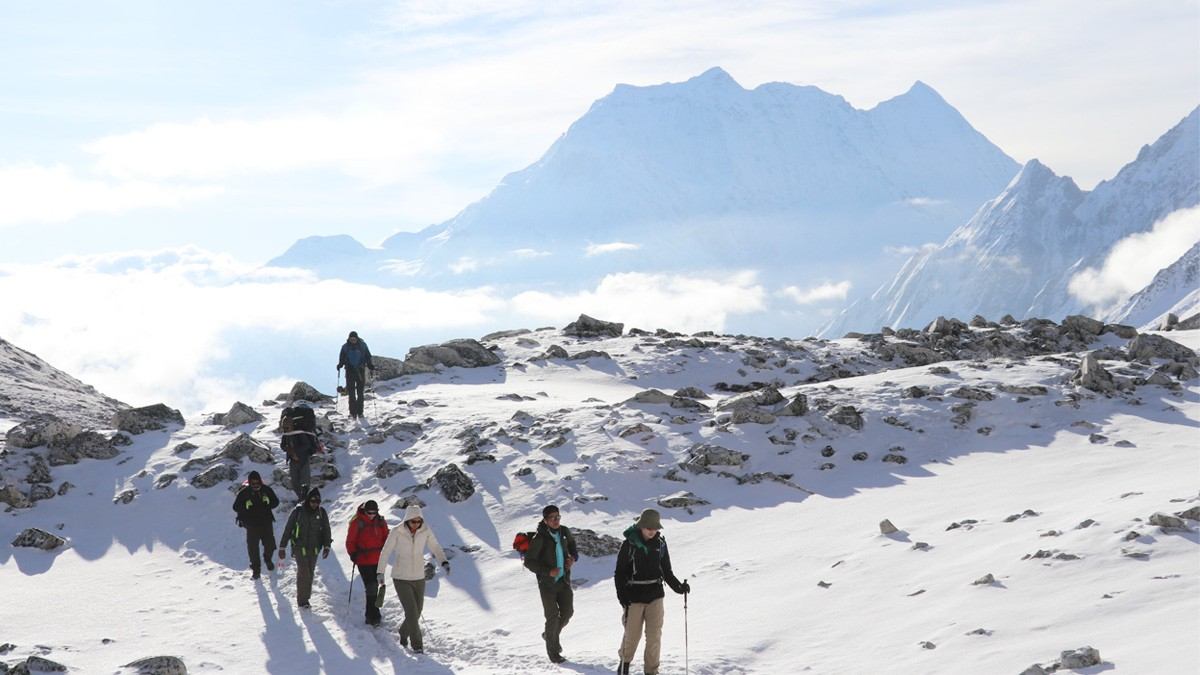
Group trekking in Manaslu Region
Go with a group trek if you're new to trekking, you want the safest option, you'd like to meet people, or you just don't want to deal with logistics. For most travelers, especially on a first Himalayan trip, this is the smart choice.
Go with a solo trek (paired with a licensed guide) if you value quiet, you like setting your own pace, and you're comfortable being more independent. Just remember the guide isn't optional on the main routes anymore.
My honest take: for most people, book through a trusted agency and go with a small group or a private guided trip. You get the safety, the local knowledge, and the friendships, without spending your evenings worrying about permits. That leaves you free to do the one thing you came for, which is to look up at the mountains and enjoy them.
Frequently asked questions
Can I trek completely alone in Nepal in 2026?
Only on short, lower-altitude trails outside the national parks, like the day hikes around Kathmandu Valley, Nagarkot, and Dhulikhel. On the main routes, you must have a licensed guide.
Do I need a guide for Everest Base Camp?
Yes. Everest is inside a national park, so a licensed guide is required, and the rule is enforced at checkpoints in 2026.
Is a group trek cheaper than trekking solo?
Usually, yes. When you share the cost of a guide, porters, and transport across a group, your per-person price is lower than paying for everything on your own.
Can beginners trek in Nepal?
Absolutely. Shorter treks like Ghorepani Poon Hill and Langtang Valley are great for first-timers, and going with a guide or small group makes them very manageable.
What is the best time to trek in Nepal?
Spring (March to May) and autumn (late September to November) give the clearest skies and the most stable weather. Autumn is the most popular season.
Do I need travel insurance for trekking?
Yes, and make sure it covers high-altitude trekking and helicopter rescue. This is one thing you don't want to skip
Kishwor Adhikari is a passionate writer with a deep enthusiasm for trekking and adventure. His extensive travels across Nepal, exploring its diverse landscapes and hidden corners, have shaped his unique perspective on the country's natural beauty. With a wealth of first-hand experience in adventure trekking, Kishwor has become a trusted voice for fellow enthusiasts. Through his writing, he shares invaluable insights, offering practical advice and inspiration for both seasoned trekkers and novices alike. His dedication to sharing his journey and knowledge helps others discover the wonders of Nepal's wilderness, making his work an essential resource for anyone seeking adventure in the region.