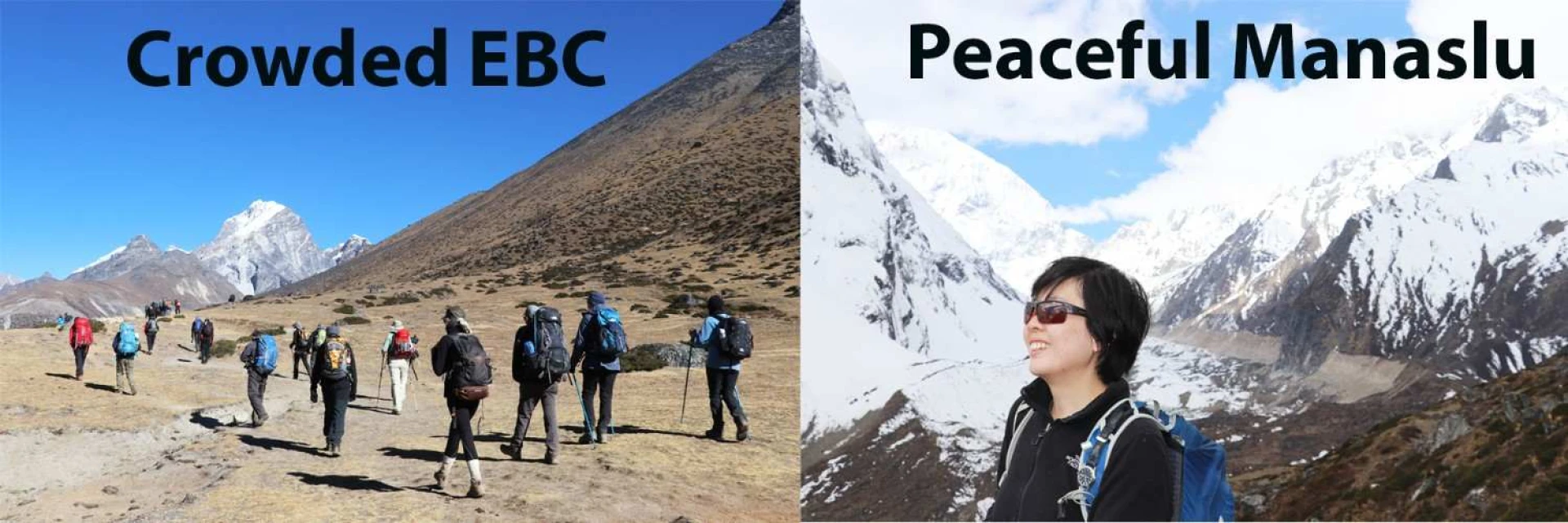
Everest Base Camp is the trek most people picture when they think of Nepal. It's also getting crowded. In the autumn and spring high seasons, the trail up from Lukla can feel like a slow queue. Teahouses are booked out by mid-afternoon, and the good photo spots are three people deep.
If that's not the trip you want, you have options. Nepal is full of trails that give you the same big mountain views and the same warm teahouse nights with a fraction of the foot traffic. A few sit right beside Everest. Others are a short flight or a jeep ride from Pokhara.
Below are the quieter alternatives to Everest Base Camp I'd actually send people on for 2026 and 2027. For each one, I've kept it honest: how long it takes, how hard it is, who it suits, and where the catch is. Because every trek has a catch.
Table of Contents
First, what "quieter" really means
No popular trek in Nepal is empty. "Quieter" means you'll share the trail with dozens of people a day instead of hundreds, and you'll usually get a bed without a fight. On some of these routes you'll walk for an hour and see nobody. On others you'll still pass a steady trickle of trekkers, just far fewer than on the main Khumbu highway to Base Camp.
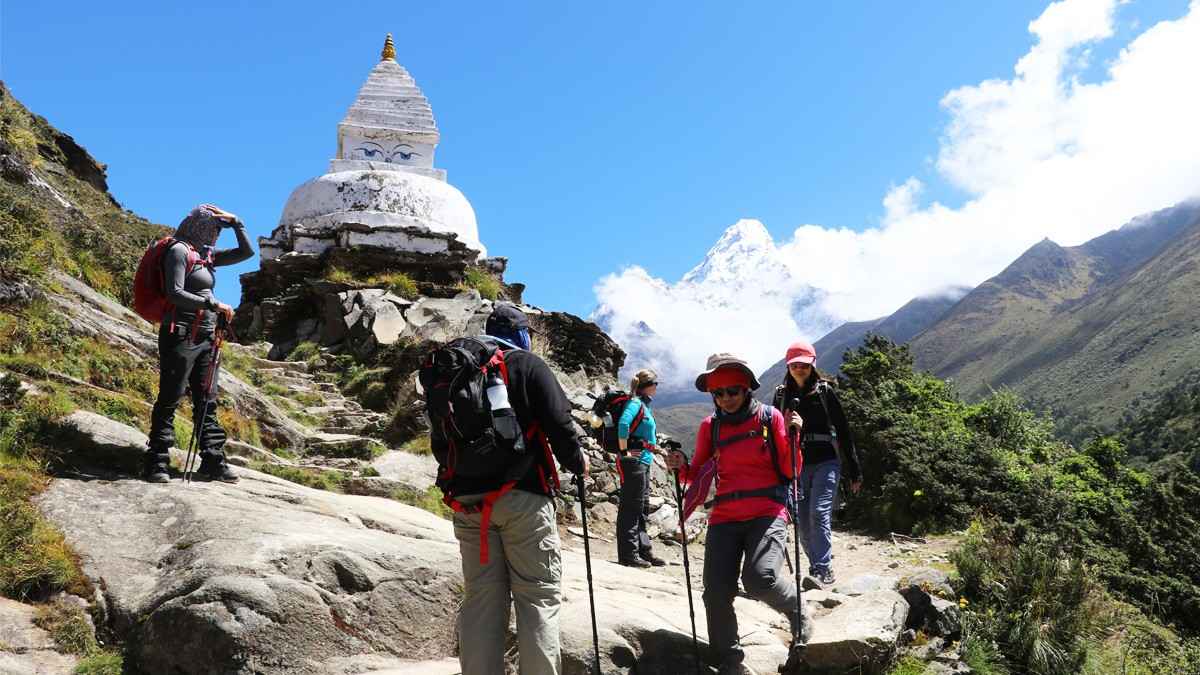
Trekkers at Everest Base Camp Trip Nepal
Two more things worth saying up front. The famous routes are famous because they're genuinely good, so going quieter is a trade, not an upgrade. And "less crowded" today doesn't stay that way forever. Manaslu was a camping-only expedition twenty years ago. Now it has teahouses the whole way and a real crowd in October. While these are still quieter than the Everest Base Camp Trek and Annapurna Treks.
Here are the major fewer crowd alternatives to EBC Trek:
Gokyo Lakes: Everest views without the Base Camp queue
Roughly 12 to 14 days.
Highest point is about 5,360 m at Gokyo Ri.
Moderate to hard.
Fly in and out of Lukla.
Restricted area, so a guide is needed
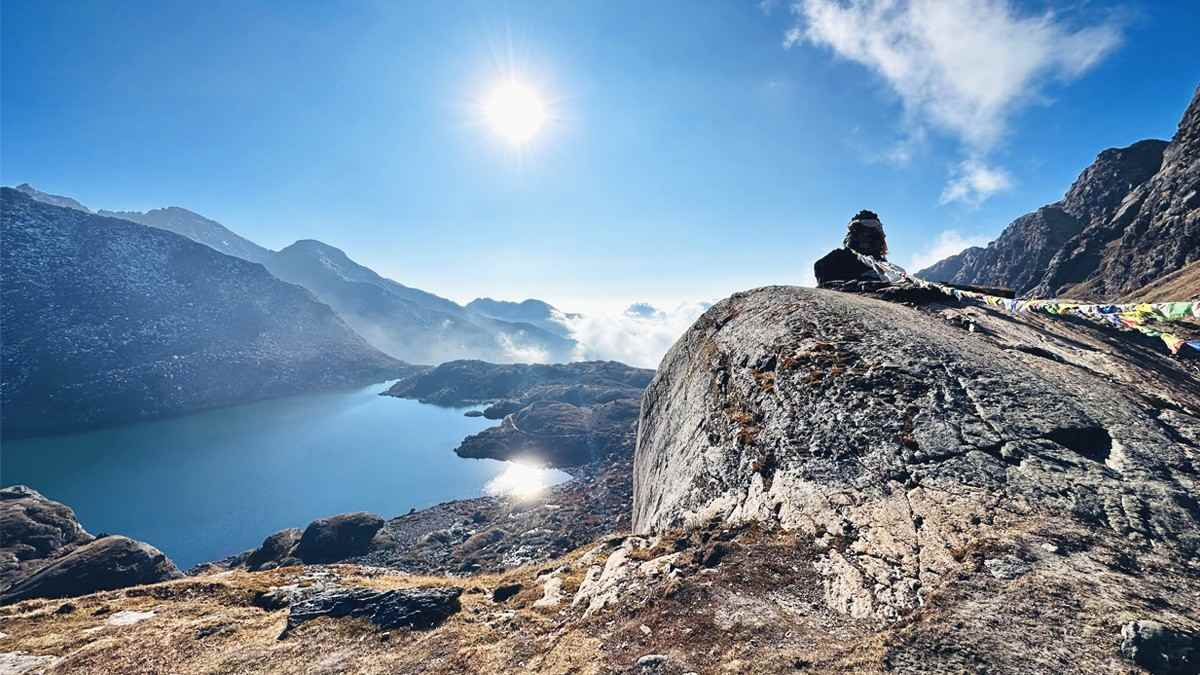
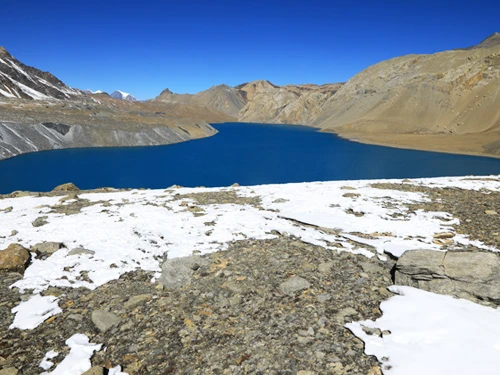
If you want the Everest region but not the Everest Base Camp crowd, start here. The Gokyo lake trail branches off the main Khumbu route and climbs a separate valley to a string of glacial lakes. These are the highest big freshwater lakes in the world. The water is a deep turquoise that photos never quite get right. You will hold your breath at its beauty.
The payoff is the dawn climb up Gokyo Ri, the hill above the lakes. From the top you get four of the world's highest peaks in one sweep: Everest, Lhotse, Makalu and Cho Oyu. Many people who've done both quietly admit the view from Gokyo Ri beats the one from Kala Patthar on the standard EBC trek. Below lies the Ngozumpa Glacier, the longest glacier in the Nepal Himalaya. It's a grey river of rubble and ice, and you can hear it cracking at night.
Who it's for: This is best for the trekkers who want the Everest payoff with more solitude and don't mind a couple of steep, high days.
The catch: Here, you still fly into Lukla and share the lower trail, so the first two or three days aren't quiet. It only really opens up once you turn off toward Dole and Machhermo. Strong walkers can link Gokyo to Base Camp over the Cho La pass, but that puts you back in the crowds, so skip it if peace is the point.
Manaslu Circuit: the big lap most people miss
Roughly 14 to 16 days.
Highest point is about 5,100 m at Larkya La.
Moderate to Hard.
Restricted area, so you'll need permits through a registered agency with a licensed guide.
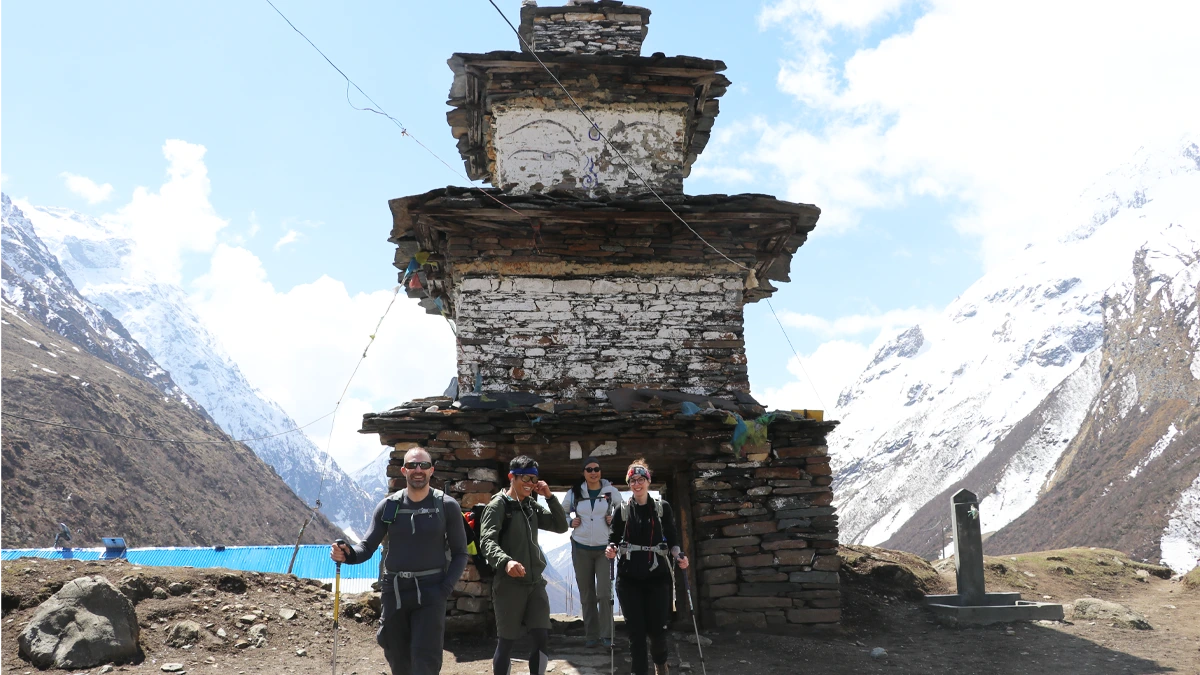
Happy trekkers in Manaslu Circuit Trail
Manaslu is the eighth-highest mountain on Earth, and hardly anyone circles it compared to Annapurna or Everest. The trek loops around the whole massif, climbing from steamy river gorges through terraced farms and pine forest up to the Larkya La, a long, cold pass with a wall of white peaks on the far side.
What makes the Manaslu Circuit Trek special is the shift as you climb. The lower villages are Hindu and Nepali-speaking. Higher up, near the Tibetan border, the culture turns Buddhist, with stone-and-timber villages, mani walls, and gompas that feel a world away from the trailhead. It scratches the same itch the old Annapurna Circuit did before the road reached it.
Who it's for: This trip is best for fit trekkers with two weeks who want a real expedition feel and quiet trails. Especially anyone who found the idea of Everest too busy.
The catch: Here, the Larkya La is a serious high pass; the restricted-area rules mean more paperwork and cost. Manaslu Circuit trekking is a good trekking option even for first-timers, provided that they do good preparation and training.
Mardi Himal: the short one that punches above its length
Roughly 2 to 5 days.
Highest point is about 4,500m at the upper viewpoint.
Moderate.
Starts near Pokhara.
Licensed Guide mandatory
Short on time? Mardi Himal is the best five-day trek in Nepal. This can also be done in just 2 or 3 days based on your preferred schedule. It only opened as a marked route around 2012, so it never picked up the crowds of nearby Poon Hill or Annapurna Base Camp. You climb through mossy rhododendron forest onto a high ridge, then walk the spine of it with the Annapurnas on one side and Machhapuchhre, the fishtail peak, hanging right in front of you.
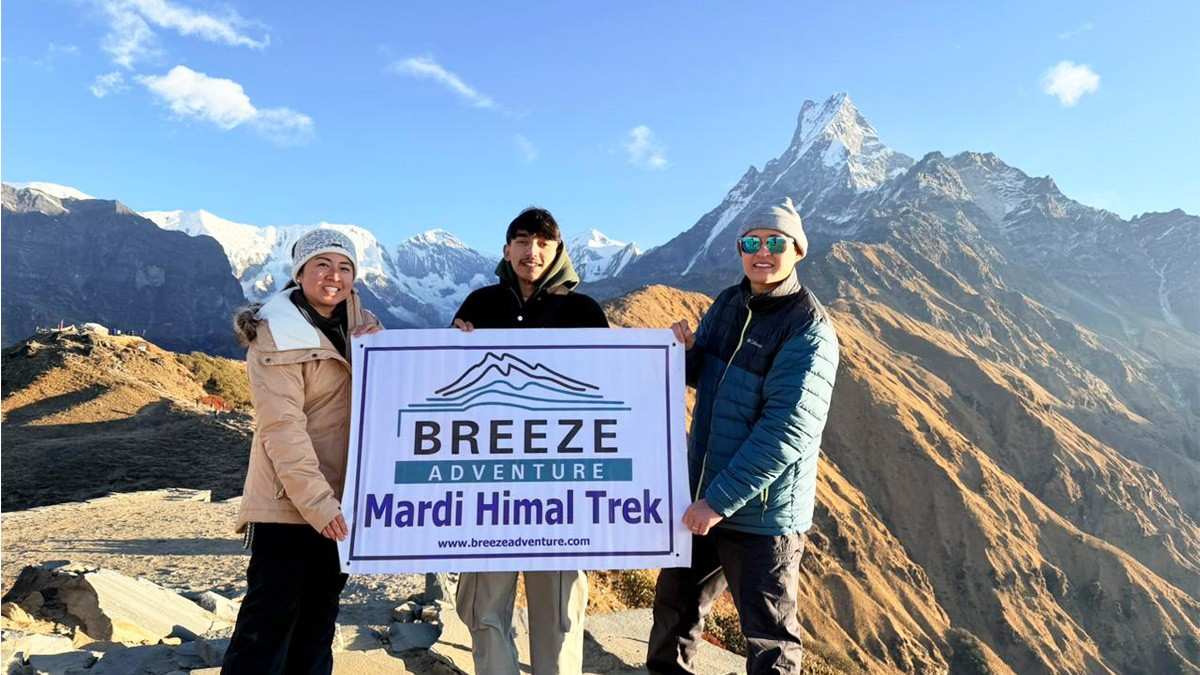
Breeze Adventure team in Mardi Himal Trek Nepal
Because it's close to Pokhara City, you can be on the trail a couple of hours after breakfast in town. The ridge walking on the last two days is the good part, open and airy with the big peaks close enough to feel like you could touch them.
Who it's for: This trip is best for first-timers and people on a tight schedule. This goes well for anyone building fitness before a longer trek later in the trip.
The catch: The top section of Mardi Himal Trek is exposed, so bad weather can flatten the views completely. It's also a moderate altitude, high enough to feel it but not high enough to worry most people.
Tsum Valley: a sacred pocket next to Manaslu
Roughly 14 to 18 days, often combined with Manaslu.
Restricted area, guide and agency permits required.
Moderate to hard in difficulty.
Tsum is a side valley off the Manaslu route, and it's one of the few places in Nepal that still feels genuinely remote. It's a beyul, a sacred hidden valley in Tibetan Buddhism, and the culture here is intact in a way that's rare on busier trails. Locals traditionally won't kill animals in the valley, so you'll see wildlife closer than usual, and old monasteries like Mu Gompa sit high against the Tibetan border.
Who it's for: Tsum Valley Trek is for trekkers who care as much about culture and quiet as about altitude, and who have the time to reach it.
The catch: it's a long way in, the permits add cost, and you need to be comfortable with basic teahouses. This is not a trek to rush. It is all about feeling the remote and isolated part blended with unique culture and lifestyle.
Nar Phu: medieval villages off the Annapurna Circuit
Roughly 10 to 14 days as a side trip or loop.
Restricted area, guide needed.
Moderate to Hard.
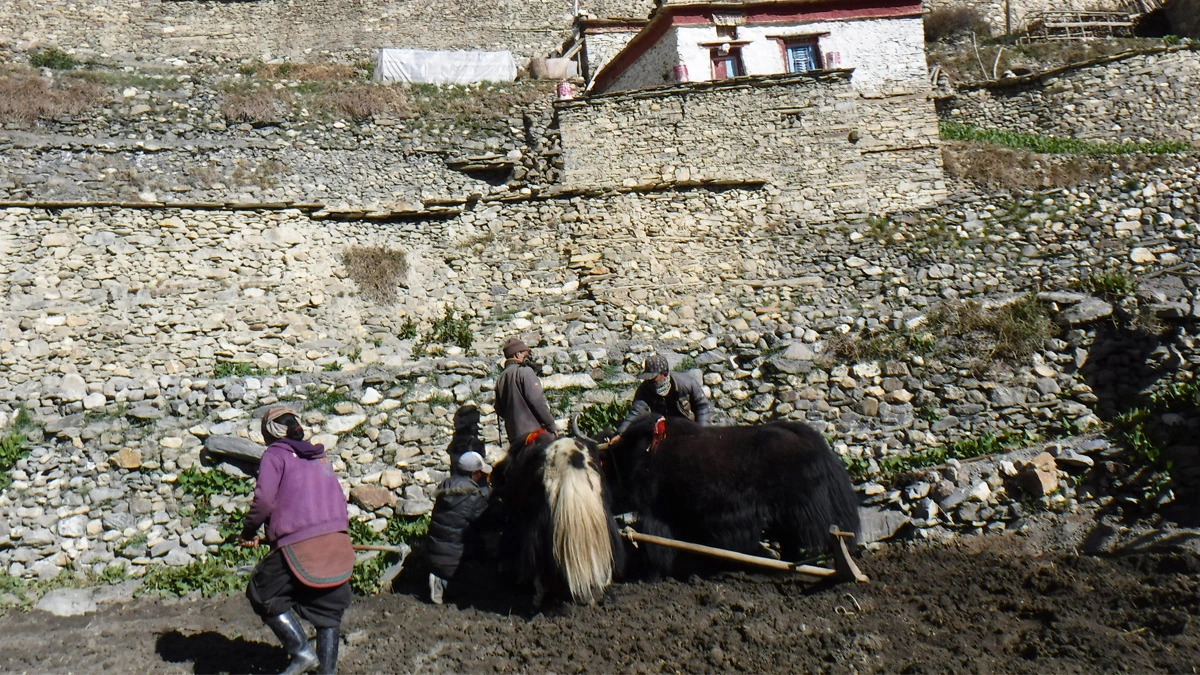
Just off the busy Annapurna Circuit, a narrow gorge leads into the Nar and Phu valleys, and almost nobody turns up it. The villages of Nar and Phu look centuries old because they more or less are: stone houses, chortens, yak herders, and a way of life shaped by the high desert on the Tibetan side.
Local life in Nar Phu Valley
Strong trekkers cross the Kang La pass to drop back onto the Annapurna Circuit, which makes for a great loop that mixes deep quiet with the comfort of a well-supplied trail at the end.
Who it's for: This is mostly for experienced walkers who want somewhere that still feels undiscovered. Even beginners can join this trip if they are ready with proper guidance and fitness training.
The catch: This can be high, cold, and committing, with real altitude on the pass.
Khopra Danda: big Dhaulagiri views on a community trail
Roughly 7 to 10 days.
Highest point is about 3,660 m on the ridge, or 4,660 m if you add the Khayer Lake day.
Moderate in difficulty and requires a licensed guide under the Nepal Government's solo trekking rules.
Starts from the Pokhara side.
Khopra Danda (also called Khopra Ridge) is a quieter line through the Annapurna foothills, run largely on community lodges that put money straight into local villages. The ridge itself gives you a head-on look at Dhaulagiri, the seventh-highest mountain, which most Annapurna treks only glimpse. Add a hard day up to Khayer Lake, a sacred pond near 4,660m, if you want the altitude and the pilgrimage feel.
Who it's for: people who like the Annapurna region but want to skip the Poon Hill sunrise scrum, and who like the idea of their money staying local.
The catch: it's moderate rather than easy, and lodges are simpler than on the main trails.
Langtang Valley: the closest quiet trek to Kathmandu
Roughly 7 days.
Highest point just under 5,000 m at Tserko Ri.
Moderate in difficulty, requires a guide.
No flight needed, just a drive from Kathmandu.
Langtang Valley is the trek I recommend to people who don't have the days or the budget for a Lukla flight. You drive to the trailhead at Syabrubesi and walk up a forested valley to Kyanjin Gompa, a village of yak pastures and a small cheese factory, ringed by peaks.
The morning climb up Kyanjin Ri or Tserko Ri gives you a full mountain panorama for a fraction of the effort and cost of the Everest trip.
Beautiful sunshine captured in Langtang Valley Trek
There's a heavier story here too. August 26 Flash Flood affected the Langtang Gateway severely, but it will be open in Autumn 2026. Back in 2015, an earthquake triggered a landslide that buried the old Langtang village and killed hundreds. The valley has been rebuilt by the people who survived, and trekking here now directly supports that recovery. It's worth going with that in mind, and worth being a respectful guest.
Who it's for: This is a perfect short trip for anyone with less time or money who still wants a proper Himalayan valley.
The catch: it doesn't have the single iconic goal of an Everest or Annapurna Base Camp, so it appeals more to people who care about the walking than the checklist.
2026/2027 Nepal trekking rules you need to know before booking
Nepal's trekking rules changed in the last couple of years, and it matters for every trek on this list.
Since 2023, foreign trekkers have needed a licensed guide from a registered agency in national parks, conservation areas, and restricted areas. This is now firmly enforced at checkpoints on all the major routes, so the days of walking these trails solo and guideless are over for non-Nepali trekkers. Short day hikes outside the parks, like Nagarkot or Sarangkot near Pokhara, don't need one.
A few more current points. The old paper TIMS card has moved to a digital system. The restricted-area treks here (Manaslu, Tsum and Nar Phu) need special permits that only a registered agency can arrange, which is one reason you can't do them fully independently.
Solo trekkers can now get restricted-area permits, a rule that loosened in 2026, but you still need the guide. And you'll want travel insurance that clearly covers high-altitude trekking and helicopter evacuation, since agencies increasingly ask to see it before issuing permits.
Rules and fees shift most years, so confirm the current details with your agency or the Nepal Tourism Board close to your travel date; this will be more reliable.
When is the best time to go
Autumn, from late September to November, is the main season to travel Nepal. The monsoon has cleared the air, the skies are their sharpest, and the mountains are as clean as they get. It's also the busiest window, so on the quieter treks aim for the shoulders of it, late September or November, rather than peak mid-October.
Spring, March to May, is the second-best window, warmer, with rhododendron forests in full color lower down and a slightly hazier sky up high. Winter is clear but cold, and the high passes on Manaslu and Nar Phu can close with snow.
Full monsoon, June to August, is wet and leechy on most of these trails, though it's the one time the rain-shadow treks in Upper Mustang and Dolpo come into their own if you want a monsoon option. Only the lower sections get rain, and high altitude trails become peaceful, green, and enjoyable.
How to pick the right one
If you want the Everest region without the Base Camp crowd, go to Gokyo. If you want a big, remote circuit and you're fit, Manaslu is the perfect choice. Short on time near Pokhara, take Mardi Himal, or Langtang if you're based in Kathmandu and want to skip the flight.
If you care most about culture and quiet, and have the days to spare, look at Tsum or Nar Phu. For Annapurna scenery on a community trail with fewer people, choose Khopra Danda.
Whatever you pick, book the restricted-area treks earlier than you think you need to, because agency logistics and permits take time, and the good autumn dates fill up.
Frequently asked questions
What's the best alternative to Everest Base Camp for the views?
Gokyo Lakes, without much argument. From Gokyo Ri you see Everest, Lhotse, Makalu and Cho Oyu in one panorama, and it's quieter than the standard Base Camp trail.
Which quiet trek is best for beginners?
Mardi Himal or Langtang. Both are moderate, and if you don't push extreme altitude, this can be done in under a week.
Can I still trek these alone in 2026 or 2027?
Not without a licensed guide. Foreign trekkers need a guide from a registered agency on all these routes, and the restricted-area treks also need agency-arranged permits.
Are the restricted-area treks worth the extra cost?
If quiet and culture are what you're looking for, then, yes. Manaslu, Tsum and Nar Phu are the quietest routes here precisely because the permit system keeps numbers down.
Which is cheapest?
Langtang, usually, because you skip the Lukla flight and reach the trailhead by road from Kathmandu.
NOTE: Trekking at high altitude carries real risks, and conditions and regulations change. Plan with a licensed local guide or registered agency, and confirm current permit rules before you travel.
Kishwor Adhikari is a passionate writer with a deep enthusiasm for trekking and adventure. His extensive travels across Nepal, exploring its diverse landscapes and hidden corners, have shaped his unique perspective on the country's natural beauty. With a wealth of first-hand experience in adventure trekking, Kishwor has become a trusted voice for fellow enthusiasts. Through his writing, he shares invaluable insights, offering practical advice and inspiration for both seasoned trekkers and novices alike. His dedication to sharing his journey and knowledge helps others discover the wonders of Nepal's wilderness, making his work an essential resource for anyone seeking adventure in the region.