Nobody tells you how quiet it gets up there on reaching Kyanjin Ri. It is the famous viewpoint in Upper Langtang Valley Nepal. Not peaceful-quiet like a park on a Sunday morning. Something heavier than that. The kind of silence that makes you notice your own breathing makes every step feel deliberate.
By the time you reach the ridge above Kyanjin Gompa and turn around to face Langtang Lirung, the mountain will be just sitting there, close enough to feel personal. Most people just stop talking. Not because there's nothing to say. Because there isn't any point like this.
Kyanjin Ri within the Langtang Valley Trek doesn't get the hype that Everest Base Camp or Poon Hill does. That's part of why it's worth doing. Located near Kathmandu Valley, this is a must-try hiking route that is not just famous for high altitude viewpoints and sunrise but also for cultural proximity and non-technical climbing.
Table of Contents
What Is Kyanjin Ri, Exactly?
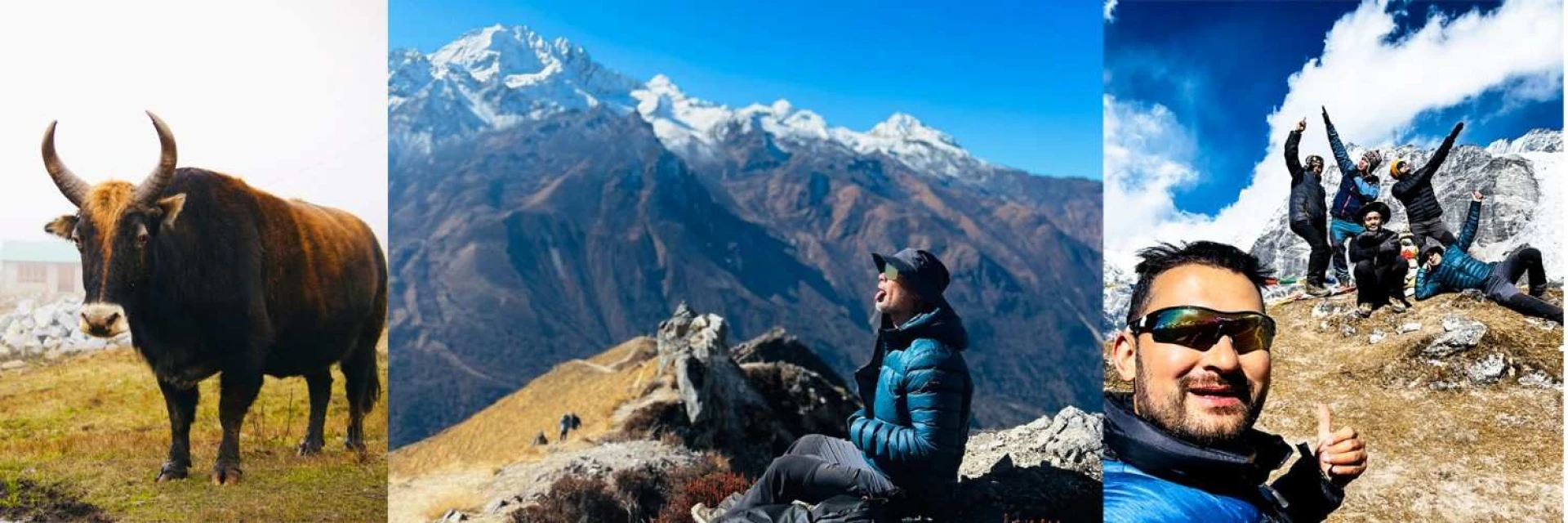
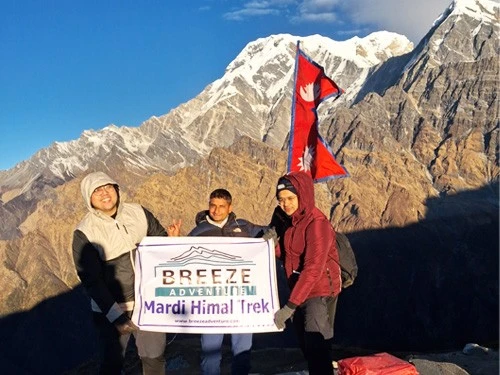
Fun moment captured on the way to Kyanjin Ri
Kyanjin Ri is a hiking viewpoint, not a technical peak. Yes, this is not a glacier crossing, not anything that requires special training. You walk up a steep ridge on your own feet, no ropes, and no crampons. The route is open and visible from most of the climb, which sounds boring but is actually one of its best features. You can see where you're going the whole time, and as the village below shrinks. Here, you feel the altitude in a way that's more motivating than scary.
It sits just above Kyanjin Gompa, the last settlement in the upper Langtang Valley, close to the Tibetan border. Because you're already starting at around 3,870 meters, the air is thin from step one.
That's the thing people underestimate: the hike itself isn't long, but your body knows it's at altitude. Every 200 meters you gain, you'll want to pause more. That's not weakness, that's just how high places work.
Kyanjin Ri Altitude - Lower Peak vs Upper Peak
There are two spots people call the "top," and the difference matters.
Lower Kyanjin Ri sits at around 4,350 meters. This is where most trekkers stop, and honestly, it's enough. The views open wide here, and you can see the glacier. Similarly, the valley floor far below and the main peaks aligned across the horizon. If you've spent only one night at Kyanjin Gompa and your body still feels adjusting, this is the right stopping point, often considered for acclimatization.
Upper Kyanjin Ri reaches around 4,773 meters. It is quieter, harder, and you see fewer people there. If you feel strong, with no headache, and have water in your pack, then start early. The extra push is worth it in this journey. The view doesn't dramatically change, but the feeling does. You're higher, you're more alone, and the mountains feel more serious.
Neither option is wrong. What matters is that you listen to your body.
The Kyanjin Ri Trail: What the Hike Actually Feels Like
The path starts from the edge of Kyanjin Gompa and climbs immediately. There's no gentle warm-up. Within the first fifteen minutes, your lungs will remind you where you are.
The trail is rocky and open, with almost no shade. So, it is better to bring sunscreen even on overcast days, because the UV rays at this altitude are real. There are no switchbacks in the dramatic sense; it's more of a sustained push up the ridge. There will be times when it's steep, sometimes a little less, but always uphill until you're not going up anymore.
The viewpoint involves more than 750 meters of vertical gain in just a few kilometers. That number sounds manageable until you're in it, breathing thin air, your legs moving slower than usual. So, allow 4 to 6 hours for the full round trip. Most people who go to the upper peak add another 45 minutes to an hour each way.
A few things worth knowing for Kyanjin Ri Hiking:
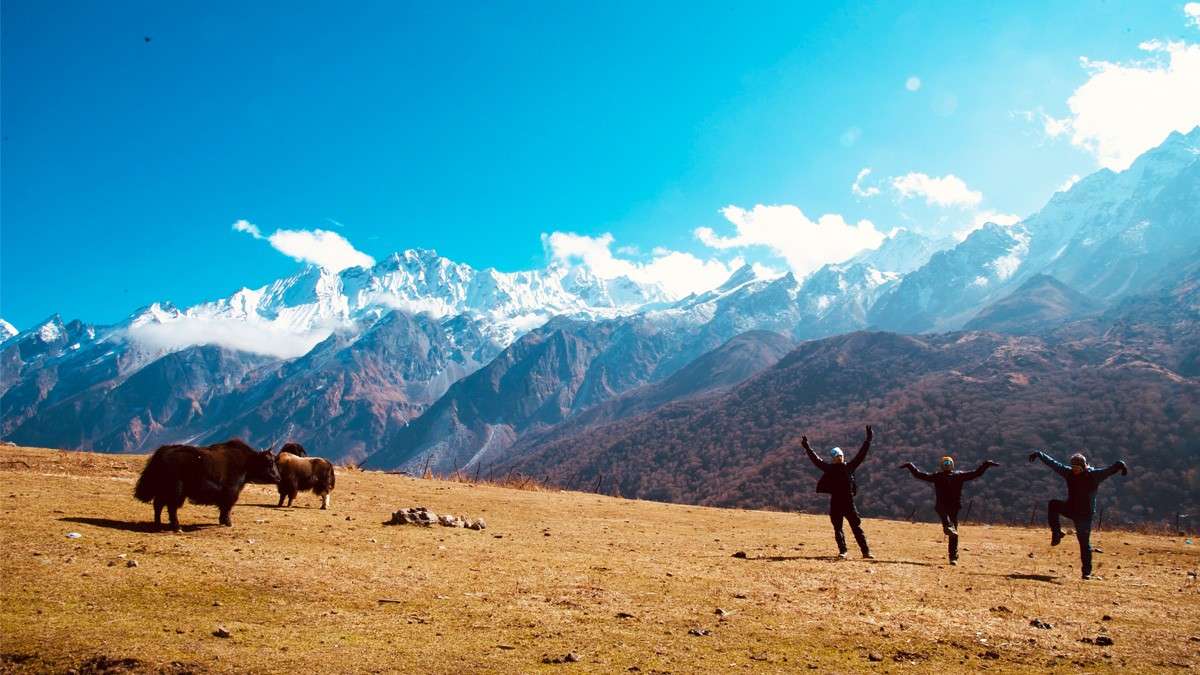
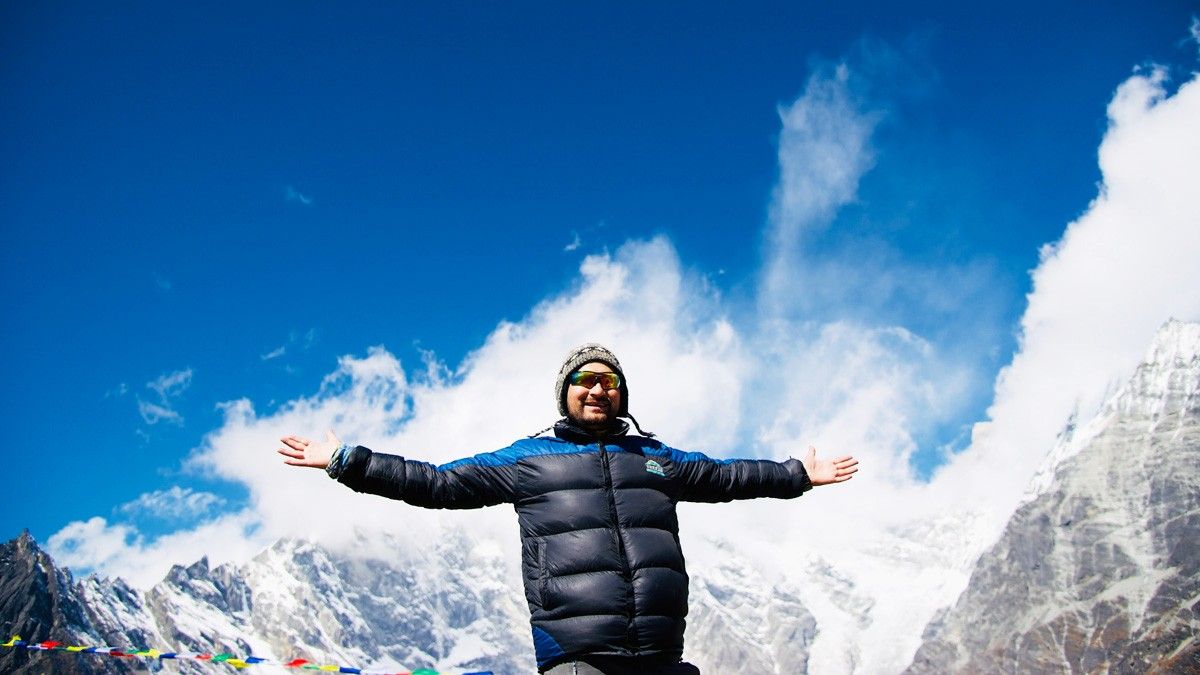
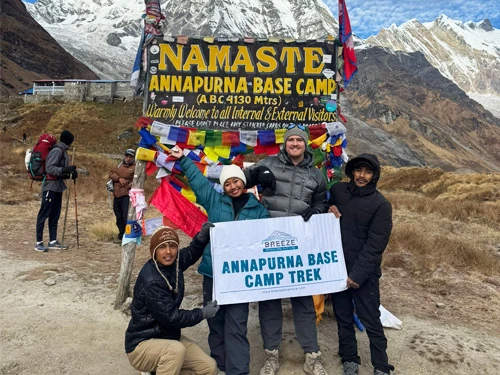
Joy of achievement at Kyanjin Ri Hiking
Start before sunrise if you can. The morning air is stable, the sky is clearest, and watching the light hit Langtang Lirung from the ridge is the kind of thing you'll remember for ages. Afternoon clouds build fast in most seasons.
The trail gets icy in winter. Snow patches stay well past sunrise at this elevation, and the loose rock underfoot makes wet sections genuinely slippery. Micro-spikes in January or February aren't excessive.
There's no teahouse on the ridge. Bring more water than you think you need. Actually, a liter and a half minimum, plus snacks and something warm. The wind picks up without warning up high, and you may not find many tea house options as the altitude increases.
Views from Kyanjin Ri
In this journey, Langtang Lirung dominates. At 7,234 meters, it's not the world's most famous mountain, but standing below its south face with nothing between you and it. Yes, there will be no trees, no buildings, no noise; it commands attention in a way photographs don't convey.
From the ridge, you'll also see Dorje Lakpa, Gangchempo, and the long white run of the Langtang Glacier stretching down the valley. Yala Peak sits to the east, and on clear mornings you can trace the border ridgeline all the way toward Tibet.
Far below, Kyanjin Gompa looks impossibly small with the yak pastures, the gompa rooftop, and the thin smoke from teahouse kitchens. It gives you a genuine sense of how high you've gone.
Let’s come to the glacier, especially. There are crevasses you can pick out from the ridge, deep blue-green cracks in the ice, and the scale of it shifts something in your understanding of what "big" means. People stand there and go quiet, then take the same photo fifteen times, not because it's getting better but because they can't quite believe it.
Best Time to Hike Kyanjin Ri
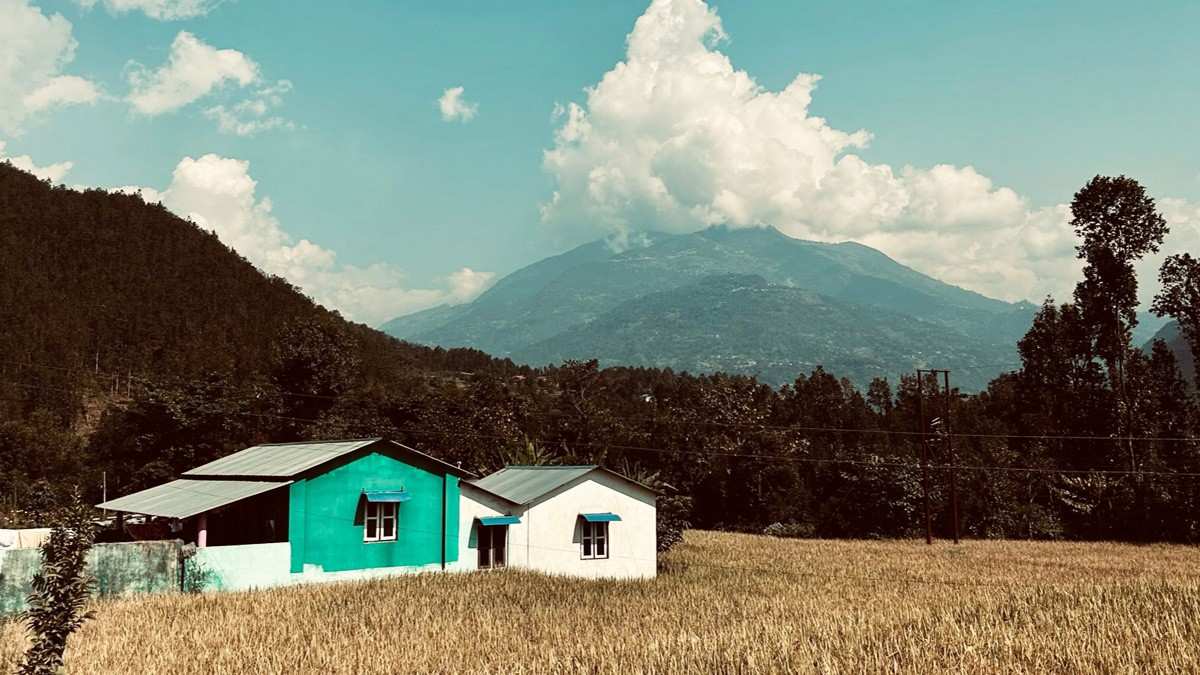
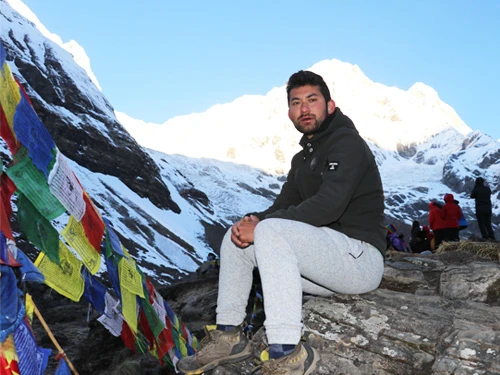
Local settlement on the way to Kyanjin Ri Hike
The best time to hike the Langtang region means the best views from Kyanjin Ri. Though you can do this hiking throughout the year, knowing what each season offers makes it easier to make a decision.
Spring (March to May) is the most popular window with clear morning skies, wildflowers lower in the valley, and stable weather. Rhododendrons bloom from around 2,000 meters upward, and by the time you reach the upper Langtang Valley, you've passed through some of the most dramatic forests in Nepal. Isn’t that amazing?
Well, Autumn (October to November) gives you the sharpest visibility. Post-monsoon air is clean, and the mountains are often completely clear by 7 or 8 in the morning. Many trekkers prefer this season specifically for the Kyanjin Ri hike because the light in October has a particular quality, often warm and low-angled. This is what makes everything look like a film set. You will surely love it.
Winter (December to February) is possible but demands respect. There may be snow on the ridge, cold nights in Kyanjin Gompa, and a smaller window of safe conditions each day. If you're comfortable in cold, the solitude is remarkable.
During the monsoon (June to September), the views are often blocked by cloud cover. The trail can get muddy, and leeches appear lower down the valley. However, this is ideal for the experienced trekkers and for those who love a lush green scenario with less crowd. People who genuinely enjoy the mist-and-mystery atmosphere find this season perfect for hiking Kyanjin Ri.
Kyanjin Ri Acclimatization and Safety
Based on my 19 years long journey in Himalayan trekking, this is an honest version for acclimatization and safety. The standard advice is to spend at least one night in Kyanjin Gompa before hiking Kyanjin Ri. That's not excessive caution, it's correct.
Your body needs time at 3,870 meters before you push to 4,700+, and one rushed day is how altitude sickness turns a great trip into a medical evacuation.
Signs to take seriously: persistent headache that doesn't ease with water and rest, dizziness when standing, nausea, confusion, or breathlessness at rest. If any of those appear on the trail, turn around. Not after a few more steps, turn around instantly.
Drink more water than feels necessary. The dry air at altitude is dehydrating in a way that sneaks up on you. Warm layers are essential even in spring, because the wind on the ridge doesn't care what month it is.
Hiring a local guide adds meaningful safety, not because the trail is confusing, but because conditions change fast at this altitude, and a guide who has walked it a hundred times will read those changes earlier than you will.
Is Kyanjin Ri Worth the Effort?
It's one of the most honest questions in trekking. You've come a long way from the days of walking, permit costs, teahouse food, and an early alarm. There you're standing at the bottom of a steep rocky ridge, wondering if the top is worth it.
Yes, the trip is really worth it.
Not because the views are the best, but there are longer hikes with more dramatic summits. But because Kyanjin Ri asks exactly as much as it gives. The trail is short enough that it stays a day hike, steep enough that you earn it, and high enough that something shifts in how the world looks from up there.
It fits cleanly into the Langtang Valley trekking without dominating it, which means even if you've had a harder week than planned, most people reach the lower peak and feel glad they did.
The summit isn't the point, really. The point is the silence, the scale, the thing that happens when you've been walking in the Himalayas long enough that the mountains stop being scenery and start being company.
Kyanjin Ri is where that tends to happen. This offers 360-degree Himalayan views with no technical climbing required, making it the crown jewel of Langtang.
Kyanjin Gompa At a Glance
Starting point within the Langtang Region
Kyanjin Gompa (3,870 m)
Lower Peak
~4350 m
upper Peak
~4773 m
Round Trip Time
4-6 hours
Difficulty
Moderate to challenging
Best Seasons
Spring (Mar–May), Autumn (Oct–Nov)
Technical gear needed
No
Guide required
Mandatory
If you are planning the full Langtang Valley trek, the Kyanjin Ri hike fits naturally as an acclimatization day from Kyanjin Gompa. Most trekkers include it without extending the itinerary.
Kishwor Adhikari is a passionate writer with a deep enthusiasm for trekking and adventure. His extensive travels across Nepal, exploring its diverse landscapes and hidden corners, have shaped his unique perspective on the country's natural beauty. With a wealth of first-hand experience in adventure trekking, Kishwor has become a trusted voice for fellow enthusiasts. Through his writing, he shares invaluable insights, offering practical advice and inspiration for both seasoned trekkers and novices alike. His dedication to sharing his journey and knowledge helps others discover the wonders of Nepal's wilderness, making his work an essential resource for anyone seeking adventure in the region.