Wondering whether it’s safe to drink water on a Nepal trek? This guide explains where trekkers get drinking water, which purification methods work best, how to stay hydrated at altitude, and how to avoid spending more than necessary for drinking water.
Whether you’re hiking to Everest Base Camp, Annapurna Base Camp, Langtang Valley, the Manaslu Circuit, or another trekking route, this practical advice helps you make informed decisions before you leave.
Water planning is one of the most overlooked parts of trekking preparation. Many first-time trekkers assume they’ll simply buy bottled water along the trail, while others expect mountain streams to be safe because the water looks clean. Both assumptions can lead to unnecessary expenses or worse, stomach problems that can quickly ruin a trek.
The good news is that staying safely hydrated in Nepal isn’t complicated once you understand your options. By the end of this guide, you’ll know which drinking water strategy best fits your trek, your budget, and your travel style.
Table of Contents
Why Drinking Water Planning Matters on Nepal Treks
Most trekking guides tell you to “carry a water bottle”, but they rarely explain how you’ll actually get safe drinking water every day.
That’s where many trekkers run into problems.
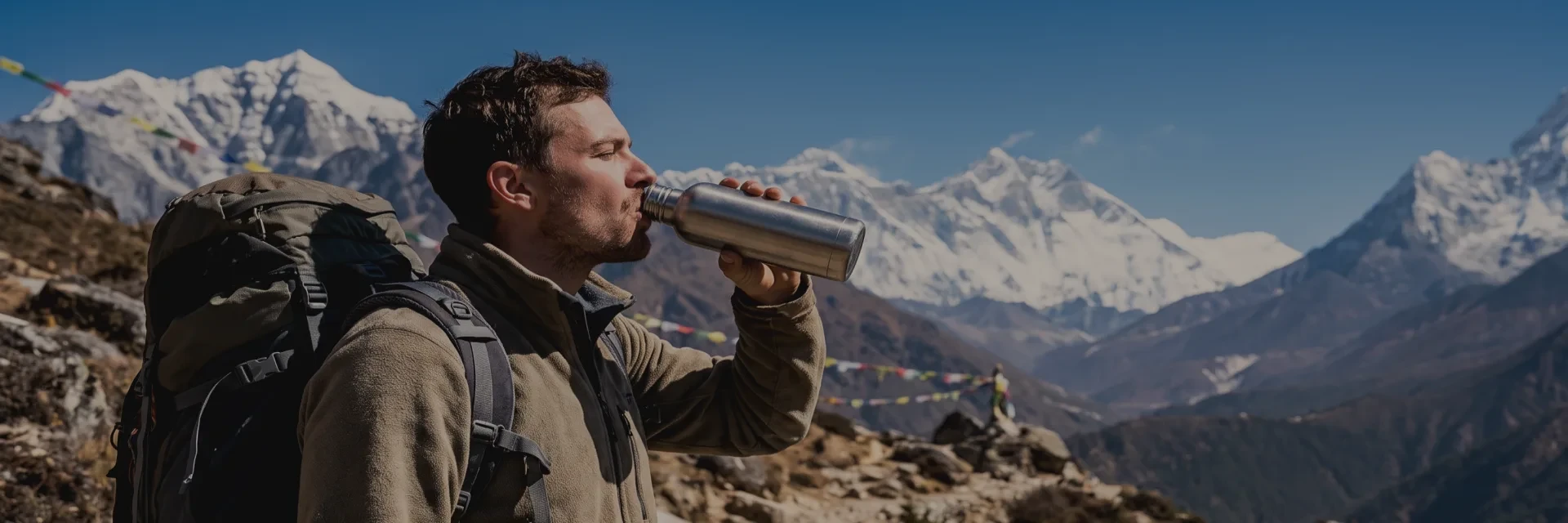
Trekker drinking water from a reusable bottle
Some carry far more bottled water than they need and spend much more than expected. Others rely entirely on streams because the water appears clean. Some bring expensive purification equipment they rarely use, while others bring nothing and struggle to find safe drinking water when they need it.
Planning your water strategy before your trek helps you:
Stay hydrated throughout long walking days.
Reduce the risk of waterborne illness.
Spend less on drinking water over the course of the trek.
Carry less weight in your backpack.
Reduce single-use plastic waste in fragile mountain environments.
Feel more confident when choosing where to refill your bottles.
A little preparation before arriving in Nepal can save you money, reduce stress, and help you avoid preventable health issues on the trail.
Where Do Trekkers Get Drinking Water in Nepal?
On most teahouse treks in Nepal, you’ll have several ways to refill your water bottle throughout the day. The best option depends on where you’re trekking, how remote the route is, and what purification method you carry.
Boiled Water from Teahouses
For many trekkers, boiled water is the simplest and most trusted option.
Most teahouses on popular trekking routes can provide boiled drinking water. Since boiling effectively kills most disease-causing microorganisms, it’s widely considered one of the safest choices available.
This option works especially well if you:
Prefer not to use purification tablets.
Want reliable drinking water each evening
Don’t mind carrying warm water in colder months
Availability can vary between villages and trekking routes, so don’t assume every teahouse offers unlimited boiled water.
Teahouse Refill Stations
Many trekking lodges also provide refillable water for guests. Depending on the location, this may be boiled, filtered, or otherwise treated water.
Always ask staff what treatment method has been used. If you’re unsure, you can add your own purification method for extra peace of mind.
Natural Water Sources
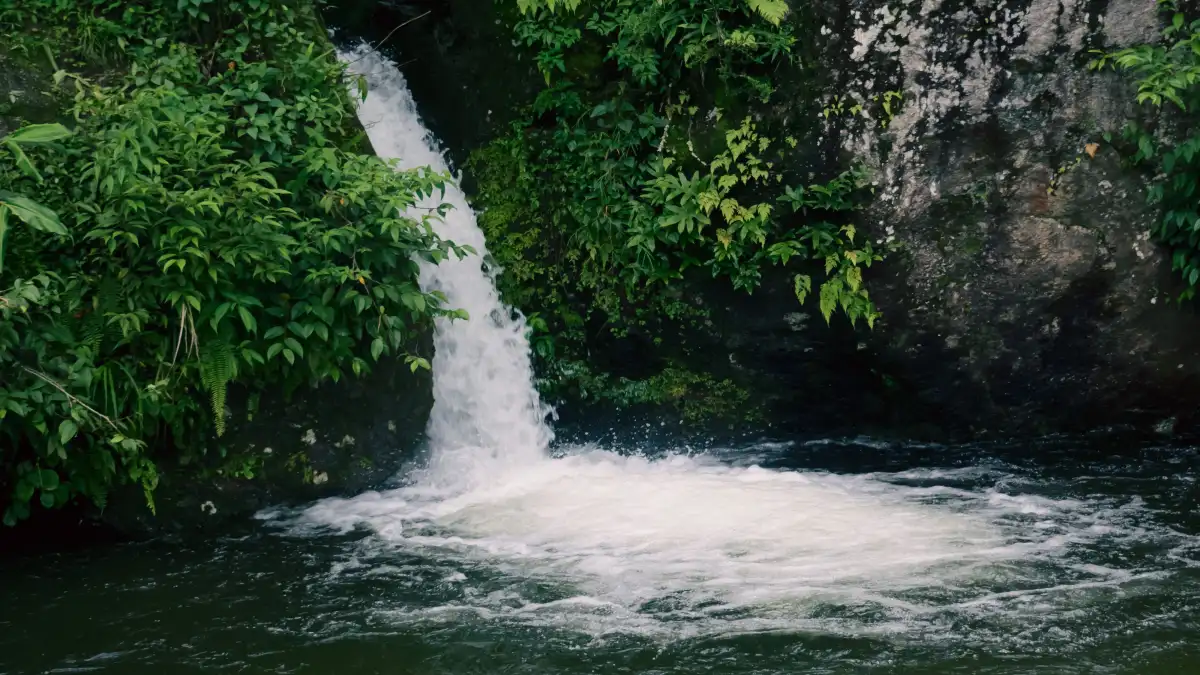
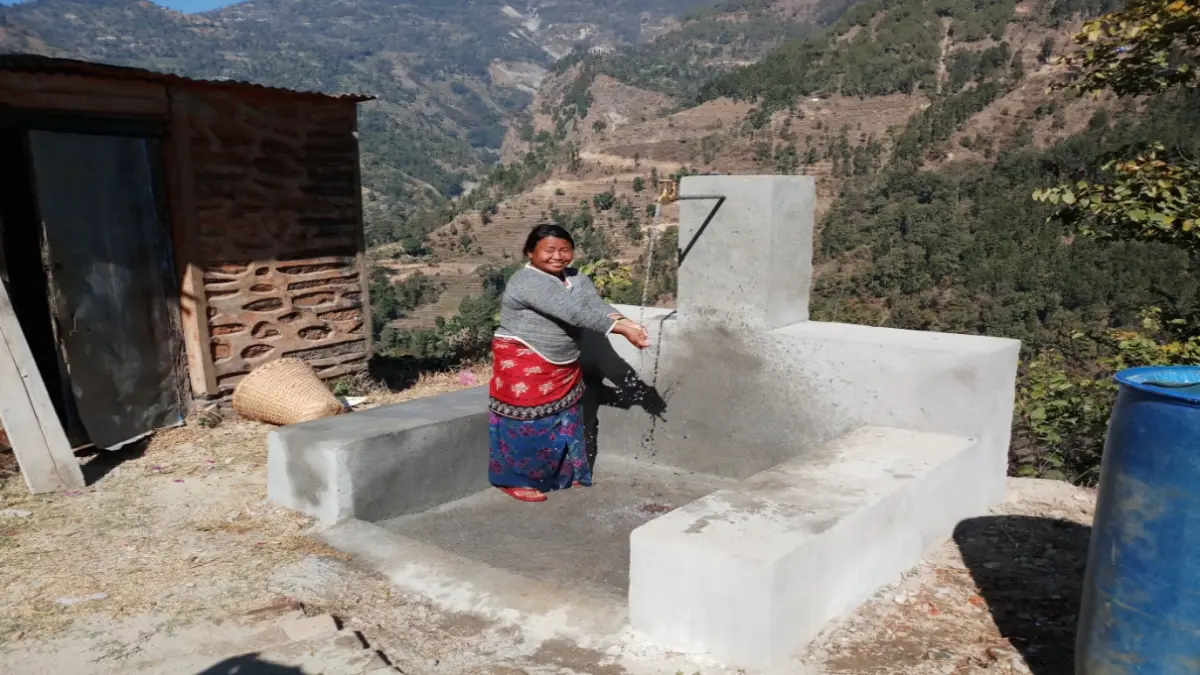
Mountain streams, springs, and taps are common along many trekking trails.
Although this water often looks exceptionally clean, appearance alone doesn’t tell you whether it’s safe to drink. Water may contain bacteria, viruses, or protozoa that aren’t visible to the eye.
If you collect water from natural sources, treat it before drinking using a filter, purification tablets, UV purifier, or by boiling it.
Bottled Water
You’ll find bottled water in many villages along popular trekking routes, especially at lower elevations.
While convenient, it’s usually the least sustainable option. Transport becomes more difficult higher in the mountains, so bottled water generally becomes more expensive as you climb.
For longer treks, relying entirely on bottled water can significantly increase your overall costs and generate a large amount of plastic waste.
Although bottled water is the convenient and safe drinking water option, you won’t find it in all the treks of Nepal. Not only in remote treks the bottle water are not available in popular treks like Annapurna Base Camp trek.
Which Water Source Is Best?
For most trekkers, the most practical approach is a combination rather than relying on just one method.
A common strategy looks like this:
Refill bottles at teahouses whenever possible.
Use a portable water filter during the day.
Carry purification tablets as a lightweight backup.
Fill an insulated bottle with boiled water before cold mornings.
Using more than one method gives you flexibility if refill points are unavailable, your filter clogs, or your batteries run out.
How to Choose the Best Water Purification Method for Your Nepal Trek
There isn’t one “best” way to get safe drinking water on a Nepal trek. The right choice depends on your itinerary, budget, trekking style, and how much gear you’re willing to carry.
Many experienced trekkers use two purification methods instead of one. For example, they may filter stream water during the day and carry purification tablets as an emergency backup. Others prefer boiled water from teahouses in the evening and refill from safe water stations whenever possible.
Before deciding, consider these questions:
Are you trekking on a popular teahouse route or a remote camping expedition?
Do you want the lightest possible backpack?
Are you travelling on a tight budget?
Will you be trekking during winter when water bottles can freeze?
Do you mind waiting for water treatment, or do you want water immediately?
Safe Drinking Water Refill Stations in Nepal
One of the easiest ways to stay hydrated while reducing plastic waste is to use Safe Drinking Water Stations (SDWS) where they’re available.
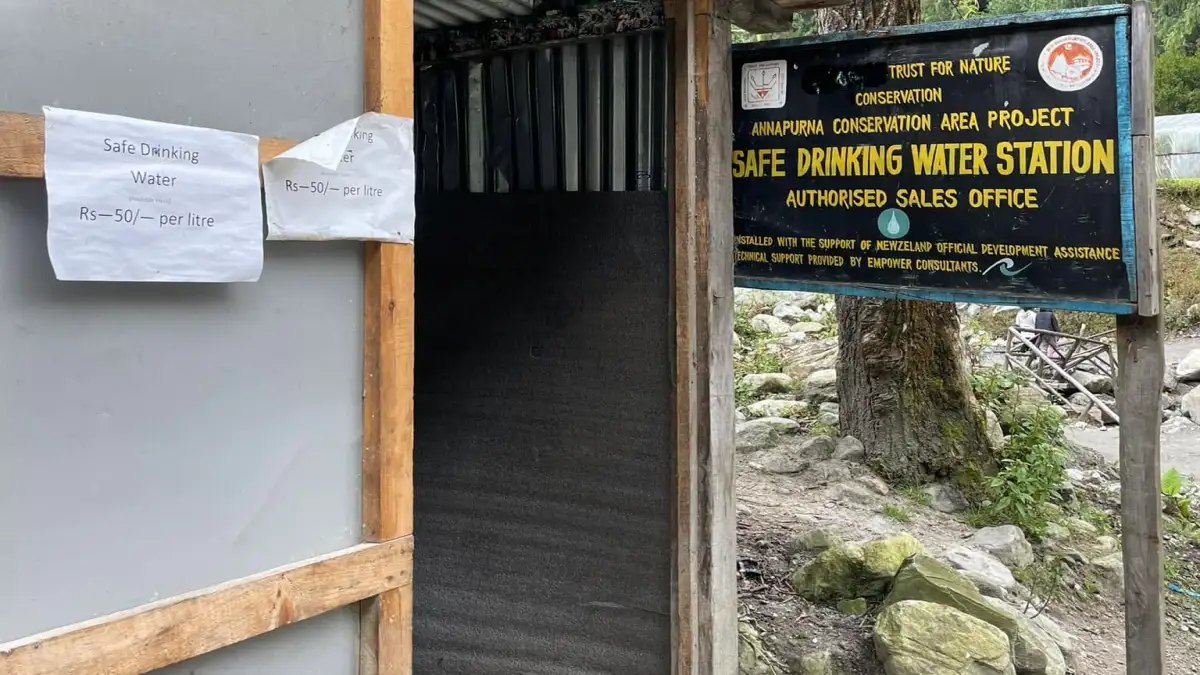
Safe Drinking Water Station refill point on the Annapurna trekking route
These refill stations provide treated drinking water that trekkers can purchase to refill reusable bottles instead of buying single-use plastic bottles. They have become increasingly common on several of Nepal’s busiest trekking routes as part of efforts to reduce plastic waste in the Himalayas.
While availability varies by region and village, these stations have made it much easier for trekkers to choose an environmentally friendly option.
What Is a Safe Drinking Water Station?
A Safe Drinking Water Station is a community-operated refill point that provides treated drinking water for trekkers and local residents.
Depending on the location, the water may be treated using filtration, UV treatment, boiling, or a combination of purification methods before being made available for refilling reusable bottles.
These projects aim to:
Reduce plastic bottle waste on trekking routes.
Provide a safer alternative to untreated water.
Support local communities through sustainable tourism.
Encourage trekkers to carry reusable bottles instead of purchasing bottled water every day.
Where Can You Find Safe Drinking Water Stations?
Safe drinking water stations are most common on Nepal’s popular teahouse trekking routes.
Availability varies between villages, and not every stop has a refill station. Before leaving each teahouse, it’s a good idea to ask where the next reliable refill point is located.
If you’re trekking in more remote regions, don’t expect refill stations to be available every day. Carry your own purification method as a backup.
Are Safe Drinking Water Stations Reliable?
Generally, yes. But it’s still worth asking a few questions before refilling.
When you arrive at a refill point, consider asking:
Is the water filtered, boiled, or UV treated?
Was it treated recently?
Can bottles be refilled directly here?
If you’re ever unsure about the treatment process, you can add your own purification method for extra peace of mind.
Why More Trekkers Are Choosing Refill Stations
Using refill stations has several advantages over buying bottled water throughout your trek.
Usually costs less than relying entirely on bottled water
Lighter backpack
Carry one reusable bottle instead of multiple disposable bottles
Supports local communities
Many refill projects are locally managed and help fund community initiatives.
Convenient
Easy to refill whenever you pass participating villages
Should You Rely Only on Safe Drinking Water Stations?
No. Although refill stations are an excellent option, it’s best not to depend on them exclusively.
Stations may occasionally be closed, unavailable, or located farther apart than expected. Weather, seasonal conditions, or maintenance can also affect availability.
For that reason, experienced trekkers usually carry:
A reusable water bottle
A portable water filter or purification tablets.
Safe drinking water stations as their primary refill option whenever available.
This combination provides flexibility while reducing both costs and plastic waste.
Comparing Every Drinking Water Option on Nepal Treks
Method
Safety
Convenience
Weight
Running Cost
Best For
Things to Know
Boiled water
Excellent
Easy on teahouse treks
None to carry
Moderate
First-time trekkers, families
Depends on teahouse availability. Usually served warm.
Portable water filter
Excellent for many microorganisms
Very convenient
Light
Low after purchase
Budget trekkers, long treks
Requires occasional cleaning and maintenance.
Purification tablets
Very good when used correctly
Easy
Extremely light
Low
Emergency backup, solo trekkers
Requires waiting before drinking and may affect taste.
UV purifier
Excellent in clear water
Fast
Light
Low after purchase
Frequent trekkers
Needs charged batteries and relatively clear water.
Bottled water
Generally safe when sealed
Very easy
Heavy when carried
Highest over long treks
Short sections of a trek
Creates plastic waste and usually costs more at higher elevations.
Safe Drinking water stations
High (treated water)
Easy where available
None to carry
Low to moderate
Most teahouse trekkers
Availability varies by village (ask before relying on the next stop)
Which Water Strategy Is Right for You?
Instead of asking, “Which purifier is best?”, ask, “which combination fits my trek?”
Natural tap water along the trail
Option 1: First-Time Trekker
Recommended combination
Reusable bottle
Boiled water from teahouses
Purification tablets as backup
Why? It’s simple, reliable, and doesn’t require learning how to maintain a filter.
Option 2: Budget Backpacker
Recommended combination
Reusable bottle
Portable squeeze filter
Backup purification tablets
Why? After buying the filter, you can refill water throughout the trek instead of relying on bottled water.
Option 3: Experienced Trekker
Recommended combination
High-quality filter
UV purifier or tablets as backup
Reusable bottle
Why? Experienced hikers often value flexibility and can adapt to changing trail conditions.
Option 4: Remote Camping Trek
Recommended combination
Primary water filter
Purification tablets
Emergency backup method
Why? Remote trekking routes may have fewer treated water sources, so carrying more than one purification option reduces the risk of equipment failure.
Recommended water gear for different trekking styles
Trekker Type
Water Bottle
Main Purification Method
Backup
First-time trekker
Reusable bottle
Boiled water
Tablets
Budget backpacker
Reusable bottle
Filter
Tablets
Family
Insulated bottle
Boiled water
Tablets
Solo trekker
Reusable bottle
Filter
Tablets
Experienced trekker
Lightweight bottle
Filter or UV
Tablets
Camping trek
Large-capacity bottle
Filter
Tablets + boiling when possible
Remember, no purification method is perfect for every situation. Carrying a lightweight backup is one of the easiest ways to avoid problems if your filter clogs, batteries run out, or refill options are limited.
A Typical Day: When and Where You’ll Refill Water on Nepal Trek
One of the biggest questions first-time trekkers have is, “How much water should I carry each day?”
The answer depends on the weather, altitude, your walking pace, and how often you’ll pass villages. On most popular teahouse treks, you don’t need to carry an entire day’s supply of water from the morning. Instead, you’ll usually refill your bottles several times along the route.
Here’s what a typical trekking day might look like.
Time
Typical Situation
Recommended water strategy
Before breakfast
At your teahouse
Fill your reusable bottle with boiled to treated water before leaving
Morning trek
Walking between villages
Drink regularly instead of waiting until you’re thirsty
Tea break
Small teahouse or village
Refill if treated water is available
Lunch stop
Larger village
Top up your bottles before continuing
Afternoon climb
Longer uphill section
Sip frequently, especially at higher elevations.
Arrival at overnight stop
Teahouse
Refill bottles for the evening and the next morning.
Instead of carrying several liters all day, most trekkers carry enough water to reach the next reliable refill point. This keeps backpacks lighter while ensuring they stay hydrated.
How Much Water Should You Drink While Trekking?
There isn’t a single amount that suits everyone.
Your hydration needs depend on factors such as:
Daily walking distance
Temperature
Altitude
Humidity
Personal fitness
How much you sweat
At higher elevations, your body loses more moisture through breathing, even if you don’t feel especially thirsty. Cold weather can also reduce your sense of thirst, making it easy to drink less than your body actually needs.
Rather than aiming for an exact number of liters, pay attention to signs that you’re staying well hydrated:
Drink small amounts regularly throughout the day.
Don’t wait until you’re thirsty.
Drink extra water after long uphill climbs.
Increase your intake during hot weather.
Continue drinking during the evening after arriving at your teahouse.
If your urine becomes consistently dark, it’s often a sign that you should drink more water.
How Water Planning Changes by Season
The best hydration strategy isn’t exactly the same throughout the year.
Spring (March-May)
Spring is Nepal’s busiest trekking season.
Conditions are generally mild, and teahouses are fully open on popular routes. Refill opportunities are usually easy to find, but trails can be busy.
Recommended approach
Carry one reusable bottle.
Refill regularly at villages.
Bring your preferred purification method as backup.
Summer / Monsoon (June-August)
Monsoon brings warmer temperatures and more rainfall.
Water sources are plentiful, but heavy rain can make streams cloudier than usual.
Recommended approach
Use a reliable purification method.
If using a UV purifier, remember that cloudy water should first be filtered or allowed to settle.
Keep purification tablets as an emergency backup.
Autumn (September-November)
Autumn is another peak trekking season with stable weather and clear mountain views.
Most teahouses are open, and water planning is generally straightforward.
Recommended approach
A reusable bottle combined with boiled water or a portable filter works well for most trekkers.
Winter (December-February)
Winter introduces a different challenge.
Water bottles and hydration bladder tubes may freeze, especially during early mornings and at higher elevations.
Recommended approach
Carry an insulated bottle.
Store your water bottle inside your sleeping bag overnight if temperatures are expected to drop below freezing.
If using a hydration bladder, remember that the drinking tube can freeze before the reservoir.
Staying Hydrated in High Altitude
Many trekkers focus only on food and forget how much hydration affects their comfort on the trail.
At higher elevations:
You lose more moisture through breathing.
Dry mountain air increases water loss.
Cold temperatures can reduce your desire to drink.
Long climbs increase fluid requirements.
Good hydration may help reduce dehydration-related symptoms such as fatigue and headaches, but it’s important to understand its limits.
Hydration Does NOT Prevent Altitude Sickness
This is one of the biggest myths about trekking in Nepal.
Drinking extra water alone cannot prevent or cure acute mountain sickness. The most effective protection is:
Ascending gradually.
Taking acclimatization days when needed.
Recognizing symptoms early.
Descending if symptoms become severe.
Think of hydration as one part of staying healthy, not the entire solution.
Should you carry Electrolytes?
Water replaces fluids, but long trekking days also lead to the loss of minerals through sweat.
Electrolyte tablets or powders can be a useful addition, especially if you:
Trek for many consecutive days.
Sweat heavily.
Experience very hot weather at lower elevations.
Prefer flavored drinks that encourage you to drink more.
Electrolytes complement your hydration plan but don’t replace the need to drink enough water.
Water Budget on a Nepal Trek
Water is one of the few trekking costs that rises as you climb higher. Every bottle and every litre of boiled water at high altitude have to be carried up by porter, mule, or yak, so the price goes up with the trail. Rely on bottled water the whole way and you can easily spend far more than you’d expect, which is exactly why a reusable bottle and a purification method usually pay for themselves within the first few days.
All prices below are approximate 2026 figures in US dollars. They vary by season, lodge, and altitude, so treat them as a planning guide rather than a fixed price list.
Method
Typical Cost
Notes
Bottled water
~$1-$2 per liter at trailheads, rising to $4-$6 near the highest villages
Cheapest low down, most expensive up high. And banned or unavailable on some routes
Boiled Water from teahouses
~$1-$4 per liter
Sometimes free or around NPR 100-200 at you overnight lodge. And more expensive above 4,000 m, where fuel must be carried in
Safe Drinking Water / refill stations
Usually cheaper than bottled water, charged per liter
Treated, community-run and not available on every route
Purification tablets
A few cents up to ~$0.50 per liter, a pack cost ~$5- $15
Extremely light and ideal backup
Portable filter
~$25-$40 upfront, then almost nothing per liter
Refill free from taps and streams.
UV purifier
~$50-$100 upfront, then almost nothing per liter
Needs charged batteries and relatively clear water
Instead of focusing only on today’s cost, think about your total spending over the entire trek. A $25-$40 filter, or a few dollars of purification tablets, almost always pays for itself within the first few days while also cutting plastic waste and lightening your pack.
Water Budget Comparison
Although bottled water is convenient, relying on it for an entire trek usually costs more than using refillable options.
Here’s a simple comparison.
Strategy
Initial Gear cost
Daily spending
Plastic waste
Best For
Bottled water only
None
Highest
Highest
Short treks or emergencies
Boiled water from teahouses
None
Moderate
Very low
First-time trekkers
Portable filter
Purchase required
Very low
Minimal
Budget trekkers and frequent hikers
Purification tablets
Low
Low
Minimal
Backup or occasional use
Filter + Tablets
Moderate
Very low
Minimal
Most experienced trekkers
Many trekkers find that carrying simple purification equipment pays for itself during longer itineraries.
Water Availability by Trek
Not every trekking route in Nepal offers the same access to safe drinking water. Popular teahouse treks have frequent refill opportunities, while remote camping treks require more self-sufficiency.
Use this comparison to choose the right hydration strategy before you start your trek
Trek
Water Availability
Safe Refill Stations
Best water strategy
Planning Tips
Everest Base Camp Trek
Excellent
Available in many villages
Reusable bottle + safe refill stations + filter or tablets as backup
Refill at teahouses whenever possible. Carry enough water between villages, especially on longer climbing days.
Annapurna Base Camp Trek
Excellent
Available in several villages
Boiled water or refill stations + reusable bottle
Frequent teahouses make it easy to refill throughout the day.
Annapurna Circuit Trek
Excellent on most sections
Available in many popular villages
Filter plus teahouse refills
Higher sections become colder, so consider an insulated bottle.
Langtang Valley Trek
Good
Limited compared with Everest and Annapurna
Reusable bottle + filter or boiled water
Most overnight stops have teahouses offering treated or boiled water.
Mardi Himal
Good
Limited
Boiled water from teahouses + reusable bottle
Carry enough water between high camp and base camp, where services are limited.
Ghorepani Poon Hill Trek
Excellent
Some refill opportunities
Boiled water or refill stations
Short trekking days mean you usually don’t need to carry large amounts of water
Manaslu Circuit Trek
Good
Limited
Filter + purification tablets + reusable bottle
Villages can be farther apart than on Everest or Annapurna, so always refill before leaving each stop.
Expect fewer teahouses and fewer treated water sources than on Nepal’s popular trekking routes.
Makalu Base Camp Trek
Limited
None or very limited
Filter + backup purification
Plan water carefully before long walking days between settlements.
Hydration Packing Checklist
Before leaving Kathmandu or Pokhara, make sure your water kit includes:
Essentials
Reusable water bottle
Second bottle or collapsible backup bottle
Portable water filter or purification tablets
Backup purification method
Electrolyte tablets or powder
Bottle cleaning brush
Cold-Weather Additions
Insulated water bottle
Bottle cover or insulating sleeve
Spare batteries if using a UV purifier
Nice Extras
Lightweight measuring bottle for mixing electrolytes
Small microfiber cloth for cleaning bottles
Dry bag to keep purification equipment organized
Water Planning for Families Trekking with children
Families often have different priorities from solo backpackers.
Children may become dehydrated more quickly, and younger trekkers may be less likely to recognize when they’re thirsty.
A few simple habits can make hydration easier:
Encourage regular drinking rather than waiting for children to ask
Use boiled or properly treated water whenever possible
Carry an additional purification backup
Pack insulated bottles if trekking during colder months
Schedule water breaks during snack stops instead of rushing through villages
Keeping hydration simple usually works better than relying on complicated purification routines.
Common Water Mistakes First-Time Trekkers make
Assuming clear mountain water is safe: Crystal-clear water can still contain harmful microorganisms. You must always treat natural water before drinking
Waiting until you feel thirsty: Thirst often appears after dehydration has already begun. So, drink small amounts regularly throughout the day.
Relying only on bottled water: This often increases both your expenses and plastic waste. Carry a reusable bottle and refill whenever possible.
Carrying only one purification method: Equipment can fail. Bring lightweight purification tablets as a backup.
Forgetting to clean your bottle: Reusable bottles should be washed regularly to prevent bacterial buildup. Clean your bottle whenever you have the opportunity at your accommodation.
Thinking hydration prevents altitude sickness: Good hydration supports your health but isn’t a substitute for proper acclimatization. Follow a sensible ascent schedule and recognize the symptoms of AMS.
Pro Tips From Expert Trek Guides About Drinking Water
After guiding trekkers across Nepal for years, these are the habits that consistently make hydration easier and safer.
Leave every teahouse with full bottles. Refill before breakfast so you’re prepared if the next section is longer than expected.
Carry two bottles instead of one large bottle. This gives you a backup if one bottle leaks or becomes contaminated.
Keep purification tablets in your daypack. If your main water treatment method fails, you’ll still have a reliable backup.
Clean your bottle regularly. Even treated water can lead to bacterial buildup inside reusable bottles over time.
Drink before you feel thirsty. Cold weather often suppresses thirst, so sip water consistently throughout the day.
Carry electrolytes on long climbing days. They can encourage you to drink more and help replace minerals lost through sweat.
Don’t rely on bottled water alone. A reusable bottle with a purification method is usually cheaper, lighter, and better for the mountain environment.
Final thoughts
Planning your drinking water strategy before your trek is one of the simplest ways to make your adventure safe, more comfortable, and more environmentally responsible.
For most trekkers, you don’t need expensive equipment or complicated purification systems. A reusable water bottle, one reliable purification method, and a lightweight backup are usually all you need.
The best approach depends on your trekking route, season, and travel style. Popular teahouse treks offer frequent refill opportunities, while remote camping expeditions require greater self-sufficiency. By understanding your options before you set off, you’ll spend less time worrying about where your next safe refill will come from and more time enjoying Nepal’s incredible mountain landscapes.
Whether you’re trekking for five days or three weeks, good hydration planning helps you stay healthy, reduce plastic waste, and focus on the experience, not on your water supply.
Frequently Asked Questions About Drinking Water
Q. Can you drink tap water in Nepal?
No. Tap water in Nepal, including in trekking villages, should always be treated before drinking. Even if the source appears clean, untreated water may contain bacteria, viruses, or protozoa that can cause gastrointestinal illness.
Q. Is Mountain stream water safe to drink?
Not without purification. Many Himalayan streams look crystal clear because they originate from glaciers and springs. However, water can become contaminated by livestock, wildlife, or human activity upstream. Always filter, boil, or disinfect stream water before drinking.
Q. What is the safest drinking water option on a Nepal trek?
Boiled water provided by teahouses is one of the most reliable options on popular trekking routes because boiling kills most disease-causing microorganisms. Many experienced trekkers combine boiled water with a portable filter or purification tablets for additional flexibility.
Q. Should I bring a water filter or purification tablets?
If possible, bring both. A lightweight filter is convenient for daily use, while purification tablets are inexpensive, weigh almost nothing, and provide an excellent emergency backup if your filter becomes clogged or damaged.
Q. Is bottled water available on all trekking routes?
Bottled water is widely available on popular teahouse treks such as Everest Base Camp, Annapurna Base Camp, Langtang Valley, and the Annapurna Circuit. On more remote trekking routes, availability may be limited, and bottles generally become more expensive as altitude increases because transportation is more difficult.
Q. How much water should I carry each day?
There is no single answer. The amount depends on:
Weather conditions
Daily walking distance
Altitude
Individual hydration needs
Distance between refill opportunities
Most trekkers on teahouse routes carry enough water to reach the next village rather than carrying an entire day’s supply.
Q. Does drinking more water prevent altitude sickness?
No. Hydration supports your body’s normal function and may help reduce dehydration-related symptoms, but it cannot prevent or cure Acute Mountain Sickness (AMS).
Q. Should I bring electrolyte Tablets?
They’re not essential, but many trekkers find them useful. Electrolytes replace salts lost through sweating during long trekking days and can make drinking enough water easier, especially during warmer months or strenuous climbs.
Q. Are insulated bottles worth carrying?
Yes, especially if you’re trekking above 3,500 meters during late autumn or winter. Insulated bottles help prevent water from freezing and keep warm drinks hot for longer, making them particularly useful on early morning departures.
Q. Can hydration bladders freeze?
Yes. The drinking tube often freezes before the reservoir, making it difficult to drink while walking. If you’re trekking in freezing temperatures, an insulated water bottle is usually the more reliable choice.
Q. How do I clean my reusable water bottle during a trek?
Rinse it thoroughly whenever possible and wash it with warm water at your teahouse every few days. If you’re on a longer trek, carrying a small bottle-cleaning brush or cleaning tablets can help prevent bacterial buildup.
Q. What’s the best overall water strategy for most trekkers?
For the majority of people trekking in Nepal, this combination offers the best balance of safety, convenience, cost, and sustainability:
Reusable water bottle
Portable water filter
Purification tablets as a backup
Boiled water from teahouses whenever available
Planning a Trek in Nepal?
If you’re still deciding which trek is right for you or have questions about drinking water, altitude, accommodation, or trekking logistics, our local team is happy to help.
At Breeze Adventure, we’ve guided trekkers across Nepal’s Himalayas for years. We can help you choose the right trek, prepare the right gear, and understand what to expect on the trail, whether you’re heading to Everest Base Camp, Annapurna Base Camp, Langtang Valley, Manaslu Circuit, or another trekking destination.
Browse our trekking packages, compare itineraries, or get in touch for personalized advice. A little planning before your trip can make a big difference once you’re in the mountains.
Kishwor Adhikari is a passionate writer with a deep enthusiasm for trekking and adventure. His extensive travels across Nepal, exploring its diverse landscapes and hidden corners, have shaped his unique perspective on the country's natural beauty. With a wealth of first-hand experience in adventure trekking, Kishwor has become a trusted voice for fellow enthusiasts. Through his writing, he shares invaluable insights, offering practical advice and inspiration for both seasoned trekkers and novices alike. His dedication to sharing his journey and knowledge helps others discover the wonders of Nepal's wilderness, making his work an essential resource for anyone seeking adventure in the region.