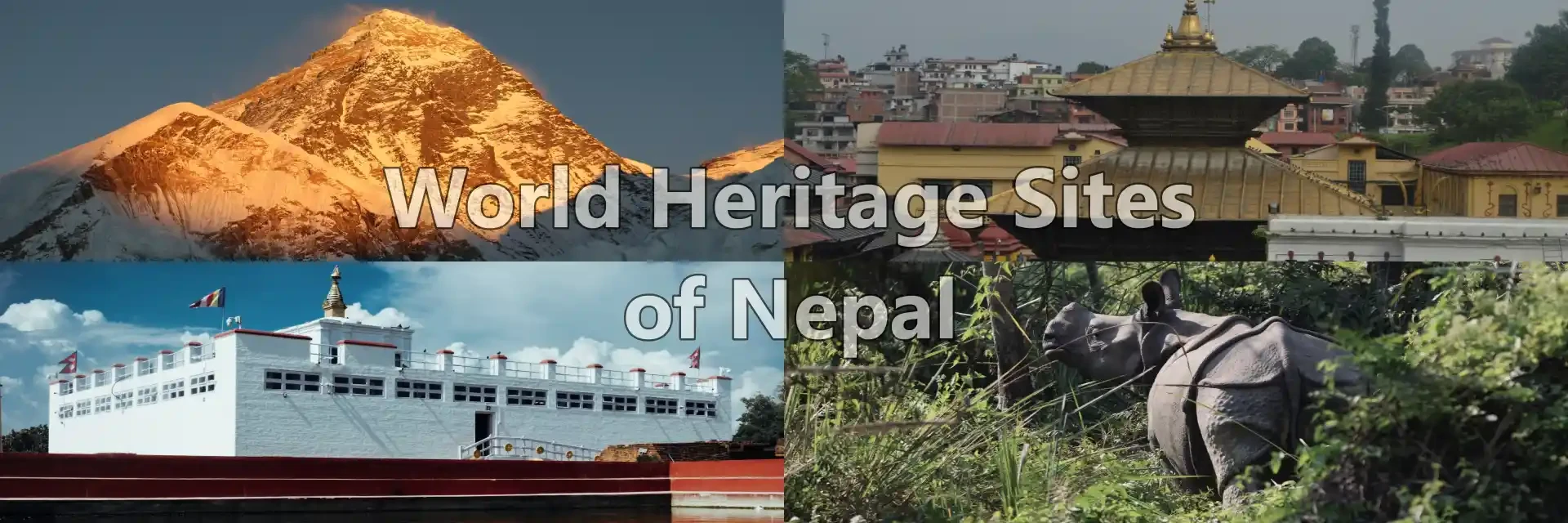
Ask three different websites how many UNESCO World Heritage Sites Nepal has and you’ll get two different answers: four, or ten. Both are right, which is exactly why the question keeps coming up and we’ll clear it up in the section below.
Nepal packs an unusual range into a small country. In a single trip you can stand in a medieval palace square, watch cremation rituals on a riverbank, walk into the birthplace of Buddha, and trek under the highest mountain on Earth. The ancient cities, sacred temples, Buddhist monuments, wildlife habitats and archeological remains have all earned Nepal an important place on the UNESCO World Heritage List.
Table of Contents
How many World Heritage Sites Are There in Nepal?
Nepal has four UNESCO World Heritage Sites. Two are cultural (the Kathmandu Valley and Lumbini) and two are natural (Sagarmatha National Park and Chitwan National Park). UNESCO official tally is four.
So where does “ten” come from? The Kathmandu Valley is a single listing, but it is made up of seven separate monument zones scattered across the valley. Count those seven individually alongside Lumbini, Chitwan and Sagarmatha and you land at ten. Tour operators and travel blogs often say “ten” because it matches what you actually visit on the ground. When you see “10 World Heritage Sites in Nepal” read it as four inscriptions, and ten places to go.
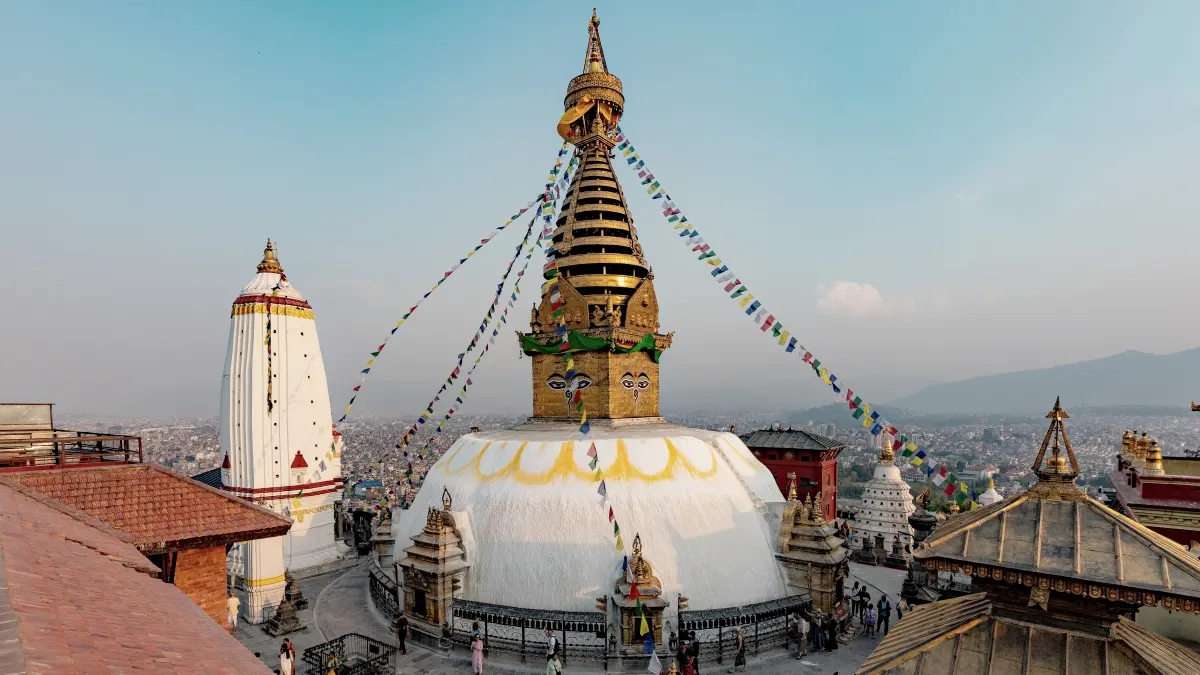
Swayambhunath Stupa at the hilltop
Nepal signed the World Heritage Convention on 20 June 1978, which made its sites eligible in the first place. The Kathmandu Valley and Sagarmatha were both inscribed in 1979, Chitwan followed in 1984, and Lumbini was added in 1997. Nothing new has been inscribed since, though Nepal keeps a long tentative list of future candidates.
Nepal’s World Heritage Sites at a glance
Site
Type
Location (district)
Year listed
Main draw
Kathmandu Valley (7 monument zones)
Cultural
Kathmandu, Lalitpur, Bhaktapur
1979
Temples, stupas & palaces
Sagarmatha National Park
Natural
Solukhumbu
1979
Everest, glaciers, Himalaya
Chitwan National Park
Natural
Chitwan
1984
Rhino, tiger, Terai wildlife
Lumbini
Cultural
Rupandehi
1997
Birthplace of the Buddha
Why do some sources say Nepal has 10 World Heritage sites?
It comes down to how you count the Kathmandu Valley. The Valley is one UNESCO property, but it contains seven monument zones:
Kathmandu Durbar Square (Hanuman Dhoka)
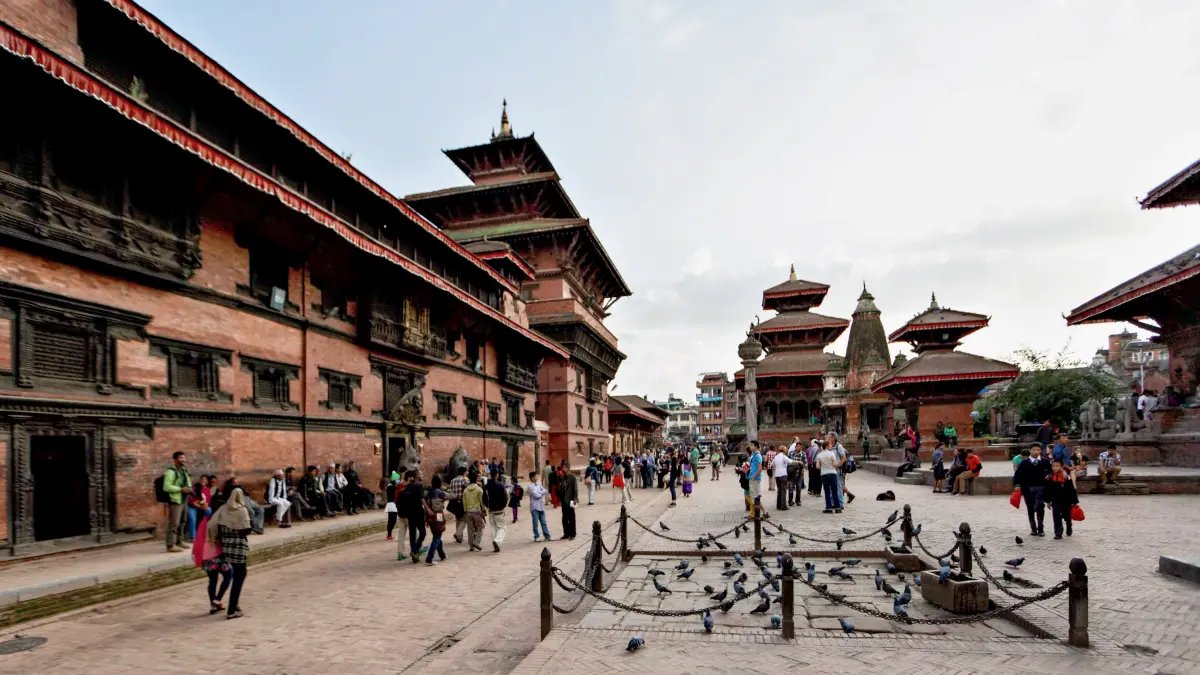
Patan Durbar Square (Lalitpur)
Bhaktapur Durbar Square
Swayambhunath (the “Monkey Temple”)
Boudhanath Stupa
Pashupatinath Temple
Changu Narayan Temple
Count those seven separately, then add Sagarmatha, Chitwan, and Lumbini, and the total becomes ten. UNESCO still lists the Kathmandu Valley as a single World Heritage property. Keep that distinction in mind whenever you’re looking for the “official” list. You can check UNESCO’s official website to confirm the number of sites it lists.
List of World Heritage Sites in Nepal
Nepal’s four heritage sites cover roughly 2,500 years of history and the full sweep of the country’s geography (from a Licchavi-era temple to lowland jungle to the foot of Everest).
Kathmandu Valley
The valley is the reason most people picture temples when they think of Nepal, and it does the heavy lifting on this list. Its seven monument zones sit within about a 20-kilometer radius, so you can realistically see all of them in a day or two. The valley’s heritage reflects centuries of Hindu and Buddhist traditions living side by side, expressed through its temples, stupas, courtyards, palaces and traditional Newar settlements.
Kathmandu Durbar Square
The old royal palace complex in the heart of the city, Kathmandu Durbar Square holds the Hanuman Dhoka palace and Kumari Ghar, home of the kumari (Nepal’s living goddess). Historic courtyards, temples, and traditional Newar architecture spread out from the square into the surrounding lanes.
Crowds at Kathmandu Durbar Square
Patan Durbar Square
Patan Durbar Square lies in Lalitpur, traditionally known as Patan, a city famous for its craftsmanship and metalwork.
The square is particularly notable for its temples and intricate architectural details. Krishna Mandir (temple), built in the shikara style, is one of its most recognizable landmarks.
Nearby, the Patan Museum provides additional insight into Nepal’s artistic and religious heritage.
Bhaktapur Durbar Square
Bhaktapur preserves one of the most atmospheric historic city centers in the Kathmandu Valley.
Its heritage architecture includes the 55-window Palace, Golden Gate and Nyatapola Temple. The surrounding lanes also reveal traditional brick buildings, courtyards, pottery traditions and local craftsmanship.
Unlike a quick monument visit, Bhaktapur is best experienced by walking through its historic streets and observing how heritage remains connected to everyday life.
Swayambhunath
Swayambhunath is a Buddhist stupa complex situated on a hill overlooking Kathmandu Valley.
It is commonly known to international visitors as the “Monkey Temple,” although its religious and historical significance goes far beyond the nickname.
The complex contains a major Buddhist stupa, shrines, temples, and religious imagery. UNESCO describes the Swayambhu monument zone as containing the oldest Buddhist monument (a stupa) in the valley.
Boudhanath
Boudhanath is one of the most recognizable Buddhist landmarks in Nepal.
The enormous white stupa and its surrounding monasteries create one of Kathmandu’s most distinctive cultural environments. The area has a strong connection with Tibetan Buddhist traditions and remains an important center of religious activity.
UNESCO identifies Boudhanath as the largest stupa in Nepal within the Kathmandu Valley World Heritage property.
Pashupatinath
Pashupatinath is one of Nepal’s most important Hindu religious sites.
Located beside the Bagmati River, the temple complex is dedicated to Lord Shiva and attracts pilgrims from Nepal and beyond.
The wider Pashupati monument zone forms part of Kathmandu Valley’s UNESCO World Heritage property. Non-Hindus cannot enter the main temple, but visitors can explore designated areas around the complex and observe the wider religious environment.
Changu Narayan
Changu Narayan is located on a hilltop to the east of Kathmandu Valley.
The temple complex is dedicated to Vishnu and is surrounded by a traditional Newar settlement. Its historical importance includes an early stone inscription dating to the fifth century AD, which UNESCO identifies as one of the notable features of the monument zone.
Because it is farther from central Kathmandu than several of the other monument zones, Changu Narayan can also be combined with a hike or a visit to nearby areas.
A note worth knowing: The 2015 earthquake badly damaged several of these monuments, especially in the Durbar Squares. Most have been restored or rebuilt, and reconstruction work is still visible in places. It doesn’t take away from a visit; if anything, it has become part of the story now.
Sagarmatha National Park
For many travelers, Sagarmatha is the most recognizable of Nepal’s World Heritage Sites. Sagarmatha is the Nepali name for Mount Everest, and this is the park that contains it, along with vast glaciers, deep valleys, and some of the most dramatic mountain landscapes on Earth. Established as a park in 1976 and inscribed by UNESCO in 1979, it covers roughly 1,148 square km of the high Khumbu region.
Why is Sagarmatha a World Heritage Site?
Its value comes from the combination of extraordinary high-mountain scenery, its biodiversity, and the long -established relationship between the environment and Sherpa culture. UNESCO specifically recognizes the park’s mountains, glaciers, and valleys, along with species such as the snow leopard, Himalayan tahr, and red panda. The Sherpa presence adds an important cultural dimension to the listing.
Is Mount Everest itself a UNESCO site?
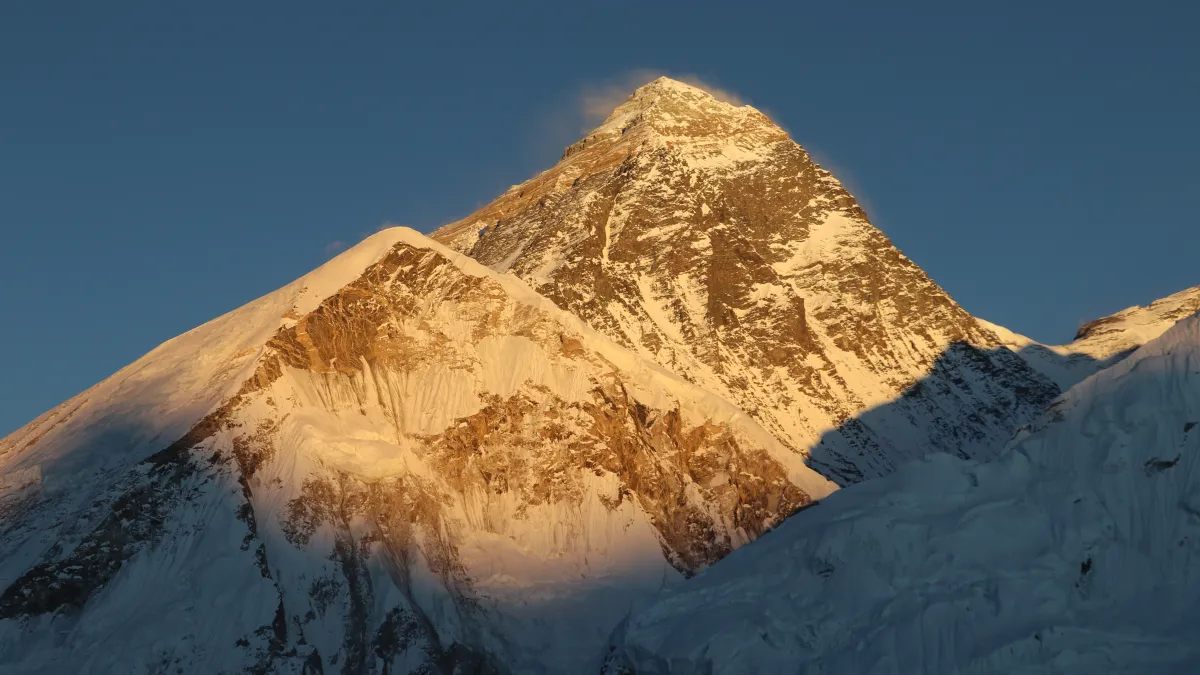
A common misconception is that Mount Everest is a separate UNESCO World Heritage Site. It isn’t. Everest sits within Sagarmatha National Park, and it’s the park that carries the World Heritage inscription, not the peak on its own. That distinction matters when you’re searching the official list.
Sunrise in Mount Everest
What can you see in the park?
You don’t need to attempt the Everest Base Camp trek to experience it. The classic Everest Base Camp trek runs through the park, but shorter routes to Namche Bazaar or Tengboche give you the scenery, the monasteries, and the thin mountain air without the full expedition. Along the way, you can take in Ama Dablam, Lhotse and Nuptse, the Khumbu Glacier, and Sherpa villages and monasteries as the landscape climbs toward the high Himalaya.
Chitwan National Park
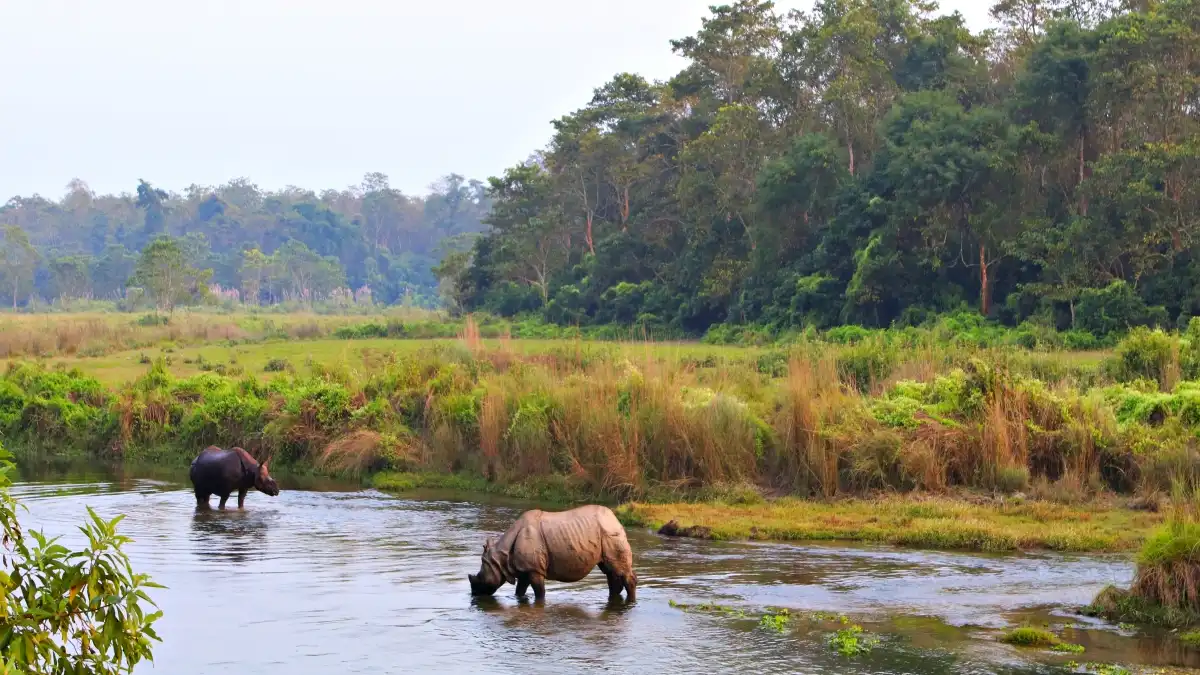
Nepal’s World Heritage sites aren’t limited to temples and mountains. Down in the subtropical Terai, Chitwan is a world away from the peaks and filled with sal forests, tall grassland and river channels that shelter genuinely rare wildlife. It became Nepal’s first national park in 1973 and joined the World Heritage List in 1984, protecting some 932 square km of forest, grassland and river habitat.
Why is Chitwan National Park a World Heritage Site?
Chitwan is internationally important for its biodiversity and its surviving Terai ecosystems. UNESCO notes that it holds one of the last populations of the greater one-horned rhinoceros and is an important refuge for the Bengal tiger, alongside exceptionally high overall species diversity.
Wildlife in Chitwan
No safari guarantees every sighting, but Chitwan offers the best chance in Nepal of seeing a greater one-horned rhino. The park is also home to Bengal tigers, wild elephants, gharial crocodiles, sloth bears, deer and more than 350 bird species. Most visitors base themselves in Sauraha and spend a couple of days on jeep safaris, canoe trips and guided walks, often paired with an evening Tharu cultural show.
Rhinos in Chitwan National Park
Lumbini, the Birthplace of the Buddha
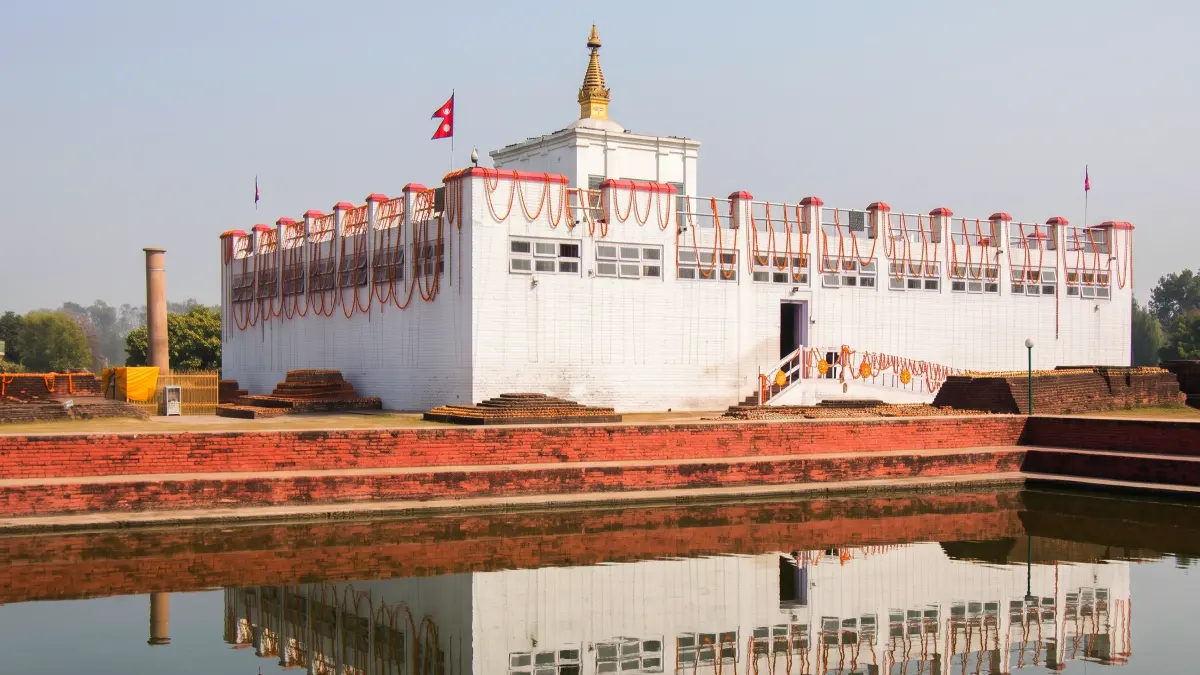
Lumbini sits in the flat Terai plains near the Indian border, a long way from the mountains, and it has a completely different energy from the busy valley. According to UNESCO, Siddhartha Gautama, the Buddha, was born in the sacred garden of Lumbini around 623 BCE. It was inscribed on the World Heritage List in 1997 and is one of the most important Buddhist pilgrimage destinations in the world.
Why is Lumbini a World Heritage Site?
Its importance is religious and archeological. The heart of the site is the Maya Devi Temple, which shelters a marker stone pinpointing the traditional birth spot, alongside ancient brick foundations, the Sacred Garden, the sacred Puskarini pond, and the remains of early monasteries and stupas.
The Ashoka Pillar, erected by Emperor Ashoka in the 3rd century BCE, carries an inscription that provides historical evidence for the site. Around the sacred garden, Buddhist nations from Thailand to Germany have built their own monasteries, so you can wander from a Burmese pagoda to a Chinese temple in a single afternoon. It rewards a slow, quiet visit.
What Makes Nepal’s World Heritage Sites Special
UNESCO inscribes a place only if it has what the Convention calls “Outstanding Universal Value” significance that reaches beyond national borders. What sets Nepal’s sites apart it that they are living, not frozen:
Living architecture: The Kathmandu Valley preserves some of the finest traditional Newar architecture, including temples, courtyards, palaces and stupas.
Hindu and Buddhist heritage side by side: Nepal’s heritage reflects centuries of two great traditions coexisting, often within the same square.
Himalayan landscapes: Sagarmatha protects one of the most dramatic high-mountain environments on the planet.
Wildlife and ecosystems: Chitwan safeguards a vital surviving stretch of Terai habitat for threatened species.
Buddhist pilgrimage: Lumbini connects visitors with one of the world’s major religions at its source.
People still worship at Pashupatinath, still cremate their dead on the banks of the Bagmati River, still circle Boudhanath every evening. That living continuity is part of what protection is meant to preserve and part of why visiting respectfully counts.
Entrance Fee for Nepal’s World Heritage Sites
Each Durbar square and each national park charges its own entrance fee, with lower rates for SAARC nationals and lower rates again for Nepali citizens. The figures below are indicative foreign-national rates to help you budget.
Site
Approx. foreign fee (NPR)
SAARC Nationals fee
Nepalese fee
Notes
Kathmandu Durbar Square
1,000
500
free
Ticket also covers Tribhuvan museums in the Square
Patan Durbar Square
1,000
500
30
Includes Patan Museum
Bhaktapur Durbar Square
1,800
500
free
Multi-day extensions available on request
Swayambhunath Stupa
200
50
free
Part of the Kathmandu Valley UNESCO property
Boudhanath Stupa
400
100
free
Part of the Kathmandu Valley UNESCO property
Pashupatinath Temple
1,000
1000. Free for Indian Nationals
free
Daily entry; tourists can view the temple from the back premises
Changu Narayan Temple
300
100
free
Part of the Kathmandu Valley UNESCO property
Lumbini
700
400
20
Birthplace of the Buddha
Chitwan National Park
2000 + 13% VAT
1000 + 13% VAT
150 + 13% VAT
Park entry fee per person
Sagarmatha National Park
3,000
1,500
100
Per person park entry fee for the Everest region
Best Time to Visit the World Heritage Sites of Nepal
There is no single “best month” for every site, because Nepal’s geography varies so much. As a rule, October to December is the best spot because of dry, clear skies and comfortable temperatures it offers across the valley, Chitwan, and the mountains.
Spring (March to May) is the other strong window, with rhododendrons in bloom in the hills. The monsoon (June to September) brings rain and cloud that can hide the peaks entirely, though the lowland cultural sites stay perfectly visitable.
Spring and autumn are the best time to visit Sagarmatha National Park and Kathmandu Valley because these seasons offer comfortable sightseeing, clear light, and are best for trekking and mountain views.
Maya Devi Temple in Lumbini
Autumn to Spring is the best time to visit Chitwan National Park and Lumbini because during these seasons the outdoor exploration becomes comfortable and you can avoid the summer heat of the Terai region of Nepal where these sites lie.
Site
Best window
Why
Kathmandu Valley
Spring and autumn
Comfortable sightseeing, clear light
Sagarmatha National Park
Spring and autumn
Best trekking and mountain views
Chitwan National Park
Autumn to Spring
Cooler, drier wildlife viewing
Lumbini
Autumn to spring
Comfortable outdoor exploration
Can You Visit All Four Sites in One Trip?
Yes, you can visit all four sites in one trip, but it depends on how much time you have and whether you want to include a Himalayan trek or not. The Kathmandu Valley, Chitwan, and Lumbini fold neatly into one compact cultural and wildlife loop. Adding Sagarmatha is a different commitment, because reaching the Everest region means a multi-day trek.
Sample 8-day Nepal Heritage Itinerary
Day 1: Arrive in Kathmandu. Settle in and get your bearings in the old city.
Day 2: Kathmandu heritage tour. Kathmandu Durbar Square, Swayambunath, Boudhanath, and Pashupatinath.
Day 3: Patan and Bhaktapur. Two more Durbar squares, plus Changu Narayan
Day 4: Kathmandu to Chitwan. Travel to the Terai and check into your lodge.
Day 5: Chitwan National Park. A full day of jeep safari, canoe, and guided walks.
Day 6: Chitwan to Lumbini. Transfer west to the birthplace of the Buddha.
Day 7: Explore Lumbini. Maya Devi Temple, Sacred Garden, Ashoka Pillar, and the monastic zone.
Day 8: Return or extend. Fly or drive back to Kathmandu, or continue your trip.
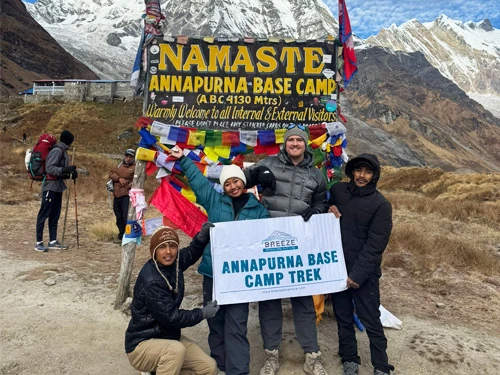
Want to add Everest? Allow significantly more time for a full Everest Base Camp trek, which normally takes around two weeks once acclimatization and return travel are included.
We can also arrange the Shorter Everest treks, which are a good alternative if you’re tight on days.
We can build any of this for you: a Kathmandu Valley cultural tour, a Chitwan jungle safari, a Lumbini pilgrimage, or a combined heritage-and-trekking trip.
Nepal’s UNESCO Tentative List: Sites That Could Be Next
A place on UNESCO’s Tentative List is not yet a World Heritage site. It’s an inventory of properties a country intends to consider for nomination. Beyond its four inscribed sites, Nepal keeps a tentative list of candidates. Some of the more notable ones:
Tilaurakot: the archaeological remains of ancient Kapilvastu, where the Buddha is believed to have spent his early life.
Panauti: A well-preserved medieval Newar town Southeast of the valley, known for the Indreshwar Mahadev temple.
Cave architecture of Muktinath Valley, Mustang: Thousands of ancient man-made caves cut into the cliffs of the upper Himalaya.
Ramagrama Stupa: Believed to be the only undisturbed stupa holding relics of the Buddha.
Sinja Valley: The medieval capital of the Khas kingdom and the cradle of the Nepali language.
Others: Gorkha palace complex, Khokana, Kirtipur, Sankhu, Nuwakot and Ram Janaki Temple also appear on the list.
Tentative status doesn’t guarantee inscription, and the list shifts over time, so treat it as a preview, not a promise. Places like Pokhara and Lo Manthang are sometimes called “UNESCO sites” loosely, but they are not on the official World Heritage List.
Conservation Challenges Facing Nepal’s Sites
World Heritage Status isn’t simply an award. The status brings responsibility for protecting the qualities that make a site significant. The main pressures are:
Earthquakes: the valley’s historic monuments are vulnerable to seismic damage. The 2015 earthquake caused extensive losses, making reconstruction a long-term priority.
Tourism pressure: Rising visitor numbers strain historic structures, waste systems, and infrastructure. UNESCO has specifically flagged managing tourism impacts at Sagarmatha, including carrying capacity and helicopter activity.
Climate change: Sagarmatha faces the wider effects of warming in high-mountain environments, which is a monitoring priority for ecosystems, wildlife and Sherpa communities alike.
Wildlife management: Chitwan’s conservation success sits alongside ongoing work on habitat protection, human-wildlife conflict and anti-poaching.
Protecting Lumbini’s remains: The ancient archaeology at Lumbini needs careful conservation against visitor impact and humidity.
How to Visit Nepal’s World Heritage Sites Responsibly
Small choices add up to real protection. A few that matter are:
Dress modestly at temples and follow any photography restrictions.
Don’t climb on monuments, carvings, or archaeological remains.
Follow the clockwise direction around stupas.
In Chitwan and Sagarmatha, stick with licensed guides and follow park rules.
Carry a reusable bottle and cut single-use plastic bottles.
Use local guides, lodges and responsible operators wherever you can.
Final Thoughts
Nepal has four UNESCO World Heritage Sites, which are often counted as ten thanks to the Kathmandu Valley’s seven monument zones. Two are cultural, and two are natural, and together they run from lowland jungle full of rhinos to the foot of Mt. Everest, by way of medieval palace squares and the birthplace of the Buddha.
If you want to visit only one, then make it the Kathmandu Valley. Because it packs the most into the least ground. But if you want the full range of Nepal’s culture and nature, it’s worth venturing out to the other three.
Planning a trip that combines heritage with trekking, wildlife, or pilgrimage? Breeze Adventure can build an itinerary around the experiences that matter most to you. Get in touch with us, and we’ll shape it around your dates and interests.
Frequently Asked Questions
Q. How many World Heritage Sites are there in Nepal?
Nepal has four properties on the UNESCO World Heritage List: the Kathmandu Valley, Sagarmatha National Park, Chitwan National Park, and Lumbini. Because the Kathmandu Valley contains seven monument zones, many sources count ten places in total.
Q. What are the “10 World Heritage Sites” of Nepal?
Nepal does not have 10 separate UNESCO properties. The figure of ten comes from counting the Kathmandu Valley’s seven monument zones individually, then adding Sagarmatha, Chitwan and Lumbini. UNESCO officially recognizes four.
Q. Which was Nepal’s First World Heritage Site?
The Kathmandu Valley and Sagarmatha National Park were both inscribed in 1979, the first year Nepal had any sites on the list.
Q. What is the most recent World Heritage Site added in Nepal?
Lumbini is the most recent World Heritage Site of Nepal, which was added in 1997. Nothing has been inscribed on the World Heritage Site from Nepal since.
Q. Which UNESCO World Heritage Sites are in Kathmandu?
The seven monument zones of the Kathmandu Valley property are Kathmandu Durbar Square, Patan Durbar Square, Bhaktapur Durbar Square, Swayambhunath, Boudhanath, Pashupatinath, and Changu Narayan.
Q. Is Mount Everest a UNESCO World Heritage Site?
Not on its own. Everest sits inside Sagarmatha National Park, which has been a UNESCO World Heritage Site since 1979.
Q. Are there natural World Heritage Sites in Nepal?
Yes, two of the four World Heritage properties of Nepal are natural World Heritage Sites. They are Sagarmatha National Park (home to Mount Everest) and Chitwan National Park in the lowland Terai.
Q. Which site is best for trekking?
Sagarmatha National Park, which takes in the Everest region and the most dramatic Himalayan landscapes.
Q. Which site is best for wildlife?
Chitwan National Park, Known for its greater one-horned rhinoceros, Bengal tiger, and rich birdlife.
Q. Is Lo Manthang a UNESCO World Heritage site?
Not yet. Lo Manthang is on Nepal’s Tentative List, which means it is being considered for nomination, but not yet inscribed.
Kishwor Adhikari is a passionate writer with a deep enthusiasm for trekking and adventure. His extensive travels across Nepal, exploring its diverse landscapes and hidden corners, have shaped his unique perspective on the country's natural beauty. With a wealth of first-hand experience in adventure trekking, Kishwor has become a trusted voice for fellow enthusiasts. Through his writing, he shares invaluable insights, offering practical advice and inspiration for both seasoned trekkers and novices alike. His dedication to sharing his journey and knowledge helps others discover the wonders of Nepal's wilderness, making his work an essential resource for anyone seeking adventure in the region.