The Pashupatinath Temple, with spiritual air, touches your skin as you first step through the gates. It carries a heavy, ancient weight, acting as a sensory slap that wakes up every nerve in your body. Yes, you are immediately met by the thick, sweet scent of marigold garlands and burning sandalwood. But then comes the sharper, grounding smell of woodsmoke from the funeral pyres. It’s a strange mix, but it feels honest. This is a strong spiritual site as well as the most precious world heritage site in Kathmandu.
The place is one of the most sought-after temples of Kathmandu Valley that purifies the soul. Here, the crowd and the constant ringing of bronze bells cut through the air as devotees offer their prayers. This is not just a quiet monument of cold stone and history. Instead, the Pashupatinath Temple Kathmandu is a living, breathing entity. It pulses with the rhythm of daily life and the quiet finality of death. Literally all happening side by side on the banks of the Bagmati River.
Pashupatinath Mandir Nepal stands as the ultimate pilgrimage site for Hindus worldwide. Thousands of people travel here every year to find peace, seek blessings, or simply witness the raw cycle of existence. In the heart of Kathmandu, the temple stands as a hope and a source of resilience for all.
Table of Contents
Pashupatinath Temple Kathmandu location
Pashupatinath Temple is loacted in the heart of Kathmandu
Finding your way to the Pashupatinath Temple Kathmandu is surprisingly easy. Even if the city feels like a beautiful maze, the popularity makes it easy to access. Here is the practical side of getting to this sacred spot:
Finding the Heart: You will find the Pashupatinath Temple sitting right on the banks of the holy Bagmati River. It’s located in the eastern part of the city, incredibly close to Tribhuvan International Airport. If you are just landing, you can actually see the temple complex within a ten-minute drive.
The Near Me Factor: Search for a Pashupatinath temple near me while staying in Thamel or Bauddha. A quick taxi from Thamel or a 20-minute rickshaw ride from Bouddha will get you there. Most local drivers know the route by heart, so you won't need to stress over a map.
Entry Fees & Access: Like many major sites in the capital, there is a tiered entry system. Foreigners usually pay around NPR 1,000, while visitors from SAARC nations get a discounted rate. Remember to keep your ticket handy, as there are various checkpoints around the large complex.
Pick Your Vibe: Timing is everything when visiting Pashupatinath in Nepal. If you crave a moment of quiet reflection and want to see the morning mist rise off the river, arrive at dawn. However, if you want to feel the electric energy of the crowds and the fire, come at dusk for the Aarti ceremony.
A Small Tip: Non-Hindus aren't allowed inside the main Pashupatinath Mandir Nepal courtyard, but don't let that stop you. The best views and the most soulful observations happen from the terraces across the river. Even 1 day Kathmandu Valley sightseeing tour includes this temple as one of its top priorities.
What is the story of Pashupatinath Temple?
The history of this place is like an onion; the more you peel, the more you find. Here are some of the interesting picks from the past. Have a look:
Babaji in Pashupatinath Temple seeking moksya (liberation)
Magic since the 4th Century
Do you know that the current structure of the temple was rebuilt in the 17th century by King Bhupatindra Malla? Yes, a rebuild was necessary as termites ate the original wood. Further, the records show that the Licchavi Dynasty kings ruled over 1,500 years ago. And they were the ones who truly put this sacred ground on the map.
They literally transformed it from a simple shrine into a massive center of power. It’s fascinating to think that while empires rose and fell across the world, people were standing on these same riverbanks, praying to the same deity, since at least 400 CE.
Pashupatinath Seal
One of the most mind-bending things you'll hear about the place is the connection to the ancient Indus Valley. Archaeologists often talk about the Pashupatinath Seal. It is a tiny artifact found hundreds of miles away in Mohenjo-daro. This depicts a figure sitting in a yoga pose, surrounded by wild animals like tigers and elephants.
This "Proto-Shiva" shows that the idea of the "Lord of Animals" is one of the oldest religious concepts in human history. It reminds us that Pashupatinath in Nepal isn't just a local god; he represents a prehistoric respect for all living creatures. Yes, he is a protector who watches over the bipeds and quadrupeds alike.
Nepalese Pagoda Style
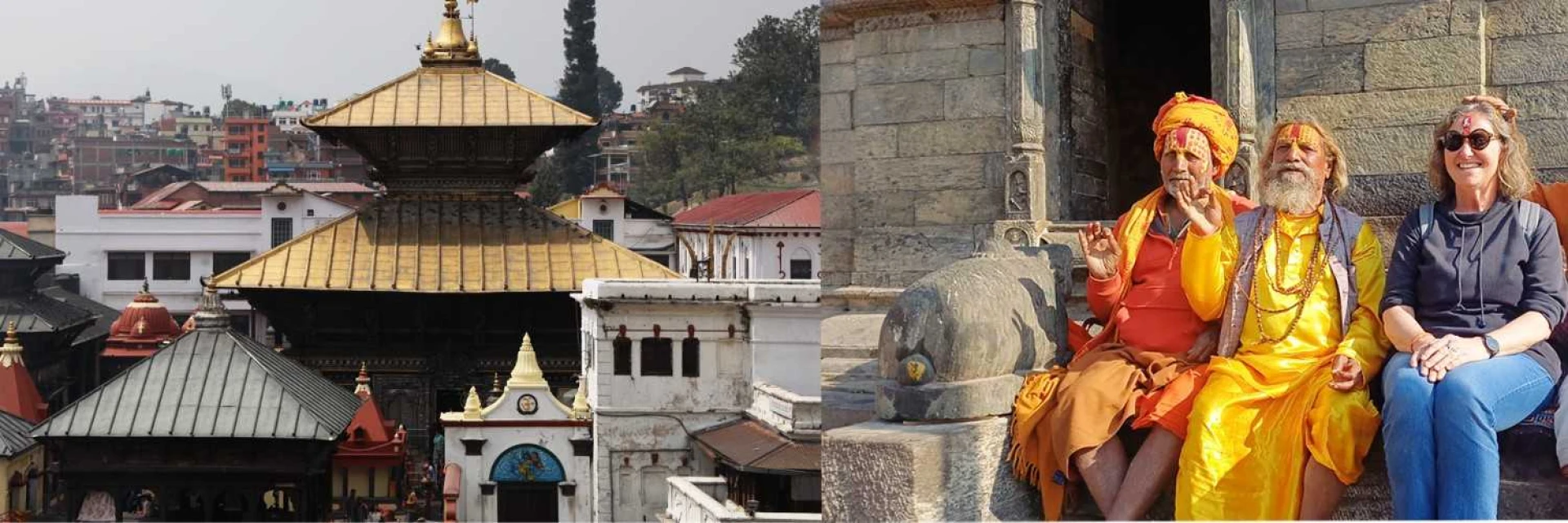
When you look at the temple itself, you’re seeing the absolute peak of the Nepalese Pagoda style. Similarly, the main building is a two-tiered masterpiece with a heavy, gilded gold roof that glows like a second sun during the afternoon. As you walk around the perimeter, you’ll notice the massive silver-plated doors that guard the inner sanctum.
There is unique craftsmanship on the outside, the intricate wood carvings of deities, and the sheer scale of the gold pinnacle. These tell everything you need to know about the importance of the Pashupatinath Mandir Nepal. Yes, it is a perfect blend of artistic beauty and raw, spiritual power.
Pashupatinath Mandir Myths and Legends
Pashupatinath Area is surrounded by many other temples besides the Shiva temple. But the question is, why Shiva, and what was the origin of this story? Here are some famous myths and legends to talk about the origin of this divine power:
The Legend of the Deers
The legends here are as thick as the incense smoke, and my favorite one starts in the lush Mrigasthali forest across the river. Long ago, Lord Shiva and his wife Parvati were so enchanted by the beauty of the Bagmati banks. And they took the form of two graceful gazelles to wander freely. The divine pair didn't want the responsibilities of the heavens; they just wanted the peace of the woods.
When the other gods finally tracked them down and tried to pull Shiva back to his duties, he leaped across the river. Legend says one of his horns broke into three pieces during the struggle. And that very spot became the foundation for this spiritual temple in Kathmandu.
The Discovery
Centuries later, the divine presence was rediscovered in a way that feels like a true folk tale. A local herdsman noticed that his most prized cow, the wish-fulfilling Kamadhenu, was acting strangely. Every day, she would wander to a specific grassy mound and start showering it with her milk, as if she were feeding the earth itself. Curious and a bit confused, the villagers eventually dug into the soil at that exact spot.
To their amazement, they uncovered a glowing stone lingam, the symbol of Shiva. This discovery is why the Pashupatinath Mandir Nepal sits exactly where it does today. It marks the spot where the earth literally gave back what was hidden.
The Divine Manifestation
There is also a beautiful connection that ties the Himalayas together across borders. Many devotees believe that the Pashupatinath in Nepal is actually the "Head" of the sacred bull, Nandi, while the famous Kedarnath temple in India represents the "Hump." This makes the two sites part of one massive, divine body spanning the mountains.
It’s a powerful thought for a traveler; it means that when you stand here in the heart of Kathmandu, you aren't just at a single building. You are at the very crown of a spiritual landscape that connects millions of people across the entire mountain range.
Pashupatinath Temple Experience: Rituals, Festivals, and Daily Life
To truly understand this temple in Kathmandu, you have to see it in motion. It isn’t just a place where people pray; it is a place where they celebrate, mourn, and surrender to the universe, often all in the same breath.
The Great Night: Maha Shivaratri
If you happen to be in Kathmandu during February or March, you will witness the city’s energy shift entirely. Maha Shivaratri is the ultimate festival at this Temple. This draws over a million devotees and thousands of Sadhus (holy men) from across Nepal and India. Walking through the crowds, you’ll see Naga Babas covered in sacred ash and pilgrims. They travel for weeks just to catch a glimpse of the deity.
Further, the air vibrates with the chant of "Om Namah Shivaya," and as night falls, the entire complex glows with the light of a hundred thousand oil lamps. It is loud, crowded, and overwhelming, yet there is a deep, underlying peace. This eventually makes you feel like you are part of something much bigger than yourself.
The Dance of Fire: Bagmati Aarti
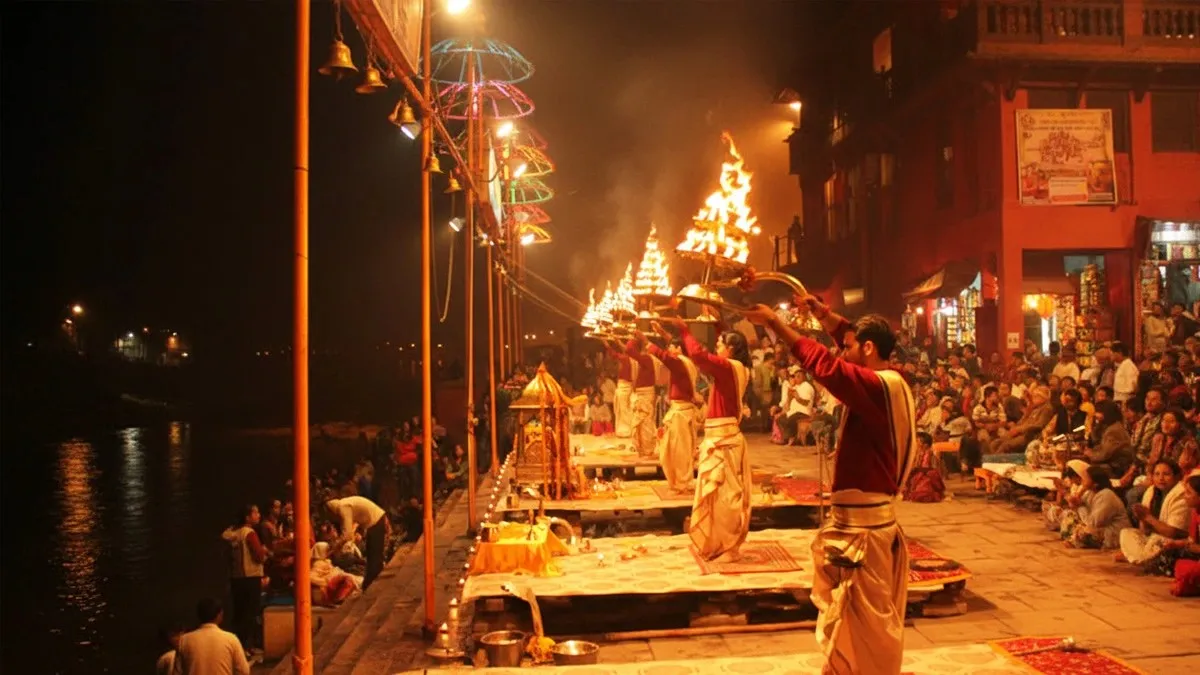
Divine Sandhya Arti on the bank of Bagmati River
Every evening as the sun dips below the horizon, the banks of the river transform for the Bagmati Aarti. This isn't just a ritual. Actually, it’s a performance of pure devotion. Three priests stand in synchronized harmony. Then, they wave massive brass lamps with fifty-four flickering wicks. The sound of bells, flutes, and cymbals fills the air. You feel the rhythm starting slow and building into a powerful "Tandav" dance.
This is literally a tribute to Shiva’s cosmic dance of creation and destruction. Sitting on the stone steps across the water, you feel the heat from the flames and the collective heartbeat of the crowd. It’s a moment where the "human" and the "divine" feel like they are finally speaking the same language.
The Heavy Truth: Life and Death at Arya Ghat
Just a few steps away from the music of the Aarti, you encounter the "heavy truth" of Pashupatinath in Nepal. Along the river at Arya Ghat, open-air cremations happen daily, in full view of the public. As a traveler, seeing the smoke rise from the funeral pyres can be a sensory shock, but it is never meant to be voyeuristic.
In Hindu culture, death is not hidden behind closed doors; it is faced openly as the final transition of the soul. Watching families wash the feet of their loved ones in the Bagmati before the final fire is a deeply humbling experience. It strips away the trivial worries of travel and leaves you with a profound respect for the cycle of life. Also, it is the most "human" part of the temple. A quiet reminder that every beginning has an end, and there is beauty in that honesty.
Lumbini Pilgrimage Tour in Nepal also talks about peace and liberation. This is a strong spiritual hub for your refreshment.
Fascinating Facts & Hidden Corners
Beyond the main rituals, this spiritual site is full of quiet corners and strange, beautiful details. You only notice these if you slow down. Further, the temple is a place that rewards the curious traveler who looks past the golden roofs.
The Sadhus: Living Art and Ancient Souls
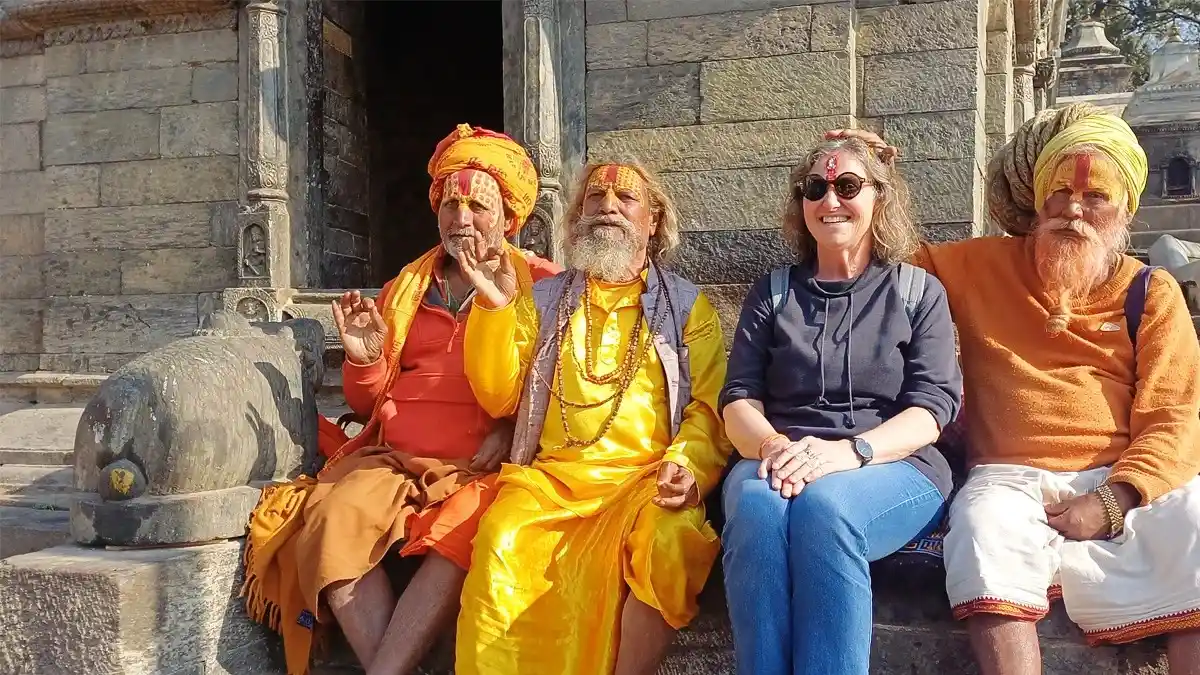
Foreigner seeking blessing of Holy Babas
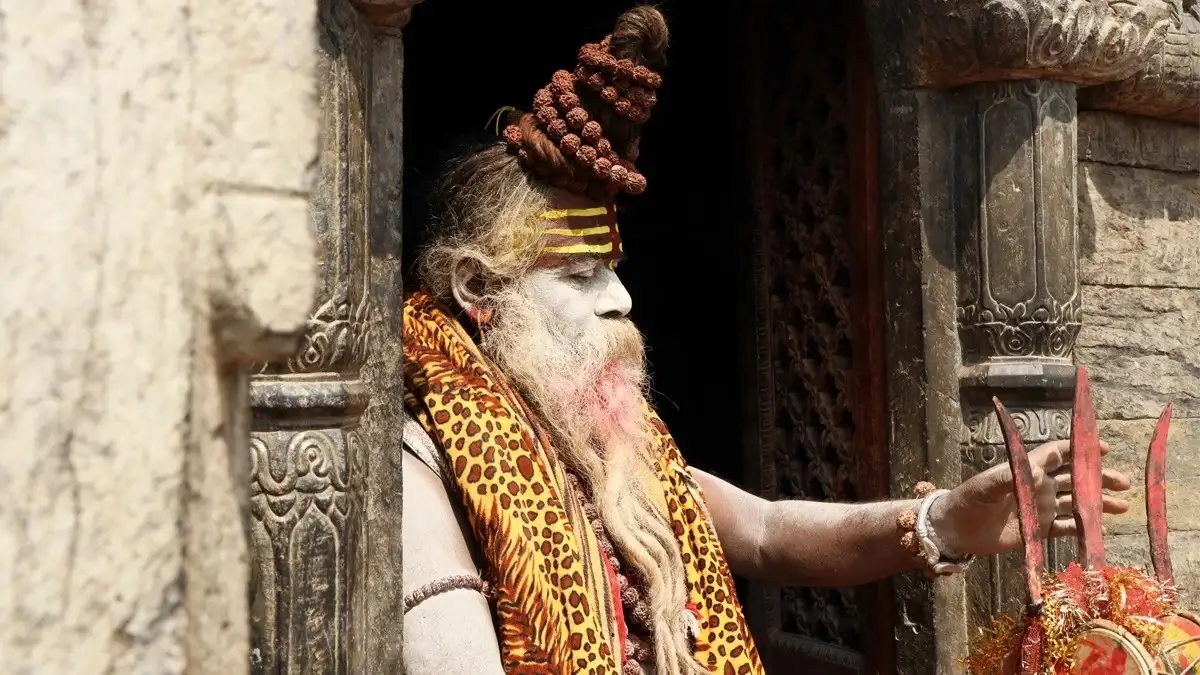
As you wander the stone courtyards, you will definitely notice the Sadhus. These are holy men who have left behind their families, homes, and worldly possessions to dedicate their lives to Lord Shiva. They possess long, tangled dreadlocks, bright orange robes, and faces painted with sacred ash. Literally, they look like figures from another century.
Most are very friendly and may offer you a blessing or a "tika" (the red mark on the forehead). If you want to take a Pashupatinath picture of them, just be a decent human and ask first. They usually expect a small tip in return, as they survive entirely on donations. It’s a small price for a memory of such a vibrant soul.
You can experience these things anytime in this temple. You don't have to worry about when is the best time to visit Nepal, unlike Himalayan treks. You can explore the temples of Kathmandu Valley throughout the year.
Shamanic experiences in Pashupatinath Temple
Just wander through the Pashupatinath temple grounds after dark. You will see the air starts to feel heavy and electric. It's definitely not your typical prayer service. This is the raw, unfiltered world of shamanic experiences and Tantric rituals that have stayed the same for centuries.
In the dead of night, you’ll see Dhami Jhankris (local shamans) and Aghori sadhus performing things that are honestly pretty shocking. Some of them actually meditate right in the smoke of the cremation pyres at Arya Ghat to face the reality of death head-on.
These late-night dedications are intense, with loud drumming used to trigger a trance called Devta Chadnu. Here, they believe a spirit literally takes over their body to heal people or see the future. These divine practices follow the "Left-Hand Path" (Vamachara), using secret mantras and even human skulls (Kapalas). This is believed to reach a total "ego death" before the fierce god Lord Bhairava.
It’s why so many people search for "Aghori rituals at Pashupatinath", it’s not just a tradition, but a wild, ancient science of energy. This literally makes this place the ultimate hub for shamanic healing and Tantric mysticism. Mostly Nepali people from various ethnic groups perform this. But few tantriks are from India also.
The Four Faces of the Mukhalinga
At the very center of the main mandir, hidden from non-Hindu eyes, sits the legendary Mukhalinga. This isn't just a simple stone; it is a one-meter-high lingam with four distinct faces carved into it. Interestingly, each face looks toward a cardinal direction. Each face represents a different aspect of Shiva, like the "Lord of Animals" or the "Protector."
There is even a fifth "invisible" face on top that represents the formless space of the universe. Even if you can't see it up close, knowing it’s there adds a layer of mystery to the temple. It feels like the building itself is watching over the entire city of Kathmandu, protecting it from every side.
The "Unseen" Advantage
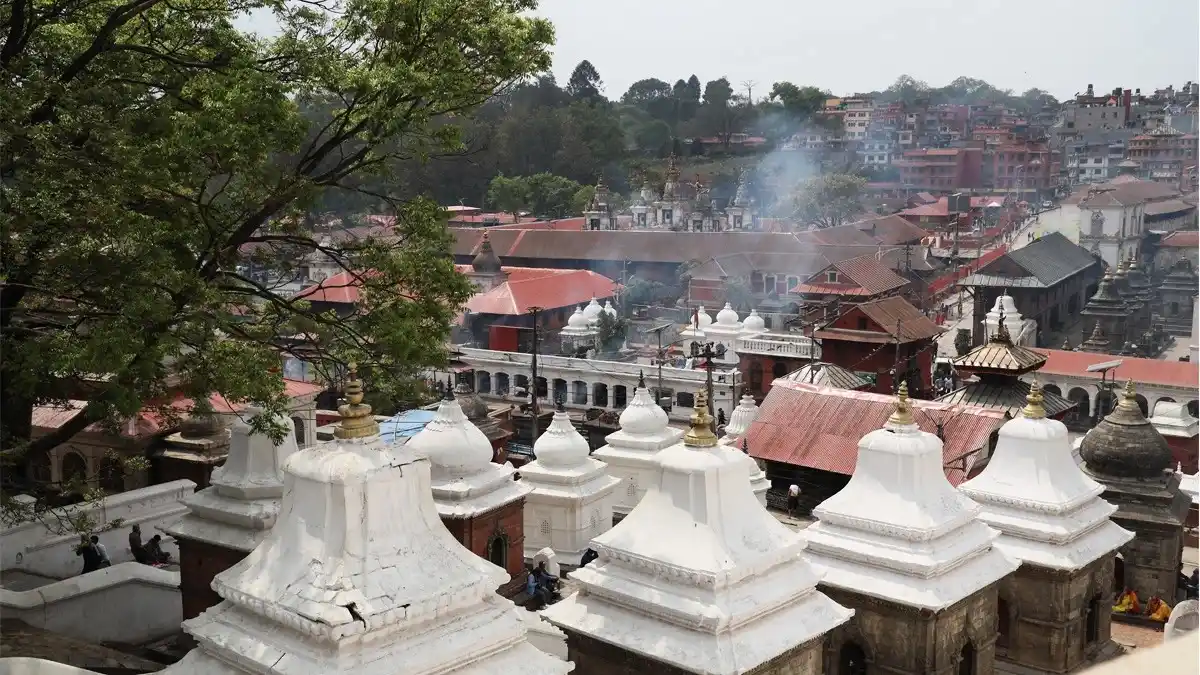
It is true that non-Hindus cannot step into the inner courtyard of the Pashupatinath Temple, but here is a little secret. The view from the other side of the Bagmati River is actually better. Kindly cross the small footbridge and climb the stone stairs of the Sleshmantak forest. There, you get a bird's-eye perspective of the entire complex.
From here, you can see the gilded roofs shining, the smoke rising from the ghats, and the tiny figures of people performing rituals all at once. It gives you a sense of the scale and the chaos of this sacred place that you simply can't get from standing right in front of the temple. Plus, it's much quieter up there, just you, the old stone shrines, and a few curious monkeys.
People also prefer Pungyen Gompa as another spiritual hub in the Manaslu Region. This is both an adventure and a spiritual retreat in the Himalayas.
Essential Tips for the Respectful Traveler
To make your visit to the Pashupatinath Mandir Kathmandu as smooth as possible, you need to navigate a few local unwritten rules. This isn't just about following the law; it’s about showing the kind of respect that opens doors.
Dress for the Divine
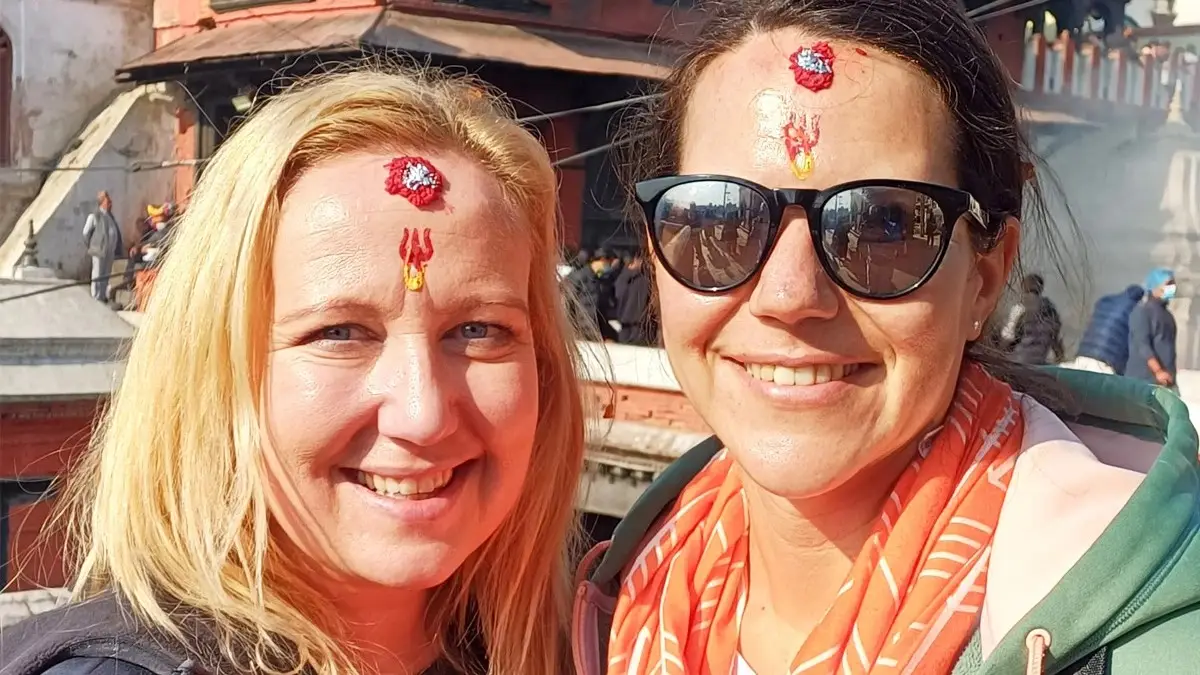
Happy Tourists with traditional tika
When you visit any sacred site in Kathmandu, modesty is your best friend. Both men and women should ensure their shoulders and knees are covered. A light scarf or a long-sleeved shirt works wonders in the heat. But here is the kicker: leather is a big no-no. Because the cow is sacred, items like leather belts, watch straps, or camera bags are often prohibited inside the temple premises.
You’ll see plenty of people leaving their shoes and leather gear in lockers at the entrance. It’s a small adjustment that shows you truly value the local traditions of the place. No doubt, Nepal is the perfect place for spiritual and yoga retreat tours.
The Monkey Business
Let's talk about the local residents: the Rhesus macaques. They are as much a part of the Pashupatinath Temple as the priests, but they are significantly more mischievous.
The Golden Rule: Never, ever carry visible food or plastic bags that sound like they contain food. They have "super-hearing" for a crinkling snack bag.
Eye Contact: Avoid staring them down. To a monkey, a long gaze is a challenge, not a friendly hello.
Shiny Objects: Keep your sunglasses on your face and your phone tucked away. If it glitters, they might decide it belongs to them. Just remember: you are a guest in their home, so give them plenty of space.
Finding a Real Voice
While it is tempting to just wander around, hiring a guide for this mandir is one of the best investments you can make. The iconography here is incredibly complex; every statue and carving has a story that goes back millennia.
How to spot a pro: Look for a licensed guide with an official ID badge from the Tourist Guide Association of Nepal (TURGAN). Or the one verified by the Nepal Tourism Board.
The Cost: Expect to pay around NPR 1,500 to 1,700 ($8-$12 USD) for a personalized tour.
Why it matters: A good guide won't just list dates; they will explain the "why" behind the rituals at the ghats. They help you navigate the crowds during a festival like Shivaratri. It turns a "pretty walk" into a deep, cultural education. They will guide you best with the culture and food tour Nepal. Your journey in this religious place will be both fun and fascinating.
Breeze Adventure helps you plan your Pashupatinath visit smoothly, along with Himalayan trekkings in Nepal. This will be an ultimate refreshment and a lifetime of memories.
Conclusion
Leaving the gates of Pashupatinath Temple Nepal, you carry away more than just memories. Yes, you will be sufficient with a piece of the city's ancient, vibrating soul. It is a rare place where the "extraordinary ordinary" unfolds right before your eyes. You will see that life and death are not opposites, but neighbors. This visit makes you leave Kathmandu with a deeper understanding that every moment is sacred and every ending is merely a new beginning in the great cycle of existence.
Frequently Asked Questions about Pashupatinath Temple
Can non-Hindus enter the main Pashupatinath Temple?
No, only practicing Hindus are allowed inside the main golden-roofed temple. However, travelers of all backgrounds can explore the massive complex of surrounding shrines. They can witness the riverbanks and the terraces across the Bagmati River for a perfect view of the main structure.
What is the entry fee for Pashupatinath Temple in 2026?
The entrance fee for foreign tourists is NPR 1,000, while Indian and Nepalese citizens enter for free. SAARC nationals often receive a discounted rate, but you should always carry your passport. Also, don’t forget to keep your ticket handy to access different parts of the complex.
What is the best time to see the Bagmati Aarti?
The evening Aarti ceremony usually begins between 6:00 PM and 7:00 PM, depending on the season and the sunset. To get a good seat on the stone steps across the river, it is best to arrive by 5:30 PM. With this, you can experience the full atmosphere as the priests prepare the lamps.
Is it okay to take pictures of the cremation ceremonies?
While photography is allowed in most outer areas of the complex, taking photos or videos of the funeral pyres at the cremation ghats is considered strictly disrespectful. It is best to put your camera away during these moments out of respect for the grieving families and the sanctity of the ritual.
How far is Pashupatinath Temple from Kathmandu Airport?
The temple is located just 3 to 4 kilometers from Tribhuvan International Airport, which is about a 10-minute drive. Because of this proximity, it is a great first or last stop for travelers who have limited time in the city.
What is the significance of the Pashupatinath Seal?
This seal is a famous archaeological artifact found in the Indus Valley. It depicts a "Proto-Shiva" figure surrounded by animals. This historical link suggests that the worship of Shiva as the "Lord of Animals" is one of the oldest religious traditions in human history. It predates the temple's current stone walls.
Are there dress code requirements for visitors?
Yes, visitors are expected to dress modestly by covering their shoulders and knees. Additionally, because cows are sacred, leather items (like belts or bags) are often prohibited inside certain areas. Hence, it is safer to leave your leather gear at your hotel or in a secure locker at the entrance.
When is the best time of year to visit Pashupatinath?
The best time to visit Pashupatinath is throughout the year. But you can visit it during the dry season from October to December, when the weather is clear and pleasant. However, if you want to witness the temple at its most energetic, visit during the Maha Shivaratri festival (February/March), though you should be prepared for massive crowds.
Kishwor Adhikari is a passionate writer with a deep enthusiasm for trekking and adventure. His extensive travels across Nepal, exploring its diverse landscapes and hidden corners, have shaped his unique perspective on the country's natural beauty. With a wealth of first-hand experience in adventure trekking, Kishwor has become a trusted voice for fellow enthusiasts. Through his writing, he shares invaluable insights, offering practical advice and inspiration for both seasoned trekkers and novices alike. His dedication to sharing his journey and knowledge helps others discover the wonders of Nepal's wilderness, making his work an essential resource for anyone seeking adventure in the region.