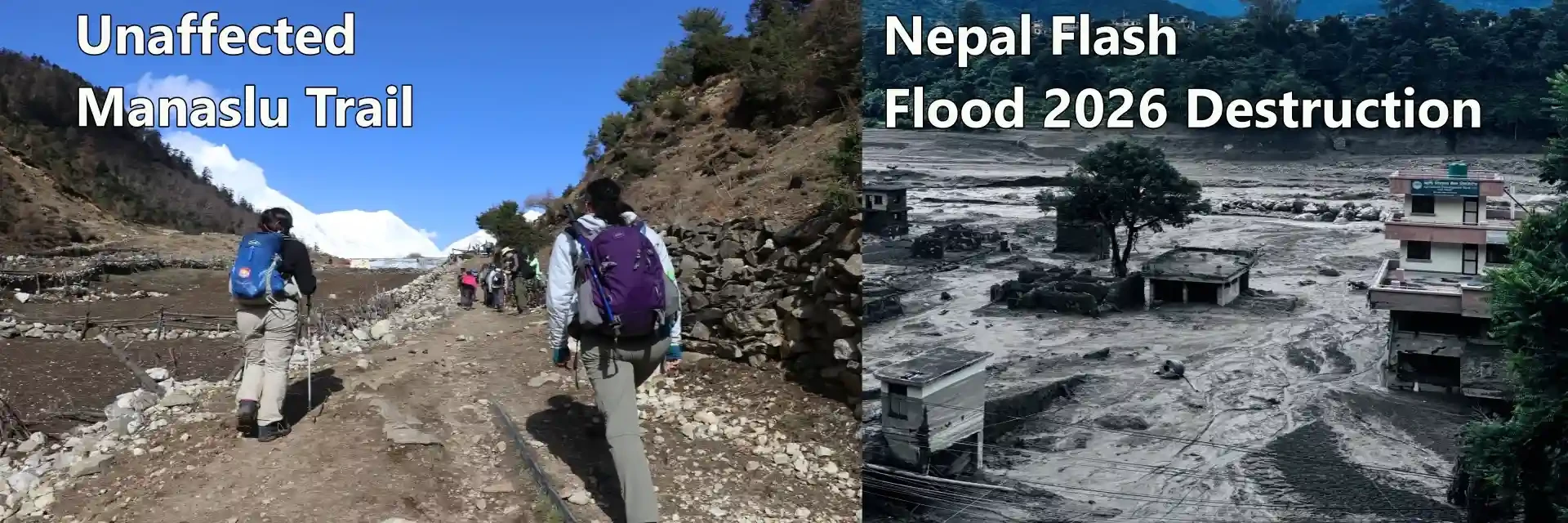
Last updated September 6, 2026. The trail itself is fine. Only the drive to the trailhead has a temporary detour. Your operator will confirm the day's best routing. This page explains what's going on so you can travel relaxed.
Let’s put your mind at ease.
You don’t have to worry if you have an upcoming Manaslu Circuit trek and are stressing that the flood ruined everything because it didn’t. The actual trail is one hundred percent fine, and your trip is absolutely still on. The only thing the high water messed up is a piece of the road you take to get to the trailhead, and there is a reliable detour that takes you to the trailhead. The detour is slightly longer, rerouted drive in, and then the same magnificent circuit you signed up for.
The Manaslu Circuit is located within the Budi Gandaki Valley in the Gorkha district, operating on an entirely different river system from the flooded zone. No water, mud, or debris affected any part of the walking route. Every single trekking stage remains perfectly intact, including Machha Khola, Jagat, Deng, Namrung, Lho, Samagaon, the Dharmasala high camp, the Larky La Pass, and the descent down to Bimthang and Dharapani.
Additionally, both the Tsum Valley and the Nubri villages are completely unaffected. So, this was never a safety question about the trek. It's just a question of how the jeep gets you to the start.
Table of Contents
The drive in: What happened, and why it’s manageable
You always start a Manaslu trek with a long road trip, covering roughly 160 km and taking about 8 to 10 hours to get from Kathmandu to Machha Khola. This route traces the Prithvi Highway corridor, which is precisely where the flooding left its mark. Downstream surges tore up a section of the main highway. The most significant damage happened at the Krishna Bhir landslide in Dhading because the raging Trishuli River undercut the asphalt. Additionally, a local bridge near Malekhu on the way to Dhading Besi was knocked out by the high water.
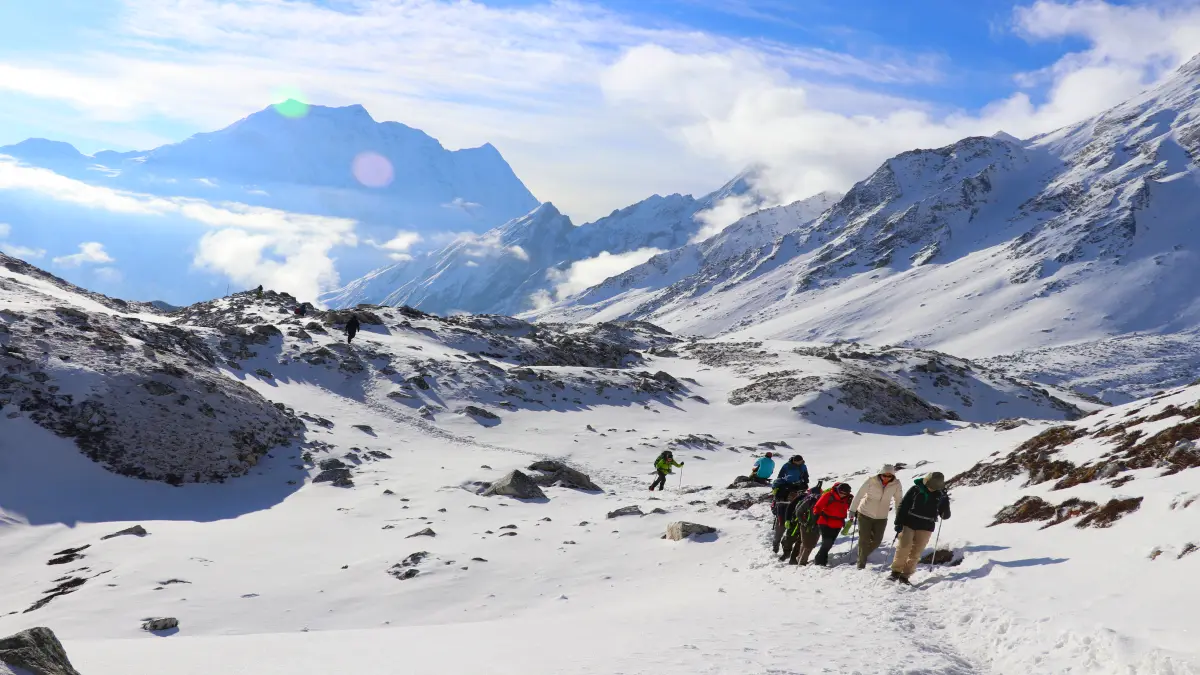
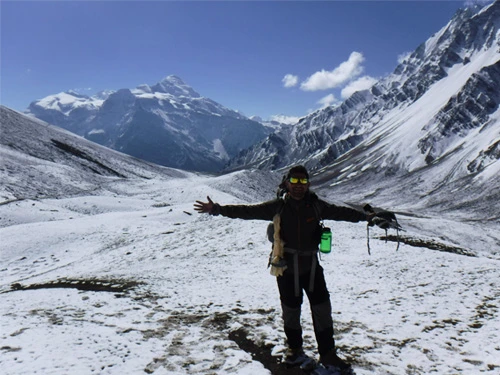
Trekkers in Manasu Circuit Trek
Here is why this is a minor logistical hurdle rather than a reason to worry: The trail itself is completely untouched, road crews are already working hard on repairs, and drivers can easily route around the damaged spots. Work is moving fast, and the highway is expected to be running normally long before the peak autumn window opens. If you are planning on an October departure like many other trekkers, the drive to the trailhead should be completely back to normal by the time you arrive. For those leaving sooner, operators have excellent backup options in place.
Your alternative routes to the trailhead
There is more than just one route into Manaslu, which is exactly why a damaged road on one side doesn’t bring the whole trek to a standstill. Depending on what the road conditions look like each day, here is how operators are safely getting trekkers out to Machha Khola:
The Galchhi-Dhading Besi route: From Kathmandu City, vehicles turn off at Galchhi and cross the Trishuli there, reaching the Dhading Besi side, then continue north through Arughat and Soti Khola to Machha Khola. This keeps the drive moving while the main highway points are repaired.
The Gorkha route (the reliable fallback): Kathmandu to Abu Khaireni to Gorkha to Arughat to Soti Khola to Machha Khola. This route stays on the highway further west before turning north through Gorkha Bazaar, neatly avoiding the damaged Malekhu-Dhading Besi stretch altogether. It’s a little longer, but it’s a proven, comfortable way in, a good choice while things settle.
The standard direct route:Kathmandu to Malekhu to Dhading Besi to Arughat to Soti Khola to Machha Khola, comes back into play as the highway repairs firm up, and may well be the one you use if your trek is later in the season.
The main takeaway is clear: There is always an open route, and navigating those logistics is your operator’s responsibility, not yours. Ultimately, you will likely just experience a somewhat longer or rougher drive at the start before stepping onto the untouched trail.
Why being on a Manaslu trek actually works in Your Favor here
Manaslu is a restricted-area trek, which means you’re legally required to travel with a licensed guide, in a group of at least two, on permits arranged through a government-registered agency. That might sound like extra paperwork, but it is actually a huge plus under current conditions. It means you have an expert team keeping tabs on the roads for you. They are checking updates every day, sorting out the best drive-in, and handling the logistics so you don’t have to stress over any of it.
To ensure a smooth journey, please complete two brief tasks with your operator: confirm their chosen route and verify the expected drive time for your specific dates. And let them build in a little buffer because an extra half-day of slack for a rerouted or one-way section is smart this time of year. Opting for a private jeep instead of a local bus will also grant you greater flexibility if road conditions change. Your permits, teahouses, guide, and the trek itself are all completely unaffected.
Beyond the flood: the things that always shape a Manaslu trek
To give you complete context, these are the standard conditions for this trek that are entirely unrelated to the flood. The exact points any transparent operator would point out in any typical year.
The lower approach road after Arughat, and the gorge sections between Soti Khola and Jagat, run through natural landslide terrain, so late-monsoon rain can cause landslides and delays there regardless of this event. As autumn comes, things dry out and settle, making it easier to pass.
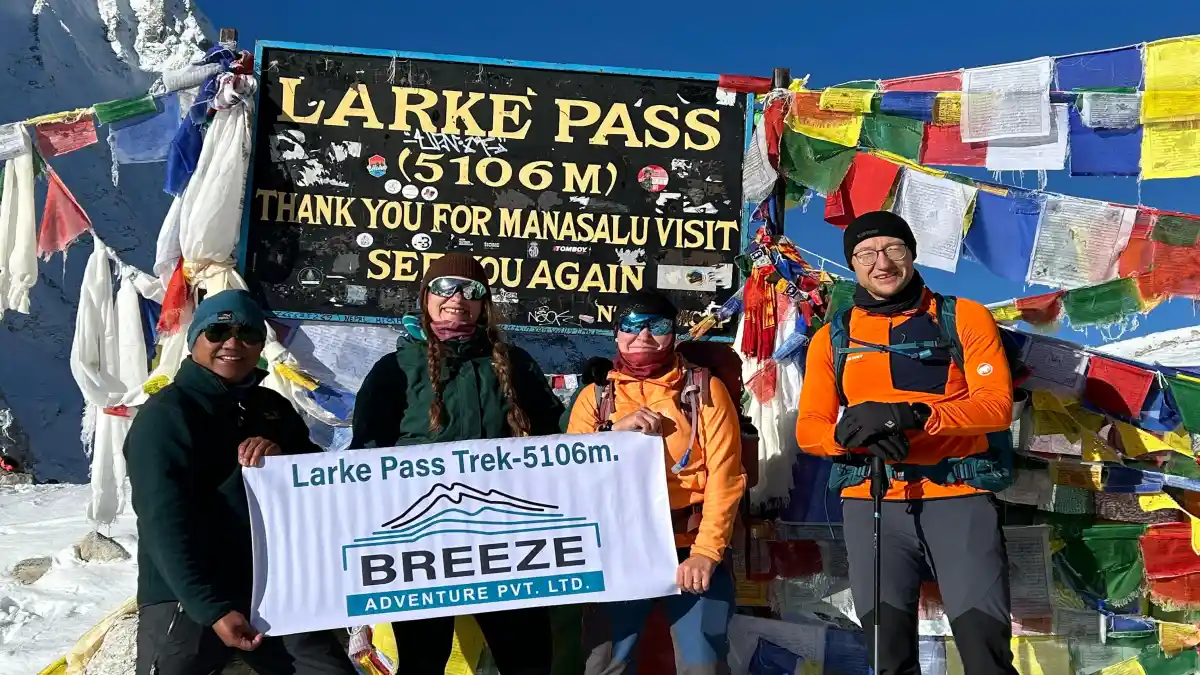
However, the main challenge of Manaslu isn’t the road at all; it’s the 5,106 m Larkya La Pass, where careful acclimatization (including the rest day at Samagaon) matters far more to your success than anything happening on the highway.
Happy Faces in Manaslu circuit trek
Given the restricted-area status, this trek requires proper planning rather than improvisation: ensure you book through a registered agency well in advance. These factors are not new, and they are not the reasons to hold back. They are simply the standard demands of embarking on a remote high-altitude Himalayan circuit.
The bottom line
There is truly no reason to call off your Manaslu trip. The trail itself is in excellent condition, road recovery is underway, and vehicle detours are functioning smoothly. Canceling would only hurt the livelihoods of the guides, porters, and Gorkha communities who depend heavily on the autumn trekking season. While treks are already operating right now, having flexible dates to travel later in the autumn offers the advantage of drier roads and optimal mountain visibility.
If you’d like the current approach-road status for your exact dates, talk to our team; we track the road and bridge conditions directly and will confirm the smoothest way in for your departure. (Worth saving while you travel: Nepal’s Tourist Police line, +9779851289445)
Quick questions trekkers are asking
Is the Manaslu trail damaged?
Not at all. It's in the Budhi Gandaki valley, a separate drainage from the flooded rivers. The trail, teahouses, and Larkya La crossing are all intact.
Can I actually get to the trailhead right now?
Yes. Vehicles are reaching Machha Khola via the Galchhi–Dhading Besi route or the Gorkha–Abu Khaireni route, both of which get around the damaged highway section. Your operator picks the best one for your day.
Will the roads be normal by the time I go?
Repairs are underway, and the highway is expected to be running smoothly again before peak autumn, so October departures should find the approach back to normal. Earlier trips just take a detour.
Are Tsum Valley and the Larke Pass affected?
No, both are entirely fine and operating normally.
Should I book a private jeep instead of the bus?
While roads are still settling, a private jeep gives you more flexibility and a smoother, faster drive, which will be worth it this season if it fits your budget.
What about the other flood-hit treks?
The only trekking region genuinely affected is Langtang (with Gosaikunda and the Tamang Heritage Trail), reached through the flood-hit Syabrubesi gateway.
Kishwor Adhikari is a passionate writer with a deep enthusiasm for trekking and adventure. His extensive travels across Nepal, exploring its diverse landscapes and hidden corners, have shaped his unique perspective on the country's natural beauty. With a wealth of first-hand experience in adventure trekking, Kishwor has become a trusted voice for fellow enthusiasts. Through his writing, he shares invaluable insights, offering practical advice and inspiration for both seasoned trekkers and novices alike. His dedication to sharing his journey and knowledge helps others discover the wonders of Nepal's wilderness, making his work an essential resource for anyone seeking adventure in the region.