Is the EBC Trek affected by the Flash Flood Nepal 2026?
Last updated: September 6, 2026. We keep this page current as conditions evolve. Confirm route-specific details with a registered operator or the Nepal Tourism Board before you travel.
In short, the answer is no, and here’s the good news.
The 2026 flash flood has had zero impact on the Everest Base Camp trek. Everything across the Khumbu region is running smoothly, from Lukla and Namche up through Tengboche and Dingboche. The trail to Base Camp, flights, permits, and teahouses are all completely open and operating as usual.
If you have an EBC trek booked, you can go ahead with confidence. There is absolutely no flood-related reason to cancel, reschedule, or alter any part of your plans.
Don’t worry if you’ve seen reports about damaged roads in other parts of Nepal; none of that touches Everest. You get to the Khumbu region by taking a quick flight to Lukla, not by using the roads affected elsewhere. Your way in and out is entirely independent of the rest of the country’s transit issues.
Table of Contents
Why Everest was never in the flood’s path
It comes down to simple geography, and it’s genuinely reassuring once you see it.
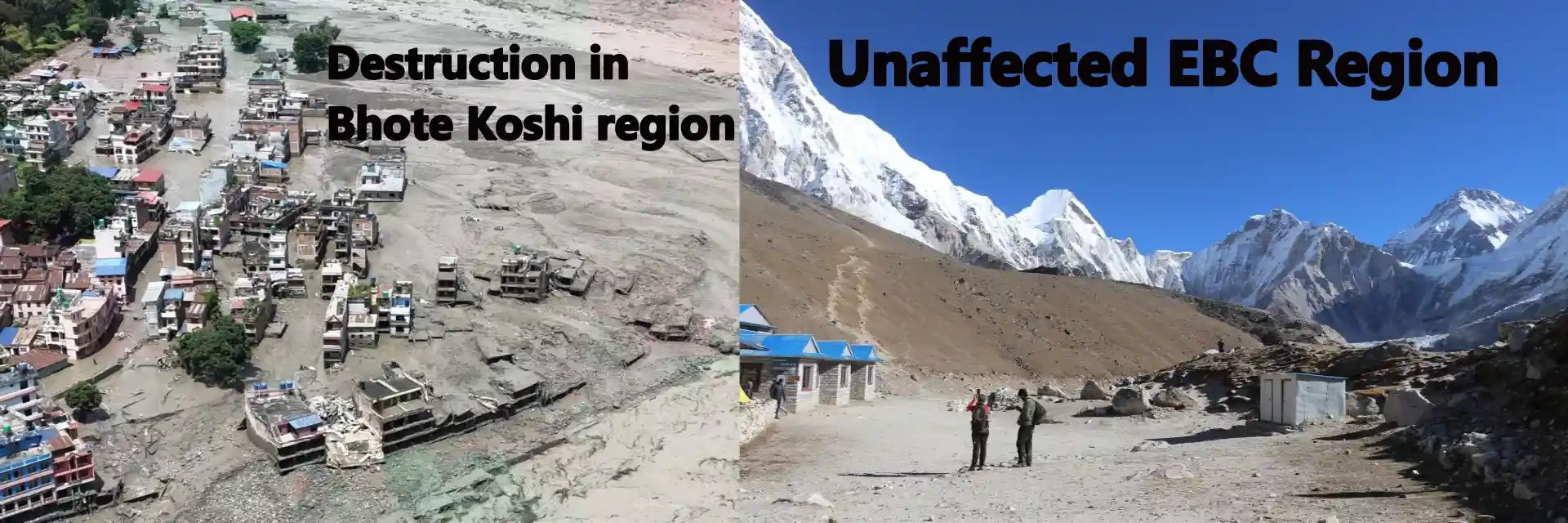
The event on August 26 started when a massive section of rock and ice collapsed high up in the Himalayas right near the Nepal-China border, above Langtang Lirung. The sudden torrent of water rushed down the Lhende Khola, emptied into the Bhote Koshi, and then flowed into the Trishuli River, sweeping through the Rasuwa district in the north-central region of the country.
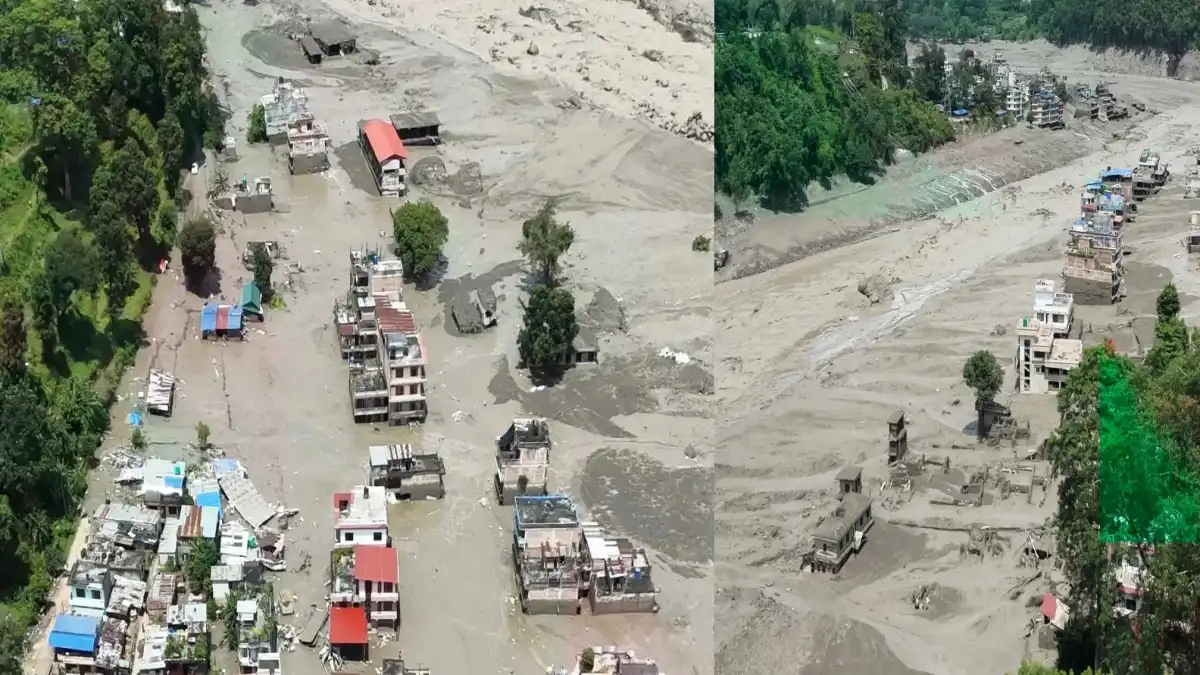
Villages Destroyed by Nepal Flash flood 2026
The Everest region is located in an entirely different part of Nepal and belongs to a completely separate river basin. The Khumbu area drains directly into the Dudh Koshi, which has zero connection to the flooded river networks. There are no shared valleys, waterways, or roads linking the two destinations. Everest was never in danger and remained completely isolated from the disaster.
Everything is running normally in the Khumbu
Every part of a standard EBC trek is operating as usual:
Flights to Lukla are running on a normal schedule. The regular routes out of Kathmandu City, as well as the peak-season flights operating from Manthali/Ramechhap, have experienced zero disruptions.
Permits (the Sagarmatha National Park entry permit and the Khumbu Pasang Lhamu Rural Municipality permit) are being issued as normal.
Local accommodations all along the path are open and welcoming visitors. This includes all the standard stops like Phakding, Namche, Tengboche, Dingboche, Lobuche, and Gorak Shep.
The trail took zero flood damage. All bridges, paths, and local settlements along the Dudh Koshi route remain completely intact.
A few worries we can put to rest
“Wasn’t there an earthquake near Everest?” Actually, the sheer force of the rock and ice collapse registered on seismometers worldwide, which naturally sparked some rumors. However, that was just the vibration of the landslide itself, not a real earthquake, and it doesn’t pose any danger to the Everest region.
“Is Kathmandu safe to fly into and pass through?” Yes. Kathmandu is far outside the impacted zone and running smoothly.
Everything is business as usual for your arrival, picking up and gear checking in Thamel, the heart of Nepal Tourism, and catching your connecting flight out to Lukla.
"Could the flooding spread toward Everest?" No. This was a one-off glacier collapse in a specific corridor, not a spreading or ongoing flood. The Khumbu is in no way exposed to it.
What to plan for this season (the honest bit)
Even though Everest is untouched by the flooding, an experienced operator will still give you a realistic picture of the usual seasonal patterns. These aren’t major red flags. They are just the typical realities that any solid travel plan needs to prepare for.
Weather in the shoulder season: Traveling from late August to mid-September means catching the tail end of the monsoon, so be prepared for some clouds, rain at lower elevation, and views that play hide-and-seek. The weather shifts beautifully starting in late September and lasts through October, clearing up the skies completely, which is precisely why this timeframe is the peak season for an EBC trek.
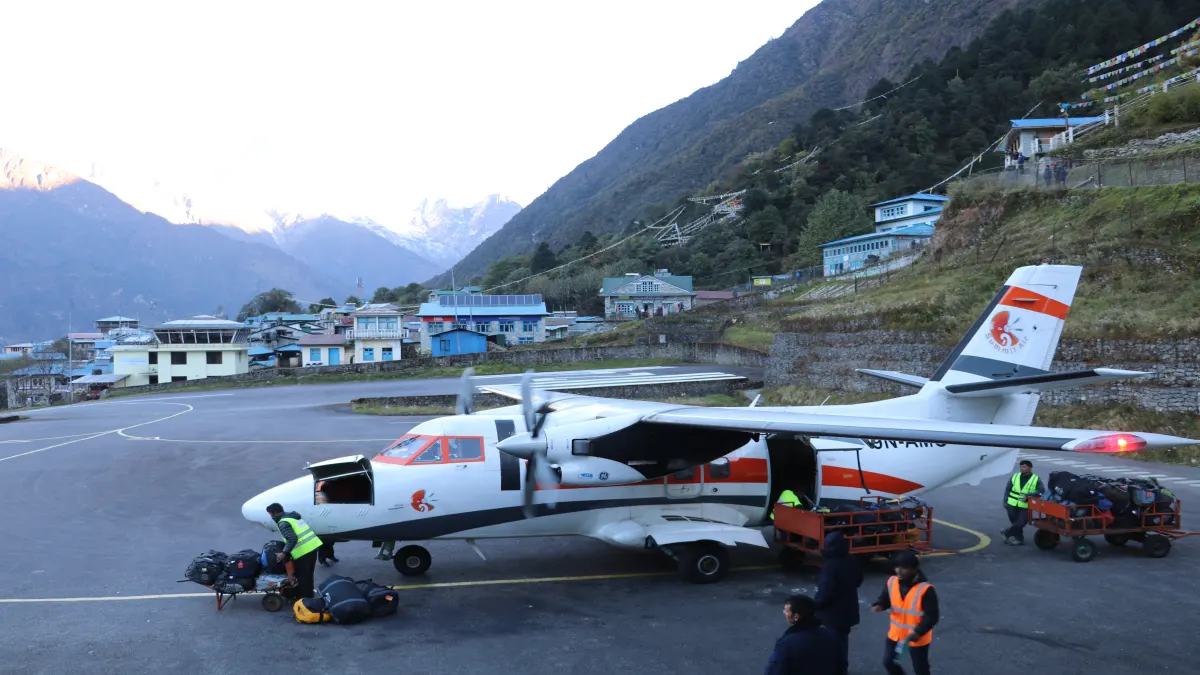
Lukla flights: Weather delays at Lukla are the most common hiccup on any Everest trek, in any year, flood or not. A buffer day or two in your plan is always smart and takes the stress out of it.
Normal flight from Lukla
Altitude: The real thing to respect on EBC is the altitude, not anything to do with the flood. A sensible pace with proper acclimatization days at Namche and Dingboche is what makes for a safe, successful trek.
Should you cancel or rebook? There’s no need
There is simply no reason to call off an Everest Base Camp trek because of the flood. Sticking to your travel plans does an immense amount of good for the guides, porters, and local families in the Khumbu who depend on the autumn season for their livelihoods, especially since some of these communities are supporting the wider relief effort too.
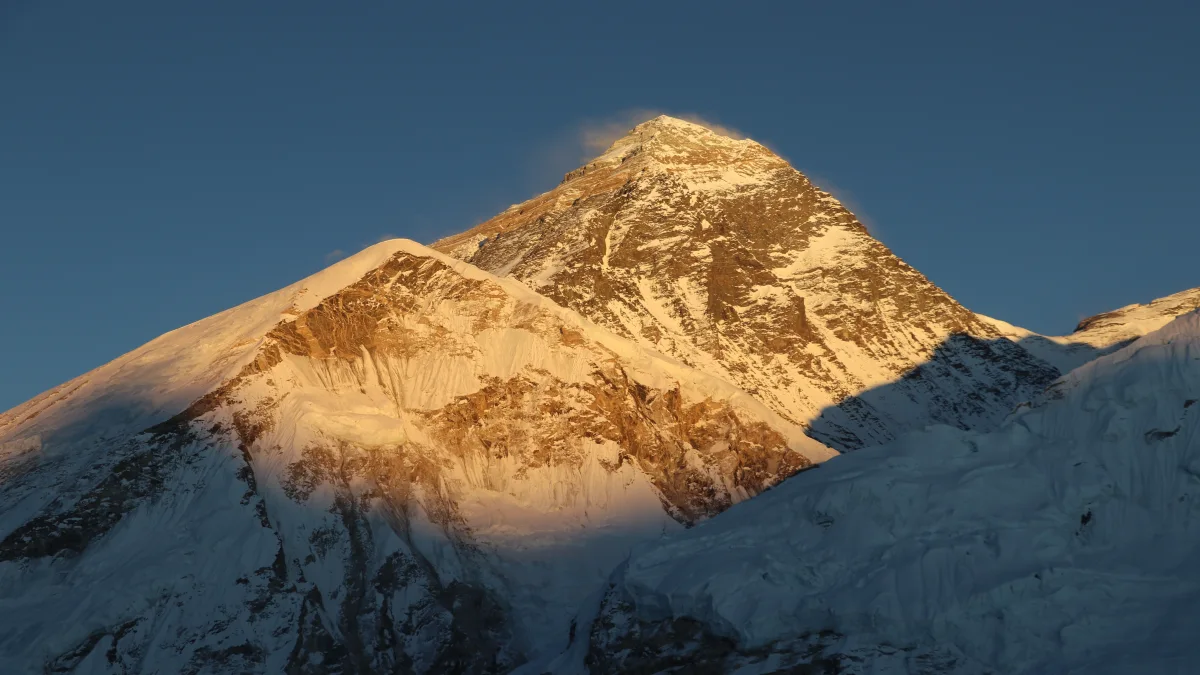
Views of Everest at Sunrise
If you have some flexibility with your schedule and want to guarantee the absolute best mountain views, targeting October instead of early September is well worth it. Think of it as a fantastic perk to chase, rather than something you need to do out of safety concerns.
A quick pre-trip checklist
Even though this area is stable, it is always a good idea to double-check conditions right before you leave just to be completely sure:
Check with your operator for current trail and flight conditions on your exact dates.
Keep an eye on Lukla flights in the days before you fly, and hold a buffer day if you can.
Read your government’s travel advisory for Nepal.
You can also get information from Nepal Tourism Board by calling these numbers: Toll-free 1234, hotline 1144, or Tourist police +9779851289445
Frequently asked questions
Q. Is the Everest Base Camp trek open after the 2026 flood?
Yes, fully, because the Khumbu region where it lies was unaffected, and everything is operating normally, including flights, permits, trail, and teahouses.
Q. Was the Everest region in the flood’s Path?
No. The flood stayed in the Bhote Koshi-Trishuli corridor in Rasuwa. Everest sits in the separate Dudh Koshi basin and was never in the path.
Q. Do the road problems elsewhere in Nepal affect the Everest trek?
No. You reach the Khumbu by flying to Lukla, so the road situations reported in other parts of the country don’t affect your journey at all.
Q. Are Lukla flights running?
Yes, on their normal schedule. Ordinary weather delays are always possible, as in any season, but the flood hasn’t disrupted them.
Q. Is it safe to fly into Kathmandu?
Yes. Kathmandu is outside the affected zone and operating normally.
Q. Should I cancel my Everest trek?
There’s no reason to do that. If you want the best weather, October beats early September, but that’s a matter of preference, not safety.
Q. Which treks were actually affected?
Langtang Valley, Gosaikunda, and the Tamang Heritage Trail, all reached through the flood-hit Syabrubesi gateway, plus the Kailash Mansarovar route via Rasuwagadi. See our full region-by-region safety update for the complete picture.
Kishwor Adhikari is a passionate writer with a deep enthusiasm for trekking and adventure. His extensive travels across Nepal, exploring its diverse landscapes and hidden corners, have shaped his unique perspective on the country's natural beauty. With a wealth of first-hand experience in adventure trekking, Kishwor has become a trusted voice for fellow enthusiasts. Through his writing, he shares invaluable insights, offering practical advice and inspiration for both seasoned trekkers and novices alike. His dedication to sharing his journey and knowledge helps others discover the wonders of Nepal's wilderness, making his work an essential resource for anyone seeking adventure in the region.