A solid training plan for the Annapurna Base Camp trek is the single biggest factor that separates trekkers who reach the Sanctuary from those who turn back at Deurali. Fitness alone won’t do it. The trail rewards preparation matched to its specific demands, not generic gym mileage.
This guide lays out a realistic, phased Annapurna Base Camp training plan built around the real demands of the trail rather than generic gym advice. It’s written for first-time trekkers and active “weekend warriors” who run, cycle, or hike locally but haven’t strung together 7-10 trekking days in a row.
You’ll find phased training blocks by timeframe, downhill-specific conditioning, backpack progression, a self-assessment checklist, and honest notes on what fitness won’t fix (altitude, cold, teahouse fatigue). There’s also guidance for older trekkers and active families who want to do this safely without overtraining.
By the end, you’ll be able to decide two things: whether you’re ready to book ABC now, and if not, exactly how many weeks of focused preparation you need before you are.
Table of Contents
Why Training for ABC Is Confusing
Most “ABC fitness” content online treats the trek like a long cardio event. It isn’t. ABC is a multi-day, load-bearing, stair-climbing endurance task with cold mornings, thin air above 3,000m, and basic teahouse sleep. Training that ignores any of those variables leaves gaps that show up on day 3 or 4, when fatigue accumulates.
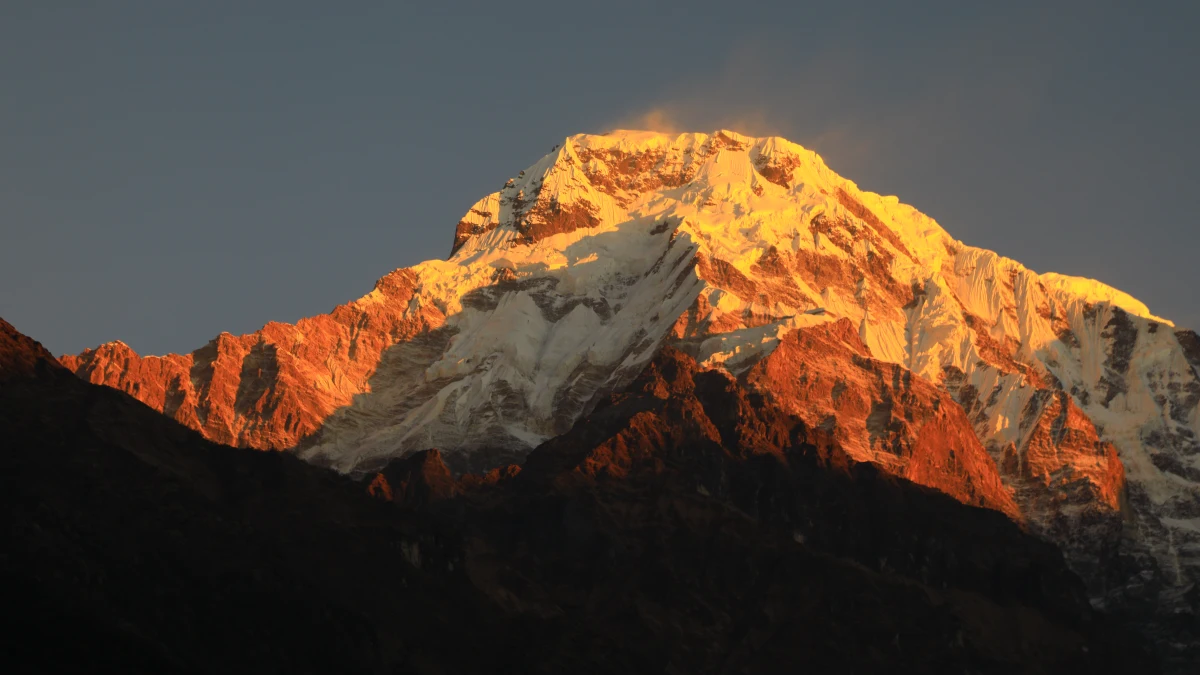
Sunrise from Annapurna Base Camp
Based on feedback from trekkers we’ve guided on the ABC route, the most common training mistakes are:
Trekkers train on flat treadmills, then meet thousands of uneven stone steps and blow out their quads on the descent.
They build cardio with short, intense workouts, then run out of gas on hour 5 of a steady climb.
They show up with brand-new boots and a pack they’ve never carried for more than an hour.
They assume good fitness equals altitude immunity. It doesn’t. According to the Himalayan Rescue Association, AMS strikes fit and unfit trekkers alike; the deciding factor is ascent rate, not fitness.
The fix isn’t more training. It’s the right kind of training, matched to the trail.
How long does it take to train for Annapurna Base Camp?
Most trekkers need 8 to 12 weeks of focused preparation for the Annapurna Base Camp trek. Complete beginners should plan for 10-12 weeks, active hikers and runners need around 8 weeks of trail-specific training, and trekkers who completed a multi-day trek within the last year can manage with 6 weeks of maintenance and ABC-specific work. The training should focus on aerobic base building, stair conditioning, eccentric (downhill) strength, and back-to-back hiking days with a loaded pack.
How to Train for the Annapurna Base Camp Trek: Step by Step
To build a body that can handle the unique challenges of the Annapurna Sanctuary, follow this structured, step-by-step preparation plan. The week numbers below follow the full 12-week beginner template; if you are an active weekend warrior or already trek-fit, compress the timeline using the comparison table further down.
Step 1: Start Where You Are (Choose your Entry Point)
Not everyone starts from the same fitness level. It is important to tailor your preparation to your current background:
The Aspiring Trekker (Beginner): If you are relatively new to hiking. Give yourself 10 to 12 weeks of training. Start with simple daily walks, build consistency, and don’t rush to add weight. Your main goal is to make walking a daily habit.
The Active weekend warrior: If you already run, cycle or hike locally, an 8 to 10 weeks program is perfect. You can start introducing hill repeats and light pack weight earlier in your schedule, focusing on consecutive training days to simulate multi-day fatigue.
Already Trek-Fit: You've done multi-day treks with a pack in the last year. 6 weeks of maintenance plus trail-specific work is usually enough.
Step 2: Build a Conversational Aerobic Base
Your primary cardiovascular goal is to expand your aerobic capacity. This is best achieved through “Zone 2” training, which is working at an intensity where you can comfortably hold a full conversation without gasping for breath.
Aim for 3 to 4 cardio sessions per week, lasting 45 to 90 minutes each. You can run, cycle, use the stair climber, or walk on an incline treadmill. If you are gasping, you are working too hard. Slow down. Consistent, low-intensity movement builds the capillary density your muscles need to utilize oxygen efficiently when the air gets thin.
What is zone 2 cardio and why does it matter?
Zone 2 means working at about 60–70% of your max heart rate, a pace where you can speak in full sentences without gasping. It's less exciting than HIIT (High-intensity Interval Training), but it's what actually builds the capillary density and fat-burning efficiency your body needs for 6-hour trekking days. Don't rush this with high intensity.
Step 3: Train Specifically for Stairs and Descents
Stair and descent work is the heart of any serious Nepal trek conditioning routine. To protect your joints from the brutal impact of descending thousands of stone steps, incorporate these eccentric and stabilizing exercises:
Uphill conditioning:
Weighted step-ups on a sturdy box or bench (3 sets x15 reps per leg, 2x per week).
Stair-machine sessions of 20-40 minutes with a pack
Hill walking with poles on the steepest local route you can find.
Downhill/ eccentric conditioning (the part everyone skips):
Eccentric squats: lower for 4 seconds, stand up normally. 3 sets x10.
Reverse lunges with control on the descent. 3 sets x10 per leg.
Downhill hiking practice: deliberately seek out trails or stadium stairs to descend. Walking downhill loads the quads and knees in a way nothing in a gym fully replicates.
Single-leg balance work to stabilize ankles on uneven steps.
Trekking poles reduce knee impact by roughly 20-25% on descents, according to a study published in Journal of Sports Science. Train with them so you’re not learning pole technique on day 1 of the trek.
Step 4: Practice Back-to-Back Days
ABC trek isn’t a single day event. It’s the same hard day repeated. The biggest training mistake is doing one big Saturday hike, then resting Sunday.
Instead, build “back-to-back” weekends:
Weeks 1-3: Saturday hike of 2-3 hours, Sunday hike of 1-2 hours.
Weeks 4-6: Saturday 4 hours, Sunday 3 hours.
Weeks 7+: Saturday 5-6 hours with pack, Sunday 3-4 hours with pack.
If Sunday’s hike feels worse than Saturday’s, that’s the point. You’re training your body to recover overnight while still loaded which is exactly what happens on the trail.
Step 5: Train with the pack and boots you’ll actually use
A simple rule you must follow is that by the time you fly to Kathmandu, your boots should have at least 40-50 hours on your feet, and daypack should feel like an old friend.
Pack progression:
Weeks 1-4: No pack weight. Focus on form and building your aerobic base.
Weeks 5-6: carry 3 to 5 kg on your walks. Keep hikes to 1 hour.
Weeks 7-8: Build to 5 to 7 kg. Introduce hill repeats.
Weeks 9-11: Carry 7 to 10 kg on your longest hikes.
Week 12: Taper phase. Drop the pack weight completely to let your joints recover before your trip.
You must know what you should pack for the trek and train with same or similar pack. You can see our Annapurna Base Camp packing list to see what kind of items you should pack for the trek.
Step 6: Add strength work twice a week
You don’t need a powerlifting program. You need durable legs, hips, and core that hold up over consecutive days. The foundation of genuine Annapurna sanctuary fitness.
Goblet squats, deadlifts (light, focus on form), lunges, calf raises.
Core: Planks, side planks, dead bugs, bird dogs.
Upper body: light rows and presses help with pole use and pack stability.
2 sessions per week, 30-45 minutes each.
Keep the loads moderate and the reps clean; you’re training muscular endurance and joint resilience, not maximal strength. Stop two reps short of failure so you can still hit your cardio and hiking days fresh. As you move into weeks 9–11, schedule strength work on the same days as your shorter cardio sessions, leaving your back-to-back hiking weekends free for the trail-specific work that matters most. Think of this block as insurance: strong hips and a stable core are what keep your knees tracking correctly on the long descent from Annapurna Base Camp back down to Bamboo.
Mental Preparation for ABC Trek
“In years guiding the Annapurna Sanctuary, the trekkers who struggle on day 7 are rarely unfit. They’re unprepared for the lifestyle.” That’s the pattern our lead guides see season after season. Physical fitness gets you to base camp. Mental preparation determines whether you enjoy it or just endure it.
Good mental preparation for the ABC trek is less about toughness and more about knowing exactly what’s coming, so nothing on the trail catches you off guard. The sections below cover the parts most first-timers underestimate.
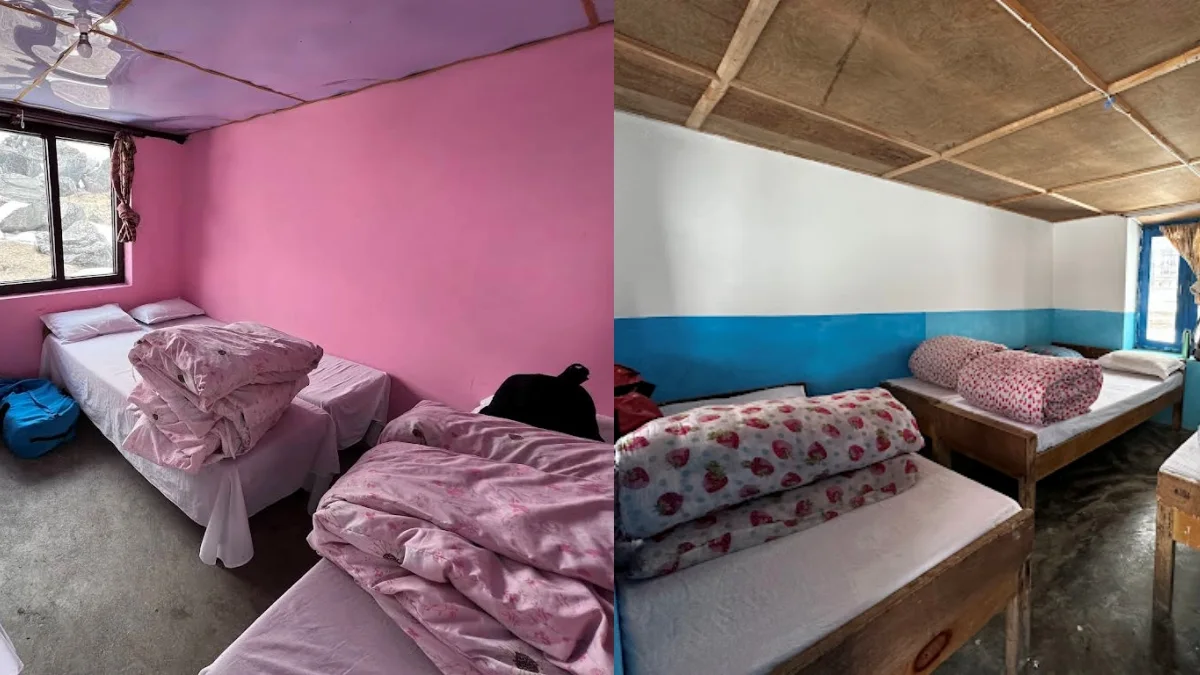
What Teahouses Are Actually Like Above Chhomrong
Rooms are unheated. Walls are thin from which you’ll hear your neighbors cough, snore, and get up for the toilet at 2 am. Hot showers may be a small bucket of lukewarm water, if available at all. Charging your phone costs extra. The food is good, but you will find the similar menu with same foods throughout the trek.
Basic rooms in Annapurna Base Camp trek
None of this is a problem if you show up knowing it. It becomes a real problem if you arrive expecting a luxury mountain lodge experience.
A Simple Exercise to Prep Your Head
On your long training hikes, build in small, deliberate discomforts. Go without your morning coffee before a 3-hour walk. Train in drizzle instead of waiting for a dry day. Eat a plain packed lunch instead of stopping somewhere nice.
These aren’t suffering exercises; they’re just teaching your brain that discomfort isn’t the same as danger. That’s the mental shift that makes a cold teahouse room feel fine rather than miserable.
The “Just to the Next Teahouse” Approach
There will be at least one hard day. Probably more. On those days, the worst thing you can do is look at the full remaining distance.
Break it down: just to the next rest stone. Just to the next stream crossing. Just to where the trail bends. This isn’t a trick, it’s how experienced trekkers actually manage long days, and it works.
What to Do When You Want to Quit on Day 7
Almost every multi-day trekker hits a low point around day 6 or 7. It’s usually not physical. It’s accumulated sleep debt, food fatigue, and the mental weight of being “on” for a week straight.
What works:
Eat more than you think you need at breakfast
Drink an extra liter of water that morning
Walk slower for the first hour, don’t try to push through
Talk to someone in your group; isolation makes everything worse
Remember the low point usually passes by lunchtime.
The mountain doesn’t care how strong you are at the start. It cares how steady you are on day 7.
Managing Fear About Altitude Symptoms
It’s normal to feel anxious as you climb past 3000m. Headaches, mild shortness of breath and disturbed sleep are common and not dangerous on their own. When anxiety rises, ground yourself by hydrating frequently, slowing down your pace, and communicating with your guide or group members.
Panic often exacerbates breathlessness. If you feel overwhelmed, stop, sit, and practice diaphragmatic (belly) breathing or "box breathing" (inhale for 4s, hold for 4s, exhale for 4s, hold for 4s). This forces your nervous system to downshift and reminds you that you are in control of your physical state.
Your guide will monitor you daily. Tell them what you’re feeling. The trekkers who get into trouble are the ones who hide symptoms because they don’t want to slow the group down.
Beginner vs Active trekker vs Already trek-fit: How the Plans Differ
Here is how your Annapurna Base Camp training plan should differ depending on your starting fitness level.
Training plan for Beginner vs Active trekker vs Already trek-fit
Element
Aspiring Trekker (Beginner)
Active Weekend warrior
Already trek-fit
Preparation time needed
10-12 weeks
8-10 weeks
6 weeks
Starting cardio base
Begin with 30-min walks, build slowly
Redirect existing cardio to hills/stairs
Maintain volume, shift to specificity
Strength focus
Bodyweight first, then add load gradually
Jump to weighted step-ups from week 2
Heavy eccentric work from week 1
Back-to-back days
Introduce from week 6-8
Introduce from week 3-4
Already doing them, extend duration
Pack weight progression
3 kg to 5kg to 8 kg over 8 weeks
5 kg to 8 kg to 10 kg over 6-8 weeks
8-10 kg from week 1
Downhill conditioning
Start gentle; build slowly to protect knees
Emphasize early, most active people lack this
Critical focus, often the weakest area
Trek simulation weekends
2-3 full back-to-back simulations
1-2 full back-to-back simulations
1 full simulation in week 4
Mental preparation
High priority, unfamiliar discomfort levels
Medium priority, teahouse reality may still shock
Lower priority, but cold/sleep deprivation still matters
Before you book your flights to Kathmandu, run through this checklist honestly. It is designed to catch the gaps that show up on the trail, not in the gym. Answer Yes or No to each question based on what you have done in the last 4 to 6 weeks, not what you plan to do.
Cardiovascular readiness
Can you walk for 5 hours at a moderate pace without needing more than 10-minute rest? (Yes/No)
Can you hold a conversation in full sentences without gasping while doing your steady cardio sessions? (Yes/No)
Have you completed at least three cardio sessions per week for the last 4 weeks? (Yes/No)
Trail-specific strength
Can you climb 30 to 40 floors of stairs (or equivalent step-ups) without your legs failing before your lungs do? (Yes/No)
Have you done dedicated downhill or eccentric leg work (eccentric squats, reverse lunges, downhill hiking) at least once per week? (Yes/No)
Can you walk downhill for 45 minutes the day after a long hike without sharp knee pain? (Yes/No)
Load and gear readiness
Have you logged at least 30 hours of walking in the actual boots you plan to wear on the trek? (Yes/No)
Have you carried a pack of 7 to 10 kg on a hike of 4 or more hours? (Yes/No)
Have you used your trekking poles enough to feel natural with them on both ascents and descents? (Yes/No)
Back-to-back endurance
Have you completed at least two back-to-back weekend hikes (long Saturday, moderate Sunday) within the last month? (Yes/No)
Mental and lifestyle readiness
Are you comfortable with the idea of cold, unheated rooms, shared bathrooms, and a repetitive menu for 7 to 10 days straight? (Yes/No)
Have you trained in conditions you would normally skip (rain, cold mornings, early starts) at least three times? (Yes/No)
How to Score Your Results
Count your No answers, then read which of the following applies to you.
0 to 2 No answers: You are ready. Confirm your boots and gear are broken in, taper for the final week, and book with confidence. (You’re ready.Browse our Annapurna Base Camp trek packages and lock in your departure date with Breeze Adventure)
3 to 5 No answers: Add 2 to 3 weeks to your training plan. Focus specifically on the categories where you answered No. A trekker who scores here is not unfit. They have specific gaps that 2 to 3 weeks of targeted work will close.
6 or more No answers: Add 4 to 6 weeks and after that only pick your departure date. This is not a failing score. It is a sign that you are honest about where you are, which is the single biggest predictor of a successful trek. Trekkers who push through without closing these gaps are the ones who turn around at Deurali.
One rule: Do not negotiate with yourself on the answers. A "kind of" or "almost" is a No. The trail will not grade on a curve.
Training Mistakes That Wreck ABC Treks
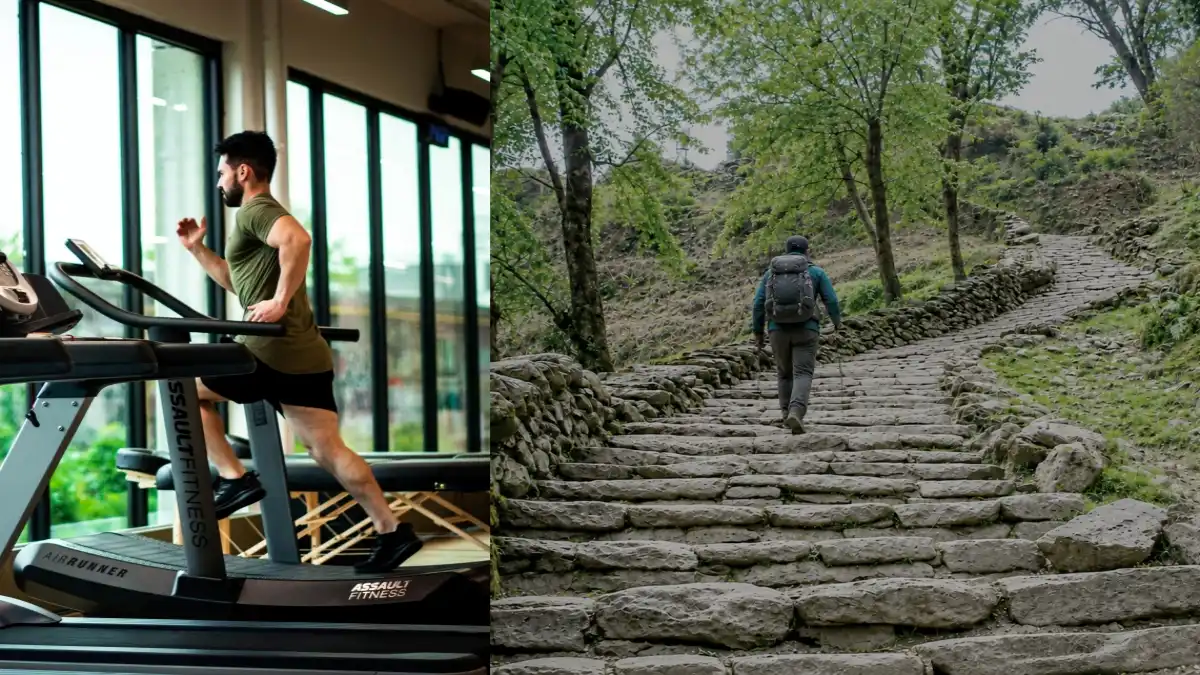
Treadmill training vs Actual trek
Training only on flat surfaces. Flat ground won’t build the specific muscle patterns you need. What to do instead: If you live in a flat city, climb stairs in a high-rise building, use stadium bleachers, or set a gym treadmill to its maximum incline.
Hiking in brand-new boots on Day 1. This is a recipe for painful, trip-ending blisters. What to do instead: Wear your actual trekking boots during your weekly weighted walks starting in week 5 to break them in thoroughly.
Pushing too hard during cardio. High intensity workouts raise your heart rate too high and utilize anaerobic energy. Stick to steady, low-intensity cardio to train your body to burn oxygen efficiently.
Carrying training weight in your hands. Never carry weights in your hands while walking, as this ruins your posture. Put all weight in a technical backpack with a secure waist strap.
Assuming fitness makes you immune to altitude. The fittest person in the group can still get Acute Mountain Sickness (AMS) if they walk too fast. What to do instead: Maintain a slow, steady pace (“Bistari, bistari”-slowly, slowly) and follow the planned itinerary.
Ignoring the mental transition to teahouse life. Trekking isn’t just a physical test; it’s a lifestyle adjustment. Prepare yourself for basic, unheated teahouse rooms, cold mornings, and limited hygiene facilities by embracing occasional discomfort during your cold-weather training walks.
Frequently Asked Questions (FAQs)
Q. How fit do you need to be for the Annapurna Base Camp trek?
You need to be able to walk 5 to 7 hours per day for 7 to 10 consecutive days while carrying a 5 to 8 kg daypack on uneven terrain that includes thousands of stone steps. You don’t need to be an athlete, but you should be comfortable with continuous moderate exercise and have at least 8 weeks of trek-specific preparation behind you.
Q. Can a beginner do Annapurna Base Camp?
Yes, complete beginners regularly complete the ABC Trek successfully. The key is honest self-assessment and adequate preparation, typically 10 to 12 weeks of structured training. Beginners with no hiking background should focus on building a daily walking habit first, then progressively add hills, stairs, and pack weight.
Q. How many kilometers per day on the ABC trek?
The Annapurna Base Camp trek covers an average of 10 to 15 km per day, with daily walking time ranging from 5 to 7 hours. Distance is less important than elevation gain and step count. Some short days involve more vertical movement than longer ones.
Q. What is the hardest part of the ABC trek?
The hardest part of the Annapurna Base Camp trek is usually the long stone staircase around Chhomrong (a steep descent immediately followed by an equally steep climb that punishes under-trained quads) plus the thinner air on the final push to base camp at 4,130m. Neither is about raw fitness; both reward steady pacing and proper downhill conditioning. For a fuller breakdown, see our Annapurna Base Camp trek difficulty guide.
Q. How much does the ABC trek cost in 2026?
A guided Annapurna Base Camp trek in 2026 typically costs between US$499 and US$900, depending on duration, group size, and whether you add a helicopter return. This usually covers TIMS and ACAP permits, a licensed guide, teahouse accommodation, and most meals on the trail. See our current Annapurna Base Camp trek packages for exact dates and pricing.
Q. Do I need travel insurance for the ABC trek?
Yes. Travel insurance that covers trekking up to at least 4,500m including emergency helicopter evacuation is required. Many standard policies exclude high-altitude trekking, so confirm yours lists trekking and helicopter rescue specifically before you travel.
Q. Do I need oxygen on the ABC trek?
No, supplemental oxygen is not required for the Annapurna Base Camp trek. The maximum altitude of 4130m is below the threshold where bottled oxygen is commonly used. However, our company carries a pulse oximeter and emergency oxygen as a safety precaution.
Q. What if I am over 50 can I still train for ABC?
Yes. We regularly guide trekkers in their 50s, 60s, and 70s to Annapurna Base Camp. Older trekkers should allow 12 to 14 weeks of preparation, prioritize joint-friendly cardio (cycling, swimming, incline walking) over running, and emphasize eccentric strength work to protect knee on descents. A pre-trek medical check is strongly recommended.
Q. Can I do ABC without a guide?
As of April 2023, Nepal requires all foreign trekkers to hire a licensed guide for treks in the Annapurna region. Solo trekking without a registered guide is no longer permitted. Book through a registered company to ensure full compliance with TIMS and ACAP permit requirements.
Q. What is the best month to do the ABC trek?
The best months for the Annapurna Base Camp trek are October to early December and March to May. October offers the clearest mountain views after monsoon, while April brings rhododendron blooms throughout the lower trail.
Conclusion
This Annapurna Base Camp training plan is designed to get you genuinely ready, not just for the climb, but for the cold mornings, the long descents, and the day-7 low point that fitness alone never prepares you for.
The trekkers who have hard time during a trek are rarely unfit. They are the ones who trained on flat surfaces, showed up in new boots, skipped the downhill work, and assumed that good cardio would handle everything the trail throws at them. It won’t.
But if you follow a structured plan by building your aerobic base slowly, train specifically for stairs and descents, practice back-to-back days, break in your boots properly, and load your pack progressively, you will arrive at the trailhead genuinely ready. Not just physically, but mentally.
The cold teahouse rooms will not surprise you. The hard days will not break you. The altitude will not catch you off guard because you will have already built the habits that keep it manageable. Start your training early. Be consistent rather than intense. And trust the process.
Kishwor Adhikari is a passionate writer with a deep enthusiasm for trekking and adventure. His extensive travels across Nepal, exploring its diverse landscapes and hidden corners, have shaped his unique perspective on the country's natural beauty. With a wealth of first-hand experience in adventure trekking, Kishwor has become a trusted voice for fellow enthusiasts. Through his writing, he shares invaluable insights, offering practical advice and inspiration for both seasoned trekkers and novices alike. His dedication to sharing his journey and knowledge helps others discover the wonders of Nepal's wilderness, making his work an essential resource for anyone seeking adventure in the region.