Everest is the most photographed mountain on Earth. That's not hype, it's just geography. At 8,848 m, it dominates the horizon from dozens of vantage points along the trail. Whether you're shooting on a phone or a DSLR, the Khumbu region gives you more frame-worthy scenes per day than almost anywhere in Nepal.
This guide from Breeze Adventure covers where to shoot, when to go, what to bring, and what the trek actually involves. Thereby making you able to capture the best scenery in the Everest Base Camp Trek in Nepal.
Table of Contents
Best Photography Spots on the EBC Trail
The world's highest peak, Mount Everest, is not just famous for altitude. Actually, this is also popular for the incredible photos that can be captured on the trail. Here are some of the places for capturing photos while being in the Everest Base Camp:
Kala Patthar (5,545 m): This is the single best viewpoint for Everest. From here, you get an unobstructed look at the southwest face, with Nuptse and Lhotse on either side. In Kala Patthar, most trekkers reach the summit at dawn to catch the sun hitting the peak before clouds roll in, typically by 9–10 am.
Tengboche (3,867 m): Consider this place for mindblowing shots. Itgives you a clear view of Ama Dablam, one of the most photogenic peaks in the Himalayas. Further, Rongbuk Monastery at Tengboche, built in 1916, also makes a strong foreground subject with Everest visible behind it on clear days.
Everest Base Camp itself (5,364 m): The base camp doesn't offer a direct Everest summit view. Yes, you heard that right, the Khumbu Icefall blocks the sight line. But the glacial landscape, prayer flags, and expedition tents make for compelling shots.
Namche Bazaar (3,440 m): This place, on a clear morning, offers a surprisingly clean Everest view from the hill above the town. Many trekkers miss this because they're focused on reaching higher camps.
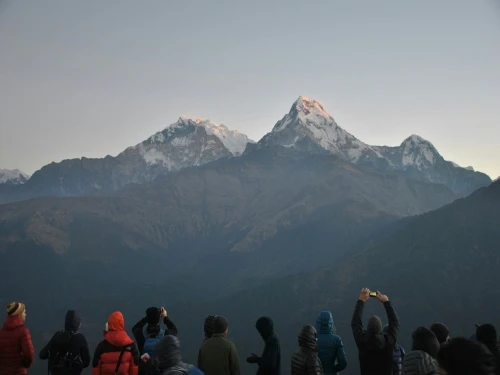
Stunning mountain view captured from EBC Trail
Best Time for Photography
The right time for the EBC Trek matters a lot when it comes to taking photographs. The weather conditions, as well as the trail conditions, decide your photo quality. So, here are the best times for the EBC Photography Trek:
October–November is the best window. Post-monsoon skies are clear, dust is washed out, and visibility is excellent. Sunrise shots from Kala Patthar in October are reliably sharp. You will love it.
March–May works well too. The air is slightly hazier, and afternoons cloud up fast, but the rhododendrons are in bloom below 4,000 m, adding colour to lower-elevation shots.
The monsoon (June–August) and winter (December–February) for photography can be good with some risk. Monsoon can bring persistent cloud cover, whereas winter can add harsh wind and whiteout conditions.
Camera Gear at High Altitude
A few things matter specifically at Everest-region elevations:
Cold kills batteries fast. Carry at least two batteries, so keep one inside your jacket.
Condensation when moving from cold outside to warm teahouse interiors can fog lenses. Let your camera acclimatise in your bag for 10–15 minutes before shooting indoors.
Mirrorless and compact cameras are lighter than DSLRs, which matters when you're already hauling altitude gear.
A 24–70 mm equivalent covers most scenarios such as landscapes, portraits, and monastery interiors. A 70–200 mm or equivalent telephoto is useful for isolating summit detail from Kala Patthar.
Polarising filter cuts glare on snow and deepens sky colour at altitude.
Lens wipes - sand and dust on the trail are constant at lower elevations.
You don't need expensive gear. Phone cameras perform well below 5,000 m. Above that, cold and altitude become management issues more than optical ones.
What to Pack
Here are the essential trekking gears for the Everest Photography Trek:
Down jacket (minimum -10°C rated)
Waterproof outer shell
Thermal base layers (2 sets)
Trekking boots (broken in before the trip)
Wool or synthetic socks (5–6 pairs)
Sunglasses (UV400 or higher — UV intensity at altitude is severe)
Sunscreen SPF 50+
Headlamp with spare batteries
Water purification tablets or a filter
Basic first aid kit, including Diamox (consult a doctor before use)
For photography specifically: spare batteries, memory cards, a small dry bag, or zip-lock bags to protect gear from rain and dust.
Everest Base Camp Trekking Equipment
EBC Trek Overview
The standard EBC trek is 12–14 days return from Lukla. The route goes: Lukla → Phakding → Namche Bazaar → Tengboche → Dingboche → Lobuche → Gorak Shep → Everest Base Camp → Kala Patthar → return.
One acclimatisation day at Namche (day 3) and one at Dingboche (day 7–8) are standard and non-negotiable for most trekkers.
The trek is rated moderate. The altitude, not the terrain, is the main challenge. Most paths are well-maintained and not technically difficult. Anyone with reasonable fitness can complete it.
EBC Trek Difficulty and Altitude
Maximum altitude: 5,545 m at Kala Patthar.
Altitude sickness is the primary risk in this trek. Symptoms above 3,500 m include headaches, nausea, and poor sleep. These are normal and usually manageable with proper acclimatisation. The rule is simple: ascend slowly, hydrate consistently, and descend if symptoms get worse.
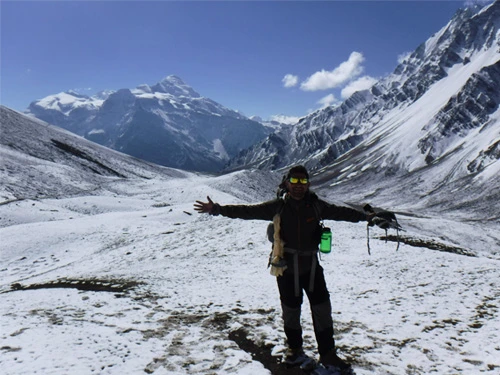
Coming to the Everest Base Camp trek difficulty, it is not a technical climb. You don't need crampons or ropes. Trekking poles help on steep descents.
Rocky mountain paths in everest base camp trail
Permits Required
Two permits are needed for the EBC trek:
Sagarmatha National Park Entry Permit - NPR 3,000 (~USD 22)
Both are obtained in Kathmandu City or Namche Bazaar. The trekking agency will typically handle this.
Season Summary
Seasons
Months
Photography Quality
Notes
Autumn
Sep-Nov
Excellent
Best overall
Spring
Mar-May
Best
Hazy afternoons, flowers
Winter
Dec-Feb
Good enough
Clear but sometimes very cold and windy
Monsoon
Jun-Aug
Moderate
Persistent cloud cover
Breeze Adventure runs guided EBC treks year-round and can help arrange photography-focused itineraries with flexibility built in for early starts at key viewpoints.
Kishwor Adhikari is a passionate writer with a deep enthusiasm for trekking and adventure. His extensive travels across Nepal, exploring its diverse landscapes and hidden corners, have shaped his unique perspective on the country's natural beauty. With a wealth of first-hand experience in adventure trekking, Kishwor has become a trusted voice for fellow enthusiasts. Through his writing, he shares invaluable insights, offering practical advice and inspiration for both seasoned trekkers and novices alike. His dedication to sharing his journey and knowledge helps others discover the wonders of Nepal's wilderness, making his work an essential resource for anyone seeking adventure in the region.