Everest Base Camp Trek Difficulty at a Glance
Here's how Everest Base Camp trek difficulty breaks down across every key factor:
Factor | Difficulty level | What it means on the trail |
|---|
Overall difficulty | Moderate to challenging | Demanding but achievable for prepared trekkers |
|---|
Technical difficulty | Low | No climbing skills required |
|---|
Altitude | High | Thin air is the main challenge above 4000m |
|---|
Daily walking effort | Moderate | Typically 5-7 hours per day |
|---|
Terrain | Moderate | Rocky trails, uneven paths, some steep sections |
|---|
Weather and cold | Moderate to high | Cold mornings and nights at higher elevations |
|---|
Teahouse comfort | Basic | Simple lodges above Namche |
|---|
Mental Challenge | Moderate | Long days and accumulated altitude fatigue |
|---|
Beginner suitability | Good with Preparation | Many first-time trekkers finish with proper planning |
|---|
In short, EBC is not hard because of technical climbing. It is hard because your body has to keep working efficiently where oxygen levels are far lower than at sea level.
How Difficult Is the Everest Base Camp Trek?
Having guided hundreds of trekkers across different seasons and among a wide range of ages and fitness levels, we rate the Everest Base Camp trek difficulty 7 out of 10 for a properly prepared trekker, with 10 being the most challenging and 1 being the easiest. This assumes a standard 12-14-day itinerary with built-in acclimatization days and porter support.
Factor | Rating out of 10 | Why |
|---|
Altitude | 8 | The single biggest challenge throughout |
|---|
Walking effort | 7 | Consecutive days of hiking add up |
|---|
Terrain | 6 | Mostly manageable, but uneven and rocky |
|---|
Weather | 6 | Cold can affect comfort and sleep |
|---|
Teahouse comfort | 4 | Basic but generally adequate |
|---|
Mental pressure | 7 | Long journey, changing conditions |
|---|
Technical climbing | 1 | No climbing skills required |
|---|
Lukla logistics | 5 | Flight delays can disrupt the schedule |
|---|
For a highly active hiker, EBC can feel closer to 6/10. For someone with little hiking experience, it can feel more like 8/10 or even 9/10.
A note on Lukla logistics: the trek begins and ends with a short flight to Lukla, and weather there can frequently delay flights by a day or more. This rarely makes the trek physically harder, but it can compress your schedule which is exactly when people rush their acclimatization and get into trouble. Build a buffer day into your plans.
What Makes EBC Difficult
Altitude: The Real Reason EBC Is Hard
Altitude is the single biggest factor in how hard this trek feels. As you climb, air pressure drops and each breath carries less oxygen. By the time you reach Gorak Shep (5,164m) and Kala Patthar (5,545m), you are working with substantially less oxygen than your body is used to which is close to half of what is available at sea level.
Here is what it feels like as you gain elevation
Place | Elevation | What you’ll notice |
|---|
Lukla | 2860m | A 30-minute flight from Kathmandu. Most people feel nothing yet |
|---|
Phakding | 2610m | A gentle first day mostly down toward the river |
|---|
Namche Bazaar | 3440m | First acclimatization stop. Some headaches; sleep and appetite can dip |
|---|
Tengboche | 3860m | Famous monastery; the air is noticeably thinner on the climb up |
|---|
Dingboche | 4410m | Second acclimatization day. Sustained effort gets clearly harder. |
|---|
Lobuche | 4,940m | Cold, exposed, and demanding. Recovery slows. |
|---|
Gorak Shep | 5,164m | Base for the final push. Sleep is often poor here. |
|---|
Everest Base Camp | 5,364m | Roughly 50% of sea-level oxygen. Every step is heavier than it should be. |
|---|
Kala Patthar | 5,545m | The highest point of the trek, on loose scree in very thin air. |
|---|

Why fitness doesn’t prevent altitude sickness
One of the most common misconceptions is that strong fitness protects you from altitude sickness. It does not. Experienced marathon runners, gym regulars, and mountain athletes can all develop Acute Mountain Sickness (AMS). Altitude affects people differently, and it has little to do with age or fitness.
In rare cases, AMS can progress to HAPE (fluid in the lungs) or HACE (swelling of the brain). Both are emergencies requiring immediate descent.
Common AMS symptoms include
- Persistent headache
- Nausea
- Loss of appetite
- Fatigue
- Dizziness
- Disturbed sleep
If symptoms appear, tell your guide right away. Early intervention matters. Mild symptoms often ease with rest, hydration, or a slower pace. If they worsen, particularly with a dry cough, confusion, or trouble walking straight, the safest response is to descend. No view is worth ignoring those signs.
Guide note: We watch the group closely from Dingboche upward. A small headache or unusual tiredness reported early is easy to manage. The same symptom hidden because someone doesn't want to slow the group down is how a fixable problem becomes a turnaround.
Some trekkers take Diamox (acetazolamide) to help prevent AMS, and it genuinely helps many people. Talk to your doctor before departure, since dosage and suitability depend on your medical history.
Daily Walking Hours and Cumulative Fatigue
Most trekking days involve 5 to 7 hours of walking, though this varies with itinerary and pace. What surprises many trekkers is that a shorter day high up can feel harder than a longer day lower down. A 10km day above 4,500m, on reduced appetite and broken sleep, can be tougher than a 15km day in the lower valleys where oxygen is more available and you recover overnight.
Fatigue tends to build during:
- Dingboche to Lobuche
- Lobuche to Gorak Shep
- The Kala Patthar summit morning
The descent brings a different kind of difficulty. Several days of sustained downhill on rocky ground is hard on knees and ankles, especially for trekkers who don't train for downhill. Trekking poles matter more on the way down than on the way up.
On days when fatigue is unusually high, your guide can adjust the pace or split the day differently, this is one reason a guided trek outperforms solo for most people.
Terrain and Trail Conditions
The trail is well-marked with painted stones and prayer flags. Getting lost is rare on the main route.
Lower Trail: Lukla to Namche Bazaar
The lower section is relatively comfortable, with forest trails, stone pathways, several suspension bridges, and gradual elevation change. The bridges sway and a few are long and high, but they are safe and most people find them more fun than frightening after the first one.
The real test here is the final climb into Namche. It isn't technically difficult, but it is a long, steep grind, and it's often a trekker's first honest read on how their body handles sustained uphill at altitude.
Take micro-breaks every 20 minutes rather than stopping for long rests. This way you'll arrive less depleted.
Upper Trail: Namche to Everest Base Camp
Above Namche the trail turns more rugged: rocky mountain paths, exposed ridges, and glacial moraine with uneven footing near Lobuche and Gorak Shep. The stretch along the Khumbu Glacier demands real concentration because of loose rock. The pre-dawn ascent of Kala Patthar then adds darkness, cold, and the highest altitude of the trek to an already tired body.
Difficulty by Route Section
Here's how Everest Base Camp trek difficulty breaks down section by section, with real distances and elevation data:
Section | Distance | Elev. Change | Difficulty rating out of 10 | Suggestion |
|---|
Lukla-Phakding | ~8km | -230m net | 2/10 | Walk slowly from day one |
|---|
Phakding-Namche | ~11km | +830m | 6/10 | Pace the long final climb |
|---|
Namche acclimatization | ~5km | +440m and return | 4/10 | Stay active, then rest |
|---|
Namche-Tengboche | ~10km | +420m net | 5/10 | Steady rhythm; a steep finish |
|---|
Tengboche-Dingboche | ~11km | +550m | 5/10 | Focus on hydration |
|---|
Dingboche acclimatization | ~6km | +670m return | 4/10 | Take it seriously |
|---|
Dingboche-Lobuche | ~9km | +500m | 6/10 | Walk slowly and steadily |
|---|
Lobuche-Gorak Shep-EBC | ~13km | +450m total | 8/10 | Conserve energy; relaxed pace |
|---|
Gorak Shep-Kala Patthar-Descent | ~16km | +380m then -1300m | 9/10 | Start early, dress warmly |
|---|
Pheriche-Namche | ~16km | -800m | 4/10 | Use poles for the knees |
|---|
Namche-Lukla | ~18km | -600m | 3/10 | Long but downhill |
|---|
Two days catch most people out. The Kala Patthar morning is the hardest by a clear margin: you start before dawn, already tired from a week at altitude, and the final stretch is steep loose scree in thin air, often into wind. Phakding to Namche is the sleeper, the 830m gain and that long uphill finish surprise people on what feels like an "easy early" day.
Difficulty By Season
The same itinerary can feel two points harder on the 10-scale depending on when you go. Winter cold and monsoon flight chaos change the trek more than most first-timers expect.
Season | Difficulty | Main challenge | Best for | Advice |
Spring (Mar-May) | Moderate | Busy trails | Most trekkers | Book early |
Autumn (Sep-Nov) | Moderate | Crowds | All trekkers | Peak season; reserve everything ahead |
Winter (Dec-Feb) | Challenging | Extreme cold and snow | Experienced trekkers | Bring serious cold-weather gear |
Monsoon (Jun-Aug) | Challenging | Rain, cloud, flight delays | Experienced trekkers comfortable in wet conditions | Expect weather disruptions |
The best time to go also affects how hard the trek feels physically. Spring (March–May) and autumn (September–November) offer the most stable weather and clearest trails. Read our best time to trek Everest Base Camp guide before you book.
Cold and Teahouse Comfort
Many trekkers prepare physically and overlook the comfort challenges, which are real. Above Dingboche, teahouses get steadily more basic. Bedrooms are usually unheated.
In peak season (October), expect nighttime temperatures around -5°C to -10°C at Dingboche and -10°C to -15°C at Gorak Shep. In winter, Gorak Shep nights can hit -25°C or below. Pack a sleeping bag with a comfort rating of -15°C or lower for peak season. Colder still for winter treks. Check the comfort rating, not the limit rating, when buying.
Other challenges:
- Interrupted sleep
- Limited or no hot showers
- Basic facilities
- Reduced appetite at altitude
Practical ways to cope:
- Carry comfort snacks you actually want to eat
- Set small daily goals rather than fixating on Base Camp
- Stay consistently hydrated
- Eat warm meals even when you're not hungry
- Bring a quality sleeping bag rated well below freezing
Mental Challenge of the EBC Trek
Ask trekkers who've finished what was hardest, and a surprising number won't mention their legs or their lungs, they'll talk about their head. EBC is as much a mental trek as a physical one. The altitude and terrain are finite problems with clear solutions. The slow, daily grind of being cold, tired, under-slept, and far from home is what quietly wears people down, and it's the part almost nobody trains for.
Here's what actually tests your mind on the trail:
The grind of repetition. Day after day of the same routine (wake cold, walk for hours, eat, sleep poorly, repeat) can sap motivation more than any single climb. There's no single dramatic obstacle to overcome, just sustained effort with no days off. Many trekkers hit a low patch around days five to seven, well before the hardest walking even begins.
Altitude changes your mood and thinking. Reduced oxygen doesn't just slow your body; it affects emotion and cognition. Low mood, irritability, short patience, and foggy thinking are normal responses to altitude, not signs you're failing. Knowing this in advance makes it far easier to ride out a bad afternoon without spiraling.
The pace feels counterintuitive. Fit, driven people often find the deliberately slow pace frustrating. Your guide tells you to walk slower than feels natural, and every instinct says push harder. Fighting that instinct is a mental discipline in itself and the trekkers who can't do it are often the ones who get altitude sick.
Summit fixation. Locking onto Base Camp as the only goal makes every hard day feel like a setback. Trekkers who measure success one day, or even one hour, at a time tend to stay far more level than those counting down to a single finish line.
The Kala Patthar morning. This is the sharpest mental test of the trek. You start in the dark and cold, already depleted, on steep scree, with your body begging you to turn around. Reaching the top is rarely about fitness at that point, it's about deciding to take the next ten steps, and then the next ten.
Disconnection and discomfort tolerance. Limited or no wi-fi, no hot shower for days, basic food, and a body that doesn't feel like its usual self all add up. Some people find the disconnection freeing; others find it harder than expected.
How to Stay Mentally Strong
- Break the trek into days, not the whole journey. Each morning, your only job is to reach that night’s lodge. Base camp takes care of itself.
- Expect the low patch. Knowing a dip in morale is coming, takes most of its power away.
- Don't compare yourself to the group. Someone striding ahead may be the one who turns back at Lobuche. Your pace is the right pace.
- Build small comforts into the routine. A favorite snack, a podcast downloaded for the evenings, and a warm drink at each stop. These small anchors matter more than you'd think.
- Lean on your guide and your group. Saying "I'm struggling today" out loud almost always helps, and shared hard days build the camaraderie most people remember long after the trek.
- Reframe the discomfort. The cold nights and basic lodges aren't the trek going wrong; they're the trek. Accepting that early removes a lot of friction.
Guide note: The trekkers who finish strong usually aren't the fittest in the group. They're the ones who stay patient on the dull days, don't panic on the low ones, and keep their world small. Just the next stretch of trail, the next teahouse, the next morning. Mindset, more than muscle, gets people to Kala Patthar.
Acclimatization on the EBC Trek: Why It's Non-Negotiable
Quality EBC itineraries build in acclimatization days so your body can adapt gradually. Most include rest-and-climb days at Namche Bazaar and Dingboche, built around the "climb high, sleep low" principle: you hike up to a higher point during the day, then return to sleep lower. On the Namche day you typically hike up toward the Everest View Hotel (3,880m) and come back down; at Dingboche you climb toward Nangkartshang and descend.
Skipping these days sharply increases altitude risk and can turn a manageable trek into a genuinely difficult one. They are not padding, and they are not optional.
How EBC Compares to Other Popular Treks
A common question is how EBC stacks up against other famous routes, especially Kilimanjaro, which it's compared to most often.
Trek | Max elevation | Duration | Technical difficulty | Altitude risk | Overall |
|---|
Everest Base Camp | 5,545 m | 12-14 days | None | High | 7/10 |
|---|
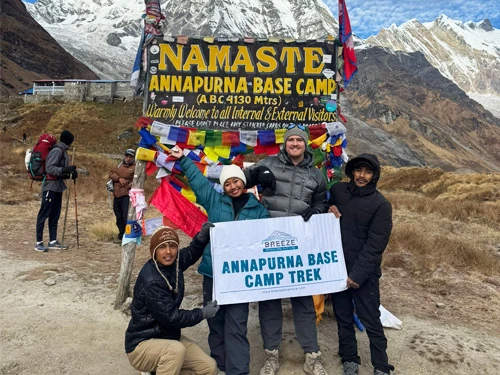
Annapurna Base Camp | 4,130 m | 9-12 days | None | Low-moderate | 5/10 |
|---|
Manaslu circuit | 5,135 m | 14-16 days | Low | High | 7.5/10 |
|---|
Langtang valley | 5,030 m (Tserko Ri, highest point of the trek) | 7-10 days | None | Moderate | 5/10 |
|---|
Kilimanjaro | 5,895 m | 7-8 days | None | Very High | 7.5/10 |
|---|
Everest three passes | 5,545 m | 18-20 days | Low | Very high | 9/10 |
|---|
Planning to do Annapurna Base Camp first as a warm-up? Read our Annapurna vs EBC comparison guide.
EBC vs Kilimanjaro is the comparison we find most. Kilimanjaro is higher (5,895m at Uhuru Peak) and reaches its summit faster (often in 5 to 8 days) which actually makes its altitude risk higher, not lower, because there's less time to adapt. EBC tops out lower but spreads the climb over more days with two dedicated acclimatization stops, so the ascent profile is gentler. Kilimanjaro's single long summit night is a sharper, more concentrated effort; EBC's difficulty is the slow accumulation of many days above 4,000m. Neither needs technical skills.
The honest takeaway: EBC is not the hardest trek in Nepal or the world, but it has the longest sustained time above 4,000m of any non-technical trek most people consider. That day-after-day altitude exposure is what sets it apart from shorter high-altitude routes.
If you'd like to test yourself before committing, Annapurna Base Camp is a good trial run because it is lower, shorter, and a clear read on how your body handles extended mountain days.
How Hard Is Kala Patthar?
Kala Patthar is harder than Base Camp, and it rewards you with the most stunning view of Mount Everest on the entire route. At 5,545m it sits 181m higher than Everest Base Camp, and 381m higher than Gorak Shep. Most people climb it on the morning after reaching Base Camp. So, you arrive at the bottom of it already tired. That timing is what makes it brutal.
The final section is roughly 45 minutes of steep, loose scree with no switchbacks, usually started at 4-5am for sunrise, which adds cold and darkness to the effort. Here is the payoff: Kala Patthar is the only point on the standard route with an unobstructed view of Everest's summit pyramid. Base Camp itself is ringed by moraine, and you cannot actually see Everest from there. Almost everyone who reaches Kala Patthar calls it the highlight of the trip.
Is the Everest Base Camp Trek Hard for Beginners?
Plan it poorly and EBC is hard even for active trekkers. Prepare properly and it is achievable even for people who have never trekked at high altitude. Every year, many first-time trekkers reach Base Camp successfully with careful planning.
Trekker Type | Suitability | Expected difficulty | Advice |
|---|
Active walker | Excellent | Moderate | Hike 4-5 hours at least twice weekly |
|---|
Gym-fit, little hiking | Good | Moderate-challenging | Add outdoor endurance training |
|---|
Complete beginner | Fair | Challenging | Train for several months |
|---|
Older trekker in good health | Good | Moderate-challenging | Prioritize acclimatization |
|---|
Fast, competitive walker | Good | Moderate | Avoid ascending too quickly |
|---|
Not sure which category you fall into? Contact our team for a free pre-trek fitness consultation.
How Fit Do You Need to Be?
You don’t need elite fitness, but “average fitness” is too vague to plan around. Here are real benchmarks. You are ready if you can:
- Hike 5-7 hours consecutively while carrying a 5-7kg daypack
- Complete a full-day hike with 600-800 m of elevation gain without needing a recovery day afterward
- Walk on uneven terrain without ankle or knee trouble
- Do cardio (running, cycling, swimming) 3-4 times a week comfortably
Recommended training plan, starting at least 3 months out:
- 3-4 cardio sessions a week (running and stair climbing are the most relevant)
- Weighted day hikes every weekend, getting progressively longer
- At least two back-to-back overnight hikes before you leave, so you know how your body handles consecutive days
- Leg and core strength work (squats, lunges, single-leg exercises)
Everest Base Camp Trek Difficulty FAQs
Q. How hard is the Everest Base Camp Trek?
It's moderate to challenging, driven by altitude and multi-day hiking demands rather than technical climbing. On a 1–10 scale we rate it 7/10 for a prepared trekker.
Q. Is Everest Base Camp hard for beginners?
It's achievable for beginners who prepare properly, follow the acclimatization schedule, and trek at a sensible pace. Do several full-day hikes and at least one overnight trek before you go.
Q. What is the hardest day of the EBC trek?
The Kala Patthar summit morning. You're already tired from a week at altitude, and the final climb is steep loose scree in thin, cold air, usually before sunrise. It's also the most rewarding day.
Q. Can you do EBC without training?
Some very fit people do, but the comfort and success gap between trained and untrained trekkers is large. Most people who struggle simply didn't prepare. Training is strongly recommended.
Q. How fit do you need to be for Everest Base Camp?
Fit enough to hike 5–7 hours on consecutive days carrying a light daypack, and to complete a full day with 600–800m of gain without needing a recovery day.
Q. Is Kala Patthar harder than Everest Base Camp?
Yes. Kala Patthar is 181m higher than Everest Base Camp and 381m higher from Gorak Shep, the final section is steep loose scree, and most trekkers climb it the morning after reaching Base Camp. It also offers the only clear view of Everest's summit, which Base Camp itself doesn't have.
Q. Is altitude sickness common on the EBC trek?
Mild symptoms are fairly common. Proper acclimatization and telling your guide early keep the risk low and manageable.
Q. Is the Everest Base Camp trek mentally hard?
For many trekkers, yes and sometimes harder than it is physically. The relentless routine, cold nights, poor sleep, and altitude-driven low mood test your patience and resolve over nearly two weeks. Breaking the trek into one day at a time, expecting a low patch, and leaning on your guide and group are what get most people through.
Q. What percentage of trekkers complete Everest Base Camp?
On a properly paced, guided itinerary, success rates are high. Most estimates put them at 85-90%. The main reasons people don't finish are AMS, injury, and weather, and rushing the schedule accounts for a large share of altitude-related turnarounds.
Final Verdict
The Everest Base Camp trek is genuinely hard, and genuinely achievable. Those aren’t contradictions, they’re what makes the trek worth doing. The real obstacle is altitude, not technical climbing skill or extreme fitness. The cumulative fatigue of eleven-plus walking days will test your resolve as much as your legs, and the Kala Patthar morning will probably be the hardest thing you’ve done outdoors.
But the trekkers who finish aren't a special category of person. They're people who prepared, paced themselves, listened to their guides, and didn't try to rush the mountain. The reward is one of the most iconic experiences on Earth: standing beneath Everest, surrounded by the peaks of the Khumbu.
If you're ready, view our Everest Base Camp trek packages, itineraries, and 2026 pricing, or reach us to talk through the right itinerary for your fitness and timeline.