If you have ever stood on a rooftop in Kathmandu on a clear winter morning and seen the white wall of the Langtang range floating above the haze, you already understand the appeal of Yala Peak. It is right there. No long flight to Lukla, no two-week approach. A bus leaves the city in the morning, and within a few days of walking, you can be standing on a 5,500-metre summit with a glacier under your boots and an 8,000-metre Tibetan giant filling the horizon.
The Yala Peak trek is, for my money, the most sensible first climb in Nepal. It is close to Kathmandu and is genuinely affordable. The climbing is about as gentle as a Himalayan summit gets, and the Langtang valley you walk through to reach it is quietly one of the most beautiful in the country.
This guide from Breeze Adventure covers everything a first-timer actually needs. How high Yala Peak really is, what it costs in 2026, the permits (there is good news there), the day-by-day route, how hard it is, when to go, and how it stacks up against Mera Peak if you are weighing your options.
Table of Contents
Yala Peak at a glance
Summit Elevation
~5,500 m (commonly cited); NMA officially lists 5,732 m
Region
Langtang, north-central Nepal, near the Tibetan border
Base
Kyanjin Gompa (3,870 m); high camp at Yala Kharka (~4,600-4,800 m)
Difficulty
Easy to moderate (graded Facile). Non-technical; altitude is the real test
Trip Length
10–14 days door-to-door from Kathmandu
Climbing Permit
Royalty-free as of 2026 (no NMA fee)
Other Permits
Langtang National Park entry + TIMS, plus a licensed guide (mandatory)
Best Seasons
Mid-September to November; March to May are best, but doable throughout the year
Typical package cost
Around USD 1999-2200 per person, depending on services
Gear used
Crampons, ice axe, harness, rope on the final snow section
Why Yala Peak is the right first climb
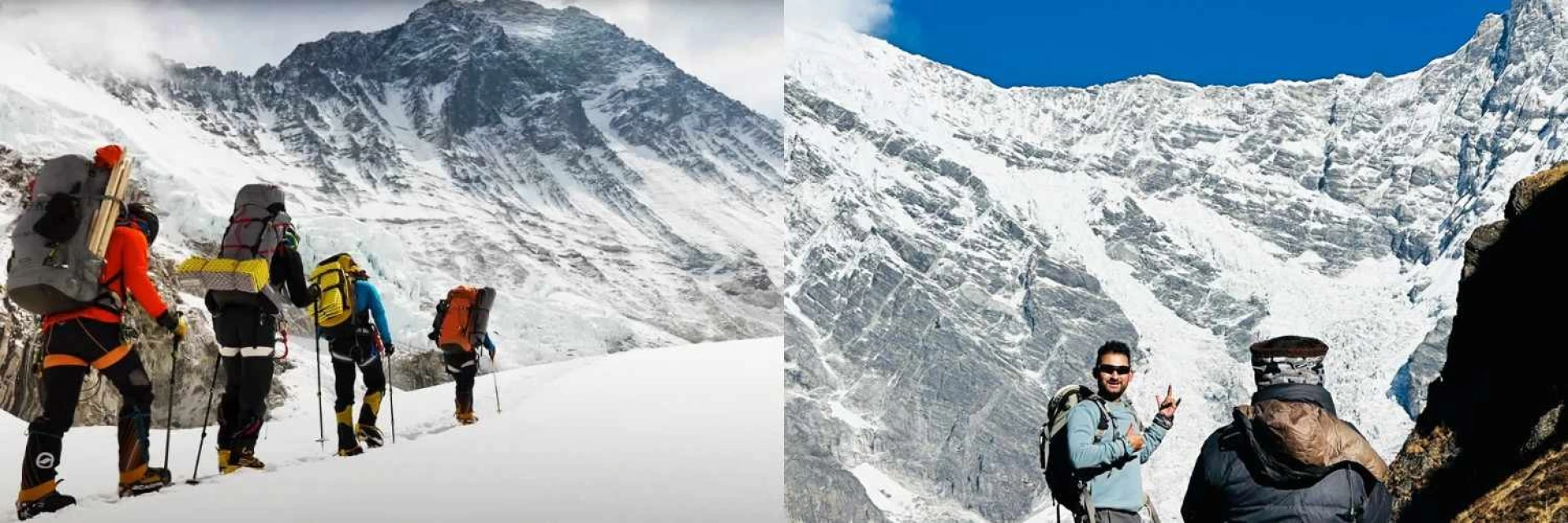
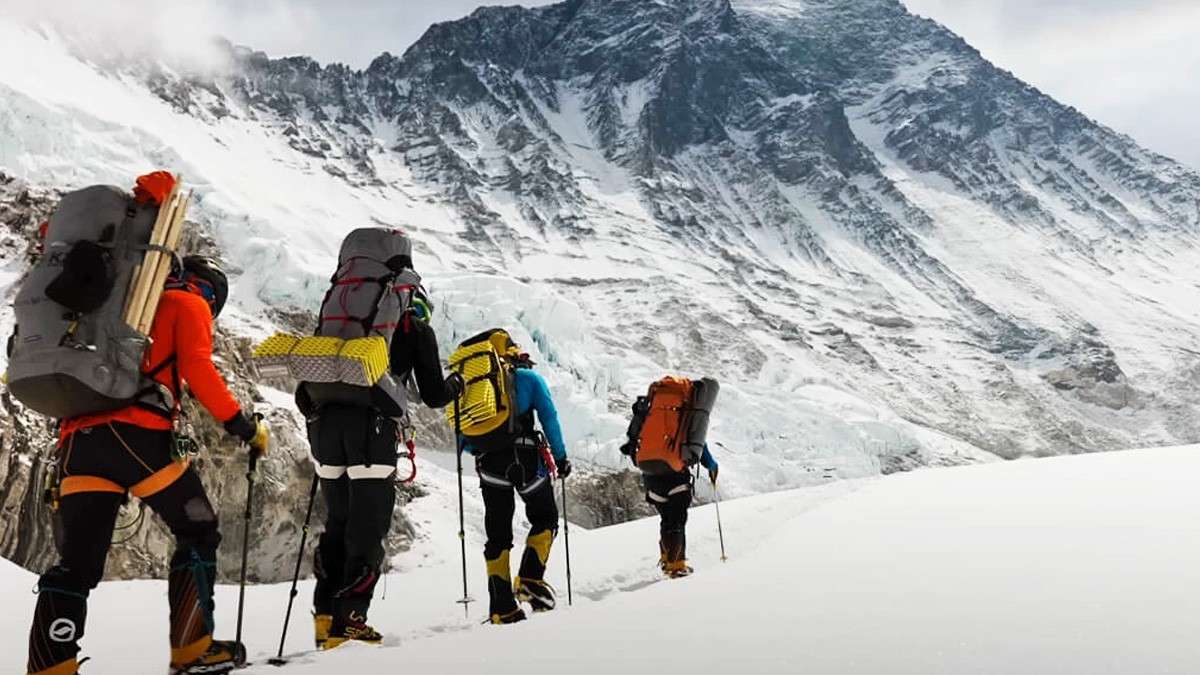
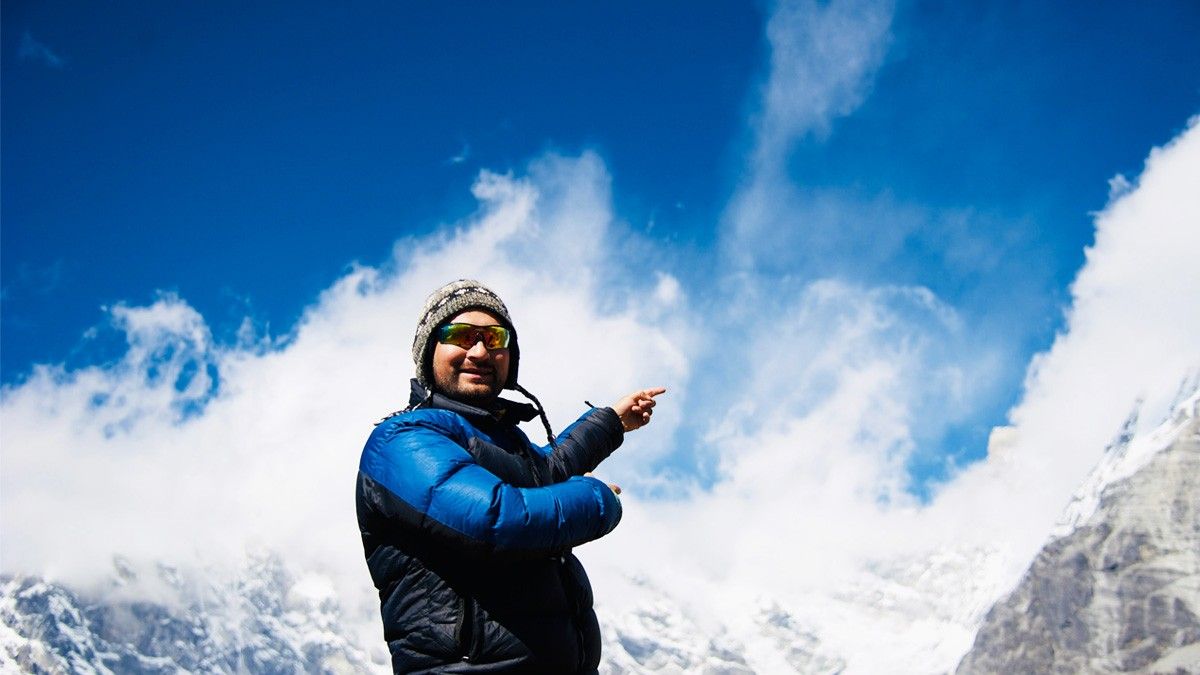
Trekkers climbing Yala Peak with right gear and preparation
Most first-time climbers in Nepal end up choosing between Yala, Island Peak, and Mera Peak. Island and Mera are bigger, more famous, and more demanding. Yala is the one almost nobody regrets starting with.
The reason is simple: the climb itself asks very little in the way of technique. The route to the top is mostly a steady walk-up over rock and then snow, with crampons and an ice axe coming out only for the final stretch below the summit. There are no crevasse fields to thread through, no fixed ladders, no steep ice wall like the headwall on Island Peak.
Similarly, guides routinely describe it as the easiest trekking peak in the country, and the grade backs that up. What you are really doing on Yala is learning the rhythm of a summit day, getting comfortable in crampons, and finding out how your body handles thin air, all in a low-consequence setting.
For a trekker who has done a few multi-day walks and wants to find out whether mountaineering is for them, that is exactly the right amount of challenge. Plenty of people climb Yala, catch the bug, and go straight on to plan something at 6,000 metres. It is a stepping stone and a confidence-building one.
The other half of the appeal is the approach. You do not fly anywhere. The Langtang Valley is the closest major trekking region to Kathmandu, which keeps both the cost and the faff down, and the valley is far quieter than the Everest or Annapurna trails. You walk through rhododendron forest, past Tamang villages and mani walls and the odd cheese factory, with Langtang Lirung looming over the whole thing. It feels remote without being hard to reach.
How high is Yala Peak, really?
Here is something the internet tends to gloss over: the sources do not agree on Yala Peak's height.
You will see three numbers floating around. The most commonly cited summit elevation, and the one Wikipedia uses, is 5,500 m (about 18,000 ft). A lot of operators list 5,520 m. And the Nepal Mountaineering Association, which is the body that actually authorises the climb, officially records it as 5,732 m.
Why the spread? Partly it comes down to old survey figures versus newer GPS readings, partly to whether a source is measuring the true summit or a slightly lower point people commonly turn around at, and partly to numbers getting copied from one website to another without anyone re-checking.
For planning purposes, think of Yala as a 5,500-metre peak. If you want the figure that appears on the official paperwork, it is 5,732 m. Both are correct depending on who you ask, and neither changes how the climb feels.
What matters more than the exact summit altitude is the profile to get there, because that is where the difficulty actually lives. You will sleep at 3,870 m in Kyanjin Gompa, push up to a high camp around 4,600-4,800 m, and summit somewhere above 5,500 m. That is real altitude, and the valley gains it fairly quickly.
Where Yala Peak is, and getting there from Kathmandu
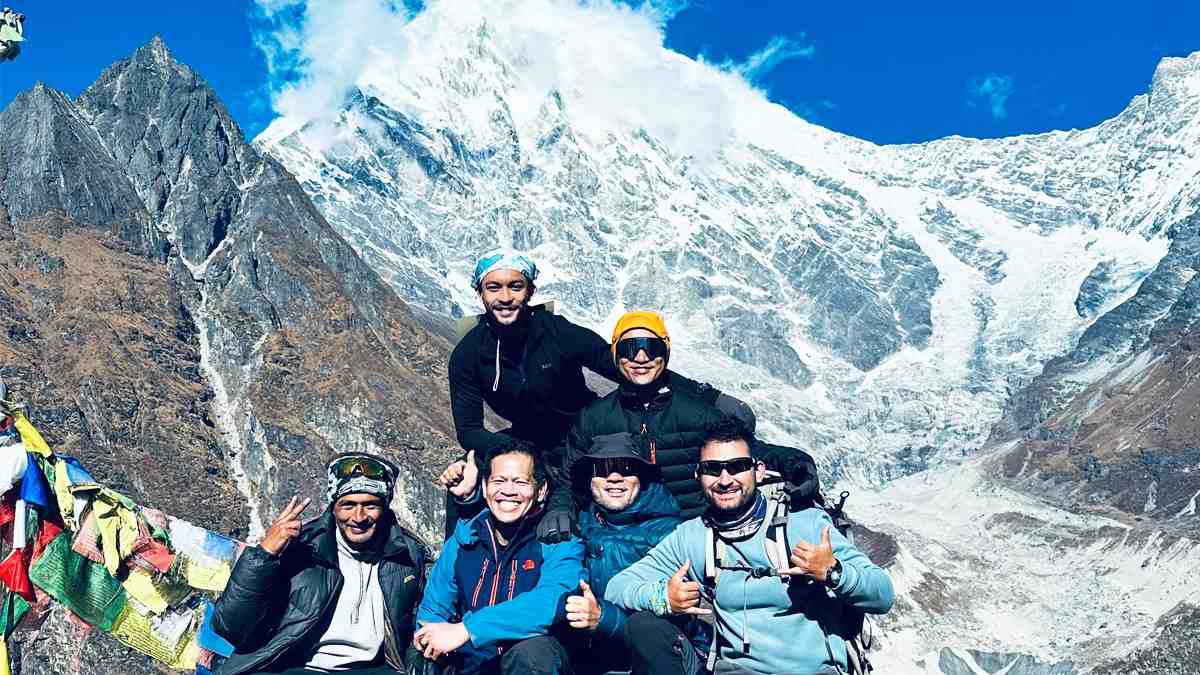
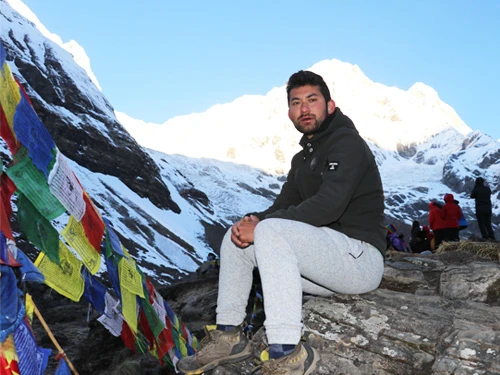
Happy Trekkers in Yala Peak Trail after few days of walking
Yala Peak sits in the Langtang Himal, roughly 120 km north of Kathmandu Valley and very close to the Tibetan border. The whole climb takes place inside Langtang National Park.
There is no airport, which is part of why the trip stays cheap. Everyone starts the same way: a road journey to Syabrubesi (1,503 m), the gateway village where the trail begins. The drive is about 122 km, but do not let that fool you into thinking it is quick. The road starts paved and turns rough and winding past Dhunche, and depending on your vehicle and the season, it takes anywhere from six to nine hours.
A few honest warnings- Leave early to dodge the afternoon traffic out of the city. The last stretch is dusty in the dry season and prone to landslides in the monsoon, so the timing of your trip affects the drive as much as the trek.
And the road shares space with cargo trucks heading to the Rasuwagadhi border crossing with Tibet. So do not expect a smooth tourist highway. It is a working mountain road. Bring something for motion sickness if you are prone to it.
Permits for Yala Peak in 2026: The good news
This is the section that has genuinely changed, and where a lot of older articles will steer you wrong.
You no longer pay a climbing permit fee for Yala Peak. In 2025, the Ministry of Tourism and the Nepal Mountaineering Association decided that peaks under 5,800 m would be promoted as free trekking peaks, and the royalty fee was waived. Yala is on that list, alongside Mardi Himal, Tent Peak, Chukung Ri, and Pokalde.
So while climbers heading up Mera or Island Peak now pay USD 175–350 in NMA royalties depending on season, Yala costs nothing in climbing-permit terms. That is a big part of why it has become the budget climber's favourite.
What you still need:
Langtang National Park Entry Permit: around NPR 3,000 for foreign nationals (roughly USD 25–30), and NPR 1,500 for SAARC nationals.
TIMS card (now e-TIMS): the Trekkers' Information Management System registration, around NPR 2,000. In Langtang, the old paper card has moved to a digital QR-code system tied to your passport and guide. It is still required here, even where other regions are phasing it out.
And the one rule that catches people out:
A licensed guide is mandatory. Since April 2023, Nepal has banned solo trekking for foreigners in national parks and conservation areas, and the rule is still firmly enforced in Langtang in 2026. The old independent "green" TIMS card is gone. You must trek with a licensed guide booked through a registered (TAAN-member) agency, and that agency arranges your permits and TIMS for you. Checkpoints along the trail check guide credentials, and being caught without one can mean a fine or being turned back.
The practical upshot: any cost breakdown you find online that describes climbing Yala completely solo for a couple of hundred dollars is out of date and, as written, no longer legal. Budget for a guide. The flip side is that the guide handles all the paperwork, so the permit process is genuinely painless from your end.
What does climbing Yala Peak cost?
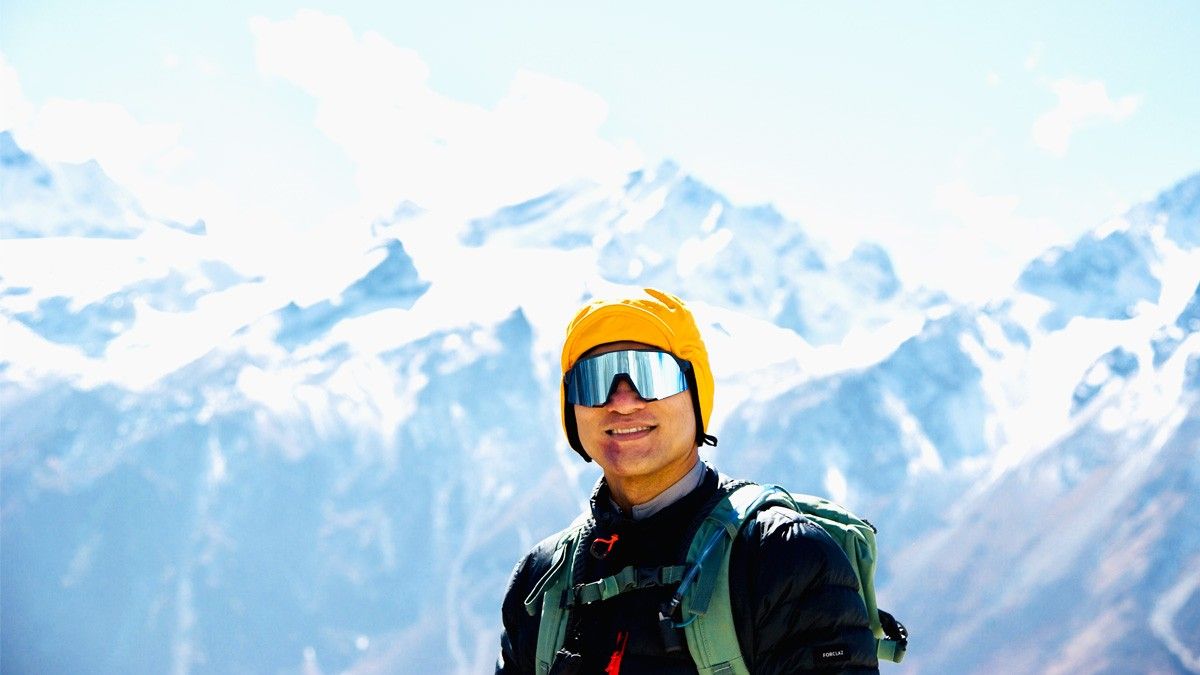
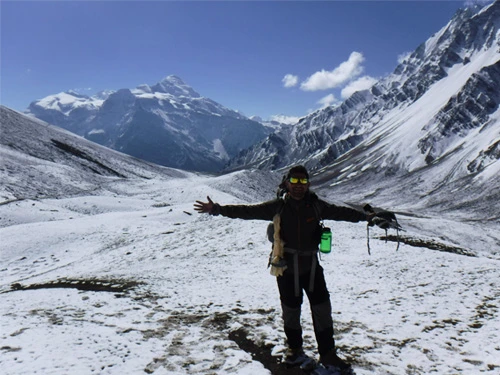
Trekker giving a smile of satisfaction infront of Yala Peak
Yala is widely considered the most cost-effective Himalayan summit for beginners. And the waived climbing fee is the main reason. Here is a realistic picture for 2026.
Most people book an organised package, and an all-inclusive Yala Peak trip typically runs USD 1999 to 2200 per person. This is absolutely customizable based on your itineraries. If you want this trip to be finished in less than a week, you will pay less. With budget group departures sometimes dipping under a thousand, and well-supported small-group trips land higher. Group size is the single biggest lever: the more people sharing a guide and logistics, the lower the per-head price.
A typical package covers your Kathmandu hotel nights, the road transfers, all permits and TIMS, the guide and porters, teahouse accommodation on the trek, tented camp and meals at high camp, three meals a day on the trail, and the shared climbing gear (rope, ice axe, crampons, harness) for the summit.
If you are price-conscious, a rough breakdown of the unavoidable fixed costs looks like this:
Item
Approx. Cost
Climbing permit (NMA royalty)
Free
Langtang National Park entry
NPR 3,000 (~USD 25–30)
TIMS / e-TIMS
NPR 2,000 (~USD 17)
Licensed guide
~USD 25–35 per day (often included in packages)
Porter (optional, shared)
~USD 20–25 per day
All these permits, guides, and porters’ fees, 3 meals a day, hotel rooms, and basic services are included within the package.
Where you can save: travel in a group, rent gear in Kathmandu's Thamel rather than buying it, and go in a shoulder period rather than peak October.
Where you should not cut corners: your guide, your insurance, and your acclimatisation days. Skimping on any of those three is how a cheap trip becomes an expensive evacuation.
One more thing on insurance: make sure your Nepal travel policy covers high-altitude trekking and helicopter rescue up to at least 6,000 m. Standard policies often cap out well below that.
Yala Peak itinerary: a realistic 13-day plan
There are shorter and longer versions of this trip floating around, but a sensible first-timer's itinerary builds in proper acclimatisation. The single most important feature of a good Yala plan is rest days at Kyanjin Gompa before you climb. So do not let anyone rush you up the valley. Here is a route that works.
Day 01: Arrive in Kathmandu and transfer to your hotel. The team briefs you on the trek and checks your gear. (Altitude: 1,400 m)
Day 02: Scenic drive north to Syabrubesi, over winding hill roads. Overnight at a local lodge after about six hours on the road. (Altitude: 1,503 m)
Day 03: Trek to Lama Hotel along the Langtang Khola, crossing suspension bridges through oak and rhododendron forest. A steep final ascent brings you in after around six hours. (Altitude: 2,340 m)
Day 04: Climb through maple and oak forest toward the open Langtang valley, with clear views of Lirung. Pass Ghora Tabela en route to Langtang village. (Altitude: 3,480 m)
Day 05: Gentle uphill that steepens past Sindum and Yamphu villages, crossing the Laja Khola. A short three-hour day ends at Kyanjin Gompa, ringed by high peaks. (Altitude: 3,870 m)
Day 06: Acclimatization day with an early hike up Tserko Ri for sweeping sunrise views. Return to Kyanjin Gompa by afternoon to explore the monastery. (Altitude: 4,780 m)
Day 07: Trek up to Yala Peak Base Camp and set up the tented camp. Spend the day resting and preparing for the summit push. (Altitude: 4,800 m)
Day 08: Pre-dawn climb to the summit of Yala Peak for a full panorama of the Langtang range. Descend carefully back to base camp. (Altitude: 5,500 m)
Day 09: Begin the descent, retracing the trail back down to Kyanjin Gompa. An easier four-hour day. (Altitude: 3,870 m)
Day 10: Long descent back to Lama Hotel through small Tamang villages. Stop for tea and take in views missed on the way up. (Altitude: 2,340 m)
Day 11: Easy, mostly downhill walk to Syabrubesi via Sherpa Gaon. Pause there for lunch before finishing the day. (Altitude: 1,503 m)
Day 12: Drive back to Kathmandu, around seven to eight hours through rolling hills and villages. Celebrate with a farewell dinner in the evening. (Altitude: 1,400 m)
Day 13: Transfer to Tribhuvan Airport for your departure. End of the trip.
Note how the summit sits late in the trip, after acclimatisation. That structure is what gives Yala its high success rate. An itinerary that skips those days is cheaper and faster and considerably more likely to end with you turning back short of the top with a splitting headache.
How difficult is Yala Peak?
Yala Peak has the highest success rate among the Himalayan Trekking Nepal
Let me be straight with you, because the marketing tends to oversell the "easy" angle. Yala Peak is technically easy and physically demanding. Those are not the same thing.
On the technical side, the climb deserves its reputation. It is graded Facile, the lowest mountaineering grade. The route is mostly walking and scrambling on rock, with a final snow-and-ice section where you will use crampons, an ice axe, and a rope for safety. There is some loose rock to watch on the scramble, and the summit ridge is a short, steeper bit. But there is no real climbing in the technical sense. If you can walk uphill in crampons and follow your guide's instructions on the rope, you have the skills.
The difficulty is almost entirely about altitude and fitness. You are spending several days above 3,500 m and summiting above 5,500 m, and the Langtang valley gains height fairly fast, with a couple of days of serious ascent. Altitude sickness is the genuine risk here, not a fall. Summit day is long and cold, often starting before dawn, with five to seven hours of effort on thin air. You need to be fit enough to walk five to seven hours a day for over a week, and you need to respect the acclimatisation schedule.
Actually, the people who struggle on Yala are almost never the ones who lack climbing technique. They are the ones who arrived underprepared in fitness, or who rushed the valley and never let their bodies adjust. Train your cardio, build some leg strength, do a long hilly day-hike or two before you come, and take the rest days seriously. Do that, and Yala is well within reach for a fit beginner who has never touched an ice axe.
When to climb: Yala Peak weather and the best seasons
Like most of Nepal, Yala has two prime windows, and they are the standard trekking seasons.
Autumn (mid-September to November) is the most popular and, for many, the best. The monsoon has washed the air clean, skies are clear, the views of Shishapangma and Langtang Lirung are at their sharpest, and the temperatures are settled. October is the sweet spot. The trade-off is that you are sharing the trail with the year's biggest crowds, though Langtang is still far quieter than Everest or Annapurna in the same months.
Spring (March to May) is the other strong choice. The weather is stable and warming, days get longer, and the rhododendron forests lower in the valley come into bloom, which is genuinely lovely on the walk in. Slightly hazier afternoons than autumn, but a beautiful time to be in Langtang.
If you want peaceful trails and budget travel, then try off-season. A winter trek to Yala Peak can be the best option for fewer crowds and snow scenery on the trail. This is less competitive than the primary season, so you will get some budget relief. However, this requires some training and preparation. The paths can be slippery if snow falls.
Likewise, the Monsoon Yala Peak Trek can be a big attraction due to the greenery and vibrant waterfalls. This is also off-season time, so you can expect a budget trek with peaceful trails. But this season can be a little risky if there is a heavy downpour. There will be chances of landslides, leeches, and slippery paths.
Whatever month you choose, summit-day mornings are cold, and the weather can turn fast at altitude. This is why a spare weather day in the itinerary is not a luxury.
Yala Peak vs Mera Peak: which first climb is right for you?
This is the comparison most first-timers actually want, so let me lay it out plainly. Both are classed as trekking peaks, but they are different.
Basis
Yala Peak
Mera Peak
Height
~5,500 m (NMA: 5,732 m)
6476 m
Region
Langtang (near Kathmandu)
Everest Regio (fly to Lukla)
Technical Difficulty
Facile - easiest trekking peak
Non-technical, but a long glacier climb
Glaciers / crevasses
None
Yes - crevassed glacier travel
Trip Length
10-14 days (can be customized to shorter days)
15-18 days
Climbing Permit
Free (royalty waived)
USD 175–350 by season
Cost
Lower
Higher
Summit View
Shishapangma, Langtang Lirung, Dorje Lakpa
Everest, Lhotse, Makalu, Cho Oyu, Kanchenjunga
Best For
Total beginners, tight budgets, limited time
Fit trekkers wanting a high summit and the Everest panorama
The short version: choose Yala if you are a genuine beginner, watching your budget, or short on time, and you want the highest possible chance of standing on a summit. Choose Mera Peak Trek if you are already fit, willing to train hard for the altitude, and your heart is set on that wall of 8,000-metre peaks at sunrise.
Mera is nearly a kilometre higher, it crosses real glaciers, and it costs and takes more. Many climbers do exactly what I would suggest: Yala first, then Mera or Island Peak once they have a summit under their belt.
One myth worth killing here, because several guides imply otherwise: you cannot see Everest from the summit of Yala Peak. The Langtang range blocks it. What you get instead is a superb close-up of Shishapangma across the Tibetan border, plus Langtang Lirung, Dorje Lakpa, Gangchempo, and Ganesh Himal. It is a magnificent view. It just is not an Everest view. If seeing Everest from the top is the dream, that is a Mera or Island Peak trip.
Yala Peak Devastation- Remembering the 2015 earthquake
It would be wrong to write a guide to this place without mentioning what happened here, and it is something the glossier itineraries skip.
When the April 2015 earthquake struck Nepal, the Yala Peak region was one of the worst-hit places in the country. A massive avalanche and landslide came off the mountains above and buried Langtang village almost entirely. Hundreds of people died, locals and trekkers alike, and the valley was closed to visitors for months afterward.
What you walk through today is a community that rebuilt itself. The Langtang village you pass on day three was reconstructed on safer ground, and the teahouses and lodges along the trail are largely new, raised by families who lost almost everything and chose to stay.
When you stop for tea, when you sleep in a guesthouse, when you hire a local guide or porter, that money goes directly into that recovery. It is worth knowing the weight of the place you are passing through, and treating it and the people with the respect that history deserves.
Yala Peak Trek Training and what to pack
You do not need a gym membership and a year of preparation, but you do need to arrive fit. For training, focus on cardio you can sustain for hours rather than short bursts: long walks with a loaded pack, hill repeats, stairs, running, or cycling. Add some leg and core strength work. If you can comfortably hike for six hours over hilly ground carrying a daypack, you are in good shape for Yala.
For gear, your agency will provide the shared technical kit (rope, ice axe, crampons, and usually a harness) for the climb itself, and you can rent personal mountaineering gear cheaply in Thamel before you leave.
The essentials you bring or rent: sturdy, broken-in trekking boots, plus stiffer mountaineering boots for the summit if your agency advises; a warm down jacket; thermal base layers; a four-season sleeping bag; gloves, hat, and a buff; good sunglasses and high-SPF sunscreen for the glare on snow; a headlamp for the pre-dawn summit start; trekking poles; and a personal first-aid kit.
Talk to your guide about whether your trip requires you to wear double mountaineering boots for the snow section, since that depends on the season.
Questions first-timers actually ask
Can a complete beginner climb Yala Peak?
Yes, and most people who do have never used an ice axe before. You need fitness and good acclimatisation far more than you need climbing experience. The technical side is taught and supported by your guide on the mountain.
Do I really need a guide?
Yes, it is a legal requirement in Langtang, not a sales pitch. Solo foreign trekking is banned here and enforced at checkpoints, considering safety.
Is there a separate climbing permit fee?
No, not anymore. Yala's royalty was waived in 2025. You still pay the national park entry and TIMS, which your agency arranges.
How long do I need for the Yala Peak Trek?
Plan for 10 to 14 days from Kathmandu and back. Shorter "express" itineraries exist, so you can customize the days as per your preference.
Will I see Everest in the Yala Peak Trekking?
No, the Langtang range hides it. You will see Shishapangma and the Langtang peaks, which are their own kind of spectacular.
What is the success rate of Yala Peak?
High, for a Himalayan summit, precisely because the climbing is easy and good itineraries build in acclimatisation. Weather and altitude are the usual reasons people turn back, not the difficulty of the climb.
Is it suitable for kids or older trekkers?
Fit teenagers and active older trekkers manage it regularly. With proper preparation and right guidance, even kids can do this, but they may require more days for acclimatization. It comes down to fitness and how you handle altitude, not age. Anyone with heart, lung, or serious knee issues should get a doctor's clearance first.
How hard is it to climb Yala Peak?
Technically easy, physically demanding. It is graded Facile, the lowest mountaineering grade, with crampons and an ice axe only on the final snow section, and no real climbing skill required. The actual challenge is altitude and fitness, so if you can hike five to seven hours a day over hilly ground, it is well within reach for a fit beginner.
How high is Yala Peak?
Commonly cited as about 5,500 m (roughly 18,000 ft), though sources disagree. The Nepal Mountaineering Association officially lists it as 5,732 m, and many operators say 5,520 m. For planning, treat it as a 5,500 m peak; for the official paperwork, it is 5,732 m.
Last Words
If you want a real Himalayan summit, close to Kathmandu, light on the wallet, and forgiving for a first attempt, it is genuinely hard to do better than Yala Peak. The waived climbing permit makes it the cheapest summit of its kind in Nepal right now.
Further, the Langtang valley is gorgeous and uncrowded, and the climb gives you a true taste of crampons and altitude without throwing you in at the deep end. Get fit, respect the acclimatisation days, go with a good guide, pick the right time, and there is every reason to think you will be standing on top, looking across at Shishapangma, wondering which mountain you climb next.
Kishwor Adhikari is a passionate writer with a deep enthusiasm for trekking and adventure. His extensive travels across Nepal, exploring its diverse landscapes and hidden corners, have shaped his unique perspective on the country's natural beauty. With a wealth of first-hand experience in adventure trekking, Kishwor has become a trusted voice for fellow enthusiasts. Through his writing, he shares invaluable insights, offering practical advice and inspiration for both seasoned trekkers and novices alike. His dedication to sharing his journey and knowledge helps others discover the wonders of Nepal's wilderness, making his work an essential resource for anyone seeking adventure in the region.