Kyanjin Gumba, also popularly known as Kyanjin Gompa, is a quiet yet powerful symbol of resilience in the Nepal Himalaya. It is at the lap of Langtang Mountain and marks the end point of the Langtang trail. Today, it appears as a peaceful and slightly flat settlement ringed by dramatic snow-covered peaks. However, the calm beauty you see now is the result of strength, rebuilding, and unity after the devastating April 2015 earthquake.
As a local trekking professional, I have visited Kyanjin Gumba both before and after the earthquake. So, this guide shares real, experience-based knowledge grounded in trust and field expertise. Hope you will find this really useful in your Langtang Trekking Route.
Table of Contents
Where Is Kyanjin Gumba Located?
Kyanjin Gumba lies in the upper section of the Langtang region at an altitude of approximately 3,870 meters. As we know, many Himalayan settlements are built on steep slopes. But Kyanjin village sits on a wide and gentle valley floor. Literally, making it one of the rare flat villages at such a high elevation. Such altitude and acclimatization make people concerned about the Langtang Valley trek difficulty.
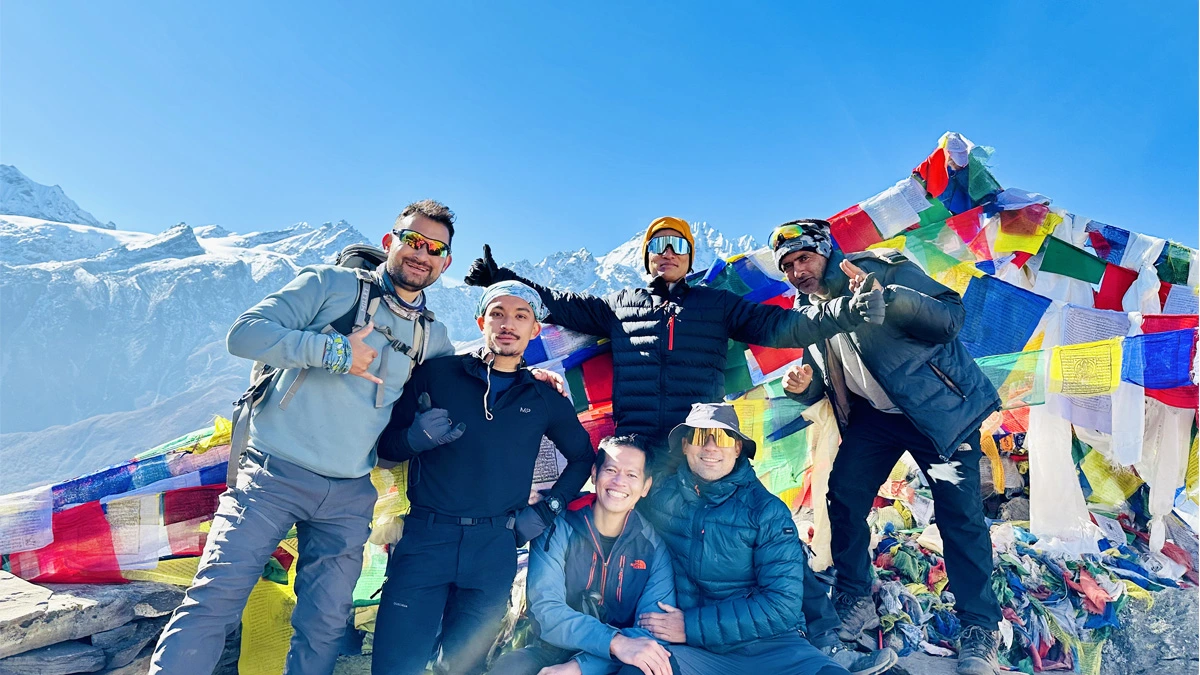
Breeze Adventure team at Kyanjin Ri located at 4700 meters in Langtang Region
High mountains surround the village from all directions, creating a natural amphitheater of rock, ice, and sky. Langtang Lirung dominates the horizon. Meanwhile, glaciers and rugged ridges stretch toward the Tibetan border. The place looks stunning if you trek at the best time to visit Langtang. So, this unique geography makes Kyanjin Gumba both visually striking and naturally protected.
A Village That Faced the 2015 Earthquake
Do you know, back in April 2015, the massive earthquake triggered avalanches and landslides across the Langtang region? Actually, the original Kyanjin Gumba village was completely destroyed. Nearly all houses, lodges, and community buildings collapsed under the force of the disaster.
What matters most, however, is this: the local people were safe.
Many villagers were away herding yaks or staying in safer locations when the earthquake struck. Homes were lost, but lives were spared. This reality still shapes how locals remember that time, with sorrow, but also deep gratitude.
Rebuilding a New Kyanjin Village
After the earthquake, the people of Kyanjin Gumba chose to rebuild rather than abandon their homeland. The new village was planned with safety and sustainability in mind. Stronger construction methods, better layouts, and improved facilities were introduced step by step.
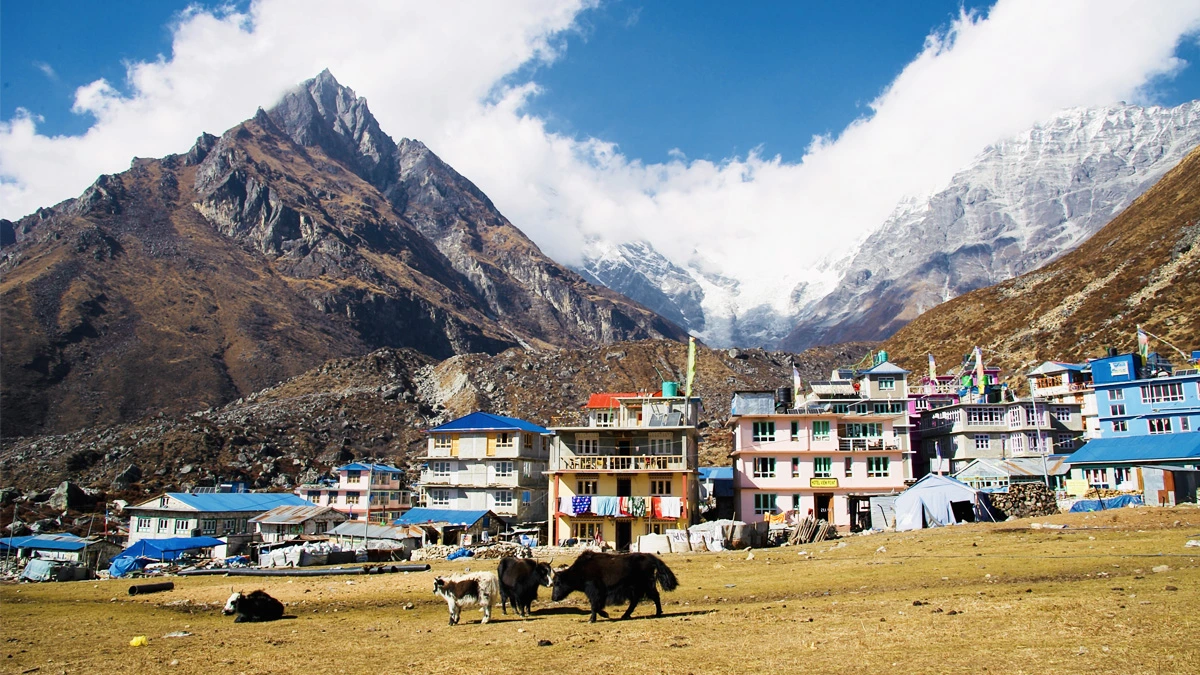
Today, Kyanjin village feels organized, clean, and welcoming. Guesthouses are built to be warmer and more secure, offering comfort even in colder months. Despite these modern improvements, the village has preserved its traditional Himalayan character. The rebuilt Kyanjin Gumba stands as a powerful example of how mountain communities can rise stronger after disaster.
The Historic Cheese Factory
One of the most iconic landmarks in Kyanjin Gumba is the historic cheese factory. It was established decades ago with Swiss support. The factory still produces yak and cow cheese using traditional methods. It has been passed down through generations.
Trekkers can visit the factory, observe the production process, and taste fresh Himalayan cheese. Simple, organic, and locally made, this cheese reflects the lifestyle of the region. The factory survived time, hardship, and change. Just like Kyanjin Gumba itself and continues to support local livelihoods today.
End Village of the Langtang Trail
Kyanjin Gumba is the final permanent settlement on the Langtang route. Beyond this point, the landscape turns wild and raw, with glaciers, moraines, and high alpine terrain replacing villages. There are no more tea houses or permanent homes ahead.
New settlement in Kyanjin Gompa
Because it is the end village, trekkers naturally slow down here. There is no rush to move forward. Instead, people rest, explore nearby viewpoints, and allow their bodies to adapt to the altitude. This makes Kyanjin Gumba a natural place for reflection and acclimatization.
Best Place for a Two-Night Stay
Most experienced guides recommend spending at least two nights in Kyanjin Gumba. Interestingly, this advice comes from real trail experience. Staying longer allows proper acclimatization and time to explore the surrounding mountains.
From the village, trekkers can hike to Kyanjin Ri for a short but steep panoramic climb. Then, attempt the higher and more demanding Tserkuri (Tserko Ri) Peak. They may also walk toward the Langtang Glacier for a quieter experience. These side hikes are rewarding and help the body adjust safely to altitude.
Culture, Peace, and Mountain Life
Life in Kyanjin Gumba moves slowly and meaningfully. Prayer flags flutter between rooftops, yaks graze quietly near lodges. And evenings are spent sharing warm meals in cozy dining halls. Mornings begin with crisp air, hot tea, and golden mountain light.
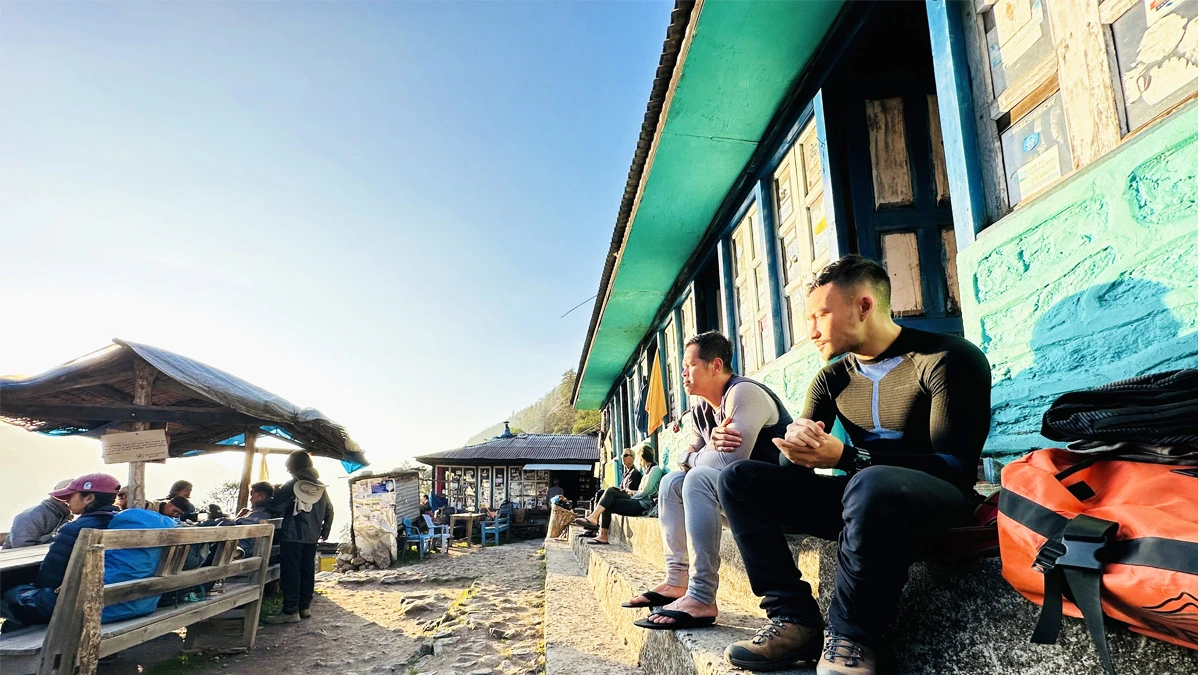
Trekkers enjoying Himalayan culture and food in Kyanjin Gompa Route
Although the village structures are new, the spirit of Kyanjin Gumba is deeply traditional. Tibetan Buddhist values, respect for nature, and genuine hospitality remain at the heart of daily life. This balance between renewal and tradition gives the village its unique charm.
Why Kyanjin Gumba Matters Today
Kyanjin Gumba is more than a trekking stop- it is a living lesson in resilience. The village shows what is possible when a community chooses rebuilding over retreat.
It represents courage after loss, unity after disaster, and harmony between people and nature. For trekkers, staying here is not only about mountain views or comfort. It is about understanding the human story of the Himalaya and witnessing how life continues. Even after everything, once fell apart.
Final Thoughts from a Local Guide
Today, Kyanjin Gumba stands stronger, safer, and more welcoming than ever before. The 2015 earthquake changed the village’s structure, but it did not break its spirit.
If you walk gently, stay a little longer, and listen to the silence around you. Kyanjin Gumba will leave a deep and lasting impression. It’s one that goes far beyond the trail itself. Knowing about the Langtang permits and local guide requirements helps you further in a smooth journey.
You May Ask: Frequently Asked Questions
How High is Kyanjin Gompa?
Kyanjin Gompa is located at an altitude of 3870 meters above sea level. It is the highest village settlement in Langtang Valley Nepal.
What does the name Kyanjin Gompa mean?
Kyanjin Gompa is believed to have been built from a rock that looks like camel ribs. Kyan means camel, and Jin means ribs in Tibetan words.
How do I get to Kyanjin Gompa?
First, you need to travel from Kathmandu to Syabrubesi by road. From there, kindly trek through the Langtang Valley for about 3-4 days to reach Kyanjin Gompa.
How far is Kyanjin Gompa from Kyanjin Ri?
Kyanjin Ri is about 2-3 km uphill from Kyanjin Gompa. The hike usually takes 3 to 4 hours round-trip. Mostly depending on pace and acclimatization.
What is Kyanjin Gompa famous for?
Kyanjin Gompa is famous for its ancient monastery, yak cheese factory, and close views of Langtang Lirung and surrounding peaks. It is also a key stop for trekkers exploring Langtang Valley.
Is it worth visiting Kyanjin Gompa?
Yes, the gompa is absolutely worth visiting for its mountain views, peaceful village life, and cultural value. It offers a perfect mix of nature, culture, and trekking experience.
Kishwor Adhikari is a passionate writer with a deep enthusiasm for trekking and adventure. His extensive travels across Nepal, exploring its diverse landscapes and hidden corners, have shaped his unique perspective on the country's natural beauty. With a wealth of first-hand experience in adventure trekking, Kishwor has become a trusted voice for fellow enthusiasts. Through his writing, he shares invaluable insights, offering practical advice and inspiration for both seasoned trekkers and novices alike. His dedication to sharing his journey and knowledge helps others discover the wonders of Nepal's wilderness, making his work an essential resource for anyone seeking adventure in the region.
.webp)