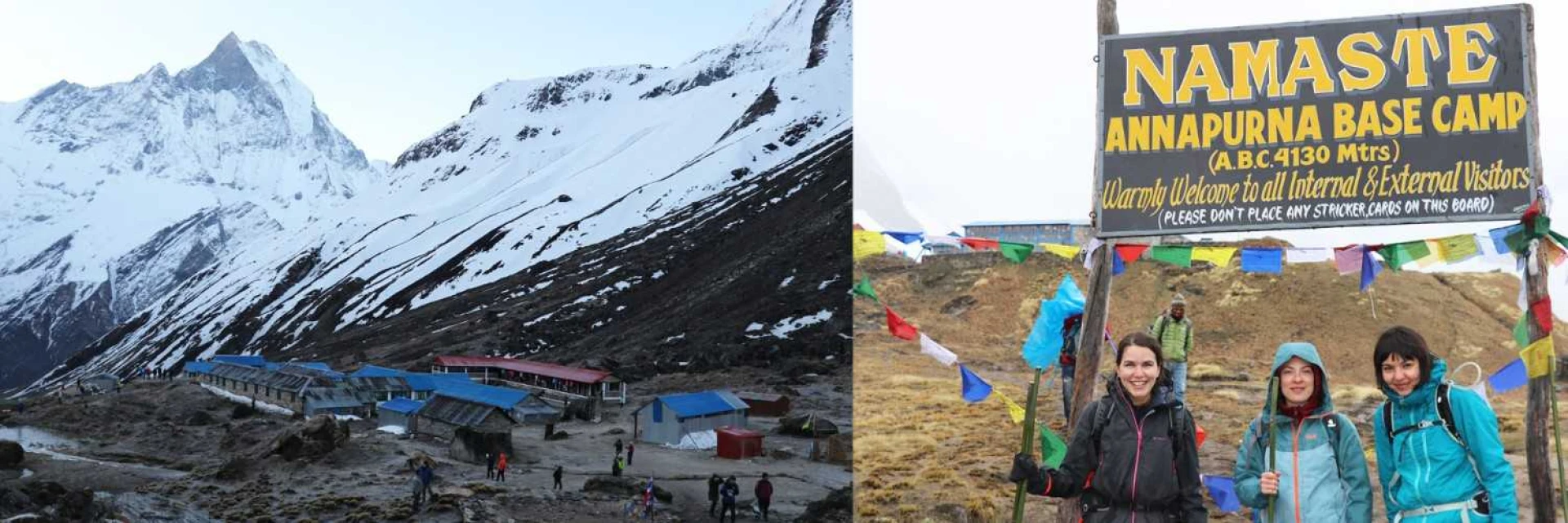
Annapurna Base Camp Trek in September is the right month if you want to experience the festive vibes and the unique local culture in the Himalaya. This is normally the end of the monsoon in Nepal, making for clear and soothing weather. The cherry on the cake is obviously the great festivals and jatras representing various communities of Nepal. Mountain beauty, thrilling adventure, accompanied by unusual culture and lifestyle. What else can you expect from ABC Trek, right?
Choosing September for your Annapurna Base Camp Trek experience is not just about enjoying festival vibes and suitable temperature, but it is also a smart move to avoid the crowd of October. Yes, October and April are often more crowded months, being peak season. However, September can be a goldmine for a peaceful trail with full focus on nature, culture, and adventure.
This guide from Breeze Adventure is based on my decades-long experience in Himalayan trekking and tours. Here, I have simplified the essence of September for ABC Trekkers. Let’s deep dive into why September is the best month for your Annapurna Base Camp Trek Nepal.
Table of Contents
Why September is the right pick for Annapurna Base Camp Trek?
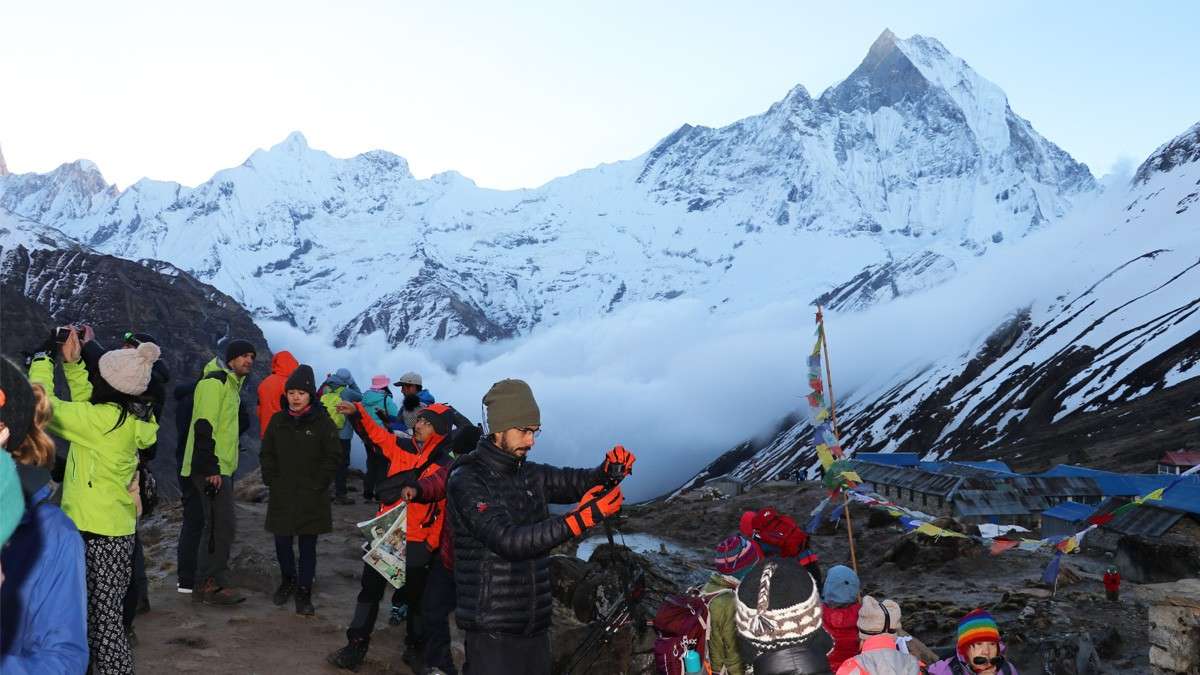
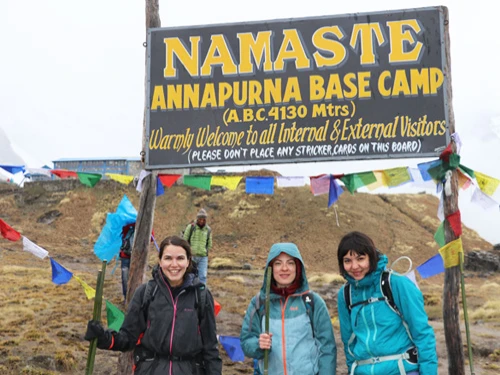
Trekkers taking photographs from Annapurna Base Camp
I've walked into Annapurna Base Camp more times than I can count on one hand, across three different seasons, and September is the month I keep telling friends to book. Not because it's flawless, but because nothing else on the calendar gives you this particular mix of clear skies, green hillsides, and quiet trails. Here are the major highlights, have a look:
1. The Air Finally Clears Up
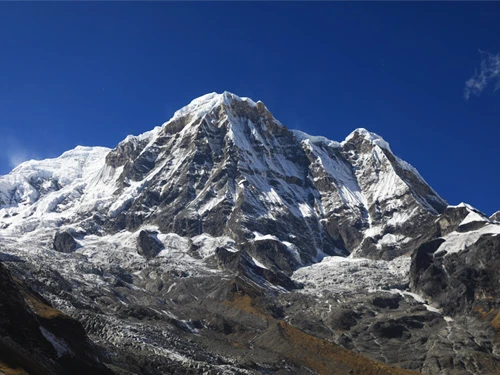
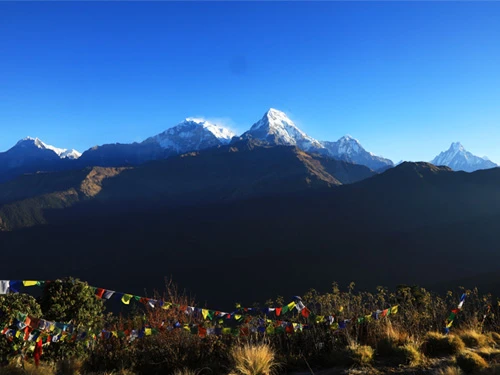
Monsoon rain washes the dust and haze out of the sky, and by September, the Annapurna range stops hiding behind a milky blur. Machhapuchhre's twin peaks and the Annapurna South wall show up sharp against a deep blue backdrop. You see stunning views, especially in the early morning before clouds build. If you've trekked in the pre-monsoon months and come home with hazy summit photos, this is the difference September makes.
2. Weather Settles Down
September trades the heavy afternoon downpours of August for shorter, more predictable showers, usually gone by evening. You get warm days on the lower trail through Ghandruk and Chhomrong, and cool but manageable nights once you climb past Deurali toward Machhapuchhre Base Camp. It's a gentler transition than jumping straight from monsoon into the cold snap of late October.
3. The Trail Is Genuinely Green
During this month, the ABC trek Nepal will have rice terraces around Nayapul and Kimrong at their fullest. LIkewise, waterfalls along the Modi Khola gorge are running hard, and the rhododendron forest between Bamboo and Dovan is thick with moss and undergrowth after weeks of rain. Photographers who only trek in the dry, dusty pre-monsoon window are missing this. September is when the Annapurna foothills actually look like the postcards.
4. You Miss the October Crowd
October is peak season for a reason, and that reason is also its downside: fully booked teahouses, queues at the ACAP checkpoint in Ghandruk, and dining halls where you're sharing a bench with twenty other trekkers. Go in September, particularly the second half, and you'll often have your pick of rooms at Deurali or MBC without a reservation scramble.
5. Festive Season Adds Something Extra
Nepal's biggest festivals, such as Teej, Indra Jatra, and Dashain- the biggest Hindu festival, usually fall in September. These festivals are observed differently across Nepal's diverse communities, reflecting unique cultural practices. Villages along the route start preparing well before the actual dates. They prepare for tika ceremonies, family gatherings, and swings built from bamboo in the courtyards of Ghandruk and Jhinu. Trekking through during this build-up gives you a look at Gurung and Magar village life that the trail doesn't offer the rest of the year.
6. Nights at Altitude Are Less Brutal
At 4,130 meters, Annapurna Base Camp is cold no matter the month, but September nights are noticeably milder than what you'll get in November, when temperatures at MBC and ABC regularly drop below freezing after dark. You still need a proper sleeping bag, but you're not fighting single-digit Fahrenheit cold just to get a night's sleep before sunrise views.
7. The Light Is Made for Photography
Wet ground and drifting cloud after the rains create the kind of soft, dramatic light that flat pre-monsoon skies rarely produce. The mist curling through the forest near Himalaya and Deurali, occasional rainbows over the valley, and sharp golden light on the peaks at dawn, once the clouds burn off. It's a harder month to predict than October, but when it delivers, it delivers big.
A quick note on the trade-off: early September still carries some monsoon residue. Expect muddy sections on the lower trail, the occasional leech below Chhomrong, and a chance of rain-shortened visibility in the first couple of weeks. If you want the safest bet, aim for the back half of the month, once the monsoon has properly retreated but before the October crowds arrive.
Why is September misunderstood for the ABC trek?
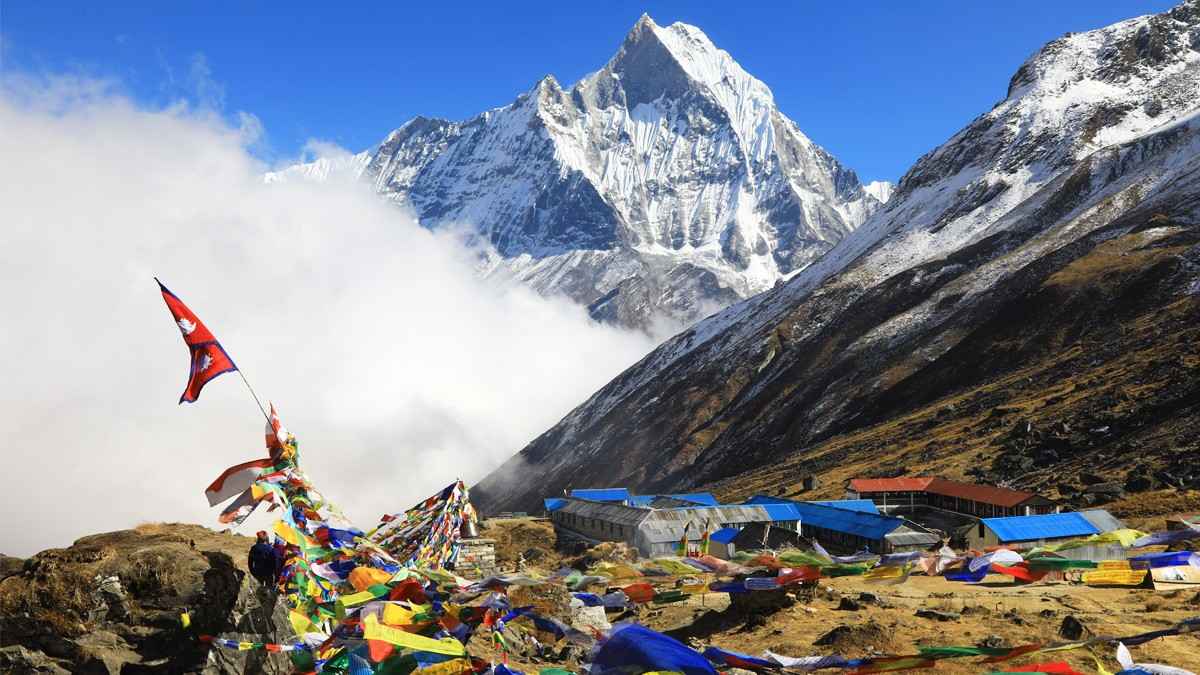
Beautiful mount view captured in ABC trek
Nepal's trekking calendar runs on two good windows, spring (March to May) and autumn (September to November), bookended by monsoon and winter. The best time to trek to Annapurna Base Camp falls in the same two windows. September sits right at the seam between monsoon and autumn. People often misunderstood September as Monsoon, let me pull the curtain from this myth. Due to climate change and global warming effects, September in Nepal is no longer a heavy monsoon season. The weather often remains supportive and pleasant.
The first week of the month can still carry monsoon leftovers: afternoon showers, muddy lower trails, and the odd leech in the forest sections below Chhomrong. In exchange, you get a Sanctuary that's still soaked in green, rivers running loud and full, and roughly a third of the foot traffic you'd hit in peak October.
Similarly, the lodge owners have more time to talk. You get a room without booking three villages in advance. Nobody's shoving past you for a photo spot at Poon Hill.
By the second week, the rain mostly backs off, the trails firm up, and you start getting the same crisp, high-visibility mornings that make October famous, except you're sharing them with a fraction of the people. If I had to pick one reason to trek Annapurna Base Camp in September over October, it's this: you get autumn's payoff without autumn's crowd tax, as long as you're willing to accept a wetter few days of trek.
One thing I have to make clear to you is that even if it rains heavily on the trek, only the lower section gets affected, where there are ample lodges and services. As altitude rises, there will be less rain or no rain at all. So, there is nothing to worry about rain or the monsoon effect.
What is the weather like in the ABC September Trek
Nobody warns you how much the temperature swings on this trek, you can eat breakfast in a t-shirt and arrive at your lodge that evening, reaching for a down jacket. September in the Annapurna region isn't one climate, it's four or five, stacked on top of each other. Hence, it is necessary to know about the ABC trek weather before you take your first step.
Elevation/Village
Daytime
Night
Pokhara / Nayapul (~800–1,000 m)
25–30°C
18–20°C
Ghandruk / Chhomrong (~1,900–2,200 m)
18–24°C
10–13°C
Bamboo / Dovan (~2,300–2,600 m)
15–20°C
8–12°C
Deurali / Himalaya (~3,000–3,200 m)
10–15°C
3–8°C
Machhapuchhre Base Camp / ABC (~3,700–4,130 m)
5–10°C
-5°C to 2°C
In early September, expect more of the low end and more moisture in the air. Mornings can start clear and cloud over by 1 or 2 pm, sometimes with a short, hard downpour. Push into the last ten days of the month, and that pattern breaks. Literally mornings stay clear longer, and by the time you're at Deurali or MBC, you're getting genuinely blue skies with the whole Annapurna wall visible edge to edge.
The number that actually matters for packing: nights at Base Camp drop below freezing. I slept in a -10°C-rated bag and still wore a base layer, and I was glad for it. Don't let the warm valley temperatures near Pokhara fool you into packing light.
ABC Trail Conditions: What Your Boots Are Dealing With
This is the part the glossy trek photos never show you. In early September, the lower sections, the stone staircases up from Tikhedhunga to Ulleri, the forest floor between Sinuwa and Bamboo, are still wet from the tail end of monsoon. Stone steps get slick. Leeches show up in the damp. Similarly, overgrown patches below Chhomrong, especially after rain (a pinch of salt or a leech sock handles this better than any spray I tried). Streams that are barely a trickle in November can be running fast enough in early September that you'll want to slow down at the crossings.
None of this is dangerous if you're paying attention. It's just slower and muddier than the postcard version. By the time you're above Deurali, the trail is mostly rock and packed earth, and the monsoon mess is behind you, regardless of when in September you're walking.
A Realistic Day-by-Day Route in September ABC Trek
Most ABC trek itineraries run 6 to 12 days round-trip from Pokhara, depending on your pace and whether you add the Poon Hill sunrise detour. Here is a quick itinerary for the ABC trek:
Day 1: Drive from Pokhara to Nayapul, permit check at Birethanti, walk to Tikhedhunga or Ulleri, then trek to Ghorepani.
Day 2: Climb the (brutal, famous) stone steps to Ghorepani, then trek to Tadapani.
Day 3: Sunrise at Poon Hill, then down through Deurali to Tadapani or on to Chhomrong.
Day 4: Chhomrong down into the valley and back up to Sinuwa, then towards Himalaya.
Day 5: Trek from the Himalaya to ABC.
Day 6: Himalaya to Deurali, then up to Machhapuchhre Base Camp, this is where the terrain opens up. You get your first real look at the amphitheater of peaks around you.
Day 7: Early walk to Annapurna Base Camp (4,130m) for sunrise, then back down to Dovan to Jhinu and then to Hot Spring.
Day 8: A jeep or drive to Pokhara, then relaxation in Lakeside.
You can skip Poon Hill Trek and shave a day or two off, or add a rest day around Chhomrong if you want more acclimatization buffer. Either works fine in September; the shorter shoulder-season crowds mean you're not fighting for lodge beds if you improvise your pace.
Pros and Cons of Trekking ABC in September
September can be the right month for your Annapurna Base Camp trip, but before booking, having an idea about the pros and cons associated with this month is necessary.
Pros
Roughly a third of October's foot traffic
Rice terraces and forests at their greenest
Waterfalls and rivers running at full volume
Rooms without booking three villages ahead
Lodge owners with time for actual conversation
Clear, wide-open skies by the third week
Cheaper flights and packages than in peak autumn
Cons
Rain may appear in the afternoons in the first half of the month
Slick, muddy stone steps below Chhomrong
Leeches in the lower forest sections
Swollen streams at some crossings
Weather less predictable than in October
ABC Trek Permits for September: What You Actually Need
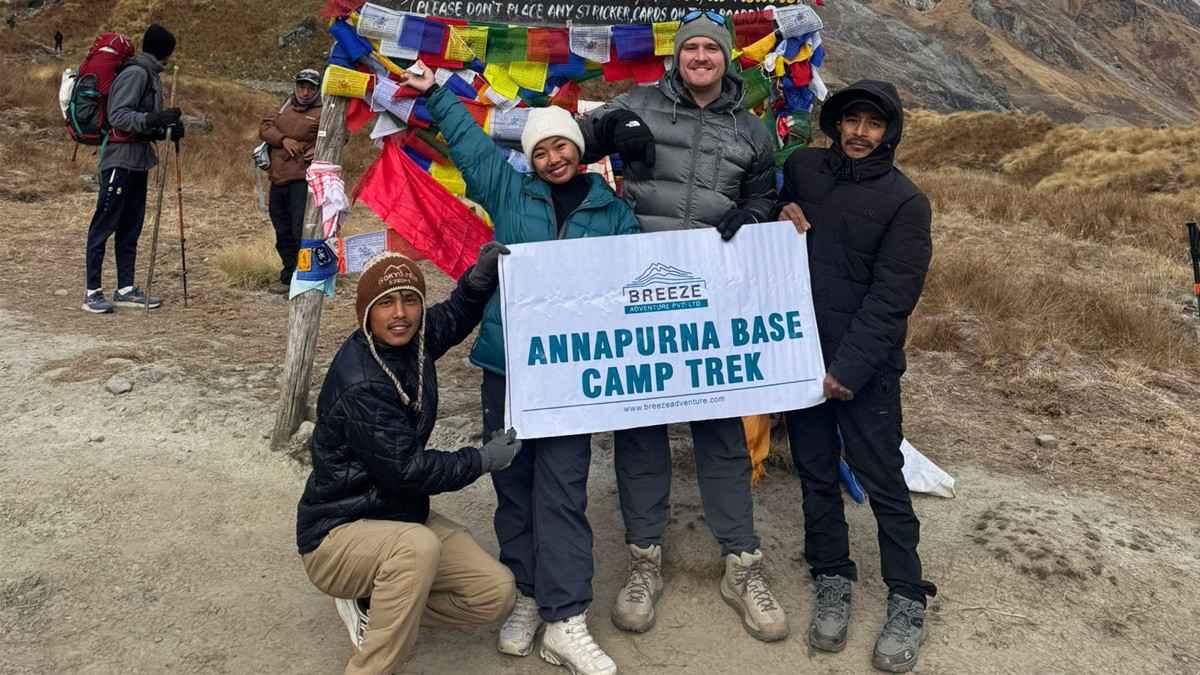
Breeze Adventure team in Annapurna Base Camp with trekkers
For the Annapurna Base Camp Trek, the one permit you cannot skip is the Annapurna Conservation Area Permit (ACAP), issued by the National Trust for Nature Conservation. It costs NPR 3,000 (roughly USD 25) for foreign nationals and less for SAARC nationals. You get it in Kathmandu or Pokhara before you start, there's no buying it at the trailhead without paying a penalty rate, and no permit offices anywhere on the actual trail.
The TIMS card is no longer required for this trek. Nepal introduced guidance in 2023, pushing foreign trekkers toward hiring a licensed guide, and enforcement of that rule has been inconsistent on the ground. Hiring a local licensed guide means there will be safety on the path. Travel through a registered travel agency in Kathmandu, and they will handle all your permits, guides, porters, rooms, and food to safety.
Food and Accommodation on the ABC Trail
Talking about the Annapurna Trek food and accommodation, you'll be staying in teahouses the entire way. They are normally small, family-run lodges that are basic but almost always warm and welcoming, especially in September when they're not slammed with October's crowds.
Rooms are simple: twin beds, a blanket, shared bathrooms lower down, squat toilets more often the higher you climb. Expect to pay somewhere between USD 5 and 20 a night, depending on altitude. Don't be surprised if the room itself is nearly free, most lodges make their money on food, so if you eat dinner and breakfast where you sleep, the room rate quietly drops.
Food-wise, dal bhat is the trail's real currency: rice, lentil soup, curried vegetables, sometimes a pickle or a bit of meat. This is the part every trekker eventually loves: free refills. It runs roughly USD 5 to 10 a plate, depending on elevation, the higher you go, because everything above Chhomrong is carried up on someone's back or a mule's. Breakfast options run to Tibetan bread, porridge, eggs, or pancakes.
Hot showers, Wi-Fi, and device charging are all separate. These are paid extras once you're above Chhomrong, figure USD 2 to 5 each, climbing to USD 5 or more near Base Camp. A power bank saves you real money over ten days.
What to Pack for the September Annapurna Trekking
September's split personality covers warm, humid valleys and near-freezing nights at altitude. It means your ABC trek packing list needs to cover both ends:
A proper rain jacket and a waterproof cover for your pack (especially in early September)
Trekking boots with real grip; the stone steps get slick when wet
Leech socks or a small bag of salt for the lower forest sections
A sleeping bag rated to at least -10°C for nights at Deurali and above
Layers you can add and strip through the day, a t-shirt at Nayapul, a down jacket by evening at MBC
A headlamp for the pre-dawn walk up to Base Camp
Water purification tablets or a filter (bottled water gets both expensive and wasteful the higher you go)
Other sunscreen, lipbalm, medicines, electrolyte powder, chocobars, and nuts as per your need.
FAQs About the Annapurna Base Camp Trek in September
Is September a good time for the Annapurna Base Camp Trek?
Yes, it is. September gives you autumn-quality weather with far fewer people than October or November. Greenery, voluminous waterfall, peaceful trails, and less crowded teahouses are to bet for.
What's the temperature like at Annapurna Base Camp in September?
Daytime highs at Base Camp (4,130 m) typically sit around 5–10°C, dropping below freezing at night, sometimes to -5°C. Lower villages stay considerably warmer, often 18–25°C during the day.
Do I need a guide for the ABC trek in September?
Nepal has pushed toward requiring licensed guides for foreign trekkers on Annapurna routes since 2023. Regardless of the legal requirement in a given year, a guide is genuinely useful for navigation, lodge bookings, and altitude judgment calls.
Are the trails muddy in September?
Yes, particularly in the first half of the month and particularly on the lower, forested sections. Above Deurali, the trail is mostly rock and stays firmer regardless of recent rain.
How much does food and accommodation cost on the ABC trek?
Rooms run roughly USD 5 to 20 a night, depending on altitude, often discounted or free if you eat at the same lodge. Meals run USD 5 to 12, increasing with elevation. Budget an extra USD 3 to 5 daily for hot showers, charging, or Wi-Fi.
Will I see leeches on the ABC trek in September?
In the lower forested sections, yes, especially after rain in early September. They're a nuisance, not a danger. Leech socks or a pinch of salt handle them easily.
Is September better than October for the Annapurna Base Camp Trek?
It depends on what you're optimizing for. October has more reliably clear weather throughout; September has fewer people, greener scenery, and a real chance of the same clear skies once you're past the first two weeks.
Is ABC Worth Trekking in September?
Yes, the Annapurna Base Camp Trek in September is really worthy. This is the right pick for fewer crowds, clearer skies, and stunning photographic opportunities. The greenery, terraced fields, festive vibes, and cultural variation make this journey worth doing again and again.
Kishwor Adhikari is a passionate writer with a deep enthusiasm for trekking and adventure. His extensive travels across Nepal, exploring its diverse landscapes and hidden corners, have shaped his unique perspective on the country's natural beauty. With a wealth of first-hand experience in adventure trekking, Kishwor has become a trusted voice for fellow enthusiasts. Through his writing, he shares invaluable insights, offering practical advice and inspiration for both seasoned trekkers and novices alike. His dedication to sharing his journey and knowledge helps others discover the wonders of Nepal's wilderness, making his work an essential resource for anyone seeking adventure in the region.