Annapurna Circuit Trek Difficulty: Honest Assessment from Decades Long Experience
Before going on any trekking journey, you must know its difficulty level. Finding out the difficulty level of a journey helps you know what you’re dealing with. The same is true with the Annapurna Circuit trek. Knowing the Annapurna Circuit trek difficulty level will prepare you for the trek so that you’re able to handle the challenges really well.
The Annapurna Circuit Trek difficulty level is considered moderate. However, the actual challenges differ as per the preparation level, right guidance, and experience on such bumpy trails. If you are a first timer on this trek, you may find it a little challenging, but with appropriate preparation, training, and a proper guide, you will nail it. Realizing the Annapurna Circuit trek difficulty level will also help you decide which challenges to avoid and which ones to face.
Table of Contents
Annapurna Circuit Trek at a Glance
Metric
Detail
Total Distance
160–230 km (varies by route)
Max Elevation
5,416m - Thorong La Pass
Oxygen at max alt
~47% of the sea level
Daily Trekking
5-8 hours
Trek Duration
8-12 days
Difficulty Rating
Moderate–Strenuous
Altitude sickness risk
High above 3,500 m
Best fitness baseline
Hike 5+ hours with a 7kg pack
Annapurna Circuit trek Nepal helps you explore the Annapurna region in the most detailed way possible. By trekking on the Annapurna Circuit trek route, you also explore the Annapurna Conservation Area Project (ACAP). This is the largest protected area of Nepal. The area is known to be the home of a few rare and endangered birds, animals, insects, and plants.
Also, the major peaks in the region, like Annapurna, Dhaulagiri, Machapuchhre, and so on, are a part of the same area. So, during your trek on the route, you’ll not just get to explore these enormous giants. But also these shy and majestic creatures. During your trek, you’ll come across other spectacles of nature, such as lakes and rivers, glaciers, waterfalls, high-altitude passes, and so on. These elements will make your trek challenging and fun.
Stunning Mount View in Annapurna Circuit Trek
How Difficult Is the Annapurna Circuit Trek?
The Annapurna Circuit is not an easy trek, but with the right preparation, it is absolutely doable even for beginners. Even the person with no prior hiking experience can make this happen if they give an extra day for acclimatization and listen to the trek guide.
A calm and careful walk is the smartest move for this journey. The local culture and unique village life will make you forget the hours-long climbing in rough, steep paths.
Let me tell you this, based on my 19 years of experience in the mountains, the route takes you to 5,416 meters at Thorong La Pass. That alone tells you something. At that height, the air carries less than half the oxygen, it means you breathe at sea level. Not just that, your legs feel it. Your lungs feel it. And if you're not prepared, your head feels it too often in the worst way possible.
Most of the trail sits above 3,000 meters. That's not a single hard day. That's your baseline for the entire trip.
Based on physical capacity and trail requirements, the Circuit Trek difficulty is categorized as follows:
Phase 1: The First Few Days (Easier Than You Think)
After about 5 hours of driving from Pokhara City, Chamje is a popular overnight spot in this circuit trek. Chamje to Chame feels manageable. The trail winds through forest and river gorges. However, the air is still thick enough to breathe normally, and the villages come regularly. You're moving well. Your pack feels fine. You start wondering what everyone was worried about.
That's the trap.
The body is absorbing altitude quietly, even when you feel nothing. This is the phase where people push too hard, walk too fast, and skip rest days. And they pay for it later, usually somewhere between Manang and the pass.
Phase 2: Manang and Above (Where It Gets Real)
Above Manang, things change. The landscape empties out. Similarly, the vegetation thins. The cold arrives earlier in the evening and stays longer in the morning. You start noticing the altitude in small ways, mostly slower steps on uphill stretches, deeper sleep, and the occasional dull headache that wasn't there before.
This is where the trek earns its difficulty rating.
The terrain gets rough, dry, and steep in stretches. The trail between Yak Kharka and Thorong Phedi is not technical, but it grinds on you. Every 100 meters of altitude feels like more than it did a week ago. Acclimatization days here are not optional; actually, they're the reason most trekkers complete the circuit at all.
If something feels off, kindly take a rest. The mountain will still be there tomorrow.
Phase 3: Thorong La Pass (The Day That Defines the Trek)
Thorong La Pass is the last and highest altitude landmark on this trip. Targeting this day, you wake up at 3 AM. It's dark and cold, and your sleeping bag feels like the best idea anyone ever had. But you get up, eat something, and start walking.
The ascent to Thorong La is 1,000 meters in a few hours, in the dark, at altitude, with wind that doesn't negotiate. It is the hardest single day of the circuit, not because the path is technical, but because everything hits at once. You will face the altitude, the cold, the fatigue you've been carrying for more than a week, and the psychological weight of knowing this is the point of no return.
And then you reach the top.
There will be the prayer flags and the wind. The view that opens up in every direction will blow your mind. There's a reason this pass stays closed most of the year due to heavy snowfall, extreme cold, and zero margin for error. On the days it's open, crossing it feels earned in a way that's hard to explain until you've done it.
The descent to Muktinath is 1,600 meters on loose gravel and stone. Your knees will remind you of this for days. Poles are not a luxury here.
Snow clad mountain captured from close in Annapurna Base Camp
Who Is This Trek Actually For?
People ask this a lot. And the honest answer is: more people than you'd think. But not everyone.
The Annapurna Circuit doesn't care about your age or how fit you look. It cares about one thing: whether you prepared or not. That's the only real dividing line on this trail. Let's see how this trek feels for trekkers with experience and preparation, and for the beginners.
First-time trekkers
Yes, you can absolutely do the Annapurna Circuit Trekking even as a beginner. In fact, plenty of people do it with zero prior trekking experience and finish it without serious trouble. But they prepared. They didn't just book the flights and show up.
Six to eight weeks of consistent loaded hiking before you arrive, that's the minimum. Not gym cardio, not running on flat roads. What you experience is actual hills, with a pack on your back, for hours at a time. If you can walk five hours uphill with seven kilograms and still feel human the next morning, you're ready to start thinking about this trek.
The other thing first-timers underestimate is altitude. You've never felt it before, so you don't know how your body responds to it. That uncertainty is fine, just don't ignore the signs when they show up. Headache, poor sleep, loss of appetite above 3,500 meters are mostly common. In this situation, take a rest, don't push.
A guide makes a real difference here. Not because the trail is hard to follow, actually, it isn't. But because someone who's crossed Thorong La forty times knows the difference between normal tiredness and something you shouldn't walk off.
Fit but no altitude experience
This is actually the trickiest group. YBets suited, if you're strong and you hike regularly. Further, the first few days feel almost too easy, and you start moving faster than the itinerary suggests. That confidence is the problem.
Altitude doesn't care about your fitness level. It catches up with people who are in excellent shape just as often as it catches beginners, sometimes more, because fit people push harder and rest less. The acclimatization day in Manang isn't optional for you either. It feels optional, but it isn't.
You can just slow down earlier than feels necessary. That's the only advice that matters for this group.
Experienced trekkers
Even though you are an experienced rekker, the circuit will still find something to test you with.
If you've done high altitude before, Thorong La won't shock you. But the duration will. about two weeks of sustained effort on varied terrain, jungle heat in the lower sections, glacial cold near the pass, and loose gravel descents. All these things destroy your knees, it accumulates in ways a single summit push doesn't.
The descent from Thorong La to the Muktinath Area is where experienced trekkers get complacent. Sixteen hundred meters of downhill on rough ground after your hardest day. This is where knees give out, thereby poles, pace, and paying attention.
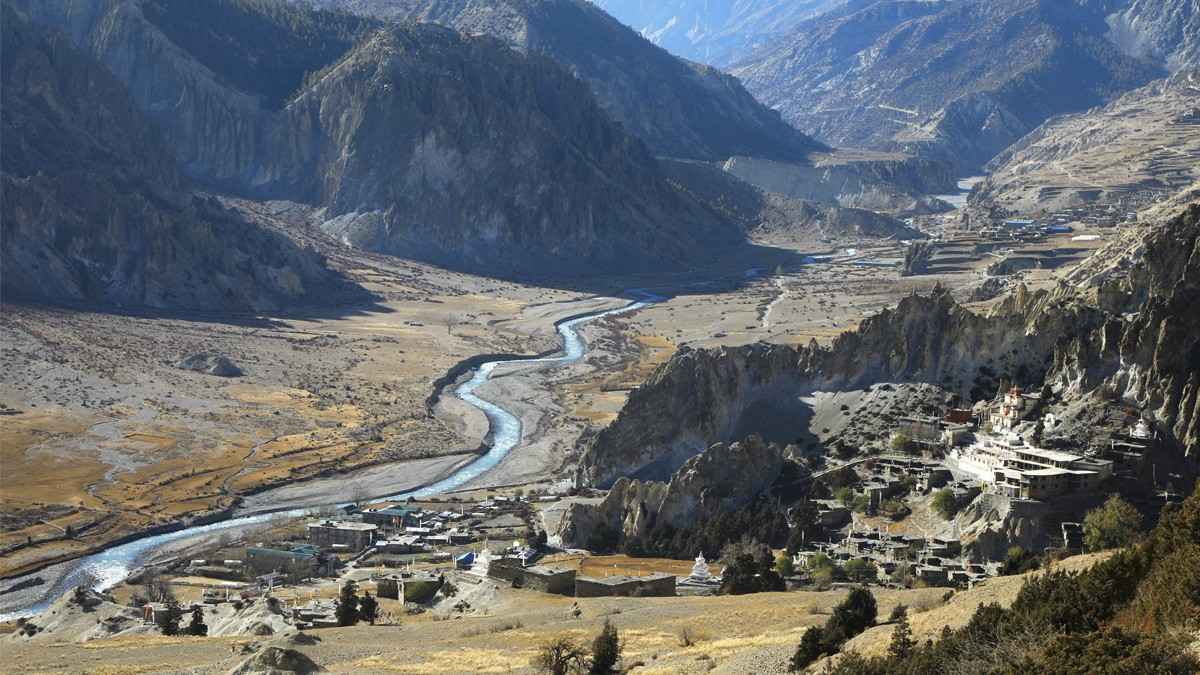
Unique landscape with local village settlement in Manang, Annapurna Circuit Trek Nepal
The 4 Things That Actually Can Stop Trekkers And How to Handle Them
Even though you are excited for the Nepal Annapurna Circuit Trek, there are a few things that can put you in confusion. Here are the main 4 culprits that can disturb the smooth journey, have a look:
1. Altitude
It's the one variable you can't train away entirely. You can arrive fitter, move slower, hydrate properly, and sleep at lower elevations than you hike, all of it helps. But above 4,000 meters, your body is making decisions your willpower can't override.
The rule is simple. If you have a headache and you're above 3,500 meters, don't go higher until it's gone. If it gets worse, go down. Not tomorrow, immediately before your conditions become worse.
For altitude sickness, Diamox helps some people. Talk to a doctor before the trek, not at a teahouse in Manang when you're already symptomatic. Carry a pulse oximeter; they cost almost nothing and tell you things your body hides from you.
Breeze Adventure handles altitude sickness with well-prepared team members. We are often skilled, well-trained, well trained, and carry a first aid kit with an oximeter and necessary things. Not just that, we offer an oxygen tank for higher altitude treks.
2. Knee damage on the descent
Nobody talks about this enough before the trek. The ascent to Thorong La gets all the attention. The descent breaks people.
Sixteen hundred meters of downhill in a single afternoon, on loose stone and gravel, on legs that have already been walking for a week. If you have any history of knee problems, this section will find it.
Trekking poles are not optional here. Neither is pace. So, you have to maintain slow, deliberate steps downhill. It will be faster than stopping every ten minutes because your knees locked up. Also, strengthen your quads before you come- wall sits, step-downs, loaded descents in training. It sounds boring, but this works.
3. Mental fatigue on the final days
This one catches people off guard because it has nothing to do with fitness.
On the final days of the Annapurna Circuit Tekking, at the highest altitude of the trek, you've crossed the pass. The hardest thing is done. And somehow that's when it gets mentally difficult. Eventually, the scenery shifts from dramatic mountain views to the drier, flatter Mustang landscape. Similarly, the teahouses start feeling the same. You're tired in a way that sleep doesn't fully fix.
This is normal. Every long trek has this phase. You just have to know it's coming, so it doesn't feel like something's wrong with you.
The people who struggle here are the ones who didn't expect it. The ones who did, they just keep walking.
4. Going too fast in the first three days
The beginning of the circuit feels easy. The altitude is low, the trail is forgiving, and you're fresh. So people move fast here. They add extra kilometers, but skip afternoon rest.
By Manang, they're running on empty, and they don't know why.
The pace you set in the first three days determines how you feel at the pass. That's not an exaggeration, it's just how the body works at altitude. The energy you burn early doesn't come back the same way it does at sea level.
So, I advise you to walk slower than feels necessary. Similarly, eat well and sleep early. The mountain isn't going anywhere.
Well, having an idea about the Annapurna Circuit trek difficulty level will help you better prepare for the trek and stay safe. So, if you’re planning to go for this trek, make sure that you first find out the Annapurna Circuit trek difficulty level. It will take you a long way and help you have a better time.
Breeze Adventure sticks by your side throughout your journey to ensure that you’re having the best time of your life. Whether it’s a one-day hike, a long trek, an expedition, or luxury travel, your journey will be adventurous, thrilling, fun, and relaxing, all at once.
For your kind information, the agency will give you all the information about the trip, for instance, the Annapurna Circuit Trek Difficulty. This is to help you get mentally prepared for what’s coming your way.
Kishwor Adhikari is a passionate writer with a deep enthusiasm for trekking and adventure. His extensive travels across Nepal, exploring its diverse landscapes and hidden corners, have shaped his unique perspective on the country's natural beauty. With a wealth of first-hand experience in adventure trekking, Kishwor has become a trusted voice for fellow enthusiasts. Through his writing, he shares invaluable insights, offering practical advice and inspiration for both seasoned trekkers and novices alike. His dedication to sharing his journey and knowledge helps others discover the wonders of Nepal's wilderness, making his work an essential resource for anyone seeking adventure in the region.