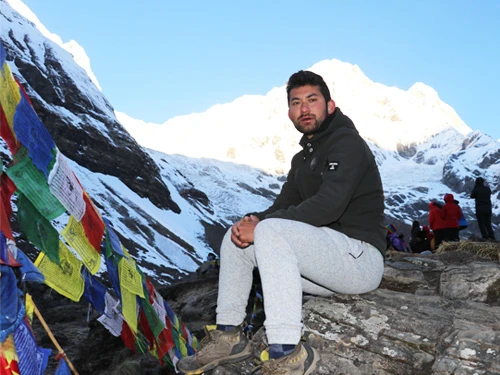
Is there a trek that allows both Kachenjunga north and south base camps? Yes, there is, and that's the answer most adventure lovers are searching for. Let me tell you this with my personal experience. For three weeks, I went back and forth between "just do the south" and "forget it, do the full circuit," or do the north only. Most people frame this as a binary choice, north or south, pick one, fly in, fly out, and honestly, if you have two weeks and a hard return flight, that's probably the right call.
But if you have the time, the budget, and a mild tolerance for suffering, there's a third option: the full Kanchenjunga Circuit. This circuit trek allows both north and south in one continuous loop. There will be no flying back to Kathmandu in the middle. Was it worth it? Absolutely. But the circuit gets far less attention than it deserves, and there are things I genuinely wish someone had told me before I laced up my boots and took the jeep from Taplejung.
In this guide, based on my experiences on the Kanchenjunga Circuit Trek, I will share everything that makes your journey smooth, thereby taking the right decision.
Table of Contents
Where Exactly Is Kanchenjunga?
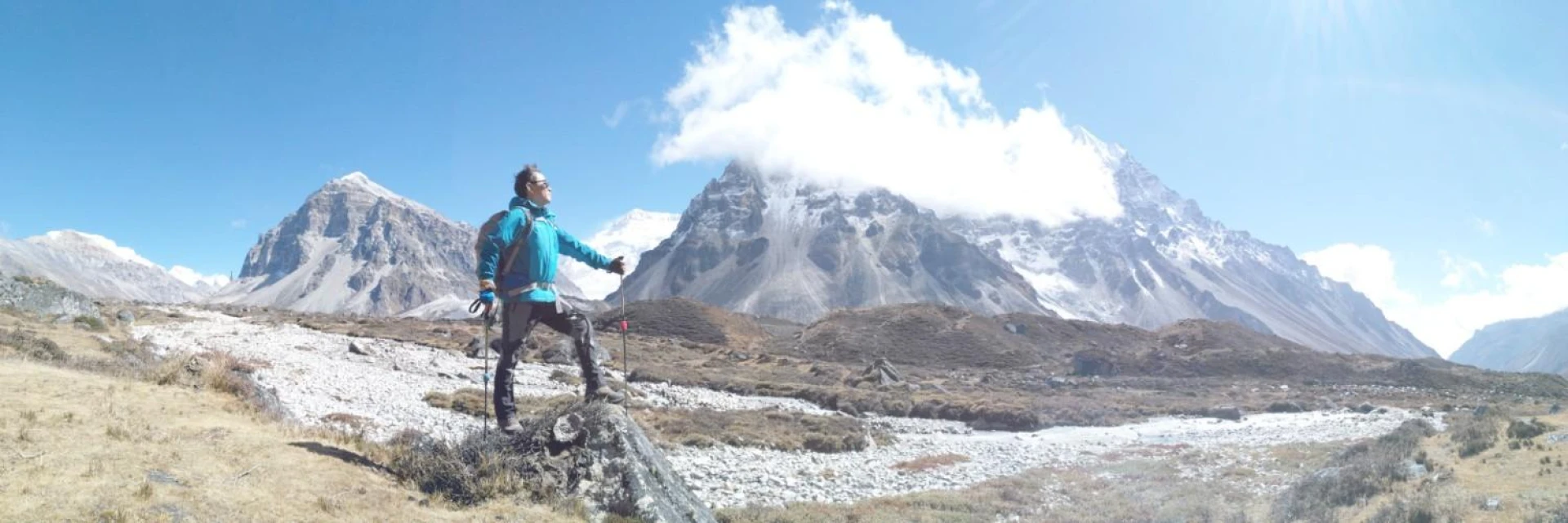
Kanchenjunga Circuit Trek is a remote Himalayan trek in Nepal
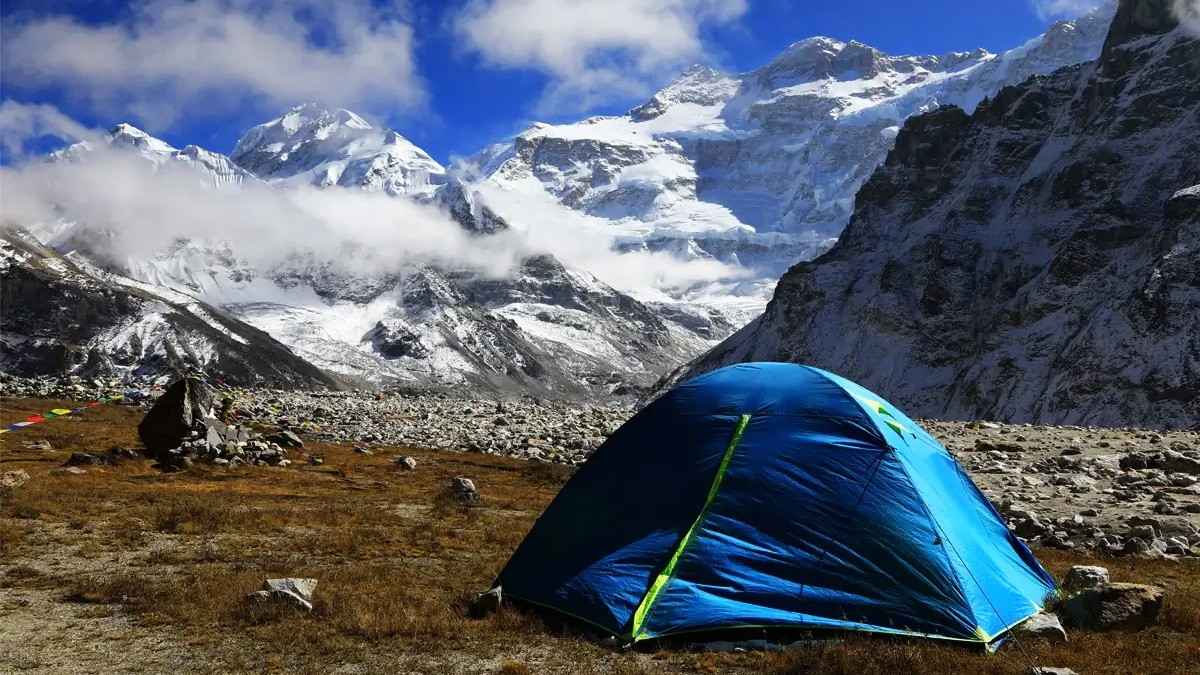
Kanchenjunga, the third-highest peak in the world, lies in the far northeastern corner of Nepal. It is right on the border with Sikkim, India. This is 8,586 meters, and honestly, it doesn't get nearly enough credit in comparison to Everest and Annapurna. The reason is simple, it’s enormous, remote, and waiting for the people who actually want to put in the effort.
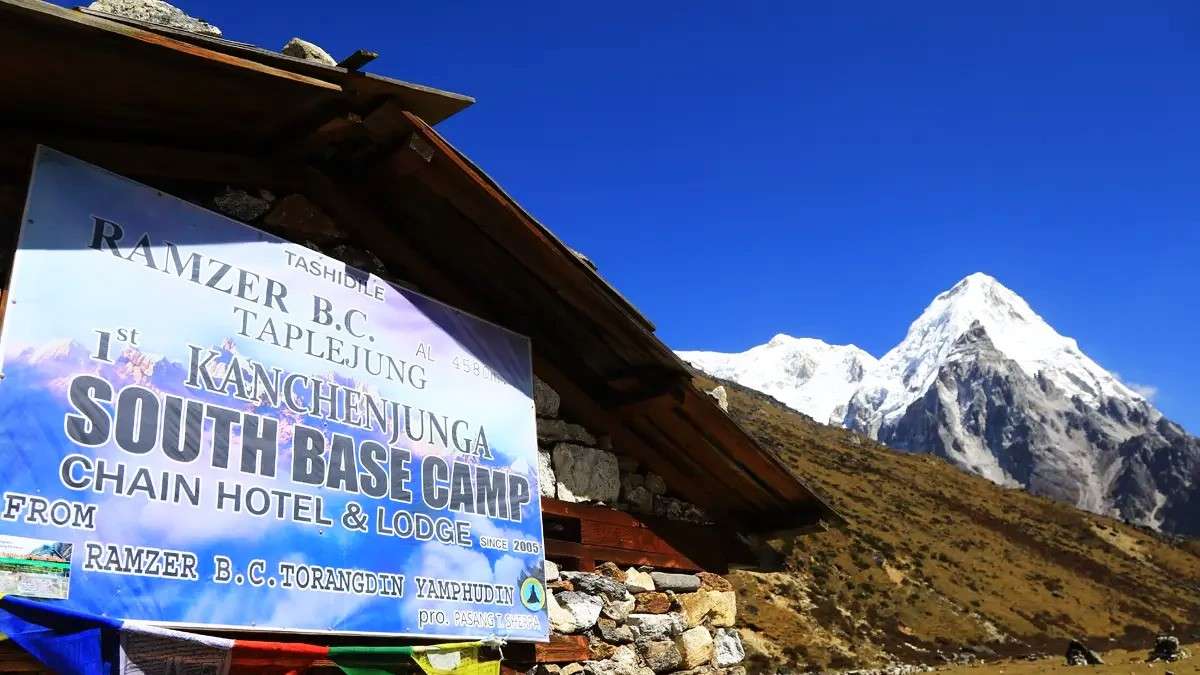
The mountain has two base camps that see trekkers. Kanchenjunga North Base Camp (Pangpema) sits at around 5,143 meters and gives you a direct, thundering close-up of the north face. Similarly, Kanchenjunga South Base Camp (Oktang) is at roughly 4,780 meters. The South face offers a completely different perspective, broader, and maybe even more dramatic in its own quiet way.
They're not close to each other. Connecting them requires crossing the Mirgin La pass (roughly 4,663 m) or the Sele La pass system (the Sele La, Sele La North, and Sinion La). This is the part that separates the circuit from a regular out-and-back trek. It's also genuinely the most beautiful section of the entire journey.
North or South First? The Route Logic
Most people who do the full circuit start from Taplejung in the south, visit the Kanchenjunga South Base Camp first, then cross via the Sele La passes to the North Base Camp. And then exit via Ghunsa and eventually back to Taplejung or to Suketar airstrip. So: South → North, counterclockwise.
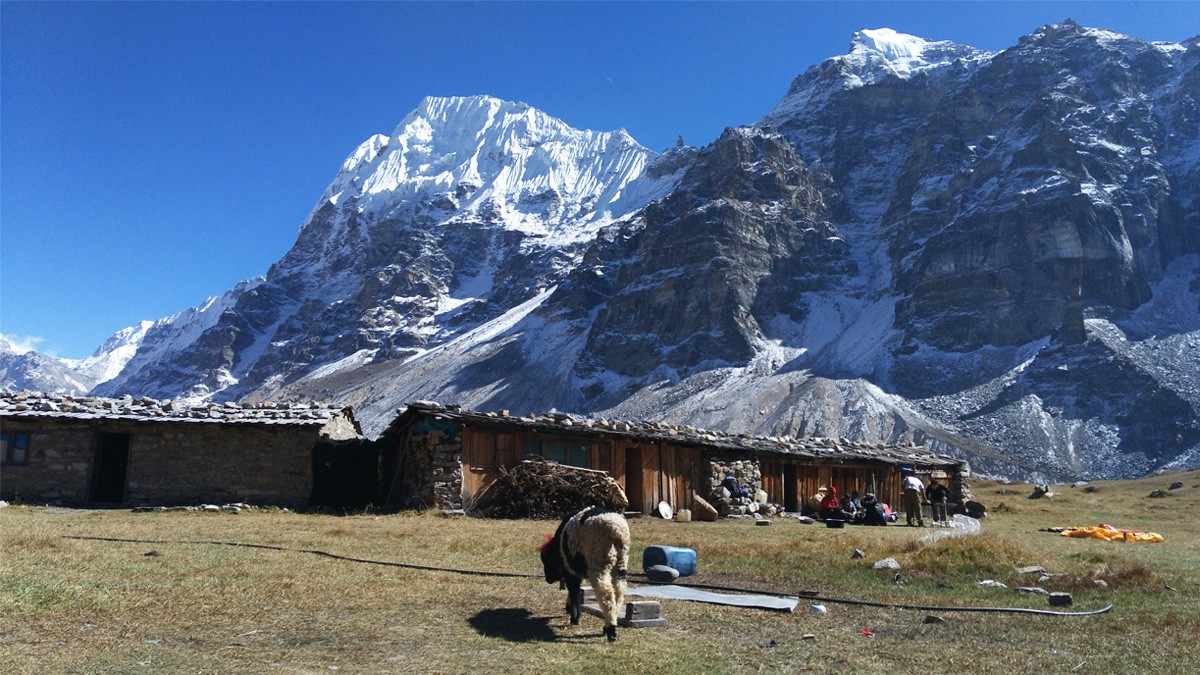
Kanchenjunga South Base Camp Region
Why this order? A few reasons
The southern approach through Yamphudin, Tortong, and Tseram is gentler in gradient. This means you acclimatize more slowly, and that's a good thing when you're heading to 4,780 meters. By the time you're climbing toward Mirgin La or Sele La to connect to the northern circuit, your body has had two or three weeks to adjust. Arriving at Pangpema at 5,143 meters feels hard but manageable rather than body-destroying.
If you did it north-first, you'd be hitting the highest point of the trek before your lungs have had time to figure out what's happening.
That said, I've met trekkers who did north-first and survived fine. One German guy I shared a teahouse with in Ghunsa had come from Taplejung via Ghunsa, done the north base camp in two weeks, crossed south, and was walking out via Yamphudin. He said he acclimatized faster than expected. But he also looked like someone who does this every year, which I very much do not.
My recommendation: south first, north second. Let the altitude come to you gradually.
How Long Does the Kanchenjunga Circuit Trek Actually Take?
The full Kanchenjunga Circuit, both base camps, the pass crossing, everything, takes between 24 and 32 days for most trekkers. But you can do this in 16 days as a short Kanchenjunga Circuit trek in Nepal.
Kindly add in acclimatization days, which aren't optional. Actually, they're a survival strategy, and you're looking at a full month, minimum, if you want to do this properly.
I took 24 days total. I had two rest days built in, one in Tseram on the south circuit and one in Ghunsa on the north. Both were genuinely necessary. My body didn't care that I had a flight to catch.
kanchenjunga Circuit Best Trekking Months
Kanchenjunga is not Everest Base Camp. It doesn't have crowds that make any season "manageable." Out here, the wrong month doesn't just mean inconvenience; it can mean the trail is snowed out, the passes are dangerous, and the teahouses are locked. So the best time for this circuit trek actually means a lot.
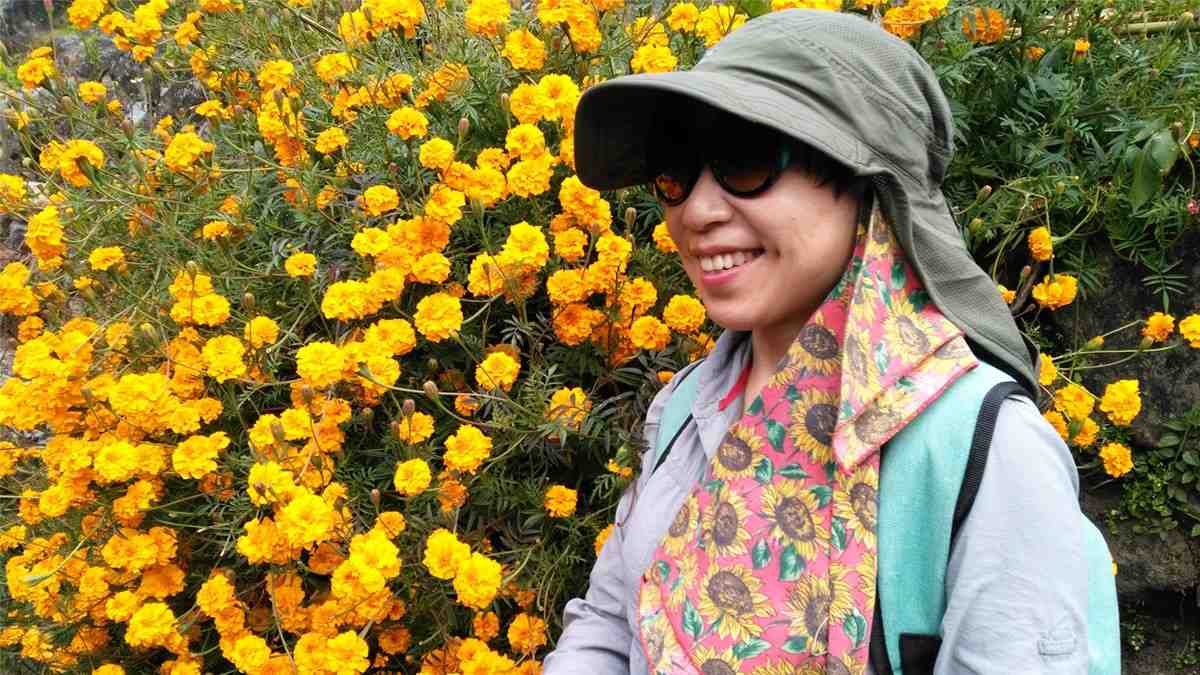
Autumn season, flowers blooming on Kanchenjunga Circuit Trail
October and November are the golden window. Post-monsoon skies, stable weather, the rhododendrons long gone, but the visibility absolutely spectacular. October gives you slightly warmer nights; November gets cold fast, especially above 4,000 meters, but the views are almost incomprehensibly clear. I went in mid-October, and the light on Kangchenjunga at 6 am from Pangpema made me sit down in the middle of the trail because my legs stopped working from something that wasn't altitude.
April and May are the second-best window. This is the pre-monsoon, when the rhododendrons bloom on the lower trails. If you're approaching via Yamphudin and Chirwa, the forests below 3,500 meters are honestly breathtaking in April. Similarly, the afternoon clouds build quickly, and by May, the monsoon is already threatening the eastern Himalaya. Snow on the passes is also heavier in spring, which makes the Sele La crossing more complicated.
Avoid June through September. The monsoon hits Kanchenjunga harder than almost anywhere else in Nepal because of its eastern position and proximity to the Bay of Bengal weather systems. Leeches, washed-out trails, zero visibility, and flooded river crossings. Some very experienced trekkers do it; most people really shouldn't.
December through February: the teahouses at higher elevations are mostly closed, passes are under serious snow, and temperatures at Pangpema can hit -25°C at night. Unless you have full winter mountaineering experience, this is not the season.
What Permits Are Required for the Kanchenjunga North and South Trek?
Kanchenjunga is a restricted area. That's what makes it feel so untouched, and also what creates a bit of a paperwork situation called Kanchenjunga Permits.
You need three things:
1. Kanchenjunga Conservation Area Permit (KCAP): NPR 3,000 per person (approximately USD 22-25). This is the conservation fee for the protected area. You get it in Kathmandu at the Nepal Tourism Board or sometimes in Taplejung, though doing it in Kathmandu saves hassle.
2. Restricted Area Permit (RAP): USD 10 per person per week for the first four weeks, then USD 20 per week after that. This is mandatory because Kanchenjunga sits on a sensitive border zone between India and China. You cannot enter without this permit. You also cannot get it alone; you must book through a registered Nepali trekking agency and go with at least one other trekker. Solo trekking is not permitted.
3. TIMS Card (Trekkers' Information Management System): NPR 2,000 for SAARC nationals, NPR 2,000 for others. Though honestly, at the time of my trek, enforcement of TIMS was inconsistent here compared to the Annapurna or Everest regions.
The "must go through a registered agency" rule is real and enforced. There are checkposts at Taplejung, Chirwa, and several points along the route where rangers check your documents. Don't try to wing this without permits; the fines are significant, and trekkers have been turned back.
Budget approximately USD 40-50 in permit fees total for a month-long trip.
How Much Does It Cost?
Budget carefully because this isn't a cheap trek, and the remoteness means you can't make up for poor planning.
Because of the restricted area permit requirement, you're paying a registered agency. A basic package normally includes a guide, a porter, permits, food, and night stay. For the full circuit, you may have to pay somewhere between USD 1,200 to 2,000 per person, depending on group size and services.
Do You Need Travel Insurance for the Kanchenjunga Circuit Trek?
I know people skip insurance sections. Don't skip this one.
Kanchenjunga is high altitude, remote, and helicopter evacuation is the only realistic emergency extraction above a certain point. A helicopter rescue from Pangpema or the upper valley costs USD 3,000 to 6,000. Potentially more. That bill lands on you if you're not insured.
Let me add this, it is better to take an insurance policy for Nepal travel in your homeland. That is much easier and takes a shorter time than taking travel insurance in Nepal.
The Kanchenjunga Circuit Trek Route in Detail
Beautiful scenario in Kanchenjunga North Base Camp
I won't give you a rigid day-by-day because, honestly, conditions change. Not just that, in this route, your pace may change, and weather forces rest days. But here's the broad structure with the key stops you need to know in 16 days circuit journey.
Southern Circuit (Taplejung to Oktang)
The Kanchenjunga Circuit Trek kicks off with a short flight from Kathmandu to Bhadrapur. Then, drive straight to Tapethok, which is your actual trailhead. From there, the path moves through river valleys and rhododendron forest, gradually climbing toward Tseram, which is the main rest stop before the real altitude begins. I have done this southern approach more times than I can honestly count, and it never feels easy. But the scenery inside Kanchenjunga Conservation Area makes every sore muscle worth it.
By Day 4, you reach Ramche at 4,350 metres, camped right beneath massive hanging glaciers. Likewise, the Day 5 hike to Kanchenjunga South Base Camp over the Yalung Glacier moraine is, simply put, one of the most raw and humbling places I've ever stood in the Himalayas.
The Pass Crossing
Day 6 is the day that most trekkers talk about for years after, when you cross both Miringla Pass and Sele Le Pass back to back. There will be steep boulder fields and unpredictable snow in between. Honestly, this is not something you should attempt without a local guide who knows the trail conditions. The descent from Sele Le drops into wide alpine meadows and yak pastures. After all that climbing, it feels like the mountain is finally letting you breathe.
Ghunsa village, reached on Day 7, is a beautiful old Tibetan-influenced settlement with mani walls, a small monastery, and teahouses run by genuinely warm locals. The mandatory rest day here on Day 8 is not just nice, for acclimatisation on any serious Kanchenjunga trekking itinerary, it's essential.
Northern Circuit (Ghunsa to Pangpema)
After resting in Ghunsa, the trail pushes north through Khambachen and up to Lhonak, a spare, high-altitude camp surrounded by glacial moraine and nothing else for miles. Day 11 is the big one: the hike to Kanchenjunga North Base Camp at 5,140 metres, where the north face of the world's third-highest peak fills your entire field of view alongside Jannu and Wedge Peak. I've been there in October and in April, and both times the silence up there felt almost physical.
The exit through Amjilosa and down to Ranipul over days 13 to 15 closes the full loop, a different valley, new forests, a whole other side of this mountain. Flying back from Bhadrapur to Kathmandu on Day 16, you realise the Kanchenjunga Circuit Trek from south to north is one of those rare off-the-beaten-path Nepal treks that genuinely change how you see the Himalayas.
Recommended Trekking Gear
I've done enough treks to know the difference between gear lists written by people who've actually been somewhere and gear lists written by people who copied another gear list. So here's what genuinely matters for this specific trek, making it the right Kanchenjunga Circuit Trek Packing List:
Footwear: Proper waterproof mountaineering boots are required, as you are not trail runners or light hikers. The terrain above 4,000 meters involves rock, ice, moraine, and snow. Gaiters are essential for the pass crossing. Break your boots in for at least 6 weeks before you go; the Sele La is not the place to discover a pressure point.
Sleeping bag: Carry this, which is rated to at least -15°C. At Pangpema, nighttime temperatures routinely drop to -15°C or colder in October. Further, the teahouses provide thin blankets. They are not sufficient alone.
Layering system: It is better to apply the layering system when wearing. Base layer (merino wool, not cotton ever), mid layer (fleece or light down), insulating layer (down jacket), and shell (waterproof and windproof).
Trekking poles: This is absolutely non-negotiable on this terrain. The descents from Pangpema back to Lhonak are steep and loose.
Headlamp with extra batteries: For headlamp use, Lithium batteries, not alkaline. Alkaline batteries lose significant capacity in cold weather.
High SPF sunscreen and glacier glasses: Above 4,000 meters, the UV intensity is brutal. So, high SPF sunscreen or glacier glasses work best.
Water purification: Use tablets to filter water, or you can carry a small water filter.
Altitude medication: For altitude sickness, carry Diamox (acetazolamide), but talk to a doctor first. Know the symptoms of AMS, HACE, and HAPE. Know what to do or talk to the team.
A Few Things I Didn't Expect
The number of trekkers drops to almost zero above Ghunsa in the northern valley. Some days, I saw nobody else on the trail. After years of Everest and Annapurna treks, where you're basically walking in a procession, the solitude on the upper Kanchenjunga trail hit me like something physical. Good different, not bad different.
The yak caravans are real, and they will not move for you. So, press yourself against the valley wall and wait.
Ghunsa's monastery is worth a slow hour. Butter lamps, old thangkas, and a caretaker monk who offered us tea and didn't ask for anything. These moments are why I keep coming back to Nepal.
The south base camp is less dramatic but more peaceful than the north. There's a gentleness to the Yalung Glacier valley that the northern approach doesn't have. The north face of Kanchenjunga is overwhelming. The south face is beautiful in a way that gives you time to think.
Bring more cash than you think you need. ATMs exist in Taplejung and nowhere else on this route. Besides this, you might be curious to know what the difficulty level of this circuit is. Well, you should consider how hard the Kanchenjunga Trek is in comparison to the Everest Base Camp trek. From this comparison, you will have clear ideas about the difficulties.
What Other Trekkers Say About the Kanchenjunga Circuit Trek?
Coming to the review, the consistent feedback from trekkers who've done the full circuit often says, " Don't rush it.” They also suggest not to skip the acclimatization days, hire a knowledgeable guide (not just any guide who knows the trail, but one who can read altitude symptoms and make evacuation calls if needed), and do it before it gets more popular and loses what makes it special.
The occasional complaint: the jeep roads from Taplejung have extended further into the valley in recent years, which means the first couple of days of the southern approach involve walking along a rough vehicle track rather than pure trail. This is improving with new trail routing, but worth knowing.
Some trekkers find the teahouse quality disappointing compared to the Everest or Annapurna circuits. They're right that facilities are more basic. This is due to the remoteness and fewer crowds.
Last Thoughts
The Kanchenjunga Circuit Trek in Nepal allows access to both the North Base Camp and the South Base Camp in one trip. So, yes, you should do both base camps if you have the time and fitness. The trek is long, genuinely demanding, and not something to underestimate. But the full circuit gives you a complete understanding of Kanchenjunga that an out-and-back to either single base camp simply doesn't. This is best for adventure lovers and those who want to explore themselves in solitude.
Kishwor Adhikari is a passionate writer with a deep enthusiasm for trekking and adventure. His extensive travels across Nepal, exploring its diverse landscapes and hidden corners, have shaped his unique perspective on the country's natural beauty. With a wealth of first-hand experience in adventure trekking, Kishwor has become a trusted voice for fellow enthusiasts. Through his writing, he shares invaluable insights, offering practical advice and inspiration for both seasoned trekkers and novices alike. His dedication to sharing his journey and knowledge helps others discover the wonders of Nepal's wilderness, making his work an essential resource for anyone seeking adventure in the region.