Standing amidst a colosseum of frozen giants, where the near-vertical south face of Annapurna I towers over two vertical miles above you. This is on the bucket list of millions of people. The crisp, thin air, the golden morning light hitting an 8,000-meter peak, and the sheer, humbling scale of the Himalayas. There is no feeling like experiencing this heavenly beauty live.
Is the Annapurna Base Camp (ABC) trek worth it? Absolutely. The Annapurna Base Camp Trek is 100% worthy. The 360-degree view of snow-clad mountains, famously called the Annapurna Range, is a lifetime experience. The close-up views of mountains and the Himalayan culture with warm hospitality are the main attractions in this trek. However, the beauty of Annapurna comes with some daring adventure. Yes, if you possess the physical grit to hike uphill for five to six hours a day over the course of seven to ten days, you already hold the golden ticket to one of the world's most spectacular alpine amphitheaters. That is the direct answer.
For those desiring less walking and more luxury, you will get ample customized packages. These are best for shorter walks, a deluxe trip, so you can take kids, senior family members, as well as the person with special abilities.
To help you plan perfectly, this guide provides a clear, reliable breakdown of exactly what to expect in the ABC Trek. You will find the precise trail facts- including actual distances, sleeping altitudes, updated permit costs, and the latest guide regulations-presented clearly so you can prepare with confidence.
We will look at who this trek is genuinely ideal for, who might be better served by a different Himalayan route, and how to navigate the journey safely. Everything that is officially settled will be stated directly, and any details that depend on your personal fitness or seasonal timing will be laid out honestly. Let’s dive more into this.
Table of Contents
What makes the Annapurna Base Camp Trek Worth It?
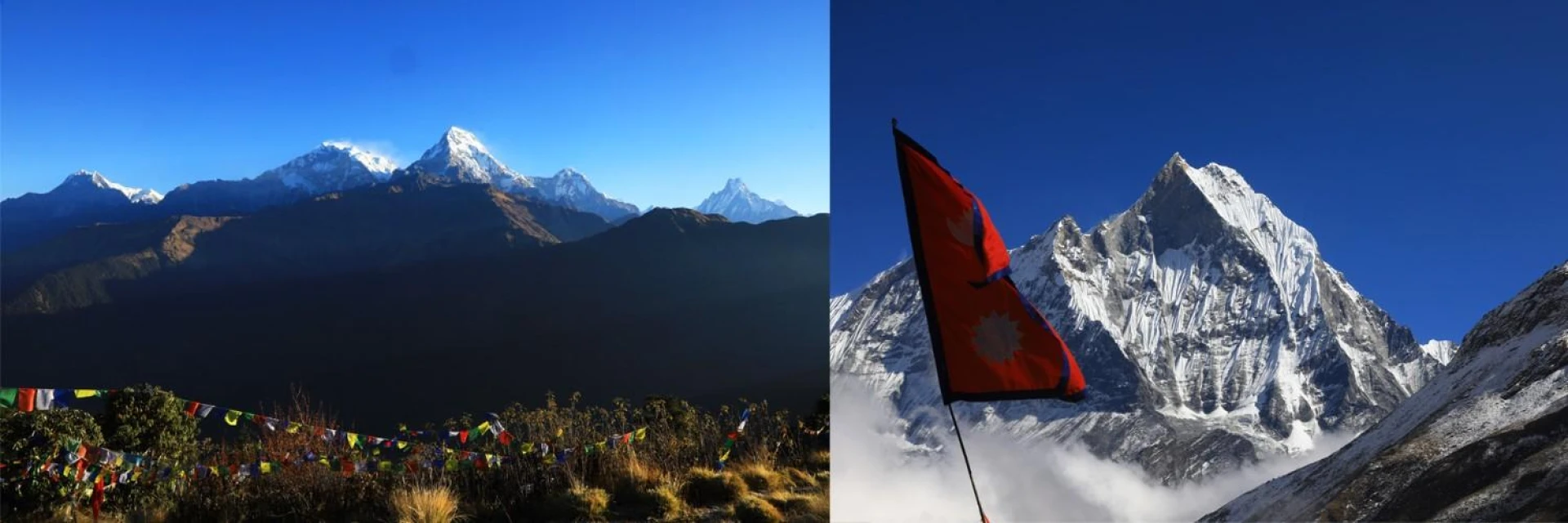
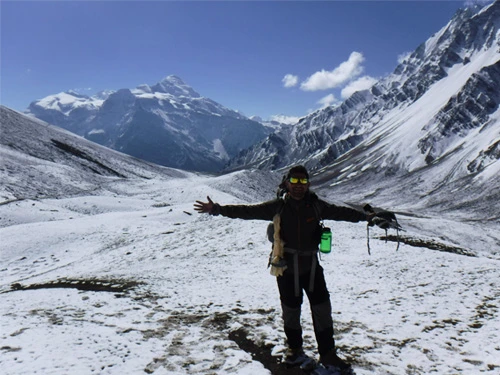
Beautiful scenario captured in Annapurna Base Camp Nepal
ABC Trek Nepal means a week-long journey showcasing the natural beauty of the Himalayas with unique culture and hospitality. This is not just a trip, but a journey you live to change yourself. Yes, this mountain trek will reshape you as a person.
1. You Stand Inside a 360° Amphitheater of Giants
At 4,130 m, you're literally surrounded by ten peaks above 7,000 m, including Annapurna I (the world's 10th highest). No other trek on earth puts you this close, this safely, to so many giants at once.
2. It's Shockingly Short for What You Get
Most people finish ABC in 7 to 10 days, door to door from Pokhara. This can also be done in 4 days if you are short on time. Even as a quick getaway, you're getting Himalayan glory without burning your entire annual leave.
3. The Sunrise at Base Camp Will Ruin Other Sunrises for You
When the first light hits Annapurna South and Machhapuchhre (Fishtail), the whole basin turns gold, then pink. People cry up there. It's that kind of view, which you will remember for your entire life.
4. Your Grandparents Can Actually Do This One
The ABC trail is well-graded with proper stone steps, teahouses every 2 hours, and no technical sections. I've personally seen trekkers in their late 60s and 70s finish it, taking it slow over 10 to 12 days. Yes, ABC Trek for senior citizens is a famous option with acclimatization itineraries.
5. It's Genuinely Budget-Friendly
You can complete the whole trek for around $444 to $700 per person, including food, lodging, and permits. No expensive flights to Lukla, no helicopter contingencies, no gear you need to buy new.
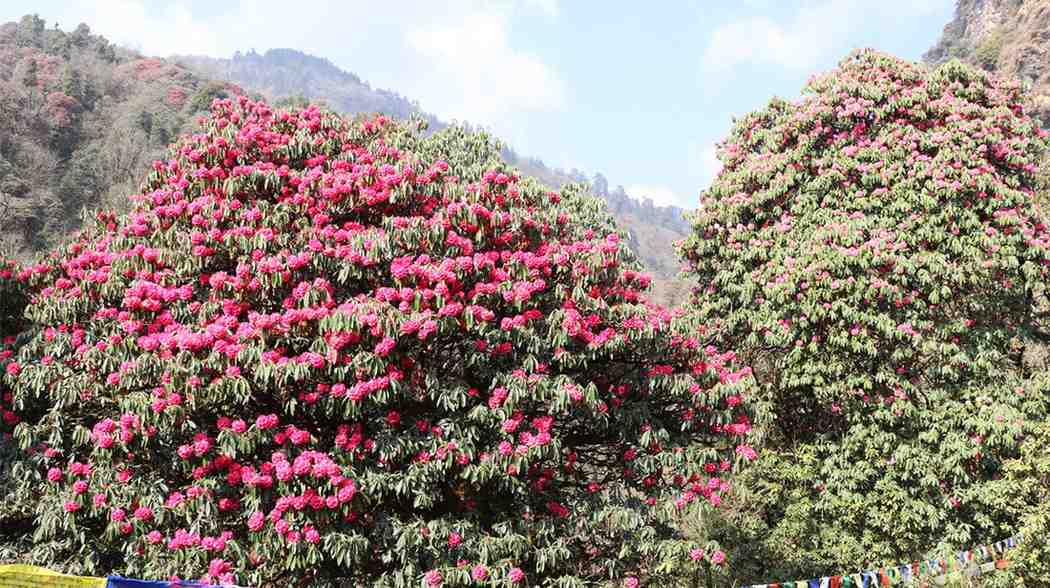
6. Rhododendron Forests That Feel Like a Fairytale
March through May, the lower trails explode into red, pink, and white blooms. Walking through Ghorepani's forests in spring feels less like trekking and more like wandering through a painting. You won’t believe what you see.
7. Accessible Options Now Exist for Special-Abled Trekkers
Local operators now offer porter-assisted and modified-route packages for travelers with mobility challenges. A few organizations have even helped wheelchair users reach Ghandruk and beyond using adapted carriers.
8. Hot Springs at Jhinu Danda on the Way Back
After days of climbing, you soak in natural hot springs beside the Modi Khola river. These hot springs have scientific significance for healing. Your knees will write you a thank-you note.
9. Real Gurung and Magar Village Life
You sleep in stone villages run by communities that have lived here for centuries. The dal bhat tastes better, the stories around the fire are real, and tourism money goes straight to the families hosting you. The Gurungs and Magars have a unique culture that you definitely love watching.
10. Diverse Landscapes in One Trek
In the Annapurna Base Camp trail, you walk through subtropical jungle, terraced rice fields, oak and bamboo forests, alpine meadows, and glacial moraine, all in under a week. Few treks anywhere pack this much ecological variety into one route.
11. Safer Altitude Profile Than Most Major Treks
Annapurna Base Camp sits at 4,130 m, lower than EBC's 5,364 m, which means a significantly lower risk of acute mountain sickness. Families with kids and older trekkers can attempt it with far less anxiety.
12. Machhapuchhre Up Close, the Mountain No One Has Ever Climbed
The sacred Fishtail peak (6,993 m) is closed to climbers out of religious respect, so it stays untouched. Seeing it from MBC at sunrise feels like meeting something ancient. You will feel fortunate to actually witness this untouched mountain.
13. You Come Back Different
Ask anyone who's done it. There's something about walking 7 days into the heart of the Himalayas that resets you in a way no beach holiday ever will. You will see a change in your personality.
Well, the Annapurna Base Camp Trek in Nepal is just about beauty and adventure. Along with refreshment, you will see a different person in you. A week-long journey will be enough to teach you patience, humbleness, simplicity, cooperation, and hospitality. Trust me, no university in the world can teach you what the ABC trail does.
What you reach, and why people care
Annapurna Base Camp sits at 4,130 metres (13,550 feet). It is not a mountain you climb. It is a flat glacial basin, often called the Annapurna Sanctuary, ringed almost 360 degrees by peaks. Standing in it, you are looking up at Annapurna I at 8,091 metres, the tenth-highest mountain on earth, plus Machapuchare (the Fishtail, 6,993 metres, never climbed and closed to climbers), Hiunchuli, Annapurna South, and Gangapurna.
The reason this trek has the reputation it does is geometry: you are not viewing big mountains from a distance, you are standing inside a bowl of them. There are very few places on the planet where a person with no climbing skills can walk to a spot that feels like this. That is the honest case for why ABC Trek is worth it, stripped of adjectives.
Is the Annapurna Base Camp trek safe?
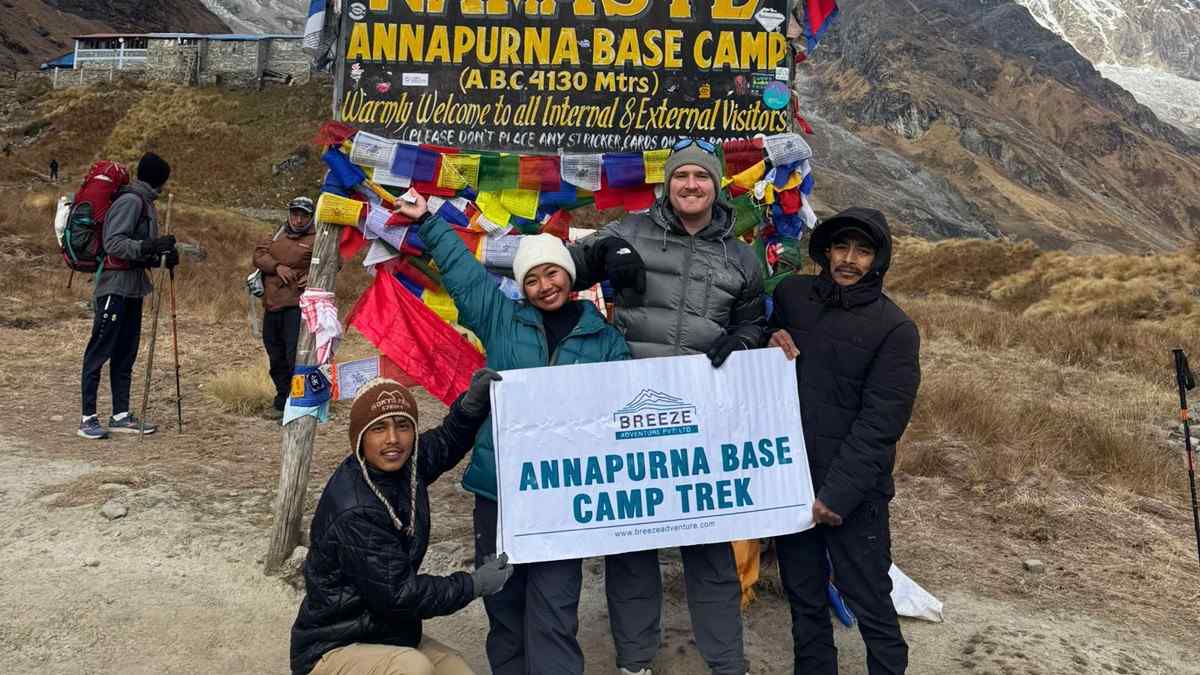
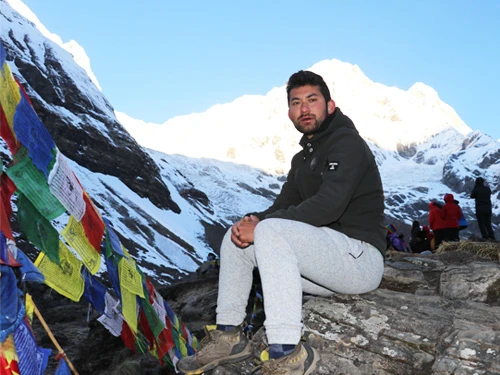
Breeze Adventure team holding company banner in Annapurna Base Camp
This is the most-searched worry, so let me answer it plainly before anything else.
The trail itself is not as dangerous as "Himalaya" makes people imagine. There is no climbing, no ropes, no glacier crossing, no exposure where a slip means a fall off a cliff. It is a walking path, mostly on stone steps and dirt, used by tens of thousands of people every season, with villages and tea houses every couple of hours. In good weather, in spring or autumn, on the standard route, it is about as safe as a hard hike gets.
The real risks are specific and worth naming honestly rather than glossing over:
Altitude sickness is the genuine one. The base camp is high enough that acute mountain sickness (AMS) is a real possibility, especially because the standard itinerary gains altitude fast in the last two days. More on exactly how to manage this below, because it is the single thing most likely to ruin or endanger your trip, and it is almost entirely preventable with pacing.
Avalanche risk exists on one specific stretch. The section between Deurali and Machapuchare Base Camp passes through avalanche-prone terrain. This is a real, documented hazard in heavy snow conditions, and it is the reason guides sometimes change start times or, rarely, hold trekkers back a day. It is not a reason to avoid the trek. It is a reason to go in the right season and listen to guidance rather than push through bad conditions on a schedule.
So: safe, yes, with the honest caveat that "safe" depends on you respecting altitude and weather rather than treating the schedule as fixed.
For your kind information, Breeze Adventure Pvt Ltd, a reputable travel agency in Thamel, offers an oxygen cylinder tank for altitude sickness. With skilled and trained members, the company handles altitude sickness as well as casualties without worsening the situation.
How difficult is the Annapurna Base Camp trek, really?
Every source agrees it is "moderate," which is accurate and also nearly useless as a word. Here is what moderate difficulty actually means in your legs and lungs.
You walk five to seven hours most days. There is no technical skill required at all. What makes it hard is not any single thing, it is the accumulation: consecutive days of effort, thousands of stone steps, and thinning air near the top. The stairs deserve their reputation.
Similarly, the climb in and out of Chhomrong in particular is a long, relentless staircase that people remember and complain about more than the altitude. If you have a knee that complains on long descents, it will complain here, and trekking poles stop being optional.
Actually, the people who struggle are almost never the unfit ones who trained; they are the fit ones who assumed gym fitness transfers directly and skipped the stair-specific preparation, then went up too fast.
A useful reframe I will borrow because it is genuinely good: this trek does not ask you to be extraordinary, it asks you to be consistent. Steady and slow gets almost everyone there. Fast and proud is what causes altitude problems.
Annapurna Trek Elevation, altitude, and the acclimatisation reality
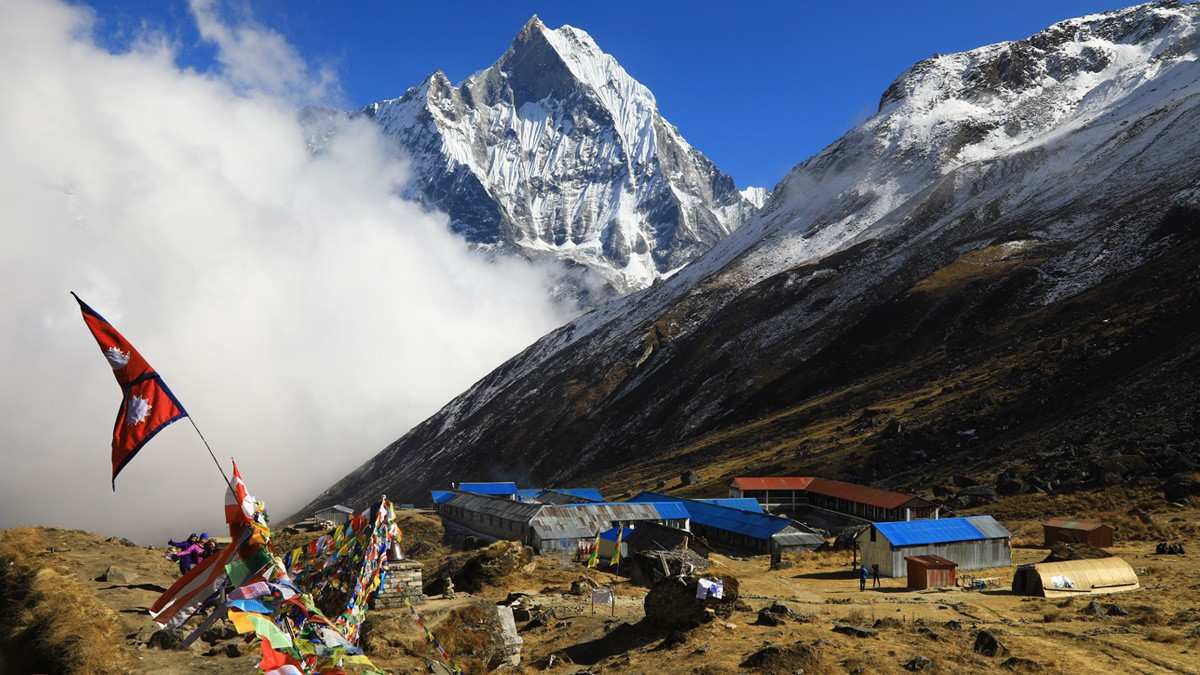
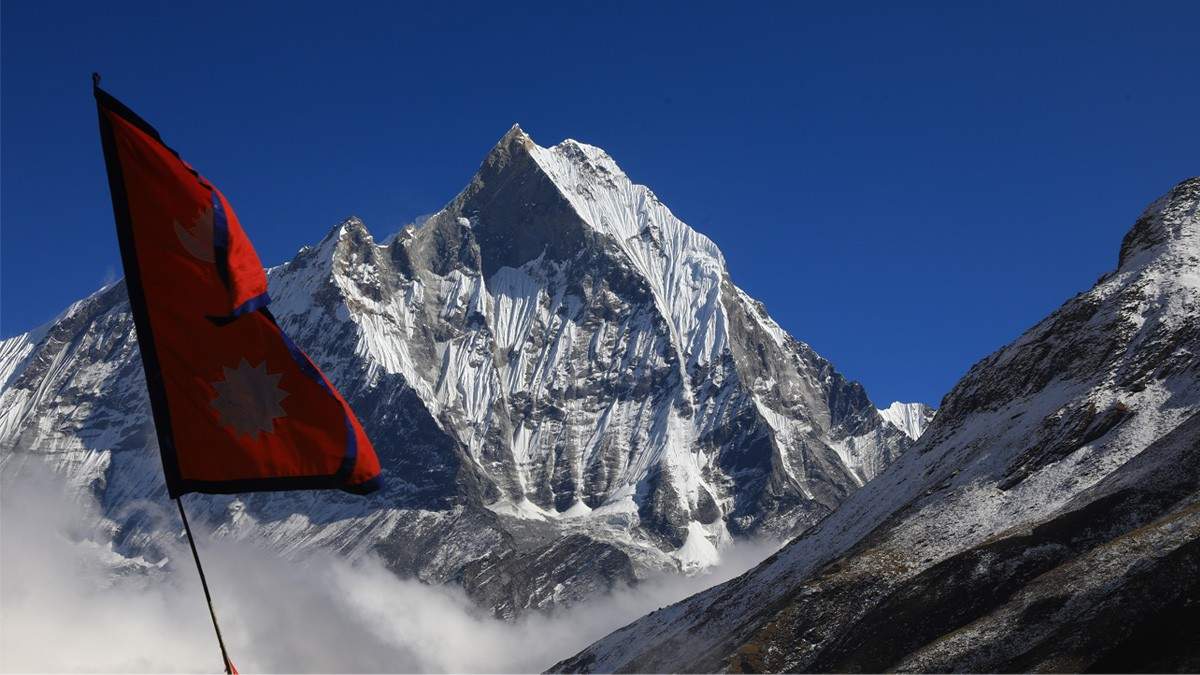
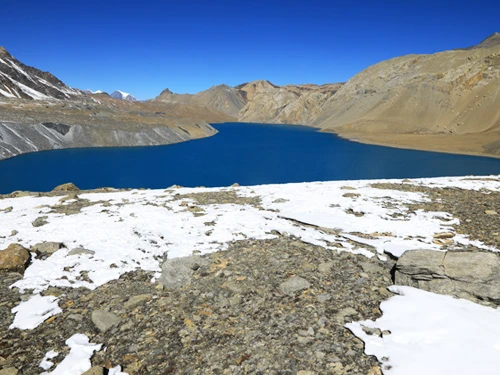
Beautiful mountain seen from Annapurna Base Camp
Searches for "elevation" and "altitude" are really searches for "will the height hurt me," so here is the profile that matters, not just a number.
The destination altitude is 4,130 metres. You typically start the actual walking somewhere between roughly 1,070 metres (Nayapul) and the higher road-head villages, depending on how far the jeep takes you, which changes year to year as roads extend. Total ascent across the trek is large, but the number that should concern you is not the total, it is the rate near the top.
This is the specific thing most pages skate over: on the standard itinerary, you sleep at Deurali (around 3,200 metres), then the next day you climb past Machapuchare Base Camp (3,700 metres) and on to Annapurna Base Camp (4,130 metres), often sleeping at ABC the same day you arrive. That is a meaningful sleeping-altitude jump late in the trek, and it is exactly the pattern that produces AMS.
The trail's saving grace is that the early days through Ghorepani and Chhomrong keep you relatively low and zig-zag up and down, which gives your body time. But the final push is where people get headaches, nausea, and bad nights.
What actually prevents this, concretely:
Build at least one extra night into the upper section if you possibly can. Sleeping at Machapuchare Base Camp instead of pushing straight to ABC, or adding a slow day, is the single highest-value change you can make to your itinerary. So generally, a 7-10 day package works best rather than rushing into this trail.
Drink far more water than feels natural, climb slowly enough to hold a conversation, and eat even when altitude kills your appetite, because it will. These sound like clichés because they are repeated everywhere.
You should know the line between normal and not. A mild headache and feeling tired at altitude is common and usually fine. Worsening headache that does not respond to rest, vomiting, confusion, or breathlessness at rest are not things to "walk off." The correct response to those is to go down, and going down even a few hundred metres works fast. Altitude is the one area where pushing through is the wrong instinct.
Crucially, ABC is not high by Himalayan standards. At 4,130 metres it is well below Everest Base Camp's 5,364 metres and the high passes of the Annapurna Circuit. The altitude is real but moderate, and the descent route means you do not linger up high. This is part of why it is genuinely a strong choice for a first Himalayan trek rather than a reckless one.
How long is the ABC trek, in days and in distance?
Here is a real contradiction in the ranking pages, and I am going to resolve it instead of repeating it.
You will see the trek's length quoted as anywhere from about 50 km to 115 km. Both are "right," and the reason is the part people leave out: the distance depends entirely on where the road drops you and whether you include the Poon Hill loop.
The shorter, direct route (starting from a high road-head like Jhinu or Kimche, skipping Poon Hill) is roughly 45 to 55 km and can be walked in about 7 days.
The classic route via Ghorepani and Poon Hill adds the famous sunrise viewpoint and several days of beautiful lower-altitude walking, bringing it to roughly 75 to 115 km depending on the exact trailhead, typically 10 to 12 days.
Rhododendron forests in Ghorepani Poon Hill
My honest recommendation: if you have the days, take the Poon Hill route. The extra low-altitude days are not padding, they double as natural acclimatisation, and the Poon Hill sunrise over Dhaulagiri and the Annapurna range is one of the genuine highlights, not a tourist tax. If you are short on time, the direct route absolutely still delivers the sanctuary, which is the thing you actually came for.
The map, in words you can actually use
A static map image tells you less than the shape of the route, so here is the route as a sequence, which is what you really want when you search "Annapurna Base Camp trek map."
Everything funnels through one geographic pinch point: the village of Chhomrong. Both the Poon Hill route and the direct route converge there, and from Chhomrong onward, there is essentially one trail in and the same trail out. The progression upward is Chhomrong, then Sinuwa, Bamboo, Dovan, Himalaya, Deurali, Machapuchare Base Camp, and finally Annapurna Base Camp.
You return down the identical path to Bamboo, then most people divert to Jhinu Danda for the natural hot springs near the river, which, after days of stone steps, is not optional in any moral sense. Pokhara is the city you start and end from; Kathmandu is usually where you fly into the country.
The practical consequence of the "one trail in and out" structure: above Chhomrong, you cannot get lost, and you also cannot resupply or change plans much. Carry what you need from Chhomrong up.
ABC Trek Current rules that genuinely affect your trip
This is where I can give you more current, useful details than the older pages, so read this part carefully.
You need the Annapurna Conservation Area Permit (ACAP) worth NPR 3,000 for foreign nationals. Permit prices do not change by season. They are checked at points like Birethanti and Chhomrong, so carry the printed originals and keep a phone photo as backup.
Nepal introduced a rule in 2023 requiring foreign trekkers to use a licensed guide on routes including this one. So, you need a licensed guide on the ABC Trek. This is not just for guidance, this is for safety in such unpredicted trail. Also, the local guide will explain to you better the things that you can read in the book.
Further, the travel insurance that explicitly covers helicopter evacuation up to at least 4,500 to 5,000 metres is the one purchase I would call genuinely non-negotiable, because the permit card tracks you for rescue but does not pay for the helicopter, and a Himalayan evacuation without insurance is financially brutal.
Honest answers to the questions people actually ask
"Is ABC Trek good for a first Himalayan trek?" Yes, and this is not a sales line. The combination of moderate maximum altitude and dense tea houses means you never carry camping gear or much food. There will be a well-marked single trail above Chhomrong and a payoff that rivals far harder treks, making it close to the ideal first one. It is the trek I would point a fit beginner to because the altitude is more forgiving.
With the right guidance and proper preparation, this trek is just a booking away. Make sure your Annapurna Trek Packing List is smart but sufficient.
"Is it overrated?" The trek to the sanctuary is not. The honest weak point of the experience, which the selling pages will not tell you, is that the route is popular, so in peak season (October to November, and to a lesser extent March to April) the trail and tea houses can be busy and lodges fill up.
If solitude is the single thing you want most from a mountain, this specific trek in peak season is not where you find it, and that is a fair trade to know about in advance rather than discover on the trail. Going at the shoulder of the season, or choosing a quieter trek if crowds are your dealbreaker, is the honest move.
Winter is best for snow hiking and lovely scenery with solitude and peace. Similarly, monsoon works best if you have prior experience and feel ok with less visibility to scenery.
So, who is ABC Trek actually worth it for?
If you want to stand inside a ring of 7,000- and 8,000-metre peaks without learning to climb, and you will put in two months of hill and stair training, and you can give it nine to twelve days, then it is worth it without an asterisk. That is genuinely one of the best returns on effort in world trekking, and I am not going to hedge it.
If you only have about seven days, it is still worth doing. Take the direct route and build in at least one buffer day near the top. You lose Poon Hill, not the sanctuary.
The one case where I would tell you to do something else: if quiet matters to you more than the view, and you would be going in October or November, you will not get quiet here. Pick off season.
Past that, the trail does not care how fast you got there or what your jacket cost. Train, go up slowly, leave yourself slack near the top, and take altitude seriously rather than personally. Do that, and for almost everyone who types this question into a search bar, the answer really is Yes, Annapurna Base Camp Trek is worthy.
Kishwor Adhikari is a passionate writer with a deep enthusiasm for trekking and adventure. His extensive travels across Nepal, exploring its diverse landscapes and hidden corners, have shaped his unique perspective on the country's natural beauty. With a wealth of first-hand experience in adventure trekking, Kishwor has become a trusted voice for fellow enthusiasts. Through his writing, he shares invaluable insights, offering practical advice and inspiration for both seasoned trekkers and novices alike. His dedication to sharing his journey and knowledge helps others discover the wonders of Nepal's wilderness, making his work an essential resource for anyone seeking adventure in the region.