One of the most famous trails in the world, the Everest Base Camp (EBC) Trek brings you face-to-face with the world’s highest mountain, Mt. Everest (8848.86 m). People love to enjoy their holidays in this snowy world. But the question is, can you do the EBC Trek with your kids? Yes, the Everest Base Camp trek with kids is absolutely possible.
You can enjoy the Everest Base Camp Hike with your children, however, this requires certain precautions and preparations. Everest Base Camp Trek is a physically demanding journey. This requires good fitness and acclimatization. But the journey is incredibly rewarding. As we climb higher into the mountains, our spirits are filled with the energy that the mountains give us. The kids will love the views and mountain culture.
Based on your preference, you can customize the trek with the most suitable itinerary. You can trek to the base camp and do a helicopter return as well. This is a comfortable option for your kids with fewer walks. You can also add extra days for acclimatization to let the kids rest properly before marching ahead.
This guide from Breeze Adventure is a solid tip for Everest Base Camp with kids. This is based on years of experience in Everest trekking, so consider this for a smooth and successful journey:
Table of Contents
Trekking to Everest Base Camp with Children
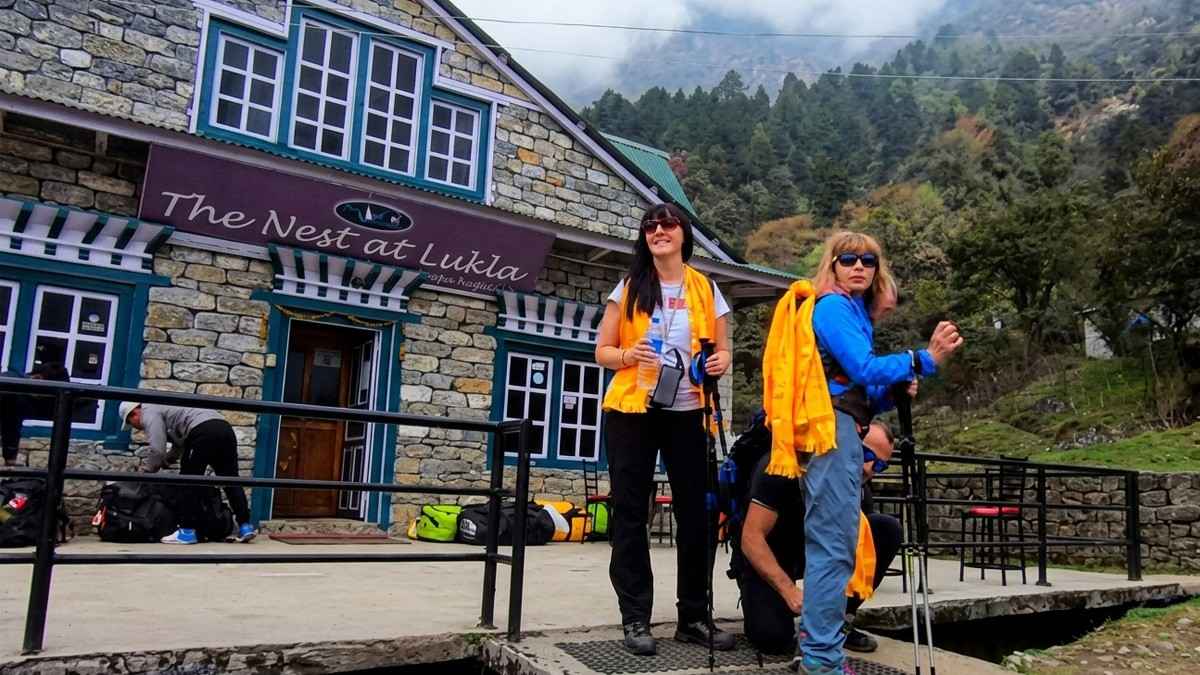
Family getting ready for Everest base Camp in Nest Hotel
Mount Everest is the pride of every snow lover. The mountain was first summited in 1953 by Tenzing Norgay and Sir Edmund Hillary. Since then, people have traveled from all over the world to get a glimpse of the legendary mountain. The Everest Base Camp Trek lies within Sagarmatha National Park, a UNESCO World Heritage Centre, and the world’s highest national park.
The park includes numerous snow-capped mountains. Likewise, glaciers, valleys, lakes, and trails are home to the Sherpa people. If we’re lucky, we may run into one of the rare animal species that inhabit the Khumbu region.
Day by day, this trek is becoming popular among people around the world! Every family has a dream to explore a new place on their vacation! And I have seen, without research, some families have tried to do the Everest Base Camp trek with their little Kids. Sadly, they had to come back with a bad experience.
So, as I saw and as I have a long experience with the Himalaya, I am going to let you know in the segment below.
Is It Possible to Trek to Everest Base Camp with Kids?
People often ask, " Can kids hike to Everest Base Camp?" Let me tell you, Everest Base Camp Hike with kids is a dream for many. Is it really possible to take your kids to such a high altitude? Well, the answer is yes. You can enjoy this dream destination with your kids, friends, family, or join the trekking group alone.
If you are planning to do a trek with your kids, please make sure that your kids are physically and mentally prepared for the trip. It's better to do a full health check before you start your adventure.
If your kids haven’t attended any adventurous activities in the past, I would not recommend this trip for them. Though it is a difficult task for non-adventurous kids, it is not an impossible task. With the right precautions and preparations, anyone can make it a successful trek.
What’s the Best Age for Kids to Do the EBC Trek?
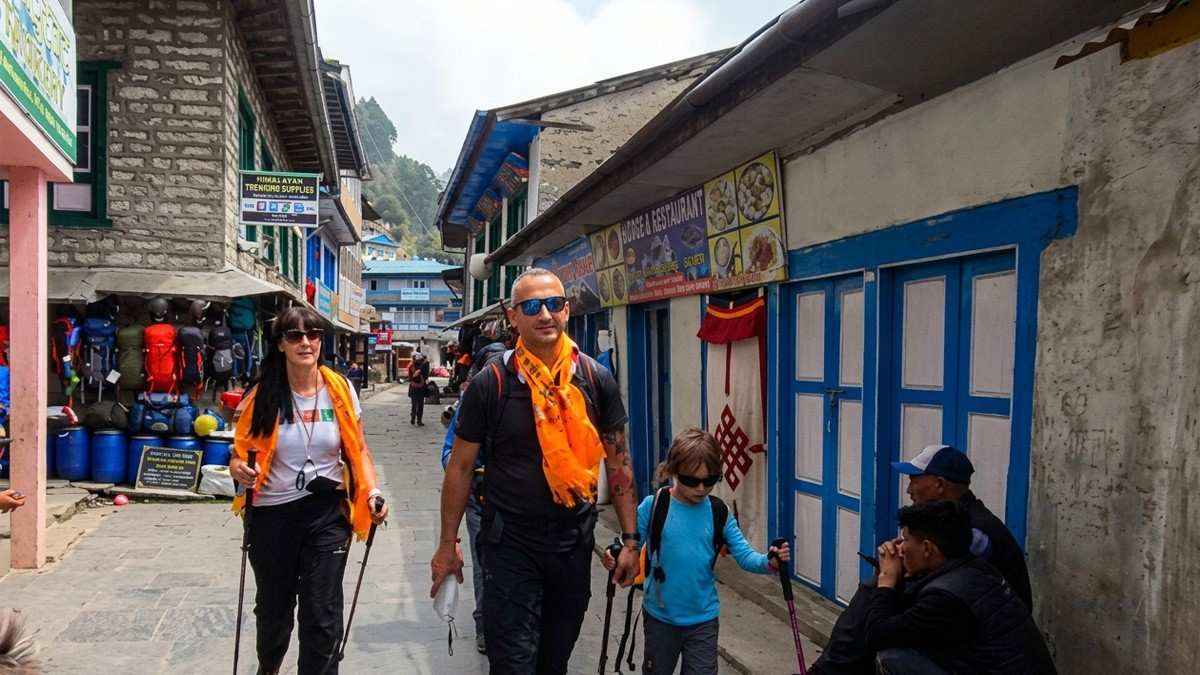
Family with child walking on streets of Lukla in EBC Trek Nepal
Normally, there are no strict rules regarding the right age for the EBC trek. But, considering the extreme cold, altitude toughness, and possible health issues, the kids above 8 years are recommended. Kids at this age or above can have some idea about travel and the snowy world.
Similarly, they can manage some weather changes and altitude toughness. If proper acclimatization is done, they can enjoy an Everest Base Camp trek without any major health issues.
Having said that, we have evidence of 2 years old Scottish toddler successfully being on EBC Trek on his father's back. So age is not a barrier.
When Is the Best Time to Trek with Kids?
The spring (March to May) and Autumn (September to November) seasons are the best times to trek to Everest Base Camp with kids. During this time, there will be mild and pleasant weather. The kids don’t have to tolerate the extreme climate.
Similarly, the clear skies, flowers blooming around, and the moderate temperature will make them cheerful. Monsoon and winter can be risky for trekking in the Base Camp for kids and adults with no prior experience.
Where does the kid start to feel the Altitude?
Normally, adult people start to feel less oxygen above 2500 m. The same applies in the case of kids, too. It depends on which altitude you are from! Here are some of the common terminologies for EBC Trek, have a look:
Altitude Sickness
Altitude sickness is a common condition in the high Himalaya. It is a condition of difficulty in breathing as altitude increases. When people go above 4000m without having rest, they might get this very soon.
Also, it depends on your health condition. If you are having some problems before your adventure, your body will be very tired on the mountain. And your body starts to seek more oxygen. When your body does not get enough oxygen, you start to feel it.
Why does it happen?
The pressure of the air that surrounds you is called barometric pressure. When you go to higher mountains, this pressure drops, and there is less oxygen available in your body.
If you live in a place that’s located at a moderately high altitude above 3000m, you get used to the air pressure. But if you travel to a place at a higher altitude than you’re used to, your body will need time to adjust to the change in pressure.
Types of Altitude Sickness:
Acute Mountain Sickness (AMS) is the mildest form, and it’s very common. The symptoms can feel like a hangover: dizziness, headache, muscle aches, and nausea.
High Altitude Pulmonary Edema (HAPE) is a buildup of fluid in the lungs that can be very dangerous and even life-threatening.
High Altitude Cerebral Edema (HACE) is a severe form of altitude sickness. This is high-altitude cerebral edema. Fluid builds up within the brain in this condition.
As the brain swells with fluid, the person's mental state changes. Loss of coordination, coma, and, finally, death can follow unless the problem is recognized and treated promptly.
Symptoms of Altitude Sickness:
Normally, you may feel the following signs as altitude sickness symptoms:
• A headache
• Dizziness
• Nausea
• Vomiting
• Fatigue and loss of energy
• Shortness of breath
• Problems with sleep
• Loss of appetite
What to do if you or your kid gets altitude sickness?
Mountain sickness is very dangerous if you don’t have an idea about it! So if you or your kids get the symptoms as I described earlier, please descend 500m-1000 m as soon as possible. You can do so by riding a horse or being carried by porters, and by helicopter in serious cases.
It is not good to stay at the same elevation after you get the altitude sickness symptoms. Breeze Adventure manages altitude sickness with skilled trekking members. We also offer a supplementary oxygen cylinder.
What must you carry with you?
Well, it is a common problem to select the right and usable things with us on our trek! I also used to carry lots of unnecessary clothes, gadgets, and light snacks. But now, after a long experience in the trekking field, I can advise you on what is useful in the mountains. And what you must carry with you as Everest Base Camp Packing List.
Warm clothes
Dry foods
Power bank or Solar charger
An extra-light sports shoe
Sunglasses
Sunscreen
Permits You Need for Your Kids in EBC Trek
One thing parents forget: your kids need the same permits you do. You will need the Khumbu Pasang Lhamu Rural Municipality Entry Permit and the Sagarmatha National Park Permit. Children under 10 are free for the Sagarmatha National Park permit, but there's no child discount on the Khumbu Pasang Lhamu Rural Municipality permit.
Carry a few passport-size photos and your kids' passport copies. If you book with us, we sort all of this out before you fly to Lukla, so you don't waste a single trekking day in an office.
A Slower, Kid-Friendly Itinerary
The standard adult itinerary is too fast for children. After years on this trail, here is what I tell families to do:
Walk fewer hours each day, four to five instead of six or seven.
Never gain more than 500 to 600 m of sleeping altitude in a day.
Take two acclimatization days, one at Namche Bazaar and one at Dingboche.
Add at least one extra rest day on top of the normal plan.
Most families reach Base Camp from Lukla in about eight days walking up, then come down faster (or fly out by helicopter).
Do You Really Need a Guide and Porter?
For a family, yes. A porter carries the heavy bags so you can keep your hands and energy free for your kids. A good guide watches your children for the early signs of altitude sickness that little ones can't explain in words, and keeps them laughing when their legs get tired. This is the part parents underestimate the most.
What Are the Teahouses Like?
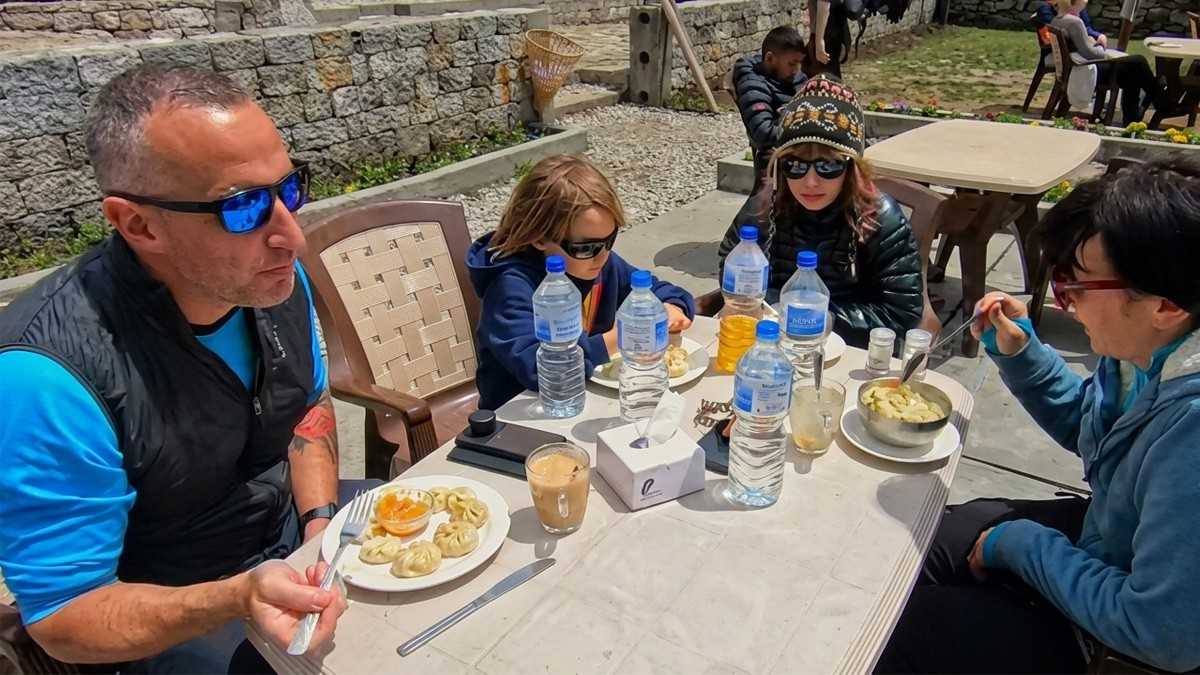
Family enjoying momo and tea with kids in Everest Base Camp Trek
Simple but warm-hearted. Rooms are basic, beds are twin, and only the dining room is heated, by a stove in the evenings. There is no central heating, so pack a proper sleeping bag and warm layers for your kids at night. Wi-Fi, charging, and hot showers cost a little extra and get pricier the higher you go. Food is mostly dal bhat, noodles, soups, and pancakes, plenty of warm meals your kids will actually eat.
Tips for the Everest Base Camp Trek with Kids
To make your Everest Base Camp hike memorable with your children, you can do the things as follows:
Get your kids into light to moderate exercise training, sometimes before the actual trek. You can make them do some leg work, stretching, or arrange for a small hike in nearby places.
Acclimatization is key for kids. You can add extra rest days to your trek.
Don’t miss any of the necessary things while packing. Make sure all the required clothes, shoes, inner wear, water bottle, and kids' things are packed well.
Carry necessary medicines as per the doctor’s prescription to prevent possible health issues.
Make the journey fun for them. You can make them sing, participate in photos, and interact with them during the journey.
Be liberal with them and listen to their queries.
Keeping Kids Happy on the Trail
Tired, bored kids are the hardest part of any family trek, not the altitude. A few things that have always worked for me:
Give them small daily goals instead of "we're walking to Everest."
Let them count yaks, prayer flags, and suspension bridges.
Pack their favourite snacks and drinks, and let them snack often.
Take photos with them, learn a few Sherpa words together, and say hello to other trekkers.
When kids feel involved, they walk further and complain less.
Conclusion:
Everest Base Camp Trek with kids is the finest way to make your kids aware of the altitude with the highest peak in the world. They will build the habit of trekking and adventure right from a young age. This not only helps them grow with confidence but also helps them grow socially and personality wise.
It is good to travel with your kids, which helps them to gain global knowledge! But, before you start your travel or trek, please get some basic knowledge and know about the place that you are going to with your family. For your safety and a full, joyful adventure, please contact us (Breeze Adventure). Our very experienced guide will help you reach your goal!
Kishwor Adhikari is a passionate writer with a deep enthusiasm for trekking and adventure. His extensive travels across Nepal, exploring its diverse landscapes and hidden corners, have shaped his unique perspective on the country's natural beauty. With a wealth of first-hand experience in adventure trekking, Kishwor has become a trusted voice for fellow enthusiasts. Through his writing, he shares invaluable insights, offering practical advice and inspiration for both seasoned trekkers and novices alike. His dedication to sharing his journey and knowledge helps others discover the wonders of Nepal's wilderness, making his work an essential resource for anyone seeking adventure in the region.