In the Manaslu Circuit Trek Nepal, a famous acclimatization point is there called Samdo Village. The village is a reflection of Tibetan culture tucked in the Himalayas. Most trekkers pass through Samdo quickly. One night, maybe two if they're smart about acclimatization, and then they're off toward Larkya La. But that’s not the way, how you see this village. Actually, the village is not just a stopping point, it’s a masterpiece that appears like a painting but is a reality.
Of all the villages on the Manaslu Circuit Trek, Samdo is the one that stays with you, not because of any single dramatic moment, but because of how quiet and old it feels. Like the mountain, let it stay. It perfectly represents the Tibetan heritage in Gandaki Province, Nepal
I spent two nights there, and I'm glad I did. The village not just helped me as an acclimatization point, but the cultural richness and natural beauty blew my mind. This is definitely something worth being a part of. This guide from Breeze Adventure is based on my 19 years long Himalayan experience, which helps you with everything you should know about Samdo Village.
Table of Contents
Where exactly is Samdo Village
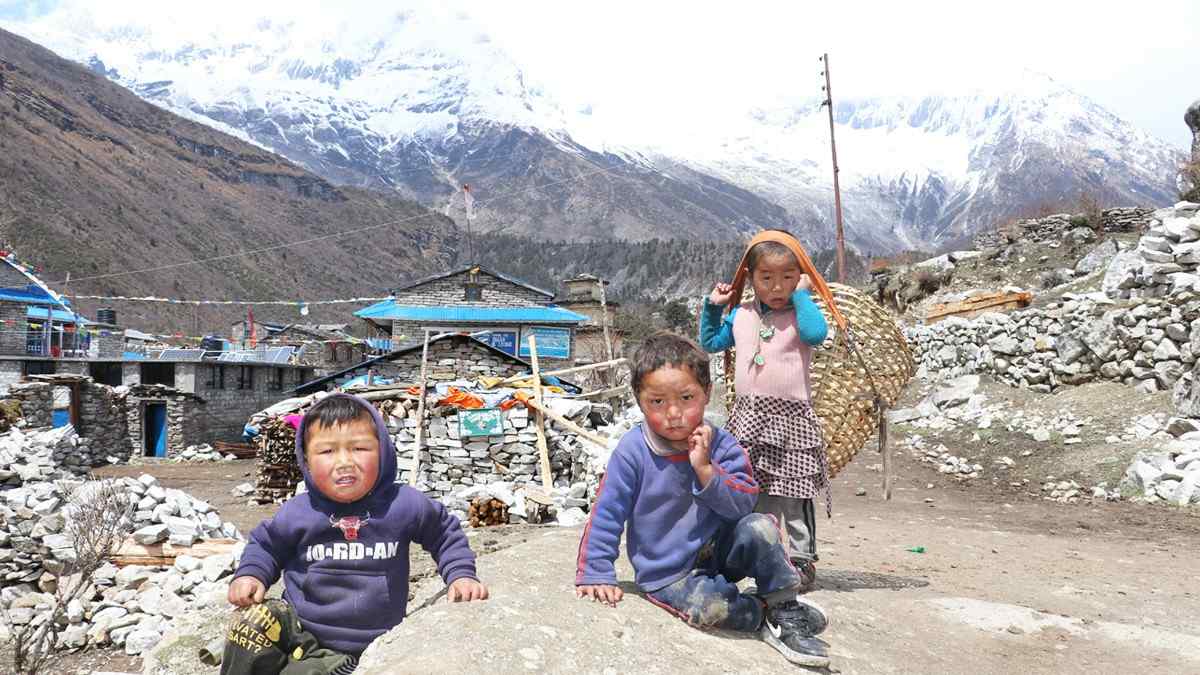
Samdo Village Kids representing local lifestyle in an altitude of 3875 m
Samdo village sits in the upper Manaslu region of northern Gorkha district, Nepal. In the Gandaki Province, the elevation is around 3,875 meters, which means you feel it, a slight heaviness in the chest on the first morning, and stairs that require a second thought.
The village is just a few kilometers south of the Tibet border, which matters more than it sounds. That proximity shaped everything about Samdo: its people, its trade history, its architecture. Standing at the edge of the village looking north, the terrain just opens up into a wide, bare valley that fades toward ridges you can't quite place on a map. Tibet is right there, behind them.
To get here, you come through Samagaun, a traditional Buddhist village in the Manaslu Circuit Trek Nepal. Samdo is the next village up, and after it, there are no more permanent settlements until you've crossed the pass and descended the other side.
What "Samdo" means
The name comes from the Tibetan language. "Sam" roughly means "three," and "do" means "confluence" or "meeting points." Samdo sits near the meeting point of several mountain streams, which explains the name. Like most Himalayan village names, it describes exactly what you see when you arrive.
What is the elevation of Samdo Village Nepal?
At 3,875 meters, Samdo is high enough to make most people slow down. Headaches are common on the first evening, especially if you've come up quickly from lower elevations. My standard advice is: drink water, rest, don't push it, it actually works here.
The good news is that Samdo's position makes it one of the better natural acclimatization points on the entire Manaslu Circuit. You arrive, rest, do a short hike the next morning to go higher and sleep lower, and your body quietly catches up. Most trekkers feel noticeably better on day two.
Samdo Village History, Culture, and Tibetan Roots
The residents of Samdo are ethnically Tibetan. Yes, you heard that right. Their language, their prayers, their house designs, even the way they arrange stones along the trail, all of it connects directly to Tibetan culture. This isn't a recent migration. Actually, these families have been here for generations, and the culture feels genuine rather than performed.
Buddhism shapes daily life in the most ordinary ways. Prayer flags are strung everywhere, not decoratively but practically, as if the wind itself has a job to do. You will see there, Mani walls, those long rows of carved stones inscribed with mantras. They appear to line the paths through the village. You walk around them, always clockwise, because that's how it's done.
Historically, the people of Samdo were traders. The route between Nepal and Tibet ran right through here, and families built their livelihoods on moving goods across the border. That trade changed after the border closed to locals. Now, most families combine yak herding, subsistence farming, and seasonal work supporting trekkers on the Manaslu trail. The economy is modest, but the knowledge of this land runs very deep.
The village population is small, with fewer families, and significantly fewer in winter when many families move to lower elevations to escape the cold. During trekking season, mainly October through November, Samdo comes alive with guesthouses open, smoke coming from kitchen chimneys, and the particular warmth of being in a place that doesn't get many visitors and genuinely welcomes the ones it does.
Samdo Weather & Best Time to Visit
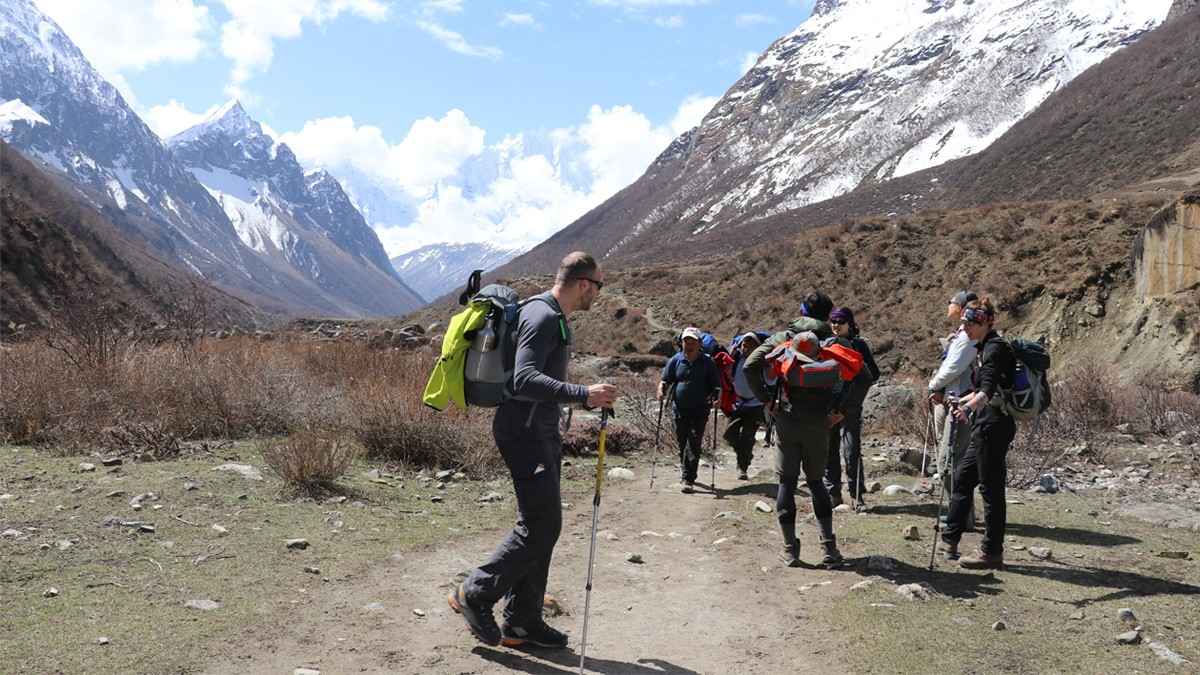
Foreign Trekkers in Samdo Village Manaslu Region in Autumn Season
Located at a higher altitude, Samdo village weather is often unpredictable. For this reason, the best time to visit matters for a great experience in this Himalayan journey. Here are the major things to consider for weather and the best time to move:
In Samdo Village, cold is the baseline, not the exception. Even in October, nights drop below freezing at this altitude. By November, temperatures at night can sit anywhere between -5°C and -10°C. Days are fine if you're walking. Sit still for too long, and you'll feel it fast.
Interestingly, mornings are the reward. Most days start clear and bright. Whereas, afternoons are a different story with clouds rolling in off the high ridges, and the wind picks up. If you want good views and photos, get moving early.
If you are lucky, snow can show up uninvited. Anywhere above 3,500 meters, snow is on the table at any point. It doesn't need to be the dead of winter. Plan around it, not against it. The snowfall makes the trip really exciting.
The best windows for Samdo Village are autumn and spring. Mid-September through late November is one sweet spot; March to May is the other. Most trekkers pick October for the balance of weather and light. If you go in November, just know you're trading some comfort for thinner crowds.
Don't underestimate the wind. The valley above Samdo pulls air down from the Tibetan plateau, and it comes with some real force behind it. This isn't a gentle breeze situation. Your sleeping bag rating isn't a minor detail here, it actually matters.
Walking from Samagaun to Samdo
This section of the Manaslu Circuit is one of the more relaxed walking days. The Samagaun to Samdo trail climbs gradually through wide alpine valleys with the kind of open views you don't often get because something is usually in the way. Here, the terrain just stretches out with snow peaks, blue sky, and the occasional yak.
It takes most trekkers about three to four hours. The path is clear. The altitude gain is manageable. And unlike some of the tighter, forested sections lower down, this walk gives you space to think. Prayer flags appear in clusters along the route, and the silence between them is genuine. You will love it.
The Tibet border hike from Samdo
This is the thing most people don't know to do, and it's worth knowing.
With a spare acclimatization day in Samdo, you can hike north toward the Nepal-Tibet border area. You can't cross the border, which is closed to foreign trekkers, but you can walk up to the ridge and look out over terrain that's been a trade route for centuries. Here, the views are dramatic in the way that empty, high-altitude landscapes are dramatic: not because anything is happening, but because the scale is so large and the quiet so complete.
It's also just a smart way to spend an acclimatization day. You go higher during the day and come back to sleep at Samdo's elevation, which is exactly what the body needs before Larkya La. Two purposes, one walk in Manaslu Himalayan Village.
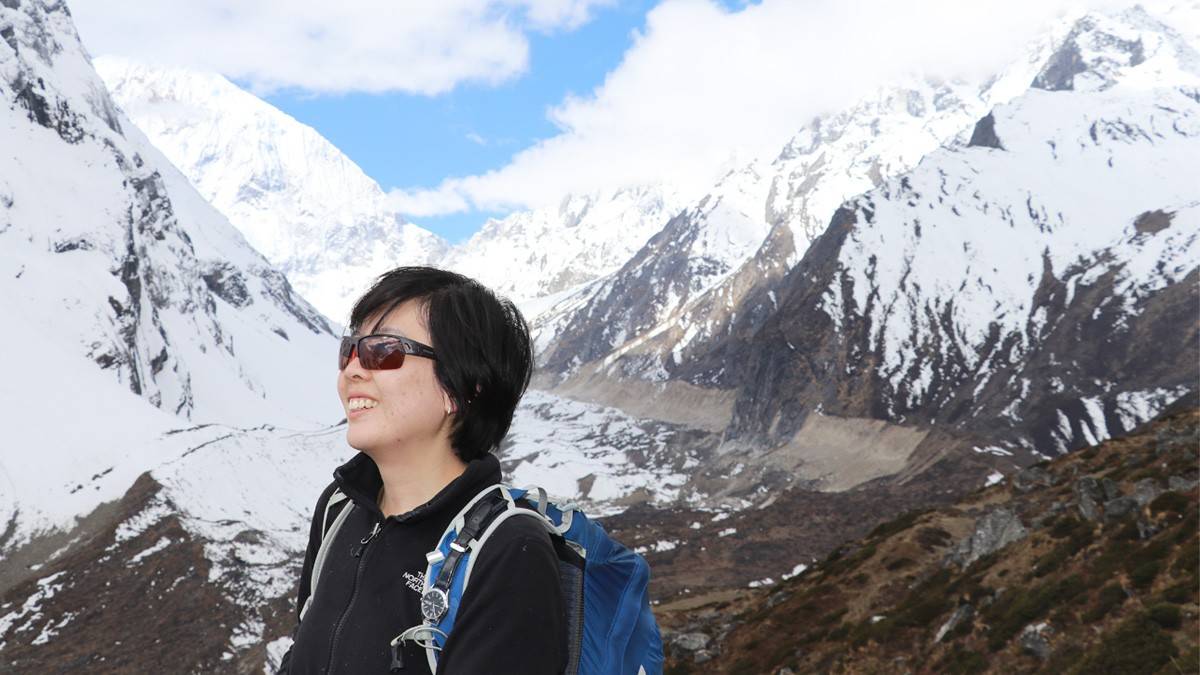
The village sits at the edge of a glacial valley with Himalayan peaks visible in most directions. The terrain is high-altitude, sparse, not the lush forests of lower Nepal, but the open, rocky, wide-sky landscape of the mountain borderlands. Similarly, the glaciers are visible from the village. The light at this altitude has a particular quality, especially in the early morning and late afternoon, when it hits the surrounding ridges at a low angle.
Wildlife in the upper Manaslu region includes Himalayan tahr, snow leopard (rare and seldom seen), blue sheep, and various high-altitude birds, including the Himalayan snowcock.
The flora is alpine and seasonal, with wildflowers in summer. You will see dry grass and bare rock there by November. It's not lush. It has a different kind of beauty, more exposed and more honest.
From Samdo to Larkya La: two options
Most people spend a night at Dharamsala (also called Larkya Phedi, around 4,460 meters) before crossing Larkya La Pass the following morning. This is the standard approach and the sensible one. You arrive at Dharamsala in the afternoon, rest, sleep poorly because of the altitude, and set off well before dawn.
Some trekkers, well acclimatized and in good shape, cross directly from Samdo without stopping at Dharamsala. It's a very long day, actually. Larkya La sits at 5,106 meters, and the early start from Samdo has to be genuinely early, around 3 or 4 AM.
Saying that, it's doable. It requires the right conditions and no room for error. For most people, the extra night at Dharamsala is worth it.
Practical Notes for Samdo Village Trek
Since Samdo is a Himalaya village at a higher altitude, some practical tips are genuinely needed to make the trip smooth and enjoyable. Here’s what you can consider:
Getting there: Samdo is reached on foot via the Manaslu Circuit Trek. Most trekkers walk from Samagaun in three to four hours.
Permits required: The Manaslu region requires a Restricted Area Permit (around $100 per week in high season), an MCAP permit (Manaslu Conservation Area), and an ACAP permit if you're completing the circuit over Larkya La into the Annapurna region.
Accommodation: Samdo has basic teahouses. Rooms are often simple stone-walled spaces, blankets provided, squat toilets, and limited electricity. Similarly, hot water for tea is always available. Hot showers are hit or miss.
Food: Dal bhat is the right answer at every meal up here. They are served warm and fresh and are locally grown. The portions are large, the refills are free, and the carbohydrates are what your body wants at altitude. Noodle soups are common. Don't expect variety.
Money: It is better if you carry Nepali rupees in cash. There are no ATMs anywhere near Samdo. The last reliable ATM before the trek begins is in Arughat or Soti Khola, depending on your route. So stock up.
Best time to visit: October and November for clear skies and stable weather. Spring (March-May) is the second window. Winter closes the pass and most teahouses.
Why Samdo stays with you
It's not the dramatic view or the famous landmark. Samdo doesn't have those. What it has is a kind of stillness that's hard to find. The village is far enough from everything that the noise of the world doesn't reach it. The culture is intact in a way that feels genuinely old. And the landscape with that wide, cold, open valley pointing toward Tibet is unlike anything else on the trek.
For a better experience, spend two nights here. Do the border hike. Eat dal bhat twice a day and drink your water. Your body and your memory will both be better for it.
Kishwor Adhikari is a passionate writer with a deep enthusiasm for trekking and adventure. His extensive travels across Nepal, exploring its diverse landscapes and hidden corners, have shaped his unique perspective on the country's natural beauty. With a wealth of first-hand experience in adventure trekking, Kishwor has become a trusted voice for fellow enthusiasts. Through his writing, he shares invaluable insights, offering practical advice and inspiration for both seasoned trekkers and novices alike. His dedication to sharing his journey and knowledge helps others discover the wonders of Nepal's wilderness, making his work an essential resource for anyone seeking adventure in the region.