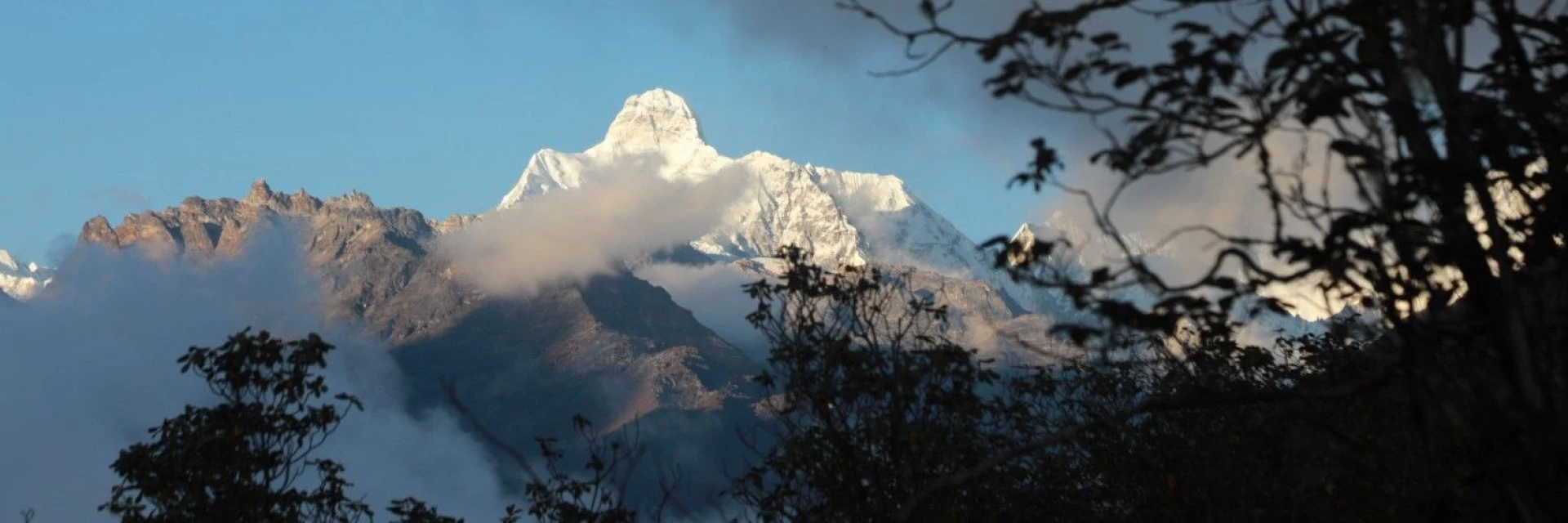
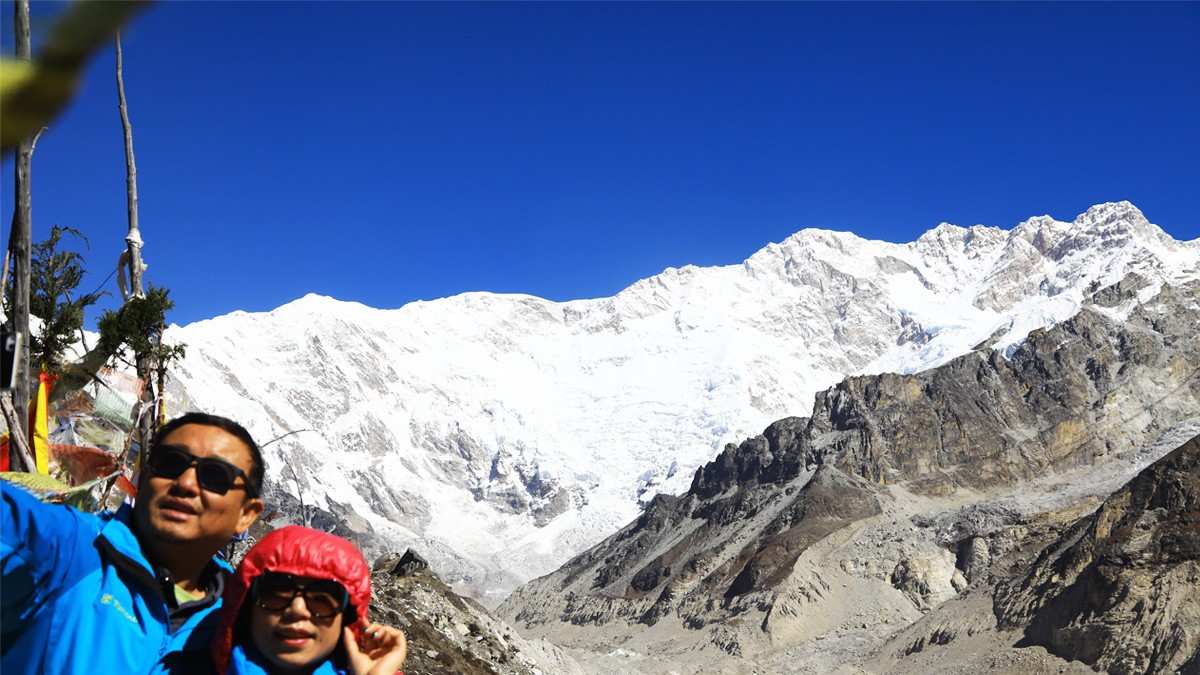
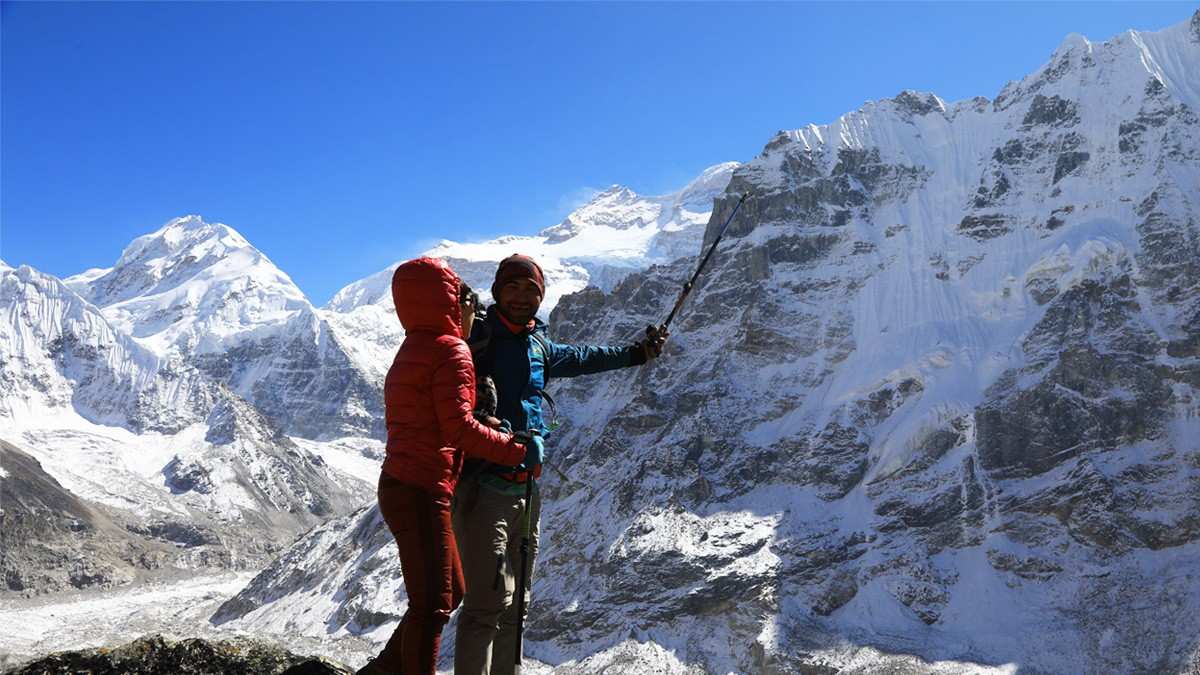
What is the Kanchenjunga weather? This is the most asked question by the trekkers who are planning this remote Himalayan Trek Nepal. Well, the answer is straight: what month you are going, that’s all that matters. I still remember the exact moment I realized I had underestimated the weather at Kanchenjunga.
It was mid-May. I was somewhere above Ghunsa, convinced I had timed this trek perfectly, post-winter, pre-full monsoon, golden window. Then suddenly, the sky turned the colour of a bruise. Eventually, the temperature dropped twelve degrees in under an hour, and hail the size of chickpeas hammered my tent like applause. My sleeping bag was damp. Not just that, my boots were soaked through, and I was grinning like an idiot.
That's Kanchenjunga for you. It doesn't apologize.
The higher altitude, unpredictable weather, and fewer crowds make the Kanchenjunga trek more challenging. Well, understanding Mount Kanchenjunga weather isn't just useful, it's the difference between a life-changing adventure and a dangerous miscalculation.
Based on my personal experience on this giant adventure route, I am here to brief you on the best season and weather. So let me walk you through every month, the way only someone who's been caught out by this mountain can.
Table of Contents
Why Kanchenjunga Weather Demands Respect
Kanchenjunga is a remote Himalayan trek in Nepal
Most trekkers compare it to Everest Base Camp or Annapurna. Stop doing that, they are very different in many aspects. The Kanchenjunga region sits in a meteorological crossfire. Actually, the Bay of Bengal monsoon hits it from the south and east, while cold Tibetan air pushes down from the north. As a result, the weather shifts faster, snows harder, and clears more dramatically than almost anywhere else in Nepal.
Talking about the elevation, the range you'll cover is staggering. It is from subtropical river valleys around 1,200 metres all the way to high camps at 5,100 metres. It means that, within a single day of trekking, you will experience excessive sweating.
Altitude also amplifies everything. UV radiation hits harder in this journey. Further, wind cuts deeper, and a cloud that looks distant in Kathmandu seems to be sitting on your face at Pangpema.
Month-by-Month Weather at Kanchenjunga
Month
Temperature Range
Rainfall
Trekking
January
−20°C to 0°C
Very Low
Experts Only
Febraury
−18°C to 2°C
Very Low
Experts Only
March
−12°C to 8°C
Low
Good
April
−8°C to 14°C
Low
Best
May
−5°C to 16°C
Moderate
Early Months Only
June
2°C to 18°C
Heavy
Avoid
July
5°C to 20°C
Heaviest
Avoid
August
4°C to 19°C
Heavy
Avoid
September
−2°C to 16°C
Moderate
Late month only
October
−8°C to 14°C
Very Low
Best
November
−14°C to 8°C
Very Low
Very Good
December
−18°C to 3°C
Very Low
Experts Only
January - Beautiful, Brutal, and Mostly Empty
January in the Kanchenjunga region is a masterclass in clarity. The weather is supportive, and the air is crisp and transparent. On a still morning, the mountain appears so sharp against the blue sky that it looks digitally rendered. Likewise, temperatures at high camps can plunge to -20°C at night, sometimes lower with wind chill.
You will be thrilled by the snow that reliably blankets the upper trails. Below 3,000 metres, daytime walking is manageable, even pleasant in full sun. But above Ghunsa, it is better to progress slowly. Exposed passes like Sele La become genuinely technical without proper gear and experience.
This month is a part of the winter season in Nepal, so it is better recommended for experienced trekkers rather than for beginners. You will love the scenario despite the days of waking in the snow.
February- Hints of Softening
February brings fractionally longer days and a slight easing of the most savage cold, though don't let that fool you. The mountain is still locked in winter. Also, the passes remain snowed in. You will see winds at altitude continue to rip through with serious force.
So, what’s the saving grace? Well, it’s rhododendron forests at lower elevations. The forests just begin to show their first buds. Walking through Yamphudin and the lower valleys, you'll catch glimpses of spring preparing itself. You can’t get enough of this reminder that the landscape transforms completely in just a few weeks.
There may be fewer teahouses on the route due to the winter effect. So, plan meticulously and carry more food than you think you need.
March- The First Real Window Opens
Here we go with the real trekking season in Nepal. March is when the Kanchenjunga region trek begins to feel genuinely accessible for well-prepared trekkers. At this time, snow levels start retreating, passes become manageable, and the rhododendron forests, particularly the magnificent stands between 3,000 and 4,000 metres. They will just burst into extraordinary bloom.
You can’t help but love the crimson, pink, and white flowers that carpet the ridge trails. It's one of the most visually arresting things I've ever seen in the Himalaya. Don’t take a chance and capture every possible image on the trail.
Temperatures still drop sharply at night. Expect -10°C to -15°C above 4,000 metres. But daytime walking between 10 AM and 4 PM is often comfortable, occasionally warm.
The weather window is more reliable in late March than in early. Kindly check forecasts carefully for the first two weeks.
April- Peak Season Begins (and For Good Reason)
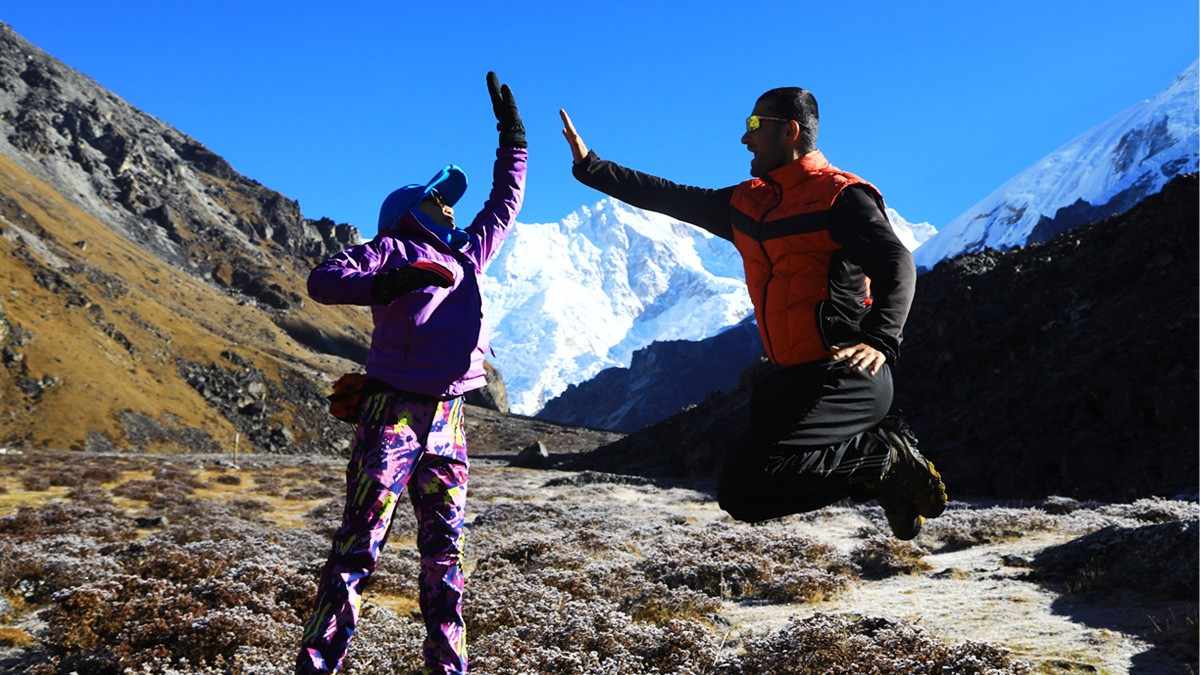
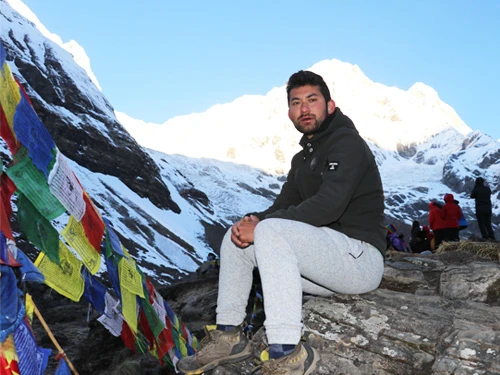
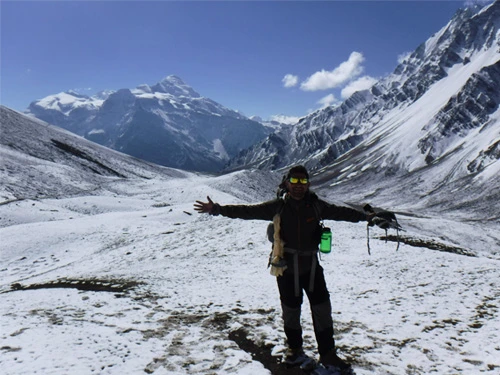
Fun moment in Kanchenunjga in the right month
April is arguably the single best month to trek in this region. The monsoon is still weeks away. Skies are predominantly clear, and the mountain reveals itself with stunning regularity. Rhododendron season reaches full crescendo. Temperatures are cold but manageable at all elevations.
Above 4,500 metres, you'll still encounter snow, especially on north-facing slopes and in shaded gullies. The high camps around Pangpema Base Camp (North) and Yalung Base Camp (South) are accessible to competent trekkers without winter mountaineering skills, though crampons remain advisable.
Visibility is often extraordinary. The sunset on Kanchenjunga's summit pyramid from Pangpema looks unbelievable. It appears like a wall of fire and ice so overwhelming that you literally sit down on the moraine and stay there for two hours.
This is spring. This is why people make the journey.
May - The Month That Requires Honest Self-Assessment
Kanchenjunga weather in May is the most complex of any month, and I say that from personal, wet, humbling experience. You will experience the real Kanchenjunga trek difficulty here.
The first two weeks of May often continue the pleasant conditions of April, clear mornings, good visibility, and manageable cold at altitude. Many trekkers have brilliant trips entirely within this window. But the pre-monsoon atmospheric instability also arrives in May. This brings afternoon thunderstorms, sudden cloud cover, and the occasional heavy snowfall at high elevations. The situation catches people completely off guard.
By the third and fourth week, the probability of disruption increases significantly. Trail conditions can deteriorate quickly. Afternoon starts become genuinely risky above 4,000 metres.
The key is to start every high-altitude day early, before 7 AM if possible, and be at camp or a teahouse before noon. Flexibility in your itinerary isn't optional in May; it's essential.
Kanchenjunga weather in May rewards the prepared trekkers.
June - The Monsoon Arrives and Changes Everything
Here is where I'll be brutally direct, tekking to the high elevations of Kanchenjunga in June is not advisable for most people. Kanchenjunga weather in June is dominated by the full force of the Bay of Bengal monsoon. And this corner of Nepal receives some of the heaviest rainfall in the entire country.
As a result, the trails flood. Leeches emerge in enormous numbers below 3,000 metres. Not only that, but the bridges wash out. The rhododendron forests that were breathtaking in spring become dripping, slippery obstacle courses. Likewise, landslides are a real and frequent hazard on the lower sections of both the north and south approaches.
So, what about the views of the mountain itself? This becomes rare to non-existent. Kanchenjunga disappears behind clouds for weeks at a time.
Some local and ethnobotanical researchers trek in June precisely because the biodiversity explodes during the monsoon, orchids, medicinal plants, and bird life are spectacular. But for a mountain trekking experience, this is the month to avoid.
July & August - Deep Monsoon: Step Away
The monsoon reaches its peak intensity. Trails on both the north circuit (Ghunsa approach) and south circuit (Yalung approach) are frequently impassable. Helicopter rescues become complicated by persistent low cloud. Further, there will be fewer accommodation options. The risk-to-reward ratio makes trekking here simply unjustifiable for leisure.
If you find yourself in Nepal during these months, consider the rain shadow regions. Mostly Upper Mustang, Dolpo, or the area around Manang on the Annapurna Circuit, where Tibetan plateau geography keeps monsoon moisture at bay.
September - Monsoon's Last Breath
September is transitional and unreliable. The monsoon technically continues through most of the month, though its intensity begins to wane. Late September sometimes offers trekking windows, particularly from the 20th onward in drier years. But you're gambling.
I know trekkers who had flawless September experiences in the last week of the month, and others who were pinned down by rain for five consecutive days. The risk is real.
If your only option is late September, build a generous contingency, at a minimum of four to five extra days, into your schedule.
October - The Post-Monsoon Glory
October arrives like a deep exhale. The monsoon retreats, the atmosphere washes clean, and Kanchenjunga emerges from its months-long cloud veil with startling grandeur. This is the second great trekking season, and it's spectacular in its own distinct way.
In this autumn season, forests are lush and green from the monsoon rains. Waterfalls that were trickles in spring are now thundering cascades. The landscape has a richness and saturation in October that's unlike any other time of year.
Temperatures begin dropping noticeably, especially above 4,000 metres. Nights are cold. But days are glorious, and the weather holds with remarkable consistency throughout the month.
This is when you'll encounter the most fellow trekkers, still far fewer than on Everest or Annapurna. But noticeably busier than other months. You also need to have an idea about which is harder, the Kanchenjunga or the Everest trek. The comparison further clarifies in planning the trek.
November - Late Season, Magnificent Views
November pushes further into autumn. The light gets lower and warmer in tone, that golden hour lasts for what feels like two hours, bathing the mountain in copper and amber that photographers chase for years. The views are exceptionally clear, best for photography.
The day temperature remains the best of all months. Nights above 4,000 metres regularly hit -15°C to -20°C by late November. Similarly, teahouses begin closing along less-traveled sections of the route. The window for safe high-elevation travel begins narrowing toward the end of the month.
I suggest you go in early to mid-November, and you'll likely have one of the finest mountain experiences Nepal offers.
December - The Circle Closes
December mirrors January's character, crystalline clarity, severe cold, snow-covered high trails, and near-total solitude. The mountain is magnificent and unforgiving in equal measure. This is for experienced winter trekkers only.
One thing December offers that January doesn't is the perspective of knowing what's coming. The snowpack is building toward its maximum. Likewise, temperatures will only fall further. If you're heading out in December, do it in the first two weeks.
The Two Best Windows, Plain and Simple
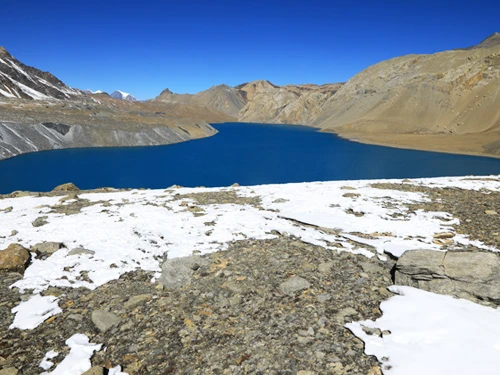
Kanchenjunga Trekking Nepal
The right time to trek Kanchenjunga plays a crucial role for a smooth journey. After everything, all the months, the variables, the nuance, it comes down to this:
Spring (mid-March to early May): It is best as the Kanchenjunga trek season brings rhododendrons, building warmth, and long daylight hours. This is the most scenic season. It's also the more unpredictable one in its later weeks.
Autumn (October to mid-November): This time offers the most reliable weather. It is post-monsoon freshness and the clearest mountain views of the year. It's the safer bet.
Both are magnificent. Just prepare well and enjoy the journey.
Packing for Kanchenjunga Weather
Kanchenjunga Packing list requires some of the most thoughtful things. Here are the gear that earned its weight on my trips:
Down jacket rated to -20°C: It is non-negotiable above 4,000 metres in any season.
Waterproof outer shell: This becomes mandatory due to unpredictable weather. Even in spring and autumn, afternoon showers arrive without warning
Merino wool base layers: Pack these layers, which help to regulate temperature across extreme ranges. These are often better than synthetics.
Microspikes or crampons: Pack these to tolerate ice. Yes, Spring and Autumn both have icy sections.
UV-protective sunglasses: Snow blindness is a genuine risk at altitude; altitude amplifies UV dramatically.
Trekking poles: Pack these to assist on wet or snowy trails. Without these, you will punish knees that aren't assisted.
Satellite communicator: Kanchenjunga's remoteness means rescue can take 24-48 hours. So, include a satellite communicator in your backpack. This two-way device is worth every cent.
Last Words
People ask me whether Kanchenjunga is "worth it" compared to better-known Himalayan treks.
I ask them this in return: have you ever stood at Pangpema at 5,140 metres, watched a sea of cloud fill the valleys below you, and looked up at the south face of a mountain so massive it occupies your entire field of vision? Have you walked for six days through a rhododendron forest so dense and flowering so wildly that it felt less like trekking and more like wandering through a fever dream?
That's what the weather at Kanchenjunga is protecting. The difficulty, the remoteness, the unforgiving conditions. They're the gatekeepers that keep this place exactly what it is.
Earn your window. Go prepared. And let the mountain show you what it wants to show you.
It will not disappoint. You will love every single moment you spend in this remote Himalayan trek.
Frequently Asked Questions
1. What is the best time to visit the Kanchenjunga trek?
The best time for the Kanchenjunga trek is April and October. April offers blooming rhododendrons, clear skies, and manageable temperatures, while October brings post-monsoon freshness with outstanding mountain views.
2. What is the weather like at Kanchenjunga in May?
Kanchenjunga weather in May is pleasant in the first two weeks but grows increasingly unpredictable toward the month-end as the pre-monsoon sets in.
3. Is the Kanchenjunga trek possible in winter?
Kanchenjunga trek in winter (December to February) is possible but strictly for experienced mountaineers with proper cold-weather gear. Night temperatures at high camps plunge to −20°C. Similarly, passes remain buried under snow, and teahouses along the route are largely closed.
4. How difficult is the Kanchenjunga trek compared to Everest Base Camp?
Kanchenjunga is widely considered harder than Everest Base Camp due to its greater remoteness, higher maximum elevation, and far thinner infrastructure. The trails are less maintained, teahouses are fewer, and weather conditions shift more rapidly due to the region's unique geography.
5. What is the weather at Kanchenjunga in June?
Kanchenjunga weather in June is dominated by the full Bay of Bengal monsoon. This brings heavy and relentless rainfall across both the north and south approach routes.
6. Do I need a permit for the Kanchenjunga trek?
Yes, the Kanchenjunga trek requires a Restricted Area Permit (RAP) along with a Kanchenjunga Conservation Area permit. The restricted area permit mandates trekking in a group of at least two people accompanied by a licensed government trekking guide.
Kishwor Adhikari is a passionate writer with a deep enthusiasm for trekking and adventure. His extensive travels across Nepal, exploring its diverse landscapes and hidden corners, have shaped his unique perspective on the country's natural beauty. With a wealth of first-hand experience in adventure trekking, Kishwor has become a trusted voice for fellow enthusiasts. Through his writing, he shares invaluable insights, offering practical advice and inspiration for both seasoned trekkers and novices alike. His dedication to sharing his journey and knowledge helps others discover the wonders of Nepal's wilderness, making his work an essential resource for anyone seeking adventure in the region.