If you are trying to decide between the Annapurna Circuit Trek (ACT) and the Annapurna Base Camp Trek (ABC), you are asking a genuinely hard question - not because the information is hard to find, but because the answer depends entirely on what you want from 6 to 12 days in the mountains.
There is a moment, somewhere around day four on any Annapurna trek Nepal, when you stop questioning your decision and just walk. The rhododendron forests thin out. The Himalayan peaks start showing themselves between clouds. A porter passes you carrying 40 kilos and wearing rubber sandals.
That moment happens on both routes. Almost everything else is different.
This guide breaks down both treks honestly, side by side, so you can choose without regret.
Table of Contents
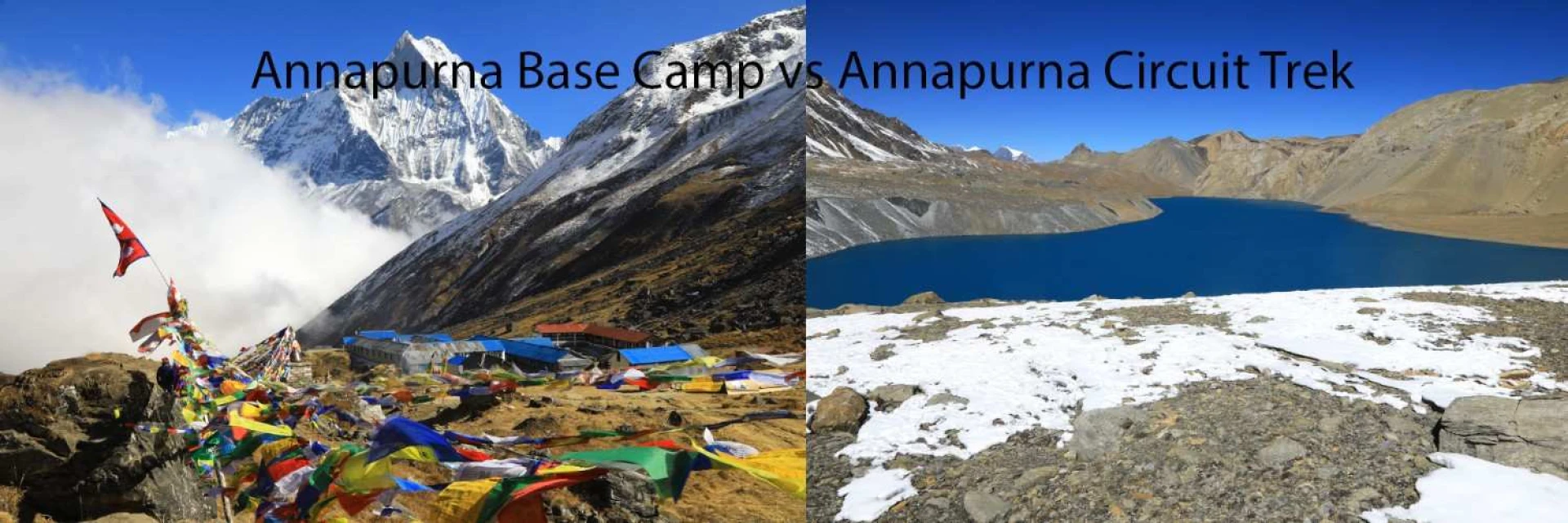
Annapurna Base Camp vs Annapurna Circuit Trek- Overview
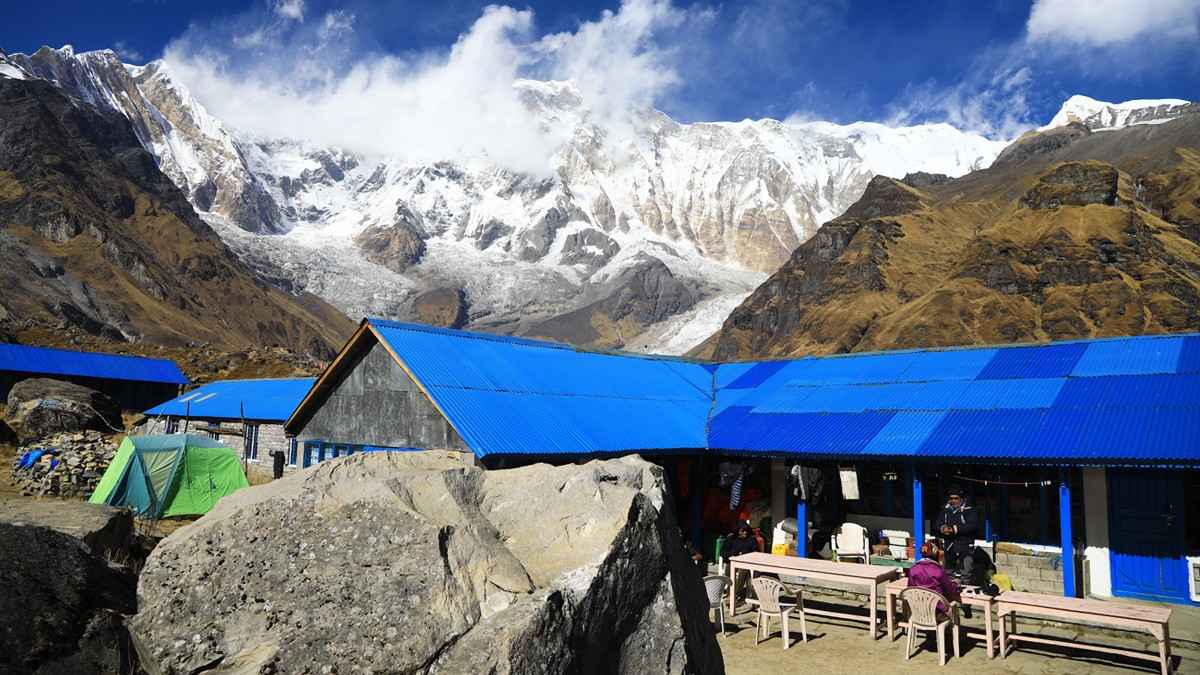
Trekkers resting in teahouse of Annapurna Base Camp Trek Nepal
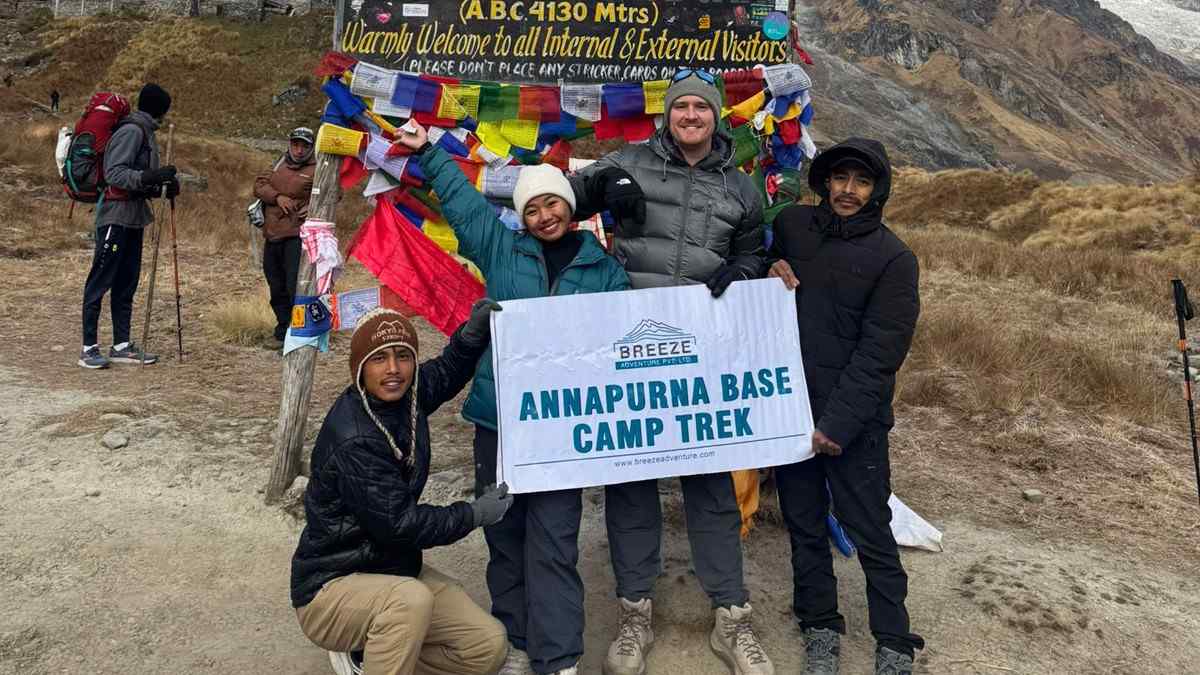
The Annapurna Base Camp trek goes straight into the heart of the sanctuary - a glacial amphitheatre surrounded by eight mountains above 7,000 metres. You hike in, you stand at 4,130 metres with Annapurna I (8,091 m) directly above you, and you hike out the same way. The total distance is around 110 to 115 km round-trip from Nayapul.
Meanwhile, the Annapurna Circuit is a loop that circles the entire Annapurna massif. Traditionally starting from Besisahar and finishing at Nayapul (or Pokhara), it crosses the Thorong La Pass at 5,416 metres. This is one of the highest trekking passes in the world. Yes, the total distance is roughly 160 to 230 km, depending on which sections you walk vs. drive.
Same region. Same permit. Completely different experience, right?
Similarities Between ABC and ACT
Before the differences of these treks, knowing the similarities matters a lot. Here is the common ground:
Both treks use the same TIMS card and Annapurna Conservation Area Permit (ACAP). You buy these in Pokhara or Kathmandu City for around $30 USD total. Both require a guide by law, yes, one licensed trekking guide is strongly recommended regarding safety and easy navigation.
Both Annapurna trekking routes pass through traditional Gurung and Magar villages, share tea house accommodation, and reward you with views of the Annapurna range, including Machhapuchhre (Fishtail), Annapurna South, and Hiunchuli. Both are accessible from Pokhara, which serves as the main gateway city.
Moving onwards, altitude sickness is a real risk on both routes, not just the Circuit. Both involve nights above 3,000 metres. Both require acclimatisation days if your body asks for one.
And both are done on foot, one step at a time, through some of the most populated mountain terrain on earth.
Annapurna Base Camp Trek vs Annapurna Circuit- Major Differences
Despite many similarities, these two treks are different in many aspects. The following comparison may help you choose the best one for you:
Trekking Days: How Long Does Each Take?
Annapurna Circuit: 7 to 15 days. The wide range exists because of jeep roads. Sections from Besisahar to Chame that used to take four days can now be driven in three hours. Many trekkers start walking from Jagat or Dharapani to skip the dusty road section. You can add an acclimatisation day in Manang (mandatory, not optional) and the Thorong La crossing. With this, a realistic timeline is 14 to 16 days for most people.
Annapurna Base Camp: 5 to 12 days. Starting from Nayapul and going through Ghandruk, Chomrong, Dovan, and Machhapuchhre Base Camp (MBC), most trekkers reach ABC in 6 to 7 days and return in 4 to 5. A 10-day schedule is comfortable, while 6 days short ABC trek is the most popular route these days. 12 days classic route gives you flexibility for weather delays, which happen.
If time is your main constraint, ABC wins by several days. This is definitely a solid option for an Annapurna Circuit alternative. If you have a whole week or more, the Circuit offers more.
ABC trek vs Circuit Trek Altitude: How High Do You Actually Go?
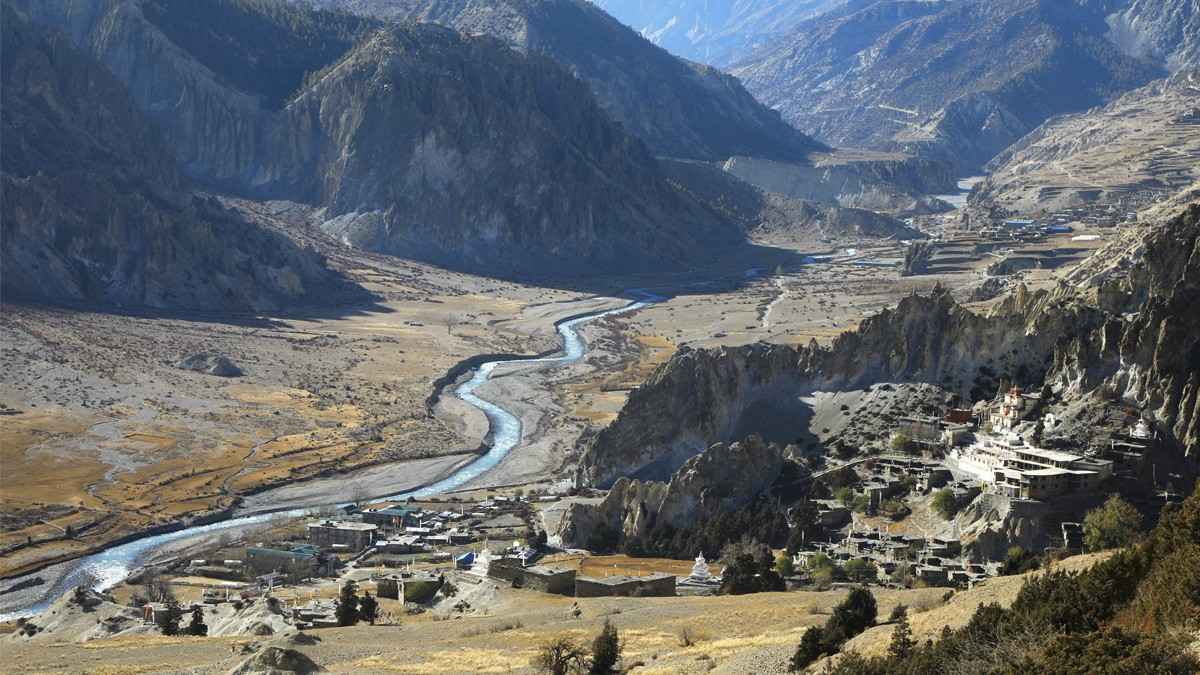
Unique scenario in Annapurna Circuit Trek Nepal
This is the biggest practical difference between the two treks.
Annapurna Base Camp tops out at 4,130 metres at the base camp itself. You sleep at Machhapuchhre Base Camp (3,700 m) the night before. For most healthy adults who ascend gradually, this altitude is manageable with proper acclimatisation. For beginners, the Annapurna Base Camp difficulty can also be managed with the right guidance and preparation.
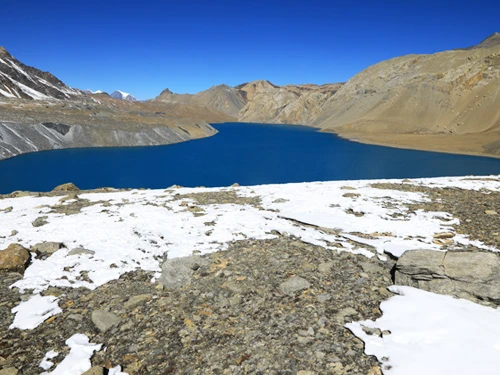
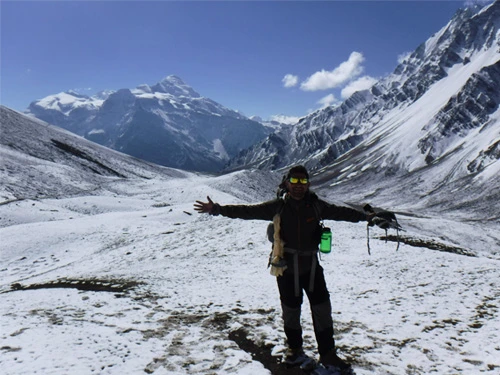
Annapurna Circuit crosses the Thorong La Pass at 5,416 metres. You wake up at 3:30 am in Thorong Phedi (4,450 m) or High Camp (4,925 m) to start the crossing. The pass itself is cold, windswept, and exhausting. After crossing, you descend steeply to Muktinath (3,760 m) on the other side.
That extra 1,300 metres of altitude is not a small thing. It changes the nature of the challenge entirely.
Altitude Sickness: Risk Levels and What to Expect
On the ABC trek, altitude sickness is possible but less common when the route is followed properly. The ascent from Chomrong (2,170 m) to ABC (4,130 m) happens over three to four days, which is reasonable. Symptoms like headache or nausea at MBC are common and usually resolve with rest or descent.
On the Annapurna Circuit, altitude sickness is a serious risk that every trekker must take seriously. Acute Mountain Sickness (AMS) affects roughly 50–70% of Thorong La crossers to some degree. Manang (3,519 m) is the critical acclimatisation stop, so you may have to spend two nights there. Just do a short hike to a higher elevation, drink water constantly, and do not push on if your headache isn't improving.
More serious conditions, such as High Altitude Pulmonary Edema (HAPE) and High Altitude Cerebral Edema (HACE), are less common but have occurred on the Circuit. The rule is simple: if symptoms are getting worse, descend. The medication acetazolamide (Diamox) is available in Kathmandu and Pokhara and is often recommended for people with no prior high-altitude experience.
Bottom line: if you are altitude-sensitive or have had problems above 3,500 m before, the ABC route is the safer choice.
ABC VS ACT Landscapes and Scenery
This is where it gets personal, because both routes are genuinely beautiful and very different from each other.
Annapurna Base Camp is immersive in a close-up way. You walk through Modi Khola valley, which gets narrower as you go higher. The bamboo forests smell damp and earthy. Similarly, the trail passes through Gurung villages where terraced fields drop away below the path.
Then, somewhere past Hinku Cave, the valley walls pull back, and you are standing inside the Annapurna Sanctuary. This is a glacial bowl with mountains on every side, actually, Annapurna I, Annapurna South, Hiunchuli, and Machhapuchhre.
At dawn, the light hits the south face, and the whole place turns gold. It is the kind of scene that makes you understand why people keep coming back to Nepal.
Annapurna Circuit gives you a continent's worth of diversity in just 12 days. You begin in subtropical lowlands with banana trees, rice paddies, and waterfalls so close you walk through the spray.
Then pine forests, then high alpine meadows, then the arid, wind-scoured landscape of the Mustang plateau north of Thorong La. The valley around Manang looks like Tibet.
Kagbeni, with its medieval mud-brick architecture and prayer flags snapping in the wind, looks like somewhere outside of time entirely. As you descend into Jomsom and move forward, you will encounter the Kali Gandaki gorge - the deepest gorge on earth. Yes, it is a landscape you won't forget.
If you want one stunning destination, choose ABC. If you want a complete landscape journey, choose the Circuit Trek.
Culture and Local Villages: The Human Side of the Trek
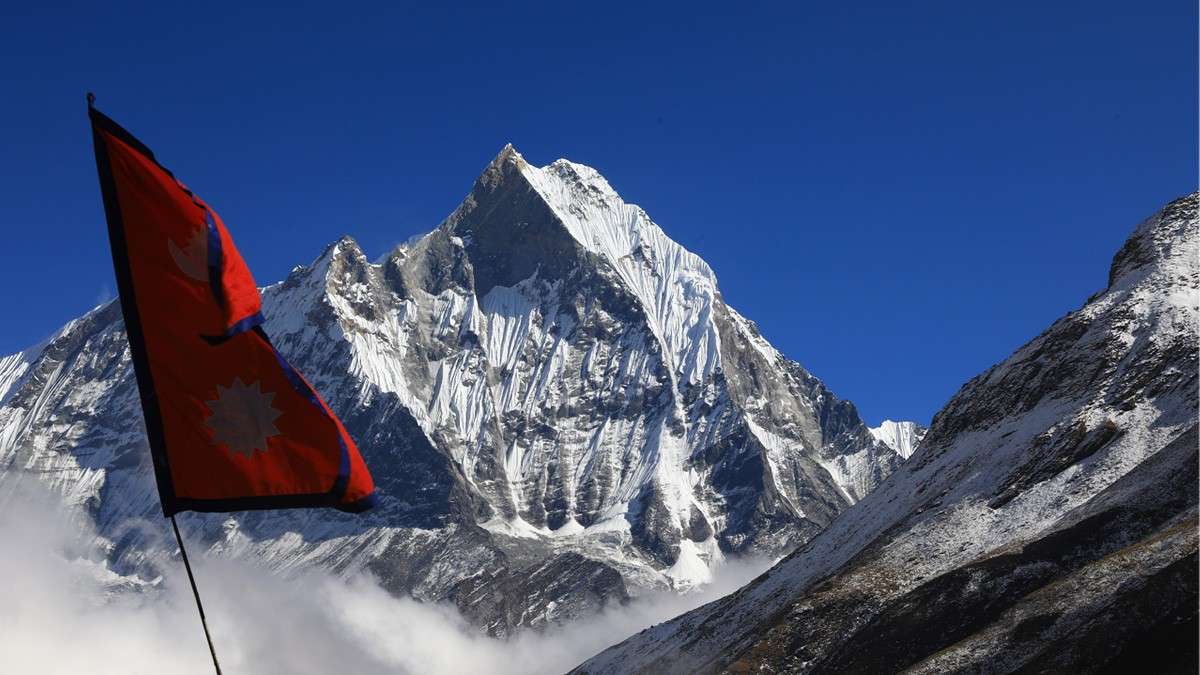
Beautiful mountain view in ABC Trek Nepal
Both routes pass through living communities, not just scenic backdrops.
On the ABC route, the Gurung people of Ghandruk and Chhomrong are your main cultural touchpoint. Ghandruk is one of the most visited Gurung villages in Nepal. The village looks stunning with stone houses, slate roofs, narrow lanes, and a small Gurung museum worth spending an hour in.
Not just that, the locals here have been hosting trekkers for decades, and the interaction tends to be warm but practiced. Tea house owners in Chomrong know their menus cold. Kids in Bamboo will ask where you're from. Overall, you'll create lovely memories here.
The Annapurna Circuit exposes you to more cultural variety. Lower Pisang and Upper Pisang are classic Gurung villages on the east side. As you cross north of the pass, the culture shifts to Tibetan Buddhist with mani walls, monasteries, butter lamps, and the smell of juniper incense.
In this route, Muktinath, a sacred site for both Hindus and Buddhists, draws pilgrims from across Nepal and India. In Kagbeni, you can arrange a restricted-area permit to enter Upper Mustang if you want to go further. So, the Circuit is essentially a walk through multiple ethnic and religious worlds. This can be one of the finest memories in your life.
What Does Each Trek Actually Cost?
Costs vary depending on accommodation style, guide/porter arrangements, and how much time you spend in Pokhara before and after. These are realistic estimates for budget trekkers in 2026/2027.
Permits (both treks):
TIMS Card: ~NPR 2,000 (~$15 USD)
ACAP Permit: ~NPR 3,000 (~$22 USD)
Daily tea house costs (food + accommodation):
Lower elevation sections: $15–25 USD/day
Higher elevation (Manang, High Camp, ABC): $25–40 USD/day
Guide fees: $25–35 USD/day
Porter fees: $18–25 USD/day
Rough total estimates (excluding flights to Kathmandu):
-
Annapurna Base Camp
Annapurna Circuit
Duration
6-10 days
7-12 days
Permits
~$37
~$37
Food + Accommodation
~$250–350
~$450–600
Guide
~$200–300
~$350–500
Porter
~$180–200
~$200–350
Total (with guide)
~$300–400
~$550–640
Total (with guide and porter)
~$720–1,000
~$1,200–1,600
The ABC trek is noticeably cheaper, mainly because it's shorter. Whereas the Circuit costs more in total, but the per-day rate is similar.
Bus to/from Pokhara is around $8–12 each way. A private jeep from Besisahar for the Circuit start costs more. Flights to/from Jomsom (cutting the Circuit short) run $100–150 if the weather allows.
Trek Difficulty - Which One Is Harder?
Neither trek is easy. Both involve multiple days of sustained uphill walking with a loaded pack. The question is what kind of hard. Let me be honest, both treks are medium in terms of difficulty, but with the right preparation and proper guidance, even beginners can do this smoothly.
ABC difficulty: The trail is well-marked and consistently graded, with the steepest section being the climb from Bamboo to Dovan. The altitude is achievable for most fit adults with proper pacing. However, the main danger is bad weather. Yes, snowfall can block the trail in winter, and the monsoon makes the Modi Khola valley wet and slippery. Hence, a moderate fitness level is required, but enough.
Circuit difficulty: The Annapurna Circuit Trek difficulty is actually worth considering, as there will be longer, higher, more varied, and in some sections, more physically demanding terrain. The Thorong La crossing involves a 1,600-metre ascent followed by a 1,700-metre descent. All in one day, starting before sunrise, often in cold and windy conditions.
Your legs will hurt. Your lungs will work harder than they ever have. The physical challenge is significantly higher than ABC, and the stakes of turning back halfway through the crossing are real.
Saying that, both treks require solid footwear, trekking poles (not optional on the Circuit), and basic fitness built before departure. Both altitude sickness, physical pressure, and mental awareness are required in the journey. But the registered trekking agency with good experience and a well-managed team looks after all these difficulties and makes it easy for you. Breeze Adventure Company has a solid altitude sickness management plan offering an oxygen cylinder to trekkers.
Fitness Level Required
For ABC: You should be able to walk 5 to 7 hours daily for 6-9 consecutive days with a daypack of 8–12 kg. Prior hiking experience helps. You don't need to be a runner or gym regular. But a couch-to-base-camp approach will be painful. It is better to start doing 1–2 hour walks 6 to 8 weeks before departure and add some stair climbing.
For the Circuit: Everything above, plus stamina for longer days (7 to 9 hours on challenging terrain), plus comfort at altitude above 4,000 metres. Cardiovascular fitness matters more on the Circuit than raw leg strength. If you've done multi-day hikes before and handled elevation gain without problems, you are probably ready.
Well, age is not a barrier to either trek if fitness is adequate. The youngest trekker regularly encountered at ABC is around 8 years old. Likewise, the oldest person to summit Annapurna's passes (admittedly a different challenge) was in their 70s. There are very good customized package options for the ABC trek for senior citizens. Every year, thousands of senior citizens enjoy this Himalayan journey.
Best Time to Trek: When Should You Go?
Breeze Adventure team with trekkers in Annapurna Base Camp Trek
October to November is the best time. Skies are clear post-monsoon, temperatures are comfortable, and the rhododendrons haven't bloomed yet, but the views are spectacular. But the trails are busy, especially on the ABC route from Chomrong upward, but not unmanageably so.
March to May is the second-best window. Rhododendrons bloom from 1,500 to 3,500 metres, which on both routes is genuinely one of the most beautiful things you'll see in Nepal. The weather is slightly less reliable than in autumn, with afternoon clouds building, but mornings are usually clear.
December to February: The Circuit becomes difficult, and the Thorong La is often closed or extremely dangerous due to snow. ABC is doable but cold, with some risk of trail closure above Dovan due to snowfall. This is recommended for those who want snow hiking more than clear mountain views.
June to September (monsoon): The trails are wet, leeches are active below 2,000 metres, and views are often obscured. The Circuit is not recommended during this period.
ABC can be done, but expect rain every day. Some experienced trekkers find the emptiness and greenery worth it.
Annapurna Base Camp vs Circuit Trek - The Honest Decision Guide
After all the data, here is the real question: what do you actually want?
Choose Annapurna Base Camp if:
You have 7 days or less
You've never been above 4,000 metres and want to test your altitude response
You want one powerful visual payoff - standing inside the Sanctuary
Budget is a meaningful factor
You are trekking with mixed fitness levels or older/younger companions
The idea of a clear destination motivates you more than an open journey
Choose the Annapurna Circuit if:
You have 7 to 12 days and want to use all of them. This can even be stretched to more days.
You've trekked at altitude before and want a bigger physical challenge
Landscape variety matters as much as the destination
You want the full cultural range with Hindu, Buddhist, Gurung, and Tibetan influences in one route
Crossing a 5,400-metre pass is something you want on your list
You are comfortable with a guide and prepared for the Thorong La
If you're torn: Do ABC first. Use it to understand your altitude tolerance, get your trail legs, and see if you want to come back for the Circuit. Many people do exactly this - two separate trips, two completely different experiences, no overlap.
Practical Tips Before You Go
The right trekking tips make this Himalayan journey enjoyable and smooth. Kindly consider the following tips from an experienced guide:
Book tea houses in advance during October and November, especially in Manang (Circuit) and Chomrong (ABC). Beds fill up. A registered travel agency in Thamel does this on your behalf. Just reach out to them.
Carry cash. ATMs exist in Besisahar, Chame, Manang, and Jomsom on the Circuit. On the ABC route, Pokhara is your last reliable ATM. Similarly, tea houses at higher elevations sometimes have card readers, but connectivity is unreliable.
Download offline maps using Maps.me or Gaia GPS before leaving Pokhara. Cell coverage on both routes is patchy.
Get travel insurance that covers high-altitude trekking and emergency helicopter evacuation. This is not optional. A helicopter rescue from Thorong Phedi or ABC can cost $3,000 to $8,000 USD. Most standard travel insurance does not cover above 4,000 metres without a specific policy add-on.
Pack layers, not bulk. The temperature range on both treks is enormous, from subtropical lowlands to sub-zero temperatures at altitude. You need a down jacket, base layers, a waterproof shell, and trekking poles. Leave the extra stuff at your hotel in Pokhara.
Final Thoughts
Both treks are worth doing. That's the honest answer. The Annapurna region is the most trekked area in Nepal for a reason - the trails are safe, the infrastructure is good, the landscapes are extraordinary, and the mountains are some of the most dramatic on earth.
The Annapurna Base Camp gets you there faster and hits harder as a single experience. You stand at 4,130 metres, completely surrounded by peaks, and feel what "sanctuary" actually means.
On the other hand, the Annapurna Circuit gives you more of everything. Like more days, more altitude, more cultures, more terrain, and more of Nepal itself.
Neither is wrong. Pick the one that fits your time, your fitness, and what you're actually after. Then go, the mountain is waiting.
Kishwor Adhikari is a passionate writer with a deep enthusiasm for trekking and adventure. His extensive travels across Nepal, exploring its diverse landscapes and hidden corners, have shaped his unique perspective on the country's natural beauty. With a wealth of first-hand experience in adventure trekking, Kishwor has become a trusted voice for fellow enthusiasts. Through his writing, he shares invaluable insights, offering practical advice and inspiration for both seasoned trekkers and novices alike. His dedication to sharing his journey and knowledge helps others discover the wonders of Nepal's wilderness, making his work an essential resource for anyone seeking adventure in the region.