Can I do the ABC trek solo? This was the question that circled around my mind, when I was planning for this trek. I almost didn't go alone. Three friends had cancelled - one by one, across four months - and by September, it was just me, a half-packed bag, and a question kept circling back to, not just physically, mentally. The kind of solo that means no one to split the tent cost with, no one to remind you to drink water, no one to look at when the mountain finally appears, and you want to share it with somebody.
I went anyway. And it was the best decision I've made in years. This was my first experience on ABC, and solo.
This guide is an honest account of the solo Annapurna Base Camp trek - what it costs, how to prepare, what to actually pack, and whether the trail is as dangerous as your anxious relatives insist. This definitely helps you make a clear decision on this solo trip.
Table of Contents
Why I Chose the ABC Trek Solo?
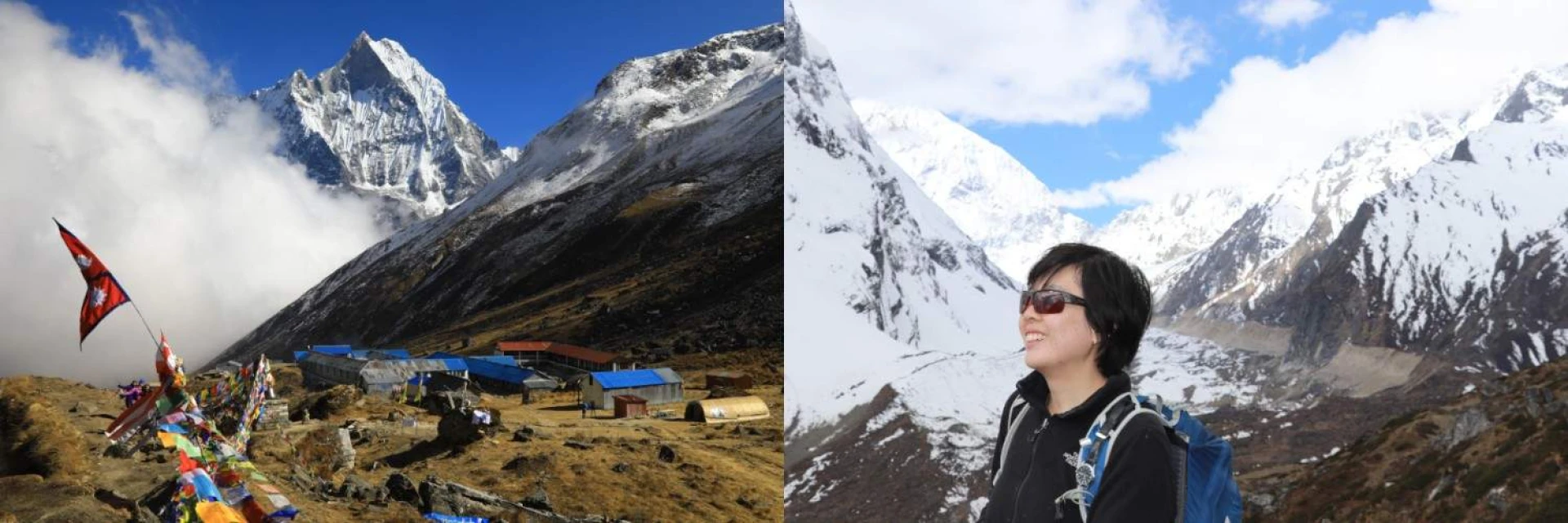
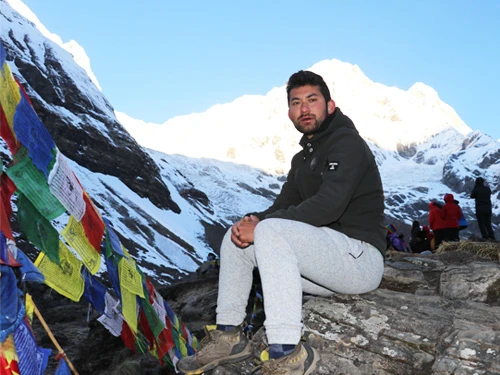
Happy trekker in ABC solo trek Nepal
There's a version of this answer that sounds poetic: I wanted to test myself, find clarity, be present without distraction. All of that is true.
But the real answer is simpler. I was tired of waiting for people. Every group trip I'd planned had collapsed under the weight of mismatched schedules and changing minds. At some point, you either accept that solo travel is the only way you'll actually go, or you stay home scrolling through other people's travel photos.
I chose to go.
The Annapurna Base Camp trail suited a first-time solo trekker well. It's busy enough that you're never truly isolated. Tea houses dot the path every few hours. Other hikers -couples, small groups, a surprising number of people also walking alone -move at their own pace in both directions.
Actually, the route was well-marked. You won't need to bushwhack or navigate by compass.
That said, going alone changes the experience in ways worth knowing before you commit.
But the twist is, Nepal Government no longer allows solo treks to the Annapurna Base Camp. Due to safety reasons, unaccompanied travel is strictly banned. You must hire a licensed guide to begin the alone journey.
Yes, this is the changed scenario now. You and the licensed guide will be there on your independent trek. If you require, you can also hire a porter.
Is Annapurna Base Camp Solo Trek Dangerous?
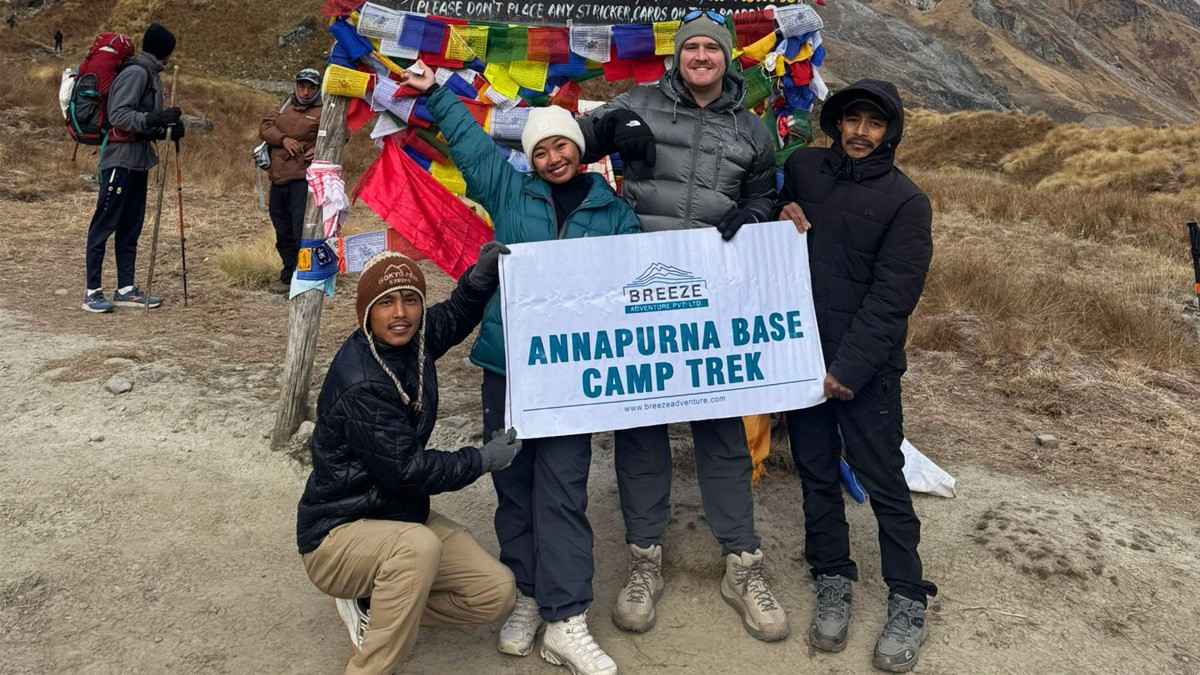
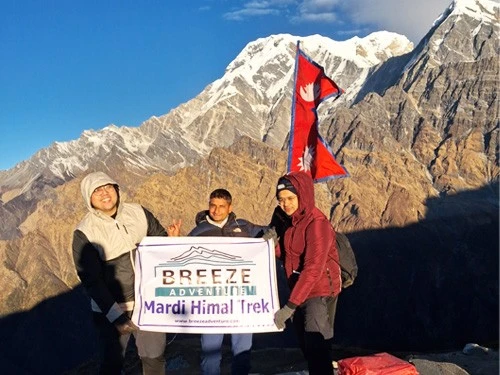
Breeze Adventure Team in Annapurna Base Camp with company banner
Honestly? Less than people think, more than Instagram suggests.
The physical terrain demands respect, representing the Annapurna Base Camp trek difficulty. Slippery stone steps after rain, narrow ridgelines above the Modi Khola gorge, and the moraines near base camp. All of these require attention. But they're manageable if you're careful and not moving too fast.
The real risk on any high-altitude trek is altitude sickness, and that risk doubles when you're alone. No one notices if you're slurring words at 3,500 m. No one suggests you rest when you're the kind of person who pushes through discomfort because stopping feels like failure.
The standard advice holds: ascend slowly, drink three to four litres of water daily, take a rest day at Deurali or Machhapuchhre Base Camp if your body asks for one. Learn to recognize symptoms like headache, nausea, and loss of coordination. Also know that descending even 300 to 500 metres usually resolves them fast.
Other than altitude, the hazards are environmental. Monsoon season (June–August) brings leeches, flooded trails, and poor visibility. Winter closes some high sections entirely. Breeze Adventure, a reputed travel agency in Thamel, Kathmandu, has a well-planned system for altitude sickness management. They offer an oxygen tank.
My suggestion- Go in October–November or March–April. The skies are clear, the trails are dry, and you'll have the kind of light that makes every photograph look too good to be real.
Is Annapurna Base Camp Safe for Solo Female Travelers?
The short answer: yes, with the same awareness you'd bring anywhere.
I spoke to three women trekking alone during my trip - one from Germany, two from South Korea. All of them said the same thing. Tea house staff are generally respectful. The trail community looks out for each other in an informal way. You're rarely alone on the path, even when you feel like it. Just be careful in sharing tea house rooms with unknown trekkers.
Further, the Annapurna Conservation Area is well-patrolled compared to more remote routes in Nepal. Women have trekked this trail solo for decades. You're not pioneering.
Still, take the TIMS card seriously. Register your route. Tell someone - your hotel in Pokhara, a friend back home, where you're going, and when you expect to be back.
Saying that, the trail is absolutely safe and friendly for a family trip. After you complete your lonely trek, you may come next year with your kids and family. ABC trek with kids is also a very popular option here.
ABC Trek Solo Cost
Numbers matter. Here's the honest breakdown from my 10-day trip starting and ending in Pokhara.
Permits: TIMS card costs NPR 2,000 (roughly $15 USD) for individual trekkers. An ACAP (Annapurna Conservation Area Permit) costs another NPR 3,000. Get both at the Nepal Tourism Board office in Pokhara - takes under an hour. This can also be arranged in Kathmandu.
Tea houses: Budget NPR 300–600 per night for a basic room. Most places charge very little for accommodation if you eat your meals there. I averaged NPR 500 per night.
Food: Tea house meals run NPR 400–900, depending on altitude and what you order. Dal bhat is the best value - unlimited refills, high carb, exactly what your legs need. Budget NPR 1,200-1,800 per day for three meals.
Why hire a guide for the ABC solo trek?
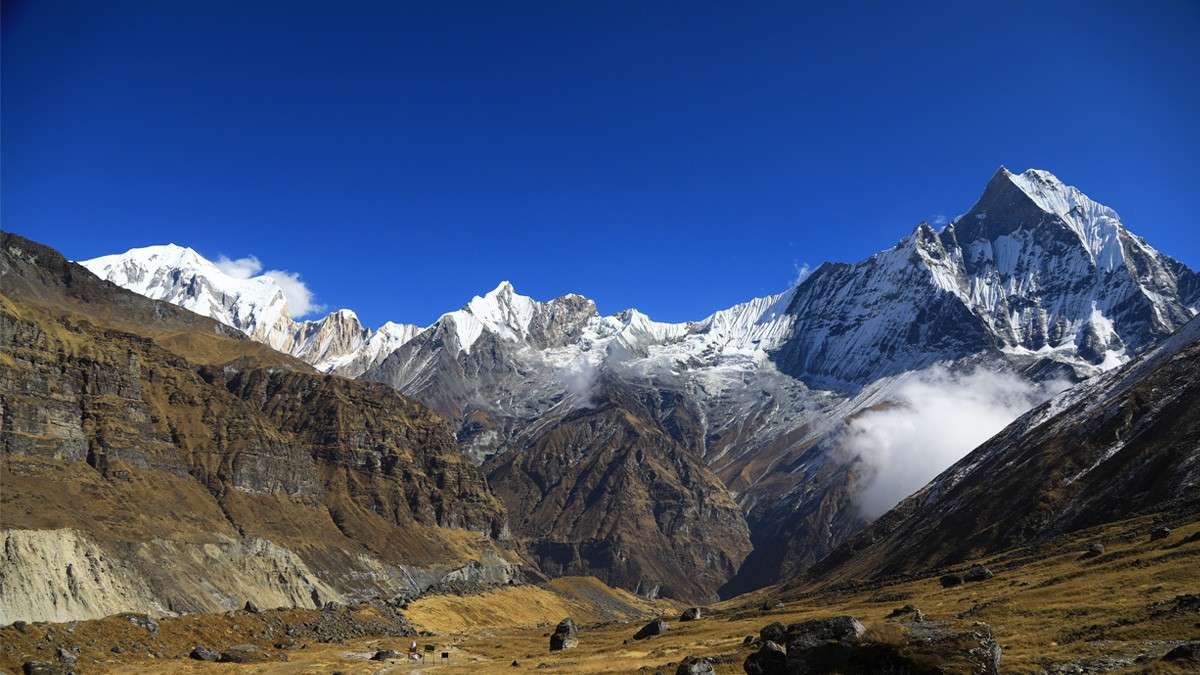
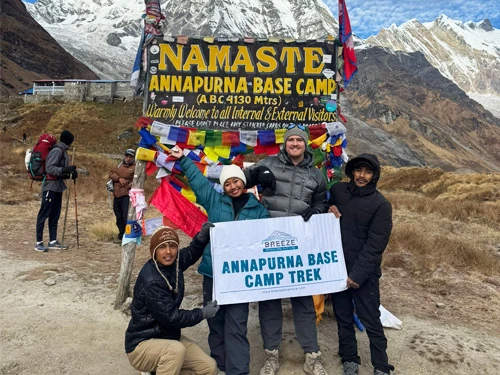
Annapurna Base Camp route at an altitude of 4130 meters
Nepal's regulations as of late 2023 technically require alone trekkers to hire a licensed guide on most routes. A local guide costs $25–35 USD per day and genuinely adds value. They catch altitude symptoms you might miss, know which tea houses are clean, and can negotiate during the busy season. If you go without one, join a small group for the high sections at a minimum.
Total for 10 days, all in: Around $350-450 USD, depending on your lodge choices. Not cheap, not expensive. The best idea is to book your solo ABC trek from a reputed travel agency in Thamel, Kathmandu. They will arrange everything, you just need to be there enjoying your mountain trip.
Annapurna Base Camp Solo Trek Training: How to Prepare Your Body
This is where most first-timers underestimate the commitment.
ABC sits at 4,130 metres. You'll gain and lose thousands of metres of elevation across multiple days. Your knees will absorb roughly three times your body weight on every downhill step. If you arrive at Nayapul having done nothing but desk work for six months, the trail will humble you by day two.
Start 12 weeks out if possible. The foundation is simple: walk uphill with a loaded pack. Stairs work. Trails are better. Aim for 60 to 90 minutes, four times a week, and increase the weight gradually from 5kg to 10kg.
Similarly, cardio endurance matters more than raw strength. Swimming, cycling, and running all build the aerobic base you need to move comfortably at altitude. Squats and lunges strengthen the stabilizing muscles around your knees - critical for long descents on uneven rock.
Practise in the boots you'll actually wear. Not new ones. Broken-in, waterproof, ankle-supporting trekking boots that you've already walked 50 kilometres in. Blisters on day one of a 10-day route are a miserable, unavoidable problem. So, be prepared for that.
What to Pack for the Solo ABC Trek
ABC trek packing list is applicable even in your independent journey. Keep it under 10 kg. You'll be carrying this for 10 days.
Non-negotiables: Down jacket (4,000 m gets cold even in October), waterproof outer shell, merino wool base layers, trekking poles (your knees will thank you on every descent), headlamp with spare batteries, and water purification tablets. Similarly, you need blister plasters, altitude sickness medication (Diamox - discuss with a doctor first), a power bank, and offline maps downloaded on Maps.me or Gaia GPS.
Things I left out and didn't miss: laptop, more than two books, a full towel (tea houses provide them), too many camera lenses.
Things I left out and regretted: a second pair of trekking socks (always bring three pairs), lip balm with SPF, and sunglasses with UV400 protection.
My Experience on the Trail - What Actually Happened
Day four. Bamboo to Dovan, then Himalaya. My quads were screaming, and it had rained for three hours straight. A local porter passed me carrying what looked like 40 kg wrapped in a tarp, moving at twice my pace, wearing rubber sandals.
That recalibrated my complaints immediately.
The stretch from Machhapuchhre Base Camp to ABC is the part that stays with you. You're above the treeline, surrounded by the Annapurna massif on three sides, walking across a high glacial basin with nothing to block the scale of what you're looking at. Words don't help here. Photography only partially works.
I arrived at base camp at 6:40 am. The peaks were clear. I sat down, ate half a chocolate bar, and didn't say anything for a long time.
That silence was the whole point of going alone. You will get the same experience, the only thing added is a licensed guide now.
Practical Solo Travel Tips Before You Leave
Solo travel with confidence can be achieved with the right practical tips. Kindly register at every checkpoint. Yes, they exist to find you if something goes wrong. Download offline maps before Nayapul, where connectivity gets unreliable. Share your itinerary with one person who will actually check in. Follow the guide’s advice and navigation, his experience is much more important than anything on that route.
Carry more cash than you think - ATMs stop at Pokhara, and some lodges above Chhomrong don't accept cards.
And pace yourself. The mountain isn't going anywhere. The tea is hot. The view on the rest day is the same view.
Should You Do the Annapurna Base Camp Trek Solo?
If you're reasonably fit, prepared for altitude, and comfortable spending time alone - yes.
The trail is manageable. The cost is reasonable. The experience of arriving somewhere that hard, under your own effort, without anyone else to credit or blame, is genuinely difficult to replicate any other way.
It's not easy. Some days are long and wet, and your knees hurt, and you question the decision at around 2 pm when the clouds roll in, and the next tea house is still 90 minutes away.
Go anyway. Just be sure you book the trek from the right company and be under the supervision of an experienced guide. This will make a journey safer and enjoyable, even as a solitary trekker.
FAQ
Can I do the ABC trek solo without a guide?
Nepal's regulations on single trekking have changed in recent years. As of late 2023, most routes, including ABC, require a licensed guide for lone trekkers. Always confirm current rules with the Nepal Tourism Board before your trip.
How long does the Annapurna Base Camp solo trek take?
Most trekkers complete the round trip in 7 to 12 days, depending on fitness, acclimatization needs, and the route taken via Ghorepani or directly through Chhomrong. But there are short trips of 5 days also.
What is the best season for the ABC solo trek?
October-November and March-April offer the clearest skies and most stable trail conditions.
Is the ABC solo trek suitable for beginners?
With proper training and preparation, yes. It's one of Nepal's more accessible high-altitude treks, but it still demands physical fitness and altitude awareness.
Kishwor Adhikari is a passionate writer with a deep enthusiasm for trekking and adventure. His extensive travels across Nepal, exploring its diverse landscapes and hidden corners, have shaped his unique perspective on the country's natural beauty. With a wealth of first-hand experience in adventure trekking, Kishwor has become a trusted voice for fellow enthusiasts. Through his writing, he shares invaluable insights, offering practical advice and inspiration for both seasoned trekkers and novices alike. His dedication to sharing his journey and knowledge helps others discover the wonders of Nepal's wilderness, making his work an essential resource for anyone seeking adventure in the region.