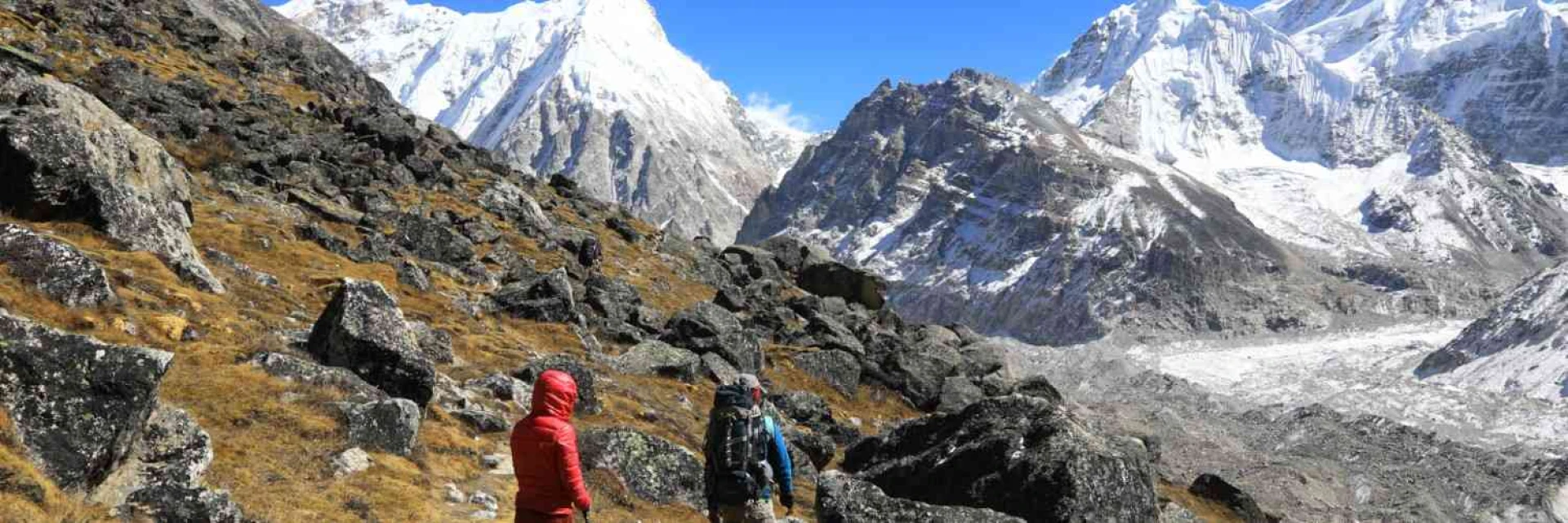
Nepal has no shortage of legendary trails. The Annapurna Circuit, Everest Base Camp, and Langtang, these routes are rightly famous. But there's a whole other category of trekking in this country that most people never even hear about. It's called restricted area trekking, and it changes everything about what you expect from a Himalayan adventure.
Restricted zones are regions that require special government permits beyond the standard TIMS card and national park entry fees. The Nepali government limits access to protect local ecosystems, cultural heritage, and sensitive border areas. Places like Upper Mustang, Manaslu, Tsum Valley, Dolpo, and Humla fall under this umbrella. You can't just show up and walk in.
And then there's Kanchenjunga.
"Of all the restricted areas in Nepal, Kanchenjunga feels like the one that most people overlook, and that's exactly why it's special."
Tucked into the far eastern corner of the country, sandwiched between India's Sikkim state and the Tibetan plateau, Kanchenjunga Conservation Area is home to the world's third-highest mountain. But the altitude isn't what makes it wild. It's the sheer remoteness and the untouched trail culture. Further, the fact that you can walk for three days without seeing another foreign trekker makes this place very special. That's genuinely rare in Nepal right now.
Kanchenjunga's elevation: 8,586 m
Annual trekkers (vs 50,000+ on EBC): ~500
Full circuit average: 28 days
Table of Contents
What actually makes a Kanchenjunga trek "restricted"?
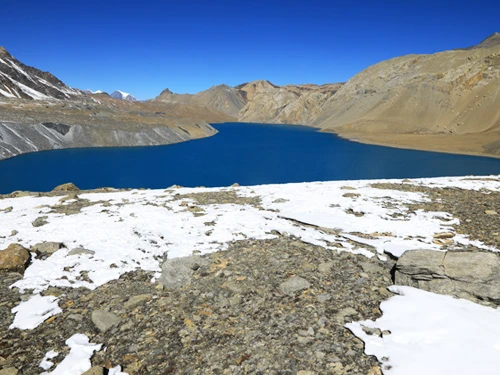
Beautiful view of Kanchenjunga Trek Nepal
Nepal's restricted area system dates back to the early 1990s, when the government opened much of the country to independent trekkers. Certain regions, however, stayed gated, either because they border China or India and carry strategic sensitivity. Also, because the ecosystems and cultures there are fragile enough to warrant controlled entry.
To enter a restricted zone today, you need a Restricted Area Permit (RAP), which costs between $10 and $50 per week depending on the area. You must also hire a licensed Nepali guide, solo, independent trekking is not permitted. These rules aren't bureaucratic friction. They're the actual reason why places like Kanchenjunga still look and feel the way they did 30 years ago.
Quick permit breakdown for Kanchenjunga Trek: You'll need a Kanchenjunga Conservation Area Permit (KCAP) and a Restricted Area Permit. Both are processed through a registered trekking agency in Kathmandu. Budget around $35–50 total for the permits, plus your guide's fees.
Why the Kanchenjunga Trek stands apart from other restricted treks?
Upper Mustang gets the press. Dolpo gets the documentary treatment. Manaslu has become increasingly popular since the Annapurna Circuit got busy. But Kanchenjunga? It sits quietly at the end of a long road, waiting for the trekkers who actually do their research.
Here's what sets it apart from every other restricted area in Nepal.
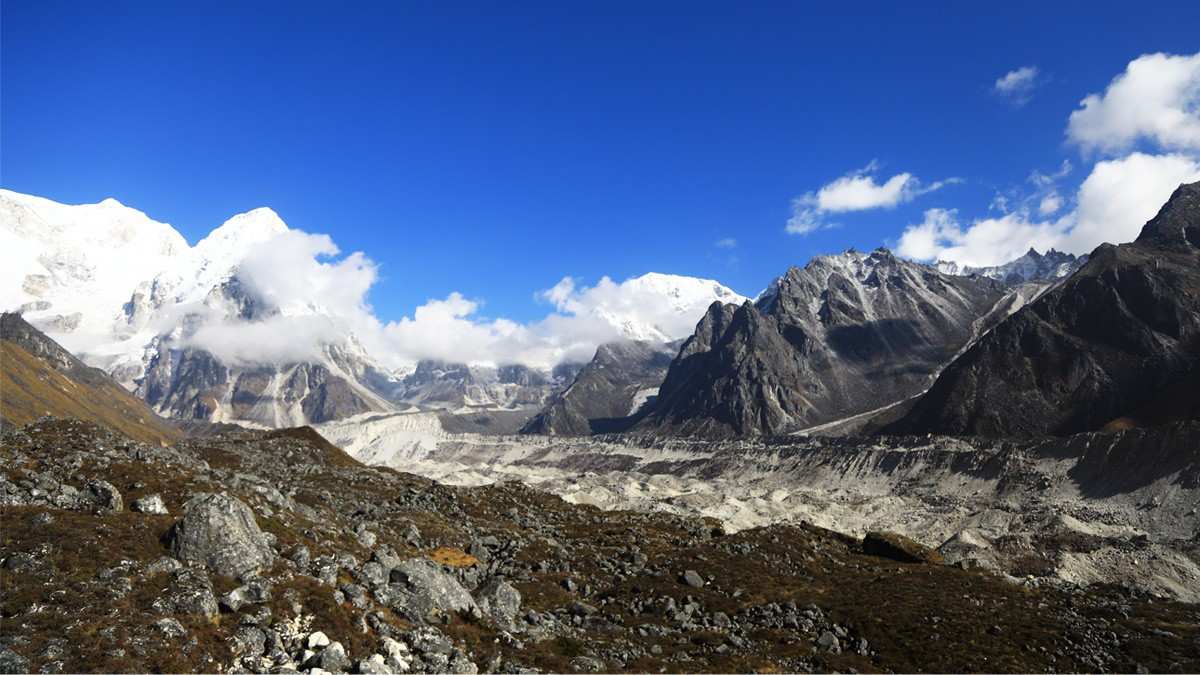
The scale is genuinely humbling. The Kanchenjunga Circuit connects two base camps, the north and south, through a high-altitude crossing at Mirgin La Pass (5,140m). Similarly, the full loop covers roughly 200 kilometers across some of the most varied terrain in the Himalayas. You move through subtropical forests full of rhododendron and cardamom farms. Then, through high-altitude meadows, glacial moraines, and finally into the icy silence of the base camp zones. No other restricted trek in Nepal offers this kind of ecological range in one continuous route.
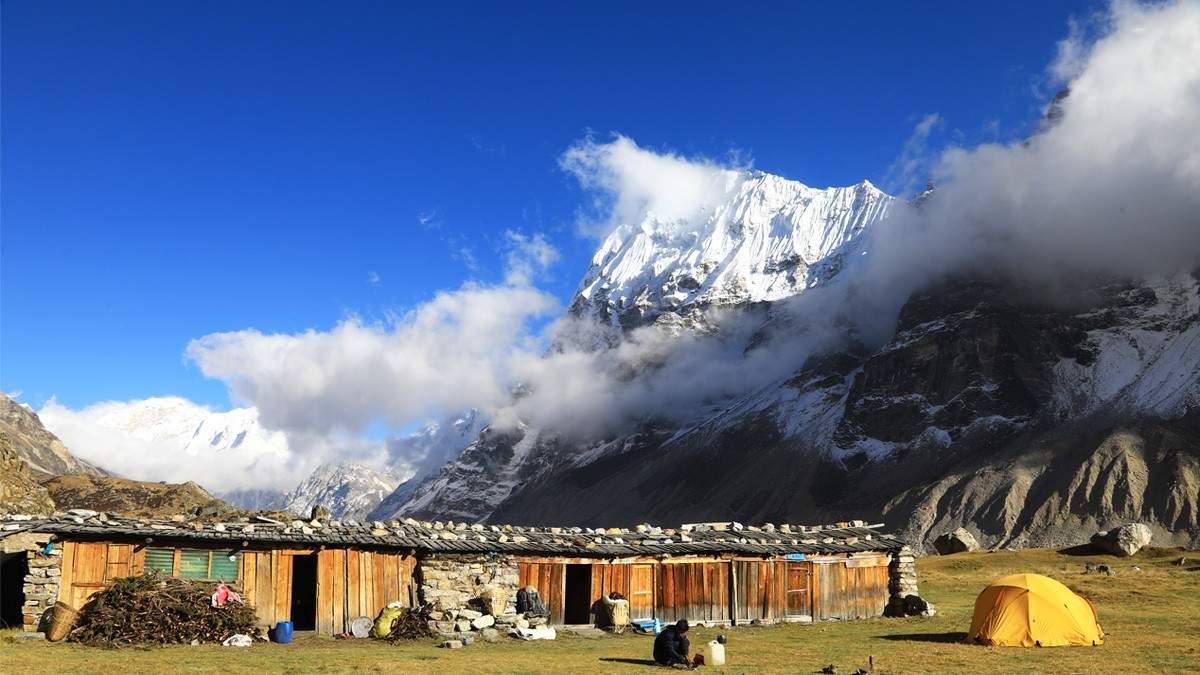
The cultural exposure is unfiltered. The Limbu and Rai communities in the lower valleys, and the Tibetan-influenced villages closer to the mountain. These are places where trekking tourism hasn't reshaped daily life. Not just that, guesthouses are family-run and basic. Meals come from whatever the family grows. Conversations happen without the polished script that comes from years of hosting thousands of tourists. It feels honest.
Wildlife encounters are legitimate. Kanchenjunga Conservation Area shelters snow leopards, red pandas, musk deer, and Himalayan black bears. These aren't zoo-style sightings, you will be moving through their actual habitat. Red panda sightings are surprisingly common in the bamboo forests between 2,500 and 3,500 meters. If wildlife trekking matters to you, this trail competes with anything in the Himalayas.
What the Kanchenjunga trail actually looks like day-to-day?
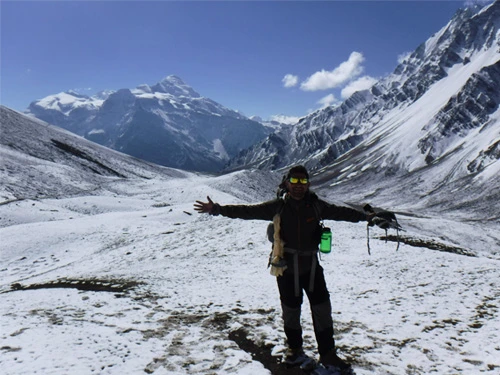
Restricted area Kanchenjunga Trek Nepal
Most trekkers start from Taplejung in the east, reached by a long jeep ride from Birtamod or a short flight to Suketar Airport. The southern route climbs through Yamphudin and Tortong toward the south base camp at Oktang (4,730 m). It is a spot with a direct, awe-inspiring view of Kanchenjunga's south face. From there, the circuit crosses over to the north side via the Mirgin La. Then descending through Ghunsa, a stone-paved Tibetan village at 3,600 meters that feels completely disconnected from anything modern.
The north base camp approach at Pangpema (5,143m) gives you a panorama that very few trekkers ever see. Kanchenjunga's north face flanked by Jannu (7,711 m) to the west, unobstructed, no crowds, no teahouse queues. Just the mountain and silence.
Further, the full circuit takes around 22–28 days. Shorter itineraries focusing on just the south or north route are possible in 15–18 days, though you'd miss the full crossing experience.
Best season: Consider March to May for spring blooms and stable weather. October to November for clear skies and sharp mountain views. It is better to avoid the monsoon (June–September) because the trails become genuinely dangerous with landslides and leeches everywhere below 3,000 m.
Is the Kanchenjunga trek actually harder than Everest Base Camp?
Technically, the highest point on the Kanchenjunga Circuit (Mirgin La at 5,140 m) is almost identical in elevation to Everest Base Camp (5,364 m). But the comparison doesn't really hold up beyond the numbers.
EBC is a highway. Teahouses every few hours, well-marked trails, helicopter evacuation when things go wrong, and thousands of trekkers moving in the same direction every day. Kanchenjunga offers none of that comfort. Stretches between villages can take 6–8 hours with no shelter options in between. Also, the trail markings disappear. The weather changes fast. A guide isn't just a permit requirement here, they're genuinely essential for safety.
That said, the physical demand isn't extreme for someone who trains and acclimatizes properly. Good cardiovascular fitness, solid footwear, and a slow pace go a long way. The altitude profile is gradual enough that altitude sickness, while still a real risk, is manageable if you follow standard protocols.
The honest challenges you should know about
Logistics take more effort than popular treks. Supplies run thin in the upper sections, so your agency needs to plan carefully. Some stretches require camping rather than staying in teahouses. Communication is patchy, satellite devices are worth carrying. Further, the road to Taplejung is rough and long, often adding a full travel day that people underestimate.
Costs are also higher than you'd expect. Between the permits, mandatory guide, porters, transport, and food, budget $1,500-$2,500 total for a full circuit. May cost more if you fly into Suketar rather than driving. That's not cheap by Nepal standards, but measured against what you actually get, it's remarkable value.
So, who is Kanchenjunga actually for?
Honestly? Not everyone. And that's completely fine. Actually, it's part of what protects the place.
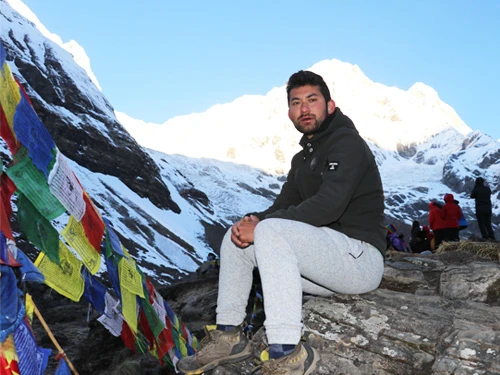
Happy and satisfied trekker in Kanchenjunga Region
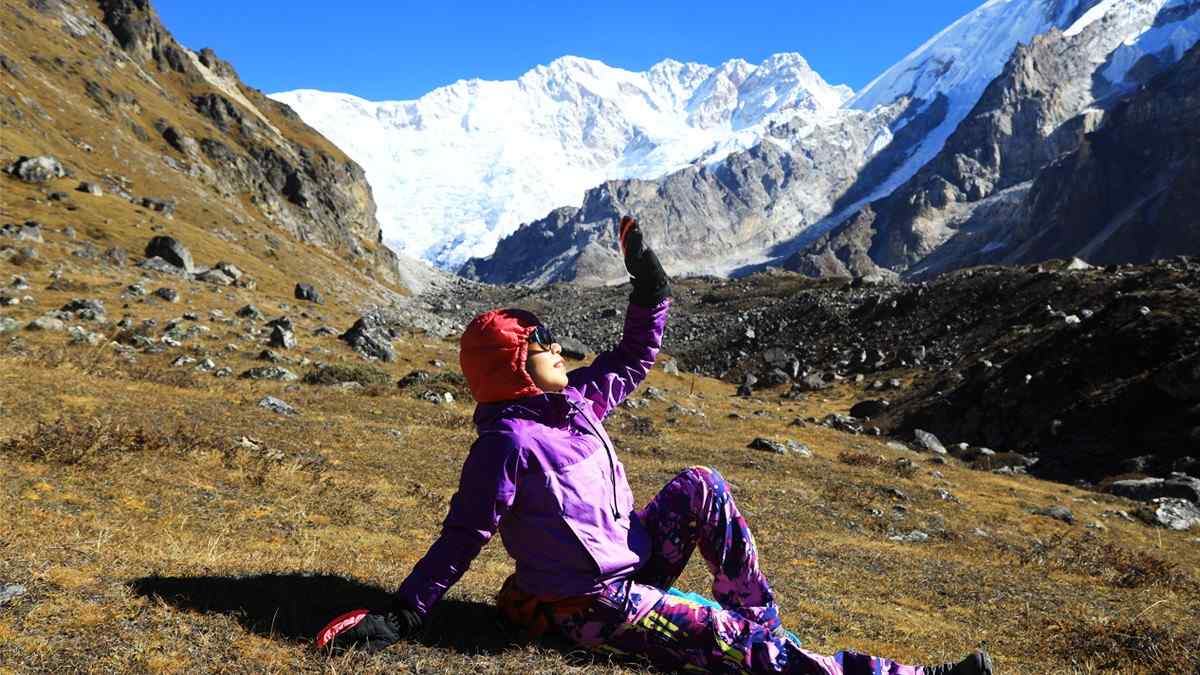
Kanchenjunga rewards trekkers who are comfortable with uncertainty. Best for those who find empty trails energizing rather than worrying. Those who want to meet mountain communities on their own terms rather than in a tourism context. Yes, it's for people who've done the classic routes and felt something missing. The rawness that Nepal used to offer everywhere before the Instagram effect took hold.
If you want a managed, well-serviced experience with reliable teahouse Wi-Fi and a rescue helicopter on standby, this isn't your trek. But if you want to stand at the base of the world's third-highest mountain with almost nobody around you, breathing air that still smells like pine and cold stone, Kanchenjunga delivers that completely.
Nepal's restricted area treks exist in a different category from the famous routes, and Kanchenjunga sits at the top of that category for a reason. It combines everything that makes Himalayan trekking genuinely meaningful. Such as big mountains, real wilderness, living culture, wildlife, and the kind of physical challenge that stays with you.
Similarly, the permit system isn't a barrier. It's the thing that keeps it worth going to. More trekkers are starting to figure this out, which means the window to experience Kanchenjunga in its current, under-visited state may not stay open forever.
Do the research, hire a good agency, train for it properly, and go. You will have the best experience of your life.
Kishwor Adhikari is a passionate writer with a deep enthusiasm for trekking and adventure. His extensive travels across Nepal, exploring its diverse landscapes and hidden corners, have shaped his unique perspective on the country's natural beauty. With a wealth of first-hand experience in adventure trekking, Kishwor has become a trusted voice for fellow enthusiasts. Through his writing, he shares invaluable insights, offering practical advice and inspiration for both seasoned trekkers and novices alike. His dedication to sharing his journey and knowledge helps others discover the wonders of Nepal's wilderness, making his work an essential resource for anyone seeking adventure in the region.