Kanchenjunga Circuit trek is the most remote adventure in Nepal, actually the best choice for thrill lovers, as well as for peaceful trekking.
Most people go to Everest. Some go to Annapurna. A rare, slightly stubborn few find their way to the far eastern corner of Nepal, where the world's third-highest mountain rises above forests so untouched they still feel prehistoric. I was one of those few. And honestly, nothing prepared me for what I found there.
There's a moment, somewhere around day nine, when the trail disappears. Not metaphorically. It literally vanishes under a sheet of snow, the valley below swallowed by cloud, and your porter, this incredibly calm man named Lakpa, just points forward like it's obvious. That moment? That's Kanchenjunga.
Based on my personal experience on this remote trek Nepal, here is a perfect guide on why you need to know about the actual remoteness and isolation in the Kanchenjunga Circuit trek Nepal.
Table of Contents
What Even Is the Kanchenjunga Circuit Trek?
Kanchenjunga Trekking in Nepal is remote adventure
Let me back up for a second.
The Kanchenjunga Circuit Trek Nepal, sometimes called the Kanchenjunga Base Camp Trek, is a high-altitude loop that connects the north and south base camps of Mt. Kanchenjunga (8,586 m). It winds through Taplejung District in far-eastern Nepal. Actually, it cuts across remote villages, dense rhododendron forests, glacial moraines, and passes that top out above 5,000 meters.
Further, the full circuit covers roughly 160 to 200 kilometers, depending on your exact route variations. Most trekkers take 21 to 28 days to complete it. There's no shortcut. No helicopter pad every two hours. Also, no wifi and cozy facilities. Just raw, unfiltered Himalayan wilderness doing exactly what it wants.
It's also one of the least-visited trekking routes in Nepal. While Everest Base Camp sees over 40,000 trekkers annually, this mountain gets a fraction of that. Some years, fewer than 2,000 people walk this trail. Think about that number for a second. Well, despite the remoteness and thrills, it is a pure love for those wanting peace over the crowd.
Why Is Kanchenjunga So Remote?
Good question. And the answer has a few layers.
First, the location obviously. Kanchenjunga sits in Nepal's far eastern corner, bordering both India's Sikkim state and Tibet. Getting there isn't a matter of hopping a quick flight to Lukla. You fly into Biratnagar or Suketar (Taplejung), and even those flights are weather-dependent in ways that will teach you patience you didn't know you needed. I waited an extra two days in Biratnagar because clouds decided they owned the airport that week.
Second, the permit situation. Unlike Everest or Langtang, Kanchenjunga requires a Restricted Area Permit on top of the regular trekking permits. You must trek in a group of at least two, and you must be accompanied by a registered guide. Solo wandering is simply not allowed here. It keeps the numbers low, which keeps the trail wild.
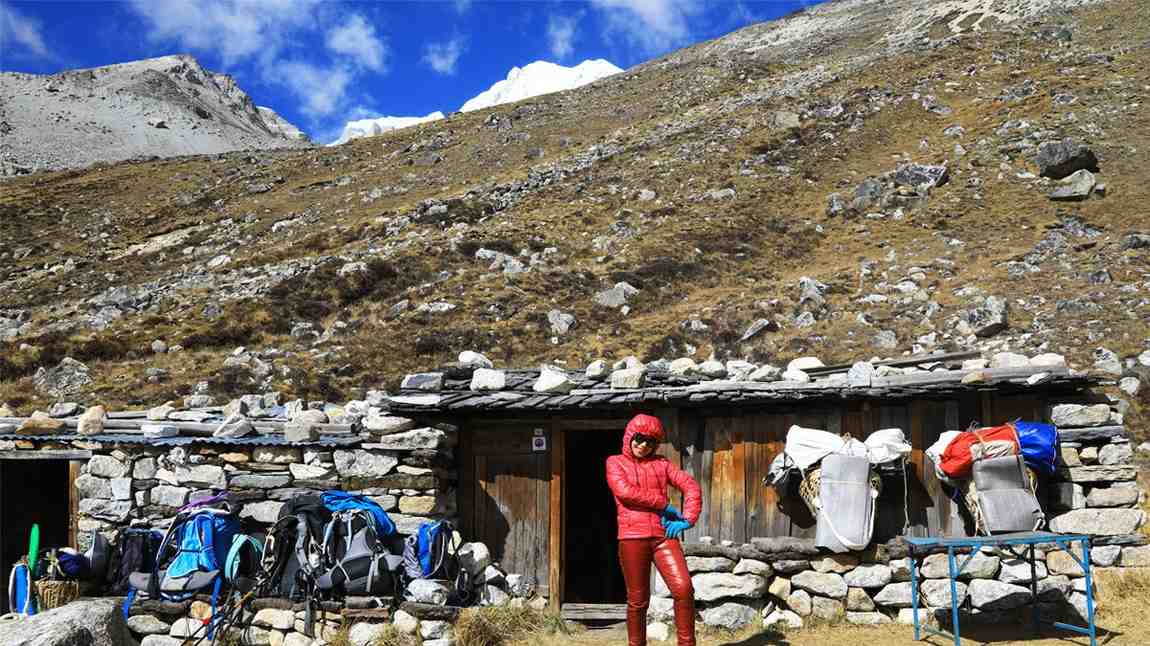
Third, and this is the part that doesn't show up in brochures. The infrastructure is minimal. Tea houses exist, yes. But spacing between them can be five, six, or sometimes eight hours of hard walking. There are no lodges catering to Instagram crowds. No heated rooms. No menus with pasta and apple pie (well, almost no menus like that). You're relying on local hospitality in its most genuine, unpretentious form. Also, the Kanchenjunga weather by month plays a crucial role.
The Kanchenjunga Circuit Trek Route
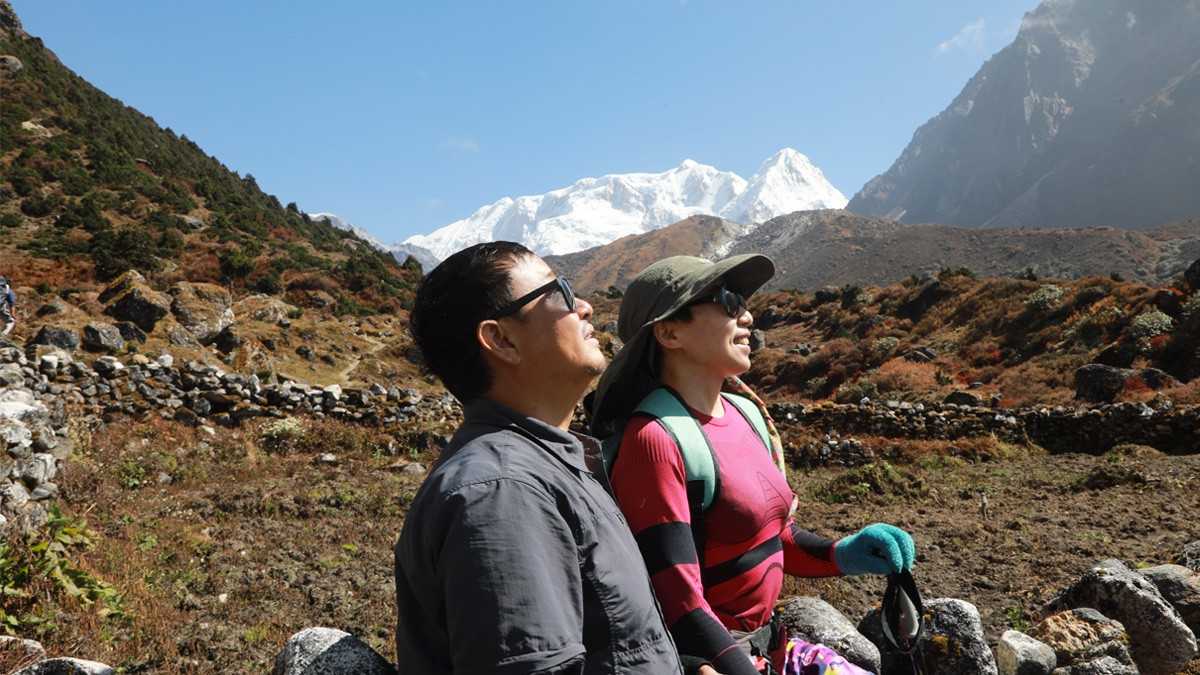
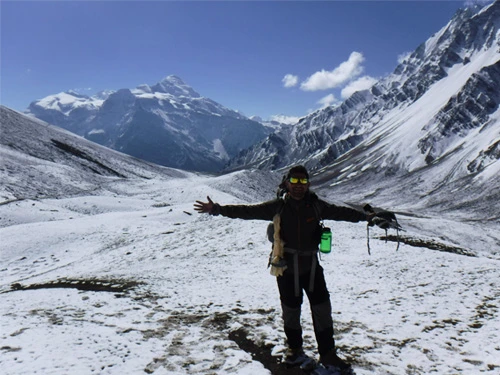
Happy trekker crossing the Kanchenjunga Circuit Trek Route
The classic Kanchenjunga Circuit route typically starts from Taplejung, the gateway town accessible by road or the small mountain airstrip.
From there, most trekkers split the journey into two main arcs:
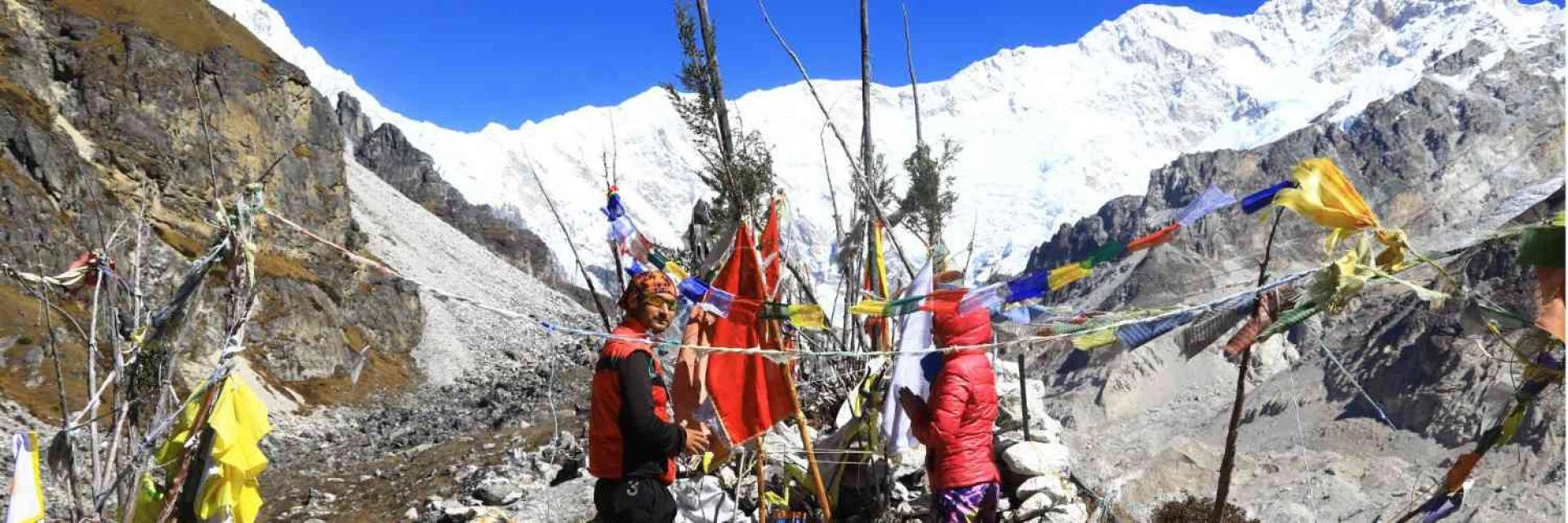
The Kanchenjunga North Base Camp (Pangpema) sits at 5,143 meters. This offers one of the most jaw-dropping close-up views of Kanchenjunga's north face I've ever witnessed in my life. The mountain just towers there. Enormous. Almost aggressive in how massive it is. You feel genuinely small, and somehow that's comforting.
The Kanchenjunga South Base Camp (Oktang) is located at 4,730 meters. This gives a completely different perspective, softer, draped in glacial silence, surrounded by ice formations that look like frozen waves. Many trekkers consider this the more emotionally affecting of the two camps. I'd agree.
Connecting the two sides is the Mirgin La Pass (4,663 m) and the legendary Sele La Pass (4,290 m). These are where the trail earns every bit of its reputation. Snow, wind, altitude, loose rock, the passes deliver all of it. But the views from the top? Absolutely unreasonable in the best possible way. You won’t believe what you saw there.
Kanchenjunga Circuit Trek Difficulty
I'll be straight with you. This is a strenuous, technically demanding trek. It's not technical climbing, you don't need ropes or crampons for most of it. But the thing is, it demands solid fitness, altitude experience, and genuine mental resilience.
Daily elevation gains can be steep and relentless. The trail isn't always well-marked. Weather in the high passes shifts without warning, sometimes within twenty minutes of clear skies. I've met experienced Himalayan trekkers who found Kanchenjunga harder than Everest Base Camp, not just because of altitude, but because the isolation adds a psychological weight that Everest's busy trail doesn't carry.
Altitude sickness is a real concern. The acclimatization schedule on this trek must be respected. Not just that, in fact, rushing kills people. Not being dramatic, it's just mountain reality. Listen to your body, trust your guide, and never be too proud to rest an extra day in Ghunsa or Tseram.
So, what is the best fitness advice? Well, you should just start training at least a few months before departure. Hike with a loaded pack on weekends. Build your cardiovascular base first. Your knees will thank you somewhere around day fourteen.
Practical Tips Nobody Puts in the Guidebooks
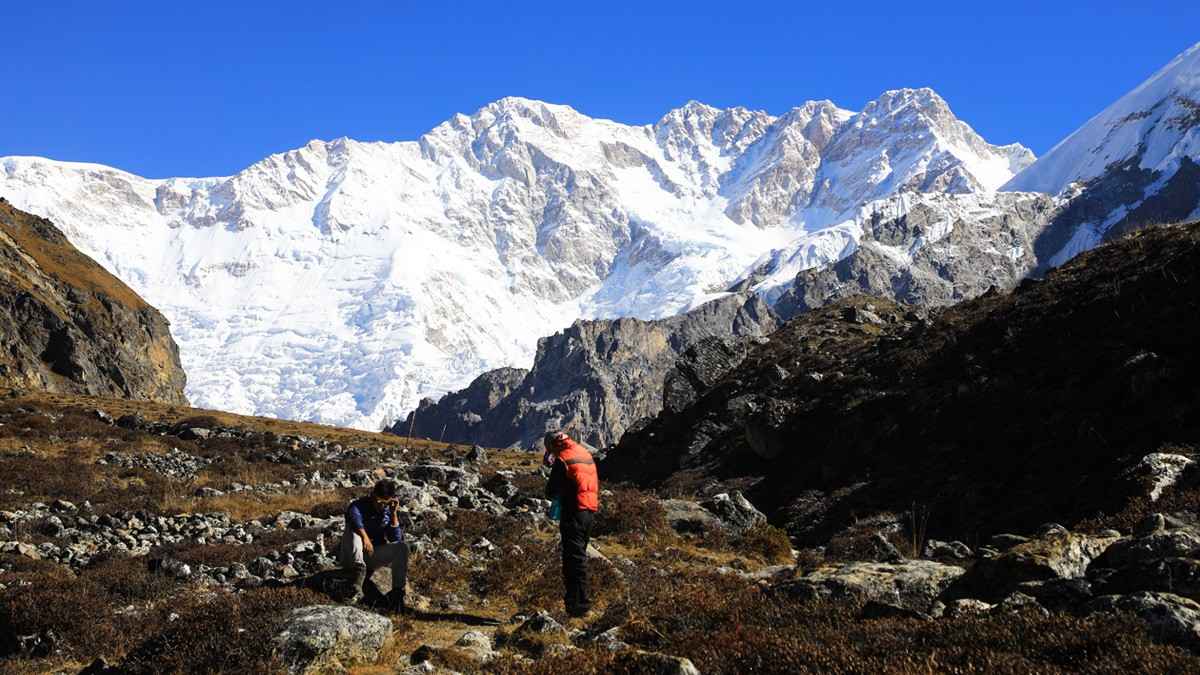
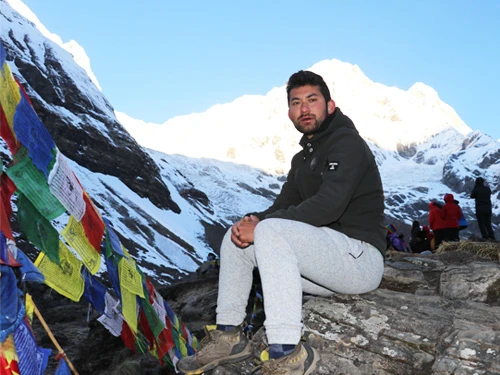
Resting while doing Kanchenjunga Circuit Trek
Real tips from experienced trekkers are really valuable in this Circuit Trek Nepal. Here are a few things I learned the hard and occasionally embarrassing way:
Bring extra cash in small Nepali rupee denominations. There are no ATMs after Taplejung. None. You will find great relief if you already have Nepali currency in your pocket. Otherwise, the journey can be stressful.
Charge everything in lower-elevation lodges. The higher altitude will disappoint you with no access to frequent teahouses and charging services. Also, solar power exists higher up but is inconsistent, especially on cloudy days.
Learn five words of Nepali. Namaste (Hello), Kasto xa (How are you), Dhanyabad (thank you), Ramro (beautiful/good), and Dherai mitho (very delicious). The smiles you get in return are worth more than any mountain view.
Don't rush Ghunsa. This is a beautiful village in this remote trek. Kindly budget two nights there for acclimatization. Use the time to explore, rest, and let your body catch up. You will feel great with this acclimatization.
Your porter knows the trail better than your map does. Trust them. They are often experienced and trusted people from registered travel agencies. So, follow them always.
Carry a journal. You will want to remember specific moments that photos can't hold. This definitely makes your journey memorable.
My Last Morning at Pangpema
I want to end here, not with logistics, but with a moment.
The morning I left North Base Camp, I woke before Lakpa (porter) did. Stepped outside into minus twelve Celsius darkness, headlamp beam cutting through total silence. And then gradually, slowly, like something shy, the first light hit the summit pyramid of Kanchenjunga. Just the very tip. Then more. The whole north face ignited in gold and orange, and I stood there in my down jacket with frozen breath and completely forgot to take a photo for about four minutes because I was too busy just being inside the moment.
That's what Kanchenjunga does. It doesn't perform for you. It doesn't market itself. It simply exists, enormous and indifferent and spectacular. And if you're patient and stubborn and willing enough to walk three weeks into Nepal's forgotten eastern corner, it lets you witness it.
That's the whole answer, really. That's why Kanchenjunga is Nepal's most remote adventure. Not because it's hard to reach, though it is. Not because it's physically demanding, though it absolutely is. But because it gives you something that the crowded trails have mostly run out of.
Silence. Wildness. The feeling that you actually found something. This is the right destination to refresh your mind and body. You will have the greatest moments on the trail. Just book your trip, pack your gear, and brace yourself.
Kishwor Adhikari is a passionate writer with a deep enthusiasm for trekking and adventure. His extensive travels across Nepal, exploring its diverse landscapes and hidden corners, have shaped his unique perspective on the country's natural beauty. With a wealth of first-hand experience in adventure trekking, Kishwor has become a trusted voice for fellow enthusiasts. Through his writing, he shares invaluable insights, offering practical advice and inspiration for both seasoned trekkers and novices alike. His dedication to sharing his journey and knowledge helps others discover the wonders of Nepal's wilderness, making his work an essential resource for anyone seeking adventure in the region.